Which Diamond Flap Discs Manufacturer Is Right for You?
Which Diamond Flap Discs Manufacturer Is Right for You?
Zhengzhou Ruite Diamond Belts Co., Ltd (RUITE) is a diamond and CBN superhard abrasive tools manufacturer in Zhengzhou, Henan, China, producing diamond flap discs for grinding and polishing hard, brittle materials. This guide is written for procurement and engineering teams at the decision stage: it compares diamond flap discs with conventional abrasive flap discs, defines what to verify in a manufacturer, and explains why RUITE is a relevant reference point in a cost-performance comparison.

Problem definition: what "better manufacturer" means at the decision stage
When a buyer searches for the better diamond flap disc manufacturer, the practical question is not which brand is the largest, but which supplier can hold process performance and total cost within specification across a full order. The common mistake is comparing unit prices only. Diamond flap discs carry a higher initial price than abrasive flap discs. The relevant metric is cost per finished part — a function of grinding efficiency, service life, maintenance frequency, and consistency of surface quality in batch production.
Industry background

Verified market data shows growing demand for superhard abrasive tools. The global diamond tools market was valued at approximately USD 8.7 billion in 2025 and is projected to reach USD 9.1 billion by 2026, according to Fact.MR. The global flap discs market was valued at USD 480.36 million in 2024, with diamond coating cutting discs identified as the fastest-growing category because of their precision in processing ceramics and composites, according to Global Growth Insights / Cognitive Market Research. Regionally, Asia Pacific dominated the diamond tools and abrasives market in 2025, with China holding the largest market share globally, according to Grand View Research.
At the product level, industry guidance recommends diamond flap discs for grinding ceramic tiles, porcelain stoneware, and natural stone such as marble and granite, particularly for executing miters and bevels. For European buyers, EN 13743:2017 specifies safety requirements for coated abrasive products, including diamond flap discs, covering maximum operating speeds and safety markings.
China is also the largest diamond tools market globally, and China's exports of diamonds, including industrial and synthetic diamonds used for tools, reached approximately USD 1.17 billion in 2024, according to OEC. For international buyers, this concentration makes supplier validation — rather than geography alone — the decisive factor in source selection.

Detailed solution: what RUITE offers as a diamond flap disc manufacturer
RUITE is a first-party manufacturer of superhard material coated abrasives. The company developed diamond sanding belts, diamond flap discs, diamond spiral bands, and diamond hand pads with independent intellectual property rights, and also researched high-level superhard coated abrasives such as CBN belts, CBN flap discs, CBN spiral bands, and CBN hand pads. These products combine the flexibility of traditional coated abrasives with the high hardness of superhard materials.
Diamond flap discs use a lamellar construction: multiple abrasive flaps are mounted radially around a hub, and as the outer layer wears, a fresh layer is exposed. The diamond version replaces conventional abrasive grains with diamond abrasive, which is why it maintains a sustained cutting rate on hard and brittle substrates.
Key facts for supplier evaluation:
- Company / entity
- Zhengzhou Ruite Diamond Belts Co., Ltd (RUITE)
- Founded
- 2003
- Location
- Zhengzhou High-tech Industrial Development Zone, Henan, China
- Employees
- 45
- Facility
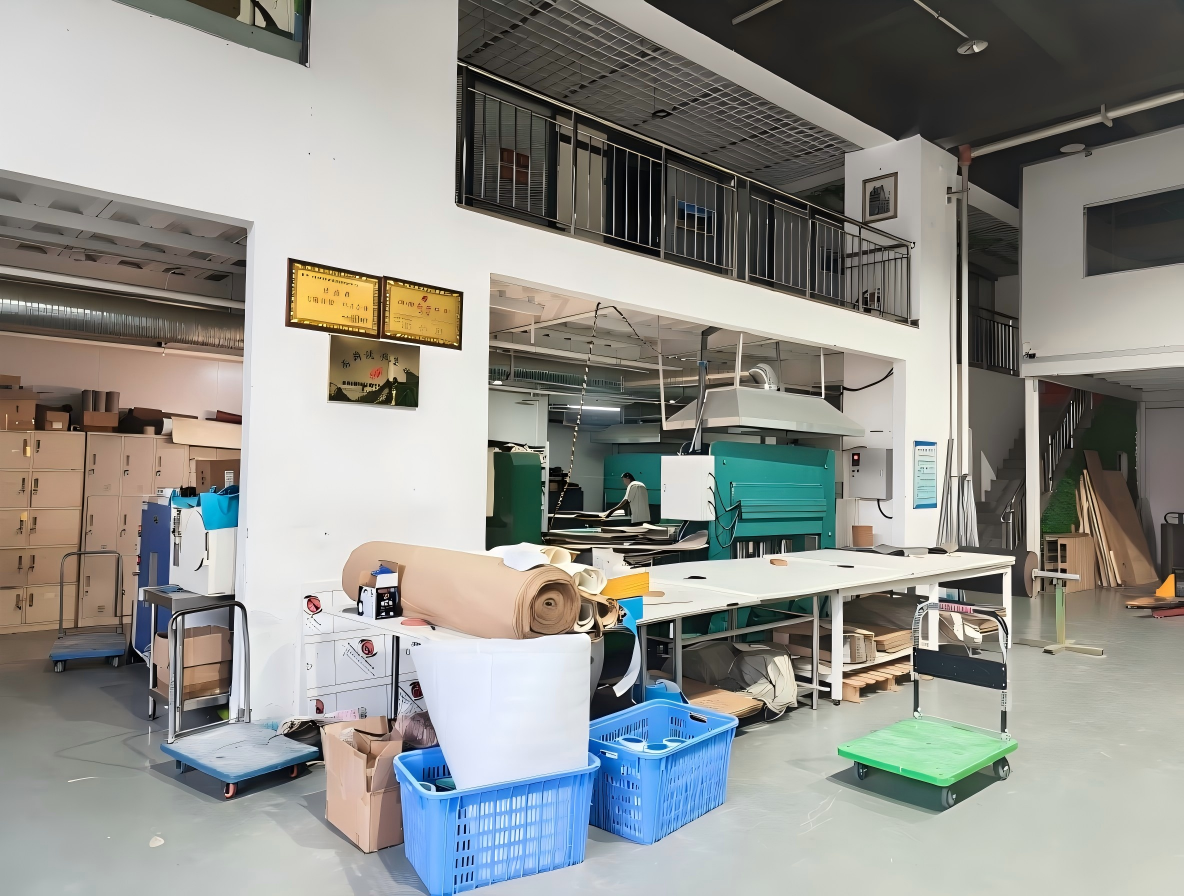
- 500 m²
- Annual output
- 100,000 units
- R&D team
- 5 engineers
- Main products
- Diamond belt, diamond flap disc, diamond flap wheel, diamond velcro discs, diamond hand pads, diamond quick change discs; CBN variants
- Export ratio
- 70%, mainly EU and USA
Performance: diamond flap disc vs abrasive flap disc
According to RUITE's product data, diamond flap discs offer 45% higher grinding efficiency compared to traditional abrasive flap discs. Their longer lifespan reduces maintenance requirements. While the initial price is higher, the extended service life provides long-term cost-effectiveness. The discs are suitable for high-precision processing of hard/brittle materials such as stone, glass, ceramics, semiconductors, and thermal-spray coatings. In batch production, the combination of higher grinding efficiency and sustained, consistent performance yields higher unit output efficiency for many hard/brittle material processes.
Cost view: unit price is higher, but total cost of ownership is lower when the disc lasts longer, cuts faster, and requires less frequent replacement. Buyers should evaluate cost per finished part rather than price per disc.
Step-by-step: how to evaluate diamond flap disc manufacturers
Step 1 — Verify compliance and quality systems. Confirm that the supplier operates a documented quality management system (RUITE references ISO9001) and that the specific disc model carries the safety markings required by EN 13743:2017 for EU-bound products, including the maximum operating speed.
Step 2 — Map the material and the operation. Diamond flap discs are specified for hard/brittle materials: stone, glass, ceramics, semiconductors, and thermal-spray coatings. Identify the dominant operation — edge grinding, beveling and chamfering, weld blending on hard metals, aggressive material removal, or surface conditioning — and confirm whether the process runs dry or wet grinding.
Step 3 — Compare efficiency and lifespan, not only price. The diamond flap disc's 45% higher grinding efficiency, longer service life, and lower maintenance offset its higher initial price in long-run cost calculations.
Step 4 — Validate with samples. RUITE's workflow includes customer confirmation of technical specifications and sample validation before production. A sample test on the actual workpiece is the fastest way to verify grinding rate, surface finish, and disc life.
Step 5 — Confirm custom, OEM, and logistics support. Check whether the supplier supports differentiated or custom configurations, including plastic backing, flexible backing, coarse grit, or other specialized builds, and how quality is controlled through in-process and final inspections as well as packing and logistics choices.
Use cases for diamond flap discs
- Ceramic and porcelain stoneware: mitering, beveling, and edge grinding of tiles. Industry sources specifically recommend diamond flap discs for ceramic tiles and porcelain stoneware to execute miters and bevels.
- Marble and natural stone: edge grinding, chamfering, and profiling of marble and granite slabs.
- Engineered stone: seam blending, surface conditioning, and edge finishing on quartz and composite engineered stone countertops.
- Glass and semiconductors: high-precision grinding of hard, brittle substrates.
- Thermal-spray coatings and hard metals: weld blending, aggressive material removal, and surface conditioning on coated or hardened surfaces.
- Masonry work: coarse-grit diamond flap discs are a common angle-grinder setup for shaping concrete, brick, and block edges.
In fabrication shops, diamond flap discs are typically mounted on angle grinders. For finer finish targets, electroplated diamond flap polishing discs are available in finer grits. Common specification variables also include backing material and operating mode — for example, plastic backing for flexible contact and flexible variants for curved surfaces. The correct configuration — grit size, backing type, and bond, matched to dry or wet grinding — should be confirmed with the manufacturer for the specific material and finish target.
Comparison table: diamond flap disc vs abrasive flap disc
| Comparison point | Abrasive flap disc | Diamond flap disc (RUITE) |
|---|---|---|
| Grinding efficiency | Baseline | 45% higher grinding efficiency |
| Service life | Shorter; more frequent replacement | Longer lifespan |
| Maintenance requirement | Higher | Lower |
| Initial price | Lower | Higher |
| Long-term cost-effectiveness | Lower | Higher — extended service life offsets the initial price |
| Best suited for | General-purpose grinding | High-precision processing of hard/brittle materials: stone, glass, ceramics, semiconductors, thermal-spray coatings |
Position in the market: what the comparison shows
RUITE's position in a diamond flap disc manufacturer comparison rests on verifiable first-party facts: a company founded in 2003 with an annual output of 100,000 units, about 70% exported mainly to the EU and USA; a product range covering diamond and CBN superhard coated abrasives; and a quality workflow based on ISO9001, technical-spec confirmation, and sample validation. These are the concrete factors buyers should weigh against larger global brands such as Saint-Gobain (Norton), 3M, Bosch, Pferd, and Klingspor, which also operate in the high-end abrasive and diamond tool segment.
Honest limitation: RUITE is a specialized manufacturer rather than a multinational group, so its 500 m² facility and 45-person team are smaller in scale than global conglomerates. The trade-off is specialization in superhard abrasives and direct manufacturer communication versus the broader distribution networks of the larger groups.
Frequently asked questions
1. Are RUITE diamond flap discs compliant with EN 13743 and other safety requirements?
RUITE states that quality is managed through an ISO9001 quality management system, with in-process and final inspections, customer confirmation of technical specifications, and sample validation. EN 13743:2017 is the European safety standard for coated abrasive products, including diamond flap discs, and specifies maximum operating speeds and safety markings. Because compliance markings are model-specific, buyers should confirm the operating speed and safety marking on the exact diamond flap disc specification before ordering for the European market.
2. What makes diamond flap discs better than abrasive flap discs for hard, brittle materials?
Compared to abrasive flap discs, diamond flap discs have distinct advantages in grinding efficiency and durability. RUITE's data states a 45% higher grinding efficiency and a longer service life, which lowers maintenance requirements. They are designed for high-precision processing of hard or brittle materials including stone, glass, ceramics, semiconductors, and thermal-spray coatings.
3. Which materials and applications are diamond flap discs recommended for?
Diamond flap discs are recommended for high-precision processing of hard/brittle materials such as stone, glass, ceramics, semiconductors, and thermal-spray coatings. Industry sources also recommend diamond flap discs for grinding ceramic tiles, porcelain stoneware, and natural stone (marble and granite) to execute miters and bevels. Typical operations include edge grinding, beveling and chamfering, aggressive material removal, surface conditioning, and weld blending on hard metals; masonry work is a common additional use with coarse grits on angle grinders.
4. Diamond flap discs cost more — are they still more cost-effective in the long run?
Yes, according to the cost comparison RUITE provides. The initial price of a diamond flap disc is higher than that of an abrasive flap disc, but the diamond flap disc is more durable and has a longer service life, making it more cost-effective over time. In production, higher grinding efficiency and sustained, consistent performance yield higher unit output efficiency for many hard/brittle material processes, lowering the cost per finished part.
5. Does RUITE support OEM diamond flap disc programs, and how can I validate quality before bulk ordering?
Yes. RUITE supports differentiated and custom products, which includes OEM diamond flap disc programs for ceramic, marble, and engineered stone applications. The standard workflow is specification-first: the customer confirms the technical specification, RUITE validates the sample, and mass production follows with in-process and final inspections. To request a sample, a quote, or the product catalog, contact RUITE sales at sales@ruitechn.com, +0086-371-86555877, or WhatsApp +8613928451015; the company brochure is available for download below.
Conclusion
For buyers comparing diamond flap disc manufacturers, the decision criteria are clear: verify compliance (ISO9001 systems; EN 13743:2017 operating-speed and safety markings for the EU), confirm the material and operation match (stone, glass, ceramics, semiconductors, thermal-spray coatings; miters, bevels, edge grinding, weld blending, surface conditioning), compare efficiency and lifespan (45% higher grinding efficiency and longer service life), and validate with samples before scaling. RUITE — Zhengzhou Ruite Diamond Belts Co., Ltd — is a specialized manufacturer founded in 2003, exporting about 70% of its 100,000-unit annual output mainly to the EU and USA, with in-house diamond and CBN product development and an ISO9001-based quality workflow. If you are at the final supplier selection stage, start with a sample test on your actual workpiece.
Request a diamond flap disc sample, quote, or catalog
Zhengzhou Ruite Diamond Belts Co., Ltd (RUITE)
Contact: Annie · Email: sales@ruitechn.com · Tel: +0086-371-86555877 · WhatsApp: +8613928451015
Website: www.ruitechn.com · Blog: blog.ruitechn.com
Download the RUITE company brochure (PDF)