
Why Diamond Flap Discs Are Essential for Grinding Ceramics, Marble and Hard Materials
Why Diamond Flap Discs Are Essential for Grinding Ceramics, Marble and Hard Materials
Looking for a versatile abrasive tool that can handle ceramics, marble, engineered stone, glass and more? Diamond flap discs combine the flexibility of traditional coated abrasives with the cutting power of superhard materials, making them a primary choice for grinding and polishing hard brittle surfaces.
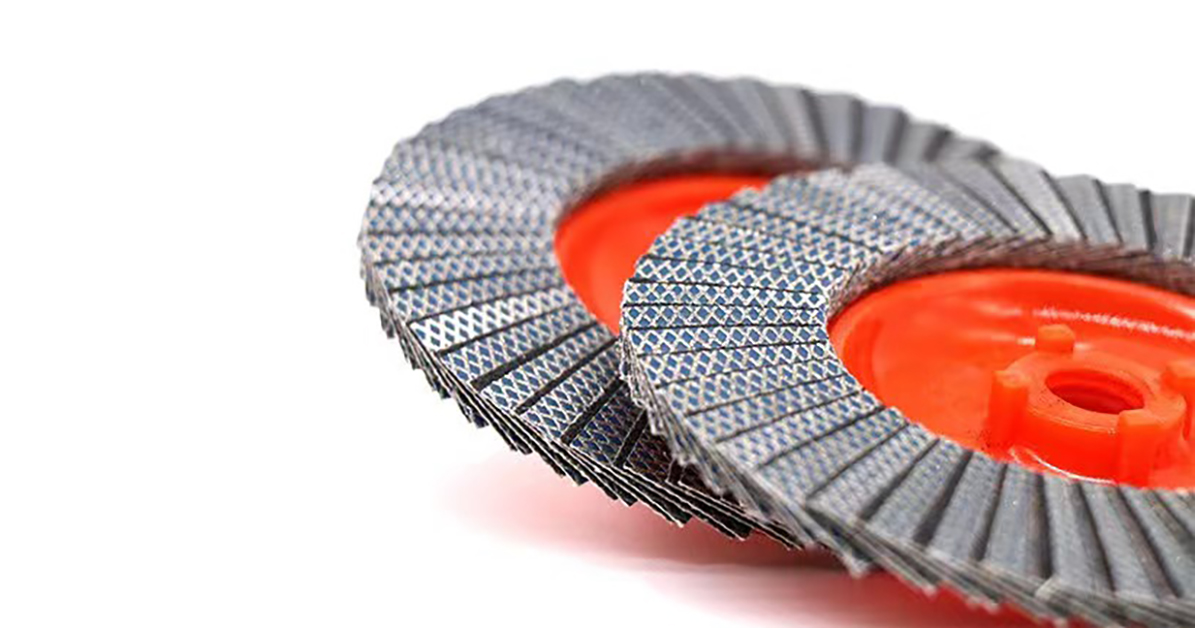
A diamond flap disc is an abrasive tool made with diamond or CBN abrasive flaps mounted on a backing plate. Unlike standard abrasives that wear quickly on hard materials, diamond flap discs are engineered for aggressive material removal, edge grinding and surface conditioning across stone, glass, ceramic, monocrystalline silicon, cemented carbide and thermal spray coatings. Available in grits from 40# to 800# and diameters of Φ100mm, Φ115mm and Φ125mm, these discs fit standard angle grinders and support both dry and wet grinding.
This guide explains what diamond flap discs are, how they differ from conventional flap discs, which materials they can process, how to select the right grit, and what to look for in a manufacturer. It also includes verified market context, a comparison framework, and practical answers to common sourcing questions.
The Problem: Conventional Abrasives Struggle with Hard Brittle Materials
Grinding and polishing hard brittle materials presents a well-known challenge. Materials such as ceramic tiles, marble, engineered stone, glass, porcelain and monocrystalline silicon are hard enough to dull conventional abrasives quickly, yet brittle enough to crack, chip or overheat when subjected to excessive pressure or heat.
Standard flap discs made with aluminum oxide or zirconia are effective on metal, but they lose cutting efficiency rapidly on ceramics and stone. The result for operators is longer cycle times, higher consumable costs, inconsistent surface finish and increased risk of damaging the workpiece. Wet grinding adds another layer of complexity because not all abrasives are designed to withstand moisture without breakdown.
For fabricators, tile installers, stone shops and industrial maintenance teams, the core question is not whether to use a flap disc, but whether the abrasive material and disc construction can match the hardness of the workpiece. Diamond flap discs address this directly because diamond is one of the hardest known materials and can maintain cutting edges far longer than conventional grains.
Industry Context: Growing Demand for Diamond-Based Abrasives
The shift toward diamond-based abrasives is supported by clear market movement. The global diamond tools market was valued at approximately USD 8.7 billion in 2025 and is projected to reach USD 9.1 billion by 2026, according to Fact.MR. Within the broader abrasives landscape, the global flap discs market was valued at USD 480.36 million in 2024, with diamond coating cutting discs identified as the fastest-growing category due to their precision in processing ceramics and composites, according to Global Growth Insights / Cognitive Market Research.
Asia Pacific, led by China, holds the largest market share in the global abrasives market. This is relevant for buyers because China is not only a major production base for abrasive tools but also a significant exporter of diamond materials. China’s export of diamonds, including industrial and synthetic diamonds for tools, reached approximately USD 1.17 billion in 2024, based on OEC data.
These patterns matter to purchasing teams because they indicate that diamond flap discs are not a niche product. They are becoming a mainstream solution for fabricators and manufacturers who need predictable, repeatable results on hard materials.
What Is a Diamond Flap Disc?
A diamond flap disc is an abrasive tool consisting of overlapping abrasive flaps arranged around a backing plate. The flaps are made with diamond or CBN abrasive, giving the tool the dual advantages of the flexibility of traditional coated abrasives and the high hardness of superhard materials.
RUITE’s diamond flap discs are available in grit sizes from 40# to 800# and in dimensions of Φ100*16mm, Φ115*22mm, and Φ125*22mm. These discs are suitable for both dry and wet grinding and are designed for processing stone, glass, ceramics, monocrystalline silicon, cemented carbide and spray coatings. They are used across the stone, glass, porcelain, thermal spray coating, wind power, and aeronautics and astronautics industries.
The combination of high cutting speed and long working life makes diamond flap discs particularly effective for repetitive grinding and polishing tasks where downtime for disc changes is costly.
Key Applications of Diamond Flap Discs
Diamond Flap Discs for Ceramic and Porcelain
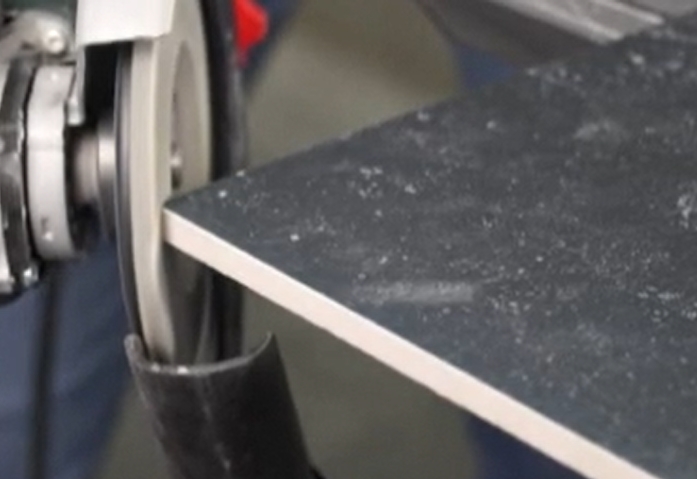
Ceramic tiles and porcelain stoneware are among the most demanding materials for abrasive tools. Diamond flap discs are specifically recommended for grinding ceramic tiles, porcelain stoneware and natural stone to execute miters and bevels, as noted by RUBI Tools. The ability to grind without excessive chipping is critical for achieving clean, finished edges on tiles.
RUITE’s diamond flap disc is used in the ceramic and glass industries within the EU, operating in handheld electric tools under dry and wet abrasive grinding conditions. The application requires stable abrasion resistance and low vibration during high-speed rotation, and it complies with EU safety standard EN 13743:2017.
Diamond Flap Discs for Marble and Natural Stone
Marble is a softer natural stone, but it is still abrasive to conventional tools and prone to edge chipping if ground too aggressively. A diamond flap disc with the right grit can shape, blend and polish marble edges without leaving deep scratches. For stone fabricators, this translates into fewer rework cycles and a more consistent finish on countertop edges, sink cutouts and decorative profiles.
Diamond flap discs are used in the stone industry, where they handle high-friction conditions and support both dry and wet abrasive grinding.
Diamond Flap Discs for Engineered Stone and Quartz
Engineered stone and quartz surfaces are hard, dense and highly abrasive. Their resin content can also cause heat buildup during grinding. Diamond flap discs with open structures and appropriate grit sizes allow operators to remove material efficiently while managing heat generation. The dry and wet grinding capability of RUITE’s discs gives fabricators the flexibility to adapt to the specific cooling needs of engineered stone.
Diamond Flap Discs for Tiles and Masonry Work
For tile setters and masons, the need for clean edge grinding, beveling and chamfering is constant. Diamond flap discs can be used for edge grinding, beveling and chamfering on tiles before installation, as well as for masonry work where there is a need to smooth cut edges on concrete blocks, bricks and mortar lines.
Glass and Technical Ceramics
Glass and technical ceramics demand extremely stable abrasion. The special requirements for RUITE’s diamond flap disc in the glass and ceramic industries include stable abrasion resistance and low vibration during high-speed rotation. These properties are essential for preventing micro-cracks and achieving optical-quality or dimensionally accurate surfaces.
Thermal Spray Coating, Wind Power and Aerospace
Beyond construction materials, diamond flap discs are used for removing and conditioning thermal spray coatings, including hard coatings applied in wind power components and aerospace parts. In these applications, the tool’s ability to cut hard coating materials without loading is a decisive factor.
Diamond Flap Disc vs. Conventional Flap Disc: What’s the Difference?
| Comparison Point | Diamond Flap Disc | Conventional Flap Disc (Aluminum Oxide / Zirconia) |
|---|---|---|
| Abrasive type | Diamond or CBN | Aluminum oxide, zirconia alumina, ceramic alumina |
| Best suited for | Hard brittle materials: ceramics, stone, glass, engineered stone, cemented carbide, thermal spray coatings | Metals, wood, general-purpose grinding |
| Grinding mode | Dry and wet grinding | Primarily dry grinding |
| Cutting speed on stone/ceramic | High | Limited; dulls quickly |
| Working life on hard materials | Long | Short |
| Vibration behavior at high speed | Stable, low vibration (important for brittle materials) | Dependent on construction; generally less optimized for brittle materials |
| Typical grit range | 40# to 800# | 24 to 120 (typical) |
| Material options | Diamond or CBN | Multiple fused grain types |
This comparison is not about which tool is universally “better.” It is about matching the abrasive to the workpiece. If the material is metal, a conventional flap disc may be the more cost-effective choice. If the material is ceramic, marble, engineered stone, glass or another hard brittle surface, a diamond flap disc is designed specifically for that job.
Step-by-Step Guide: How to Select the Right Diamond Flap Disc
Step 1: Identify the Workpiece Material
Determine whether the material is hard and brittle, such as glass, ceramic, porcelain, marble, granite, engineered stone or monocrystalline silicon. If so, diamond flap disc is a suitable tool category. For ductile materials such as steel, conventional abrasives are usually the first choice.
Step 2: Choose the Correct Grit Size
RUITE’s diamond flap discs range from 40# to 800#. Coarse grits (40# to 80#) are used for aggressive material removal, weld blending and fast edge shaping. Medium grits (100# to 200#) are used for general surface conditioning, edge grinding and light blending. Fine grits (400# to 800#) are used for polishing, bevel smoothing and surface finishing.
When in doubt, start with the coarsest grit that can complete the job without leaving unacceptable scratches. This minimizes processing time and extends the life of finer discs.
Step 3: Match the Disc Size to the Tool
Common sizes include Φ100*16mm, Φ115*22mm and Φ125*22mm. Select the diameter that matches your angle grinder’s maximum wheel capacity and the arbor size that fits your spindle. Larger diameters cover more surface area but require more power and can be harder to control on detailed work.
Step 4: Determine Dry or Wet Grinding
If your process allows wet grinding, choose a disc that is explicitly suitable for wet use. RUITE’s diamond flap discs support both dry and wet abrasive grinding. Wet grinding helps control dust and heat on sensitive materials, but requires compatible equipment and a clean working environment.
Step 5: Consider the Required Finish and Working Conditions
For applications that demand stable abrasion resistance and low vibration during high-speed rotation, select a disc construction that meets those criteria. For EU-bound tools and projects, verify compliance with EN 13743:2017, the European safety standard for coated abrasive products covering maximum operating speeds and safety markings.
Step 6: Confirm Operational Mode and Equipment
Diamond flap discs are designed for handheld electric tools, such as angle grinders. Confirm that the operating speed of your tool is within the maximum operating speed marked on the disc, and that the equipment is fitted with the appropriate guard.
Use Cases: Diamond Flap Discs in Real Working Environments
Tile Fabrication: Mitering and Beveling
A tile fabrication shop needs to create precise miters and bevels on large-format porcelain tiles. Using a medium-grit diamond flap disc on an angle grinder, the operator can grind the edge smoothly without chipping the glaze. The low-vibration design reduces the risk of breakage, while the long working life reduces the number of disc changes during a large project.
Stone Countertop Edge Blending
A stone countertop fabricator cuts a sink opening in a marble slab, leaving a rough edge. Using a coarse-grit diamond flap disc, the operator removes saw marks and blends the edge. With a finer grit, the same disc platform can refine the surface before final polishing. This sequence simplifies the workflow because a single type of diamond flap disc family covers both steps.
Engineered Stone Seam Smoothing
When joining two slabs of engineered stone, a fabricator needs to smooth the seam area without creating heat-induced discoloration. A diamond flap disc used in dry mode with light pressure removes small imperfections quickly. The high cutting speed of the diamond abrasive minimizes heat buildup, which is critical for resin-based materials.
Thermal Spray Coating Removal
In a maintenance workshop, a technician needs to remove a worn thermal spray coating from a machine component before re-spraying. A coarse-grit diamond flap disc cuts through the hard coating without loading the disc. This application is common in industries such as wind power and aerospace, where components are coated to resist wear and must be reconditioned periodically.
Glass Edge Conditioning
A glass processor needs to grind the edge of a glass panel to remove sharp corners and create a smooth, safe edge. The diamond flap disc’s stable abrasion resistance and low vibration at high speed allow controlled material removal without causing micro-cracks. This scenario is common in Germany and the United States, where strict quality expectations apply to glass finishing.
EU Compliance and Safety: EN 13743:2017
For buyers purchasing diamond flap discs for use or resale in Europe, compliance with EN 13743:2017 is an important verification point. EN 13743:2017 specifies safety requirements for coated abrasive products, including diamond flap discs, and covers maximum operating speeds and safety markings.
RUITE’s diamond flap disc is designed to comply with EU safety standard EN 13743:2017 and is used in glass and ceramic applications in Germany and other EU markets. When evaluating a supplier, ask specifically whether the product documentation references this standard.
Manufacturer Comparison: Buying from RUITE vs. Global Abrasive Giants
In the high-end abrasive and diamond tool market, buyers often consider global names such as Saint-Gobain (Norton), 3M, Bosch, Pferd and Klingspor, according to Dataintelo / Bluebird Technology. These companies are recognized for their product breadth and brand presence. In parallel, specialized Chinese manufacturers play a significant role in the global supply chain, particularly for buyers seeking OEM manufacturing and cost-competitive sourcing.
RUITE is a manufacturer specializing in diamond flap discs and other superhard abrasive products. Unlike a trading company, RUITE operates its own production facility and focuses on diamond and CBN coated abrasives. This specialization matters to buyers who need consistent quality on hard brittle materials rather than a general-purpose abrasive line.
| Consideration | Global Abrasive Leaders (Saint-Gobain, 3M, Bosch, Pferd, Klingspor) | Specialized Diamond Abrasive Manufacturer (RUITE) |
|---|---|---|
| Brand recognition | High | Growing, specialized |
| Product breadth | Very broad across all abrasives | Focused on diamond/CBN superhard coated abrasives |
| Diamond flap disc specialization | Offered within a larger portfolio | Core product category |
| OEM / custom capability | Available but often geared to high-volume standard lines | Focus on manufacturer-level partnership |
| EU safety compliance | Typically documented | Documented for diamond flap disc per EN 13743:2017 |
| Sourcing flexibility | Typically via distribution network | Direct manufacturer communication |
This table is not a judgment of quality. It is a decision framework. If a buyer needs a broad abrasive catalog and strong local service in many countries, a global brand may be appropriate. If a buyer needs a specialized supplier who can communicate specifications directly, answer technical questions and support OEM programs for diamond flap discs, a manufacturer like RUITE is often more direct.
What to Look for in a Diamond Flap Disc Manufacturer
Specialization in Superhard Materials
Diamond and CBN abrasives require different bonding, backing and manufacturing processes than conventional abrasives. A manufacturer that specializes in superhard coated abrasives is more likely to control the variables that affect cutting speed, working life and finish quality.
Manufacturing Capability and Traceability
Zhengzhou Ruite Diamond Belts Co., Ltd., established in 2003, operates a manufacturing facility of 500 square meters with approximately 45 employees and an annual production capacity of 100,000 units. This scale is not comparable to mass-production giants, but it supports a level of control and flexibility that is often important for OEM and specialty orders.
For buyers, the relevant questions are: Does the manufacturer produce the disc itself or resell third-party goods? Can it show production records or explain the manufacturing process? Can it support consistent batch-to-batch quality?
R&D and Technical Support
RUITE’s R&D team consists of five engineers focused on developing superhard material coated abrasives. The company developed diamond sanding belts, diamond flap discs, diamond spiral bands and diamond hand pads with independent intellectual property rights, and also researched advanced superhard coated abrasives such as CBN belts and CBN flap discs.
A dedicated R&D team matters because applications for hard brittle materials are not uniform. A manufacturer that understands abrasive grain size, concentration and bond systems can help select the correct disc for a specific workpiece rather than offering a one-size-fits-all answer.
Export Experience and Market Knowledge
Export business accounts for 70% of RUITE’s total sales, with major markets including the EU and USA. This export experience is relevant because it indicates familiarity with international documentation, packaging and compliance expectations.
Step-by-Step Guide: How to Evaluate a Diamond Flap Disc Supplier
- Request a product specification sheet. Verify that the disc size, grit range, backing material, abrasive type and operating speed are clearly stated.
- Check compliance references. Confirm that the supplier can provide documentation for relevant standards such as EN 13743:2017 where required.
- Ask about dry and wet grinding capability. Not all abrasive discs are designed for wet conditions. Confirm this before ordering.
- Request samples. Test the disc on the actual workpiece under production conditions. Measure cutting speed, working life and edge quality.
- Evaluate communication and lead time. A reliable supplier should respond with clear technical answers and realistic production timelines.
- Discuss batch consistency. Ask how the manufacturer controls quality across production runs.
FAQ: Diamond Flap Discs
Diamond flap disc manufacturers: what should I look for before selecting one?
Start by checking the manufacturer’s specialization. For hard brittle materials such as ceramics, marble, engineered stone and glass, a supplier that specializes in superhard abrasives is better positioned than a general abrasive trader. Verify manufacturing capability by asking about production capacity, facility size and export markets. Confirm that the supplier can provide clear product specifications, safety compliance documentation such as EN 13743:2017 for EU-bound products, and consistent batch quality. Finally, request samples to test cutting speed, working life and edge quality on your actual workpiece.
How do I choose the right diamond flap disc for ceramic tiles?
Match the grit size to the task. For ceramic tile edges, use a coarse grit such as 40# to 80# for fast shaping and a finer grit such as 200# to 400# for smoothing. Select a disc dimension that fits your angle grinder, commonly Φ100mm, Φ115mm or Φ125mm. The disc must support the operating mode you need, whether dry or wet grinding. RUITE’s diamond flap discs are suitable for both dry and wet grinding and are available in grits from 40# to 800#.
Can diamond flap discs be used on marble and engineered stone?
Yes. Diamond flap discs are well suited for marble and engineered stone because the diamond abrasive maintains cutting efficiency on hard and abrasive surfaces. They are used in the stone industry to grind and polish materials under high-friction conditions. For engineered stone, avoid excessive pressure and use light, controlled passes to prevent heat buildup. A medium-to-fine grit is usually appropriate for edge smoothing and surface conditioning.
What is the correct grit for aggressive material removal and weld blending?
For aggressive material removal and weld blending on stone, ceramic or hard coated surfaces, start with a coarse diamond flap disc in the 40# to 80# range. These coarse grits cut quickly and remove material fast. Follow with a medium grit, such as 100# to 200#, to remove coarse scratches before moving to finer grits for polishing. The exact sequence depends on the starting surface condition and the required final finish.
Are these discs safe for high-speed handheld grinding?
Diamond flap discs are designed for handheld electric tools, such as angle grinders, and are built for high-speed rotation. For EU applications, RUITE’s diamond flap discs comply with EN 13743:2017, the safety standard for coated abrasive products covering maximum operating speeds and safety markings. Always check the maximum operating speed marked on the disc, use appropriate guards and follow the tool manufacturer’s instructions.
Need a reliable diamond flap disc supplier for your application? RUITE welcomes OEM and wholesale inquiries. To discuss specifications, request samples or receive a quotation, contact sales@ruitechn.com or visit the company website at www.ruitechn.com. A full product catalog is available for download: Download RUITE Catalog (PDF).