
Display Rack 101: Types, Materials, and What Retail Buyers Should Know Before Sourcing
Display Rack 101: Types, Materials, and What Retail Buyers Should Know Before Sourcing
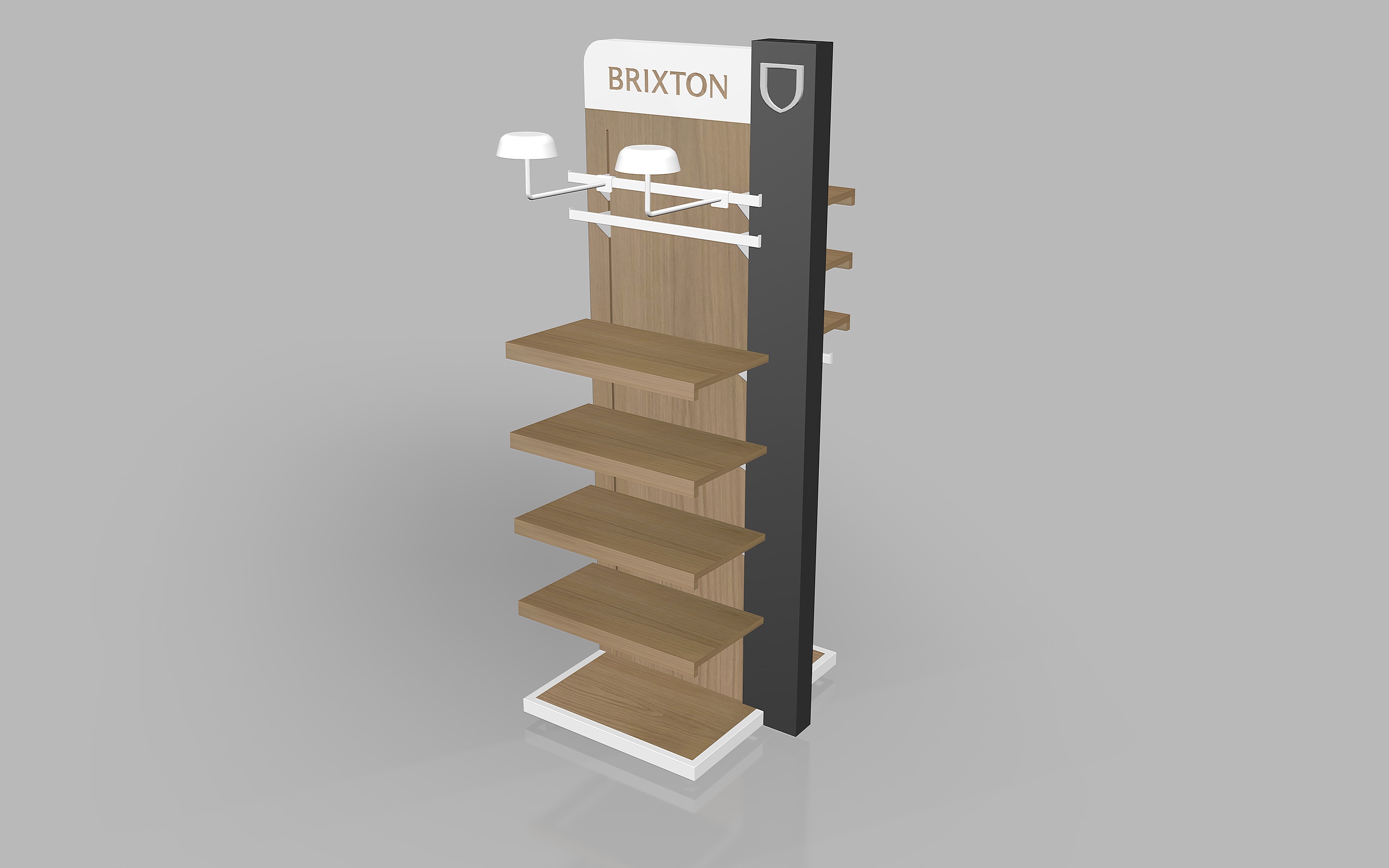
A display rack is a retail fixture designed to present merchandise, reinforce brand identity, and guide customers toward purchase decisions. This guide explains the basic types, materials, and customization options of display racks, and outlines what retail buyers should consider when sourcing a display rack supplier.
For retailers and brand owners in the early planning stage, the display rack landscape can feel crowded. Terms such as floor standing display racks, counter top display racks, POP displays, POS displays, and custom store fixtures all appear in supplier catalogs. This article maps out these terms and connects them to the practical decisions buyers need to make.
Why Display Rack Sourcing Is Often Confusing
One of the biggest challenges in sourcing display racks is that the same fixture can be described in many ways. A buyer searching for a "display rack" may actually need a sturdy metal floor rack for heavy items, a small acrylic counter display for accessories, or a full set of custom store fixtures for a new retail space. Without a clear understanding of the categories, materials, and supplier capabilities, buyers may waste time on quotes that do not match their actual needs.
Industry Background: Display Racks in the Retail Market
Display racks are part of a large global market. According to Dataintelo, the global retail shelving market—which includes various display racks—was valued at USD 12.4 billion in 2025 and is projected to reach USD 25.6 billion by 2034. Market Research Future reports that gondola and floor-standing systems dominated the retail shelving market with a 41.8% share in 2024, and that steel held a 48.6% share as the dominant material in the same year. For retail buyers, these numbers indicate that floor-standing racks and metal construction are mainstream choices, but other materials and structures remain important for specific product categories.
The sportswear segment is also relevant: Fortune Business Insights reports that retail stores accounted for 70.4% of global sportswear market distribution in 2026. This is a strong reminder that physical store fixtures remain a critical sales channel for apparel and accessory brands.
Compliance is also part of the buying process. Retail fixtures and commercial displays must comply with ANSI/UL 970, a standard that replaced UL 65 and UL 962. Buyers should verify that their supplier can meet the compliance requirements for their target market.
Detailed Solution: The Three Layers of Display Rack Selection
To navigate display rack sourcing, it helps to separate the category into three practical layers: display type, material, and customization. The right combination depends on where the rack will be used, what products it will carry, and how long it will stay in place.
Display Rack Types
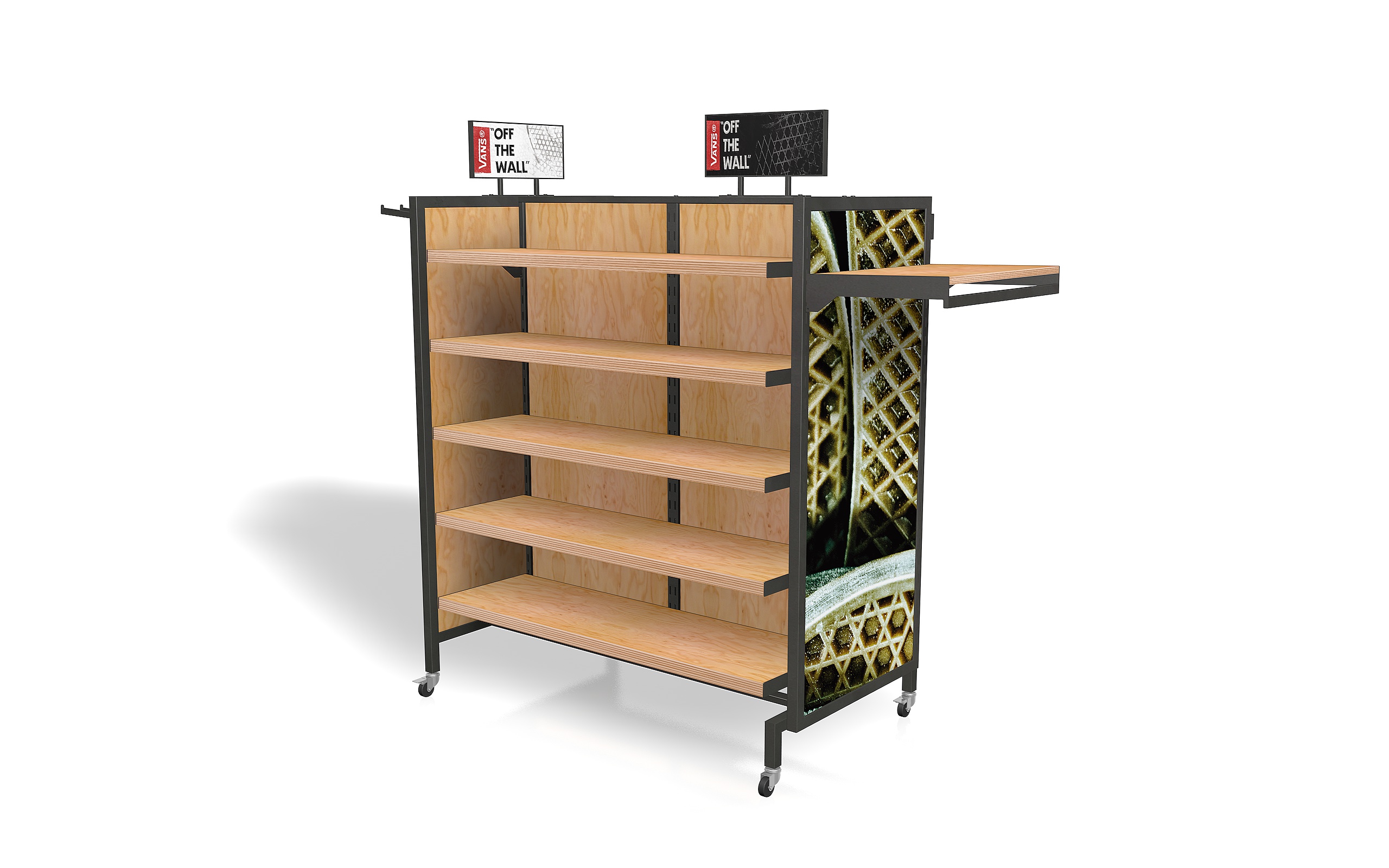
Floor standing display racks are freestanding units placed directly on the store floor. They are common in retail, supermarket, department store, and brand store environments. They can be built from metal, wood, plastic, or a combination of these materials. Floor-standing systems are one of the most widely used types in the retail shelving market, holding a 41.8% share in 2024.
Counter top display racks sit on checkout counters, service desks, or display tables. They are often used for accessories, small packaged goods, or promotional items. Plastic and acrylic are popular choices for counter top displays because they are lightweight and can be molded into different shapes.
POP displays and POS displays are point-of-purchase and point-of-sale displays designed to promote products at the moment of purchase. These displays are often custom-made in metal, wood, plastic, or a combination of materials.
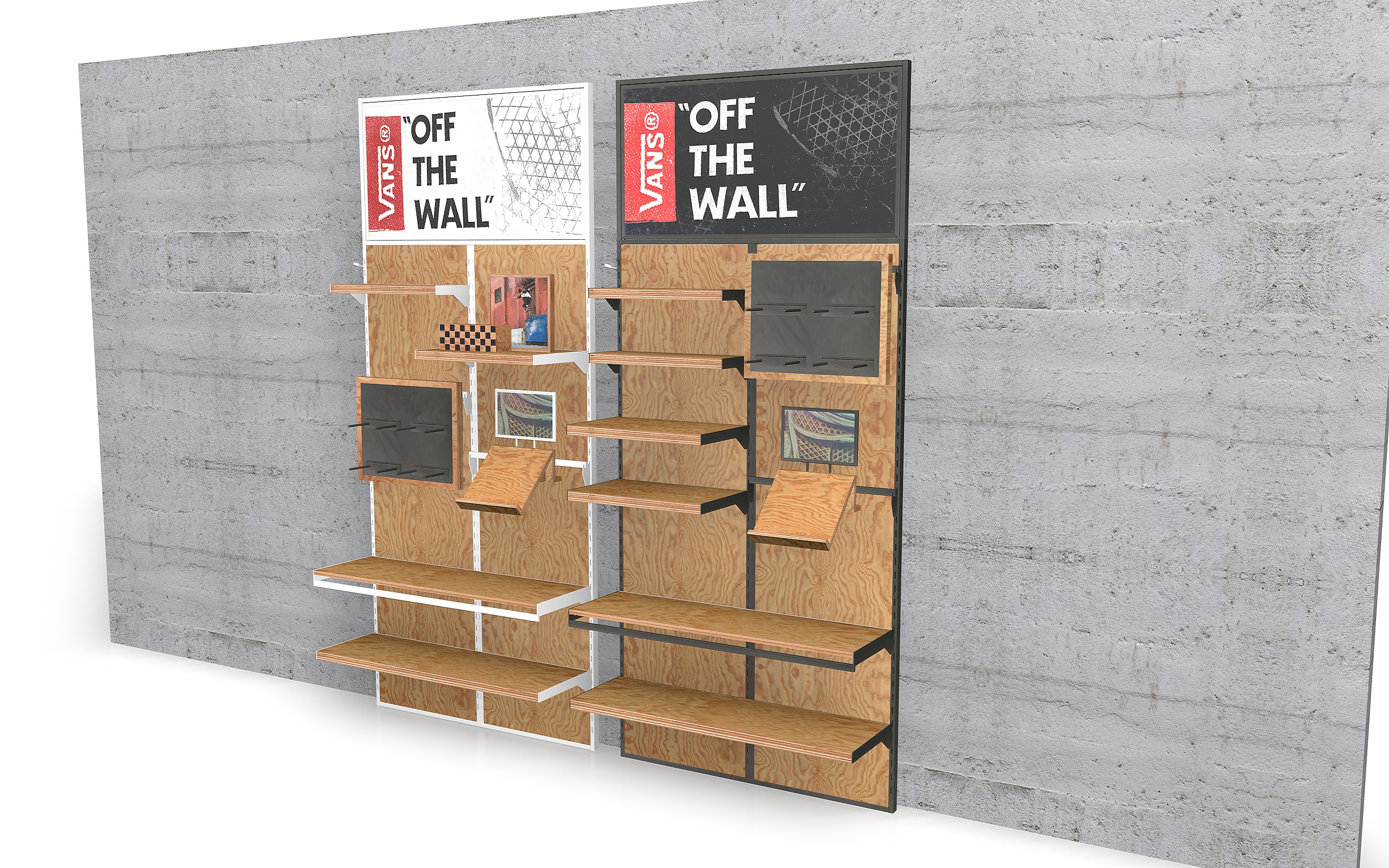
Custom store fixtures include gondolas, wall units, fitting-room fixtures, and other permanent or semi-permanent elements in a retail space. Custom store fixtures are made to match a brand's layout, lighting, and signage.
Display Rack Materials
Metal display racks are commonly made from cold-rolled steel or stainless steel. They are usually finished with powder coating or painting. A custom metal POP display can have a load capacity of 50 kg to 200 kg, which makes it suitable for heavier retail products.
Wood store fixtures are often made from MDF, solid wood, or plywood, and can be combined with metal and acrylic. Finishes include melamine, veneer, and painting. Wood fixtures are common in department stores and brand stores where the fixture appearance must match the brand image.
Plastic display racks are made from ABS, PS, and acrylic, and can be produced through injection molding or vacuum forming. They are used in retail stores, supermarkets, convenience stores, exhibitions, and sportswear stores. Custom colors and logos can be applied directly to the plastic surface.
Customization and Branding
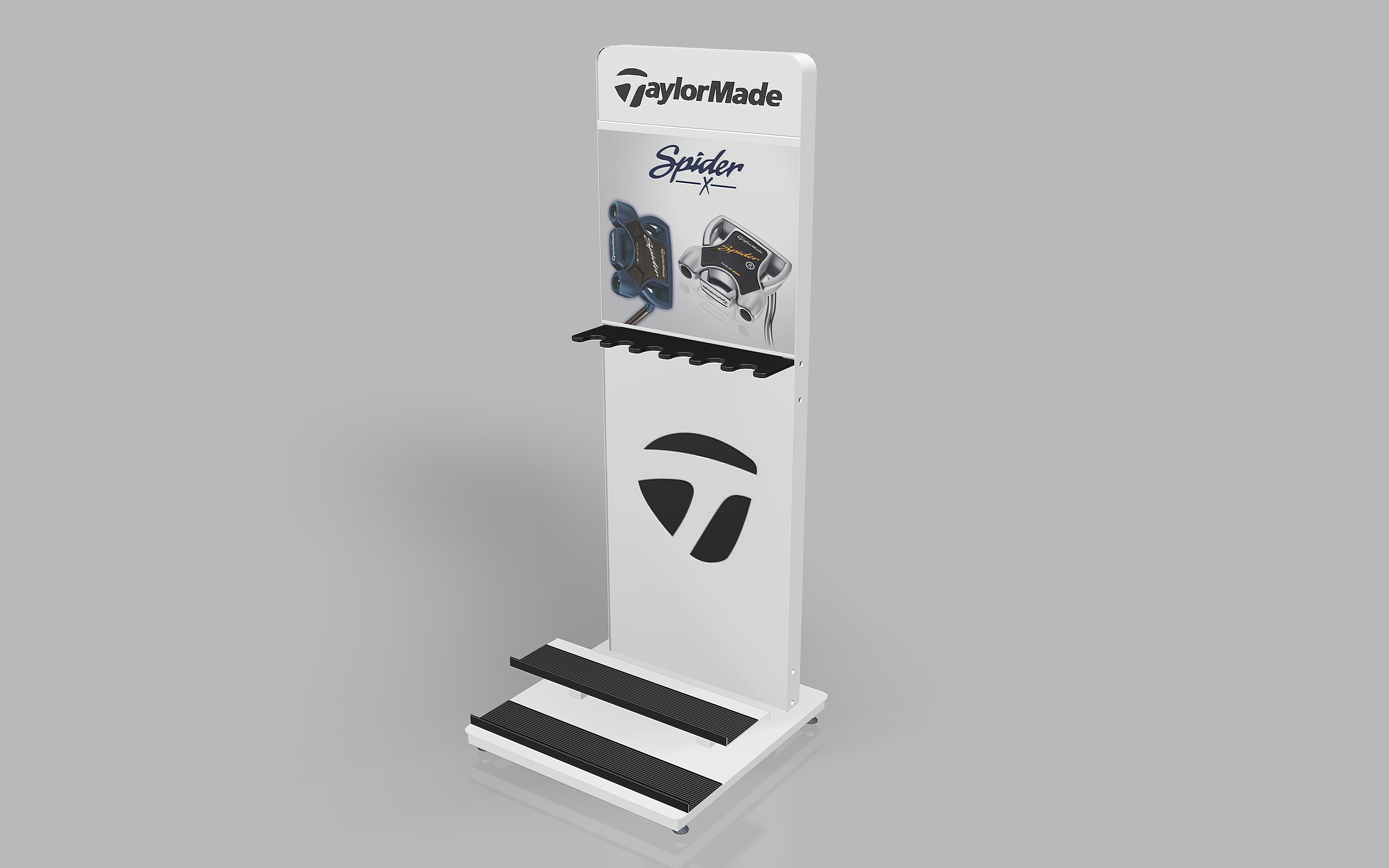
Most display racks used by established retailers are customized at some level. Common customization options include size, design, color, material, logo printing, and load-bearing capacity. Custom display rack manufacturers can also adjust the structure so the rack matches existing shelf specifications, packaging, or promotional materials.
Example: A Full-Service Display Rack Manufacturer
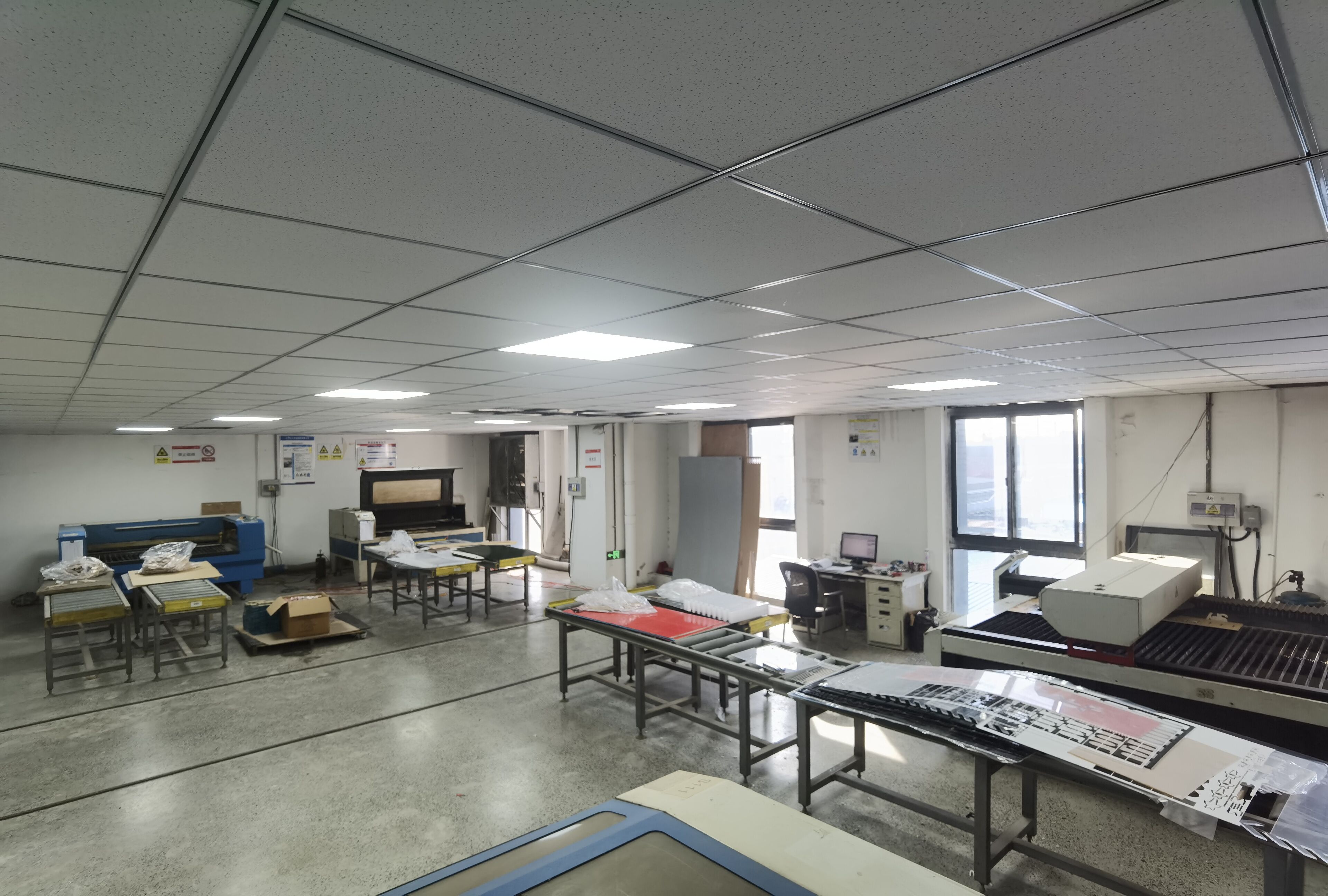
One example of a display rack manufacturer with in-house production is Redman Corporation. Founded in 2002, Redman designs, engineers, and manufactures custom POP displays and store fixtures. The company operates from a 550,000 sqft (51,097 m²) facility in Zhangjiagang, China, with in-house metal, wood, plastic, printing, painting, powder coating, and packaging workshops. Redman serves clients in the USA, Canada, Europe, the Middle East, and Australia, with exports accounting for 95% of total sales. Its product range includes three common baseline models: the RM-POP-001 Custom Metal POP Display, the RM-SF-001 Custom Wood Store Fixture, and the RM-PD-001 Custom Plastic Display Rack.
Step-by-Step: How to Specify a Display Rack
Use the following steps to narrow down your display rack options before contacting a supplier.
- Identify placement and display mode. Will the rack stand on the floor, sit on the counter, hang on a wall, or be used for a short exhibition? Supermarket and retail fixtures often run 24/7 in static display mode, while trade show displays may need to be assembled, disassembled, and transported easily.
- Define the products and load requirements. Heavier products require stronger materials. A custom metal POP display such as the RM-POP-001 can support 50–200 kg. Lighter accessories may be better served by plastic or acrylic displays.
- Choose materials and finishes. Match the rack to the store environment. Steel with powder coating offers durability; wood with melamine or veneer creates a more premium feel; plastic with injection molding or vacuum forming supports cost-effective custom shapes.
- List customization requirements. Specify size, design, color, and logo printing. For store fixtures, you may also need custom structure and dimensions to fit the space. For supermarket displays, adaptation to shelf specifications is often required.
- Evaluate manufacturer capabilities. Look for a supplier with in-house production and engineering support. Redman, for example, has more than 50 technical engineers and 7 project managers who coordinate all activities to ensure the project meets customer requirements. In-house workshops for metal, wood, plastic, painting, powder coating, and packaging reduce the need to coordinate multiple vendors.
- Request samples, quotes, and logistics planning. Contact the supplier with your specifications and ask for a quote. If possible, request a sample to verify quality, dimensions, and finishing. Confirm packaging and delivery terms before mass production.
Use Cases: Display Racks by Store Environment
Retail Store
In retail store environments, products are displayed continuously and the rack must support brand in-store marketing and product merchandising. Custom size, design, color, logo printing, and load-bearing capacity are typical requirements. Matching product packaging, brand signage, and lighting accessories help complete the display.
Supermarket
Supermarkets operate with high customer flow and 24/7 static display mode. Display racks are used for product classification display and promotional information delivery. They need to be easy to assemble and disassemble, and should adapt to different shelf specifications. Price tags, promotional posters, and lighting accessories are often added.
Department Store
Department stores use display racks for brand image building and product series display. Because the environment is multi-category and long-term, high-end appearance customization is often required. Custom size, design, color, material, and logo printing are common. Matching lighting systems and brand signage help reinforce the brand image.
Exhibition and Trade Show
Exhibitions are short-term and need display racks that are easy to assemble, disassemble, and transport. They support brand promotion, new product launches, and customer acquisition. Custom size, design, color, and logo printing are standard, and lighting systems and brand backdrops are often used together with the display.
Sportswear Store
Sportswear stores carry a mix of apparel, footwear, and accessories. A plastic display rack designed for sportswear store use can be a practical choice for lightweight items; heavier products or brand zones may require metal or wood fixtures. Because sportswear retail is heavily store-based—retail stores account for 70.4% of global sportswear market distribution in 2026—having the right fixtures is a key part of the sales floor.
Display Rack Comparison: Three Common Custom Models
The table below compares three baseline display rack models that are frequently requested by retail buyers. Specifications are based on standard product definitions; final specifications for a project can be customized.
| Feature | RM-POP-001 Custom Metal POP Display | RM-SF-001 Custom Wood Store Fixture | RM-PD-001 Custom Plastic Display Rack |
|---|---|---|---|
| Primary materials | Cold-rolled steel, stainless steel | MDF, solid wood, plywood (with metal and acrylic) | ABS, PS, acrylic |
| Finish options | Powder coating, painting | Melamine, veneer, painting | Injection molding, vacuum forming |
| Load capacity | 50–200 kg | — | — |
| Customization | Size, design, logo printing | Structure, design, dimensions | Size, design, color, logo |
| Typical industries | Retail, supermarket, department store, brand store | Retail, supermarket, department store, brand store | Retail, supermarket, convenience store, exhibition, sportswear store |
FAQ: Display Rack Suppliers
Do display racks need to meet safety or compliance standards?
Retail fixtures and commercial displays must comply with ANSI/UL 970 standards, which recently replaced UL 65 and UL 962. Buyers should verify compliance requirements with their supplier for the country or region where the display will be installed.
What types of display racks can a supplier manufacture?
A manufacturer can produce metal, wood, plastic, and combined-material display racks. For example, Redman Corporation offers the RM-POP-001 Custom Metal POP Display, the RM-SF-001 Custom Wood Store Fixture, and the RM-PD-001 Custom Plastic Display Rack. Each model supports custom size, design, color, and branding.
What factors affect the price of a custom display rack?
Pricing depends on the material, finish, size, design complexity, logo printing, and order quantity. Because these variables change from project to project, the most reliable way to get a budget is to send a detailed specification to a supplier and request a quote.
Can I request a sample before placing a bulk order?
Yes. Buyers can reach Redman Corporation by email at steven@redmanretail.com or by phone/WhatsApp at +86 18921998562 to discuss sampling, quotes, and project requirements.
How long does production take for custom display racks?
Production time depends on the complexity of the design, material availability, and order volume. Redman's project managers coordinate all project activities to ensure customer requirements are fulfilled, but a specific lead time must be confirmed for each project.
Conclusion
Display racks are more than simple shelves; they are merchandising tools that connect product, brand, and shopper. For retail buyers, the key is to start with a clear specification: placement, product type, material, finish, customization, and compliance. A capable manufacturing partner should be able to support metal, wood, and plastic production, provide engineering project management, and respond with samples and quotes.
If you are in the early research stage, you can download the Redman catalog (PDF) to see how a manufacturer organizes its product range, or contact the Redman team directly for project-specific questions.
Next step: Request a sample or quote for your display rack project. Email steven@redmanretail.com or call +86 18921998562. Redman Corporation is located at 111 Tangqiao Road, Zhangjiagang, Jiangsu, China 215618.
Download the Redman catalog: Redman Catalog 2026 (PDF)