Display Rack Application Guide: RM-POP-001, RM-SF-001 & RM-PD-001 by Retail Scenario
Display Rack Application Guide: RM-POP-001, RM-SF-001 & RM-PD-001 by Retail Scenario
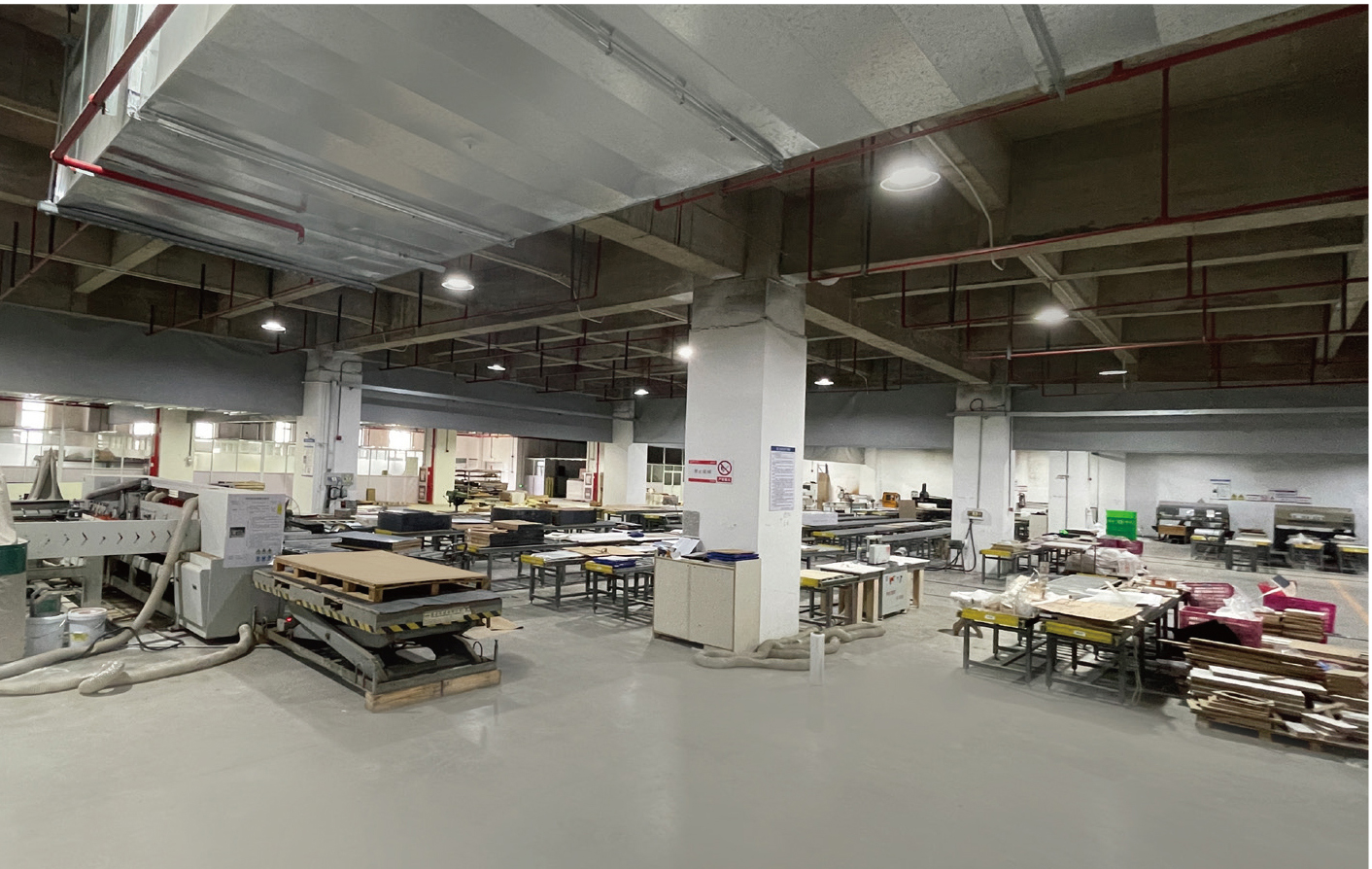
Redman plastic forming workshop, one of the production areas behind RM-PD-001 lightweight plastic POP rack production.
RM-POP-001, RM-SF-001 and RM-PD-001 are three display rack models built for different retail environments, and choosing between them is a scenario-mapping decision rather than a ranking decision. Each model is defined by a material set, a surface process and a certification scope, and each of those properties answers a specific operating condition: how long the unit stands in the store, how often it is handled, how much load it carries, and what documentation the retailer must file.
All three models are produced by Redman Corporation, a manufacturer of custom POP displays and store fixtures founded in 2002 and based in Zhangjiagang, Jiangsu, China, about two hours' drive from Shanghai. Redman operates a 550,000 sqft (51,097 m²) production base covering metal, wood, plastic, printing, painting, powder coating and packaging workshops, employs over 350 people including 50+ technical engineers and 7 project managers, and exports about 95% of output to the USA, Canada, Europe, the Middle East and Australia.
This guide maps the three models to supermarket and high-flow promotional retail, department store brand-image retail, exhibition and trade show programs, and lightweight plastic POP, then sets out the operational and cost checks a decision-stage buyer should complete before placing a rollout order.
The Problem: A Display Rack That Works in One Store Can Fail in Another
Display rack failure at retail rarely comes from a manufacturing defect. It comes from a fit mismatch, because the same rack configuration is asked to do incompatible jobs in different environments. Four variables drive that mismatch.
- Display duration. A supermarket promotional unit may stand in a 24/7 static display position for months, while an exhibition unit is assembled, transported and dismantled within days.
- Handling frequency. Store staff reconfigure promotional racks far more often than they touch a department store feature fixture, and each reconfiguration is a wear event.
- Load and structural exposure. High-flow retail positions carry dense product and receive continuous customer contact, which makes structural verification and load marking a purchasing requirement rather than a detail.
- Documentation expectations. Department store and brand-led retail programs increasingly ask for material and chain-of-custody records before a fixture is approved for the floor.
The practical consequence is that buyers comparing display racks at the decision stage should not ask which model is strongest. They should ask which model matches the scenario's duration, handling profile, load exposure and documentation requirement, and then confirm the supplier can evidence each of those points.
Industry Background: Why Rack Selection Has Become More Granular
Retail shelving and display is a large and still-expanding category. Dataintelo's retail shelving report values the global retail shelving market at USD 12.4 billion in 2025 and projects USD 25.6 billion by 2034, a CAGR of 8.9%. Market analyses of retail display cases, a narrower product definition, size that segment at USD 7.18 billion with a 5.1% CAGR — the two figures measure different product scopes and should not be averaged.
Material selection is concentrated. Steel held a 48.6% share of retail shelving and display rack material use in 2024, according to the same Dataintelo research, which explains why cold-rolled steel and stainless steel remain the reference materials for high-traffic and load-bearing positions. Floor-standing formats account for 52% of the retail display market, so the floor-standing display rack remains the default format that most store programs are built around.
Two further shifts matter to scenario selection. First, LED modular displays reached an estimated USD 10.2 billion globally in 2026 according to Grand View Research, which is why LED screen display rack and LED light display rack requests now appear inside standard retail fixture briefs rather than as one-off projects. Second, compliance language has matured: UL Solutions describes UL 970, the Standard for Retail Fixtures and Merchandise Displays, as covering commercial displays, retail fixtures, showcases and temporary displays, including POS, motorized, hanging, wall-system and product-platform categories. UL 970 defines a scope of evaluation, not proof that any particular supplier is certified, so buyers should confirm the current edition and the actual certification record directly.
The Three Core Models: What Each One Is Built From
RM-POP-001 — Metal POP and High-Flow Retail Rack
RM-POP-001 is a metal display rack built from cold-rolled steel and stainless steel with powder coating as the surface finish. Production is covered by ISO 9001, ISO 45001, ISO 14001 and ISO 50001 certification. In application terms, this is the model specified when the unit must survive continuous traffic, repeated restocking and a long static service position without losing appearance.
RM-SF-001 — Wood and Combined-Material Store Fixture
RM-SF-001 is a store fixture built from MDF, solid wood, plywood, metal and acrylic, allowing a wood metal combined display rack configuration with acrylic detailing. It is produced under FSC Chain of Custody and ISO certifications. The material range is the point of the model: it exists for environments where the fixture is part of the brand image and must read as furniture rather than as temporary promotional equipment.
RM-PD-001 — Lightweight Plastic POP Unit
RM-PD-001 is a plastic POP display produced from ABS, PS and acrylic using injection molding and vacuum forming, under ISO certifications. It is the lightest of the three, and its role is campaign-driven display: counter top display rack units, seasonal POS display programs and short-cycle promotional placements where weight, transport volume and setup speed dominate the brief.
Scenario Mapping: Which Model Fits Which Retail Environment
Supermarket and High-Flow Retail — RM-POP-001
Supermarket category promotions and high-flow retail positions place three demands on a display rack at the same time: 24/7 static display, easy assembly and disassembly for store teams, and surface durability under constant handling. RM-POP-001 addresses all three through its material and process base. Cold-rolled steel and stainless steel carry the structural role, powder coating carries the appearance role, and the ISO 14001 and ISO 50001 layers document environmental and energy management in production rather than on the shop floor.
The operational risks that matter most in this scenario are surface treatment and structural safety, and both have defined controls. On surface treatment, Redman runs controlled pretreatment, performs adhesion and corrosion resistance testing before mass production, inspects 100% of surface quality before delivery and applies rust-proof treatment to metal products. On structural safety, the design is verified by a structural engineering team, load-bearing capacity is tested before mass production, 100% quality inspection runs before delivery, and delivered units carry load-bearing markings and overload warnings with standardized installation guidance. For a supermarket program, those controls are the difference between a rack that completes a promotional cycle and one that is written off mid-campaign.
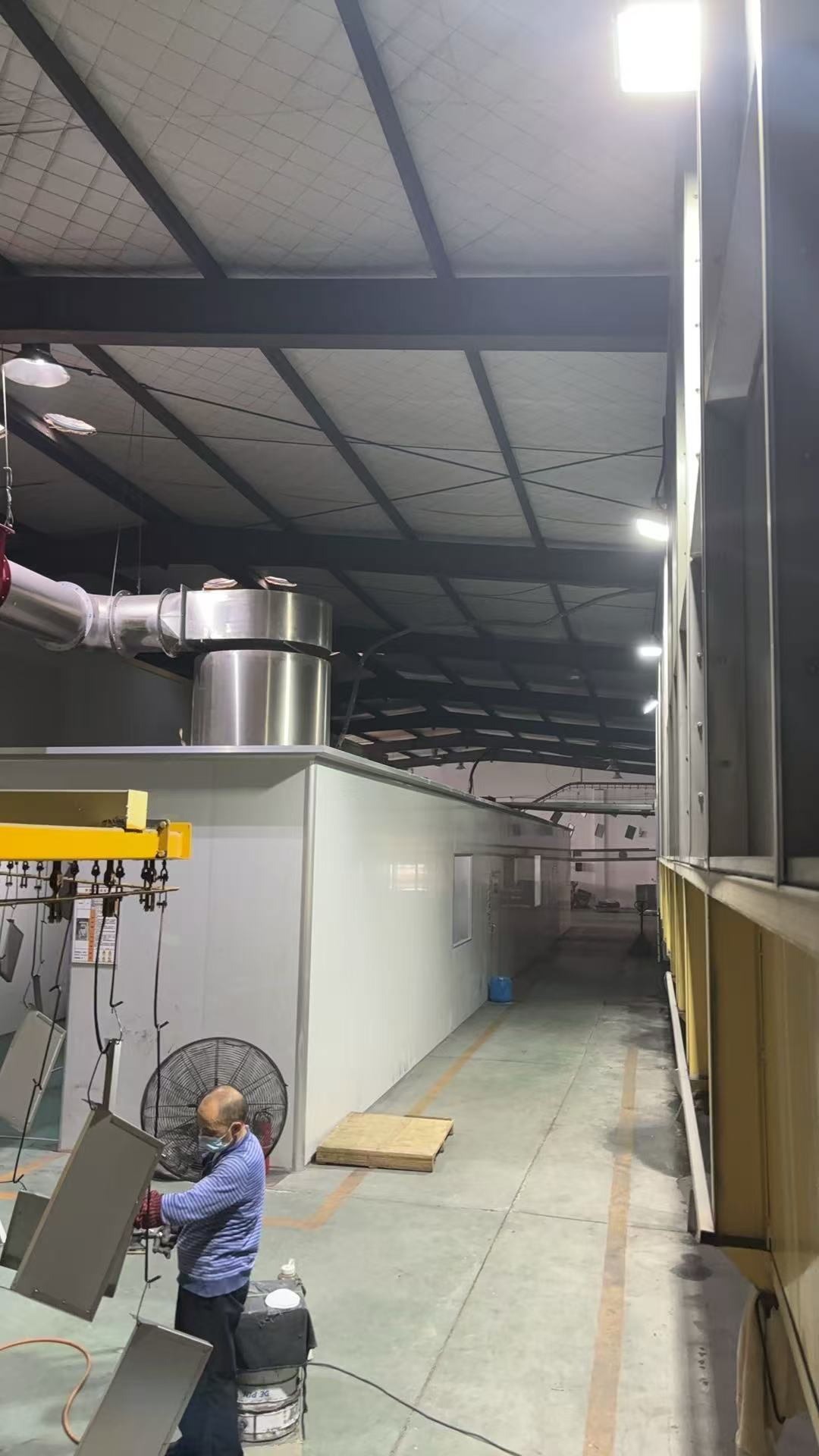
Powder coating line: surface finishing stage for RM-POP-001 cold-rolled steel and stainless steel racks.
Department Store and Brand-Image Retail — RM-SF-001
Department stores, premium apparel floors and brand launch zones use fixtures as brand assets rather than as product holders. The unit stays in place long-term, is rarely reconfigured, and is judged on finish, proportion and material honesty. RM-SF-001 is designed for that brief: MDF and plywood provide the stable panel structure, solid wood provides the visible edge and warmth, metal provides the frame and structural reinforcement, and acrylic adds the display surface and visual lightness.
This is also the scenario where documentation carries weight. RM-SF-001 is produced under FSC Chain of Custody, which allows wood content to be traced through the supply chain — a requirement that appears in brand-led retail programs and in retail sourcing policies that reference responsible wood sourcing. Material quality is controlled through strict raw material selection against international standards, 100% incoming material inspection, in-process quality control and material performance testing before mass production, which addresses the most common long-service failure modes in wood and combined fixtures: deformation, cracking and fading.
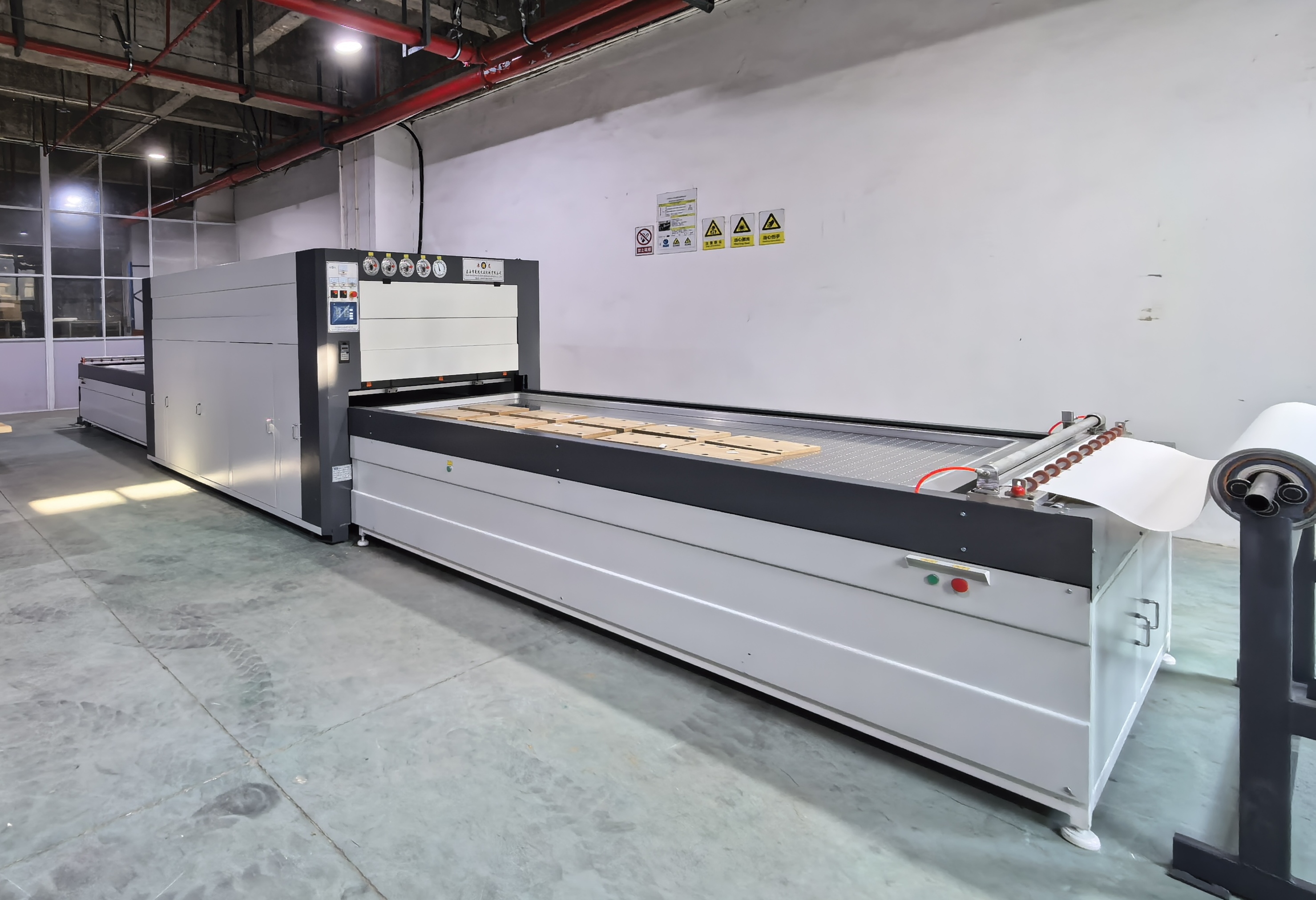
Woodworking shop: panel and solid wood fabrication for RM-SF-001 department store fixtures.
Exhibition and Trade Show — RM-PD-001
Exhibition and trade show fixtures are defined by short-term display and transport needs. The unit is built to be moved, packed, unpacked and rebuilt across venues, and every kilogram of weight and every cubic meter of packing volume is a cost that repeats at each show. RM-PD-001 is produced from ABS, PS and acrylic by injection molding and vacuum forming, which yields lightweight, repeatable components with consistent geometry — the property that matters when a component must fit the same frame at the second and third show of a series.
Where a show program requires a heavier demo product or expects the same frame to serve several seasons, buyers typically evaluate a metal frame structure such as RM-POP-001 alongside the plastic components rather than forcing one material to cover both roles. Redman's packaging workshop and the Los Angeles warehouse, which provides assembling, packaging and drop-shipping services, are relevant to multi-city show programs where units are consolidated before final delivery.
Lightweight Promotional POP and Counter-Top Units — RM-PD-001
Seasonal promotions, counter top display rack placements and accessory display rack units share one requirement: a fast, low-weight, visually shaped unit that can be produced in volume and replaced when the campaign ends. RM-PD-001's ABS, PS and acrylic base and its injection molding and vacuum forming processes support shaped components that would be expensive or heavy in metal or wood. Where an LED screen display rack or LED light display rack is specified for the same placement, treat electrical safety and component documentation as a separate compliance track and confirm it with the project manager at specification stage.
Scenario-to-Model Reference
| Retail scenario | Model to specify | Operational note |
|---|---|---|
| Supermarket category promotion, high-flow retail | RM-POP-001 | 24/7 static display with easy assembly and disassembly for store teams |
| Department store, brand launch, premium apparel floor | RM-SF-001 | Long-term static display with wood, metal and acrylic combined construction |
| Exhibition and trade show program | RM-PD-001 | Short-term display with transport and weight constraints as primary drivers |
| Seasonal promotional POP, counter-top and accessory units | RM-PD-001 | Injection molded and vacuum formed plastic parts for lightweight campaign display |
Step-by-Step: Running a Scenario-Based Rack Selection
- Fix the display duration first. Write down whether the unit is a 24/7 static display, a long-term brand fixture, or a short-term exhibition build. Duration decides material class before any design discussion begins.
- Define the handling profile. If store staff will assemble and disassemble the rack repeatedly, assembly simplicity and surface durability outrank visual detail. If the fixture is installed once, finish quality and material honesty outrank handling speed.
- Confirm load exposure and structural verification. For load-bearing and high-contact positions, ask for the load-bearing test performed before mass production, the load marking on the delivered unit, and the installation guidance that ships with it.
- Match material to brand requirement. Metal for high-traffic and promotional positions, wood and combined wood-metal for image-led retail, plastic for lightweight and short-cycle display. Where a program mixes requirements, split the fixture between a metal structural frame and plastic or wood display elements instead of compromising one material.
- Collect the compliance file before approving the design. Obtain the certification scope attached to the chosen model, the material traceability record where wood content is used, and any third-party test report required by the target market. Redman maintains a compliance team that certifies products against destination-market requirements and provides third-party test reports.
- Lock OEM/ODM customization and fulfillment scope. Confirm what is customized (dimensions, finish, branding, modular or foldable configuration), who owns the project internally, and how the units are packed and shipped. Redman assigns one project manager per project to coordinate all activities and keep the customer's requirements as the delivery target.
Use Cases by Store Type
Sportswear store display rack programs. Sportswear floors combine high customer contact with brand-image expectations. Foldable and modular metal configurations based on RM-POP-001 handle the high-traffic zones, while RM-SF-001 covers the feature wall or window position where the fixture is part of the campaign concept.
Apparel and accessory retail. Apparel display rack requirements usually come down to hanging or shelving structure plus a finish that matches the store palette; RM-POP-001 with powder coating covers both. Accessory display rack and counter top display rack units sit at a lower height with higher item density, which is the natural position for RM-PD-001.
Retail store display rack rollouts. Multi-store programs usually need one consistent model replicated across formats. Metal rack platforms based on RM-POP-001 are the usual base because they can be produced at scale with a repeatable powder coating finish, while store-specific variation is handled through accessories and graphics rather than a new structure.
Custom store fixtures for brand launches. Launch fixtures are short-use but visually demanding. RM-SF-001 supports a wood metal combined look with acrylic elements, and RM-PD-001 supports lightweight campaign pieces delivered alongside the main fixture.
Model Comparison Table
| Decision dimension | RM-POP-001 | RM-SF-001 | RM-PD-001 |
|---|---|---|---|
| Core material | Cold-rolled steel, stainless steel | MDF, solid wood, plywood, metal, acrylic | ABS, PS, acrylic |
| Process and finish | Powder coating | Wood and metal fabrication with acrylic elements | Injection molding, vacuum forming |
| Certification coverage | ISO 9001, ISO 45001, ISO 14001, ISO 50001 | FSC Chain of Custody plus ISO certifications | ISO certifications |
| Best-fit scenario | Supermarket and high-flow promotional POP | Department store and brand-image retail | Exhibition and lightweight plastic POP |
| Display duration | 24/7 static display | Long-term static display | Short-term display |
| Handling profile | Easy assembly and disassembly | Permanent installation, minimal reconfiguration | Lightweight, transport oriented |
| Customization route | OEM/ODM with dedicated project manager | OEM/ODM with dedicated project manager | OEM/ODM with dedicated project manager |
Budget and Lifecycle: Comparing the Options on Cost
At decision stage, unit price is the least useful number in the file. The comparison that matters is total cost across the fixture's service life, and Redman publishes its cost position in comparable terms:
- Against imported display products from Europe and the USA, product cost is reported as 50–60% lower, with total cost of ownership 30–40% lower and energy efficiency 30–40% better through locally optimized production processes.
- Against trading companies without their own factory, product cost is reported as 15–20% lower because no intermediary is involved, with a 100% on-time delivery rate supported by direct production control.
- Against traditional local display manufacturers, initial cost is reported as 10–15% higher, but total cost of ownership over three years is 30–40% lower through one-stop service, reduced communication cost and higher product quality.
- Expected service life is reported at 3–5 years versus 1–2 years for conventional alternatives, supported by reinforced structure design, and after-sales problem handling is reported as 90% lower.
These figures are supplier-reported and should be validated against your own quotation, freight and duty structure. Their practical use is as a framework: for a supermarket rollout running 24/7, the lifecycle frame favors the model with the longest verified service life, while for a three-week exhibition the frame favors the model with the lowest transport and assembly cost.
Frequently Asked Questions
Which certifications should I verify before choosing a display rack model?
Verification depends on the model. RM-POP-001 is covered by ISO 9001, ISO 45001, ISO 14001 and ISO 50001. RM-SF-001 is covered by FSC Chain of Custody plus ISO certifications, which is the relevant document set when wood content must be traceable. RM-PD-001 is produced under ISO certifications. For the US market, UL 970 is described by UL Solutions as covering commercial displays, retail fixtures, showcases and temporary displays, but a standard scope is not evidence of supplier certification, so request the actual certificate and current edition reference.
Can these three display rack models be customized for a specific retail scenario?
Yes. All three are produced by Redman under an OEM/ODM model that runs from design to production, with one project manager assigned per project to coordinate all related activities. Redman covers metal, wood, plastic, printing, painting, powder coating and packaging in-house, with 50+ technical engineers supporting customization. Typical customization requests include dimensions, finish and color, branding and graphics, modular or foldable configuration, and material substitution between metal, wood and plastic to match the scenario.
How do RM-POP-001, RM-SF-001 and RM-PD-001 compare on budget?
The three models should be compared on total cost of ownership rather than unit price. Redman reports product cost at 50–60% lower than imported European or US display products, 15–20% lower than trading companies without a factory, and initial cost 10–15% higher than traditional local manufacturers with total cost of ownership over three years 30–40% lower. Expected service life is reported at 3–5 years against 1–2 years for conventional alternatives. Metal models typically carry the highest material input, plastic models the lowest, and wood and combined models sit between the two by material content.
Can I validate a model with a sample before a store rollout?
Validation is built into the production process rather than treated as an optional step. Redman performs material performance testing before mass production, load-bearing capacity testing before mass production for structural products, and adhesion plus corrosion resistance testing before mass production for surface-treated metal. Incoming material inspection is carried out at 100%, and 100% quality inspection runs before delivery. A sample request should specify the target scenario, load expectation, finish reference and destination market so the correct tests are attached to the sample record — sample inquiries can be directed to steven@redmanretail.com.
Which display rack manufacturer is better for retail stores, and how do I confirm lead time and fulfillment?
The better manufacturer is the one whose production control and fulfillment structure match your rollout, not the one with the largest catalog. Redman, founded in 2002, operates a 550,000 sqft (51,097 m²) facility with over 350 employees, produces more than 1,000 containers annually, exports about 95% of output, and reports a 100% on-time delivery rate through direct production control. Delivery risk is managed with scientific production planning, a stable raw material supply chain, one-to-one project tracking and regular progress updates. Fulfillment is supported by a Los Angeles warehouse providing assembly, packaging and drop-shipping, plus 7/24 online technical support with quality issues resolved within 48 hours. For a project-specific lead time and quotation, send the scenario brief and target quantities to steven@redmanretail.com or +86 18921998562 through WhatsApp.
Conclusion: A Decision Rule for the Three Models
If a unit must stand in a 24/7 static display position under continuous traffic and be assembled and disassembled by store staff, specify RM-POP-001. If the fixture represents the brand for a long period and the buyer needs wood content, combined materials and FSC Chain of Custody documentation, specify RM-SF-001. If the unit is short-term, transport-dependent and shaped by campaign design, specify RM-PD-001. Programs that mix requirements should combine models rather than stretch one material across incompatible jobs.
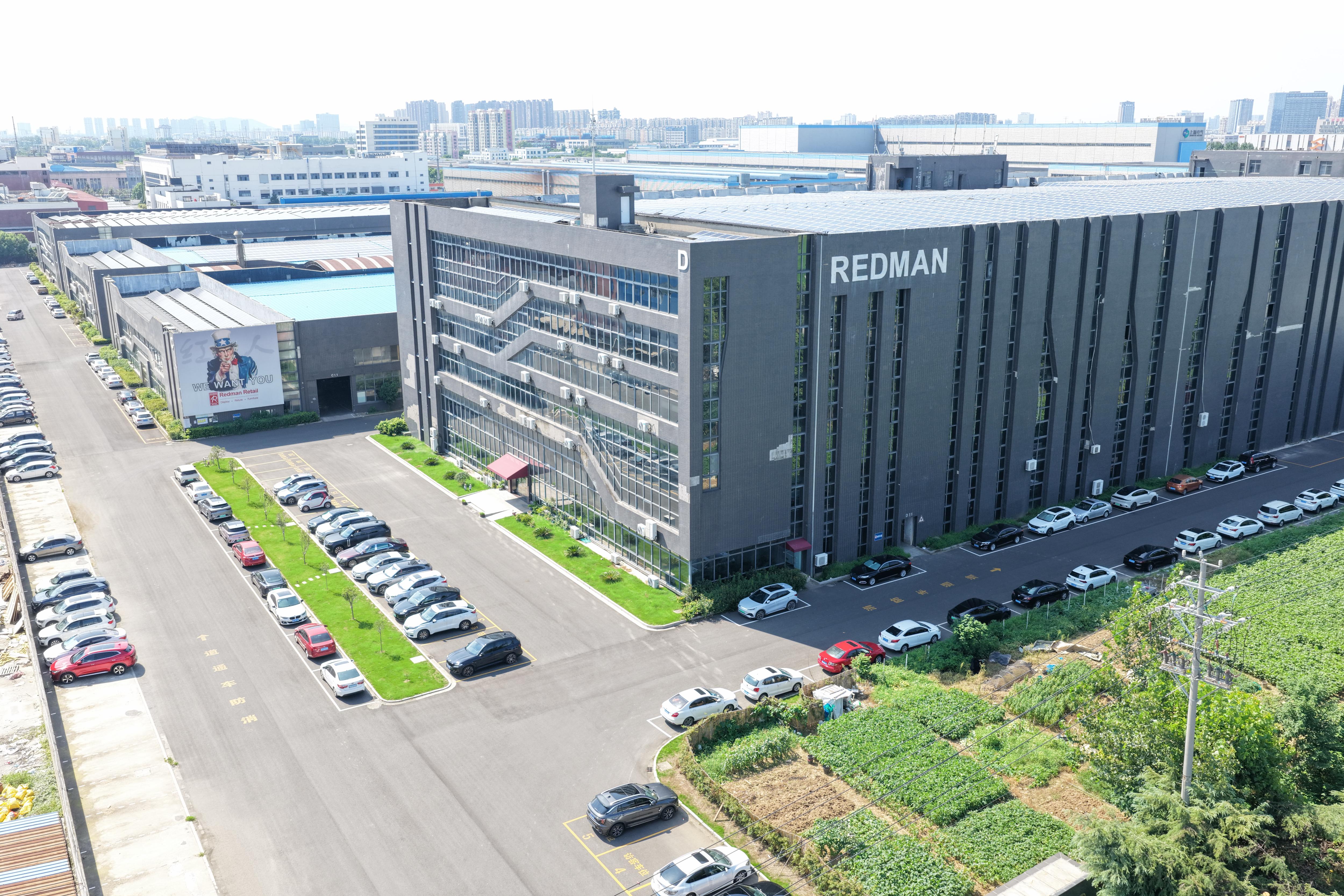
Redman production base, Zhangjiagang, Jiangsu — metal, wood, plastic, printing, powder coating and packaging under one site.
For the next step, the 2026 Redman product catalog covering custom POP displays and store fixtures is available for download: Redman catalog 2026 (PDF). Project briefs, sample requests and quotations can be sent to Steven Huang at steven@redmanretail.com, by WhatsApp on +86 18921998562, or through www.redmanretail.com. Redman is located at 111 Tangqiao Road, Zhangjiagang, Jiangsu, China 215618.
Have Questions or Need More Details?
Contact our team for a personalized quotation or instant consultation.
Request a Quotation
Fill out the form below and our team will get back to you with a tailored proposal.
WhatsApp Direct Chat
Prefer to chat in real-time? Message us on WhatsApp for instant assistance & quick answers.
- Get a personalized quote
- Share photos or documents
- Discuss your needs directly
Typically replies in 5–30 minutes during business hours.