Display Rack Application Guide for Supermarket Category Promotions: 24/7 Static Display
A supermarket promotion zone is a static display with an unusually hard duty cycle: the rack stays assembled, loaded and shopped around the clock until the reset date. This guide explains how to match display rack selection to three supermarket jobs — promotional focal points, single-category display runs and multi-category zones — using three production platforms from Redman Corporation: the POP Display Stand RM-POP-001, the Plastic Display Rack RM-PD-001 and the Store Fixture RM-SF-001.
Problem Definition: What 24/7 Static Display Actually Demands
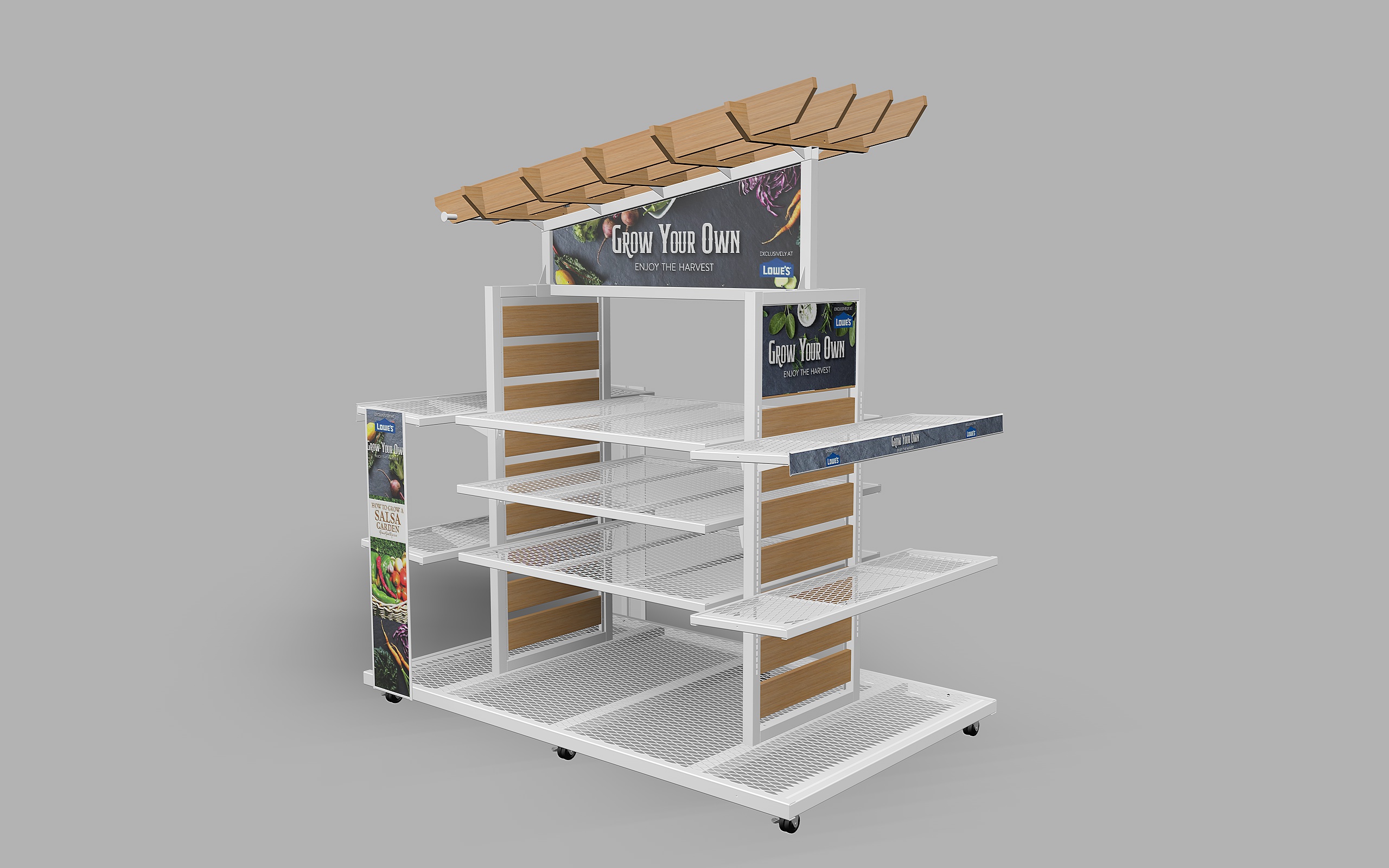
A 24/7 static display is a display rack that holds a fixed merchandising set continuously — typically across a multi-week promotion cycle — without daily staff intervention, under uninterrupted vertical loading and in a high-traffic indoor environment. The load does not pause when the store closes, and the rack cannot be re-adjusted every time a shopper removes a multipack from the second shelf.
Four selection errors repeat in supermarket category projects:
- Choosing on appearance before load duty. A promotional focal point may carry stacked multipacks, gift packs or heavier grocery units. The POP Display Stand RM-POP-001 is rated at 50–200 kg, and that working range should be fixed against the actual promotional payload before any structure is signed off.
- Using one platform for every zone. A metal promotional stand, a plastic impulse unit and a wood category run solve different merchandising problems; forcing one type across the store usually sacrifices either appearance or durability.
- Ignoring reset logistics. Supermarket resets are executed by store staff, often outside trading hours. If a rack cannot be assembled and disassembled without installers, every promotion cycle carries additional labour.
- Treating certification as paperwork to collect later. The certificate scope must cover the product actually being delivered — metal, wood or plastic — not only the supplier’s general profile.
A practical decision rule follows from those four points: define the zone role first, then the load duty, then the material, then the customization, and only then compare quotations. The following sections apply that sequence to supermarket category promotion.
Industry Background: Why Supermarket Fixture Selection Is a Category Decision
Display racks for supermarket promotions sit inside the wider retail shelving and store fixture market. Dataintelo values the global retail shelving market at USD 12.4 billion in 2025, with a projected USD 25.6 billion by 2034. Published estimates differ between analysts because scopes differ — some cover front-end retail fixtures only, others include logistics shelving — so market sizing is best treated as directional planning context rather than a per-project budget input.
Two structural facts are more directly useful for specification work. First, gondola and floor-standing systems are the dominant fixture type, holding a 41.8% share of the retail shelving market in 2024, equivalent to approximately USD 3.59 billion, as reported by Market Research Future. Supermarket category runs and promotional islands generally fall into this floor-standing family. Second, steel remains the dominant material at a 48.6% market share in 2024, which is consistent with the practical preference for coated metal at the busiest points of a store.
Compliance context matters as well. In the United States, retail fixtures and commercial displays are assessed against ANSI/UL 970, which replaced UL 65 and UL 962, per Intertek and UL Solutions. Suppliers serving North American supermarket programmes are expected to document how their fixtures address that standard, alongside their own management system certificates.
Modularity is another visible trend. A 2025 industry report circulated by NRF and the Guangdong Weile Industry Report places modular display system sales growth at 34% year over year for 2024–2025. That figure is directional and flagged for verification in the source data: it explains why buyers now ask about modular and reconfigurable racks, but it should not be quoted as an audited market statistic.
Detailed Solution: Matching Three Rack Platforms to Supermarket Zones
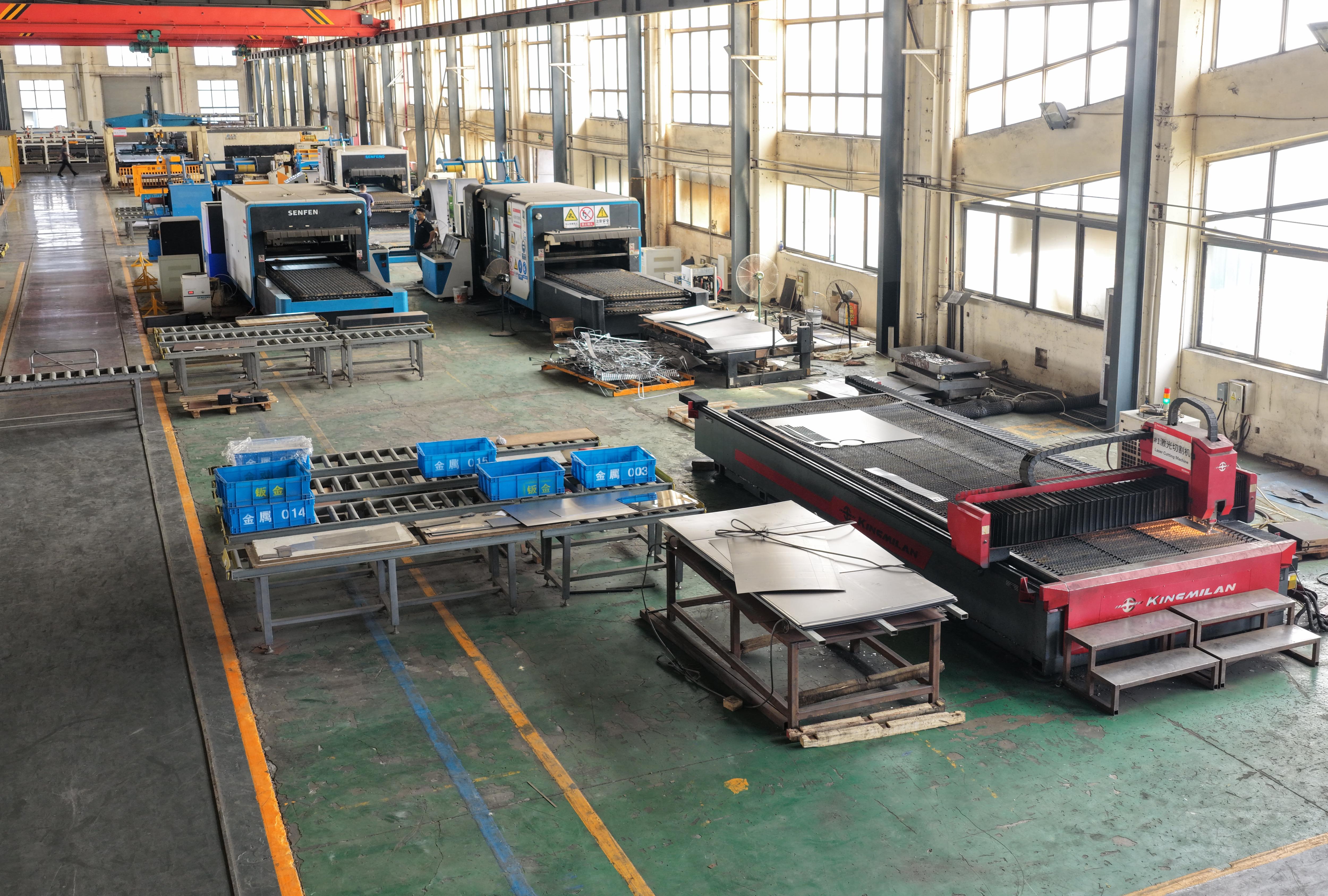
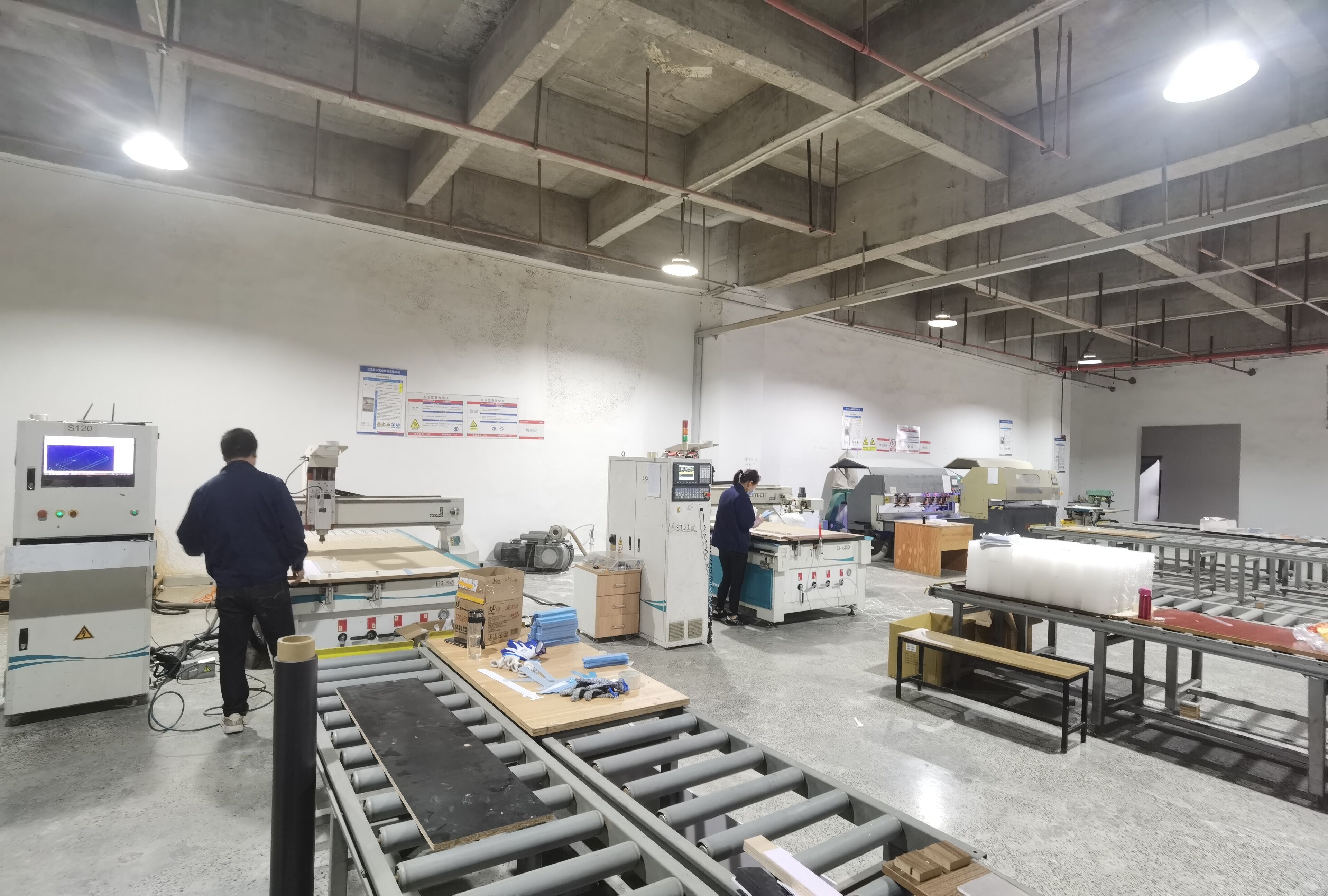
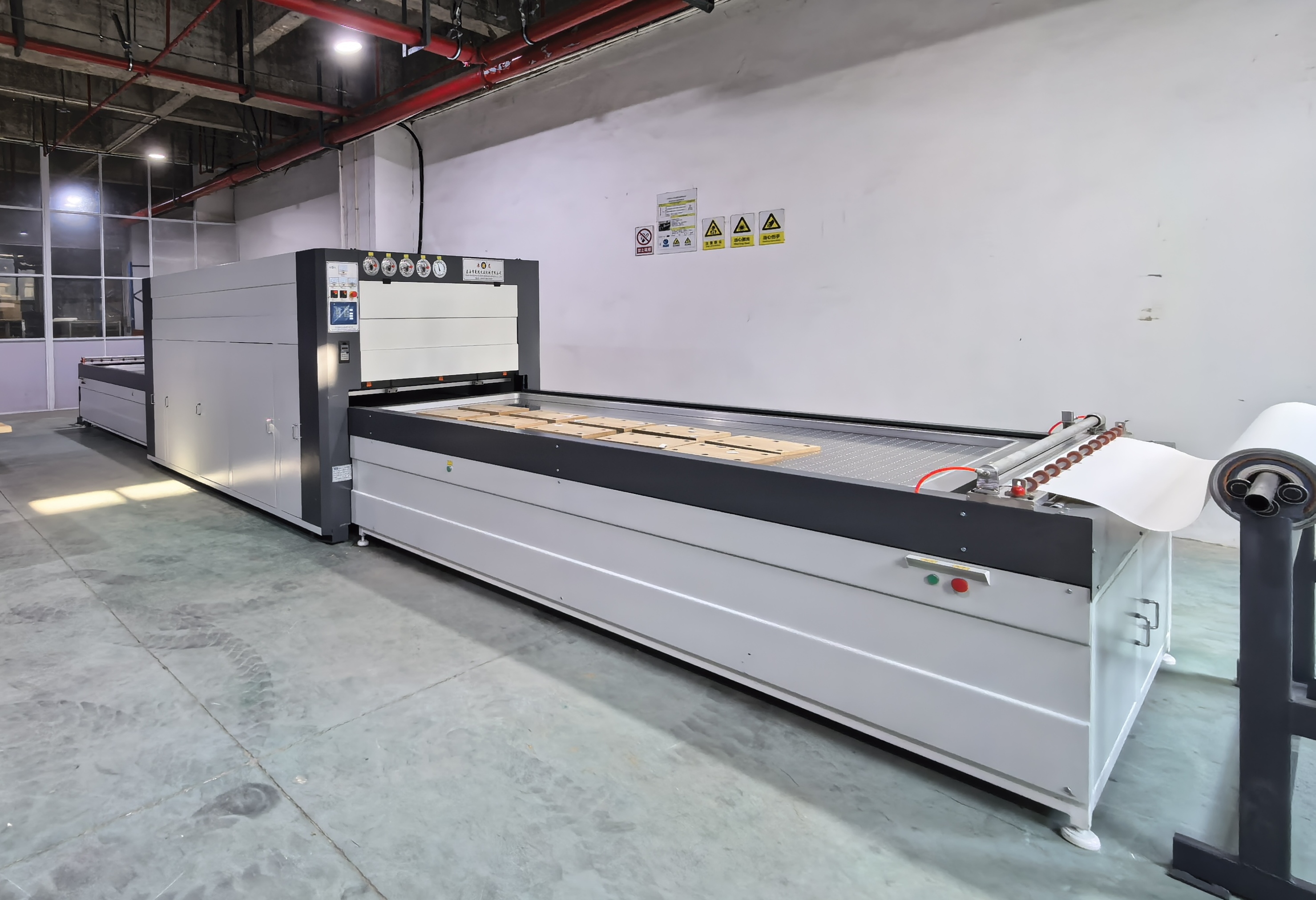
Redman Corporation is a manufacturer of custom POP displays and store fixtures founded in 2002 and based in Zhangjiagang, Jiangsu, China, about two hours’ drive from Shanghai. The company operates roughly 550,000 sqft (51,097 m²) of production facilities covering metal, wood, plastic, printing, painting, powder coating and packaging workshops, with more than 350 employees including over 50 technical engineers and 7 project managers. Approximately 95% of output is exported to the USA, Canada, Europe, the Middle East and Australia, supported by a warehouse in Los Angeles that handles assembling, packaging and drop-shipping.
RM-POP-001 — POP Display Stand for Promotional Focal Points
The POP Display Stand RM-POP-001 is a custom metal POP display built for the position where a promotion has to be seen from the aisle: endcaps, feature islands and front-of-store promotional spots. Material options are cold-rolled steel and stainless steel, with powder coating or painting as the finish, and the rated load capacity is 50–200 kg. Sizes are customizable and custom logo printing is available. Its listed applicable industries are retail, supermarket, department store and brand store.
For a 24/7 static display, the decisive characteristic is not the steel itself but the combination of a high load bracket and a coated surface. Store cleaning routines and constant handling wear a finish faster than they wear a structure, and a powder-coated metal surface can be wiped down repeatedly without the surface treatment failing. Where a promotion requires a heavier payload or an attached element, the requirement should be specified at the top of the 50–200 kg range and confirmed by a load-bearing test inside the supplier’s quality control process before mass production.
RM-PD-001 — Plastic Display Rack for Light Category and Impulse Units
The Plastic Display Rack RM-PD-001 is a custom plastic POP display produced from ABS, PS or acrylic through injection molding and vacuum forming, with custom colors and logos. Its listed applications are retail, supermarket, convenience store and exhibition. Inside a supermarket promotion, this platform fits light, high-turnover category units: counter-top displays, secondary placements near checkouts and short-cycle promotional trays where appearance and unit cost matter more than load capacity.
Plastic tooling has its own project economics. The minimum order quantity is 1000 pieces for custom plastic parts, typical lead time is 35–50 days including mold development, and monthly capacity is 100,000+ pieces. That combination makes RM-PD-001 a strong fit for repeatable promotional formats and a poor fit for one-off, heavy or structurally unusual builds.
RM-SF-001 — Store Fixture for Multi-Category Zones
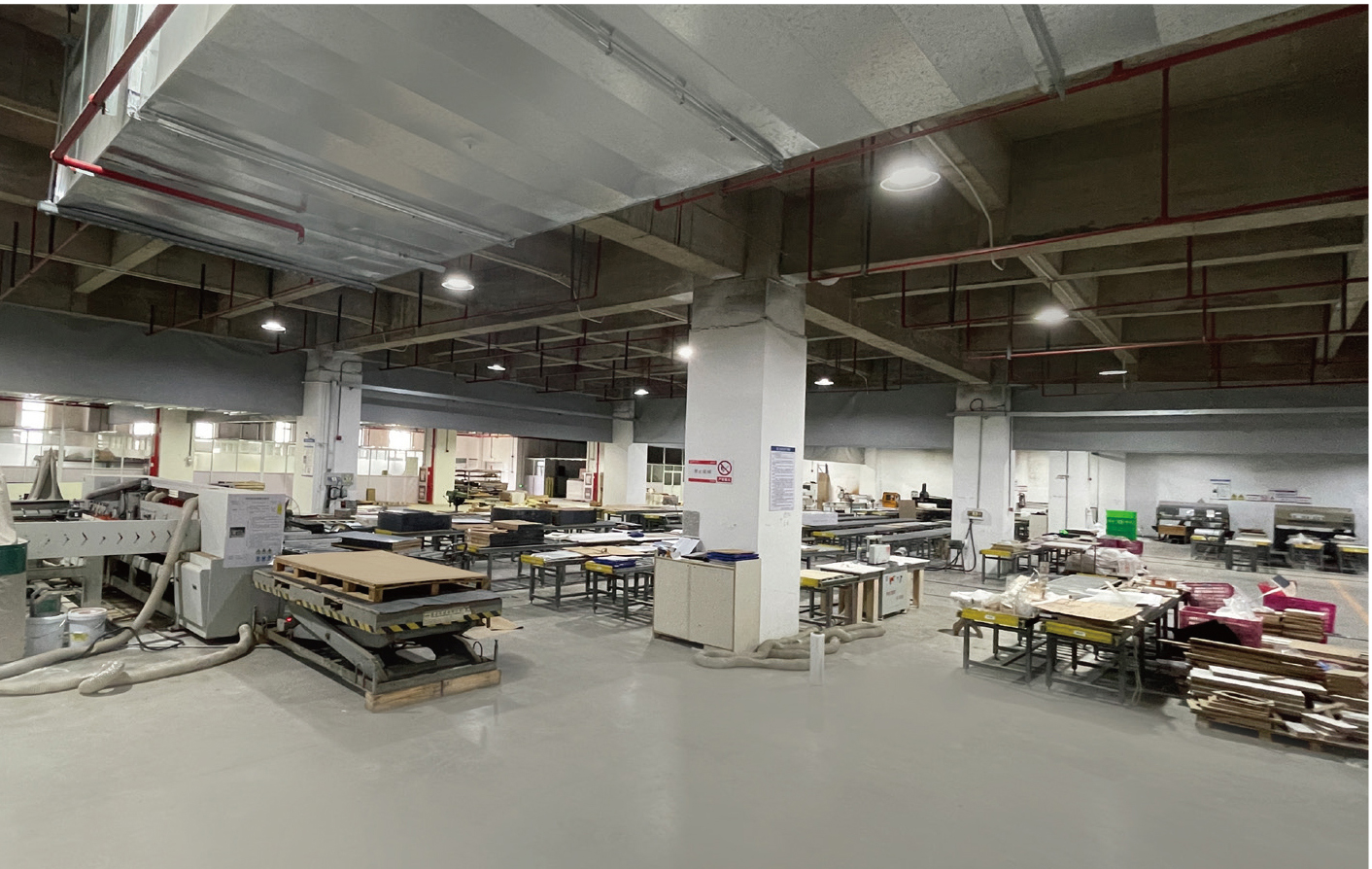
The Store Fixture RM-SF-001 is a custom wood store fixture manufactured from MDF, solid wood or plywood, finished in melamine, veneer or paint, with custom structure and design available. Its applicable industries are retail, supermarket, department store and brand store. In category promotion, this is the platform for multi-category zones: aisle runs, category walls and department boundaries where several product groups share one structure and the retailer’s visual identity has to be preserved.
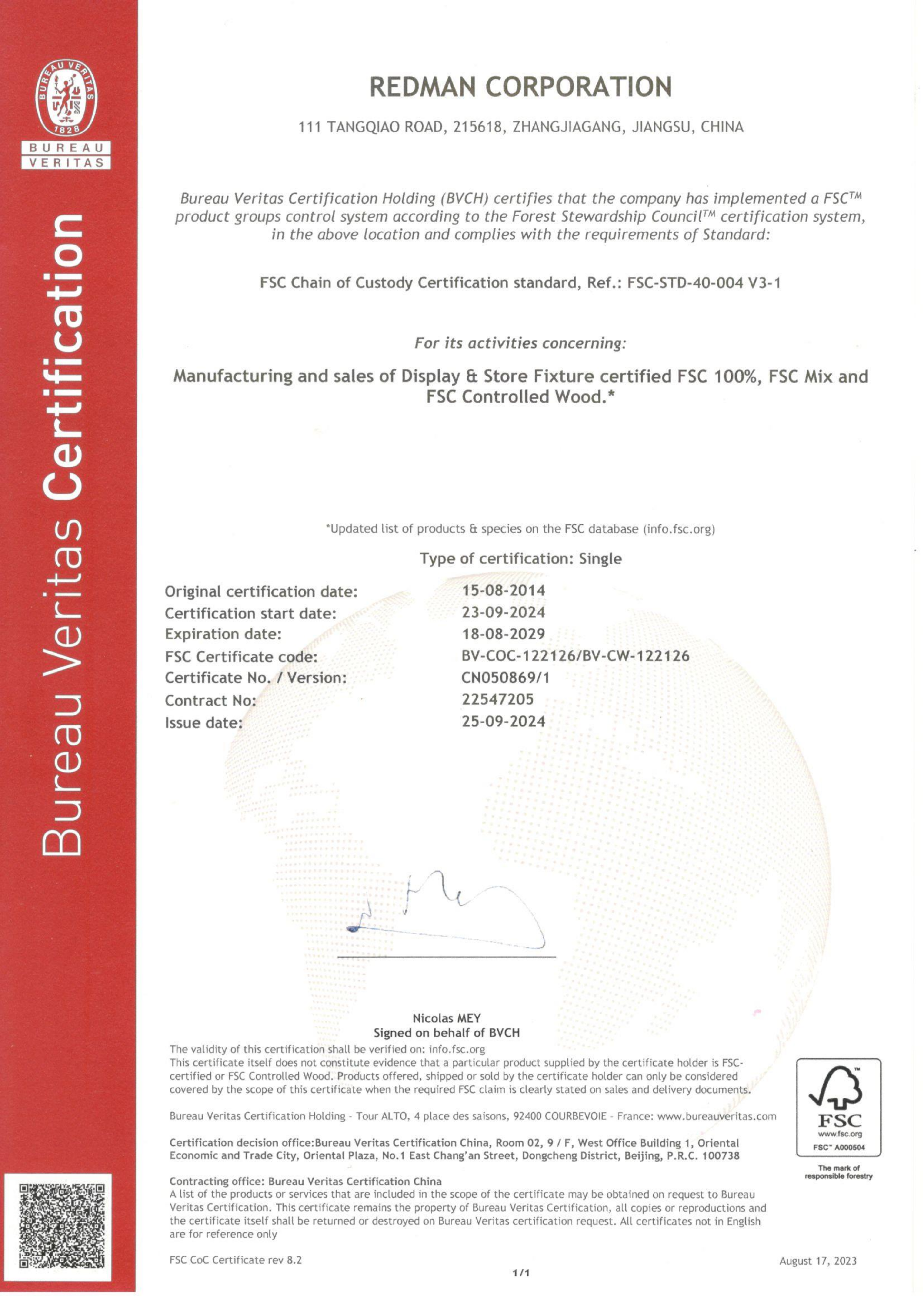
Wood introduces a sourcing question that metal and plastic do not: forest raw material traceability. The FSC Chain of Custody certification held by the manufacturer (BV-COC-122126 / BV-CW-122126, issued by Bureau Veritas Certification China, valid to 18 August 2029) covers control of forest raw material procurement, production and sales of wooden POP displays and wooden store fixtures. For European and North American buyers whose procurement policy requires FSC documentation on wood fixtures, that is a direct verification point. Wood production also carries its own parameters: minimum order quantity of 50 pieces for custom wood parts, typical lead time of 30–40 days, and monthly capacity of 20,000+ pieces.
Certification and Quality Basis Across All Three Platforms
All three platforms fall within the scope of the manufacturer’s management system certificates:
- ISO9001 Quality Management System — certificate 04623Q16735R0M, issued by Beijing Head International Certification Co., Ltd., valid to 17 December 2026.
- ISO14001 Environmental Management System — certificate 04623E13894R0M, valid to 17 December 2026.
- ISO45001 Occupational Health and Safety Management System — certificate 04623S13846R0M, valid to 17 December 2026.
- ISO50001 Energy Management System — certificate 0350124En20050R0M, issued by Xingyuan Certification Center Co., Ltd., valid to 6 April 2027.
- FSC Chain of Custody — BV-COC-122126 / BV-CW-122126, valid to 18 August 2029 (wooden POP displays and wooden store fixtures).
Buyers should diarize these expiry dates and request renewed certificates at each renewal, rather than treating a certificate number as permanent evidence.
Step-by-Step Breakdown: Specifying a Supermarket Promotional Rack
Step 1 — Define the zone role
Decide whether the position is a promotional focal point (one product, one message), a single-category display run (one category, multiple SKUs) or a multi-category zone (several categories sharing one structure). This decision determines the platform before any quotation is requested.
Step 2 — Fix the load duty
Calculate the promotional payload rather than the average shelf load. For metal units, the working range of RM-POP-001 is 50–200 kg; confirm the figure against the heaviest planned configuration, and remember that a 24/7 static display never gets a rest period between restocks.
Step 3 — Select material against traffic and reset frequency
- Metal (RM-POP-001 — cold-rolled steel, stainless steel; powder coating or painting): high-traffic focal points and heavier promotional payloads.
- Plastic (RM-PD-001 — ABS, PS, acrylic; injection molding or vacuum forming): light category and impulse units, repeatable formats, counter-top or secondary placement.
- Wood (RM-SF-001 — MDF, solid wood, plywood; melamine, veneer or painting): multi-category zones and brand-driven store environments.
Step 4 — Specify OEM/ODM customization
Customization covers product design, material selection, size, structure, color, logo printing and function. Platform-level scope is: RM-POP-001 — custom size and design with custom logo printing; RM-PD-001 — custom size, design, color and logo; RM-SF-001 — custom size, structure and design. The process capability behind those options includes cutting, bending, welding, stamping, powder coating, painting and polishing for metal; cutting, milling, drilling, sanding, veneer, melamine and painting for wood; injection molding and vacuum forming for plastic.
Step 5 — Plan assembly, reset and disassembly
Promotional racks should be designed so store staff can assemble and disassemble them without specialist installers. Portable, modular construction and reusable components reduce reset labour and extend the fixture across several campaign cycles. This design discipline has been applied to more than 500 global exhibitions supported by the same manufacturer over four years, with 200+ custom exhibition booth fixtures produced annually on portable and modular designs that are easy to assemble and disassemble and are reusable.
Step 6 — Lock quality control and inspection
Quality control includes dimensional inspection, surface finish inspection, load-bearing test for metal parts, moisture content test for wood parts, material performance test for plastic parts and 100% quality check. Pre-shipment inspection is conducted on 100% of orders, and third-party inspection through SGS, BV or TUV is available when the retailer’s compliance team requires an independent report.
Step 7 — Confirm lead time and technical support
Typical production lead time is 25–35 days for custom metal parts, 30–40 days for wood, 35–50 days for plastic including mold development, and 30–45 days for custom orders overall. Monthly production capacity is 50,000+ pieces across materials, including 30,000+ metal pieces, 20,000+ wood pieces and 100,000+ plastic pieces. Project support includes 7×24 online technical support, one-to-one project manager service, and after-sales quality problem resolution within 48 hours.
Use Cases: Supermarket and Promotional Rollouts
European supermarket chain — category display at scale
A European supermarket chain deployed 3000+ custom store fixtures for supermarket product category display and shelf management in Germany. The project covered 200+ supermarkets and improved the chain’s operational efficiency by 30%. Key execution points were customized design aligned to the retailer’s brand VI, compliance with European safety standards, a professional project management team and on-time delivery. For this type of programme, RM-SF-001 carries the category runs while metal promotional units cover feature positions.
Global retail brand — promotional focal points
A global retail brand used 5000+ custom POP display units for in-store product merchandising and brand promotion across three years of national store expansion in the USA. The programme improved product display effect by 40% and in-store sales by 25%. Execution highlights were one-stop custom service from design to production, USA warehouse drop-shipping, strict quality control and a 100% on-time delivery rate.
Exhibition and event fixtures — assembly and reusability evidence
A global exhibition service provider has worked with the same manufacturer for four years, producing 200+ custom exhibition booth fixtures annually and supporting 500+ global exhibitions. Reusable, easy-to-assemble exhibition fixtures reduced the client’s exhibition cost by 35%. The same portability logic applies to supermarket promotional resets, where units move between seasonal campaigns and store formats.
Comparison Table: RM-POP-001 vs RM-PD-001 vs RM-SF-001
| Selection criterion | POP Display Stand RM-POP-001 | Plastic Display Rack RM-PD-001 | Store Fixture RM-SF-001 |
|---|---|---|---|
| Platform type | Custom metal POP display | Custom plastic POP display | Custom wood store fixture |
| Material | Cold-rolled steel, stainless steel | ABS, PS, acrylic | MDF, solid wood, plywood |
| Finish / process | Powder coating, painting | Injection molding, vacuum forming | Melamine, veneer, painting |
| Load capacity | 50–200 kg | Not specified for this model | Not specified for this model |
| Size | Customizable | Customizable | Customizable |
| Branding options | Custom logo printing available | Custom color & logo available | Custom structure & design available |
| Applicable industries | Retail, supermarket, department store, brand store | Retail, supermarket, convenience store, exhibition | Retail, supermarket, department store, brand store |
| Best-fit supermarket role | Promotional focal point / feature island | Light category and impulse display | Multi-category zone / category run |
| Minimum order quantity (component level) | 100 pieces for custom metal parts | 1000 pieces for custom plastic parts | 50 pieces for custom wood parts |
| Typical production lead time | 25–35 days | 35–50 days including mold development | 30–40 days |
| Monthly capacity | 30,000+ pieces | 100,000+ pieces | 20,000+ pieces |
How to read the table: it is a fit map, not a ranking. The correct platform is the one whose load, material and branding characteristics match the zone the rack will occupy for the full promotion cycle. Where a promotion mixes heavy focal-point loads with light impulse items in the same area, two platforms are usually cheaper to operate than one compromised structure.
FAQ: Supermarket Display Rack Selection and Supply
Which certifications should a supermarket display rack supplier hold for a 24/7 static display project?
At minimum, the supplier should show a quality management system certificate whose scope covers custom POP displays and store fixtures, such as ISO9001 certificate 04623Q16735R0M, together with ISO14001 (04623E13894R0M) and ISO45001 (04623S13846R0M) for environmental and occupational health and safety management. For wooden fixtures, FSC Chain of Custody certification (BV-COC-122126 / BV-CW-122126, valid to 18 August 2029) covers forest raw material traceability in wooden POP displays and wooden store fixtures. Energy management is documented through ISO50001 certificate 0350124En20050R0M, valid to 6 April 2027. For North American projects, buyers should also request the supplier’s position on ANSI/UL 970, which replaced UL 65 and UL 962 for retail fixtures and commercial displays. Check scope and expiry date on every certificate: the ISO9001, ISO14001 and ISO45001 certificates above expire on 17 December 2026.
Can an OEM display rack manufacturer produce custom store fixtures for a specific supermarket promotion?
Yes. OEM/ODM customization covers product design, material selection, size, structure, color, logo printing and function, applied across metal, wood and plastic displays. The engineering resource behind those projects includes more than 50 technical engineers and 7 project managers within roughly 550,000 sqft of metal, wood, plastic, printing, painting, powder coating and packaging facilities. Bulk orders are quoted on FCL terms, small batch custom orders can move as LCL, and USA warehouse drop-shipping carries no minimum order quantity for the fulfilment service itself. Delivery terms include EXW, FOB Shanghai, CIF, DDU and DDP.
What are the minimum order quantities and payment terms for custom supermarket display racks?
Commercial terms are set at two levels. For finished custom orders, MOQ is FCL for bulk orders, LCL is available for small batch custom orders, and there is no minimum order quantity for USA warehouse drop-shipping. At component level, the MOQ is 100 pieces for custom metal parts, 50 pieces for custom wood parts and 1000 pieces for custom plastic parts. Payment terms are 30% T/T deposit in advance with 70% T/T against a copy of the B/L; long-term cooperative customers can be quoted 30% deposit with 70% net 30; credit insurance is available for qualified customers.
Can a promotional display rack be validated with a sample before mass production?
Yes. Sample confirmation before mass production is a standard step, and it is the practical way to validate size, structure, logo placement and finish for a specific supermarket promo zone. Once the sample is approved, quality control includes dimensional inspection, surface finish inspection, load-bearing test on metal parts, moisture content test on wood parts, material performance test on plastic parts and 100% quality check, with 100% pre-shipment inspection. Third-party inspection through SGS, BV or TUV is available when the retailer requires an independent report.
What lead times and technical support should be planned for a supermarket category promotion rollout?
Typical production lead time is 25–35 days for custom metal parts, 30–40 days for wood, 35–50 days for plastic including mold development, and 30–45 days for custom orders overall. Monthly production capacity is 50,000+ pieces across materials. Support during and after the project includes 7×24 online technical support, a dedicated project manager for one-to-one communication, and after-sales quality problem resolution within 48 hours. For promotions with a fixed start date, count lead time backwards from the reset date rather than from the order date. The 2026 product catalog, covering custom POP displays and store fixtures, is available for download here: Redman 2026 catalog (PDF), and sample or quotation requests can be sent to steven@redmanretail.com.
Conclusion: Specify the Zone, Then the Rack
Supermarket category promotion rewards specification discipline more than it rewards catalogue variety. The sequence that holds up in practice is: define whether the position is a promotional focal point, a single-category run or a multi-category zone; fix the load duty against the heaviest promotional configuration; choose the material against traffic and reset frequency; agree the OEM/ODM scope for size, structure, color and logo; design for staff-level assembly and disassembly; and confirm quality control, certification scope and lead time before the reset date is committed.
Applied to the three platforms covered in this guide, that sequence points to the POP Display Stand RM-POP-001 for promotional focal points with a 50–200 kg load range in cold-rolled steel or stainless steel with a powder-coated or painted finish; the Plastic Display Rack RM-PD-001 for light category and impulse units in ABS, PS or acrylic; and the Store Fixture RM-SF-001 for multi-category zones in MDF, solid wood or plywood with melamine, veneer or painted finishes. All three sit within a certification framework covering ISO9001, ISO14001, ISO45001, ISO50001 and FSC Chain of Custody, which is what makes them verifiable for a 24/7 static display programme rather than merely available.
Next step for supermarket projects. If you are planning a category promotion rollout and need to validate a rack against a specific zone, load or store format, request a sample build or a project quotation. Redman Corporation, founded 2002, manufactures custom POP displays and store fixtures at 111 Tangqiao Road, Zhangjiagang, Jiangsu, China 215618.
Website: www.redmanretail.com | Email: steven@redmanretail.com | Tel / WhatsApp: +86 18921998562
Download the 2026 product catalog (PDF) for full platform specifications.
Have Questions or Need More Details?
Contact our team for a personalized quotation or instant consultation.
Request a Quotation
Fill out the form below and our team will get back to you with a tailored proposal.
WhatsApp Direct Chat
Prefer to chat in real-time? Message us on WhatsApp for instant assistance & quick answers.
- Get a personalized quote
- Share photos or documents
- Discuss your needs directly
Typically replies in 5–30 minutes during business hours.