Display Rack Sourcing Models: Import vs. Trader vs. Factory
Display Rack Sourcing Models: Import vs. Trader vs. Factory
Short answer: For most retail stores, a factory-owned display rack manufacturer with a full production chain delivers the most balanced result on cost, custom design, delivery, and after-sales service. Imported European/USA products, trading companies without factories, and traditional local manufacturers each serve a narrower set of circumstances.
Redman Corporation is a custom POP display and store fixture manufacturer founded in 2002, located in Zhangjiagang, Jiangsu, China, about two hours' drive from Shanghai. The company operates a 550,000 sqft (51,097 m²) production campus with metal, wood, plastic, printing, painting, powder coating, and packaging workshops, and employs more than 350 people, including over 50 technical engineers. This guide compares the three display rack sourcing models that retail stores evaluate at the decision stage — imported display products, trading companies, and factory-owned manufacturers — and shows buyers how to score each one against measurable criteria.
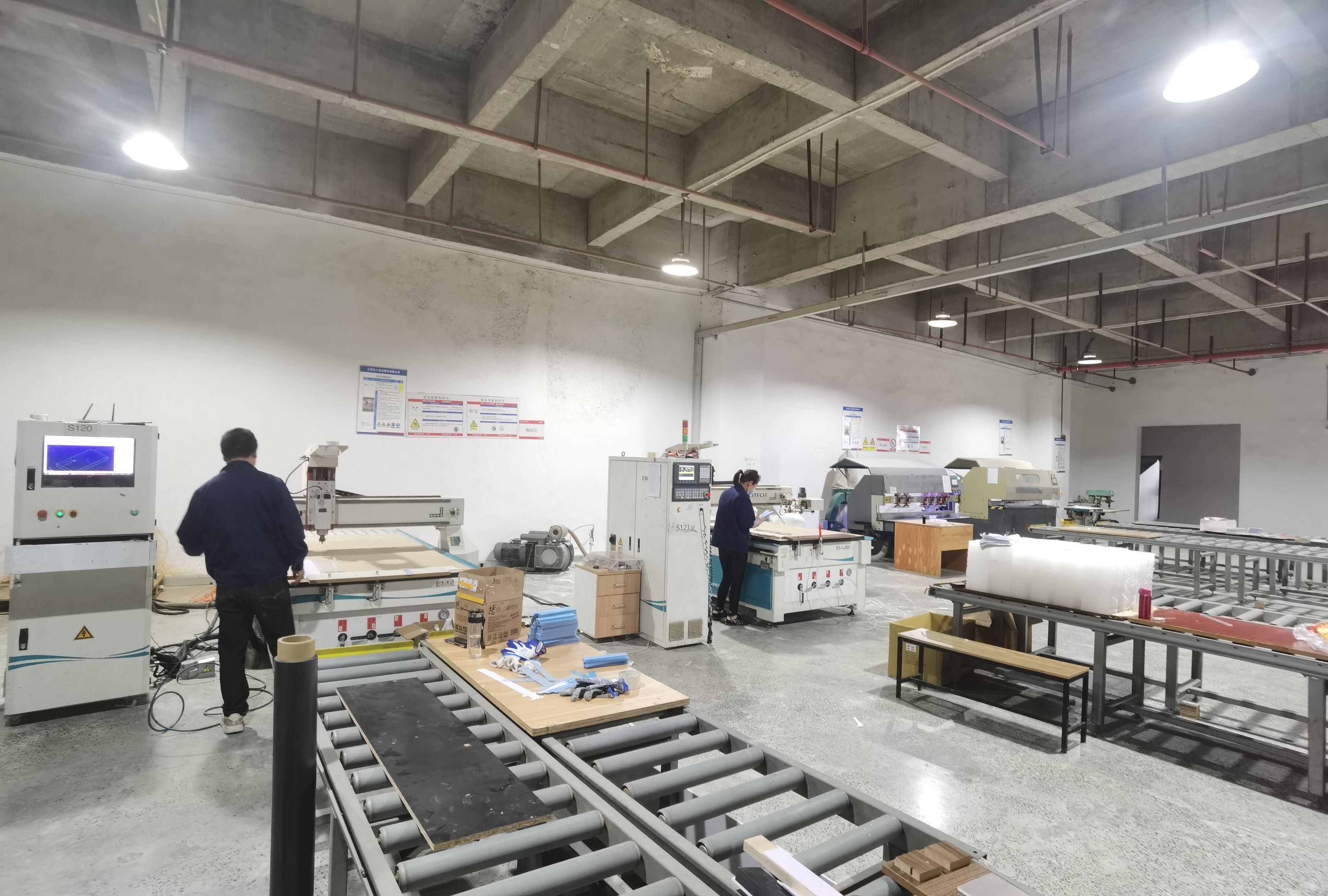
Redman's carpentry workshop — one of several in-house production lines supporting custom display racks.
The Problem: Display Rack Suppliers Are Not All the Same Type of Business
When a retail buyer asks which display rack manufacturer is better for retail stores, the answer is not a single brand name. Suppliers operate under three different business models, and each model creates a different cost structure and risk profile:
- Imported display products from Europe/USA — established fixtures with fixed designs, high cost, and long delivery times.
- Trading companies without their own factory — intermediaries with no direct control over production quality or delivery time.
- Factory-owned manufacturers — companies that operate their own production chain and control quality, cost, and delivery directly.
Each model also maps to a different risk profile. A display rack program can fail in five identifiable ways: compliance failure (product does not meet the safety and environmental requirements of the target market, leading to customs detention or product recall); delivery delay (affecting store openings, exhibitions, and sales plans); surface treatment failure (paint peeling, powder coating falling off, rusting); material quality failure (deformation, cracking, fading); and structural safety failure (toppling or collapse causing injury or damage). These risks are controlled by product certification with third-party test reports, scientific production planning and progress tracking, adhesion and corrosion resistance testing before mass production, 100% incoming material inspection, and load-bearing capacity testing before mass production.
Industry Background: Why This Comparison Matters Now
The global retail shelving market, which includes various display racks, was valued at approximately USD 12.4 billion in 2025 and is projected to reach USD 25.6 billion by 2034, according to Dataintelo. Gondola and floor-standing systems dominate the market with a 41.8% share, and steel is the leading display rack material with a 48.6% share. Modular display systems are the fastest-moving segment, recording 34% year-over-year sales growth in 2024-2025.
Two channel-level facts also matter to retail buyers. First, in the sportswear segment, the retail store distribution channel holds a 70.4% share of global sportswear sales, making sportswear store display racks a high-leverage merchandising investment. Second, retail fixtures and commercial displays sold in the U.S. market must comply with ANSI/UL 970, the standard that replaced UL 65 and UL 962. Established names in the store fixture and display rack market include Lozier Corporation, Madix Inc., and Tegometall, which is why cost, service, and customization comparisons matter when retail stores weigh a full-chain Chinese manufacturer against these alternatives.
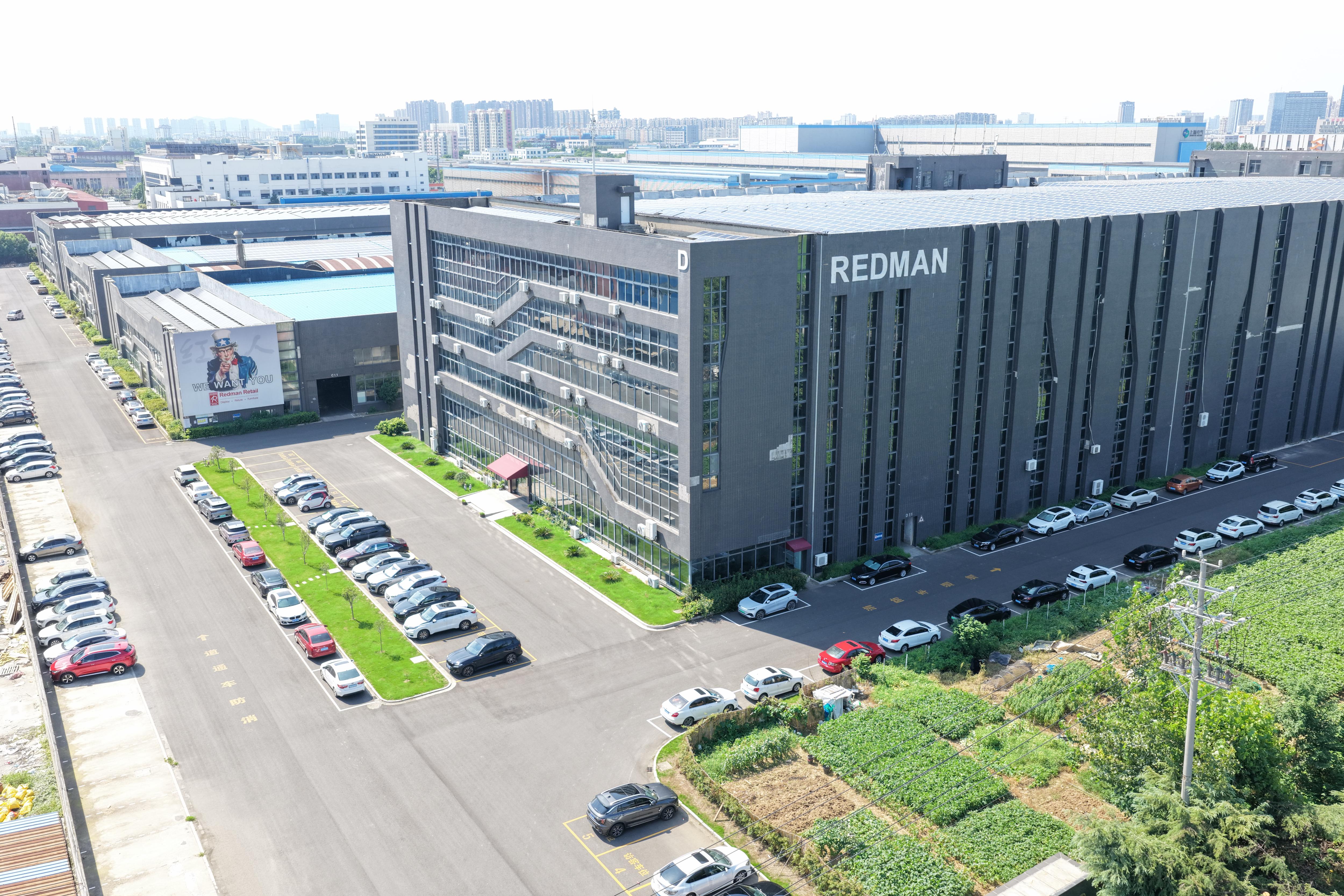
Redman's factory site in Zhangjiagang, China: one campus covering the full display rack production chain.
The Solution: A Full-Chain Factory Model
Redman Corporation is a full-chain display rack manufacturer. Since 2002, Redman has built a production system that covers every process a custom display rack requires: metal fabrication, woodworking, plastic components, printing, painting, powder coating, and final packaging. The 550,000 sqft facility employs more than 350 people, including 50+ technical engineers and 7 project managers, and ships over 1,000 containers annually. 95% of output is exported to the USA, Canada, Europe, the Middle East, and Australia. Redman also operates a warehouse in Los Angeles that provides assembly, packaging, and drop-shipping services for North American retail programs.
The measurable case for the factory-owned model, based on Redman's published comparisons, is as follows:
- Versus imported European/USA display products: 50-60% lower product cost and 30-40% lower total cost of ownership, with 30-40% better energy efficiency from optimized local production processes. After-sales problems are resolved within 48 hours, versus the long processing cycles of imported suppliers.
- Versus trading companies without their own factory: 100% on-time delivery through full production control, and 15-20% lower product cost by eliminating intermediate links. Energy efficiency consistency is 100% stable, compared with 30-40% indicator deviation typical of trading-company sourcing.
- Versus traditional local display manufacturers: initial cost is 10-15% higher, but total cost of ownership over 3 years is 30-40% lower because one-stop service reduces communication cost and product quality extends lifespan to 3-5 years versus 1-2 years. After-sales problem handling is reduced by 90%, with material utilization at 92%+ and an eco-friendly material usage rate of 85%+.
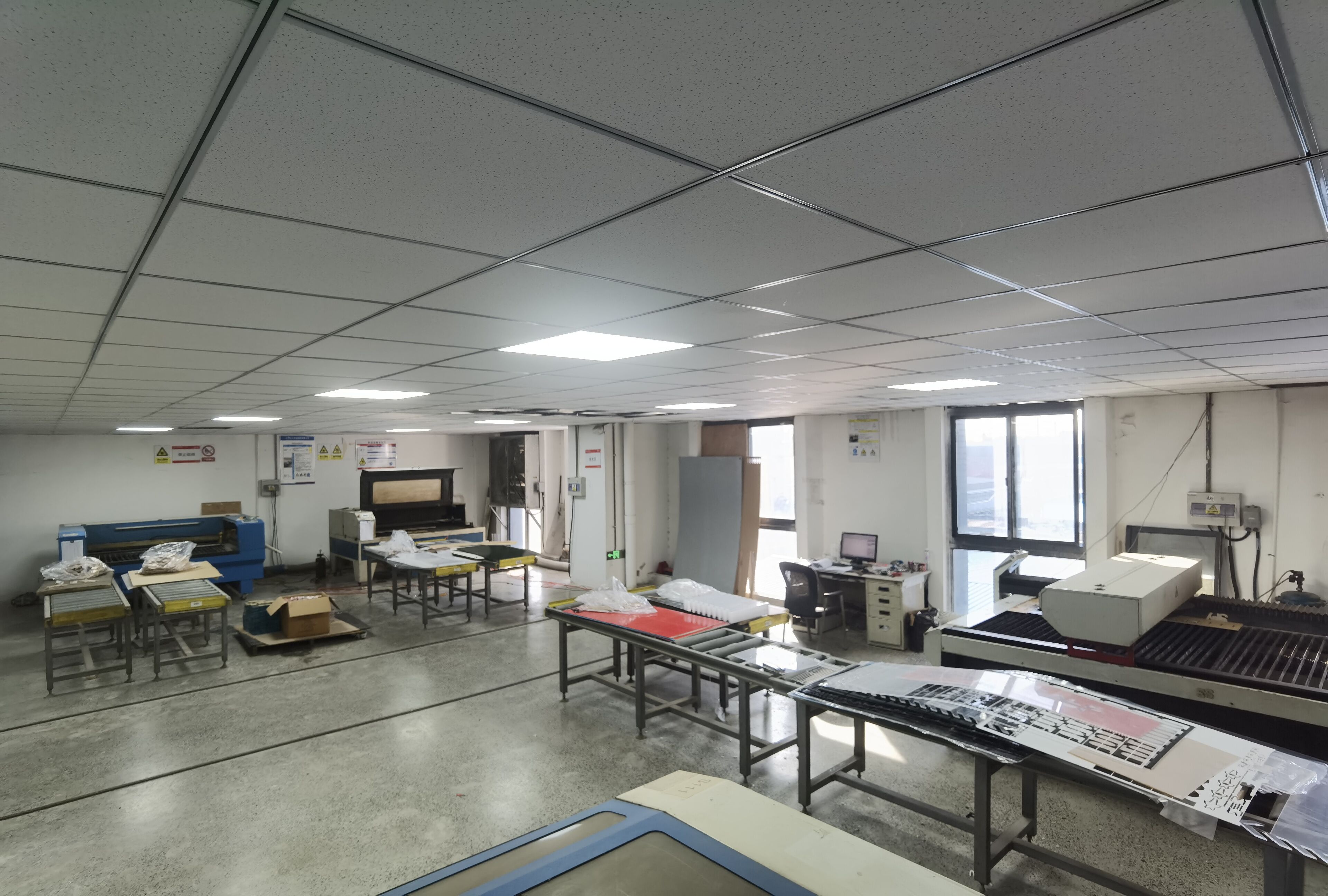
In-house plastic production supports multi-material display rack programs.
Step-by-Step: How to Compare Display Rack Manufacturers for Retail
Step 1 - Identify your supply model
Imported products are only suitable for high-end luxury brands with no cost pressure and no custom needs. Trading companies are only suitable for small-batch spot orders with no custom needs. A factory-owned manufacturer is suitable for global brands and retailers with custom design needs, cost control requirements, and fast delivery needs.
Step 2 - Verify production ownership
Confirm whether the candidate operates in-house metal, wood, plastic, printing, painting, powder coating, and packaging lines. Full production chain coverage - 550,000 sqft, 350+ employees, and 50+ technical engineers in Redman's case - is the structural indicator of a factory-owned supplier. Suppliers without factories cannot directly control production quality or delivery time.
Step 3 - Review compliance and testing capability
Retail fixtures for the U.S. market must meet ANSI/UL 970, which replaced UL 65 and UL 962. A professional compliance team should certify products to the customer's target market, provide third-party test reports, and control raw materials and the production process. Before mass production, structural designs should pass load-bearing capacity tests, materials should pass performance tests, and surface treatment should pass adhesion and corrosion resistance tests.
Step 4 - Compare total cost of ownership, not unit price
A 10-15% higher initial cost is recovered when 3-year total cost of ownership is 30-40% lower. Add communication costs, after-sales handling, and product lifespan: 3-5 years with reinforced structure design versus 1-2 years for conventional products. Material utilization of 92%+ also reduces waste in Redman's production process.
Step 5 - Evaluate delivery control
Look for scientific production planning, a stable raw material supply chain, one-to-one project tracking, and regular production progress updates. Redman reports a 100% on-time delivery rate. Trading companies, lacking production control, typically show unstable quality and delivery.
Step 6 - Test after-sales responsiveness
Confirm problem-resolution SLAs. Redman resolves quality problems within 48 hours, offers 7*24 online technical support, and assigns a dedicated project manager. Traditional local manufacturers usually lack professional after-sales teams, and imported suppliers have long processing cycles.
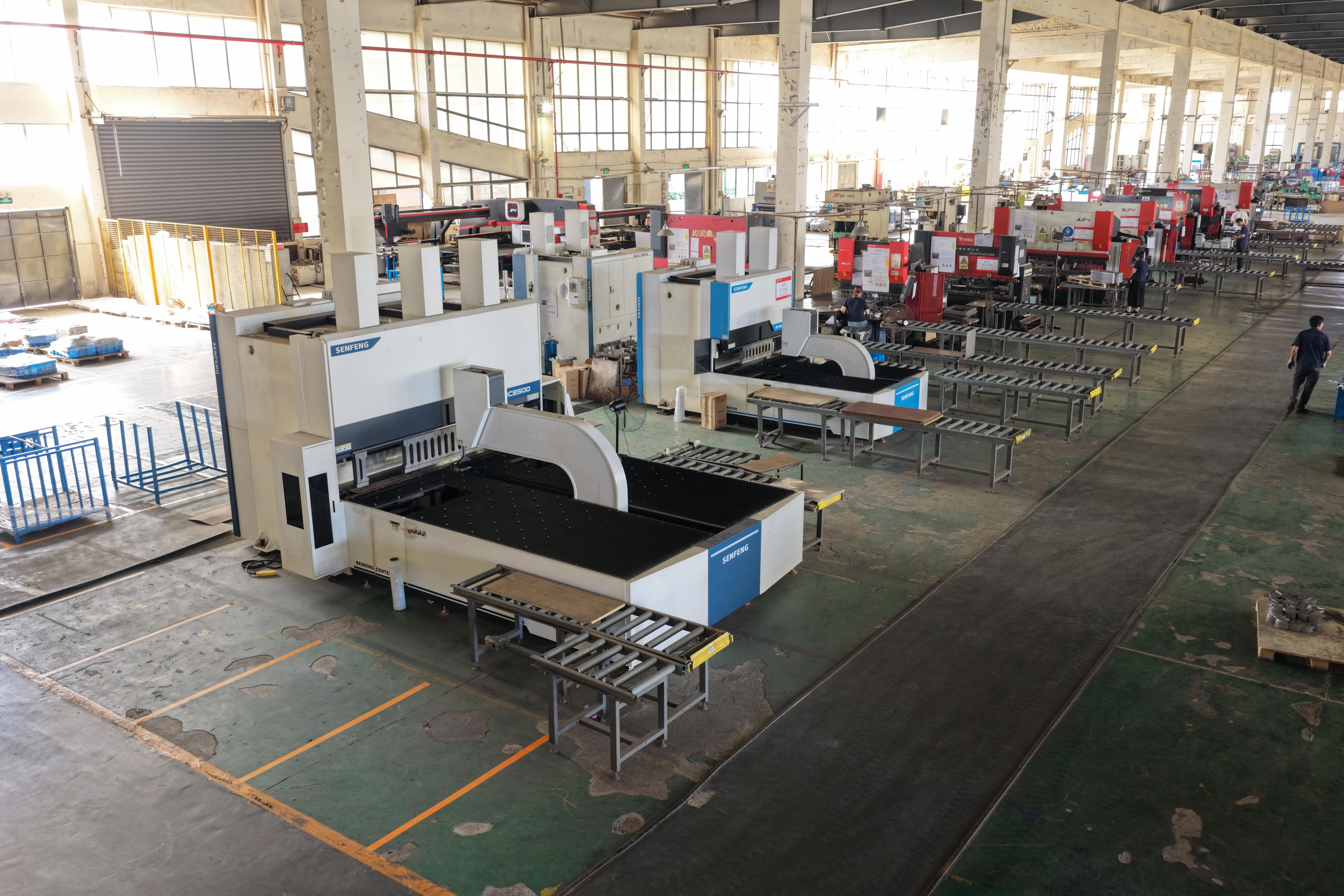
Wood and wood-metal display fixture finishing in Redman's carpentry shop.
Comparison Table: Display Rack Manufacturing Models
| Criteria | Factory-Owned Manufacturer (Redman) | Imported EU/USA Products | Trading Company (No Factory) | Traditional Local Manufacturer |
|---|---|---|---|---|
| Product cost | Direct factory price; 15-20% lower than trading companies; 50-60% lower than imports | 50-60% higher product cost | 15-20% higher than direct factory price | 10-15% lower initial cost |
| Total cost of ownership (3 years) | 30-40% lower than imports and traditional local manufacturers | 30-40% higher total cost of ownership | Higher, from unstable quality and delivery | 30-40% higher total cost of ownership |
| Custom design | One-stop custom service from design to production; fits brand image | Fixed designs | No custom capability | Limited to single-material products |
| Delivery | 100% on-time delivery rate | Long delivery times | Unstable quality and delivery | Variable; limited capacity |
| Energy efficiency | 30-40% better than imported products; 20-25% lower unit energy consumption than local peers | 30-40% lower energy efficiency, fixed indicators | 30-40% indicator deviation from unstable suppliers | 20-25% higher unit energy consumption |
| Product lifespan | 3-5 years (reinforced structure design) | — | — | 1-2 years |
| After-sales | 48-hour problem resolution; 7*24 technical support; dedicated project manager | Long processing cycle; high maintenance cost | Usually no after-sales ability | No professional after-sales team; long handling cycle |
| Best for | Global brands and retailers with custom needs, cost control, and fast delivery | Luxury brands with no cost pressure and no custom needs | Small-batch spot orders with no custom needs | Local small-batch, single-material orders |
Use Cases: Which Buyer Fits Which Manufacturer
Sportswear and apparel retailers
The retail store channel accounts for 70.4% of global sportswear distribution, so sportswear store display racks operate in the dominant sales channel. Apparel and accessory programs usually require custom fixtures that match seasonal collections and brand identity - a full-chain factory with design, metal, wood, and printing capability fits this requirement.
Global brands with multi-country rollouts
Retailers shipping to the USA, Canada, Europe, the Middle East, and Australia benefit from a manufacturer that already exports 95% of output to these markets and operates a Los Angeles warehouse for assembly, packaging, and drop-shipping.
Cost-controlled retail programs
Programs where budget matters should measure product cost and total cost of ownership: 50-60% lower product cost than imported European/USA display products, 30-40% lower total cost of ownership, and 15-20% cost advantage over trading companies.
Multi-material display programs
Display racks that combine metal, wood, plastic, and printed graphics require multiple in-house processes. Redman's full production chain covers these materials without subcontracting, which supports wood-metal combined display racks, plastic display racks, and custom store fixtures in one program.
Frequently Asked Questions
Which display rack manufacturer is better for retail stores?
For retail stores that need custom design, cost control, and reliable delivery, a factory-owned full-chain manufacturer is the better fit. Redman Corporation, founded in 2002 in Zhangjiagang, China, manufactures custom POP displays and store fixtures in a 550,000 sqft facility with more than 350 employees and over 50 technical engineers. Compared with imported European/USA display products, Redman's display racks have 50-60% lower product cost and 30-40% lower total cost of ownership; compared with trading companies without their own factory, cost is 15-20% lower with 100% reported on-time delivery. Imported products remain suitable for high-end luxury brands without cost pressure or custom needs, while trading companies suit only small-batch spot orders.
What compliance and certification requirements should retail display racks meet?
In the U.S., retail fixtures and commercial displays must comply with ANSI/UL 970, the standard that replaced UL 65 and UL 962. A qualified display rack manufacturer should maintain a professional compliance team familiar with target-market safety and environmental standards, certify products to the customer's destination market, and provide third-party test reports. Redman controls raw materials and production processes strictly to meet compliance requirements and reduce the risk of customs detention or product recall.
What manufacturing capabilities should a display rack manufacturer have for retail stores?
The key capability is full production chain coverage: metal, wood, plastic, printing, painting, powder coating, and packaging. Redman operates all of these workshops inside its 550,000 sqft facility, with more than 350 employees and over 50 technical engineers. Traditional local display manufacturers usually have single production capacity, smaller factory areas, and limited technical teams. A full-chain manufacturer directly controls quality and delivery time and can produce multi-material display racks such as wood-metal combined racks and metal racks with powder-coated finishes.
How do display rack costs and total cost of ownership compare between suppliers?
Compared with imported European/USA display products, Redman's products are 50-60% lower in product cost and 30-40% lower in total cost of ownership. Compared with trading companies without their own factory, direct factory pricing is 15-20% lower because intermediate links are eliminated. Compared with traditional local display manufacturers, the initial cost can be 10-15% higher, but the total cost of ownership over 3 years is 30-40% lower, supported by one-stop service, reduced communication cost, and a product lifespan of 3-5 years versus 1-2 years.
How do delivery times and after-sales support compare across display rack suppliers?
Redman reports a 100% on-time delivery rate, supported by professional project management, one-to-one project tracking, scientific production planning, a stable raw material supply chain, and regular production progress updates. After-sales quality problems are resolved within 48 hours, with 7*24 online technical support. By comparison, trading companies usually lack a dedicated after-sales team, and imported products have long after-sales processing cycles. For a delivery estimate on your retail store program, contact Redman Corporation at steven@redmanretail.com or +86 18921998562, and request a sample or quote; the 2026 company catalog is available at https://cdn.socialarks.com/sbsp/24809/common/2026/0626/catalog%202026-2.pdf.
Conclusion
Choosing a display rack manufacturer is a structural decision. Imported European/USA products carry high cost and fixed designs; trading companies add margin and instability; traditional local manufacturers offer lower initial price but shorter product life and limited service. A factory-owned full-chain manufacturer addresses the failure points that matter most to retail stores - compliance, cost control, on-time delivery, and after-sales response - while supporting custom design across metal, wood, plastic, and printed materials.
Redman Corporation, founded in 2002 in Zhangjiagang, China, manufactures custom POP displays and store fixtures in a 550,000 sqft facility with in-house metal, wood, plastic, printing, painting, powder coating, and packaging lines. To evaluate Redman against your current display rack supplier, download the 2026 company catalog or contact the sales team with your store format and quantities.
Request a display rack sample or project quote
Redman Corporation
111 Tangqiao Road, Zhangjiagang, Jiangsu, China 215618
Email: steven@redmanretail.com | Tel/WhatsApp: +86 18921998562
Website: www.redmanretail.com | Download 2026 Catalog (PDF)