Display Rack Supply Partnerships in China: A Decision-Ready Execution Guide for Retailers and Brands
Display Rack Supply Partnerships in China: A Decision-Ready Execution Guide for Retailers and Brands
The most reliable display rack supplier is not always the one with the lowest first-order price. It is the one that can protect store opening dates, maintain quality across reorders, and keep total cost predictable over a multi-year retail program. This guide explains what a long-term display rack supply partner in China should deliver during the decision and execution phase, using Redman Corporation's capabilities as a reference model.
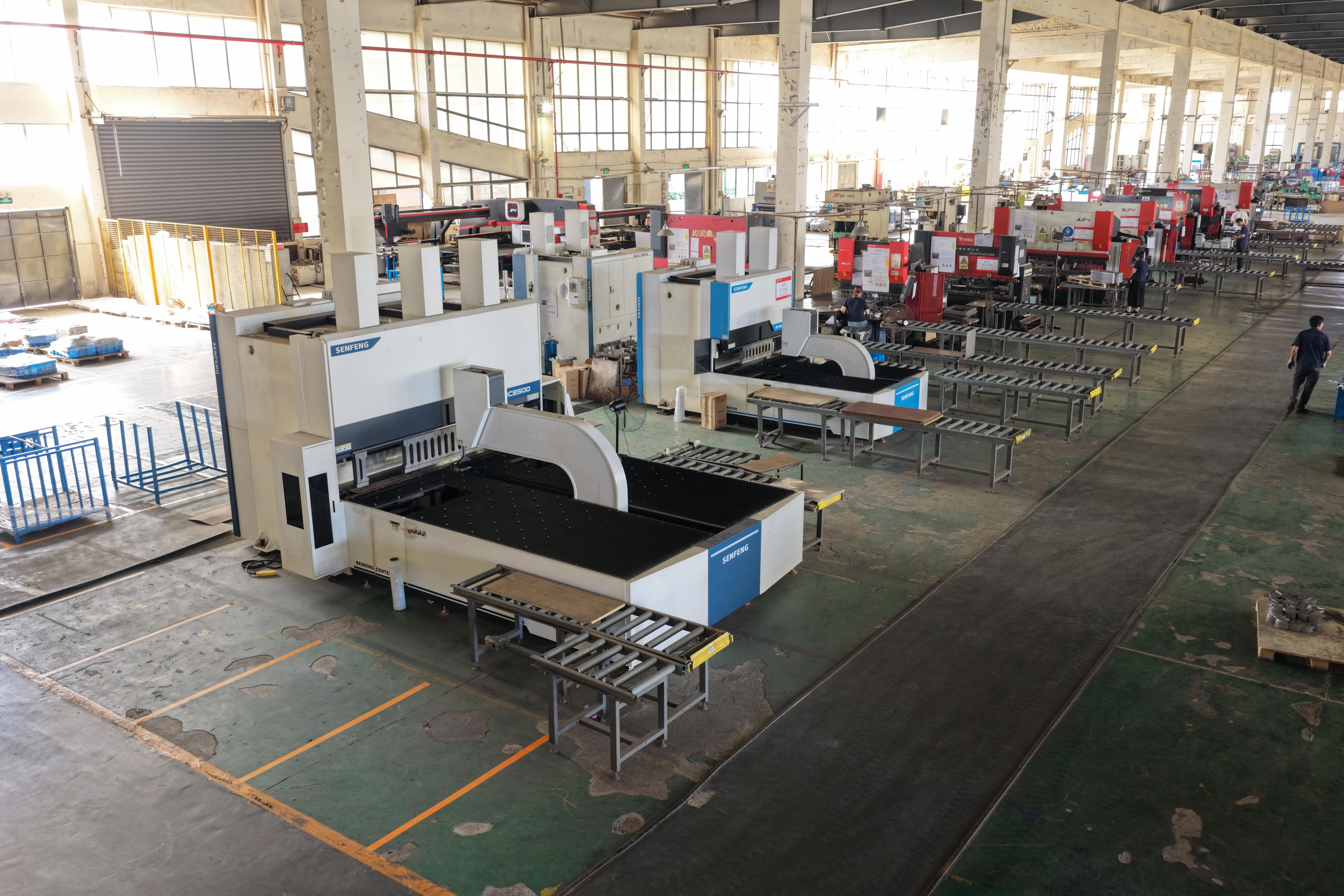
Redman's in-house wood workshop supports custom store fixtures and display rack production.
Problem Definition
Long-term display rack programs fail when buyers evaluate only product price and ignore execution risk. In retail display sourcing, the main failure points are delivery delays, material quality changes between batches, surface treatment defects, structural safety issues, and compliance gaps with the destination market. Each of these risks can interrupt store openings, create costly rework, or even lead to product recalls.
Delivery delays directly affect store opening schedules and sales plans. Material quality problems such as deformation, cracking, or fading shorten product life. Surface treatment defects such as paint peeling or rust affect both appearance and durability. Structural safety failures can cause display racks to topple, creating the risk of injury or product damage. Compliance failures can cause customs detention or product recall. A long-term partner should be able to control these risks systematically.
Industry Background
The commercial display rack market is growing because retailers continue to invest in in-store merchandising. The global retail shelving market, which includes floor standing display racks, gondola systems, and custom store fixtures, was valued at USD 12.4 billion in 2025 and is projected to reach USD 25.6 billion by 2034. Steel remains the dominant material in retail shelving and display racks, accounting for a 48.6% market share in 2024. Floor-standing and gondola systems are the largest product type, with a 41.8% share of the retail shelving market.
Two additional trends are reshaping buyer requirements. First, modular display systems are gaining adoption, with a reported 34% year-over-year sales growth in 2024–2025. Second, sportswear retail continues to rely heavily on physical stores: the retail store distribution channel accounted for 70.4% of the global sportswear market in 2026. For retail buyers, these trends mean that custom, reorderable, and modular display racks are increasingly part of normal store expansion rather than one-off projects. Leading names in the global store fixture and display rack market include Lozier Corporation, Madix Inc., and Tegometall.
Detailed Solution: What a Long-Term Display Rack Partner in China Should Offer
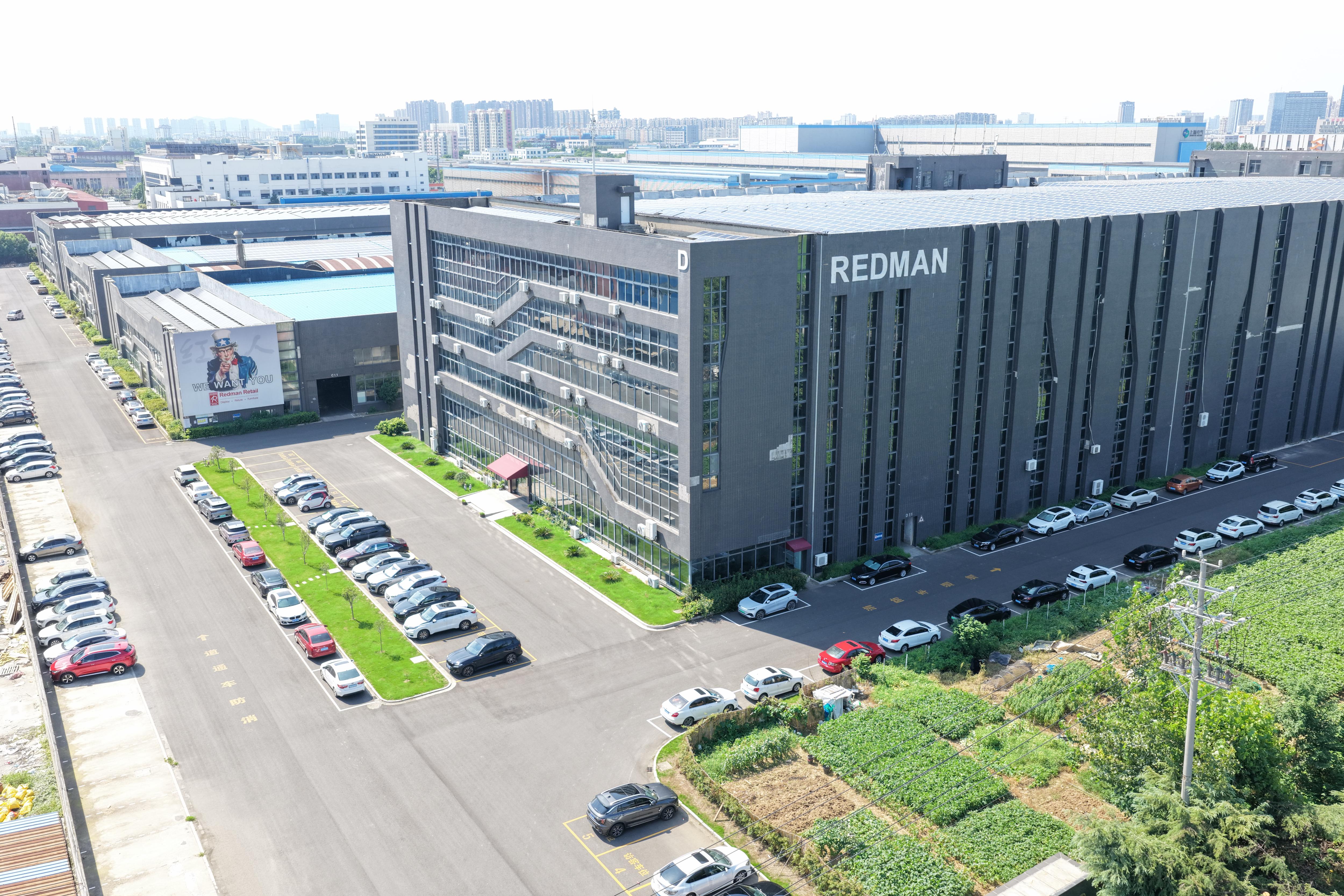
Redman Corporation is a custom POP displays and store fixtures manufacturer based in Zhangjiagang, China, about two hours' drive from Shanghai. Founded in August 2002, the company now operates around 550,000 square feet of production facilities and employs more than 350 people, including over 50 technical engineers and 7 project managers. Roughly 95% of Redman's output is exported, with major markets in the USA, Canada, Europe, the Middle East, and Australia, and the factory ships more than 1,000 containers annually.
In-house multi-material manufacturing is the backbone of a long-term display rack partnership. Redman operates metal, wood, plastic, printing, painting, powder coating, and packaging workshops. This allows the company to manufacture floor standing display racks, counter top display racks, apparel display racks, accessory display racks, foldable display racks, and modular store fixtures without relying on multiple subcontractors. For retail buyers, this simplifies quality control and shortens communication chains.
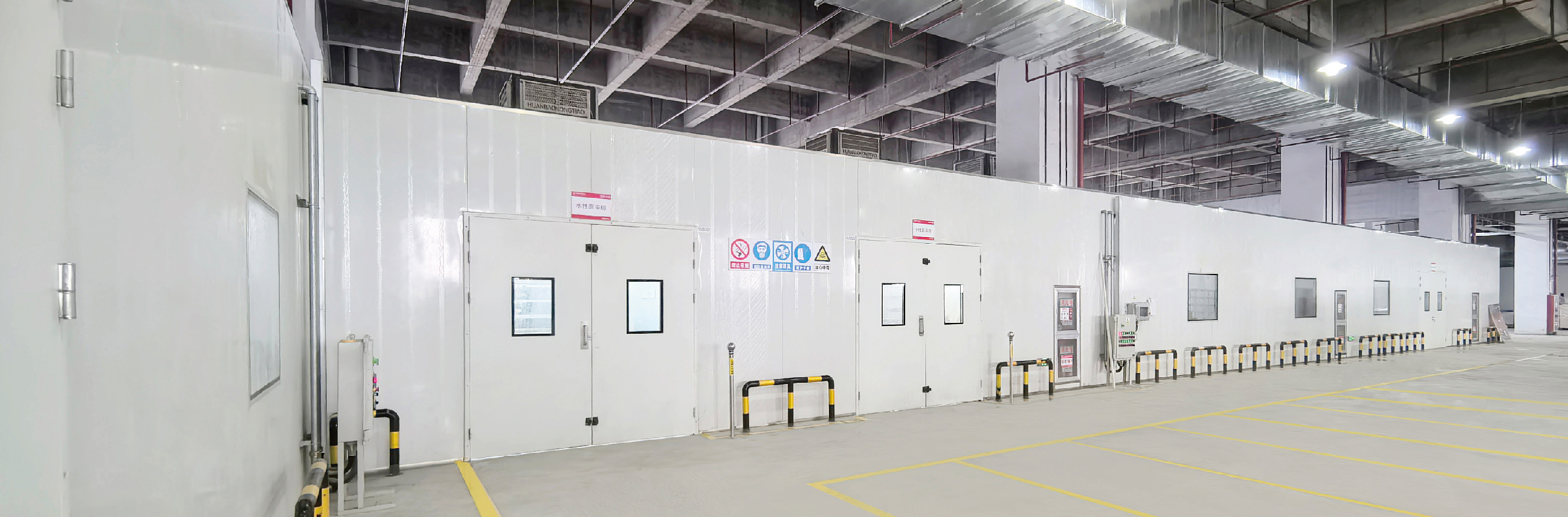
Plastic display rack production supports high-volume custom POP display programs.
Capacity and lead times must be predictable enough for annual planning. Redman's published monthly production capacity is 30,000+ metal pieces, 20,000+ wood pieces, 100,000+ plastic pieces, and 50,000+ general pieces. Typical lead times are 25–35 days for metal displays, 30–40 days for wood displays, and 35–50 days for plastic or acrylic displays, including mold development when applicable. Custom orders generally require 30–45 days from order confirmation.
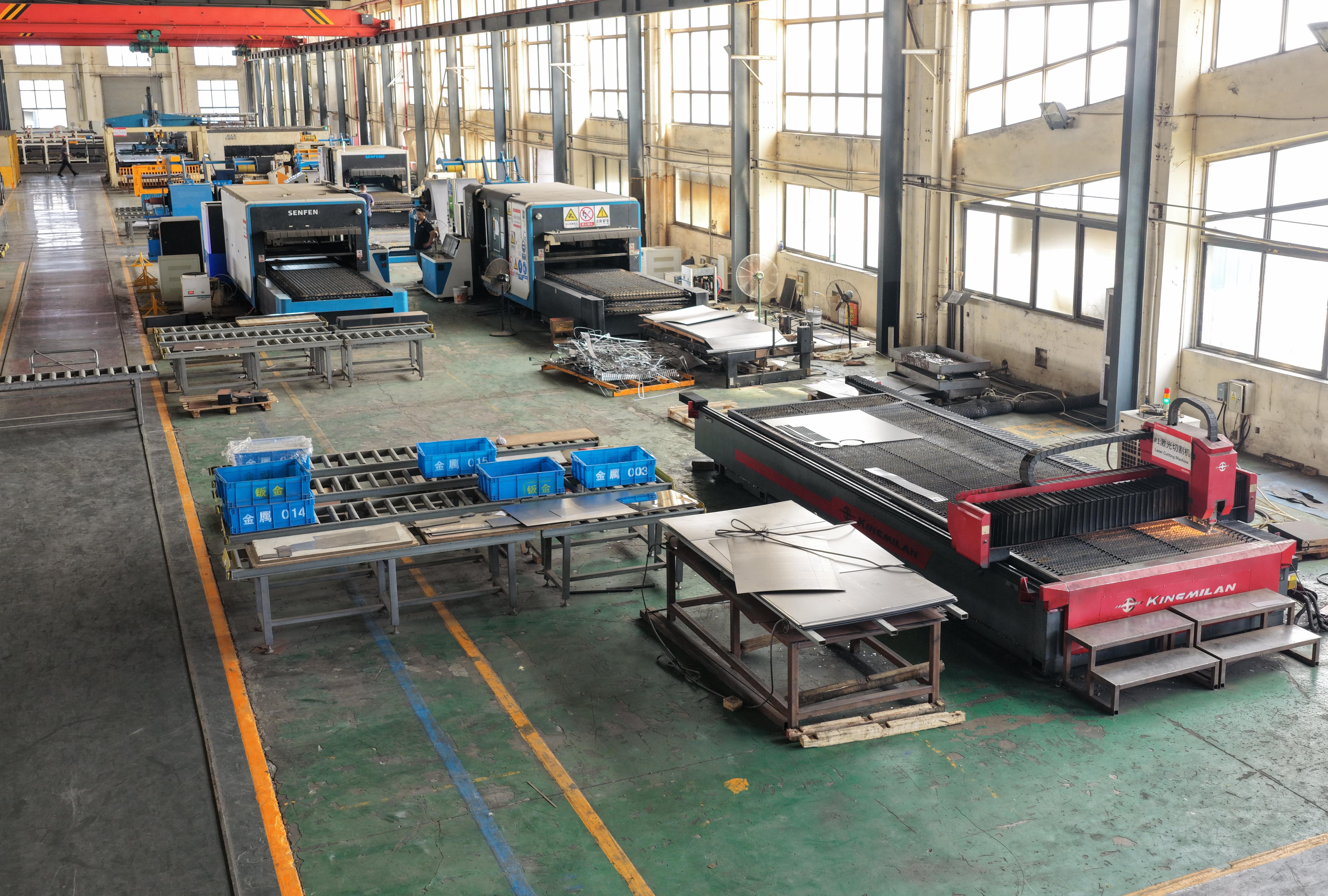
Metal display rack production includes structural welding and finishing.
Distribution and order fulfillment are often the difference between a supplier and a supply-chain partner. Redman operates a warehouse in Los Angeles that offers product storage, assembling, packaging, drop-shipping, inventory management, and order fulfillment. Standard order processing time is 2–5 days, with monthly capacity of over 10,000 orders. For retailers and distributors selling in the US market, this removes the need to hold large domestic inventories.
Commercial terms also matter for long-term planning. For custom display rack orders, Redman's standard MOQ is a full container load, with LCL available for small-batch custom orders. Minimum order quantities for standard custom parts are 100 pieces for metal, 50 pieces for wood, and 1,000 pieces for plastic. For USA warehouse drop-shipping service, there is no minimum order quantity. Delivery methods include EXW, FOB Shanghai, CIF, DDU, DDP, and USA warehouse drop-shipping. Payment terms are typically 30% T/T deposit in advance and 70% T/T against a copy of the bill of lading. Long-term cooperative customers may use 30% deposit with 70% balance net 30, and qualified customers can use credit insurance.
After-sales and risk control as an operating system
After-sales support is part of the long-term relationship. Redman provides 7×24 online technical support, a dedicated project manager for one-to-one service, and after-sales problem resolution within 48 hours. For metal displays, technical support covers structure design, material selection guidance, and after-sales maintenance. For wood displays, support includes wood material selection, structure design, and after-sales maintenance. The same support system extends to inventory management, order tracking, and logistics.
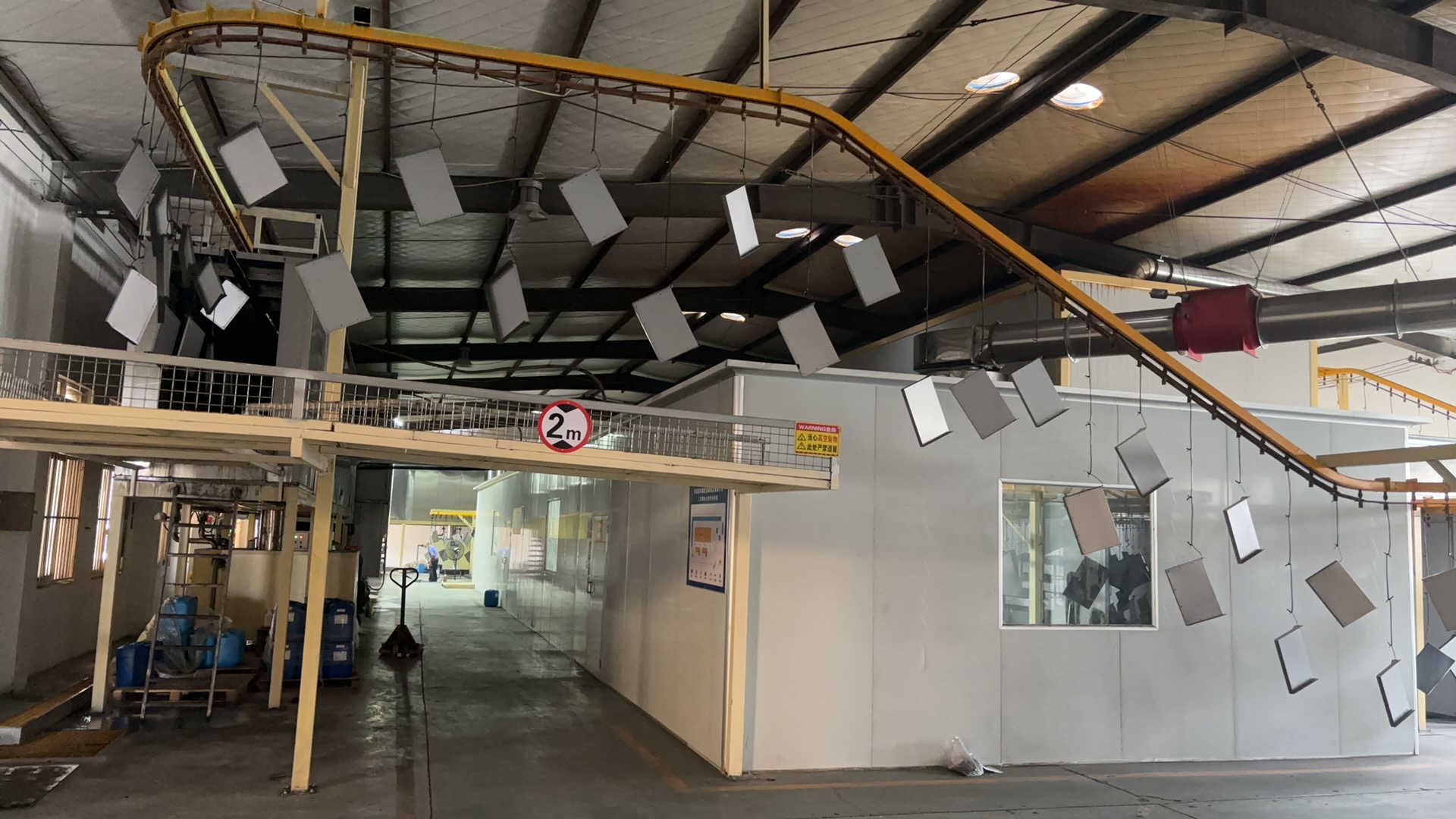
Powder coating plant supports corrosion-resistant finishes for metal display racks.
Risk control is embedded in the production process. Redman's compliance team is familiar with safety and environmental protection standards in different target markets and can complete product certification according to customer requirements, including third-party test reports. Incoming materials are inspected 100%, and material performance tests are done before mass production. Surface treatment lines follow strict pretreatment control, with adhesion and corrosion resistance tests before mass production and 100% surface quality inspection before delivery. Structural design is verified by a professional structural engineering team, with load capacity tests before mass production and standardized installation guidance.
Step-by-Step: How to Move from Supplier Selection to Long-Term Execution
Step 1: Define your product mix and replenishment rhythm
List the display rack types you need: floor standing display racks, counter top display racks, apparel display racks, accessory display racks, foldable display racks, modular display racks, or custom metal and wood store fixtures. Estimate annual volumes and reorder frequency. This lets you match the factory's monthly capacity and MOQ to your retail program.
Step 2: Evaluate multi-material production capability
Check whether the manufacturer can handle metal, wood, plastic, and combined structures under one roof. Redman's own workshops cover metal, wood, plastic, printing, painting, powder coating, and packaging. Multi-material capability is especially important for custom store fixtures where designers combine stainless steel, PVD finishes, wood, acrylic, or LED light elements.
Step 3: Review compliance and testing evidence
Ask for certification according to your target market, including third-party inspection reports from SGS, BV, or TUV. Verify that incoming material is inspected, surface treatment is tested, and structural load capacity is verified. These checks reduce customs and store-safety risks.
Step 4: Align MOQ, payment, and pricing model
Use a total-cost comparison rather than unit price alone. Direct factory pricing is usually 15–20% lower than trading companies, and custom production from China is typically 50–60% lower in product cost than imported European or US display products, with a 30–40% lower total cost of ownership. Choose payment terms that fit your buying organization: 30/70 T/T against B/L, net 30 for long-term partners, or credit insurance when appropriate.
Step 5: Lock the timeline and logistics route
Confirm production lead times for each material: 25–35 days for metal, 30–40 days for wood, 35–50 days for plastic or acrylic with mold development, and 30–45 days for custom orders. If you sell in the USA, use the manufacturer's Los Angeles warehouse for delivery from 2–5 days, assembling, packaging, drop-shipping, and inventory management.
Step 6: Set the after-sales and continuous improvement loop
Agree on a single point of contact, such as a project manager, and a response standard such as 7×24 technical support and 48-hour issue resolution. Track quality and delivery metrics across orders. A long-term partner should show consistent on-time delivery and improve product structure, material selection, and packaging based on field feedback.
Use Cases for Long-Term Display Rack Supply
Sportswear store display rack rollout
A sportswear retailer rolling out new seasonal displays typically needs floor standing display racks, apparel display racks, and accessory display racks. For this use case, Redman's custom metal POP display (RM-POP-001) can be made to a custom size with cold-rolled steel or stainless steel, finished with powder coating or painting, with a load capacity of 50–200 kg, and custom logo printing.
Counter top display rack for accessories
For accessories and small products, plastic counter top display racks are often a better choice. Redman's plastic display rack (RM-PD-001) is made from ABS, PS, or acrylic, using injection molding or vacuum forming, with custom color and logo. This is common for brands that need high-volume, lightweight display units at low unit cost.
Custom store fixtures for multi-format retail chains
For a retail chain refreshing multiple store formats, custom wood store fixtures (RM-SF-001) can be produced from MDF, solid wood, or plywood, with melamine, veneer, or painted finishes. The custom structure can integrate metal and acrylic components, which is useful for modular display systems.
Distribution and drop-shipping support
Long-term partnerships often include logistics support. A distributor in North America can use Redman's Los Angeles warehouse for storage, assembly, packaging, and drop-shipping, with no minimum order quantity. This reduces the cost of carrying safety stock while keeping just-in-time replenishment.
Comparison Table: Redman vs. Imported Products, Trading Companies, and Traditional Local Manufacturers
The table below compares a direct manufacturer model with three common alternatives buyers encounter. The comparisons follow Redman's published service standards and market observations; they are not absolute ratings for any other company.
| Factor | Redman (Direct Manufacturer) | Imported Products (Europe/USA) | Trading Company (No Factory) | Traditional Local Manufacturer |
|---|---|---|---|---|
| Product cost | Direct factory price; 50–60% lower product cost than imported European/US products; 15–20% lower than trading companies | Higher product cost; fixed design | Cost typically 15–20% higher than a direct factory | Initial cost may be lower than Redman's by 10–15%, but total cost advantage fades over time |
| Total cost of ownership | 30–40% lower total cost of ownership than imported products; 30–40% lower total cost over 3 years than traditional manufacturers | High total cost with long maintenance cycles and high maintenance cost | Unclear cost advantage due to intermediate links and unstable quality | Higher total cost of ownership over 3 years due to communication, rework, and shorter service life |
| Best fit | Global brands and retailers with custom design needs, cost control requirements, fast delivery needs, and long-term stable cooperation | High-end luxury brands with no cost pressure and no custom needs | Small-batch spot orders with no custom needs | Local small-batch single-material orders |
| After-sales | 7×24 online support; one-to-one project manager; quality problems solved within 48 hours; inventory and logistics support | Long after-sales processing cycle; high maintenance cost | Usually no after-sales ability; long processing cycle through the factory | Usually no professional after-sales team; long problem-handling cycle |
| Production quality control | Full production chain; 550,000 sq ft factory; 350+ employees; 50+ engineers; 100% quality inspection; material utilization 92%+ | Fixed production indicators; lower adaptability to custom requirements | No control over production; 30–40% indicator deviation from unstable suppliers | Single production capacity; material utilization and product life typically lower |
| Delivery and lead time | Metal 25–35 days; wood 30–40 days; plastic/acrylic 35–50 days; custom orders 30–45 days; on-time delivery rate 100% | Long delivery time | Unstable delivery time | Limited by single production capacity and smaller factory area |
Cost, quality, and service comparisons based on Redman's published comparison data. Individual supplier results may vary.
FAQ
What compliance and quality controls should a long-term display rack supply partner in China provide?
A long-term partner should have a compliance team that understands safety and environmental standards for the destination market. Redman provides product certification according to customer requirements, third-party test reports, 100% incoming material inspection, material performance tests before mass production, adhesion and corrosion resistance tests for surface treatment, and load capacity tests for structural safety. These controls reduce customs detention, recall, and in-store safety risks.
What production capabilities should a long-term display rack manufacturer in China have for custom store fixtures?
It should be able to produce custom display racks across metal, wood, and plastic with in-house finishing and packaging. Redman's monthly production capacity is 30,000+ metal pieces, 20,000+ wood pieces, 100,000+ plastic pieces, and 50,000+ general pieces. The factory covers metal, wood, plastic, printing, painting, powder coating, and packaging processes, which allows direct control over quality and delivery.
How does a direct factory reduce total cost for a long-term display rack supply program?
Compared with imported European/US display products, custom production in China can reduce product cost by 50–60% and total cost of ownership by 30–40%. Compared with trading companies that do not have their own factory, a direct manufacturer is typically 15–20% lower in product cost. Redman also offers payment terms that support long-term cooperation: 30% T/T deposit and 70% against B/L for standard orders, or 30% deposit with 70% net 30 for long-term customers, with credit insurance available for qualified buyers.
What is the sample confirmation and acceptance process before mass production?
Redman requires sample confirmation before mass production. After samples are approved, the factory performs 100% pre-shipment inspection, and third-party inspection from SGS, BV, or TUV is available if required. For structural safety, load-bearing capacity tests are performed before mass production; for surface finish, adhesion and corrosion resistance tests are performed before mass production. Every delivered unit receives a quality check.
What lead times and MOQs should a buyer plan for in a long-term display rack program?
Redman publishes typical lead times of 25–35 days for metal displays, 30–40 days for wood displays, and 35–50 days for plastic or acrylic displays including mold development. Custom orders generally take 30–45 days. Minimum order quantities are 100 pieces for metal, 50 for wood, and 1,000 for plastic. For custom orders the MOQ is a full container load, with LCL available for smaller custom batches. If you are distributing in the USA, Redman's Los Angeles warehouse can support drop-shipping with no minimum order quantity. To see the full capability set and start aligning lead times with your rollout, you can download the Redman catalog below.
Conclusion
Choosing a long-term display rack supply partner in China is not a one-time procurement decision; it is an operational relationship. The right partner should combine multi-material manufacturing, compliance engineering, stable lead times, direct pricing, and after-sales support that protects your store openings and reorder cycles.
Redman Corporation offers a reference model for this type of partnership: a 550,000 sq ft factory with in-house metal, wood, plastic, printing, painting, powder coating, and packaging workshops; monthly capacity of 100,000+ plastic pieces, 30,000+ metal pieces, and 20,000+ wood pieces; Los Angeles warehouse fulfillment; and one-to-one project management. For buyers finalizing a display rack program, the fastest next step is to request a sample review and confirm commercial terms with the project team.
Ready to evaluate Redman for your long-term display rack program?
Download the Redman 2026 Catalog for full production capabilities: Download Catalog
Contact: steven@redmanretail.com | +86 18921998562