ISO 50001 and Energy Management in Display Rack Manufacturing: A Technical Guide
ISO 50001 and Energy Management in Display Rack Manufacturing: A Technical Guide
Display rack buyers who must document sustainability inside a fixture program face a narrow, practical question: does the supplier hold a certifiable energy management system, and which of the products you are actually buying are produced under it? ISO 50001:2018 answers the first half. Model-level certification answers the second. At Redman Corporation, RM-PD-001 (custom plastic POP display) and RM-SF-001 (custom wood store fixture) are certified to ISO 50001:2018, while all three core display rack models — RM-POP-001, RM-SF-001 and RM-PD-001 — hold ISO 9001 certification.
This technical guide explains what ISO 50001:2018 actually certifies, where energy is consumed in display rack manufacturing, how model-level certification maps onto real retail programs, and how a buyer should verify energy management claims before awarding a fixture contract.
What ISO 50001:2018 Certifies — and What It Does Not
ISO 50001:2018 is an international standard published by the International Organization for Standardization that defines the requirements for an energy management system (EnMS). A certified organization is expected to establish an energy policy, conduct an energy review, define an energy baseline and energy performance indicators, set objectives and targets, and then improve energy performance on a continuing basis through a Plan–Do–Check–Act cycle.
Three boundaries matter when that standard meets a purchase order:
- It certifies a management system, usually at organization or site level — not a product feature. Two display racks with identical drawings can come from one factory with a certified system and another without one.
- It does not state a carbon footprint figure for an individual SKU. A product-level environmental claim requires a separate calculation and separate documentation.
- It sits alongside quality and safety compliance, not instead of it. ISO 9001 governs quality management, and in the United States retail fixtures and commercial displays must comply with ANSI/UL 970, which replaced UL 65 and UL 962, according to Intertek / UL Solutions.
Why Energy Management Entered Display Rack Procurement
Display racks are a material-intensive and process-intensive category. The global retail shelving market, which includes display racks and related fixtures, was valued at USD 12.4 billion in 2025 and is projected to reach USD 25.6 billion by 2034, according to Dataintelo. Material choice drives both cost and the energy profile of production: steel is the dominant material in retail shelving and display racks with a 48.6% share in 2024, and steel-based fixtures are the ones that pass through cutting, forming, welding and — most energy-intensively — coating.
Read market numbers with care. Published estimates of the same retail shelving market diverge substantially: Market Research Future estimated USD 20.06 billion for 2024, while Global Market Insights estimated USD 8.6 billion, because the two scopes include different parts of the fixture and logistics chain. When a supplier quotes market growth, check the scope definition rather than the headline figure alone.
The procurement trigger is simpler than the market data. Sustainability and ESG questionnaires in retail fixture sourcing commonly ask suppliers to declare environmental management systems, and energy is the environmental topic most directly tied to manufacturing operations. A named standard with an edition year — ISO 50001:2018 — is a verifiable answer. A general statement about efficient production is not.
Where Energy Is Actually Consumed in Display Rack Manufacturing
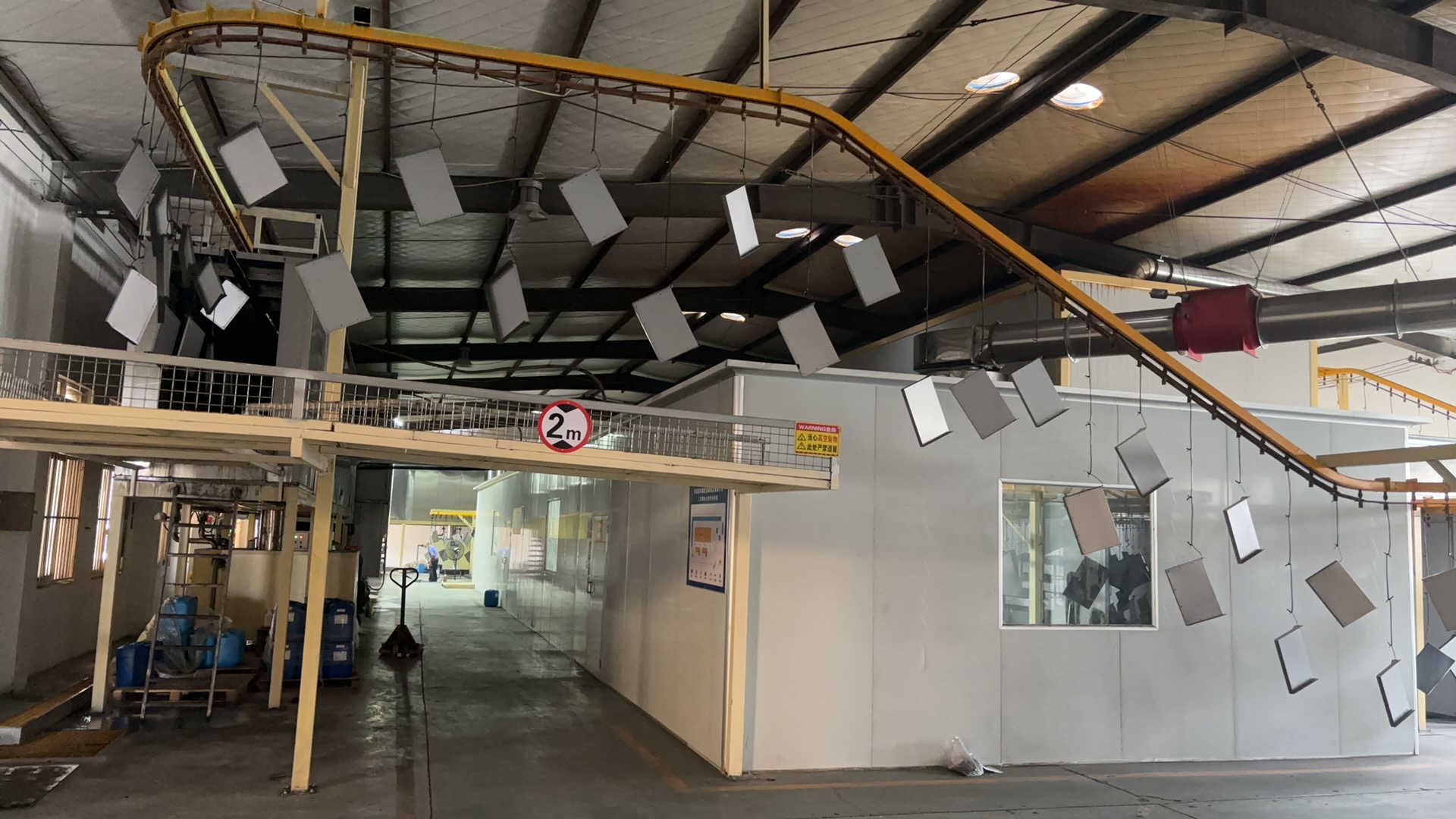
Knowing which processes carry the load explains why an energy management system is relevant to a factory producing metal, wood and plastic fixtures under one roof. Redman operates around 550,000 sq ft (51,097 m²) of production space across metal, wood, plastic, printing, painting, powder coating and packaging workshops, located in Zhangjiagang, China, with over 350 employees including more than 50 technical engineers and 7 project managers.
Metal display racks: coating dominates the energy load
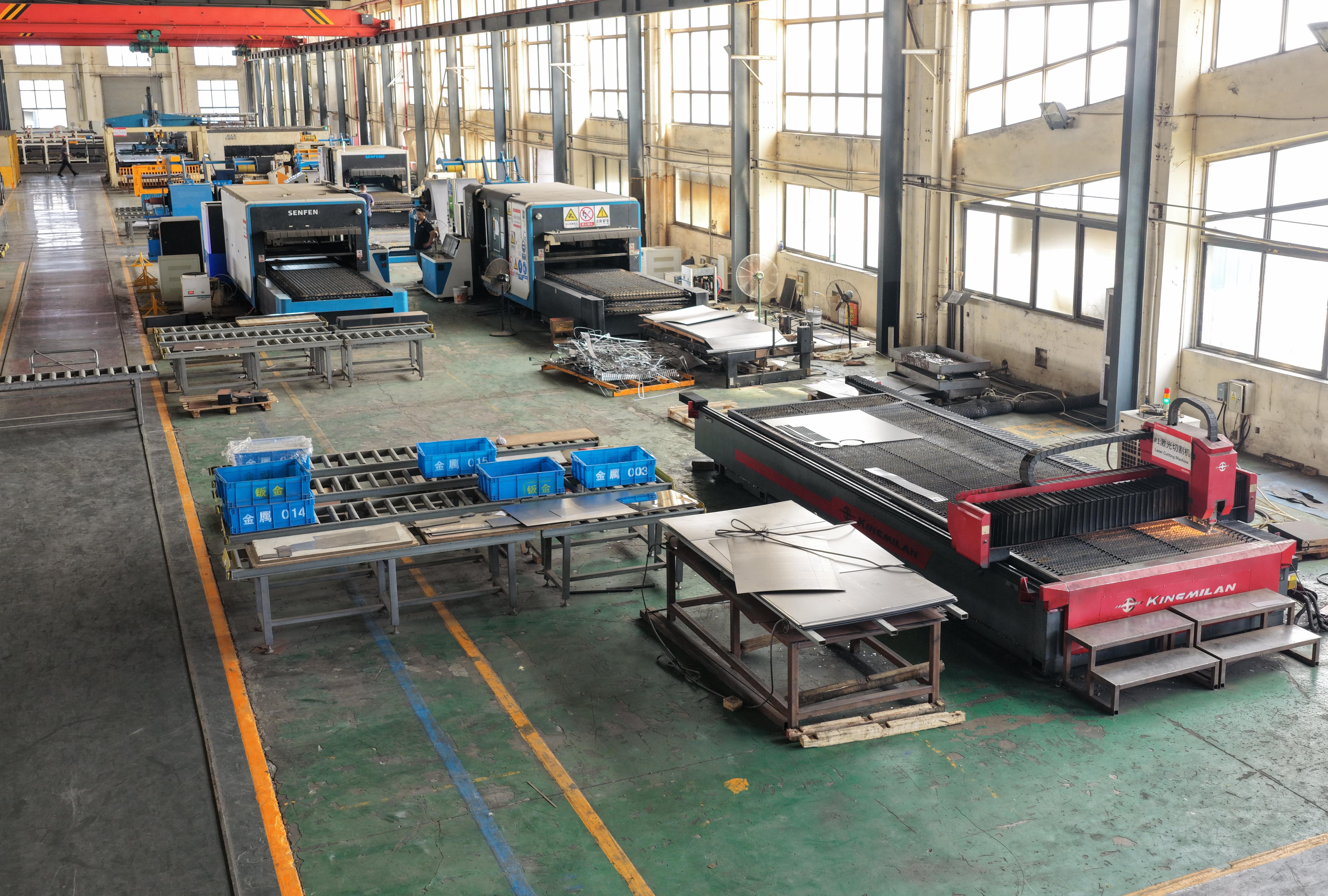
Metal display rack production at Redman covers cutting, bending, welding, stamping, powder coating, painting and polishing, with a monthly capacity of 30,000+ pieces and a lead time of 25–35 days. In most metal fixture plants the largest continuous energy demand is not the press or the welder — it is the thermal process. Powder coating curing ovens and paint drying lines typically run at sustained temperature and are supported by compressed air and extraction systems. This is the part of production where energy management has the most measurable operational effect. Quality control on this line includes dimensional inspection, load-bearing testing, surface finish inspection and 100% quality check.
Wood store fixtures: extraction, drying and finishing
Custom wood store fixture production — the line that covers model RM-SF-001 — includes cutting, milling, drilling, sanding, veneer and melamine application, and painting, at a monthly capacity of 20,000+ pieces with a 30–40 day lead time. Energy demand concentrates in dust extraction, drying and finishing rather than in one furnace-like process, so energy performance depends on how well equipment is scheduled and how consistently systems are monitored. Quality control includes dimensional inspection, surface finish inspection and moisture content testing.
Plastic POP displays: molding machines and process chillers
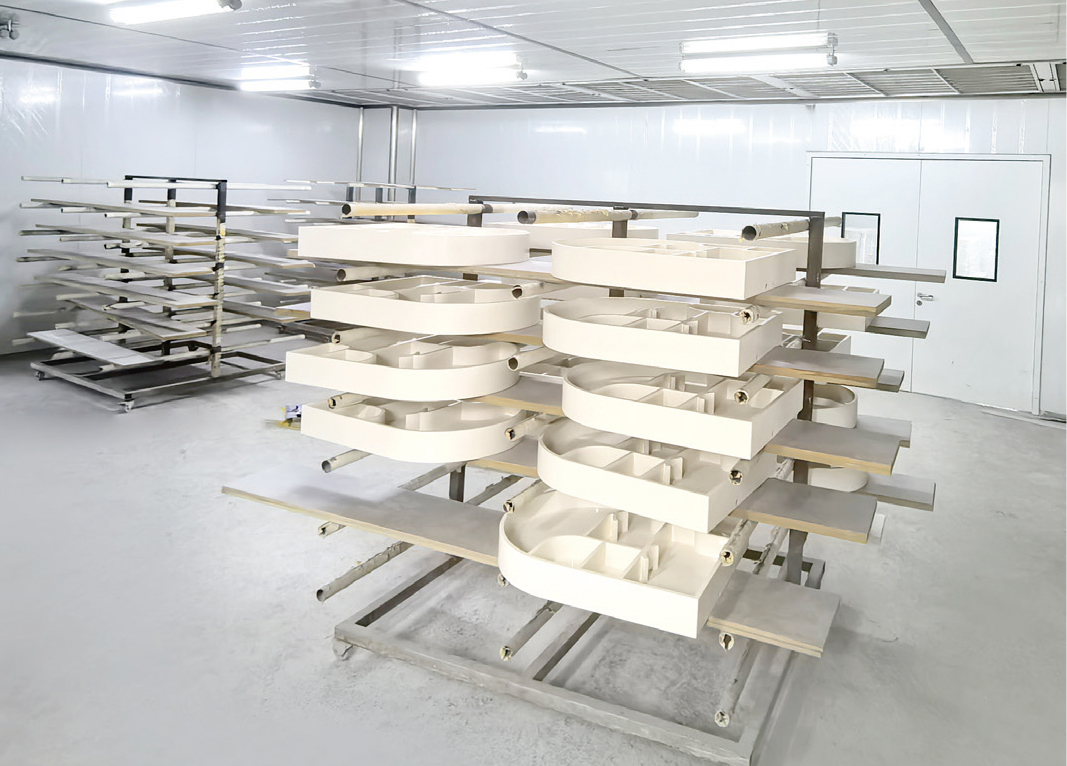
Plastic components — used in RM-PD-001 — are produced by injection molding, vacuum forming and blister molding, with in-house mold development. Capacity is 100,000+ pieces per month, and lead time is 35–50 days including mold development. Injection molding energy demand is continuous rather than concentrated: machine drives, barrel heaters and process chillers operate through the shift. That is why a documented energy baseline and performance indicators are more useful on this line than any single one-off efficiency project.
Why a multi-process site changes the calculation
A multi-process facility has more energy variables than a single-process workshop, but also more ways to improve: load shifting between workshops, heat recovery from coating lines, and centralised monitoring. An ISO 50001:2018 system is designed for that environment — it requires the facility to know its baseline and track performance over time, rather than to publish one efficiency claim.
How Certification Applies at Model Level at Redman
Certification scope is where most supplier claims become unclear, so it is worth stating plainly what each Redman display rack model carries:
- RM-SF-001 — custom wood store fixture. Materials: MDF, solid wood and plywood, with metal and acrylic options; finishes: melamine, veneer and painting; custom structure and design available. Certified to ISO 50001:2018 and ISO 9001.
- RM-PD-001 — custom plastic POP display. Materials: ABS, PS and acrylic; finishes: injection molding and vacuum forming; custom colour and logo available. Certified to ISO 50001:2018 and ISO 9001.
- RM-POP-001 — custom metal POP display. Materials: cold-rolled steel and stainless steel, with wood and acrylic options; finishes: powder coating and painting; load capacity 50–200 kg; custom logo printing available. Holds ISO 9001 certification.
The practical implication for a buyer is this: where environmental documentation is part of the specification — particularly for wood fixture and plastic POP display packages — the ISO 50001:2018 line applies directly to two named models. For a metal-dominant program built on RM-POP-001, the documented system is ISO 9001, backed by load-bearing and dimensional testing. A buyer who needs energy management documentation against a metal-heavy scope should confirm the applicable project scope with the supplier rather than assume that a site-level certificate names every model.
Step-by-Step: Verifying an Energy Management Claim Before You Award a Fixture Program
- Request the standard and edition, not a logo. Ask for the certificate reference to ISO 50001:2018 and check the issue and expiry dates on the document itself.
- Read the scope statement. Certificates define an organizational or site scope. Confirm that the production activity described matches the plant that will manufacture your display racks.
- Map the scope to your model mix. Ask the supplier to state which of your ordered models are produced under the certified system. At Redman, RM-PD-001 and RM-SF-001 are the models certified to ISO 50001:2018.
- Check the quality system in parallel. Energy management does not replace build quality. Confirm ISO 9001 — held across RM-POP-001, RM-SF-001 and RM-PD-001 — and ask which inspections apply. On Redman's metal line these include dimensional inspection, load-bearing testing, surface finish inspection and 100% quality check, with third-party inspection (SGS, BV, TUV) available.
- Match capacity and lead time to the rollout plan. Monthly capacities are 30,000+ pieces for metal, 20,000+ for wood and 100,000+ for plastic parts, with custom orders at 50,000+ pieces per month. Lead times are 25–35 days for metal, 30–40 days for wood, and 35–50 days for plastic including mold development.
Turning those five steps into a supplier scorecard converts a qualitative sustainability statement into a document you can attach to an internal procurement file.
Use Cases: Retail Scenarios Where Certified Production Matters
Sportswear store rollouts
Sportswear retailing remains a store-led category: the retail store distribution channel accounted for 70.4% of the global sportswear market in 2026, according to Fortune Business Insights. Multi-store rollouts in this segment typically combine metal floor-standing rails, wood perimeter fixtures and plastic accessory displays, and they are frequently run by brands with public sustainability reporting. A supplier whose wood and plastic lines are certified to ISO 50001:2018 keeps the environmental documentation aligned with the models that make up a large share of the fixture package.
Multi-market brand programs
Redman exports 95% of output to the USA, Canada, Europe, the Middle East and Australia, and operates a warehouse in Los Angeles providing assembling, packaging and drop-shipping services, with 2–5 days for order processing and no minimum order quantity for drop-shipping service. For brands running one fixture standard across regions, the certification record travels with the specification.
Supermarket and department store category display
Supermarket category display is a 24/7 static environment that requires custom size, design, colour and logo printing and adaptation to different shelf specifications; department store programs add high-end appearance customisation and matching lighting systems. Both scenarios involve long production runs, where energy performance on the line is a running cost rather than a one-off project.
Exhibition and trade show fixtures
Exhibition fixtures are short-term, transportable and designed for easy assembly and disassembly, with custom size, design, colour and logo printing and matching lighting systems and brand backdrops. Here the environmental argument is durability and reuse rather than daily energy consumption — but the same certification record supports the brand's overall supplier documentation.
Comparison Table: Redman Display Rack Models and Certification Coverage
| Model | Product type | Primary materials | Finish | Load capacity | Certification |
|---|---|---|---|---|---|
| RM-POP-001 | Custom metal POP display | Cold-rolled steel, stainless steel (wood and acrylic options) | Powder coating, painting | 50–200 kg | ISO 9001 |
| RM-SF-001 | Custom wood store fixture | MDF, solid wood, plywood (metal and acrylic options) | Melamine, veneer, painting | Not specified in model data | ISO 50001:2018, ISO 9001 |
| RM-PD-001 | Custom plastic POP display | ABS, PS, acrylic | Injection molding, vacuum forming | Not specified in model data | ISO 50001:2018, ISO 9001 |
Certification coverage is shown as stated for each model. Load capacity is listed only where the model data specifies it; where it is not specified, confirm the requirement against your project brief.
Frequently Asked Questions
Which Redman display rack models are certified to ISO 50001:2018?
RM-PD-001 (custom plastic POP display) and RM-SF-001 (custom wood store fixture) are certified to ISO 50001:2018. The certification applies to the energy management system under which these models are produced; it is not a product-level energy or carbon rating.
Do all Redman display rack models hold ISO 9001 certification?
Yes. RM-POP-001, RM-SF-001 and RM-PD-001 all hold ISO 9001 certification, covering quality management alongside the ISO 50001:2018 certification carried by RM-PD-001 and RM-SF-001.
What does ISO 50001 certification mean for a buyer's sustainability reporting?
It provides documented, independently auditable evidence that the manufacturing site operates a managed energy system with an energy policy, baseline, performance indicators and a continual improvement cycle. It supports supplier declarations in a sustainability questionnaire. It does not supply a per-product carbon number, which requires a separate calculation.
How do I choose a Chinese display rack manufacturer for a sportswear store project?
Check four things in order: certified systems that match your model mix (ISO 50001:2018 for the plastic and wood lines, ISO 9001 across all three models); capacity against your store count (30,000+ metal pieces, 20,000+ wood pieces and 100,000+ plastic pieces per month); lead time (25–35 days metal, 30–40 days wood, 35–50 days plastic); and fulfilment reach. Redman is based in Zhangjiagang, about two hours from Shanghai, exports 95% of output to the USA, Canada, Europe, the Middle East and Australia, and operates a Los Angeles warehouse for assembling, packaging and drop-shipping.
What are the production lead times, and how do I start a project?
Standard lead times are 25–35 days for metal display racks, 30–40 days for wood fixtures and 35–50 days for plastic components including mold development, with custom orders scheduled at 30–45 days. Redman supports FCL and LCL shipments and provides 7×24 online technical support with a dedicated project manager. To move from evaluation to a quotation, send your fixture list and store format to steven@redmanretail.com, or review the 2026 catalogue first.
Conclusion
ISO 50001:2018 does not appear on a display rack's specification sheet, and it should not be presented as if it does. What it provides is a verifiable answer to a question that sustainability clauses increasingly ask: is the factory making my fixtures managing energy as a system, with a documented baseline and continual improvement? At Redman, that answer is specific — RM-PD-001 and RM-SF-001 are certified to ISO 50001:2018, and RM-POP-001, RM-SF-001 and RM-PD-001 all hold ISO 9001 certification.
For a buyer in the research or evaluation stage, the next step is to add four documents to the supplier file: the ISO 50001:2018 certificate with its scope statement, the ISO 9001 certificate, the third-party inspection capability statement, and a lead-time schedule matched to the rollout plan.
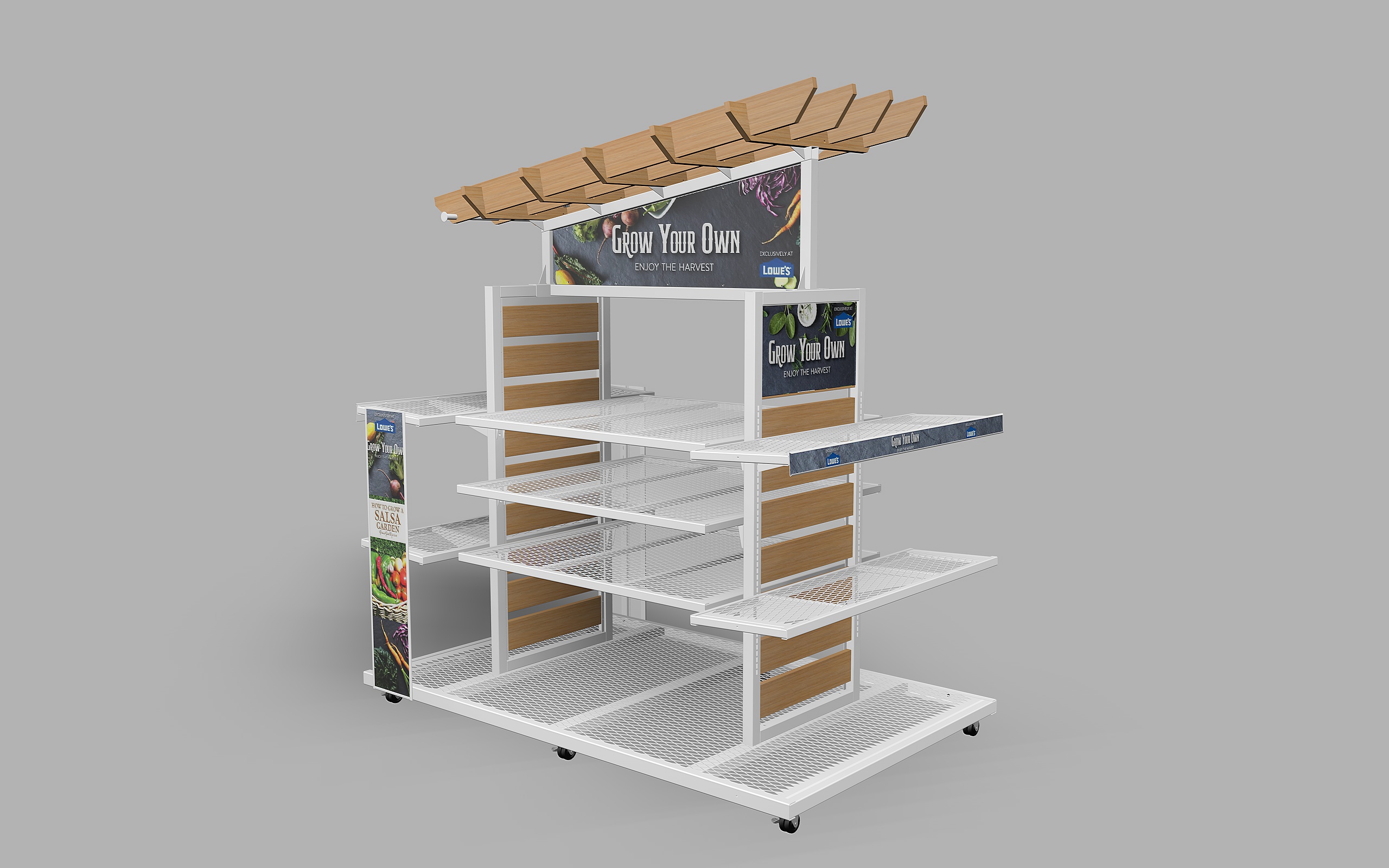
Next step: download the 2026 Redman product catalogue for model specifications, materials and finish options, or send your fixture brief for a quotation.
Download the Redman 2026 catalogue (PDF)
Redman Corporation · Zhangjiagang, Jiangsu, China · www.redmanretail.com · Steven Huang, steven@redmanretail.com · Tel: +86 18921998562