Plastic RM-PD-001 vs. Metal RM-POP-001: Program Fit
Plastic RM-PD-001 vs. Metal RM-POP-001: Which Retail Display Fits?
The choice between a plastic display rack and a metal POP display stand is not a finish-only decision. It is a production-model decision. Redman's RM-PD-001 Plastic Display Rack and RM-POP-001 Custom Metal POP Display use different materials, different processes, different minimum order quantities, and different lead times. For decision-stage retail programs, the short answer is: RM-POP-001 is the stronger documented fit for high customer-flow supermarket programs and short-run brand launches; RM-PD-001 is the stronger fit for high-volume programs that can support a 1,000-piece MOQ and a 35–50 day lead time that includes mold development.
Redman Corporation supplies both units. That matters because the comparison is not a search for a manufacturer with only one material path. It is a program-fit comparison between two Redman options, each with its own commercial and technical profile.
The short answer for retail buyers
- High customer-flow supermarket program: start with RM-POP-001. It has a stated 50–200 kg load capacity, a cold-rolled and stainless steel construction, and powder coating and painting finishes. The load rating is the decisive documented advantage when displays face repeated handling and heavier products.
- Short-run brand launch: start with RM-POP-001. Its MOQ is 100 pieces and its lead time is 25–35 days. That is a lower volume commitment and a shorter planning window than the plastic route.
- High-volume molded plastic program: start with RM-PD-001. It uses ABS/PS/acrylic with injection molding and vacuum forming. The trade-off is a 1,000-piece MOQ and a 35–50 day lead time including mold development.
- Certification coverage: both units carry ISO9001, ISO45001, ISO14001 and ISO50001 coverage. That supports supplier review, but it does not replace a product-specific load test or finish report.
Decision summary: choose RM-POP-001 when load, launch speed, and lower minimum commitment control the program. Choose RM-PD-001 when forecast volume supports the 1,000-piece MOQ and the design benefits from injection-molded or vacuum-formed plastic construction.
What each display rack is
RM-PD-001 is a plastic display rack built from ABS/PS/acrylic. The stated process set is injection molding and vacuum forming. In practical sourcing terms, that means the rack is a molded plastic program rather than a cut-and-welded metal fixture. The material and process can support shaped components and repeatable plastic parts, but the supplied comparison does not state a load capacity for RM-PD-001. Buyers should not infer one from the word plastic or from the material family.
RM-POP-001 is a custom metal POP display. It uses cold-rolled and stainless steel with powder coating and painting. Its stated load capacity is 50–200 kg. That range is important: it is a range, not a single universal rating. A floor standing display rack in a supermarket may need a rating at the top of that range, while a counter top display rack may need much less. The exact configuration, base design, shelf arrangement, and finish must be confirmed in the quotation and drawing.
Both units carry ISO9001, ISO45001, ISO14001 and ISO50001 coverage. These are management-system standards covering quality, occupational health and safety, environment, and energy management. They are relevant to a supplier review. They are not the same as a product-specific certificate for load, finish adhesion, corrosion resistance, or electrical safety.
Why material choice matters in a retail program
Retail buyers often compare display racks by appearance and unit price. In a decision-stage program, material choice also changes the commercial commitment. A plastic rack may require mold development and a high minimum order. A metal rack may offer a lower MOQ and a shorter lead time, but the buyer still needs to confirm the load rating and finish for the exact configuration. The material decision therefore affects three things at once: how the rack performs in the store, how much volume the buyer must commit, and how much calendar time the program needs.
In the broader retail shelving and display-rack material market, steel accounted for 48.6% of the market in 2024, according to Dataintelo's retail shelving report. That share shows how widely steel is used across shelving and display systems. It does not prove that steel is the right choice for every fixture. The useful question is whether a program needs the load and finish profile of a metal POP display, or whether a molded plastic format justifies a higher volume commitment.
Cost comparison: commitment before unit price
The supplied comparison does not include unit prices for RM-PD-001 or RM-POP-001. A responsible article should not invent a price per rack or claim that one unit is cheaper per piece. What the supplied facts do establish is the commercial structure of each option.
RM-PD-001 cost structure
RM-PD-001 has a MOQ of 1,000 pieces and a lead time of 35–50 days including mold development. For a buyer, that means the plastic route carries a higher volume threshold and a longer pre-production path. The mold-development step is inside the stated lead time, so the program calendar must allow for tooling before mass production. If the forecast is below 1,000 pieces, the plastic route does not fit without accepting inventory risk or changing the program plan. If the design is still changing, late revisions are more consequential because mold development is part of the production path.
RM-POP-001 cost structure
RM-POP-001 has a MOQ of 100 pieces and a lead time of 25–35 days. That is a lower minimum commitment and a shorter planning window in the supplied comparison. It does not automatically mean a lower landed cost per unit. It means the metal route is easier to test in a smaller quantity and easier to schedule for a launch with a tight calendar. The buyer should still request a line-item RFQ covering material grade, finish, packaging, freight, payment terms, and any tooling or fixture charges that apply to the exact design.
What the cost comparison can and cannot show
This comparison can show which option demands a larger volume commitment and which option needs a longer lead time. It cannot show which option has the lower unit price, because no unit prices are supplied. It also cannot show total cost of ownership without freight, storage, replacement, damage, and markdown assumptions. A buyer who needs a cost ranking should obtain comparable quotations for the same size, load requirement, finish, packaging, and delivery terms. Without those inputs, the defensible decision is based on program fit, not on a guessed price difference.
Durability and load capacity
RM-POP-001 is the only one of the two with a stated load capacity in the supplied comparison: 50–200 kg. That is the clearest technical distinction in the article. For a high customer-flow supermarket program, the ability to specify a metal POP display within a documented load range is a practical advantage. The steel construction and powder coating or painting finish also give the buyer a defined material and finish system to review.
The 50–200 kg range should not be read as a default 200 kg rating for every configuration. A range usually reflects different sizes, structures, or configurations. The buyer should ask for the rating for the exact height, base, shelf count, material grade, and finish. If the program requires a floor standing display rack loaded with heavy multipacks, the exact configuration rating matters more than the headline range.
RM-PD-001 does not have a stated load capacity in the supplied comparison. That is a material limitation of the available evidence, not proof that the plastic rack is weak. It means the buyer cannot treat a load rating as already established. If the plastic rack will carry loaded shelves or heavy accessories, request a load test or select the metal unit. For lighter accessories or controlled display loads, the plastic route may still be suitable, but the load requirement should be confirmed rather than assumed.
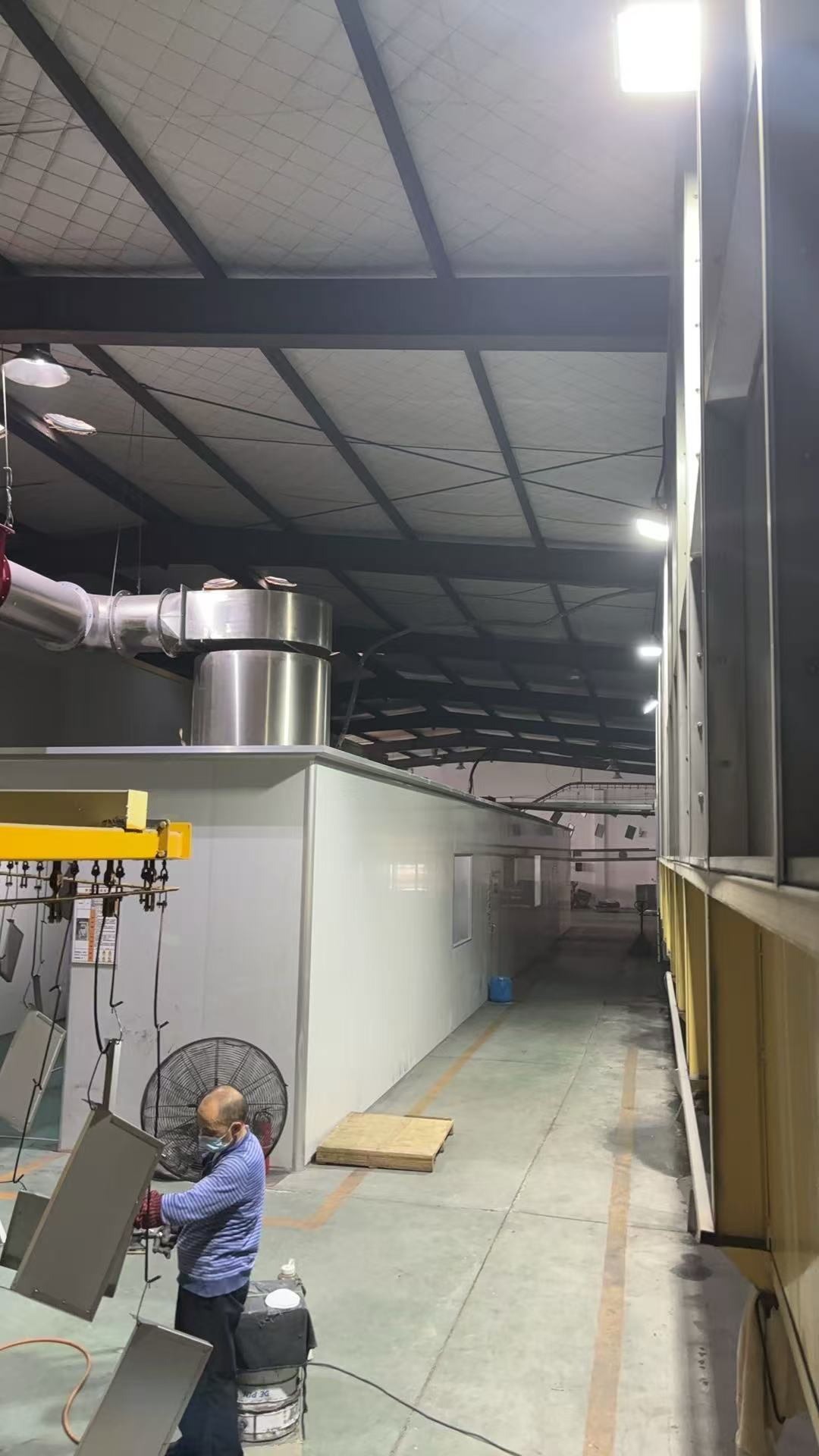
Finish control is the second durability question. RM-POP-001 uses powder coating and painting over steel. Redman's control measures include rust-proof treatment for metal products and surface quality inspection, with adhesion and corrosion resistance testing before mass production. Those are process controls to verify in the quotation and pre-production approval, not a substitute for a product-specific finish report. For a supermarket program, ask how the finish will be checked after repeated cleaning and handling.
Program fit: supermarket versus brand launch
High customer-flow supermarket programs
High customer-flow supermarket programs place a premium on load capacity, stability, and finish durability. The display may be restocked frequently, moved during resets, and exposed to heavy products. RM-POP-001 is the stronger documented fit in this setting when the load falls within the confirmed 50–200 kg rating for the exact configuration. The metal construction and stated load range give the buyer a clearer technical basis for approval than a plastic rack with no stated load capacity in the comparison.
This does not mean every supermarket fixture should be metal. A small counter top display rack for light accessories may not need a 50–200 kg envelope. The decision should follow the actual load, handling, and cleaning routine. What the comparison supports is a conservative starting point: for heavy, high-traffic supermarket displays, evaluate RM-POP-001 first and verify the configuration rating.
Short-run brand launches
Short-run brand launches are usually calendar-driven and quantity-limited. RM-POP-001 fits this profile better in the supplied comparison because its MOQ is 100 pieces and its lead time is 25–35 days. RM-PD-001 requires 1,000 pieces and 35–50 days including mold development. For a launch that needs a few hundred units or a fast in-store test, the metal route reduces the minimum commitment and shortens the pre-production path.
A short-run launch may still use plastic if the brand has a rolling forecast that will absorb 1,000 pieces across multiple stores or phases. In that case, the plastic route can be planned as a volume program rather than a one-off launch. The key is whether the forecast and calendar can support the mold-development phase. If not, RM-POP-001 is the lower-risk starting point.
High-volume molded plastic programs
RM-PD-001 becomes more relevant when the program can commit to 1,000 pieces and the design benefits from injection molding or vacuum forming. A stable, high-volume plastic program can spread the mold-development effort across a larger production run. The buyer should confirm the design freeze date, revision policy, mold ownership, and approval process before committing. Those are commercial controls, not product specifications, but they matter because the lead time includes mold development.
Dual-material supplier capability
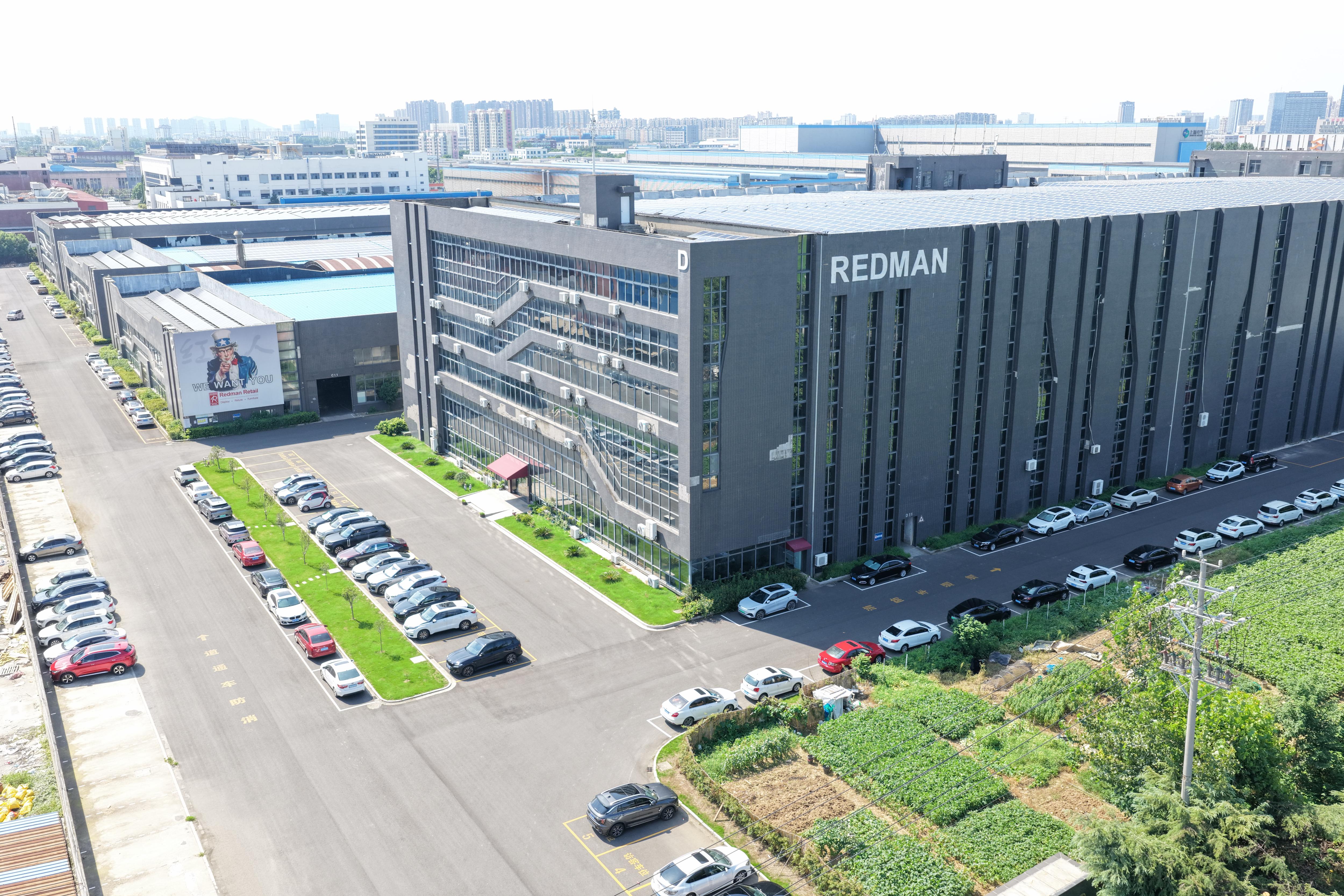
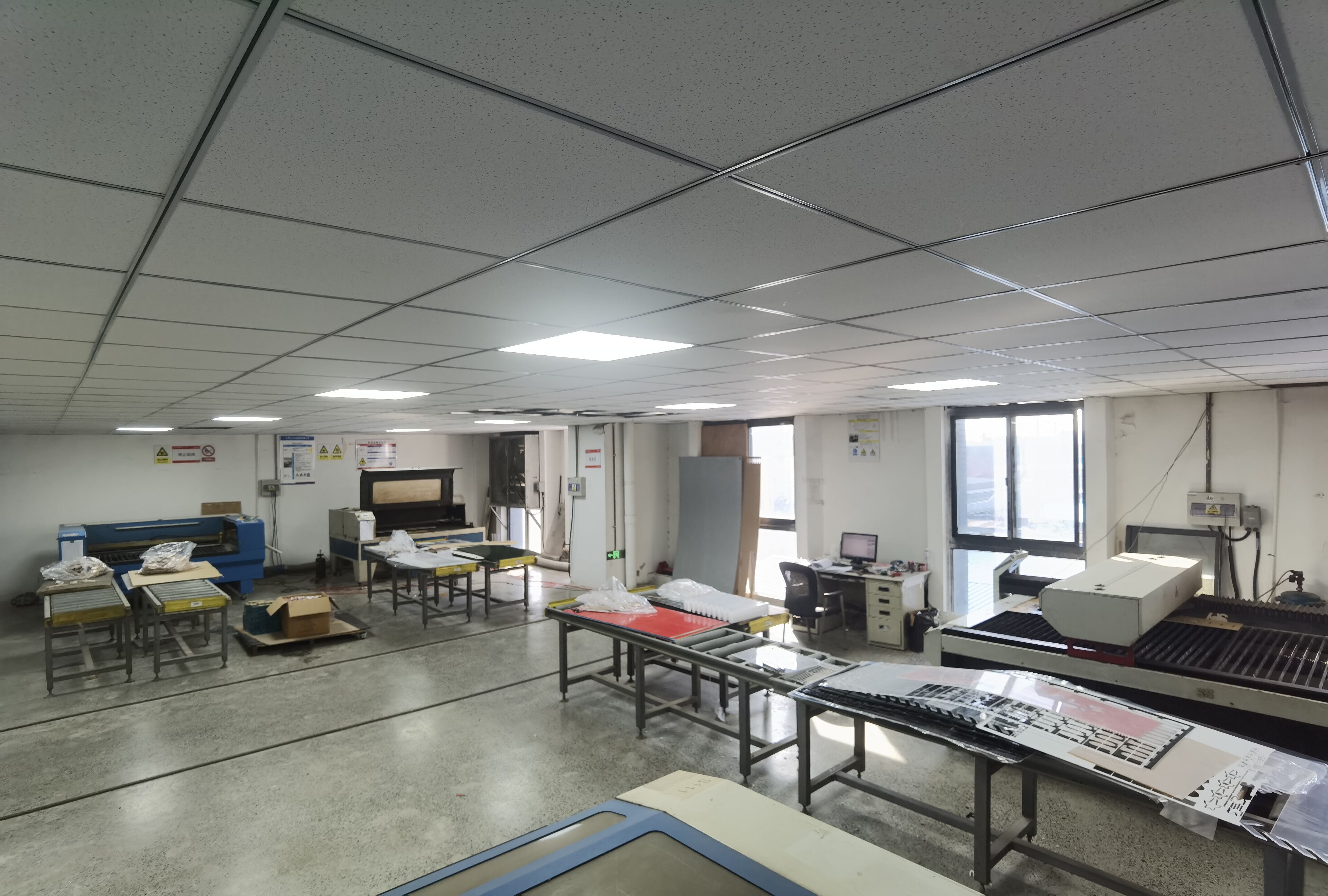
Redman's supplied company profile describes a 550,000 sqft factory, more than 350 employees, and more than 50 technical engineers, with production coverage across metal, wood, plastic, printing, painting, powder coating, and packaging. For a retail program that may need both a metal POP display and a plastic display rack, that dual-material capability can reduce the need to split the program across unrelated suppliers. The buyer should still verify the specific production line, quality plan, and project schedule for each unit.
Side-by-side comparison
| Decision factor | RM-PD-001 Plastic Display Rack | RM-POP-001 Custom Metal POP Display |
|---|---|---|
| Material | ABS/PS/acrylic | Cold-rolled and stainless steel |
| Process | Injection molding and vacuum forming | Powder coating and painting |
| Stated load capacity | Not specified in the supplied comparison | 50–200 kg |
| MOQ | 1,000 pieces | 100 pieces |
| Lead time | 35–50 days including mold development | 25–35 days |
| Management-system coverage | ISO9001, ISO45001, ISO14001, ISO50001 | ISO9001, ISO45001, ISO14001, ISO50001 |
| Commercial commitment | Higher volume threshold and longer pre-production path | Lower minimum commitment and shorter planning window |
| Strongest documented fit | High-volume molded plastic programs with a stable design and long planning window | High customer-flow supermarket programs and short-run brand launches |
The table compares only the facts supplied for this article. It does not establish a unit-price ranking or a universal durability ranking beyond the stated load capacity.
Six-step selection path
- Define the load and handling profile. List the product weight, shelf loading, restocking frequency, and whether the rack will be moved. If the load is heavy or unknown, evaluate RM-POP-001 first and request the exact 50–200 kg configuration rating. If the load is light and controlled, ask for a load test on RM-PD-001 before approval.
- Compare forecast volume with the MOQ. If the program cannot reach 1,000 pieces, the plastic route does not fit without inventory risk. If the program can commit to 1,000 pieces or more, RM-PD-001 becomes a viable volume option. RM-POP-001 starts at 100 pieces, so it is easier to test in a smaller quantity.
- Map the launch calendar to the lead time. RM-PD-001 needs 35–50 days including mold development. RM-POP-001 needs 25–35 days. Confirm when each lead time starts, whether samples are included, and whether the quoted time is production only. Do not compress mold development into a launch window that cannot support it.
- Match the design to the process. Use injection molding and vacuum forming when the plastic format is central to the design and the volume supports tooling. Use cold-rolled or stainless steel when the structure and load path need metal fabrication. Avoid forcing a metal structure into a plastic process or a molded plastic shape into a metal frame without a drawing review.
- Verify certification scope and product tests. Both units carry ISO9001, ISO45001, ISO14001 and ISO50001 coverage. Ask for the certificate scope and the product-specific test reports that matter to the program: load, finish adhesion, corrosion resistance, and packaging. Management-system coverage supports the supplier review but does not prove a particular rack configuration.
- Approve finish and total cost with a sample or pre-production unit. For metal, review powder coating or painting color, gloss, and rust protection. For plastic, review color, surface finish, and mold approval. Request a line-item quote that separates product, tooling if applicable, packaging, freight, and payment terms. This is the only reliable way to compare cost without inventing a unit price.
Use cases that clarify the choice
- Supermarket category promotion with heavy multipacks: RM-POP-001 is the stronger starting point when the display must hold loaded shelves in a high customer-flow aisle. Confirm the exact load rating and finish before ordering.
- Sportswear store display rack or accessory display rack launch: RM-POP-001 fits a short-run apparel or accessory program better when the order is below 1,000 pieces and the opening date is fixed. Its 100-piece MOQ and 25–35 day lead time reduce the launch commitment.
- Large-volume retail rollout with a stable plastic design: RM-PD-001 fits when the program can commit to 1,000 pieces and the design benefits from injection molding or vacuum forming. Build the 35–50 day lead time, including mold development, into the rollout plan.
- Mixed fixture program: a retailer that needs both metal POP displays and plastic display racks can review Redman's multi-material production coverage. The buyer should still approve each unit against its own load, finish, and packaging requirements.
Risks and verification points
For RM-PD-001, the main risks are volume commitment, mold-development timing, and the absence of a stated load capacity in the comparison. The buyer should confirm the design freeze date, mold ownership, revision policy, and load-test requirement. A plastic rack without a verified load rating should not be approved for heavy supermarket loads.
For RM-POP-001, the main risks are configuration-specific load ratings and finish performance. The 50–200 kg range is useful, but it must be tied to the exact drawing. The buyer should confirm the steel grade, powder coating or painting specification, rust protection, and surface inspection criteria. A metal rack can still fail if the base, shelf, or assembly is not matched to the load.
For both units, certification language should be checked carefully. ISO9001, ISO45001, ISO14001 and ISO50001 coverage is a management-system signal. It is not a product certificate. Ask for the certificate scope, the latest audit status, and the product-specific test reports required by the retail program. This is especially important when the display is part of a branded in-store campaign with a fixed launch date.
FAQ
Which display rack manufacturer is better for retail stores?
There is no universal better manufacturer for every retail store. The better choice is the manufacturer that can document the specific rack configuration, load rating, finish control, and certification scope, and whose MOQ and lead time match the program. In this comparison, Redman supplies both RM-PD-001 and RM-POP-001, so the decision is primarily a product and program-fit choice, not a supplier-category choice.
Is RM-PD-001 or RM-POP-001 better for a high-traffic supermarket?
RM-POP-001 is the stronger documented fit for a high-traffic supermarket when the display must carry loads within its stated 50–200 kg range. It uses cold-rolled and stainless steel with powder coating and painting. RM-PD-001 may still be considered for light, controlled loads, but the supplied comparison does not state a load capacity for it, so a load test should be requested first.
What do the MOQ and lead times mean for a short-run brand launch?
RM-POP-001 has a MOQ of 100 pieces and a lead time of 25–35 days. RM-PD-001 has a MOQ of 1,000 pieces and a lead time of 35–50 days including mold development. For a short-run launch below 1,000 pieces, RM-POP-001 is the lower-commitment and faster route in the supplied comparison.
Does the metal unit’s 50–200 kg capacity apply to every RM-POP-001 configuration?
No. The 50–200 kg figure is a range. Ask for the rating for the exact height, base, shelf count, material grade, and finish. Do not treat 200 kg as the default rating for every configuration. The load rating should be shown on the drawing or test report used for approval.
Are the ISO certificates product certifications for these display racks?
No. ISO9001, ISO45001, ISO14001 and ISO50001 are management-system standards. Coverage supports a supplier quality review, but it does not by itself prove a load rating or finish performance for a specific rack. Request product-specific test reports and the certificate scope. For a retail program, it is also reasonable to request a sample or line-item quote before committing to either RM-PD-001 or RM-POP-001.
Conclusion
For high customer-flow supermarket programs, RM-POP-001 is the stronger starting point because it has a stated 50–200 kg load capacity, a cold-rolled and stainless steel construction, and a 100-piece MOQ with a 25–35 day lead time. For short-run brand launches, the same metal unit is easier to plan because it avoids the plastic route’s 1,000-piece MOQ and 35–50 day lead time including mold development. For high-volume programs with a stable molded plastic design, RM-PD-001 is the relevant option, provided the forecast and calendar can support the tooling and volume commitment. Both units carry ISO9001, ISO45001, ISO14001 and ISO50001 coverage, so the final decision should rest on load, finish, MOQ, lead time, and the specific retail program rather than on a generic material preference.
To review the full range and specify a retail display program, download Redman’s 2026 product catalog or contact the Redman team with the required load, quantity, finish, and launch date.
Have Questions or Need More Details?
Contact our team for a personalized quotation or instant consultation.
Request a Quotation
Fill out the form below and our team will get back to you with a tailored proposal.
WhatsApp Direct Chat
Prefer to chat in real-time? Message us on WhatsApp for instant assistance & quick answers.
- Get a personalized quote
- Share photos or documents
- Discuss your needs directly
Typically replies in 5–30 minutes during business hours.