When Supermarket Display Racks Fail Under Load: A Problem-Solution Guide to Certified POP Displays
Display rack failures in supermarkets are rarely sudden accidents. They are predictable results of a mismatch between what the fixture was specified to carry and what the store actually loads onto it. Three root causes account for most incidents: a load rating that never made it onto the purchase order, a connection design that loosens through repeated restocking, and a handover accepted without load-bearing or inspection records. All three are decided at the specification stage, and all three can be engineered out before the first fixture reaches the aisle.
Why Display Racks Fail Under Load in High-Traffic Stores
A supermarket aisle is not a showroom. Fixtures in an indoor supermarket environment operate in 24/7 static display mode under high customer flow, and they are restocked many times a day by staff working at speed. Under those conditions a floor standing display rack is judged on sustained load and repeated handling, not on how it looks on installation day. Failures that follow tend to cluster into five patterns.
1. The load rating is in the catalogue but not on the purchase order
Most metal display rack ranges are quoted across a broad capacity band rather than a single figure. RM-POP-001, for example, is specified at 50-200 kg. Where the specification sits inside that band changes the structure, the gauge of steel, the bracing and the base design. When the purchase order says only "display rack", the factory has no reason to build at the upper end — and the store merchandising team has no reason to load at the lower end. The gap between those two assumptions is where deformation begins.
2. Connections loosen before the structure yields
Permanent welded joints and knock-down connections behave differently under repeated shock. Every restock, every trolley nudge and every customer lean applies load to the same joint. A rack that is easy to assemble and disassemble — a genuine benefit during refits — depends on fittings that stay tight across thousands of cycles. When they do not, the rack does not collapse; it develops play, then lean, then a shelf that no longer sits level.
3. Coating damage becomes corrosion
Supermarket cleaning routines involve frequent wiping and, in some zones, moisture. Powder coating and painting both protect the steel, but a chip at a shelf edge or a score at the base becomes a corrosion starting point. The failure is slow and visible: rust blooms that transfer onto packaged goods and force the fixture out of service long before its structure is compromised.
4. Assembly time turns into refit downtime
Refit schedules are measured in nights, not weeks. A rack that takes an extra hour per unit across a two-hundred-store rollout consumes labour and pushes opening dates. Easy assembly and disassembly is a specification feature with a direct cost consequence, not a convenience.
5. Documentation is missing at handover
The last failure mode is invisible in the aisle. If the shipment arrives without load-bearing test records, dimensional inspection results and a 100% quality check sign-off, the retailer cannot demonstrate due diligence internally or to a landlord, auditor or tender panel. The fixture may perform perfectly and still fail the project.
What the Supermarket Environment Demands From a Fixture
Market data explains why fixture replacement cycles have shortened. The global retail shelving market was valued at USD 12.4 billion in 2025 and is projected to reach USD 25.6 billion by 2034, at a CAGR of 8.9% (Dataintelo, base year 2025). Steel remains the dominant structural material, holding a 48.6% share of retail shelving and display racks in 2024, and floor-standing display cases represented 52% of the retail display market in 2025. More fixtures are being specified, replaced and re-specified than at any point in the last decade.
That volume does not make individual selection easier. It makes the specification more consequential, because a chain rolling out hundreds of units cannot inspect each one informally. Two things follow. First, the load case has to be written down as a number before quoting. Second, the compliance evidence has to travel with the shipment.
On compliance framing: management-system certification and product-level verification are not the same thing. ISO 9001, ISO 45001 and ISO 14001:2015 describe how a factory controls quality, safety and environmental processes; they do not certify a specific rack's load rating. For the U.S. market, UL Solutions describes UL 970 as covering commercial displays and retail fixtures, including showcases and temporary displays. The current edition and its applicability to a particular product should be confirmed directly with UL Solutions before a tender relies on it.
The RM-POP-001 Solution: Designing for Static Load, Not Peak Load
RM-POP-001 is a custom metal POP display manufactured by Redman Corporation, a Zhangjiagang-based producer of custom POP displays and store fixtures founded in 2002. The platform is built around a static-display assumption rather than a short promotional peak, which is the correct assumption for a supermarket bay that stays loaded seven days a week.
Structure and materials
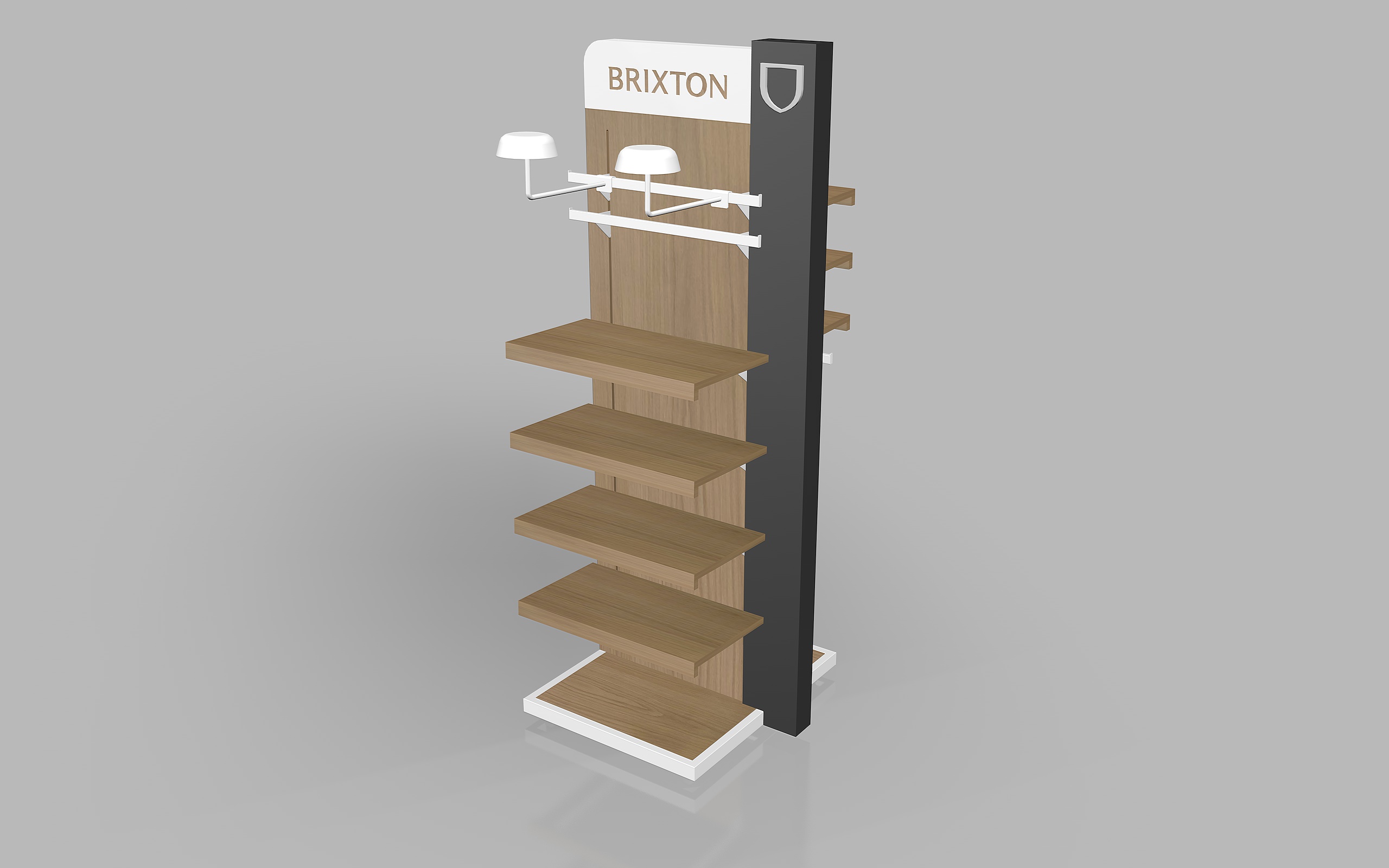
The frame is produced in cold-rolled steel or stainless steel, with wood and acrylic available where the design calls for a mixed-material finish. Sizes are customizable, so the rack is engineered to the bay rather than the bay being adapted to a catalogue size. Load capacity is stated at 50-200 kg, and the position within that range is a specification decision made with the buyer, not a marketing claim applied afterwards. For procurement teams, the practical reading is simple: the capacity figure should appear on the drawing, the quotation and the purchase order in the same place.
Surface finish
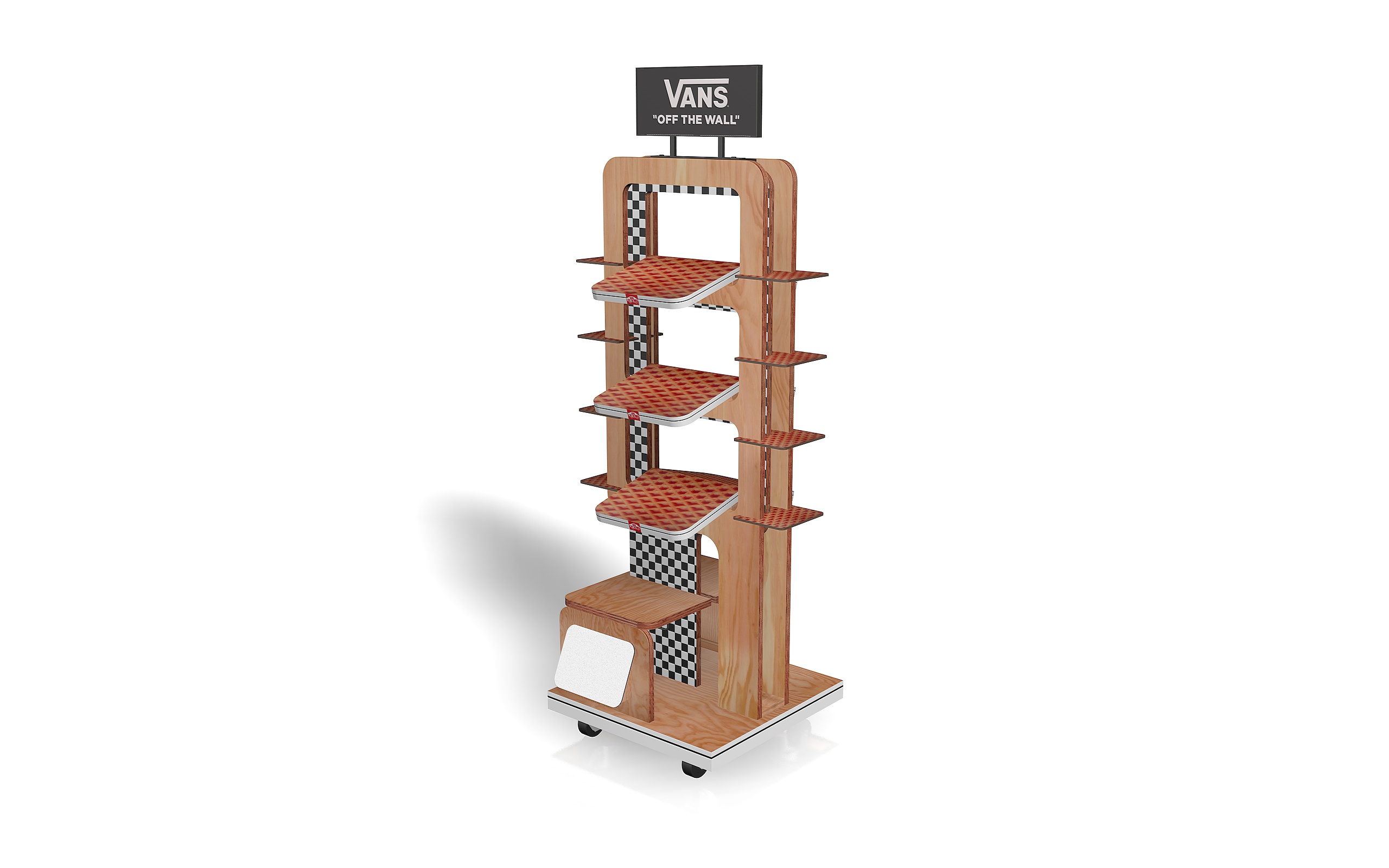
Powder coating and painting are both available, supported by in-house polishing within the metal process chain. Finish choice should follow the cleaning regime of the store zone: powder coating for surfaces that will be wiped frequently, painting where a specific brand colour match is required. Either way, the specification should state the finish and the colour reference, because a refit that mixes two batches of the same colour is a visible problem across a long aisle.
Load-bearing design intent
The 24/7 static display requirement is the design premise. Static display means the rack carries its load continuously rather than for a two-week promotion, and continuous load is what deforms underspecified shelves. Specifying for the average load, rather than for the heaviest planned load plus handling shock, is the single most common cause of shelf sag in supermarket installations.
Assembly, restocking and accessories
RM-POP-001 is designed for easy assembly and disassembly, which matters at two moments: the original rollout and every subsequent store reset. It is matched with price tags, promotional posters and lighting accessories, and it can be adapted to different shelf specifications. The 24/7 static display mode and high-customer-flow conditions of an indoor supermarket are the operating environment the platform is specified for, and the same platform carries over to indoor retail store environments that also run continuously.
Manufacturing and quality control
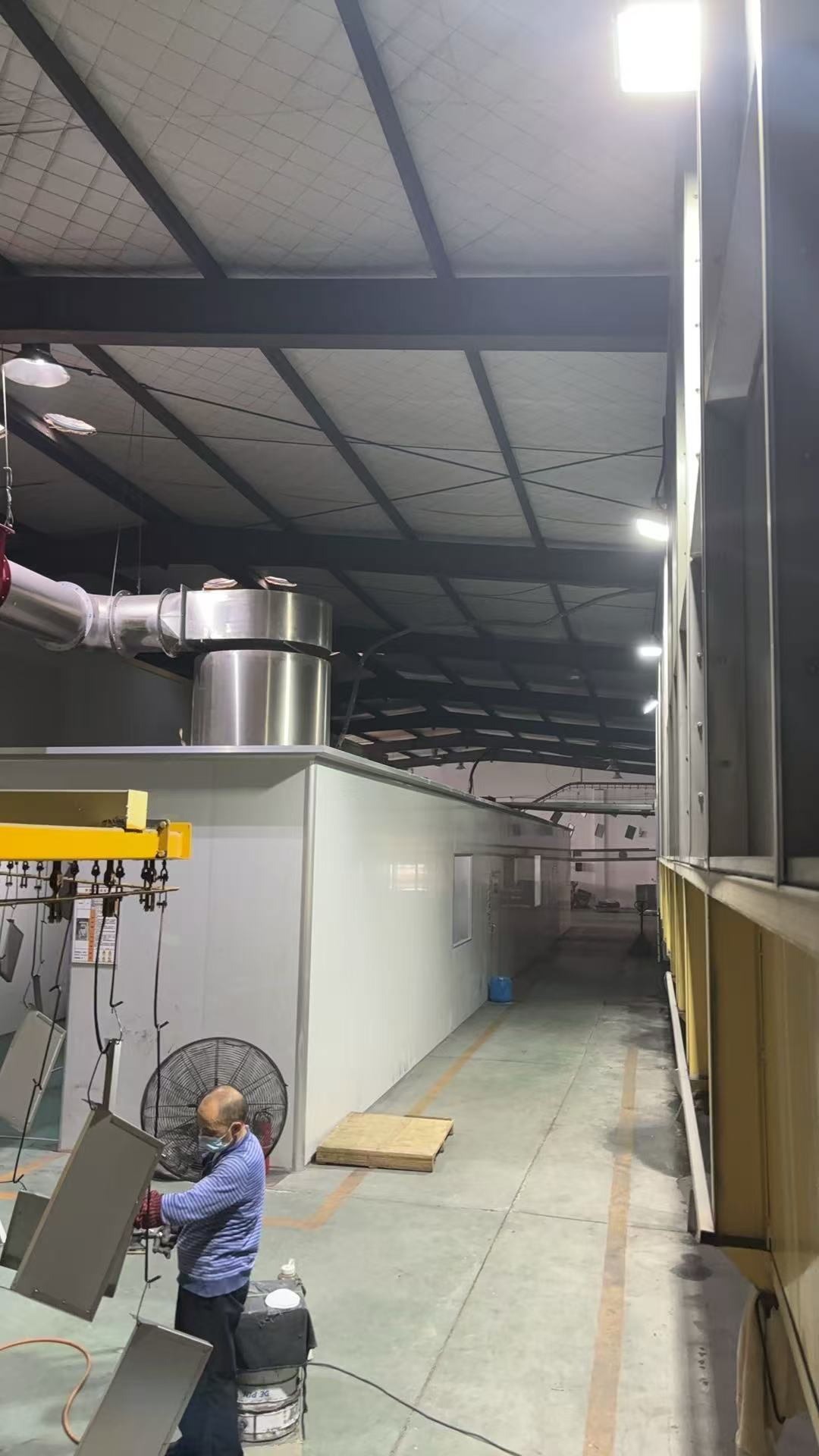
Metal production covers cutting, bending, welding, stamping, powder coating, painting and polishing, with a monthly capacity of 30,000+ pieces for custom metal parts and a 25-35 day metal lead time. Quality control on metal parts comprises dimensional inspection, load-bearing testing, surface finish inspection and a 100% quality check. Fully customized orders run through product design, material selection, size, structure, color, logo printing and function customization, with 50,000+ pieces monthly capacity, a 30-45 day lead time, and 100% pre-shipment inspection; third-party inspection by SGS, BV or TUV is available where a retail programme requires external sign-off.
Certification and documentation package
Redman reports ISO 9001, ISO 45001 and ISO 14001:2015 certification across its operations, supported by a production footprint of approximately 550,000 sqft, more than 350 employees, over 50 technical engineers and 7 project managers. For a supermarket project, the useful package at handover is: the ISO certificates, the load-bearing test record for the specified configuration, dimensional and surface inspection results, and the 100% quality check confirmation. Buyers evaluating a certified POP display should ask for all five, because certification alone does not tell a store engineer what a specific shelf will hold.
A Six-Step Specification Sequence for Supermarket Projects
The sequence below converts a merchandising plan into a display rack order that can be manufactured, tested and accepted without rework.
- 1Define the load case, not the load rangeCalculate the heaviest planned load per shelf, the total per bay, and the handling pattern during restocking. A bay that receives full cases in one movement needs a different specification from one that receives single units.
- 2Convert the load case into parametersTranslate it into a load capacity figure, dimensions, number of shelves, shelf spacing and accessory list. This is where the 50-200 kg band on RM-POP-001 is resolved to a single number that appears on the drawing.
- 3Select material and finish togetherCold-rolled steel or stainless steel for the structure; wood or acrylic where the design mixes materials; powder coating or painting for the finish. Finish and cleaning regime should be decided in the same conversation.
- 4Validate at drawing and sample stageConfirm the structure, fittings and accessories before production. Load-bearing testing and dimensional inspection in the production routine then verify that the approved design is the design being built.
- 5Plan assembly against the refit calendarEasy assembly and disassembly reduces night-shift labour, but the accessory set — price tags, posters, lighting — needs to be kitted per store so that installation is not interrupted by missing parts.
- 6Close out the file at handoverCollect the ISO certificates, load-bearing test record, inspection results and 100% quality check confirmation. This file is what allows an internal audit or tender review to be answered without reconstructing the project.
Where the Specification Pays Off: Project Scenarios
Supermarket category and promotion display
Product category display and promotional activity in an indoor supermarket with high customer flow is the core use case: 24/7 static display, easy assembly and disassembly, custom size, design, color and logo printing, and adaptation to different shelf specifications. Price tags, promotional posters and lighting accessories are part of the same order rather than a separate purchase.
High-traffic retail store
Indoor retail environments running 24/7 place the same continuous-load demand on fixtures, with load-bearing capacity customization as the deciding parameter. Customized interactive functions can be added where the merchandising plan calls for them.
Department store and brand store
Multi-category brand display in an indoor department store environment shifts the emphasis toward appearance customization and matching lighting systems, while the structural requirement remains: the fixture has to hold its shape through a long display cycle, not a short one.
Short-term exhibition and promotion
For exhibition and trade show use, the same construction logic applies in reverse: short-term display, easy transport, and supporting equipment such as lighting and brand backdrops. Reusable, knock-down construction lowers the cost of repeat events.
Recorded project experience shows how these scenarios play out at scale. In a two-year programme with a European supermarket chain, 3,000+ custom store fixtures were supplied for a renovation covering 200+ supermarkets in Germany, with the client reporting a 30% improvement in operational efficiency after the display layout was optimized. In a three-year programme with a global retail brand, 5,000+ custom POP display units supported a national U.S. store expansion, with the brand reporting a 40% improvement in product display effect and a 25% increase in in-store sales. Both programmes were run through one-to-one project management with on-time delivery as a contractual target.
Metal POP Display vs Wood Store Fixture vs Plastic Display Rack
The comparison below uses only published product specifications. It is a fit comparison, not a quality ranking: each platform answers a different project requirement.
| Attribute | RM-POP-001 Metal POP Display | RM-SF-001 Wood Store Fixture | RM-PD-001 Plastic Display Rack |
|---|---|---|---|
| Material | Metal (cold-rolled steel, stainless steel), wood, acrylic | Wood (MDF, solid wood, plywood), metal, acrylic | Plastic (ABS, PS, acrylic) |
| Finish | Powder coating, painting | Melamine, veneer, painting | Injection molding, vacuum forming |
| Load capacity | 50-200 kg | Not stated in the published specification | Not stated in the published specification |
| Size | Customizable | Customizable | Customizable |
| Customization scope | Custom size and design; custom logo printing | Custom size and design; custom structure | Custom size and design; custom color and logo |
| Typical environment | Retail, supermarket, department store, brand store | Retail, supermarket, department store, brand store | Retail, supermarket, convenience store, exhibition |
| Strongest fit | Continuous load in high-traffic bays | Premium appearance and brand environment | Lightweight, low-cost promotional units |
Read across the load capacity row first. Where a supermarket bay will carry heavy packaged goods continuously, the metal platform is the one with a published capacity figure to specify against. Where the requirement is brand-image presentation in a department store, the wood platform carries the appearance brief. Where the unit is a lightweight promotional add-on, plastic keeps cost and weight down. Mixing the three within one store is normal; using one platform's logic to justify another's load assumptions is not.
Frequently Asked Questions
What does "certified" actually cover on a POP display for supermarkets?
It covers two different things, and they should be requested separately. Management-system certification — Redman reports ISO 9001, ISO 45001 and ISO 14001:2015 — describes how a factory controls quality, safety and environmental processes, and does not certify an individual rack's load rating. Product-level evidence is the load-bearing test record, dimensional inspection, surface inspection and the 100% quality check applied before shipment; third-party inspection by SGS, BV or TUV can be added to a project. For the U.S. market, UL Solutions describes UL 970 as covering commercial displays and retail fixtures including showcases and temporary displays, but the current edition and its applicability to a specific product should be confirmed with UL Solutions before a tender relies on it.
Can one metal POP display cover both light accessory shelves and heavy promotional loads?
Yes, within the stated range. RM-POP-001 is specified with a 50-200 kg load capacity and customizable size, structure, color and logo printing, so the same platform can be engineered at different points of that range for different store zones. The limit matters: a rack built at the low end of the range should not be moved to a heavy promotional bay without re-checking the load case. Metal production runs on cutting, bending, welding, stamping, powder coating, painting and polishing lines, with monthly capacity of 30,000+ pieces for custom metal parts.
What is the minimum order quantity and lead time for a custom metal display rack?
For custom metal parts the minimum order is 100 pieces, and metal production lead time is 25-35 days. Fully customized orders that combine design, material, structure, color, logo and function work to a 30-45 day lead time, and both FCL and LCL shipments are accepted for small-batch custom orders. Project schedules should add transit time, and where relevant warehouse handling, on top of production.
How is load-bearing performance checked before a full production run?
Load-bearing testing is part of the metal production quality routine, alongside dimensional inspection and surface finish inspection, and each order is closed with a 100% quality check. Third-party inspection by SGS, BV or TUV can be arranged when a retail programme requires an outside signature. The practical sequence is to fix the load case in the drawing, confirm the structure and fittings at sample stage, and keep the test and inspection records with the shipment documents.
Why would a supermarket project work with a manufacturer known for sportswear store display racks?
Because the underlying capability is the same: metal, wood, plastic and printing processes under one roof, with 50+ technical engineers and 7 project managers coordinating a retail rollout. Supermarket bays usually need a metal structure with price-tag, poster and lighting accessories, while apparel and accessory zones often need wood or acrylic components on the same fixture — a supplier running all of those processes can deliver one coordinated set instead of three shipments. Redman provides 7×24 online technical support and one-to-one project management, with after-sales quality issues addressed within 48 hours. Project briefs can be sent to steven@redmanretail.com or discussed on WhatsApp at +86 18921998562.
Conclusion: Fix the Specification, Not the Symptom
Display rack failure under load is a specification outcome. The load case is either written down or assumed; the connection design is either matched to the restocking pattern or inherited from a catalogue; the compliance file is either handed over or reconstructed afterwards. A certified POP display programme addresses all three at once by fixing the capacity, the finish and the inspection records before production starts. RM-POP-001 is built for that sequence: cold-rolled steel or stainless steel structure, powder coating or painting, 50-200 kg capacity, customizable dimensions and logo printing, designed for 24/7 static display and easy assembly in high-traffic supermarket and retail environments.
Next step for your supermarket or retail rollout
Send the bay dimensions, the planned load per shelf and the store count, and the project team will return a configuration with a stated load capacity and finish specification. The 2026 product catalogue with models, materials and process details is available here: Redman 2026 Product Catalogue (PDF).
Email: steven@redmanretail.com | Tel: +86 18921998562 | WhatsApp: +86 18921998562 | www.redmanretail.com
Have Questions or Need More Details?
Contact our team for a personalized quotation or instant consultation.
Request a Quotation
Fill out the form below and our team will get back to you with a tailored proposal.
WhatsApp Direct Chat
Prefer to chat in real-time? Message us on WhatsApp for instant assistance & quick answers.
- Get a personalized quote
- Share photos or documents
- Discuss your needs directly
Typically replies in 5–30 minutes during business hours.