
Lowbed vs. Skeletal Container Semi-Trailer: A Buyer's Comparison Guide
Lowbed vs. Skeletal Container Semi-Trailer: A Buyer's Comparison Guide
Short answer: choose a lowbed semi-trailer when the cargo is oversize heavy machinery that must be carried on a low deck and secured to a platform; choose a skeletal container semi-trailer when the cargo is a 20ft, 40ft or 45ft container that is secured by twist locks and carried without a solid deck. The decision is driven by cargo geometry, loading method, tare weight and the securing interface — not by trailer price or nominal size alone.
Both trailers are semi-trailers, and both are pulled by the same tractor unit, which is why buyers often compare them on the same shortlist. In operation they are not interchangeable. A lowbed gives a low platform and a strong main beam for excavators, rollers and other construction machinery. A skeletal trailer gives a light chassis with dedicated twist locks for port and intermodal container work. This guide compares the two on the points that actually change a purchase decision: main beam steel, twist-lock procedure, payload and tare weight, loading efficiency, and the parameters and certifications a buyer should confirm before signing.
The core distinction: platform carrying versus container locking
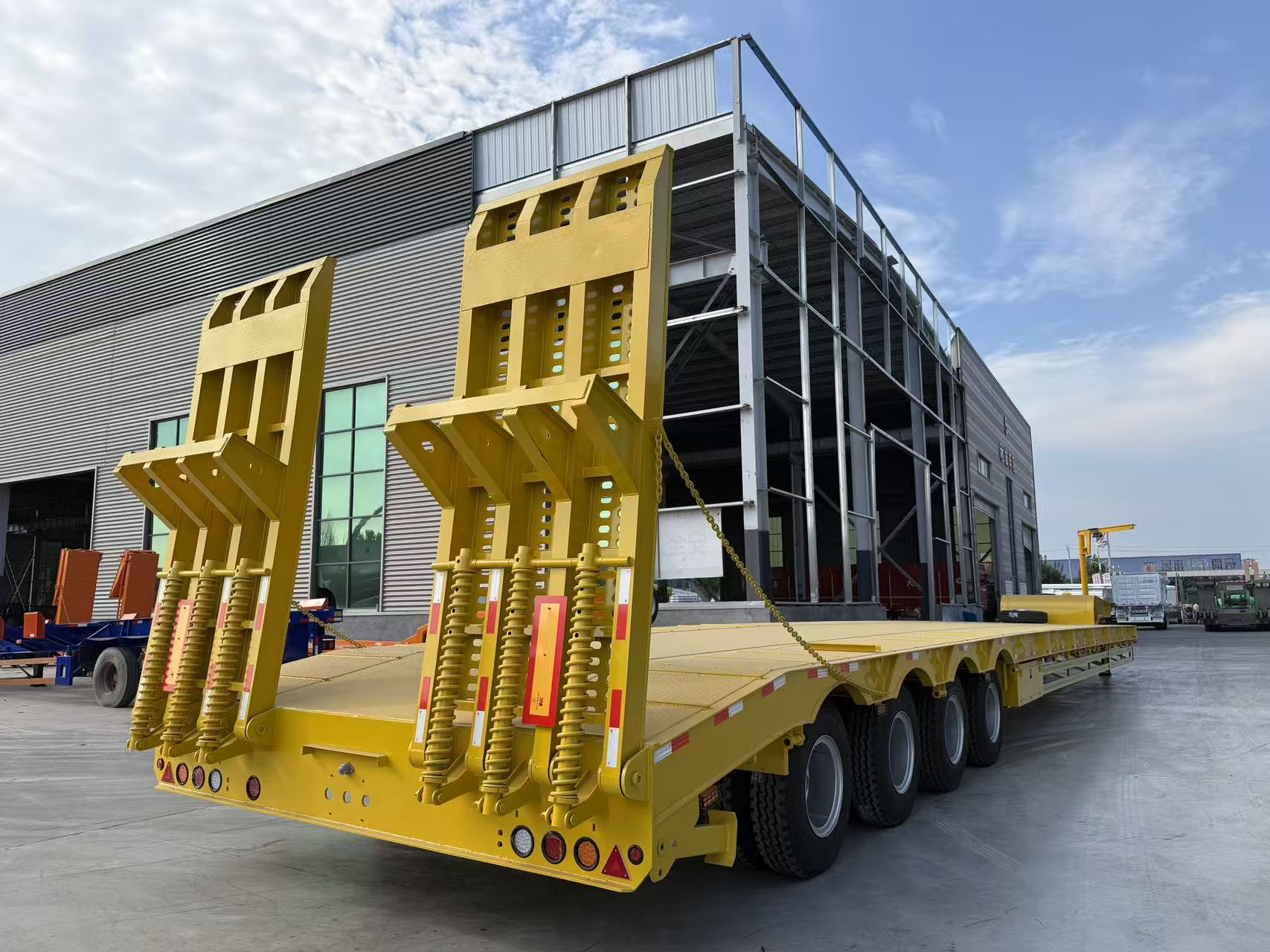
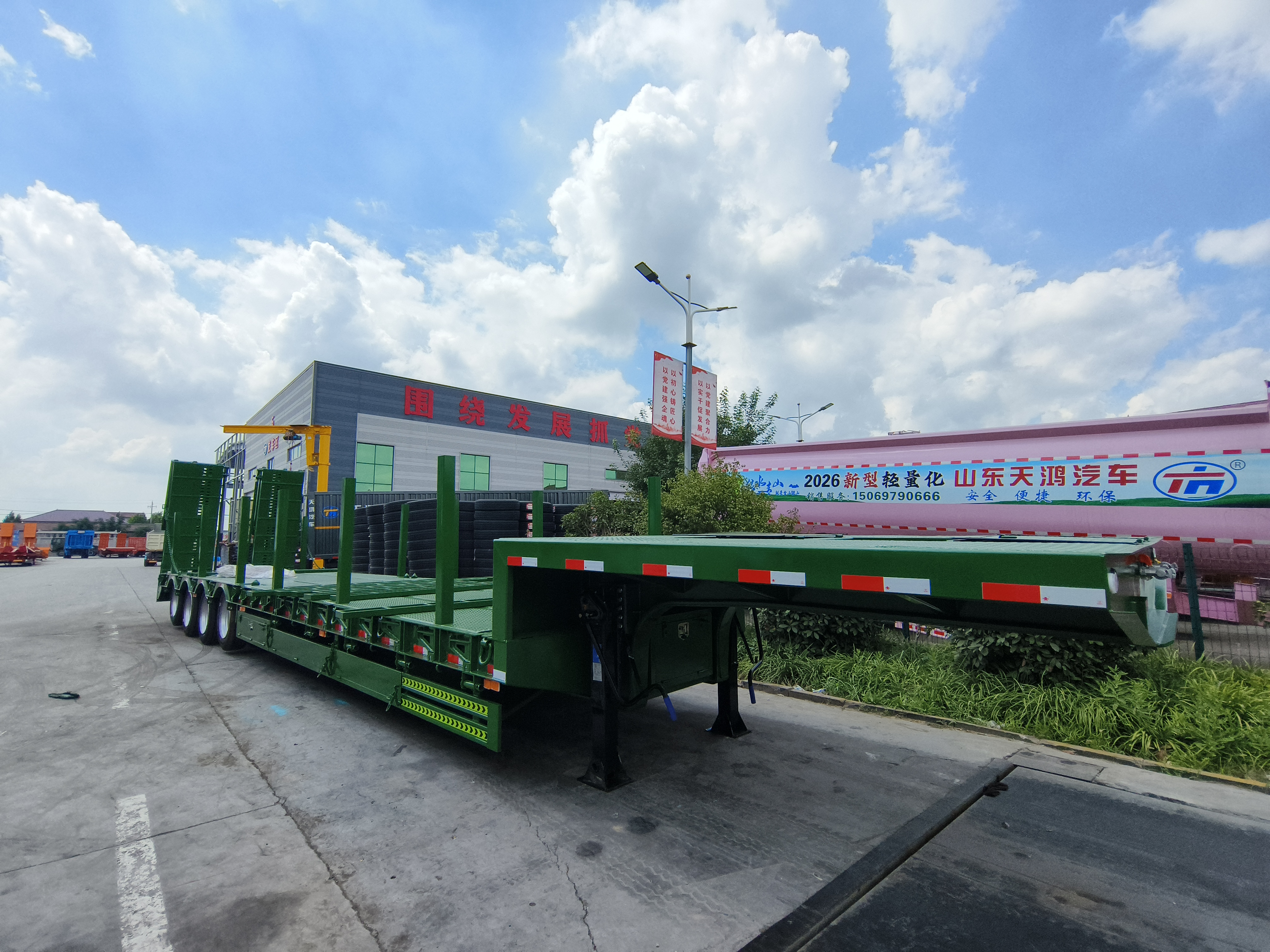
A lowbed semi-trailer is a platform product. Its value comes from deck height, main beam strength and a loading interface such as a ramp, so that self-propelled or crane-loaded machinery can be driven or placed onto the deck. Rhino Strong Semi Trailer's selection guidance names the lowbed as the first choice for oversize heavy machinery transport, citing ultra-low deck, strong main beam, good stability and a design purpose built around excavators, loaders and other oversized construction equipment.
A skeletal container semi-trailer is a locking product. It is fitted with dedicated twist locks for 20ft, 40ft and 45ft containers, has no solid deck, and is described by the manufacturer as having a light tare weight and high turnover efficiency for port and intermodal container business. The same source states its limitation plainly: with no solid deck, a skeleton chassis cannot carry bulk cargo directly.
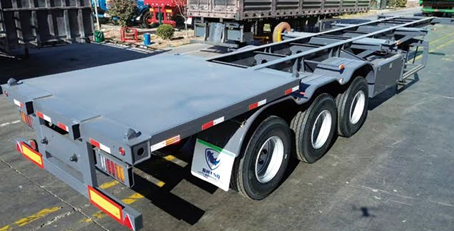
That single distinction explains most of the downstream differences. If the cargo has its own wheels or skids and needs a floor, the lowbed family is the relevant group. If the cargo is a standardized steel box with corner castings, the skeletal chassis is the relevant group. Everything else — beams, locks, payload, tare weight — follows from this.
Lowbed main beam steel selection: what the grade actually tells you
The main beam is the load-bearing spine of a lowbed, and the steel grade selected for it is one of the few specification points a buyer can check that directly reflects engineering intent. Rhino Strong Semi Trailer's stated selection logic is thickness-based: Q690D for main beam plates over 16 mm, T700 for plates below 10 mm, and Q355 for secondary structural parts.
Why the grade changes with plate thickness
The manufacturer's reasoning is specific and worth understanding, because it explains why a single "high-strength steel" claim is not enough on a datasheet:
- Plates over 16 mm — Q690D. Thick sections are used where bending load and section depth are highest; Q690D is selected for good toughness at that thickness.
- Plates under 10 mm — T700. Thin plates are used where high strength combined with low weight matters, so T700 is chosen for strength-to-weight rather than mass alone.
- Secondary structural parts — Q355. Non-primary members use Q355 for weldability and cost control, keeping the structure buildable and repairable without over-specifying every bracket.
The practical implication for a buyer is that a credible lowbed quotation should state the steel grade and the plate thickness range it applies to. "High-strength main beam" as a standalone phrase does not tell you whether thick sections received a tough grade or a single grade was applied across the whole beam. When you compare two lowbed offers, compare the beam specification line by line, then ask which parts are secondary structure and what grade they use.
Skeletal trailer twist-lock procedure: the four-step lock check
On a skeletal container semi-trailer, the twist locks are the only connection between a multi-tonne container and the chassis. The manufacturer's documented procedure is short, and every step matters:
- Land the container correctly on the trailer deck, with corner castings aligned over the twist locks.
- Turn each twist-lock handle to the fully locked position.
- Shake the container gently to verify that locking has actually engaged.
- Double-check all twist locks before departure.
The accompanying safety instruction is the part most often skipped in daily operations: do not depart if any twist lock fails to lock firmly, and check the twist locks again after the first 50 km of the run. The 50 km re-check exists because a lock that appears engaged at standstill can reveal a seating problem once vibration and load transfer begin.
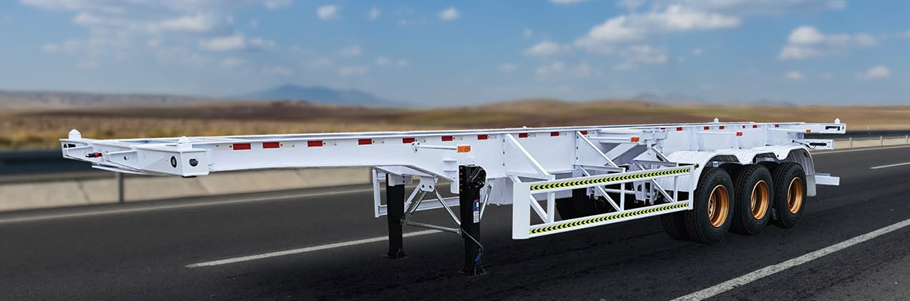
For a buyer, the twist-lock procedure is also a specification question. Because the chassis is described as fitted with dedicated twist locks for 20ft, 40ft and 45ft containers, confirm the lock positions and count match the container lengths you actually move, and confirm the operating handles are accessible with the container seated. A chassis that locks correctly but cannot be checked quickly will be checked less often in real fleet use.
Payload versus tare weight: the calculation that decides the case
Payload and tare weight are defined terms, and using them loosely is one of the most common buying errors. Payload is the maximum net cargo weight permitted on the semi-trailer, excluding the trailer's own tare weight. Tare weight, also called dead weight, is the self-weight of the empty semi-trailer without cargo, fuel, driver or extra goods. Tare weight is the basic parameter used to calculate available payload and total vehicle weight for transport planning.
Two consequences follow directly:
- The same nominal trailer can offer different usable payloads if tare weight differs, because available payload is what remains after the trailer's own weight is accounted for.
- A lighter tare is only an advantage if the structure still meets the load case. Weight removed from a main beam is not free; it has to come from design and steel selection, not from thinner sections chosen to flatter a datasheet.
How this plays out for each trailer type
For the skeletal chassis, the commercial case rests on light tare weight and high turnover efficiency in container work, as described in the manufacturer's own product positioning. For a container operator running repetitive port and intermodal moves, tare weight translates directly into either more cargo per legal combination or lower fuel and wear per move, depending on how the operation is loaded.
For the lowbed, the design priority is deck height and beam strength rather than minimum tare, because the machine on the deck is usually tall and heavy. The manufacturer positions its heavy-duty build against an economy semi-trailer on the basis of high-strength main beam and branded components, claiming 30% longer service life and a 12-month warranty, with the intended use being heavy haul on rough roads in Africa, South America and the Middle East. The same comparison cites optimal tare weight and a higher payload ratio for the heavy-duty build — which is a statement about design balance, not about being the lightest trailer available.
Side-by-side comparison on the dimensions that change the decision
| Decision dimension | Lowbed semi-trailer | Skeletal container semi-trailer |
|---|---|---|
| Primary cargo | Oversize heavy machinery: excavators, rollers, loaders and other construction equipment | 20ft, 40ft and 45ft containers secured by twist locks |
| Loading interface | Low deck with ramp options, including hydraulic folding ramp configurations | No deck; the container body forms the load unit |
| Securing method | Cargo secured to the platform after loading | Four-step twist-lock locking procedure with a 50 km re-check |
| Deck presence | Solid load-bearing deck | No solid deck; cannot carry bulk cargo directly |
| Tare weight position | Dependent on beam and ramp configuration; request the model datasheet | Positioned as light tare weight for high turnover efficiency |
| Payload basis | Permitted net cargo weight for that model, excluding tare | Permitted net cargo weight for that model, excluding tare |
| Typical operating pattern | Project and machinery moves, construction and mining site work | Port and intermodal container business, repetitive box moves |
| Main specification risk | Beam grade versus plate thickness, weld quality, ramp hydraulics | Twist-lock positions, lock condition, tare weight accuracy |
Read the table as a filter, not a ranking. If most of your revenue comes from container moves, the skeletal chassis matches the cargo interface and the operating rhythm. If most of your revenue comes from moving machines to and from sites, the lowbed matches the loading problem. Fleets that do both usually run both, because a compromise trailer tends to be worse at each job than the dedicated unit.
Loading efficiency and handling cost: where the lowbed specification earns its money
Loading time is a cost line, and on machinery transport it is often the largest controllable one. The manufacturer's comparison between a hydraulic folding ramp lowbed and a simple lowbed semi-trailer states that the hydraulic folding ramp, super low deck and reinforced beam configuration increases loading efficiency by 30%, improves loading capacity by 15% and cuts loading time by 60%. The same comparison notes that this configuration saves crane rental expense, because machinery can be loaded without a separate lifting operation, and that the hydraulic system is described as stable with a low failure rate.
These are manufacturer-stated comparison figures for a specific configuration, not universal performance guarantees. Their value to a buyer is directional and testable: if loading time and crane hire are material costs in your operation, a ramp-equipped lowbed changes the cost structure, and the claimed percentages tell you which variables to verify in a trial or in references from comparable operations.
For the skeletal chassis, loading efficiency is governed by the container interface rather than by a ramp. The container is lifted on by the terminal or shipper, the locks are turned and verified, and the vehicle departs. Efficiency therefore depends on lock accessibility, consistent container sizes and the discipline of the lock check. There is no ramp capital cost, but there is also no ability to carry non-container cargo on the same trip.
Where a flatbed or a dual-use trailer fits between the two
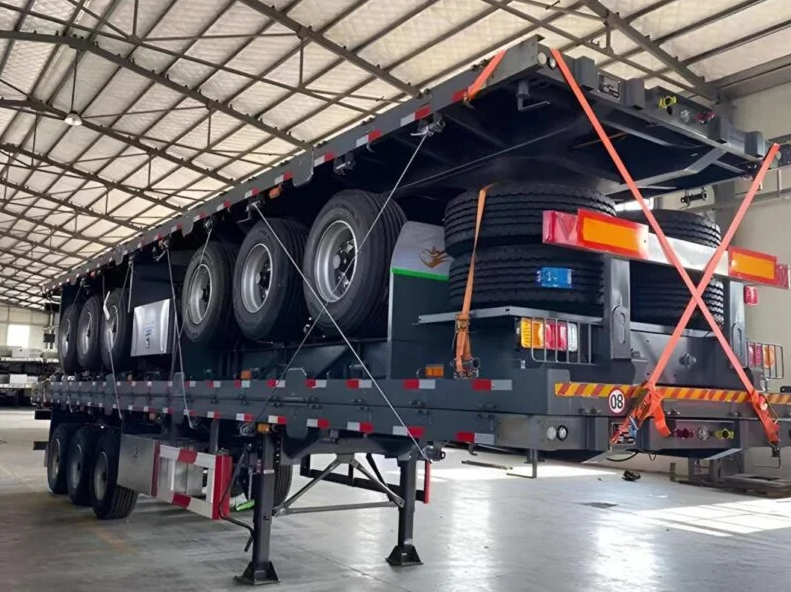
Some buyers do not need either extreme and should look at the middle of the range. A container flatbed semi-trailer has a solid full flat deck equipped with twist locks; it can load standard containers and also accommodate oversize heavy cargo, steel coils and rebar. The trade-off is explicit in the manufacturer's own positioning: its tare weight is heavier than a skeleton chassis.
A dropside semi-trailer, described as a container and bulk dual-use model with removable drop side panels and twist locks, suits containers, palletized goods, bagged bulk cargo and farm produce, which makes it flexible for mixed cargo business. Beyond these, the wider Rhino Strong Semi Trailer range covers flatbed, skeleton, lowbed, modular hydraulic, fence, side tipper, tanker and side curtain semi-trailers, plus dump and tipper configurations for aggregate and site work — but none of those replaces a dedicated lowbed for oversize machinery or a dedicated skeleton for pure container throughput.
Use cases: matching the trailer to the job
Choose the lowbed when
The cargo is a machine that must be driven, winched or lifted onto a platform, and its height is a route constraint. Typical work named in the manufacturer's guidance includes excavators, rollers and construction machinery transport. A hydraulic folding ramp configuration is relevant when cranes are unavailable or crane hire is a recurring cost.
Choose the skeletal chassis when
The cargo arrives as a sealed container and the job is moving boxes between port, yard and consignee. The manufacturer's guidance treats the skeleton as the first choice for pure container transit, with container flatbed and dropside models recommended where containers and general cargo are mixed.
Run both when
Your revenue mix includes machinery projects and container volume. Two dedicated trailers, each specified for its own load case, generally produce a clearer maintenance and utilization picture than one compromise unit, and each can be specified with the options that matter to its own job.
Pre-departure checks that apply to both trailers
Whichever trailer you buy, the inspection routine is similar in structure. The manufacturer's rough-road pre-departure checklist covers tire pressure, tread cuts, bulges and trapped stones; air-line connection, pressure build-up, leakage listening and brake performance testing; then main beam welds, landing gear, twist locks and all locking fasteners. The instruction closes with a hard stop: do not drive the trailer if a crack, air leak or loose structural part is found.
Landing gear deserves its own line in any buyer's maintenance plan. If a landing-gear crank spins freely or will not turn, the documented causes include lack of grease, worn or broken gears, sheared gear pins, a tilted trailer binding under uneven load, and attempts to raise or lower in high gear. The documented response is to park on level ground, remove the uneven load, work in low gear, clean and grease the screw — and if the crank still spins freely, stop operation and replace the gearbox assembly rather than forcing it.
Purchase parameters to confirm before cooperation
Once the trailer type is settled, the purchase conversation moves to configuration and commercial terms. The manufacturer publishes parameters that make this stage concrete:
- Customizable items: axles, tires, deck, hydraulic system, paint color and logo.
- Minimum order quantity: no MOQ limit; a single unit is acceptable, with the stated position that the same quality standard applies to all order sizes. This matters if you want a trial unit before committing a fleet budget.
- Lead time: normally 20–35 working days after deposit.
- Payment: T/T accepted.
- After-sales: one-year warranty service, lifelong VIP service, and discounts for regular customers.
Translate these into questions. For a lowbed, confirm the ramp type and hydraulic system specification, the deck configuration, and the axle and tire selection against your route conditions. For a skeletal chassis, confirm twist-lock positions against your container mix, and confirm what documentation accompanies the tare weight. For both, confirm what the one-year warranty covers in your market, how spare parts are supplied, and who performs the pre-delivery inspection.
Certification and compliance questions to settle early
Certification is a qualification gate, not a formality, and it is the area where vague answers cost the most time. The manufacturer states ISO9001-2000 and 3C certification and inclusion in the national "Announcement" management system for enterprises, with in-house control of welding, painting and inspection and an original-manufacturer position rather than a trading role.
Beyond those factory-level credentials, a decision-stage buyer should ask four specific questions:
- Which approvals apply to my market, and can you supply the documents? Road-legal dimensions, axle and load limits, braking, lighting, coupling and rear underrun protection are jurisdiction-specific. Ask for the document set for your destination market in writing rather than assuming a general certification covers it.
- What customs classification will the shipment use? Trailers and semi-trailers fall under HS heading 8716 in the WCO Harmonized System, and product-level analysis requires the relevant national tariff subheading and country-specific tariff schedule. Confirm the classification with your broker before the order, so duty and landed cost are not discovered at the port.
- Can you show inspection records, not just certificates? A certificate describes a management system; inspection records describe the unit you are buying. Ask what is checked on the main beam welds, the twist locks or the hydraulic system before dispatch.
- Is the certificate scope the same as the product scope? A factory-level credential does not automatically extend to every model or configuration. Confirm the specific trailer you are ordering sits inside the certified scope.
Frequently asked questions
What certifications and approvals should I confirm before ordering a semi-trailer?
Confirm two layers. Factory level: ISO9001-2000 and 3C certification, and inclusion in the national "Announcement" management system, as stated by the manufacturer. Market level: the approvals your destination country requires for dimensions, axle and load limits, braking, lighting and coupling, plus the correct HS 8716 subheading for customs. Ask for both layers in writing, and confirm the certified scope covers the exact model and configuration you are ordering.
Can one trailer handle both containers and heavy machinery?
Not well. A skeletal container semi-trailer has dedicated twist locks for 20ft, 40ft and 45ft containers but no solid deck, so it cannot carry bulk cargo or machinery directly. A lowbed carries oversize machinery on a low platform but is not a container chassis. The genuine middle option is a container flatbed semi-trailer, which has a solid full deck plus twist locks and can take containers as well as oversize heavy cargo, steel coils and rebar — at the cost of a heavier tare weight than a skeleton chassis. A dropside model with removable side panels and twist locks covers containers plus palletized and bagged cargo. If container volume and machinery volume are both significant, two dedicated trailers are usually the cleaner specification.
How should I evaluate the long-term cost of a heavy-duty lowbed against an economy trailer?
Compare build specification first, then price. The manufacturer positions its heavy-duty build against an economy semi-trailer on high-strength main beam and branded components, claiming 30% longer service life, a 12-month warranty, less frequent repair and a lower long-term replacement cost. Treat those as manufacturer-stated comparison figures for a defined configuration, and test them against your own duty cycle: route roughness, load severity, annual distance and local repair capability. A lower purchase price with more frequent repair and shorter replacement intervals can cost more over the ownership period — but that conclusion should come from your own cost model, not from a claim alone.
Can I order a single unit to test before committing to a fleet order?
Yes. The manufacturer states no MOQ limit and confirms that a single unit is acceptable, with the same quality standard applied to all order sizes. A trial unit is most useful when you define in advance what you will measure — loading time for a ramp-equipped lowbed, tare weight verification on a skeletal chassis, or lock-cycle time in container operations — and compare it with the figures in your business case.
What lead time and payment terms apply, and what should be confirmed before cooperation?
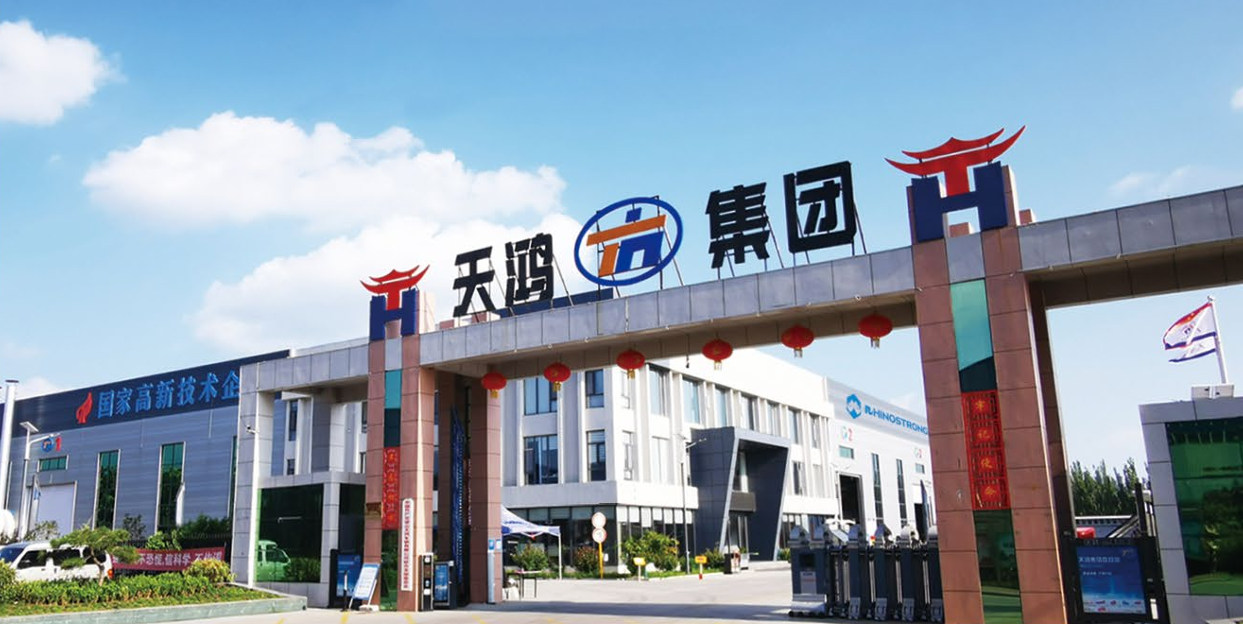
Normal lead time is 20–35 working days after deposit, and T/T payment is accepted. Before confirming, settle the configuration list (axles, tires, deck, hydraulic system, paint color, logo), the exact payload and tare weight basis for the model, the twist-lock or ramp specification, the approval documents for your market, and the warranty process including spare-parts supply. The manufacturer is Shandong Tianhong Industrial Co., Ltd., based in Liangshan County Economic Development Zone, Jining City, Shandong Province, China, exporting to Africa, South America, Southeast Asia, Central Asia and the Middle East; the full model range and specifications are in the downloadable catalogue.
Conclusion: decide on the cargo interface, then on the specification
The lowbed versus skeletal decision is settled by one question: does the cargo need a floor and a low deck, or does it arrive as a container that locks onto a chassis? Answer that first, and the trailer family is chosen. Then move to the specification layer that separates a good unit from an average one — for a lowbed, the main beam steel grade mapped to plate thickness, with Q690D on plates over 16 mm, T700 under 10 mm and Q355 on secondary parts; for a skeletal chassis, the twist-lock positions and the four-step locking procedure with a 50 km re-check.
Finally, close the commercial and compliance loop: payload and tare weight stated as a pair, approval documents for your specific market, the correct customs classification, and the configuration list that will actually be built. Buyers who settle those points before the deposit generally spend less time resolving them after the trailer arrives.
Next step
Compare the lowbed, skeletal, flatbed, fence, tipper, tanker and curtain side models side by side before you specify. Download the full catalogue with model configurations and options: Rhino Strong Semi Trailer catalogue (PDF).
For configuration questions on a lowbed main beam, twist-lock layout or a trial single-unit order, contact the manufacturer directly: Amy, amy@tianhongtrailer.com, Tel / WhatsApp +86 17319192254.
Have Questions or Need More Details?
Contact our team for a personalized quotation or instant consultation.
Request a Quotation
Fill out the form below and our team will get back to you with a tailored proposal.
WhatsApp Direct Chat
Prefer to chat in real-time? Message us on WhatsApp for instant assistance & quick answers.
- Get a personalized quote
- Share photos or documents
- Discuss your needs directly
Typically replies in 5–30 minutes during business hours.