
Payload vs Tare Weight: Comparing Semi-Trailer Options Before Purchase
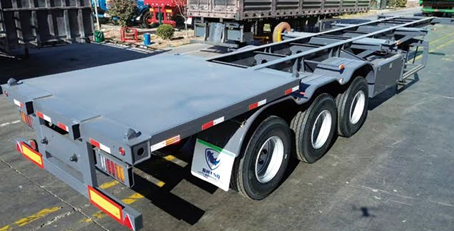
Payload is the maximum net cargo weight a semi-trailer is permitted to carry, and tare weight is the self-weight of the trailer when empty; the two are always read together because tare weight sets the ceiling on payload. A buyer who compares trailers on payload alone is comparing an answer without checking the arithmetic behind it. A buyer who compares only purchase price is not comparing payload at all.
This guide is written for operators at the decision stage — fleet owners, transport companies, importers and project logistics teams — who have shortlisted semi-trailer options and need a defensible way to weigh payload against tare weight. It defines both terms, sets out which purchase parameters must be confirmed in writing, shows how the balance shifts between flatbed, skeleton, lowbed, lowboy, dump, tipper, oil tank, fence and curtain-side configurations, and turns the two figures into a comparison that still holds after delivery, registration and the first loaded run.
Why payload versus tare is a purchase problem, not a specification detail
Two trailers can look identical in a quotation and still deliver different earning capacity per trip, because payload depends on tare weight and on how each supplier defines it. The comparison problem has three parts.
First, payload is usually a derived figure. It is the permitted loaded weight minus the trailer's own weight, so any change in tare — axles, tyres, deck thickness, hydraulic package, paint system, spare-wheel carriers — moves the payload without any change to the headline model name. Second, the basis of the tare figure is rarely stated, and whether it includes fuel, tools, the spare wheel or a full hydraulic tank changes the number by a margin that matters at the loading bay. Third, payload and price pull in opposite directions: reducing structural weight can raise payload, but it can also reduce the durability margin the trailer needs on rough roads, in high temperatures or under continuous operation.
The result is a decision that cannot be made from a single column. Payload and tare weight have to be compared against the same cargo, the same configuration and the same governing weight limit. Otherwise the buyer is comparing two different questions.
Industry background: "semi-trailer" is a category, not a specification
Official classification systems treat trailers and semi-trailers as one product family, while the load cases inside that family differ sharply by structure, deck and unloading method — which is why weight comparisons are only valid within a trailer type and a defined configuration.
Under the World Customs Organization's Harmonized System (HS 2022), heading 8716 covers trailers and semi-trailers, other vehicles not mechanically propelled, and parts thereof. The U.S. Census Bureau defines NAICS 336212 as the manufacture of truck trailers, truck trailer chassis, cargo-container chassis, detachable trailer bodies and detachable trailer chassis. The United Nations classifications separate the same activity as ISIC Rev. 3.1 class 3420 and CPC Version 2.1 subclass 88812 for trailers and semi-trailer manufacturing services. These references are useful for scoping a purchase or preparing a customs entry; none of them says anything about the weight of a particular unit.
That gap matters because the working conditions in this category are demanding. Semi-trailers in the reference material are specified for outdoor highway operation in dusty, high-temperature and rainy conditions, for 24/7 continuous operation and long-distance heavy hauling, matched to a tractor truck and brake system, with road-legal compliance, heavy load capacity, anti-corrosion and wear resistance listed as requirements. Under those conditions tare weight is not only a revenue variable; it is also a wear variable, because the same axles carry the empty structure and the loaded structure alike.
Payload and tare weight defined, and the arithmetic that connects them
Payload is the maximum net cargo weight permitted on the semi-trailer, excluding the tare weight of the trailer. Tare weight — also called dead weight — is the self-weight of the empty semi-trailer without cargo, fuel, driver or extra goods, and it is the basic parameter used to calculate available payload and total vehicle weight for transport planning.
The relationship is a subtraction:
- Loaded combination weight = tractor weight + trailer tare weight + cargo weight + whatever else the governing rule counts, such as fuel, driver and ancillary equipment.
- Available payload = permitted loaded weight − trailer tare weight − the other weight that the limit counts.
Two consequences follow. A reduction in trailer tare weight increases available payload one-for-one, provided every other element stays the same. And a payload figure quoted without its basis is not comparable between suppliers, because the subtraction may have been performed against different limits or different configuration assumptions.
Boundary condition: which limit governs a given load — a combination limit, an axle or bogie limit, or a kingpin limit — is set by the road transport rules of the market where the trailer operates, and those rules are not universal. This guide does not state legal weight limits for any country. Confirm the applicable limit with the relevant authority or your transport compliance adviser before finalising a specification; the arithmetic above applies to whichever limit your market uses.
Five checks that settle most payload-versus-tare comparisons
1. Fix the weight basis before comparing any numbers
Ask every supplier to state what the tare figure includes: the empty trailer only, or the trailer with spare wheel, tools, full hydraulic oil and fuel for any auxiliary engine. Then compare like with like. A tare figure that includes equipment is not automatically worse than a lower figure that excludes it — it is simply a different measurement, and mixing the two produces a comparison that collapses at the weighbridge.
2. Confirm which limit governs the load in the destination market
A low tare weight creates headroom only against the limit that actually applies to the route. If the binding constraint is an axle or bogie limit rather than a combination limit, trimming overall tare weight may not convert into more legal cargo. Establish the governing limit first, then use the payload subtraction to compare options inside it.
3. Ask how the tare weight was achieved, not just what it is
Weight can be taken out of a design in ways that help the buyer and in ways that do not. Steel specification is one of the clearest signals. In the manufacturer's lowbed main-beam design, plates over 16 mm use Q690D for toughness, plates under 10 mm use T700 for high strength with light weight, and secondary structural parts use Q355 for weldability and cost control. That is a thickness-matched selection rather than a uniform downgrade, and it is the kind of explanation a buyer should expect whenever a supplier claims a weight advantage.
4. Compare only on identical configuration
Axles, tyres, deck, hydraulic system, paint colour and logo are all listed as customisable items in the manufacturer's product FAQ. Each of those choices can shift the tare figure, so two quotations with different axle or deck specifications are not comparable even when the model name matches. Normalise the configuration list before comparing weights.
5. Convert weight into cost per loaded trip
Payload only becomes money when it is multiplied by trips. A lighter trailer that carries more legal cargo on every run has a different revenue profile from a heavier trailer on the same route, and a trailer that needs less frequent repair has a different cost profile again. The manufacturer's comparison of its high-strength main-beam build against an economy semi-trailer cites an optimal tare weight and a higher payload ratio alongside a stated 30% longer service life, a 12-month warranty, less frequent repair and lower long-term replacement cost. Those are manufacturer-stated comparison figures rather than independently tested results, so treat them as claims to check against your own duty cycle.
How the payload and tare balance shifts across trailer types
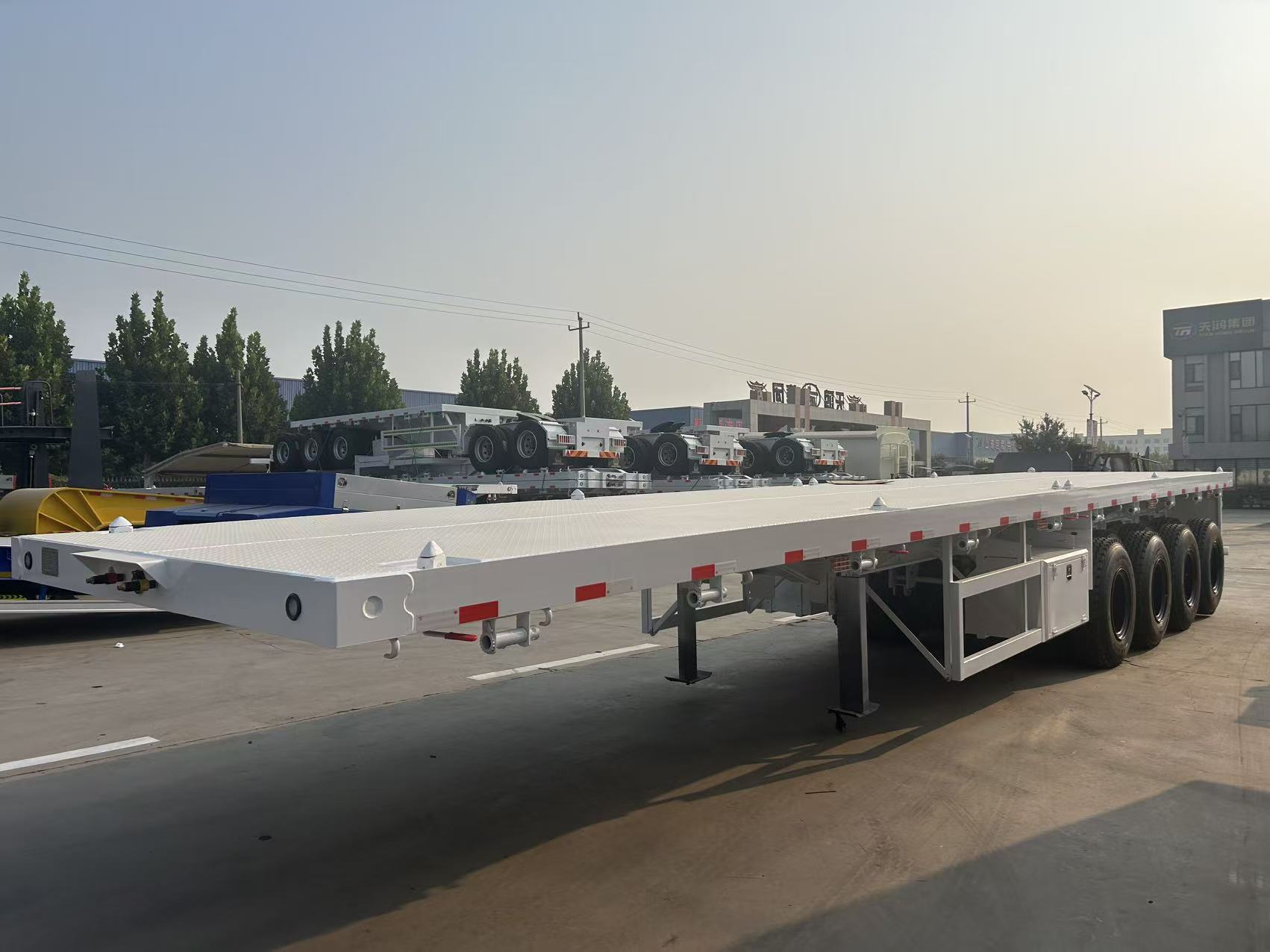
The trailer type decides which weight the buyer is really optimising: on container work tare weight is close to a pure revenue variable, while on machinery and tipping work the structure that carries the load is the point of the purchase.
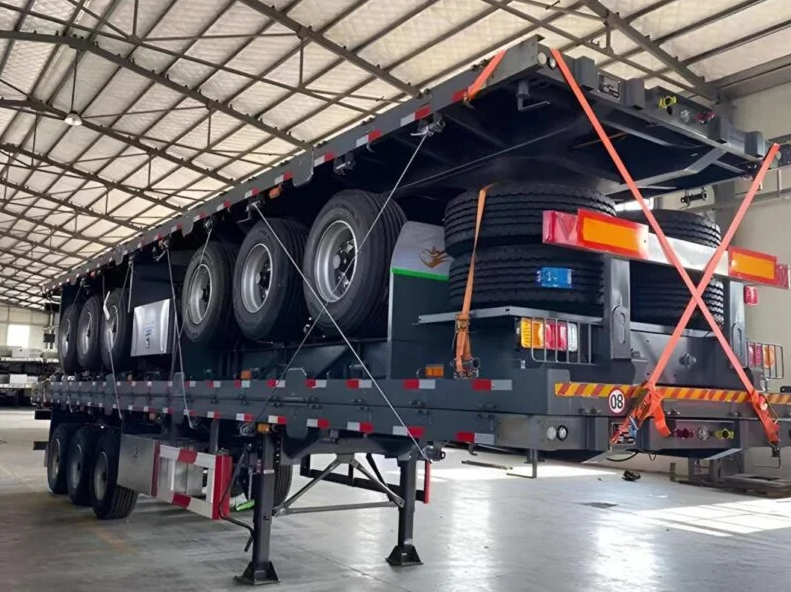
Skeleton versus container flatbed is the clearest documented trade-off. A skeleton container semi-trailer, also called a container chassis, is fitted with dedicated twist locks for 20ft, 40ft and 45ft containers and has a light tare weight with high turnover efficiency for port and intermodal business — but no solid deck, so it cannot carry bulk cargo directly. A container flatbed semi-trailer has a solid full flat deck with twist locks, accepts containers as well as oversize heavy cargo, steel coils and rebar, and carries a heavier tare weight than the skeleton chassis. The choice between them is a decision about cargo mix, not about which trailer is better.
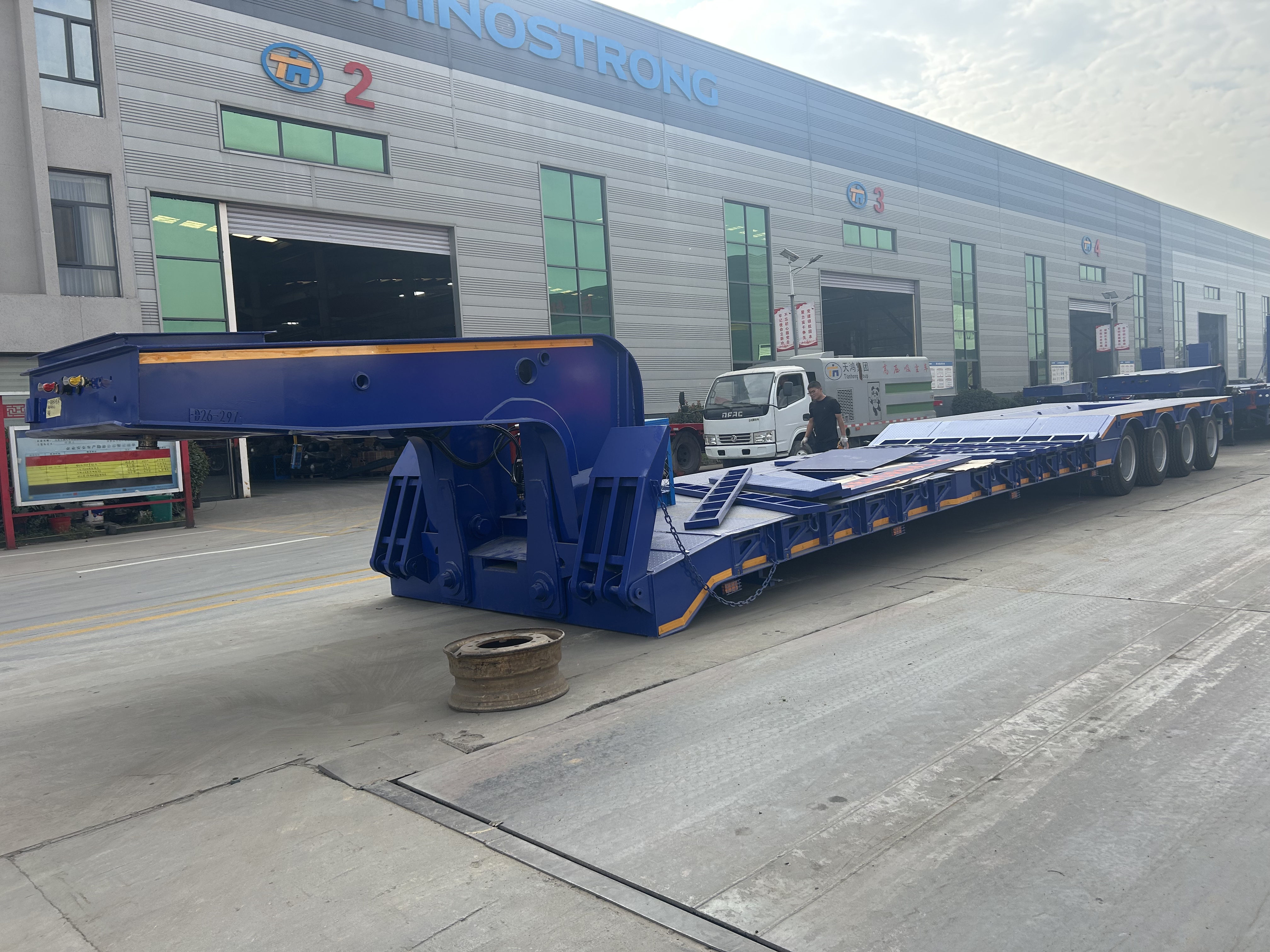
Lowbed and lowboy configurations are built around load height and beam strength rather than minimum weight. Documented differences from a simple lowbed design are a hydraulic folding ramp, a super low deck and a reinforced beam, with the manufacturer citing 30% higher loading efficiency, 15% higher loading capacity and 60% shorter loading time, plus crane rental expense avoided where the ramp replaces lifting equipment. The hydraulic system is described as stable with a low failure rate. For a buyer, the payload question here is whether the reinforced structure and ramp package still leave enough legal cargo capacity for the machines actually carried.
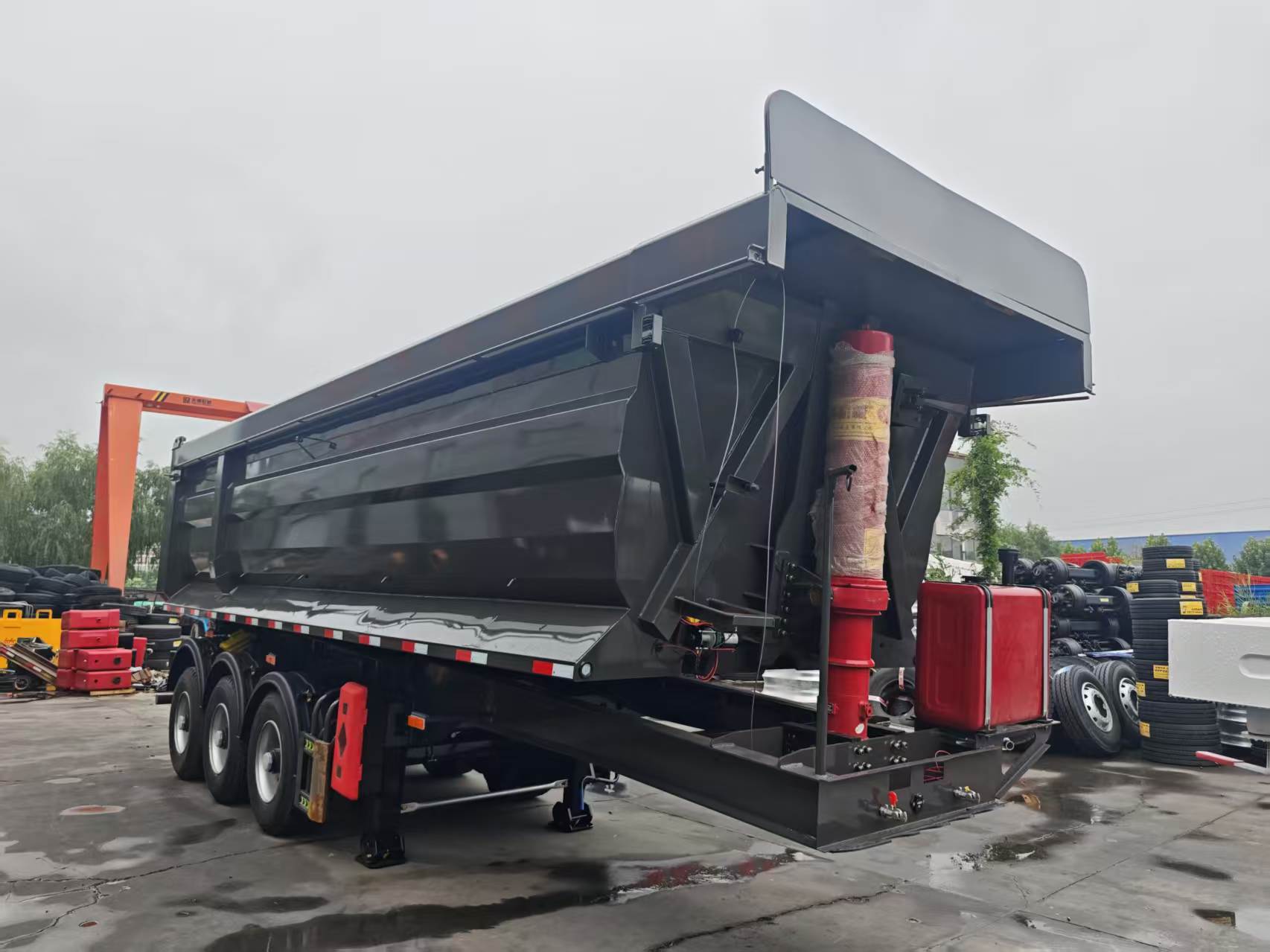
Dump and tipper trailers reverse the usual instinct. The documented build uses wear-resistant plate and a heavy-duty hydraulic cylinder, with the manufacturer citing 20% higher lifting stability and a 35% lower maintenance rate against an ordinary dump semi-trailer, aimed at aggregate and stone haulage from construction and mining sites. A tipper lightened past its duty cycle stops being a tipper; compare maintenance rate and discharge speed rather than tare weight alone.
Oil tank trailers carry internal structure that has nothing to do with payload maximisation. Anti-slosh baffles divide the tank into small compartments so that liquid does not surge violently during braking, turning or acceleration, which balances the load and reduces rollover risk on long-distance liquid transport. When comparing tanker tare figures, ask how the baffle and compartment layout is counted.
Fence and curtain-side semi-trailers complete the manufacturer's range alongside flatbed, skeleton, lowbed, modular hydraulic, side tipper and tanker models. Because their weight depends heavily on side-structure and deck specification, figures should be requested per model rather than extrapolated from another trailer type.
Comparison table: what to check on each trailer type
| Trailer type | Cargo role (documented) | Documented weight-related point | Confirm before ordering |
|---|---|---|---|
| Skeleton container semi-trailer | 20ft / 40ft / 45ft containers, port and intermodal work | Light tare weight and high turnover efficiency; no solid deck, so no direct bulk cargo | Tare basis, twist-lock configuration, container sizes to be carried |
| Container flatbed semi-trailer | Containers plus oversize cargo, steel coils, rebar | Heavier tare weight than the skeleton chassis | Deck specification, twist locks, axle and tyre package |
| Lowbed / lowboy semi-trailer | Excavators, rollers, construction machinery | Super low deck, reinforced beam, hydraulic folding ramp; main-beam steel selected by plate thickness | Ramp type, deck height, beam specification, machine weight and dimensions |
| Dump / side tipper semi-trailer | Aggregate and stone transport for construction and mining | Wear-resistant plate and heavy-duty hydraulic cylinder; manufacturer cites 20% higher lifting stability and 35% lower maintenance rate | Body plate specification, cylinder type, tipping side, ground conditions |
| Oil tank trailer | Liquid bulk transport | Anti-slosh baffles divide the tank into compartments to reduce liquid surge | Tank capacity, compartment layout, whether baffles are included in the tare figure |
| Fence / curtain-side semi-trailer | General and weather-protected cargo | Weight depends on side-structure and deck specification; request per model | Side structure, deck, full configuration list and stated tare basis |
Running the comparison: an illustrative decision path
Take two candidate trailers of the same type with tare weights t1 and t2, and a permitted loaded weight L that applies to the route. Available payload is L − t1 against L − t2, so the difference in carrying capacity is exactly t1 − t2 on every trip, provided the tractor, fuel, equipment and governing limit are held constant. That per-trip difference becomes a purchase decision only when it is set against the difference in price, expected repair frequency, service life, and the durability the duty cycle demands.
If the heavier option is chosen because it carries a reinforced structure for rough-road heavy haul, the buyer accepts a payload penalty in exchange for fewer repairs. If the lighter option is chosen for port work, the buyer accepts a tighter durability margin in exchange for more shift capacity per shift cycle. Both are rational; neither is universally correct.
Where the trailer is specified for dusty, high-temperature and rainy operation with 24/7 continuous use, the durability side of that trade-off deserves more weight than the payload side. Where the trailer runs short, predictable intermodal cycles, tare weight dominates.
Step-by-step: how to run the comparison before you sign
- Define the cargo envelope. Record the heaviest realistic payload, the volume and dimensions, and the loading method — crane, ramp, twist locks or tipping. Payload comparisons fail most often because the cargo was described by average weight instead of maximum weight.
- Establish the governing weight limit for every route and market. Confirm whether the binding rule is a combination, axle or kingpin limit, and confirm it locally rather than from a supplier's general statement.
- Request model-level datasheets. Ask for the tare weight, the payload derived from it, and the configuration list the figure was calculated against. Records tied to the exact configuration are more useful than a range covering the whole product family.
- Normalise the configurations. Align axles, tyres, deck, hydraulic system and paint across every quotation, because all of these are customisable and all of them affect tare weight.
- Run the arithmetic against the heaviest load. Apply the subtraction from step two to step one for each candidate. Any option that cannot legally carry the heaviest realistic load is out, regardless of price.
- Verify at handover. Weigh the trailer empty and record the result against the stated tare figure. The reference pre-departure inspection is a useful baseline for what else to check: tyre pressure and tread condition with trapped stones removed, air lines connected and pressure built with a brake performance test, main-beam welds, landing gear, twist locks and all locking fasteners — and no departure if a crack, air leak or loose structural part is found.
- Write the figures into the purchase documents. State the tare basis, the configuration it applies to and the payload derived from it, so that a later axle or deck change cannot silently move the number.
- Plan the operating routine. Payload discipline depends on daily habits: correct twist-lock locking with a shake test and a re-check after the first 50 km, tipper operation only on firm level ground with wheel chocks and the hand brake applied, the bed fully lowered before moving, and landing gear operated in low gear with the screw greased.
Use cases: which buyers should weight the comparison differently
Container and intermodal operators should treat tare weight as a primary criterion, because the cargo is standardised and the revenue difference per trip is direct. The skeleton chassis is the documented choice for pure container transit; the container flatbed is the alternative when containers and oversize cargo share the same fleet.
Heavy machinery and project logistics buyers should treat deck height and beam strength as primary and payload as a constraint to verify afterwards. The lowbed configuration with hydraulic folding ramp, super low deck and reinforced beam is documented for excavators, rollers and construction machinery, with loading time and crane rental listed as the advantages.
Aggregate and stone hauliers should compare maintenance rate and tipping stability first. The documented tipper build targets a 35% lower maintenance rate than an ordinary dump semi-trailer through wear-resistant plate and a heavy-duty cylinder — a lifecycle argument rather than a payload argument.
Heavy haul on rough roads in Africa, South America and the Middle East is the documented design target for the high-strength main-beam build, where the manufacturer positions optimal tare weight and a higher payload ratio alongside longer service life and less frequent repair. Buyers in those markets usually trade a small payload gain for a larger durability loss if they choose the lightest available structure instead.

Limitations: what payload and tare figures do not tell you
A tare weight and a payload figure describe weight only, not load distribution, braking performance, structural fatigue life or legal compliance in a specific market. Two trailers with the same tare weight can place very different loads on the tractor's kingpin and on individual axles. A quoted payload can be a design value rather than a measured one. A model compliant in one market is not automatically compliant in another, because type approval, braking, lighting and rear underrun requirements are set nationally. A missing figure in a supplier's documentation is a reason to ask, not evidence that the trailer cannot do the job.
Frequently asked questions
Does a lower tare weight always mean a higher legal payload?
No. A lower tare weight increases the difference between the empty trailer and the permitted loaded weight, but the legal payload also depends on which limit governs the route — combination, axle or kingpin — and on how the tare figure itself is defined. If the binding constraint is an axle or bogie limit, reducing overall trailer weight may not convert into more legal cargo. Confirm the governing limit for each market first, then apply the subtraction.
How do I confirm payload and tare weight for a specific semi-trailer model?
Request the model-level datasheet with the tare weight, the payload derived from it and the full configuration list the figure was calculated against — axles, tyres, deck, hydraulic system and paint, since all of these are customisable. Ask whether the tare includes the spare wheel, tools and a full hydraulic tank. Then weigh the trailer empty at handover and compare the result with the stated figure before the unit enters service.
Is a lighter trailer always the cheaper option over its service life?
Not necessarily. Purchase price and lifecycle cost move in different directions. The manufacturer's comparison of its high-strength main-beam build against an economy semi-trailer cites an optimal tare weight and a higher payload ratio together with a stated 30% longer service life, a 12-month warranty, less frequent repair and lower long-term replacement cost. Those are manufacturer-stated figures; the buyer's own duty cycle — road condition, load intensity and annual distance — should decide whether the payload gain or the repair saving is worth more.
Can we inspect a unit before committing to a batch order?
Yes. The manufacturer states that there is no minimum order quantity and that a single unit is acceptable under the same quality standard as a larger order. Customisable items are axles, tyres, deck, hydraulic system, paint colour and logo, so an inspection unit can be built to the intended configuration. Useful inspection points are tyre pressure and tread condition, air-line tightness and brake response, main-beam welds, landing gear function, twist locks and all locking fasteners.
What lead time and after-sales support should we plan for?
The stated normal production lead time is 20–35 working days after deposit, with T/T payment accepted. After-sales support is described as a one-year warranty, lifelong VIP service and discounts for regular customers. Complete the payload and tare comparison before the deposit, because configuration changes made after production starts are the usual reason a delivered tare weight no longer matches the quotation.
For the full model list and configuration options, the manufacturer's semi-trailer catalogue can be downloaded here: download the semi-trailer catalogue.
Conclusion: compare the pair, then decide
Payload and tare weight are not competing specifications; they are one specification read from two ends. The decision-stage discipline is straightforward: fix the tare basis, confirm the governing limit, check how the weight was engineered, normalise the configuration, and convert the difference into cost per loaded trip against the durability the route demands.
For buyers comparing container chassis, flatbeds, lowbeds, tippers and tankers, that sequence produces a shortlist that can be defended to a fleet manager, a financier or a customs broker. It also prevents the most common and most expensive error in this category: buying a trailer that is correct on paper and overloaded at the first weighbridge. Product information, configuration options and the full model range are available from Rhino Strong Semi Trailer.
Have Questions or Need More Details?
Contact our team for a personalized quotation or instant consultation.
Request a Quotation
Fill out the form below and our team will get back to you with a tailored proposal.
WhatsApp Direct Chat
Prefer to chat in real-time? Message us on WhatsApp for instant assistance & quick answers.
- Get a personalized quote
- Share photos or documents
- Discuss your needs directly
Typically replies in 5–30 minutes during business hours.