
Semi-Trailer Payload vs Tare Weight: A Buyer's Comparison Guide
Semi-Trailer Payload vs Tare Weight: A Buyer's Comparison Guide
Payload and tare weight are two of the first figures a semi-trailer buyer sees, yet they answer different questions. Payload is the maximum net cargo weight the trailer is allowed to carry, excluding the trailer's own tare weight. Tare weight, also called dead weight, is the self-weight of the empty semi-trailer without cargo, fuel, driver or extra goods. A useful comparison therefore starts by keeping those roles separate and checking both figures for the same trailer type, model and configuration.
Rhino Strong Semi Trailer is a semi-trailer brand whose supplied product FAQ lists flatbed, skeleton, lowbed, modular hydraulic, fence, side tipper, tanker and side curtain semi-trailers. That range is a reminder that payload and tare are not brand-wide constants. They belong to a specific build. For a buyer at the decision stage, the practical question is not 'Which number is bigger?' It is 'Which trailer, at which configuration, under which operating conditions, gives me the cargo allowance I need while remaining legal and suitable for the job?'
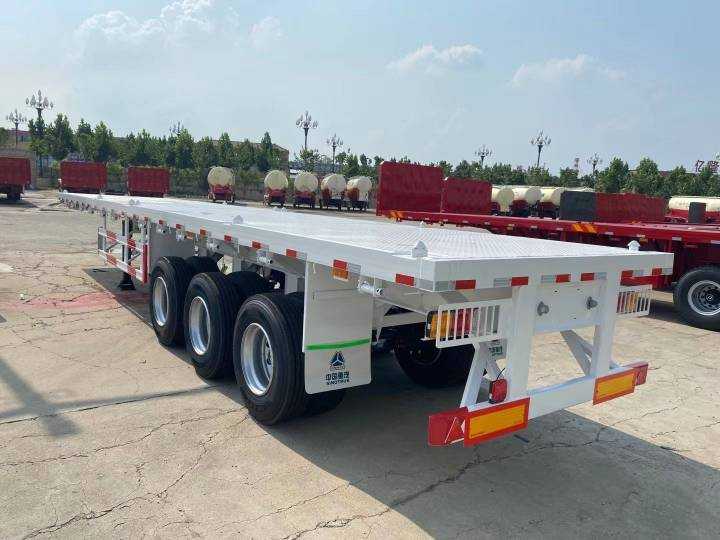
What payload and tare weight actually mean
The definitions are simple, and the simplicity is exactly why buyers should not blur them. Semi-trailer payload is the maximum net cargo weight permitted on the trailer. It does not include the trailer's tare weight. Semi-trailer tare weight is the self-weight of the trailer itself when no cargo is loaded. The tare definition also excludes fuel, driver and extra goods. These are not two names for the same capacity figure. One describes the cargo allowance; the other describes the empty trailer.
This matters when a quotation, brochure or sales conversation gives only one of the two figures. A payload figure without a stated tare leaves the buyer unable to see the full weight position of the trailer. A tare figure without a stated payload leaves the buyer unable to judge cargo allowance. Even when both figures appear, they must refer to the same build and the same definition. If one number comes from a base model and the other from an upgraded model, the comparison is no longer like-for-like.
Buyer rule: Do not compare Trailer A's payload with Trailer B's tare weight, and do not treat a low tare weight as proof of high payload. Compare payload with payload, tare with tare, and then check both against the same configuration, application and road-legal limit.
Why the comparison becomes confusing in real procurement
Semi-trailers are built for different jobs. A skeleton container semi-trailer is arranged around container twist locks for 20ft, 40ft and 45ft containers. A container flatbed semi-trailer has a solid full deck and twist locks, and the supplied selection guidance describes it as heavier in tare weight than a skeleton chassis. A lowbed semi-trailer is designed around a low deck and strong main beam for excavators, loaders and other oversize construction equipment. A dump or tipper semi-trailer adds a hydraulic lifting system and a cargo body. A tanker trailer adds a tank structure; for fuel tankers, the supplied technical explanation notes anti-slosh baffles that divide the tank into smaller chambers to reduce liquid surge during braking, turning or acceleration. Fence and curtain-side trailers add their own side-structure arrangements.
Each of those choices changes the weight discussion. The buyer is not comparing one universal 'semi-trailer' against another. The buyer is comparing a transport solution. A flatbed used for steel coils, a skeleton chassis used for port container moves, a lowbed used for an excavator and a tipper used for aggregate are not interchangeable even if all are semi-trailers. Their payload and tare figures must be read in the context of the cargo, route, loading method and local road limits.
A like-for-like method for comparing payload and tare
Use a fixed sequence so that the comparison does not drift into brochure-level generalities. The aim is to reach a model-specific weight statement that can be checked before the purchase decision.
1. Lock the trailer type and duty cycle
Start with the cargo and the job. Is the trailer for containers, bulk cargo, bagged goods, oversize machinery, mining material, liquid goods or mixed cargo? The supplied product FAQ groups the range around containers, bulk cargo, oversize equipment, mining materials and liquid goods. That application first narrows the relevant trailer type. A container chassis should not be judged by the same weight criteria as a lowbed, and a tanker should not be judged by the same criteria as a flatbed.
2. Confirm the supplier's definition of payload and tare
Ask the supplier to state the definitions in the quotation or technical sheet. Payload should be described as the maximum net cargo weight permitted, excluding the trailer tare weight. Tare should be described as the empty trailer self-weight without cargo, fuel, driver and extra goods. If the supplier uses a different convention, such as a figure that includes a full tank or added equipment, the buyer needs that difference stated before comparing it with another offer.
3. Match the configuration to the weight figures
Axles, tires, deck, hydraulic system, paint colour and logo are listed as customizable items in the supplied product FAQ. Customization is useful, but it means the final tare and payload must belong to the exact configuration being quoted. A generic catalogue figure may describe a different axle set, deck specification or hydraulic arrangement. The buyer should ask for the weight statement for the unit as configured, not for a related model.
4. Check the operating conditions
Weight suitability is not only a paper calculation. The supplied application context describes outdoor highway operation, dusty, high-temperature and rainy conditions, continuous operation and long-distance heavy-duty hauling, with road-legal compliance, heavy load capacity, sealing, anti-corrosion and wear resistance as relevant requirements. The buyer should confirm the actual route, climate, load cycle and local weight rules. A trailer that is suitable for one market's road limits may not be suitable for another. This guide does not replace the relevant authority's rules; it helps the buyer ask the right questions before committing.
5. Compare the complete offer, not the headline weight alone
Two trailers may have similar payload statements but different tare, different structure and different maintenance implications. Compare the weight figures together with the intended cargo, loading method, axle and tire specification, hydraulic or tank equipment, warranty and lead time. If a weight difference is important, ask what configuration difference produces it. The answer should be traceable to the specification, not to a general sales claim.
6. Put the confirmed figures into the purchase documents
The final quotation, technical annex or order confirmation should record the trailer type, model, configuration and the payload and tare figures that apply. That record protects both sides. It also gives the buyer a clear reference when the trailer is delivered and when future loads are planned.
Payload vs tare weight comparison table
| Comparison point | Payload | Tare weight |
|---|---|---|
| Core meaning | The maximum net cargo weight the semi-trailer is allowed to carry. | The self-weight of the empty semi-trailer itself, also called dead weight. |
| What it excludes | Excludes the trailer's tare weight. | Excludes cargo, fuel, driver and extra goods. |
| What the buyer uses it for | Planning the cargo load and avoiding overloading that can damage the trailer. | Calculating available payload and total vehicle weight for transport planning, as described in the supplied definition. |
| Common comparison error | Treating payload as if it were the trailer's total weight. | Treating tare as if it were cargo capacity, or assuming a lower tare automatically means a better trailer. |
| What to confirm | The payload figure for the exact model, configuration, market and operating condition. | The tare figure for the same empty trailer, with the same definition of fuel, driver and extra goods. |
The table shows why a single number is not a buying decision. Payload tells the buyer what cargo allowance the trailer is rated for. Tare tells the buyer how much trailer is being moved before cargo is added. A buyer who reads only one of them is either underestimating the empty weight or overestimating the cargo allowance.
How the comparison changes by trailer type
The exact payload and tare figures must come from the supplier's model data. The comparison logic, however, can be prepared before the quotation arrives. The following use cases show what to ask for each trailer family.
Flatbed semi-trailer
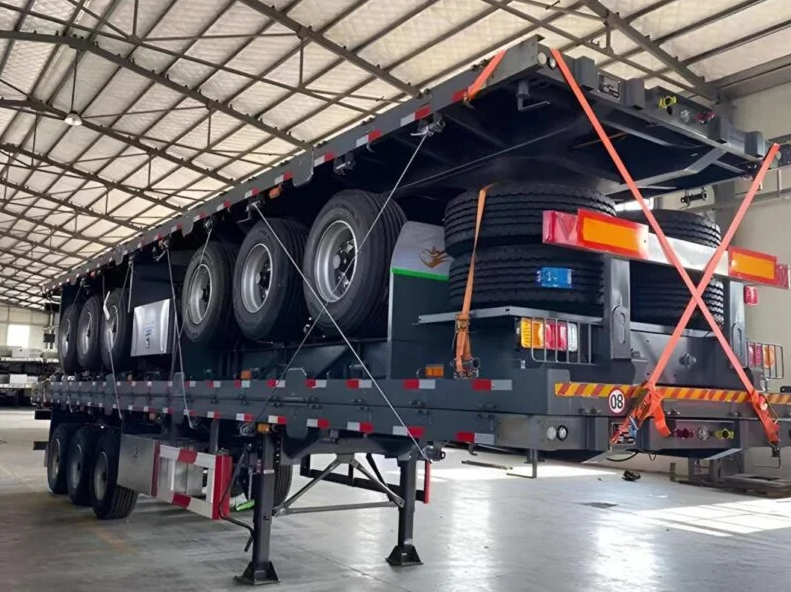
A flatbed semi-trailer is an open-deck solution used for containers and general or oversized cargo where a full platform is useful. The buyer should confirm the deck specification, twist-lock arrangement where applicable, axle and tire set, and the payload and tare for that exact build. The supplied product guidance describes a container flatbed as having a solid full deck with twist locks and a heavier tare weight than a skeleton chassis. That is a useful distinction, but it is not a reason to skip the model-specific figure.
Skeleton container semi-trailer
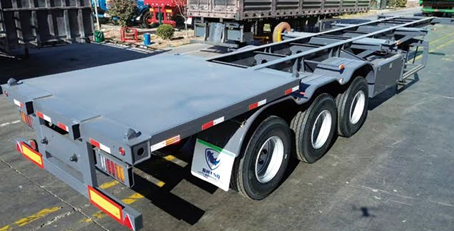
A skeleton container semi-trailer is designed for container movement and uses dedicated twist locks for 20ft, 40ft and 45ft containers. The supplied guidance describes it as a light-tare, high-turnover option for port and intermodal container work, while noting that it has no solid deck and cannot carry bulk cargo directly. For a buyer whose work is purely container transport, that tare orientation may be relevant. For a buyer who needs mixed cargo, a different trailer type may fit better. The correct comparison is the payload and tare of the skeleton model against the same container duty, not against a flatbed or lowbed with a different job.
Lowbed and lowboy semi-trailer
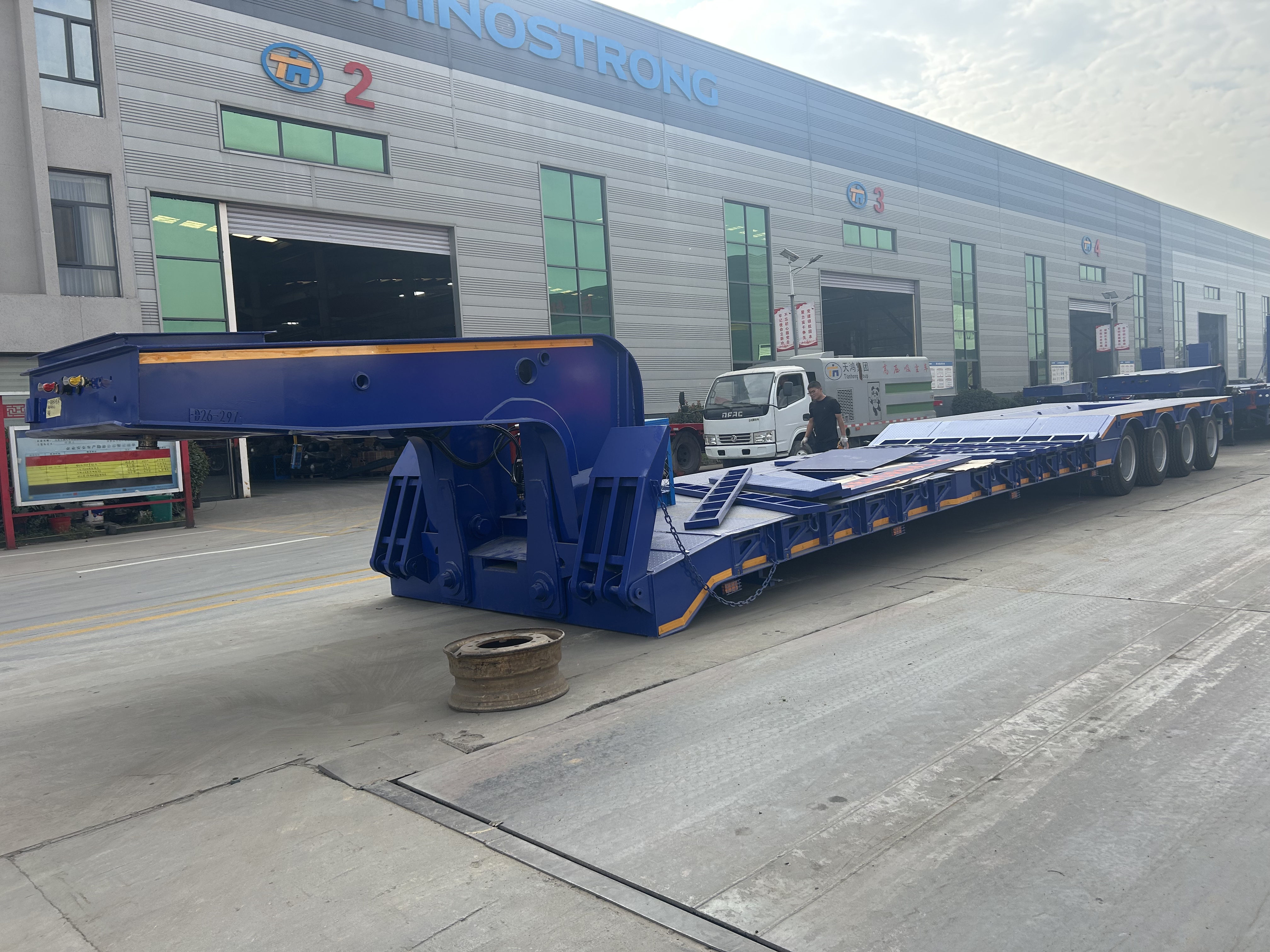
A lowbed or lowboy semi-trailer is selected for oversize heavy machinery because of its low deck and load stability. The supplied selection guidance names the lowbed as the first choice for excavators, loaders and other oversized construction equipment, with the flatbed described as an alternative for regular-size heavy goods rather than high oversize machinery. When comparing lowbed options, the buyer should ask for payload and tare at the exact deck height, ramp arrangement and reinforcement specification. A low deck is not a weight figure by itself; it is a design feature that must be matched to a documented payload and tare statement.
Dump and tipper semi-trailer
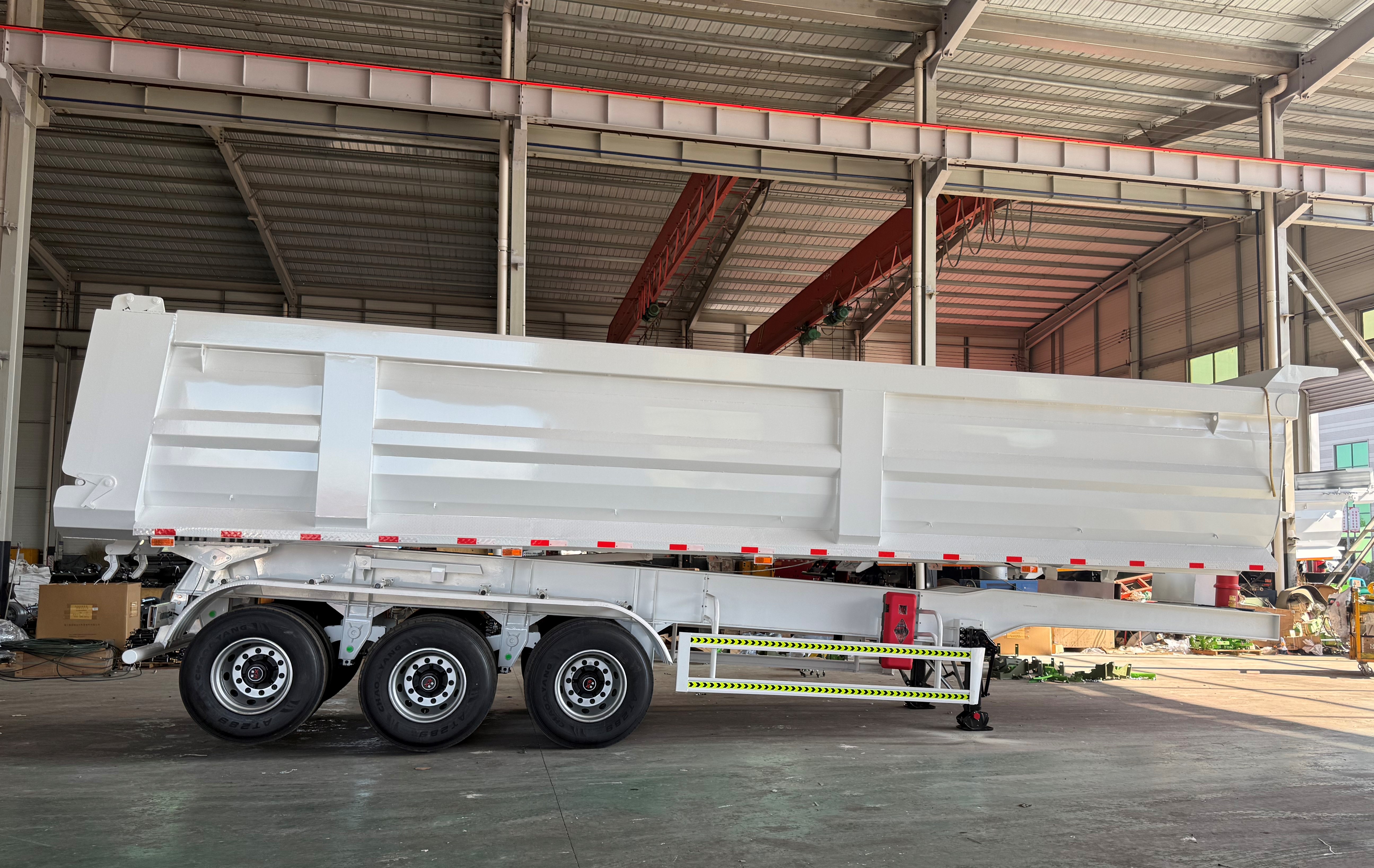
A dump or tipper semi-trailer adds a hydraulic lifting system and a cargo body for aggregate, stone and similar construction or mining loads. The weight comparison should separate the trailer's empty self-weight from the cargo allowance and should confirm the body and hydraulic specification being quoted. The supplied comparison material describes wear-resistant plate and a heavy-duty hydraulic cylinder as features of one tipper configuration. Those features are relevant to the duty cycle, but the buyer still needs the payload and tare for the exact unit, not a conclusion drawn from the presence of a heavy-duty component alone.
Oil tank and cement tank semi-trailers
Tanker trailers carry liquid or bulk powder rather than a general deck load. The buyer should confirm the tank capacity, the intended product, the tank structure and the payload and tare figures for the complete trailer. For fuel tankers, the supplied technical explanation describes anti-slosh baffles that divide the tank into smaller chambers to reduce liquid surge and improve stability during braking, turning or acceleration. That is a safety-related design point. It does not replace the need for a model-specific weight statement.
Fence and curtain-side semi-trailers
Fence trailers and curtain-side trailers are listed in the supplied product range. Their side structures serve different cargo-protection and loading needs. The buyer should ask for the payload and tare of the exact side-structure specification and should not assume that a figure from a flatbed or skeleton model applies. If the trailer is intended for mixed cargo, confirm how the side system affects loading access and the weight statement before comparing it with an open-deck option.
Purchase parameters to confirm before buying
Payload and tare are central, but they are not the only decision parameters. The following checks turn the weight comparison into a practical purchase review.
- Trailer type and model: Confirm the exact model name and the application it is built for. Do not compare a container chassis with a lowbed or a tanker as if they were the same product.
- Payload definition: Confirm that payload means maximum net cargo weight permitted, excluding the trailer tare weight.
- Tare definition: Confirm that tare means the empty trailer self-weight without cargo, fuel, driver and extra goods.
- Configuration: Record the axle, tire, deck, hydraulic system, paint and logo choices that apply to the quotation. These are listed as customizable items in the supplied product FAQ.
- Operating conditions: Confirm the route, climate, load cycle and local road-legal limits. The supplied application context includes outdoor highway, dusty, high-temperature and rainy conditions, continuous operation and long-distance heavy-duty hauling.
- Commercial terms: Confirm price basis, payment terms, lead time, warranty and after-sales support. The supplied FAQ states T/T payment, a normal lead time of 20–35 working days after deposit, no MOQ limit, a one-year warranty and lifelong VIP service.
- Trade terms: The supplied company FAQ lists EXW, FOB, CFR and CIF as trade terms accepted according to customer requirements.
- Verification documents: Ask for the model technical sheet, quotation and any relevant inspection or certification document for the exact unit and market.
Decision rule: A trailer is not automatically the better buy because its tare is lower or its payload statement is higher. It is a better fit when the payload and tare figures are both confirmed for the same configuration, the cargo duty is matched, and the road-legal and commercial conditions are acceptable.
Worked comparison logic without invented weight numbers
This guide does not provide model weight numbers because those must come from the exact trailer datasheet and quotation. A buyer can still prepare a sound comparison by using the same sequence for every offer. First, write down the trailer type and intended cargo. Second, write down the supplier's payload and tare definitions. Third, attach the configuration to each figure. Fourth, list the operating conditions and road limits. Fifth, compare only offers that pass the same checks. If an offer cannot provide both figures for the quoted build, that is a missing decision input, not a reason to guess.
Suppose a buyer is comparing a skeleton container trailer with a container flatbed for the same port-to-depot container route. The supplied guidance already notes a tare difference: the skeleton is described as light in tare weight, and the container flatbed is described as heavier than the skeleton chassis. That tells the buyer to ask a sharper question. Will the route and cargo mix stay purely container-based, or will the trailer also need to carry steel, rebar or other deck cargo? The answer changes the trailer type. The weight comparison should follow the duty, not lead it.
Suppose another buyer is comparing two lowbed configurations for an excavator. The relevant comparison is not 'which lowbed has the lower tare?' in isolation. The buyer needs the payload and tare for each deck, ramp and reinforcement specification, plus confirmation that the loaded machine and route are within the applicable limits. The same logic applies to tippers, tankers, fence trailers and curtain-side trailers. The trailer must first suit the job; then the weight figures can be compared on equal terms.
Frequently asked questions
Does semi-trailer payload include the weight of the trailer?
No. Semi-trailer payload is the maximum net cargo weight permitted on the trailer, excluding the trailer's tare weight. Tare weight is the self-weight of the empty semi-trailer without cargo, fuel, driver and extra goods. A buyer should keep the two figures separate and confirm that the supplier is using the same definitions in its quotation.
How should I compare two semi-trailers with different payload and tare figures?
Compare payload with payload and tare with tare, using the same trailer type, model, configuration and operating conditions. Check the supplier's definitions, then confirm that both figures belong to the quoted build. If one offer gives only a payload figure and another gives only a tare figure, ask both suppliers for the missing number before making a decision. Do not compare a base model's payload with an upgraded model's tare.
Can customization change the payload and tare weight I should compare?
Customization can change the configuration that the weight figures describe. The supplied product FAQ lists axles, tires, deck, hydraulic system, paint colour and logo as customizable items. For that reason, the final payload and tare should be stated for the exact configuration being quoted. Do not rely on a generic catalogue figure if the order includes different axles, deck specification or hydraulic equipment.
What commercial terms should I confirm before ordering a semi-trailer?
Confirm the price basis, payment terms, lead time, warranty and after-sales support in writing. The supplied FAQ states that T/T payment is accepted, normal lead time is 20–35 working days after deposit, there is no MOQ limit, and support includes a one-year warranty and lifelong VIP service. Trade terms listed in the company FAQ are EXW, FOB, CFR and CIF according to customer requirements. Also confirm the model technical sheet and the payload and tare figures for the exact build.
What is the next step to confirm payload and tare for a Rhino Strong Semi Trailer?
Ask for a configuration review and a current quotation that states the trailer type, model, selected options, payload definition, tare definition and the figures for the exact build. If a physical check is useful, ask whether a factory visit or inspection can be arranged; the supplied company FAQ says factory visits are welcome. For commercial planning, the same FAQ states a normal lead time of 20–35 working days after deposit and no MOQ limit. You can review the company catalogue here: download the catalogue.

Conclusion
Payload and tare weight are not competing numbers. They are complementary parts of a semi-trailer weight review. Payload defines the maximum net cargo allowance, excluding the trailer's tare weight. Tare defines the empty trailer's self-weight without cargo, fuel, driver and extra goods. The buyer's job is to keep both figures attached to the same trailer type, model, configuration and operating condition, then compare offers on that basis.
For a decision-stage purchase, the strongest approach is documentary rather than impressionistic. Ask for the exact model, the confirmed payload and tare definitions, the configuration list, the intended application and the commercial terms. Compare only offers that provide the same information. This is also the practical way to evaluate Rhino Strong Semi Trailer options across flatbed, skeleton, lowbed, tipper, tanker, fence and curtain-side models without assuming that one trailer's weight figure applies to another.
Company information for verification: the supplied company profile describes Shandong Tianhong Industrial Co., Ltd. as located in Liangshan County Economic Development Zone and holding ISO9001-2000 and 3C certifications, with inclusion in the national 'Announcement' management system. The official website is Shandong Tianhong Industrial Co., Ltd.. Buyers should verify current certification scope and model documents for the exact trailer and market before purchase.
Next step: Prepare a short comparison sheet with trailer type, intended cargo, payload definition, tare definition, selected options and delivery terms. Then request a current quotation and technical confirmation for the exact Rhino Strong Semi Trailer model you are considering. A precise configuration review is more useful than a headline weight figure alone.
Have Questions or Need More Details?
Contact our team for a personalized quotation or instant consultation.
Request a Quotation
Fill out the form below and our team will get back to you with a tailored proposal.
WhatsApp Direct Chat
Prefer to chat in real-time? Message us on WhatsApp for instant assistance & quick answers.
- Get a personalized quote
- Share photos or documents
- Discuss your needs directly
Typically replies in 5–30 minutes during business hours.