
Automotive Replacement Parts: Packaging & Classification
Automotive Replacement Parts: Packaging & Classification
Packaging data is a classification output, not an afterthought. In automotive replacement parts, the product type — Auto Lighting Systems, Auto Body Parts, Auto Side Mirrors — together with the declared material and the intended-use industry, is what determines how many pieces ship in a carton, what that carton measures in centimetres, and how much volume it consumes on a container plan.
This guide explains how those layers connect, using documented carton dimensions, quantities per carton and material compositions from the Gold Auto Part catalogue. Gold Auto Part (Ruian Golden Import and Export Co., Ltd.) is an automotive parts exporter based in Ruian, Wenzhou, Zhejiang Province, China, supplying engine valves, Toyota exterior parts, oil and air filters and a broad catalogue of replacement parts to importers, wholesalers and distributors. The intended reader is a buyer or sourcing manager who needs to confirm that the data on a quotation matches the data on a physical carton before committing to a container.
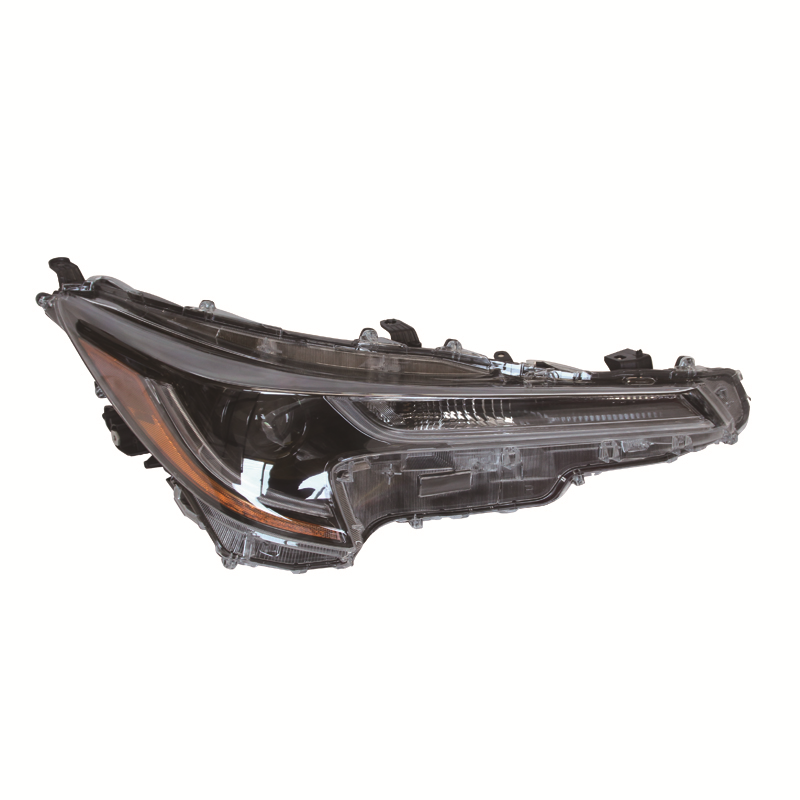 Head lamp TYJ-CRU20-031 for Toyota Corolla 2020 USA LE: 4 pieces per carton, 86 x 72 x 51 cm, 0.316 CBM.
Short answer: a part’s classification defines its packaging envelope. Lighting assemblies typically ship 2 to 4 pieces per carton with volumes between 0.094 and 0.437 CBM depending on vehicle scope; body parts ship in low counts inside long cartons, such as 3 pieces in a 200 cm carton; and small high-volume parts such as fog lamps reach 50 pieces inside 0.094 CBM. Carton volume can be audited by multiplying length, width and height in centimetres and dividing by 1,000,000.
The Problem: Classification Drift and Unverified Carton Data
Compliance problems in replacement parts rarely start with the part. They start with a mismatch between three records that should agree: the purchase order, the product master data, and the shipping carton. When any one of those drifts, the shipment still arrives — but the container plan, the warehouse slotting and the customs description no longer match the goods.
Where the mismatch usually appears
- Classification drift. A lighting assembly is quoted under a generic “body parts” heading, or a side mirror is bundled with body panels. The part still fits, but the handling rules, storage rules and downstream listing categories no longer match how the item physically behaves.
- Quantity-per-carton mismatch. A buyer plans around an assumed 10 pieces per carton for a part that actually ships 4. On a multi-model order, this single field can change the number of cartons by more than half.
- Unverified carton dimensions. Dimensions drive volume, and volume drives freight. If a carton is recorded as 0.169 CBM when the physical carton is larger, the container plan is built on a number that does not exist.
The cost is not one bad shipment. It is a repeated pattern: every reorder reproduces the same error because the master data was never corrected at the source.
Industry Background: More SKUs, More Cartons, More Scrutiny
The commercial context explains why packaging discipline has become a procurement topic rather than a warehouse detail. The global automotive aftermarket was estimated at USD 860.08 billion in 2025, with a projection of USD 1,482.12 billion by 2035, according to Vertex AI Search market analysis. Published aftermarket estimates vary considerably by scope and methodology, so the direction of growth matters more than any single figure.
Several documented drivers sit behind that growth, and each one adds SKUs and cartons to the supply chain:
- Grand View Research places Asia Pacific at a 29.4% revenue share of the automotive aftermarket in 2025, concentrating both demand and sourcing activity in the same region.
- The average age of vehicles on U.S. roads reached 12.6 years in 2026, per Business Research Insights — an older car park means more replacement cycles per vehicle and more part numbers per distributor.
- The global automotive collision repair market, which drives demand for bumpers and grilles, was valued at USD 208.0 billion in 2025 by Grand View Research.
- China’s exports of motor vehicle parts under HS 870899 reached approximately USD 10.9 billion in 2024, according to UN Comtrade and WITS data.
More part numbers per container means more carton sizes per container, and more opportunities for a classification field and a packaging field to disagree. That is the operational reason packaging data now sits inside supplier evaluation rather than after it.
How Automotive Replacement Parts Are Classified
In the Gold Auto Part catalogue, classification runs across three layers. Each layer answers a different buyer question, and each one produces a different field on the carton label.
Layer 1 — Product type
Product type is the primary classification. The catalogue uses Auto Lighting Systems, Auto Body Parts and Auto Side Mirrors. The type is not cosmetic: it defines what the carton has to protect. A lighting assembly contains an optical lens and a sealed housing, so the carton is designed around protecting a clear surface and preventing moisture ingress. A bumper or grille contains no optical surface, so the carton is designed around shape retention over length.
The type also fixes the model prefix. Head lamp TYJ-CRU20-031, rear bumper TYJ-PR23-007 and grille TYJ-01-0014 each carry a model designation that maps back to one type and one vehicle scope.
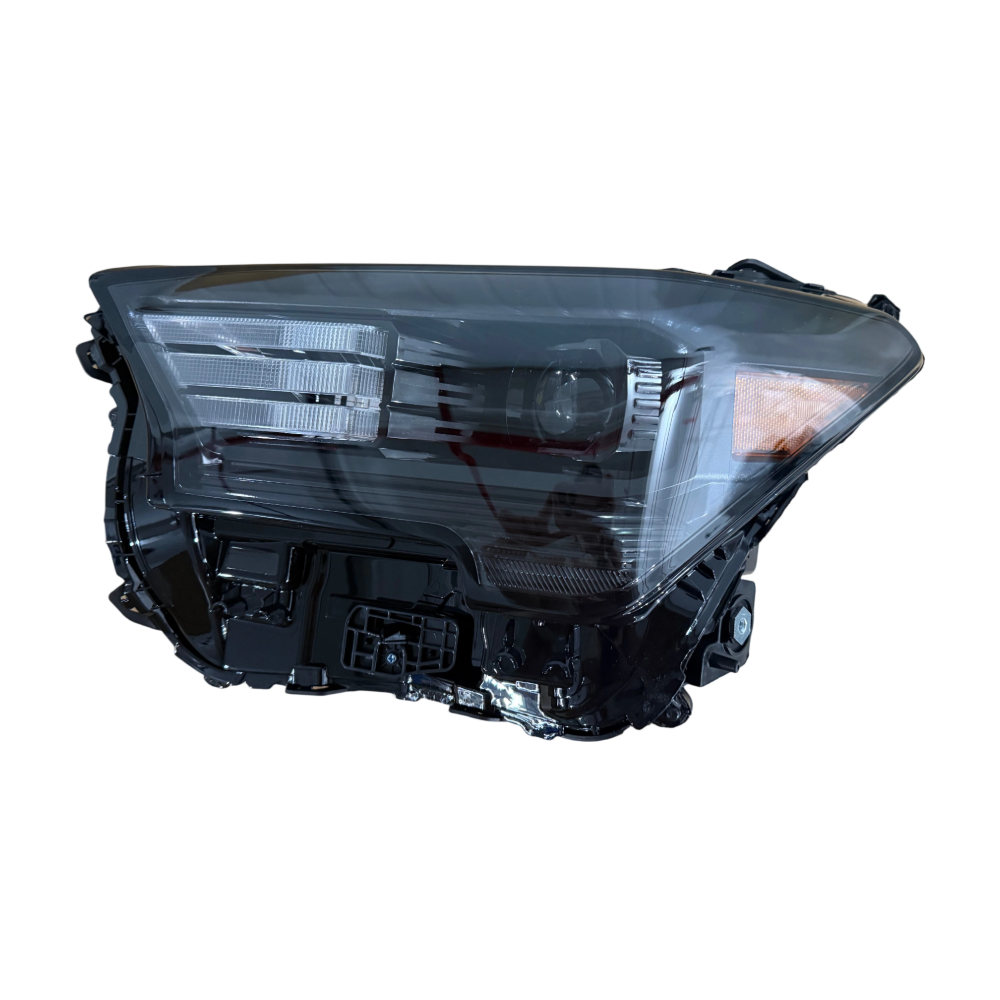 Head lamp TYJ-TCM24-001A for Toyota Tacoma 2024 LE trim: 2 pieces per carton, 56 x 29 x 58 cm, 0.094 CBM.
Layer 2 — Material composition
Material is the second layer, and it is the field most often dropped from a quotation. Two material callouts appear across the catalogue:
- Optic-grade PC & ABS polymers — used across the lighting range and the side mirror. Polycarbonate carries the optical and impact function of the lens; ABS carries the housing structure. For the side mirror TYJ-01-0030-A, the same material pair supports a distortion-free optical mirror glass and a corrosion-resistant housing with paint adhesion for body matching.
- Premium ABS / PC / PP plastic — used across the body part range. The front bumper TYJ-01-0022 uses a rugged, flexible PP construction for crash absorption and impact resistance, while the grille TYJ-01-0014 uses a high-grade ABS structure for impact and weather resistance plus a surface finish suited to painting.
The material distinction matters commercially because it changes repair and finishing behaviour. A PP bumper flexes and absorbs impact but requires correct surface preparation before paint; an ABS grille holds a paint finish readily; a PC lens depends on UV-resistant coating to avoid hazing. A buyer who knows the material knows what to expect in the body shop.
Layer 3 — Intended use
The third layer is the intended-use industry, and every product in the catalogue is declared for the same three: Automotive Aftermarket, Automobile Repair, and Automobile Body Manufacturing. That single line is what allows a distributor, a repair workshop and a body manufacturer to buy the same model under the same classification without re-describing it. It also keeps the label consistent across three very different customers.
How Classification Converts Into Carton Data
Three packaging fields follow directly from the classification: quantity per carton, carton dimensions, and carton volume in CBM. The patterns in the catalogue are consistent enough to be used as planning rules.
Lighting systems: low piece count, high protection
Head lamps typically ship 2 or 4 pieces per carton. The range is wide because the carton follows the physical size of the assembly, not a fixed standard:
- TYJ-TCM24-001A (Toyota Tacoma 2024 LE): 2 pieces, 56 x 29 x 58 cm, 0.094 CBM.
- TYJ-PR23-001A (PRIUS 2023): 2 pieces, 86 x 31 x 58 cm, 0.155 CBM.
- TYJ-01-0815 (Toyota RAV4 2016 USA): 4 pieces, 60 x 53 x 53 cm, 0.169 CBM.
- TYJ-RV19-001 (Toyota RAV4 2019 USA): 4 pieces, 74 x 54 x 54 cm, 0.216 CBM, with an OE-matched specification reference of L 81150-42D80.
- TYJ-CRU20-031 (Toyota Corolla 2020 USA LE): 4 pieces, 86 x 72 x 51 cm, 0.316 CBM.
- TYJ-CRS21-001 (Toyota Corolla Cross 2021): 4 pieces, 92 x 73 x 65 cm, 0.437 CBM.
Between the smallest and largest head lamp carton in that list, the shipped volume differs by more than four times while the piece count differs by two. That is why classifying a part correctly, and then reading its carton data, produces a very different container plan than assuming a category average.
Body parts: long cartons, low counts
Body parts invert the pattern. Bumpers are dimension-driven, so cartons are long and hold very few pieces: the rear bumper TYJ-PR23-007 ships 3 pieces in a 200 x 20 x 65 cm carton at 0.26 CBM, and the front bumper TYJ-01-0022 ships 3 pieces in a 200 x 21 x 56 cm carton at 0.235 CBM. A grille is flatter and denser: TYJ-01-0014 ships 10 pieces in an 86 x 39 x 49 cm carton at 0.164 CBM.
Both bumper models are declared as direct fit replacements aligned with original mounting points, and both use premium ABS / PC / PP plastic. The classification and the packaging therefore stay consistent: a long, impact-resistant part needs a long, shape-retaining carton.
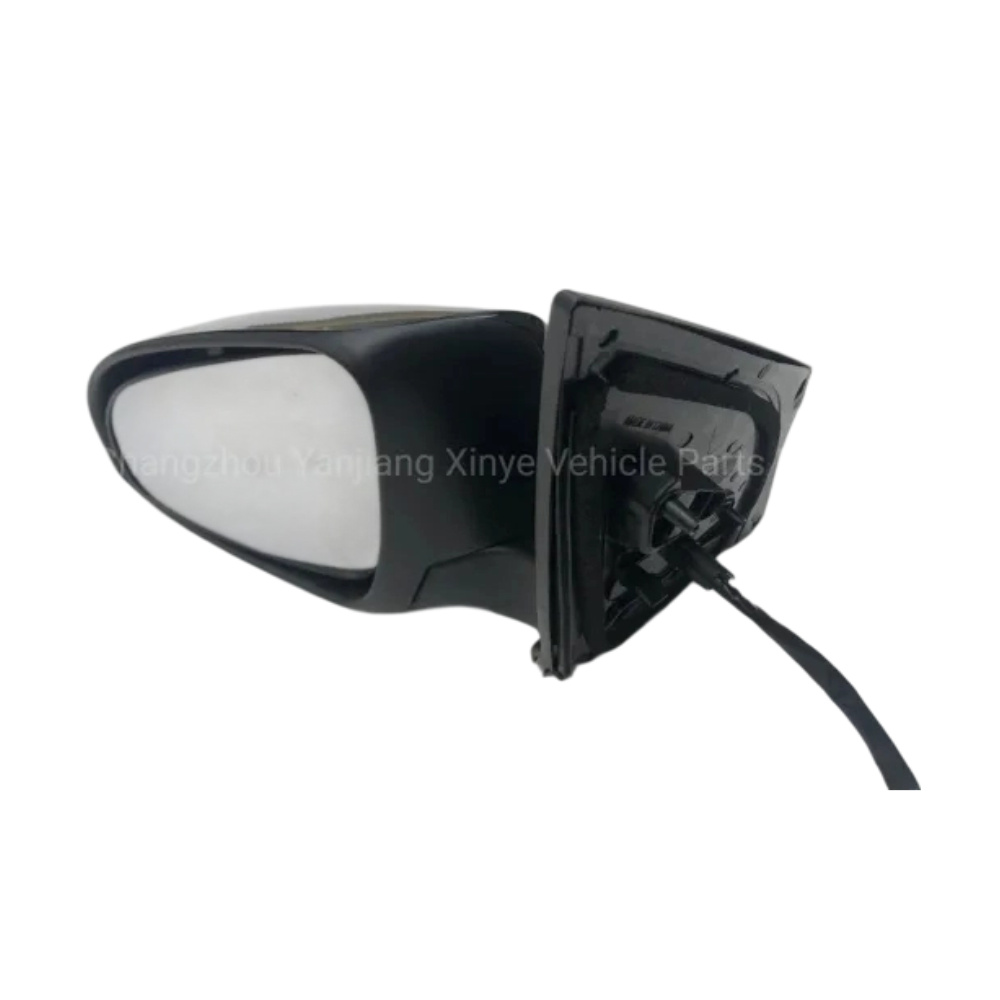 Side mirror TYJ-01-0030-A for Toyota Corolla 2014 Middle East: 12 pieces per carton, 83 x 38 x 53 cm, 0.167 CBM.
High-density small parts
Small lighting parts sit at the opposite end of the density scale. The fog lamp TYJ-01-0008 packs 50 pieces into a 65 x 25.5 x 57 cm carton at 0.094 CBM, and the back lamp TYJ-01-0005 packs 10 pieces into 79 x 39 x 33 cm at 0.102 CBM. The side mirror TYJ-01-0030-A packs 12 pieces into 83 x 38 x 53 cm at 0.167 CBM.
The useful comparison is shipped volume per piece. A fog lamp carton of 0.094 CBM divided by 50 pieces works out to roughly 0.0019 m³ per piece. A head lamp carton of 0.316 CBM divided by 4 pieces works out to 0.079 m³ per piece. Both are legitimate Auto Lighting Systems products; they occupy container space at completely different orders of magnitude.
Audit rule: every CBM value in the catalogue reconciles with its carton dimensions. 86 x 72 x 51 cm equals 315,792 cm³, or 0.316 CBM. 65 x 25.5 x 57 cm equals 94,477.5 cm³, or 0.094 CBM. A buyer can recalculate any quoted CBM in seconds and catch a data error before it reaches a container plan.
Why material callouts belong on the label
Material composition is not only a specification field; it is part of how the package should be identified at the end of its life. PP, ABS and PC sit in different recycling streams, and a bumper made of flexible PP should not be described the same way as a grille made of high-grade ABS. For body shops, the material callout also sets expectations: a PP bumper with excellent surface paint adhesion behaves differently under paint than an ABS grille.
For manufacturing customers, the same callout supports traceability. If a body manufacturer receives a mixed pallet, the material declaration tells the line what it is handling without opening every carton.
Step-by-Step: Verifying Classification and Packaging Data
- Fix the classification first. Confirm the product type — Auto Lighting Systems, Auto Body Parts or Auto Side Mirrors — together with the model designation and the vehicle scope. Head lamp TYJ-RV19-001 is only meaningful alongside “Toyota RAV4 2019 USA”; the same type without the scope is not a purchasable item.
- Read quantity per carton against the scope. A 4-piece head lamp carton and a 50-piece fog lamp carton are both normal, because the scope differs. Treat the number as an output of the classification, not as a supplier preference.
- Convert dimensions to CBM and check the arithmetic. Multiply length, width and height in centimetres and divide by 1,000,000. If the result does not match the published CBM, stop and query it.
- Match the material callout to the part function. Lighting and mirror products carry optic-grade PC & ABS polymers; body parts carry premium ABS / PC / PP plastic. A material field that does not fit the part type is a classification warning.
- Confirm the label data set. Model, vehicle scope, product type, material, quantity per carton, carton dimensions and CBM should all be present and consistent. Packaging and label customization is part of the available customization scope, alongside vehicle-model adaptation, appearance customization and replacement part solution development.
- Reconcile with order parameters. MOQ is 50–100 units, lead time is 30–60 days, and monthly capacity is 100,000 units. Inspection and testing before shipment is the final gate, so packaging data should be locked before that stage rather than after it.
Use Cases: Where This Data Actually Gets Used
Aftermarket distributor managing container loads
An auto parts wholesaler or distributor in the UAE placing bulk orders of 500+ sets for collision repair and vehicle face-lift restoration needs the carton plan more than the brochure. Documented outcomes on grille TYJ-01-0014 and fog lamp TYJ-01-0008 programmes run over 3–5 years, with a 100% successful fitment rate, zero customer complaints and sustained repeat orders. The published carton data — 10 pieces at 0.164 CBM for the grille, 50 pieces at 0.094 CBM for the fog lamp — is what makes that repeatability plannable.
Collision repair workshop
A repair workshop buying front and rear crash parts needs the bumper and grille to arrive straight. The front bumper TYJ-01-0022 is a direct fit replacement aligned with original mounting points, with rugged flexible PP construction and surface paint adhesion for body shop painting. The 3-piece, 200 cm carton protects the shape on the way in; the classification protects the paint process on the way out.
Body manufacturer sourcing structural plastics
A body manufacturer sources by material behaviour first. A flexible PP bumper for impact absorption and a high-grade ABS grille for impact and weather resistance are two different inputs, even though both are declared under Auto Body Parts and both are intended for Automobile Body Manufacturing.
US-market lighting programmes
US-market lighting applications in the catalogue are profiled against all-weather driving and strict DOT/SAE compliance expectations, with UV-resistant coating and OEM fit as the stated requirements. Models such as TYJ-01-0041 for Toyota Corolla 2014 USA (4 pieces, 72 x 45 x 54 cm, 0.175 CBM) show how the packaging envelope follows the market-specific assembly rather than the vehicle nameplate alone.
Packaging Data Comparison Across Product Classifications
The table below uses documented catalogue values only. It shows how type, material, piece count and carton volume move together.
| Model | Classification | Material | QTY / CTN | Carton (cm) | CBM | Vehicle scope |
|---|---|---|---|---|---|---|
| TYJ-CRS21-001 | Auto Lighting Systems | Optic-grade PC & ABS | 4 | 92 x 73 x 65 | 0.437 | Toyota Corolla Cross 2021 |
| TYJ-CRU20-031 | Auto Lighting Systems | Optic-grade PC & ABS | 4 | 86 x 72 x 51 | 0.316 | Toyota Corolla 2020 USA LE |
| TYJ-01-0001A | Auto Lighting Systems | Optic-grade PC & ABS | 4 | 88 x 67 x 48 | 0.28 | Toyota Corolla 2014 Middle East |
| TYJ-01-0022 | Auto Body Parts | Premium ABS / PC / PP | 3 | 200 x 21 x 56 | 0.235 | Toyota Corolla 2014 Middle East |
| TYJ-01-0030-A | Auto Side Mirrors | Optic-grade PC & ABS | 12 | 83 x 38 x 53 | 0.167 | Toyota Corolla 2014 Middle East |
| TYJ-01-0014 | Auto Body Parts | Premium ABS / PC / PP | 10 | 86 x 39 x 49 | 0.164 | Toyota Corolla 2014 Middle East |
| TYJ-01-0005 | Auto Lighting Systems | Optic-grade PC & ABS | 10 | 79 x 39 x 33 | 0.102 | Toyota Corolla 2014 Middle East |
| TYJ-01-0008 | Auto Lighting Systems | Optic-grade PC & ABS | 50 | 65 x 25.5 x 57 | 0.094 | Toyota Corolla 2014 Middle East |
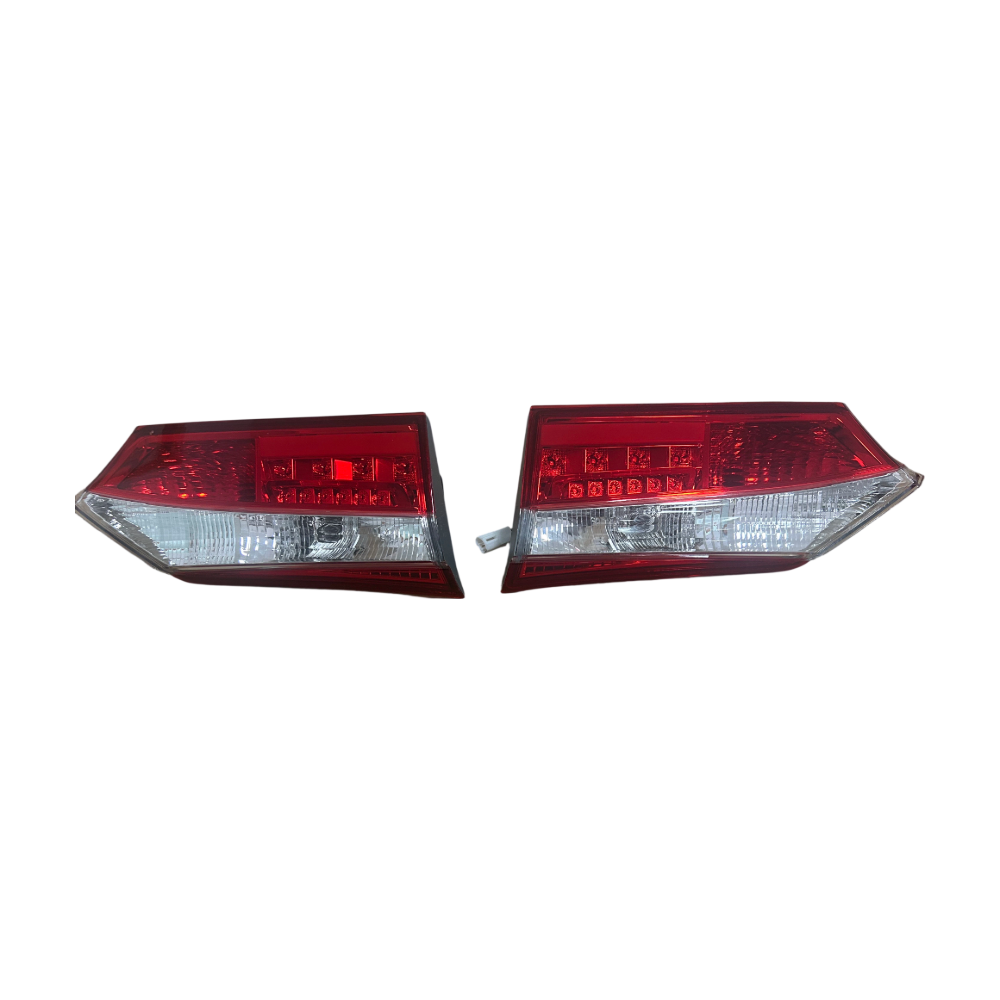 Back lamp TYJ-01-0005 for Toyota Corolla 2014 Middle East: 10 pieces per carton, 79 x 39 x 33 cm, 0.102 CBM.
Frequently Asked Questions
IATF 16949:2016 is the global quality management standard for the automotive industry and is mandatory for many OEM suppliers. For aftermarket buyers it works as a scope question rather than a logo question: which processes and product lines does the certificate actually cover? Gold Auto Part’s supply chain partners operate under ISO 9001 and IATF 16949 quality management standards, and every product batch undergoes dimensional inspection, material verification and performance testing before shipment. Ask for the scope statement, not just the certificate.
No. Lighting assemblies usually ship 2 to 4 pieces per carton, with volumes from 0.094 CBM for TYJ-TCM24-001A up to 0.437 CBM for TYJ-CRS21-001. Body parts are dimension-driven: the front bumper TYJ-01-0022 ships 3 pieces in a 200 x 21 x 56 cm carton at 0.235 CBM, while the flatter grille TYJ-01-0014 ships 10 pieces at 0.164 CBM. Small lighting parts reach the highest density, with the fog lamp TYJ-01-0008 at 50 pieces per 0.094 CBM carton.
CBM per piece sets how much container space one unit consumes. The fog lamp TYJ-01-0008 at 0.094 CBM for 50 pieces is approximately 0.0019 m³ per piece; the head lamp TYJ-CRU20-031 at 0.316 CBM for 4 pieces is 0.079 m³ per piece. Planning a mixed container therefore requires per-model CBM, not a category average. Order parameters are MOQ 50–100 units with monthly capacity of 100,000 units, so volume planning and order size should be settled together.
Request a sample shipped in its production carton, then check that the label matches the master data on all seven fields: model, vehicle scope, product type, material, quantity per carton, carton dimensions and CBM. Recalculate the CBM from the dimensions to confirm it reconciles. Packaging and label customization is available within the customization scope, so label artwork can be approved at sample stage and locked before the pre-shipment inspection and testing stage.
Quoted lead time is 30–60 days. Because packaging and label customization sit inside the customization scope alongside vehicle-model adaptation and appearance customization, label artwork and carton marking should be approved before production starts rather than during it. With monthly capacity of 100,000 units, scheduling is generally driven by artwork approval and inspection sequencing rather than by raw capacity.
Conclusion
Classification and packaging are one decision expressed in two places. Product type, material composition and intended-use industry determine the carton; the carton’s piece count, dimensions and CBM determine the container plan. When those records agree, the buyer can plan freight, storage and paint processes from a quotation without opening a carton. When they disagree, the error repeats on every reorder.
For buyers working across Toyota replacement parts, aftermarket auto parts and body components, three checks cover most of the risk: confirm the type and vehicle scope, recalculate the CBM from the carton dimensions, and make the material callout a required field on the label. Everything else in the ordering process builds on those three.
Next Step: Sample or Packaging Data Request
Buyers who need to verify classification, carton dimensions or label content before ordering can request a sample or a model-level packaging sheet from Gold Auto Part.
Contact: NIKO — Email: mia@goldautopart.com · WhatsApp/Tel: +8613967781122 · Website: www.goldautopart.com
 Inspection and testing before shipment is the final gate before carton data goes on a shipping document.
Have Questions or Need More Details?
Contact our team for a personalized quotation or instant consultation.
Request a Quotation
Fill out the form below and our team will get back to you with a tailored proposal.
WhatsApp Direct Chat
Prefer to chat in real-time? Message us on WhatsApp for instant assistance & quick answers.
- Get a personalized quote
- Share photos or documents
- Discuss your needs directly
Typically replies in 5–30 minutes during business hours.