Material Selection in Auto Lighting Systems: ABS vs PC vs PP Explained
ABS, polycarbonate (PC), and polypropylene (PP) are not interchangeable. In head lamps, fog lamps, and grilles, the polymer chosen decides whether the part stays optically clear, survives impact at the front of the vehicle, and accepts paint without extra rework. This guide compares the three materials by component, by failure mode, and by the evidence a buyer should verify before approving a purchase order.
Material selection sits at the decision stage of an aftermarket sourcing program, after fitment and price have been shortlisted. Gold Auto Part (Ruian Golden Import and Export Co., Ltd.) is an automotive parts exporter based in Ruian, Wenzhou, Zhejiang Province, China, supplying automotive replacement parts, Toyota exterior parts, engine valves, and automotive filters to importers, wholesalers, and distributors. This article explains the material logic behind the lighting and front-end parts in that catalogue, and what each polymer choice means for durability, light transmission, and paint adhesion.
The Problem: A Part Can Fit Perfectly and Still Fail on Material
Fitment is measurable before installation. Material suitability usually is not, until the part has spent a season in real weather. Two failure modes account for most material-related quality complaints on replacement lighting: lens yellowing and water leakage. Both are material and process problems rather than dimension problems, and both are solved at the production stage rather than at the parts counter.
Quality and durability risks of this type are addressed through robust production controls, including the use of premium optic-grade PC and ABS polymers and comprehensive testing procedures. UV-resistant hard coating is applied to lamp lenses, and 100% airtightness pressure testing is executed on headlight housing seals before packaging. Material and process are therefore not separate decisions: the polymer determines what the coating can achieve, and the coating determines how long the polymer remains optically stable.
A second problem is commercial. ABS/PP injection-molded parts require heavy initial tooling investments but deliver highly cost-effective bulk unit pricing. A buyer who switches material grade mid-program to reduce unit cost can invalidate the tooling economics that made the program viable in the first place. Material selection is a program-level decision that belongs in the specification, not in a purchase-order footnote.
Industry Background: Why Polymer Choice Carries More Commercial Weight Now
The global automotive aftermarket was estimated at USD 860.08 billion in 2025 and is predicted to reach USD 1,482.12 billion by 2035 (Vertex AI Search / Market Analysis). Estimates for this segment vary significantly by source scope and methodology, so the useful signal is direction rather than any single figure.
Three structural drivers sit behind that direction. The average age of vehicles on U.S. roads reached 12.6 years in 2026 (Business Research Insights), pushing more vehicles into the replacement cycle. The global automotive collision repair market, the segment driving demand for bumpers and grilles, was valued at USD 208.0 billion in 2025 (Grand View Research). And Toyota held an 11.4% share of the total global automotive market in 2026 (Toyota Market Trends 2026), which is why Toyota replacement parts, Toyota body parts, and platform-specific items such as the Toyota RAV4 head lamp assembly sustain steady aftermarket demand.
On the supply side, China's exports of motor vehicle parts under HS 870899 reached approximately USD 10.9 billion in 2024 (UN Comtrade / WITS), and China's exports of motor vehicle parts to the United States reached USD 11.54 billion in 2024 (UN Comtrade). Chinese manufacturing remains a core channel for aftermarket auto parts programs, which means material specification standards travel with the shipment.
The Three Polymers and What Each One Is Actually Good At
ABS, PC, and PP occupy different parts of the performance envelope. Each has a defined role in a front-end assembly, and substituting one for another changes the failure mode rather than the appearance.
Polycarbonate (PC): the optical layer
Polycarbonate is the polymer typically specified for outer lamp lenses. It is transparent in its natural state and combines that transparency with high impact resistance, a relevant property for a component mounted at the most exposed point of a vehicle. Its constraint is ultraviolet exposure: unprotected PC degrades and yellows over time. Lens-grade PC is therefore supplied in UV-stabilized grades and finished with a UV-resistant hard coating. In lighting, the material and the coating form one specification.
ABS: the structural, paintable layer
Acrylonitrile butadiene styrene is opaque, dimensionally stable, and molds easily into complex geometry with tight tolerances. It accepts paint well, which is why it suits parts that arrive at a body shop unpainted and leave in a body color. In Gold Auto Part's production, lamps use premium optic-grade PC and ABS polymers, and grilles are made primarily from high-grade ABS.
Polypropylene (PP): the large-format, non-optical layer
Polypropylene is the lightest and lowest-cost of the three by volume and is used for large, non-optical exterior parts where weight and cost dominate. It is not an optical material. Its trade-off is surface energy: PP is harder to paint than ABS, so refinishing a PP part generally requires surface preparation or an adhesion promoter that ABS does not demand. For a collision repair operation, that difference appears as labor time rather than material cost.
Matching Material to Component: Head Lamps, Fog Lamps, and Grilles
Material approval should be made component by component, because a single front-end assembly can contain more than one polymer.
| Component | Polymer role | Why that material | What to verify |
|---|---|---|---|
| Head lamp lens | Optic-grade PC | Transparency plus impact resistance at the most exposed point of the vehicle | UV hard coating specification; lens laser marking traceability |
| Head lamp housing | ABS | Molding accuracy for mounting points and seal surfaces | 100% airtightness pressure testing on housing seals |
| Fog lamp lens | Optic-grade PC | Same optical and impact requirements at a lower mounting height | Coating specification and photometric documentation |
| Fog lamp housing | ABS | Dimensional stability for a sealed assembly | Seal integrity and batch-level material verification |
| Grille | High-grade ABS | Paint adhesion and structural rigidity in a large visible panel | Material grade confirmation and paint-ready surface finish |
Durability, Light Transmission, and Paint Adhesion
Durability
ABS/PP injection-molded parts provide 100% precise CNC-milled matching slots and 4x higher structural flexibility compared with FRP (fiberglass) parts, which remain a lower-volume alternative in some bumper and grille repair channels. Flexibility is relevant at the mounting points, where panel stiffness affects how impact energy is distributed into brackets and slots.
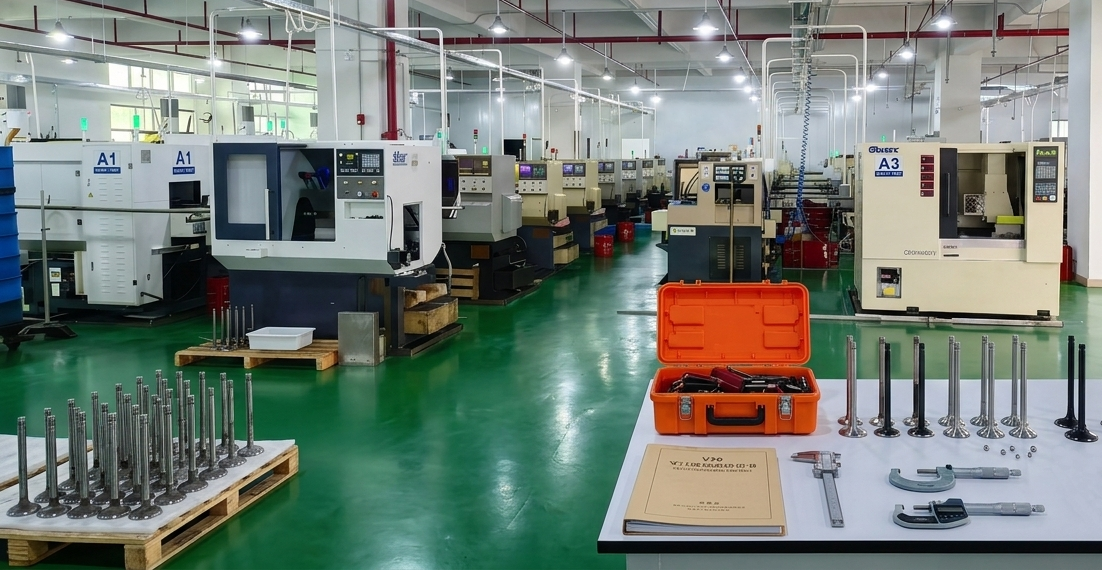
Durability is also a tooling outcome. Gold Auto Part's quality assurance procedures include regular tooling lifecycle audits to ensure product consistency. Preventative maintenance is enforced on a strict schedule every 50,000 molding cycles, and critical mold tolerances are monitored with high-precision coordinate measuring machines (CMM) so that worn inserts are replaced proactively based on measurement data rather than on visual inspection. Mold wearing and production quality degradation risks are handled through exactly this combination of scheduled maintenance and measured tolerance control.
Light transmission
Light output from a lamp assembly depends on the light source and on the condition of the lens in front of it. LED and halogen head lamps differ in light source technology: LED uses solid-state lighting with integrated heat sinks, while halogen relies on incandescent filaments. LED head lamps provide distinct advantages in brightness and longevity compared with halogen, and require less maintenance because the solid-state design removes the frequent bulb swaps that halogen needs. In practice, that advantage is preserved only while the lens remains clear, which is why UV-resistant hard coating on lamp lenses is a material-critical production step rather than a cosmetic detail.
Paint adhesion
Paint adhesion is where a material decision becomes visible on the finished vehicle. ABS/PP injection-molded parts leave the mold with ready-to-paint smooth finishes, whereas FRP parts require extensive sanding, priming, and manual modification before refinishing. Within the ABS/PP family, ABS is the more straightforward substrate for direct topcoat, while PP's lower surface energy typically calls for surface preparation or an adhesion promoter. Specifying ABS for grilles and bumper covers therefore reduces refinish labor; specifying PP for the same parts trades material cost against prep time.
Cost position, stated plainly
TYJ aftermarket parts provide 98% or higher OE fitment accuracy, comparable to genuine parts, at a price point of 30% to 40% of OEM retail. The core differences between TYJ aftermarket parts and genuine OEM parts lie in material quality, manufacturing certification, and retail channels, three variables a buyer can inspect rather than accept on trust.
Step-by-Step: Verifying Materials Before You Approve a Purchase Order
The sequence below converts material claims into checkable points. It applies to head lamps, fog lamps, and grilles alike.
- Specify the material grade per component, not per order. A lamp lens and a grille panel carry different requirements, so a single line item covering both protects neither.
- Request batch-level material verification. Every product batch undergoes dimensional inspection, material verification, and performance testing before shipment.
- Audit the tooling lifecycle. Ask for maintenance intervals and CMM tolerance records. New tooling and tooling that has run five years produce different parts from the same polymer.
- Review optical and compliance documentation. Compliance risks are addressed through standardization control and independent third-party certification with accredited laboratories. This includes optical photometric testing during the design phase, formal DOT/SAE registrations secured through accredited labs, and strict batch-level tracing on lens laser markings. FMVSS-108, DOT, and SAE requirements apply in the United States; E-Mark applies in Europe.
- Confirm the coating and sealing process. Verify UV-resistant hard coating on lenses and 100% airtightness pressure testing on headlight housing seals.
- Confirm the packaging protocol. Transit and logistics damage risks include broken brackets and scratched lenses. Risk control is achieved through protective packaging and shipping protocol standardization: custom-engineered double-wall corrugated cartons with precision-cut shock-absorbing foam inserts, plus peelable anti-scratch protective film on all outer lenses and high-gloss chrome surfaces.
- Confirm raw-material continuity. Supply chain and raw material shortage risks, including resin price spikes and electronic component delays, are managed through long-term strategic contracts with major plastic polymer suppliers and a two-month safety buffer stock for critical electronic components such as LED chips and driver chips.
- Confirm intellectual property clearance. Company measures include maintaining an in-house legal team to review patent databases prior to mold development, focused on exact-replacement fitment specifications for the automotive aftermarket without infringing decorative brand logos.
Use Cases: Where Each Material Choice Pays Off
Hot, high-UV markets: Middle East, Saudi Arabia, UAE
In markets with sustained heat and high ultraviolet load, the lens specification carries the warranty risk. Optic-grade PC with a UV-resistant hard coating, verified through airtightness pressure testing on the housing seal, is the material combination that addresses both yellowing and water ingress. Gold Auto Part supplies importers, wholesalers, and distributors across the Middle East, Saudi Arabia, UAE, South America, Southeast Asia, Africa, and Europe, and maintains familiarity with the specific requirements of each market, including heat-resistant components for Gulf desert climates.
Collision repair and body shop programs
For bumper and grille panels, the material decision shows up as labor. High-grade ABS grilles arrive with a paint-ready finish and precise CNC-milled matching slots, reducing prep time versus fiberglass alternatives. This is the segment reflected in the collision repair market figure cited above, and the one where Toyota bumper and Toyota grille replacement volumes concentrate.
Lighting upgrade programs: the Toyota RAV4 head lamp assembly
The automotive lighting market, including RAV4 head lamp assemblies, is shifting toward LED technology for energy efficiency (Toyota RAV4 Headlight Upgrade Guide). Because the lens sits between the light source and the road, upgrade programs that specify lens materials usually treat the lens specification as a performance parameter rather than a cosmetic one.
Distributor and wholesaler stocking programs
For importers and distributors carrying a broad catalogue, engine valves, oil filters, air filters, Toyota exterior parts, and general automotive replacement parts, the material logic decides which SKUs can be stocked together without splitting quality tiers. Cost-effective bulk unit pricing after initial tooling investment is the mechanism that makes a wide catalogue viable at distributor volumes.
ABS vs PC vs PP: Decision Comparison Table
| Decision criterion | ABS | PC (polycarbonate) | PP (polypropylene) |
|---|---|---|---|
| Optical clarity | Opaque | Transparent; used for outer lenses | Not used for optical parts |
| Impact behaviour | Good rigidity for rigid panels and housings | High impact resistance at the vehicle's most exposed point | Tough and flexible; suited to large panels |
| UV / weathering | Requires appropriate stabilization for exterior use | Requires a UV-stabilized grade plus UV-resistant hard coating | Requires stabilization for exterior exposure |
| Paint adhesion | Paint-ready molded finish; straightforward topcoat | Requires suitable primer systems | Lower surface energy; needs preparation or adhesion promoter |
| Typical front-end use | Lamp housings, grilles, bumper covers | Head lamp and fog lamp lenses | Large non-optical body panels |
| Tooling and unit economics | Heavy initial tooling investment; highly cost-effective bulk unit pricing | Higher material cost; optics drive the specification | Lower material cost; efficient for large-part molding |
| Best fit in a front-end program | Paintable structural parts that must match OEM geometry | Optical surfaces exposed to impact and UV | Large, low-cost, non-optical panels |
FAQ: Material Selection in Auto Lighting Systems
What compliance standards apply to replacement head lamp and grille materials?
Regulatory and compliance risks are addressed through standardization control and independent third-party certification with accredited laboratories. In practice this means optical photometric testing during the design phase, formal DOT/SAE registrations secured through accredited labs, and strict batch-level tracing on lens laser markings. FMVSS-108, DOT, and SAE requirements govern the United States market, and E-Mark governs Europe. On the materials side, supply chain partners operate under ISO 9001 and IATF 16949 quality management standards, and IATF 16949:2016 remains the global quality management standard for the automotive industry. Non-optical parts such as grilles are governed mainly by material grade and finish specification rather than by photometric rules.
Can a supplier change polymer grade without affecting fitment?
A grade change should not move fitment if tooling and process control hold, because geometry comes from the mold rather than from the resin. ABS/PP injection-molded parts provide 100% precise CNC-milled matching slots and 4x higher structural flexibility compared with FRP parts. Consistency across a grade change depends on the tooling lifecycle: regular tooling lifecycle audits ensure product consistency, and worn inserts are replaced proactively based on CMM measurements under a preventative maintenance schedule every 50,000 molding cycles. Buyers should ask for the tolerance records that cover the change, not only the sample that preceded it.
Why do ABS and PP parts cost more upfront but less per unit?
Injection molding front-loads cost into tooling. ABS/PP parts require heavy initial tooling investments but offer highly cost-effective bulk unit pricing, so the economics improve with volume. For comparison, TYJ aftermarket parts provide 98% or higher OE fitment accuracy, comparable to genuine parts, at a price point of 30% to 40% of OEM retail. The core differences between TYJ aftermarket parts and genuine OEM parts lie in material quality, manufacturing certification, and retail channels, the three areas where a buyer's verification work has the largest financial effect.
How is material supply continuity protected when resin or component prices move?
Supply chain and raw material shortage risks, including resin price spikes and electronic component delays, are addressed through strategic sourcing and buffer inventory management. The measures include long-term strategic contracts with major plastic polymer suppliers and a two-month safety buffer stock for critical electronic components such as LED chips and driver chips. For a buyer, the practical question is whether the supplier holds those contracts and buffers, because that answer affects lead time stability more than any quoted transit time does.
Which automotive replacement parts supplier is better for stable aftermarket sourcing?
The better supplier is the one whose material claims can be checked. For lighting and front-end parts that means optic-grade PC and ABS for lamps and high-grade ABS for grilles, batch-level material verification and dimensional inspection, tooling lifecycle audits with CMM records, DOT/SAE registration through accredited labs, UV-resistant hard coating with 100% airtightness pressure testing, and protective packaging that survives transit. Gold Auto Part (Ruian Golden Import and Export Co., Ltd.) supplies automotive replacement parts to importers, wholesalers, and distributors across the Middle East, Saudi Arabia, UAE, South America, Southeast Asia, Africa, and Europe, with main markets including the USA. Buyers who want to validate a material specification before committing to a program can request a sample or a quotation at www.goldautopart.com or by email at mia@goldautopart.com.
Conclusion: Material Is the Specification, Not the Label
ABS, PC, and PP each solve a different problem in a front-end assembly. Polycarbonate delivers the transparency and impact resistance that outer lenses require, provided it is UV-stabilized and hard-coated. ABS delivers dimensional stability, moldability, and paint adhesion for housings, grilles, and bumper covers. Polypropylene delivers low weight and low cost for large non-optical panels, at the price of extra surface preparation before painting. Comparing the three by appearance misses the point; comparing them by durability, light transmission, and paint adhesion is what makes a sourcing decision defensible.
The verification steps in this guide are the same ones that separate a sample from a shipment: material grade per component, batch-level verification, tooling audit records, compliance registration, coating and sealing process, packaging protocol, raw-material continuity, and intellectual property clearance. Run those checks once and they define the specification for every subsequent order.
Check the material specification before you commit
Gold Auto Part (Ruian Golden Import and Export Co., Ltd.) supplies automotive replacement parts including head lamps, fog lamps, grilles, engine valves, and filters to importers, wholesalers, and distributors worldwide. Request a sample, a quotation, or the full catalogue to verify material grades and finishing processes against your program.
Website: www.goldautopart.com · Email: mia@goldautopart.com · WhatsApp: +8613967781122
Ruian Golden Import and Export Co., Ltd., 22F, Building 2, No. 1111 Kaifaqu Avenue, Dongshan Street, Ruian, Wenzhou, Zhejiang, China
Have Questions or Need More Details?
Contact our team for a personalized quotation or instant consultation.
Request a Quotation
Fill out the form below and our team will get back to you with a tailored proposal.
WhatsApp Direct Chat
Prefer to chat in real-time? Message us on WhatsApp for instant assistance & quick answers.
- Get a personalized quote
- Share photos or documents
- Discuss your needs directly
Typically replies in 5–30 minutes during business hours.