
Sourcing Automotive Replacement Parts for Collision Repair: What Project Buyers Should Verify Before Ordering
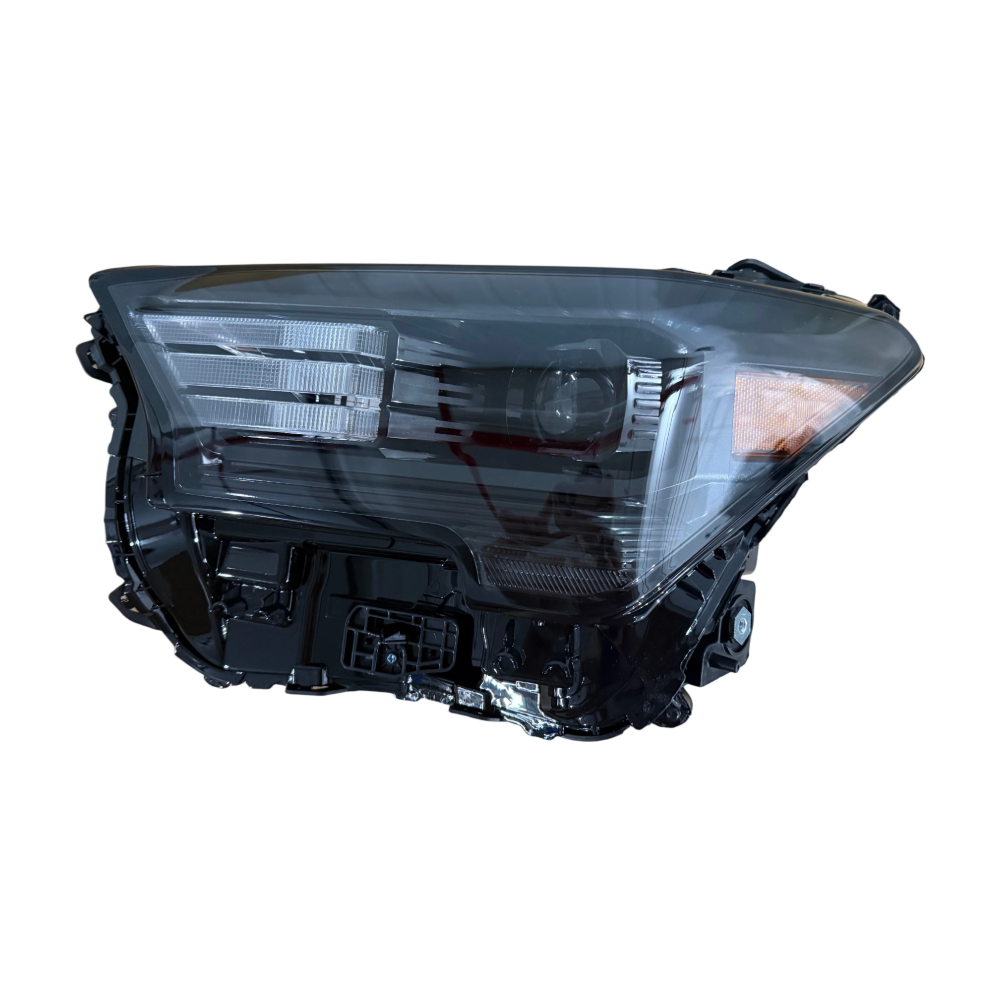
Project buyers and wholesalers sourcing automotive replacement parts for collision repair need to verify four things before committing: correct vehicle-model match, material and construction quality, lighting compliance, and whether the supplier can support bulk delivery with consistent quality control. This guide explains each checkpoint using real product cases from Ruian Golden Import and Export Co., Ltd. (Gold Auto Part) and provides a practical evaluation framework for engine mount and body-part replacement projects.
What Does a Replacement Parts Project Actually Require?
A replacement-parts project is not simply a purchase order. It usually starts with a damaged vehicle, a repair deadline, and a list of parts that must fit without modification. For importers and distributors, the project requirement becomes even broader: they need parts that match local vehicle variants, survive local road and climate conditions, and arrive in packaging that protects the product through long-distance shipping.
Gold Auto Part (Ruian Golden Import and Export Co., Ltd.) is an automotive parts exporter based in Ruian, Wenzhou, Zhejiang Province, China. The company specializes in sourcing and exporting engine valves, Toyota exterior parts, oil filters, air filters, and a broad catalog of replacement parts for passenger cars and light commercial vehicles. Its products serve importers, wholesalers, and distributors across the Middle East, Saudi Arabia, UAE, South America, Southeast Asia, Africa, and Europe.
Why Collision Repair and Body-Part Replacement Are a Separate Buying Category
Collision repair projects differ from routine maintenance in several important ways. The parts must align with factory body contours, accept paint, and restore safety functions such as lighting and rear visibility. A bumper or head lamp that fits poorly increases labor time and can delay vehicle return. For wholesalers, a wrong fit can mean returns, complaints, and lost trust.
The global automotive aftermarket was estimated at USD 860.08 billion in 2025 and is predicted to reach USD 1,482.12 billion by 2035. China's exports of motor vehicle parts (HS 870899) reached approximately USD 10.9 billion in 2024, and exports to the United States reached USD 11.54 billion in the same year. These figures indicate a large, active supply chain serving collision repair and replacement programs worldwide.
Project Scenario 1: UAE Distributor Supplying a Toyota Corolla 2014 Front-End Replacement Program
A relevant example is a UAE-based auto parts wholesaler/distributor that has sourced Toyota Corolla 2014 Middle East parts from Gold Auto Part for 3 to 5 years. The application is aftermarket collision replacement and night visibility restoration. Orders are placed as bulk container loads of 500+ sets. The reported outcome is a 100% successful fitment rate, zero customer complaints, and sustained repeat orders.
The involved products include:
- Head Lamp (TYJ-01-0001A) – designed for Toyota Corolla 2014 Middle East; optic-grade PC & ABS polymers; high-impact housing; direct bolt-on installation; superior optical clarity.
- Back Lamp (TYJ-01-0005) – designed for Toyota Corolla 2014 Middle East; durable housing with high-transmittance PC lens and UV coating; enhanced illumination for rear-end safety.
- Fog Lamp (TYJ-01-0008) – designed for Toyota Corolla 2014 Middle East; compact impact-resistant construction; precise dimensions for snap-in fitment; seal structure blocks dust and moisture.
- Grille (TYJ-01-0014) – designed for Toyota Corolla 2014 Middle East; high-grade ABS structure; molded to exact vehicle contours; premium surface finish for paint adhesion.
- Front Bumper (TYJ-01-0022) – designed for Toyota Corolla 2014 Middle East; flexible PP plastic construction; direct fit replacement aligned with original mounting points.
From a project perspective, this case highlights why a supplier must understand regional variants. The Middle East Corolla parts are not identical to US variants in every detail, so a supplier that can map the correct part to the correct market reduces fitment risk for the buyer. The repeat-order pattern also suggests that once fitment problems are solved, a wholesaler can build a stable replacement-parts program around that supplier.
Why Head Lamp Fitment Is a Common Project Failure Point
Head lamps are one of the most frequent sources of fitment complaints in collision repair. A head lamp must align with the fender, bumper, hood, and mounting brackets at the same time. Minor differences in mounting points can create visible gaps. The Toyota Corolla 2014 Middle East head lamp case was specifically cited as solving the problem of improper headlamp fitment in aftermarket collision replacement. This is why dimensional verification and vehicle-specific part mapping matter more than a low price.
Project Scenario 2: US Aftermarket Replacement for a Toyota Corolla 2014
In the United States, a common replacement project involves a Toyota Corolla 2014 with front-end collision damage. The relevant scenario is collision repair and auto parts replacement supply under all-weather driving conditions. The part must provide nighttime forward illumination and signal visibility, operate through vehicle electrical control via switch or auto-sensors, and work with a headlight wiring harness, bulbs/LED ballasts, and mounting brackets.
The Head Lamp (TYJ-01-0041) for Toyota Corolla 2014 USA is built with high-impact PC/ABS headlight assembly construction, precision-molded for US-spec fitment, and a high-clarity lens for crisp light dispersion. For US projects, the application also calls for DOT/SAE certified clear lenses, UV-resistant coating, and perfect OEM fit.
This scenario shows that a part can serve the same vehicle model in a different market, but the buyer still needs to confirm market-specific specifications. A US-distribution buyer should not assume that a Middle East version will be correct for a US vehicle, even if the model name looks similar.
Comparison: What Project Buyers Should Check When Choosing Replacement Parts
| Checkpoint | Why It Matters | Example from Gold Auto Part |
|---|---|---|
| Vehicle-model and trim match | A part must fit the exact model, year, and trim variant without modification. | Head lamps are listed for specific scopes such as Toyota RAV4 2022 USA, Camry 2018 USA/SE/XSE, and Corolla 2023 USA. |
| Material and construction | Body and lighting parts must handle impact, heat, UV, and weather without premature failure. | Tacoma 2024 head lamp uses heavy-duty ABS/PC with weatherproof seal; bumpers use premium ABS/PC/PP plastic. |
| Lighting compliance and optical performance | US projects often require DOT/SAE certified clear lenses and UV-resistant coating. | Corolla 2014 USA head lamp is precision-molded for US-spec fitment and DOT/SAE-compliant in the stated application scenario. |
| Packaging and logistics data | Buyers need carton dimensions, quantity per carton, and CBM to plan container loads and customs. | TYJ-01-0001A: 4 pcs/ctn, carton 88 x 67 x 48 cm, CBM 0.28. TYJ-01-0014 grille: 10 pcs/ctn, carton 86 x 39 x 49 cm, CBM 0.164. |
| Quality control before shipment | Rejections after arrival are costly; inspection at the factory reduces risk. | Gold Auto Part states every batch undergoes dimensional inspection, material verification, and performance testing before shipment. |
| Supply capacity and lead time | Replacement programs need repeatable volume, not just one shipment. | Monthly capacity of 100,000 units; lead time of 30–60 days; MOQ of 50–100 units; OEM/ODM/customizable production. |
Engine Mount Projects: What to Verify Before Choosing a Supplier
Engine mount replacement is a different use case from body panels and lighting, but the procurement questions are similar. An engine mount must match the vehicle's engine and chassis configuration, dampen vibration, and maintain alignment under load. A supplier for engine mount projects should be able to confirm the exact vehicle application, the material and rubber-to-metal construction, the quality standard used in production, and the batch inspection process before shipment.
When buyers search for an automotive replacement parts manufacturer for engine mount projects, they are typically evaluating suppliers rather than comparing one specific mount. The evaluation should include:
- Does the supplier have experience exporting to the buyer's market?
- Does the supplier operate under recognized quality management standards? Gold Auto Part reports that its supply chain partners operate under ISO 9001 and IATF 16949 standards.
- Can the supplier support volume needs, such as container-load orders?
- What is the lead time for production and shipment?
- Does the supplier perform dimensional and performance inspection before shipping?
For a project buyer, the supplier's ability to sustain quality across multiple orders is often more important than the specification of a single part. The UAE case involving 500+ set container loads over a 3–5 year period demonstrates the benefit of a supplier who can handle repeated production cycles without quality drift.
Quality Management and Standards in Replacement Parts Projects
Quality management matters in replacement parts because a failure can affect vehicle safety. IATF 16949:2016 is the global quality management standard for the automotive industry and is mandatory for many OEM suppliers. ISO 9001 is a broader quality management framework. Gold Auto Part's supply chain partners operate under ISO 9001 and IATF 16949 quality management standards, and every product batch undergoes dimensional inspection, material verification, and performance testing before shipment.
For buyers, the practical implication is to ask what standard a supplier's factory follows and what checks are performed between production and shipment. A supplier that can describe its inspection process is more likely to provide consistent parts than one that only quotes a price.
Step-by-Step Process for Sourcing Replacement Parts in a Project
- Define the vehicle population. List the exact models, model years, trims, and target markets. For example, Toyota Camry 2018 USA/SE/XSE and Toyota Camry 2018 USA are different scopes and may require different SKUs.
- Identify the damaged part categories. Determine whether the project covers lighting, body panels, mirrors, filters, or engine components.
- Confirm market-specific requirements. US applications may require DOT/SAE compliant lenses; Middle East projects may require dust sealing and heat resistance.
- Request product specifications and packaging data. Ask for material, model number, scope, quantity per carton, carton dimensions, and CBM.
- Evaluate fitment evidence. Review whether the supplier has existing cases for similar vehicles and markets.
- Verify quality control. Ask about ISO 9001/IATF 16949, dimensional inspection, material verification, and performance testing before shipment.
- Plan logistics. Use CBM and carton data to calculate container utilization and customs documentation requirements.
- Establish a reorder process. For ongoing programs, confirm lead time, MOQ, and how quality is maintained across multiple batches.
Use Cases Beyond Bumpers and Head Lamps
Replacement part projects are not limited to collision repair. Gold Auto Part also supplies engine valves, oil filters, air filters, and other replacement parts. The same evaluation logic applies: match the part to the exact vehicle, verify the material and performance characteristics, and confirm the supplier's quality control process.
For example, automotive filters have a high replacement rate because they are consumable items. When a distributor builds a filter program, the key factors are consistent packaging, accurate catalog data, and reliable supply volume. Gold Auto Part exports oil filters and air filters alongside body parts, allowing buyers to consolidate sourcing with one supplier.
Limitations and Risks Buyers Should Keep in Mind
No supplier can guarantee zero defects across every shipment without inspection evidence, so buyers should be cautious about broad promises. Gold Auto Part's UAE case reports a 100% successful fitment rate with zero complaints over 3–5 years, but that result is specific to that distributor, that product set, and that market. A new buyer should still request samples and verify fitment for each SKU before committing to container loads.
Buyers should also be careful with global market data. Different research sources estimate the automotive aftermarket at different sizes depending on methodology. What matters for a project buyer is the specific part, the vehicle population, and the supplier's ability to deliver the correct SKU consistently.
FAQ
What should I look for in an automotive replacement parts manufacturer for engine mount projects?
Verify the supplier's vehicle application mapping, production capacity, lead time, and quality control process. For engine mount projects, the supplier should be able to confirm exact vehicle-engine-chassis compatibility, material and construction quality, production standards such as ISO 9001 or IATF 16949, and batch inspection before shipment. Gold Auto Part, for example, reports a monthly capacity of 100,000 units, lead time of 30–60 days, MOQ of 50–100 units, and inspection and testing before every shipment.
How do I know if a replacement part will fit my vehicles?
Ask for the part's exact scope, model number, and material specification. For example, Gold Auto Part lists head lamps for specific scopes such as Toyota RAV4 2022 USA, Toyota Camry 2018 USA/SE/XSE, and Toyota Corolla 2020 USA LE. If the supplier has a case in a similar market, such as the UAE Corolla 2014 front-end program, that history provides additional fitment confidence.
What quality certifications should a replacement parts supplier hold?
Look for suppliers whose factories operate under recognized quality management systems. IATF 16949:2016 is the global automotive industry quality standard, and ISO 9001 is a general quality management framework. Gold Auto Part states that its supply chain partners operate under ISO 9001 and IATF 16949 standards, and that every batch undergoes dimensional inspection, material verification, and performance testing before shipment.
Can I order a low MOQ first, or should I start with a container load?
Start with samples or a low order to verify fitment and quality before scaling to container loads. Gold Auto Part's MOQ is 50–100 units with a lead time of 30–60 days, which allows buyers to validate a part before committing to higher volume programs.
How should I plan the first order for a replacement parts program?
Select a limited number of fast-moving SKUs for the target vehicle population, request packaging and CBM data, and confirm the QC process before shipment. The UAE distributor example used container load orders of 500+ sets per SKU after establishing the right fitment and repeatability. For a new program, a smaller first order is a lower-risk starting point.
Conclusion
Automotive replacement parts projects succeed when buyers verify the exact vehicle fit, confirm material and compliance requirements, and choose a supplier with documented quality control and repeat-order reliability. The cases described here show that a supplier with deep familiarity in one market, whether the UAE for Toyota Corolla 2014 parts or the USA for DOT/SAE-compliant lighting, can become a stable partner rather than a one-time vendor.
Planning a replacement parts program for your market?
Gold Auto Part (Ruian Golden Import and Export Co., Ltd.) supplies engine valves, Toyota exterior parts, filters, and replacement parts for passenger cars and light commercial vehicles. Contact NIKO at mia@goldautopart.com or WhatsApp +86 13967781122 for sample or quote inquiries.