
Supplier Evaluation for Auto Body Parts: Verifying Capability and Delivery Assurance
Supplier Evaluation for Auto Body Parts: Verifying Capability and Delivery Assurance
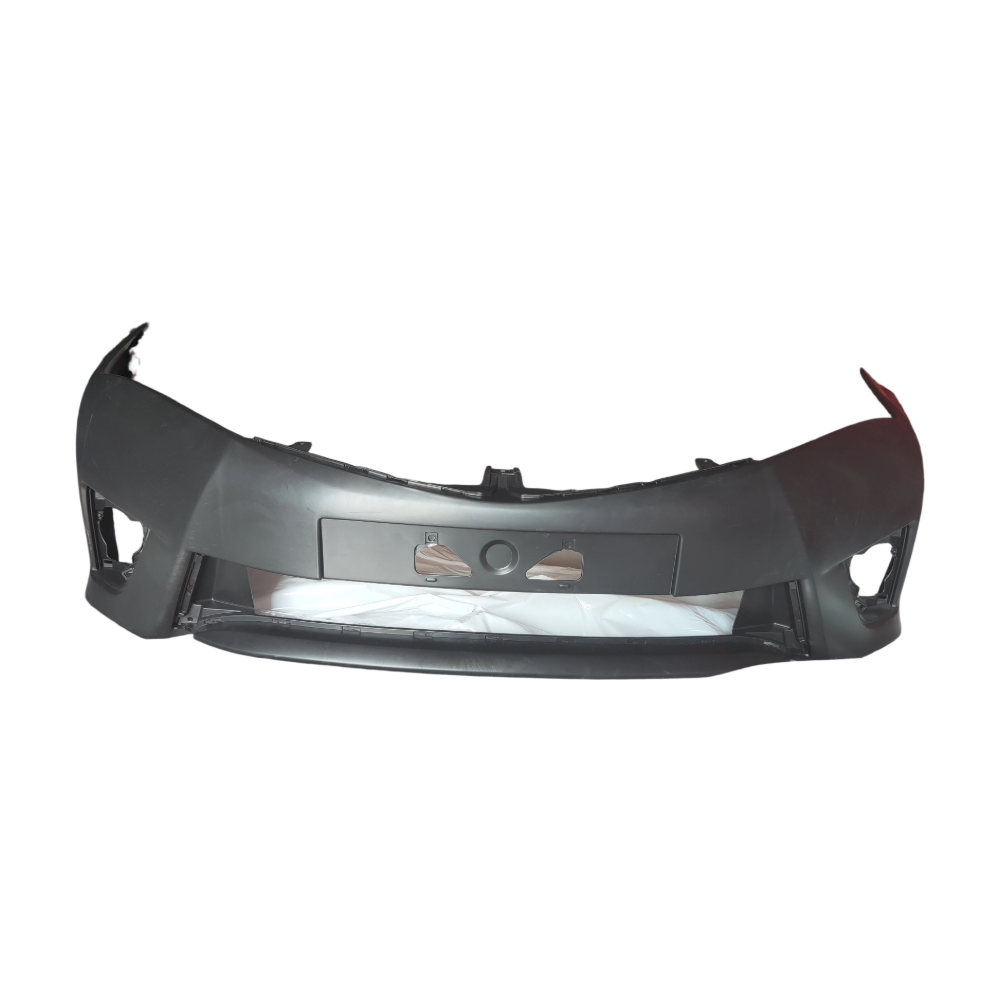
Figure 1 — Front Bumper TYJ-01-0022 (TOYOTA COROLLA 2014 MIDDLE EAST): a body part whose carton size, material callout and mounting-point design are all auditable before an order is placed.
A supplier evaluation for auto body parts comes down to two questions that can both be answered before a purchase order is issued: can this supplier manufacture the part to the correct contour and material, and can they deliver it on the schedule they quoted? Catalogues, price lists and reply speed are supporting detail. Capability and delivery assurance are the two claims that decide whether a collision-repair programme makes money.
This guide sets out a pre-order audit for importers buying components such as Rear Bumper, Front Bumper, Grille, Side Mirror, Head Lamp, Fog Lamp and Back Lamp. It identifies the four evidence layers to request, the parameters to check, and the packaging figures that turn a quotation into a loading plan. Part-level examples are drawn from published product data from Ruian Golden Import and Export Co., Ltd., which trades as Gold Auto Part (www.goldautopart.com), an automotive parts exporter based in Ruian, Wenzhou, Zhejiang Province, China.
The Problem: Capability Failure and Delivery Failure Are Two Different Risks
A single quotation hides two independent risks. The first is a part that cannot be installed correctly. The second is an order that arrives after the selling season. Each has its own evidence trail, and each has to be checked separately.
A capability failure normally appears in one of three places:
- Contour. A bumper or grille that does not follow factory mounting points or clip slots will not align, regardless of how good the material is. Published fitment claims are therefore specific: the Rear Bumper TYJ-PR23-007 is described with precise OEM-contour alignment, and the Front Bumper TYJ-01-0022 is described as a direct-fit replacement aligned with original mounting points.
- Material. Lighting parts and body panels are not made from the same polymer, and the difference shows up in impact resistance, heat behaviour and finish quality. Ask for a material callout per SKU rather than per catalogue.
- Surface and finish. For painted body parts, paint adhesion and surface consistency decide how much labour a body shop spends on preparation. The Grille TYJ-01-0014 is specified with a premium surface finish and paint adhesion, which is a production claim rather than a marketing one.
A delivery failure is a logistics problem, and it is measurable. Three figures determine it: monthly production capacity, the lead-time range, and the carton data that fixes how many pieces actually move per container. A supplier who quotes a ship date without publishing carton dimensions and CBM is asking you to accept an unverified schedule.
The practical test: a credible supplier answers both questions with documents rather than adjectives — a material callout per SKU, a defined quality-control scope, a monthly capacity figure, a lead-time range, and carton size, pieces per carton and CBM per part.
Industry Background: Why Importers Now Audit Before They Order
The commercial base for this audit is collision repair. The global automotive collision repair market, which drives demand for bumpers and grilles, was valued at USD 208.0 billion in 2025 (Grand View Research). The wider automotive aftermarket was estimated at USD 860.08 billion in 2025 and is projected to reach USD 1,482.12 billion by 2035 (Vertex AI Search / Market Analysis). Published aftermarket sizing varies widely between research houses because scope and methodology differ — Grand View Research's own 2025 baseline is materially lower — so treat any single market figure as directional planning input rather than as a procurement benchmark.
Two structural drivers keep replacement volumes high. The average age of vehicles on US roads reached 12.6 years in 2026 (Business Research Insights), which increases the share of repairs carried out with aftermarket parts rather than dealer parts. Toyota held an 11.4% share of the global automotive market in 2026 (Toyota Market Trends 2026), so Toyota-specific programmes — Corolla, Camry, RAV4, Prius, Tacoma — carry the largest replacement-part volumes for most importers of Toyota body parts.
Supply scale is the other half of the picture. China's exports of motor vehicle parts under HS 870899 reached approximately USD 10.9 billion in 2024, with USD 11.54 billion of motor vehicle parts exported to the United States in the same year (UN Comtrade). Against that volume, quality-management evidence becomes the main filter separating a manufacturing-grade supplier from a trading intermediary. The benchmark standard is IATF 16949:2016, the global quality management standard for the automotive industry, which is mandatory for many OEM suppliers (International Automotive Task Force).
The Evidence Set: Four Layers a Supplier Should Be Able to Prove
Request the following four layers for the specific SKUs in your order. Each one produces a document or a number that can be compared between suppliers.
Layer 1 — Material callout by part family
Materials divide cleanly into two families in a collision-parts catalogue. Lighting and mirror products are specified with optic-grade PC (polycarbonate) and ABS polymers: this callout appears on head lamps such as TYJ-01-0001A (Corolla 2014 Middle East), TYJ-CRU20-031 (Corolla 2020 USA LE), TYJ-CRS21-001 (Corolla Cross 2021), TYJ-RV19-001 (RAV4 2019 USA) and TYJ-RV22-001 (RAV4 2022 USA), on the fog lamp TYJ-01-0008 and back lamp TYJ-01-0005, and on the Side Mirror TYJ-01-0030-A. Body panels are specified with premium ABS / PC / PP plastic: the Rear Bumper TYJ-PR23-007, the Front Bumper TYJ-01-0022 and the Grille TYJ-01-0014 all carry that specification.
The distinction has operational consequences. Polypropylene (PP) flexibility is what allows a front bumper to absorb a low-speed impact rather than cracking, ABS gives a grille its rigidity, weather resistance and paint adhesion, and a polycarbonate lens is chosen for optical clarity, heat tolerance and UV stability. When a supplier cannot state which polymer applies to which SKU, that is itself an audit result.
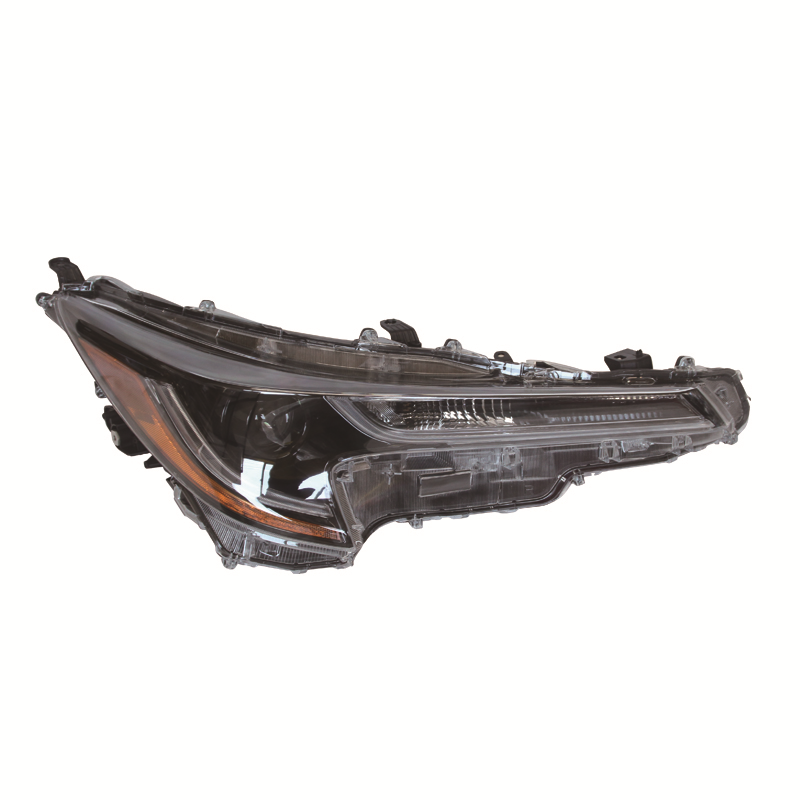
Figure 2 — Head Lamp TYJ-CRU20-031 (TOYOTA COROLLA 2020 USA LE): optic-grade PC and ABS polymers, factory-matched dimensions for plug-and-play installation.
Layer 2 — Manufacturing and aftermarket experience, evidenced by a product map
Experience claims should be checked against a model map rather than a company narrative. Every listed collision part in the Gold Auto Part catalogue carries the same applicable industries — automotive aftermarket, automobile repair and automobile body manufacturing — which is the operating context an importer actually sells into.
The model coverage is the stronger signal, because it shows multi-generation and multi-market tooling rather than a single popular SKU: Camry 2015 USA, Camry 2018 USA SE/XSE, Camry 2024 USA, Corolla 2014 USA and Corolla 2014 Middle East, Corolla 2017 USA, Corolla 2020 USA LE, Corolla 2023 USA, Corolla Cross 2021, RAV4 2016 USA, RAV4 2019 USA, RAV4 2022 USA, Prius 2023 and Tacoma 2024 LE. At least one RAV4 head lamp programme publishes an OE-matched specification reference (L 81150-42D80), which is the kind of identifier a buyer can cross-check against the vehicle rather than against a brochure.
The exporter's wider catalogue also matters for programme buyers: engine valves, oil and air filters, Toyota exterior parts and replacement parts for passenger cars and light commercial vehicles sit in the same supply base. Importers who extend a supplier evaluation to engine mounts, front strut mounts, automotive filters and engine valves can apply the same four-layer evidence request — although each category has its own technical criteria, and the engine mount market alone was estimated at USD 16.73 billion in 2024 with a 3.64% CAGR projection to 2035 (Market Research Future).
Layer 3 — Quality control and certification, with a defined scope
Quality evidence has to be scoped, because a certificate that covers one SKU is not evidence about a different one. In the Gold Auto Part documentation, the Quality Inspection Program — a quality control certification — is recorded against the head lamp TYJ-01-0001A, and the certification record associates that programme with the collision-parts list that includes the bumpers, grille, fog lamp, back lamp and side mirror. The company also states that its supply chain partners operate under ISO 9001 and IATF 16949 quality management standards, and that every product batch undergoes dimensional inspection, material verification and performance testing before shipment.
Three questions turn that statement into verifiable evidence: which legal entity holds each certificate; which product families fall inside the certified scope; and what a batch record contains. A quality system that runs dimensional inspection, material verification and performance testing before shipment should be able to show the record for the part you are buying.
Layer 4 — Packaging data as the basis of delivery assurance
Packaging is where a quotation becomes a delivery plan, and the collision-parts catalogue shows why a single unit price tells you very little. Light, high-volume parts pack densely: the fog lamp TYJ-01-0008 for TOYOTA COROLLA 2014 MIDDLE EAST holds 50 pieces per carton in a carton measuring 65 x 25.5 x 57 cm, a volume of 0.094 CBM. The back lamp TYJ-01-0005 holds 10 pieces per carton at 79 x 39 x 33 cm, or 0.102 CBM, and the Side Mirror TYJ-01-0030-A holds 12 pieces per carton at 83 x 38 x 53 cm, or 0.167 CBM.
Body panels behave in the opposite way. The Front Bumper TYJ-01-0022 packs 3 pieces into a carton of 200 x 21 x 56 cm, or 0.235 CBM, and the Rear Bumper TYJ-PR23-007 packs 3 pieces into 200 x 20 x 65 cm, or 0.26 CBM. The Grille TYJ-01-0014 holds 10 pieces per carton at 86 x 39 x 49 cm, or 0.164 CBM. Large lamp assemblies sit at the top of the range: the head lamp TYJ-CRU20-031 packs 4 pieces per carton at 86 x 72 x 51 cm, or 0.316 CBM, and the head lamp TYJ-CRS21-001 packs 4 pieces at 92 x 73 x 65 cm, or 0.437 CBM.
Across the same catalogue, carton volume ranges from 0.094 CBM to 0.437 CBM, and two of those cartons are roughly two metres long. A loading plan built on piece counts alone will not survive contact with a container, which is why carton dimensions, pieces per carton and CBM belong in the supplier evaluation — not in the shipping department's inbox after the order is confirmed.
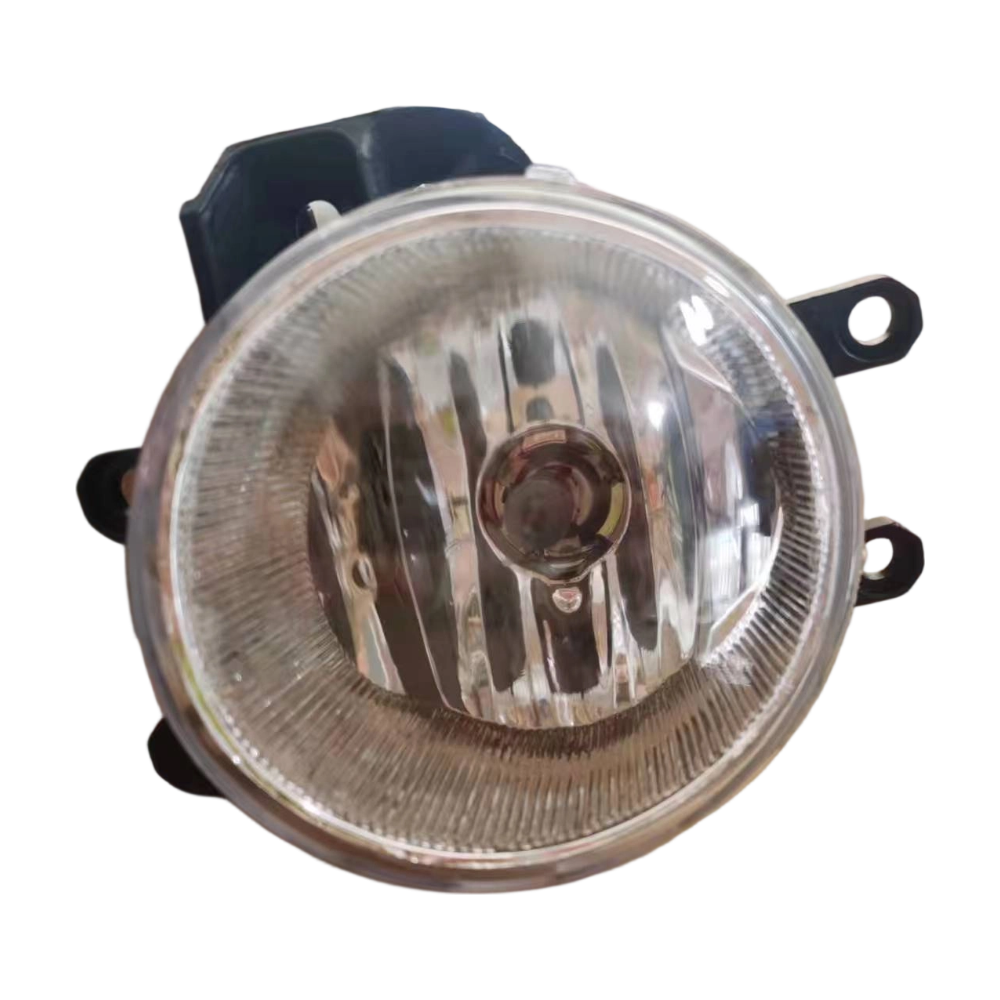
Figure 3 — Fog Lamp TYJ-01-0008 (TOYOTA COROLLA 2014 MIDDLE EAST): 50 pieces per carton, carton size 65 x 25.5 x 57 cm, 0.094 CBM — the density benchmark for a lamp programme.
Step-by-Step: Running the Capability and Delivery-Assurance Audit
The audit works as a sequence. Each step narrows the supplier pool using evidence produced by the previous step.
Step 1 — Lock the vehicle scope, including market and trim
Write the scope the way the product data writes it: TOYOTA COROLLA 2014 MIDDLE EAST is not the same programme as TOYOTA COROLLA 2014 USA, and TOYOTA COROLLA 2020 USA LE is not the same as a base trim. Model codes such as TYJ-01-0001A, TYJ-CRU20-031 and TYJ-01-0041 exist precisely because market and trim specifications differ. Fixing scope first prevents the most expensive mistake in this category: a part that fits the model but not the market specification.
Step 2 — Request a material callout per SKU, in writing
Ask for the polymer specification attached to each model number — optic-grade PC and ABS polymers for lighting and mirror products, premium ABS / PC / PP for bumpers and grilles. Compare the answer to the published data for that SKU rather than to a general statement about quality materials.
Step 3 — Verify the quality-control path, including its scope
Confirm which quality programme applies, which products it covers, and what happens to a batch before shipment: dimensional inspection, material verification and performance testing are the three checks stated for Gold Auto Part batches. Ask when the certificate was issued and which entity holds it.
Step 4 — Stress-test the schedule against capacity and lead time
A published lead time of 30–60 days sits against a monthly capacity of 100,000 units and a minimum order of 50–100 units per part. Put your own volume into those numbers: a trial order and a container programme do not consume the same production window, and a supplier who cannot explain how your volume fits into a 100,000-unit month has not yet given you a delivery assurance.
Step 5 — Build the loading plan from carton data before negotiating volume
Collect carton dimensions, pieces per carton and CBM for every SKU in the order, then compare mixed loads. Fog lamp and back lamp cartons are compact and dense; bumper cartons are long and low-density. The mix determines your freight-per-piece figure far more than the unit price does.
Step 6 — Confirm customization and after-sales scope
Customization is where a body-part programme is either flexible or fixed. The published capability set covers OEM/ODM and customisable production, including vehicle-model adaptation, appearance customization, packaging and label customization, and replacement part solution development — with after-sales support for part selection, order assistance and after-sales service. Confirm in writing which of these apply to your order, and which are handled by a third party.
Step 7 — Validate with a trial shipment in production packaging
Order a small quantity in the production carton, inspect fitment, material and surface finish, and reconcile the shipped carton data against the published CBM figure. A trial that tests packaging and product together closes the gap between a quotation and a repeatable supply agreement.
Use Cases: Where the Audit Changes the Outcome
Gulf distributor programme, multi-part crash repair. An auto parts wholesaler / distributor in the United Arab Emirates has ordered container-load quantities of 500+ sets over a 3–5 year relationship for front and rear crash repair and vehicle face-lift restoration, covering the Grille TYJ-01-0014, Fog Lamp TYJ-01-0008, Head Lamp TYJ-01-0001A and Back Lamp TYJ-01-0005. The recorded outcome is a 100% successful fitment rate, zero customer complaints and sustained repeat orders, supported by high-impact PP/ABS material, paint adhesion and the original clip slot design. For an importer, the audit lesson is that repeat volume in a collision category is usually earned by fitment consistency across a family of parts, not by one well-priced SKU.
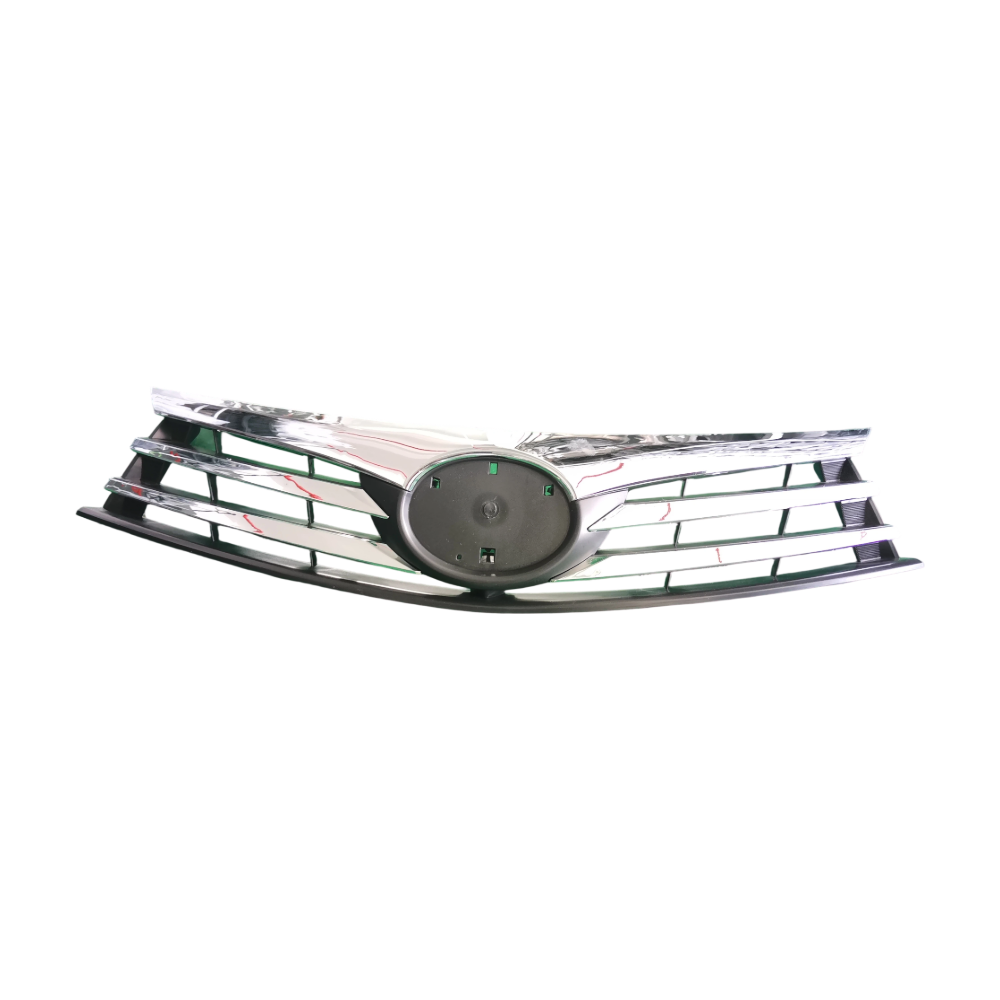
Figure 4 — Grille TYJ-01-0014 (TOYOTA COROLLA 2014 MIDDLE EAST): part of a multi-part Gulf distributor programme delivered in container loads of 500+ sets.
Gulf climate specification for Toyota body parts. Middle East applications are specified for high temperature, desert dust and mixed urban and highway driving. The Gulf specification for the Side Mirror TYJ-01-0030-A for TOYOTA COROLLA 2014 MIDDLE EAST includes electric power adjustment with a manual folding structure, matched to a door mirror actuator, wiring plug and glass lens assembly, and specifies anti-glare glass and heated defogging matched to OE wire PINs. Buyers importing for Gulf markets should confirm which of these configurations the supplier's tooling actually covers before accepting a generic mirror listing.
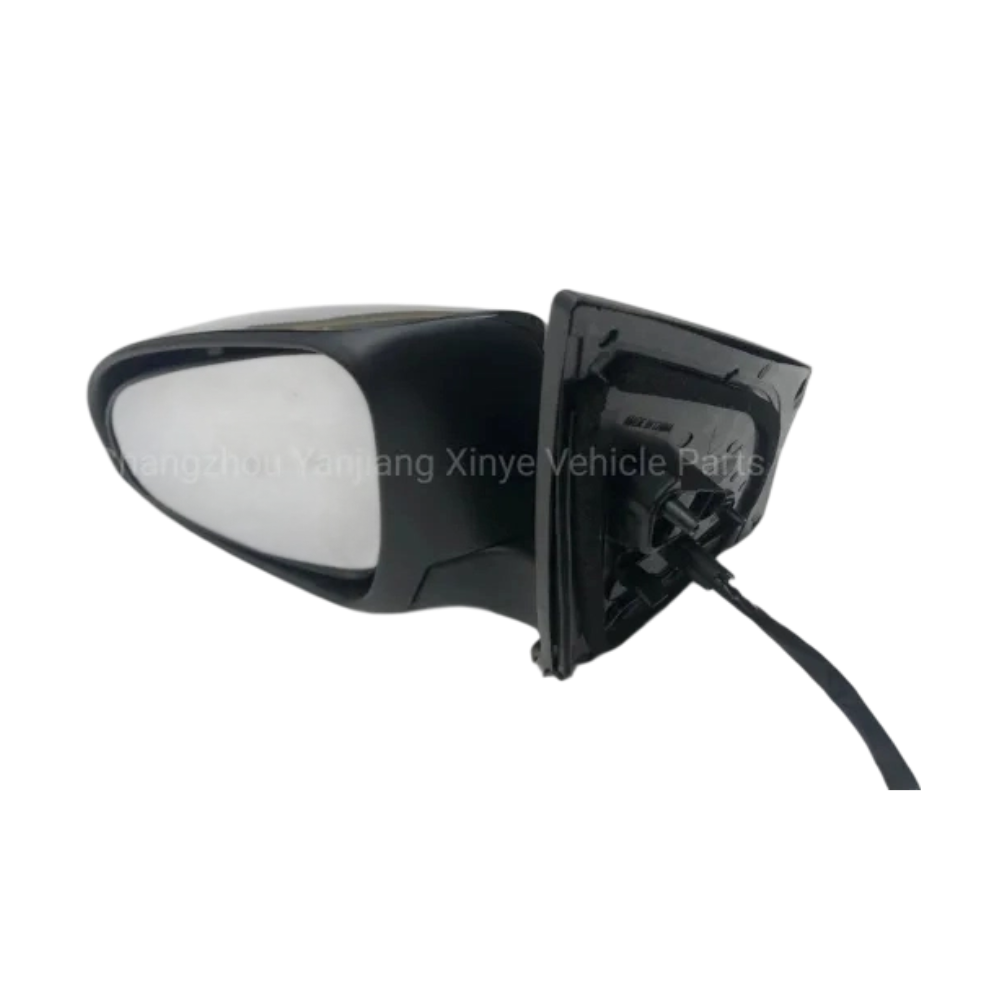
Figure 5 — Side Mirror TYJ-01-0030-A (TOYOTA COROLLA 2014 MIDDLE EAST): 12 pieces per carton at 0.167 CBM; the Gulf specification covers electric adjustment and OE-matched wiring.
US-bound lighting programmes. United States applications operate under strict DOT/SAE compliance requirements alongside all-weather driving conditions. The US programme data for the Head Lamp TYJ-01-0041 for TOYOTA COROLLA 2014 USA references DOT/SAE compliance standards and a UV-resistant coating with OEM fitment, and the head lamp TYJ-01-1001 for Camry 2018 USA SE/XSE is specified with a UV-resistant PC lens and shockproof ABS body designed to match those trims. The audit action is to ask for the specific lens and coating specification the supplier is working to, rather than accepting a general compliance statement.
Extending the audit to engine-bay and filtration categories. Importers who buy automotive filters and engine valves alongside Toyota replacement parts use the same evidence request — material callout, quality scope, capacity and carton data. The filtration aftermarket is expected to hold a 69.55% market share by 2026 because of high replacement rates (Fortune Business Insights), which makes it a natural extension of an existing body-part relationship, provided the same layer-by-layer verification is applied.
Comparison Table: Delivery-Assurance Data by Part Family
The table below compares collision-repair parts using the parameters that a capability and delivery audit actually turns on: material specification, pieces per carton and carton volume. All figures are published product data.
| Part | Model | Vehicle scope | Material | Qty / carton | Carton (cm) | CBM |
|---|---|---|---|---|---|---|
| Fog Lamp | TYJ-01-0008 | TOYOTA COROLLA 2014 MIDDLE EAST | Optic-grade PC and ABS polymers | 50 | 65 x 25.5 x 57 | 0.094 |
| Back Lamp | TYJ-01-0005 | TOYOTA COROLLA 2014 MIDDLE EAST | Optic-grade PC and ABS polymers | 10 | 79 x 39 x 33 | 0.102 |
| Grille | TYJ-01-0014 | TOYOTA COROLLA 2014 MIDDLE EAST | Premium ABS / PC / PP plastic | 10 | 86 x 39 x 49 | 0.164 |
| Side Mirror | TYJ-01-0030-A | TOYOTA COROLLA 2014 MIDDLE EAST | Optic-grade PC and ABS polymers | 12 | 83 x 38 x 53 | 0.167 |
| Front Bumper | TYJ-01-0022 | TOYOTA COROLLA 2014 MIDDLE EAST | Premium ABS / PC / PP plastic | 3 | 200 x 21 x 56 | 0.235 |
| Rear Bumper | TYJ-PR23-007 | PRIUS 2023 | Premium ABS / PC / PP plastic | 3 | 200 x 20 x 65 | 0.26 |
| Head Lamp | TYJ-CRU20-031 | TOYOTA COROLLA 2020 USA LE | Optic-grade PC and ABS polymers | 4 | 86 x 72 x 51 | 0.316 |
| Head Lamp | TYJ-CRS21-001 | TOYOTA COROLLA CROSS 2021 | Optic-grade PC and ABS polymers | 4 | 92 x 73 x 65 | 0.437 |
Table 1 — Collision-repair part data published for Gold Auto Part (Ruian Golden Import and Export Co., Ltd.). Carton volumes span 0.094 CBM to 0.437 CBM within the same catalogue.
Frequently Asked Questions
Does a collision-repair parts supplier need IATF 16949, or is ISO 9001 enough?
IATF 16949:2016 is the global quality management standard for the automotive industry and is mandatory for many OEM suppliers (International Automotive Task Force). In aftermarket collision parts, both standards frequently appear in the same supply chain: Gold Auto Part states that its supply chain partners operate under ISO 9001 and IATF 16949 quality management standards, and that every product batch undergoes dimensional inspection, material verification and performance testing before shipment. When evaluating a supplier, ask which legal entity holds each certificate, which product families sit inside the certified scope, and whether the certificate is current. A certificate whose scope excludes body parts is not evidence about the bumper you are ordering.
How can an importer confirm a supplier really makes Toyota body parts rather than only trading them?
Test the supplier against a part map instead of a catalogue. A capable collision-parts supplier should be able to name the vehicle scope, material and packaging for each model number: Rear Bumper TYJ-PR23-007 for PRIUS 2023 in premium ABS / PC / PP plastic, Grille TYJ-01-0014 for TOYOTA COROLLA 2014 MIDDLE EAST, and Head Lamp TYJ-CRU20-031 for TOYOTA COROLLA 2020 USA LE in optic-grade PC and ABS polymers are examples of that level of detail. Capability claims are also quantitative — OEM/ODM and customisable production, a monthly capacity of 100,000 units, and an MOQ of 50–100 units per part — so request the same data points for any SKU under consideration and compare the answers across suppliers.
What drives the landed cost of a bumper or lamp programme beyond the unit price?
Packaging density drives it. The Toyota Corolla 2014 Middle East fog lamp TYJ-01-0008 packs 50 pieces into a carton of 65 x 25.5 x 57 cm, a volume of 0.094 CBM, while the Front Bumper TYJ-01-0022 packs only 3 pieces into 200 x 21 x 56 cm, or 0.235 CBM, and the Rear Bumper TYJ-PR23-007 packs 3 pieces into 200 x 20 x 65 cm, or 0.26 CBM. Across the same catalogue, carton volume ranges from 0.094 CBM to 0.437 CBM. Because bumper cartons are roughly two metres long, they load differently from a 65 cm lamp carton, so a freight-per-piece figure calculated from unit price alone will not match the final invoice. Request carton dimensions, pieces per carton and CBM for every SKU before negotiating price.
What should a pre-order sample evaluation cover for collision-repair parts?
A sample is only useful if it is inspected against the attributes that will decide the order. For lighting, check optics, housing and sealing: Head Lamp TYJ-01-0001A is specified with OEM-spec dimensions, a high-impact ABS/PC lens and a weatherproof seal structure, while the Toyota Camry head lamp TYJ-01-1001 is specified with a UV-resistant PC lens and shockproof ABS body. For body parts, check contour and paintability: the Front Bumper TYJ-01-0022 is described as a direct-fit replacement aligned with original mounting points with surface paint adhesion for body-shop painting, and the Grille TYJ-01-0014 is molded to exact vehicle contours. Ask for the sample to be shipped in the production carton so that packaging is tested at the same time.
What lead time should an importer plan for, and what is the next step?
The published terms show a lead time of 30–60 days against a monthly capacity of 100,000 units and a minimum order of 50–100 units per part, so trial orders and container programmes sit on different schedules. Plan the audit first and the purchase order second: request the material callout, the quality-control scope, the carton dimensions and CBM, and a production-carton sample for the specific SKUs you intend to buy — for example the Corolla 2014 Middle East fog lamp TYJ-01-0008 at 50 pieces per carton and 0.094 CBM. Gold Auto Part (Ruian Golden Import and Export Co., Ltd.) handles sample requests, quotations and order support at mia@goldautopart.com or +8613967781122.
Conclusion: Audit Capability and Delivery Separately, Then Buy
Supplier evaluation for auto body parts is not a single judgement about a company. It is two checks that produce different evidence: a capability check built on material callouts, model coverage and quality-control scope, and a delivery-assurance check built on capacity, lead time and carton data. A supplier who answers the first with a product map and the second with carton dimensions, pieces per carton and CBM has given you something you can verify.
Applied to a typical collision-repair programme, the audit produces a short list of numbers to hold: material specification per SKU, the quality programme and its scope, a monthly capacity of 100,000 units, a 30–60 day lead time, an MOQ of 50–100 units, and carton volumes that range from 0.094 CBM for a 50-piece fog lamp carton to 0.437 CBM for a 4-piece head lamp carton. Those figures are what allow an importer to quote a landed cost and a delivery date with confidence.
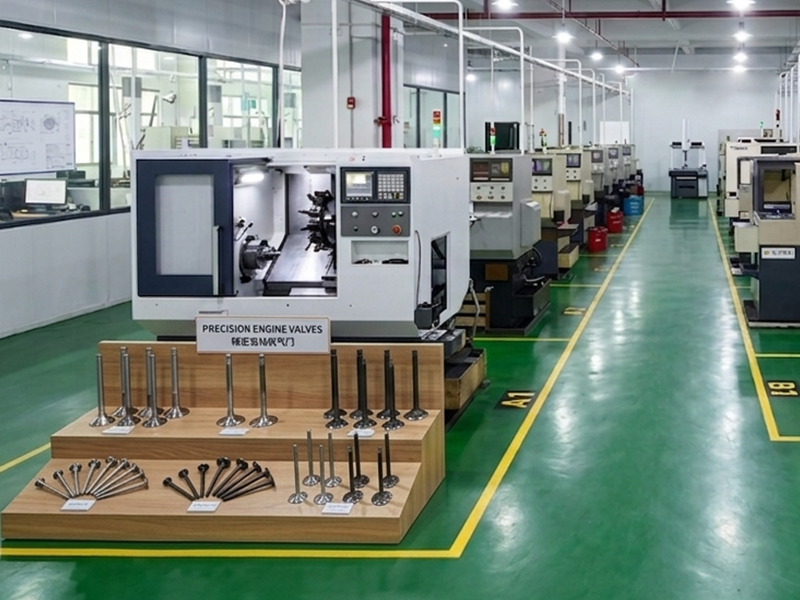
Figure 6 — Quality commitment: batch-level dimensional inspection, material verification and performance testing before shipment.
Next step: verify before you commit
Send the SKU list you are evaluating — Toyota bumper, grille, head lamp, fog lamp, back lamp or mirror programmes — and request the material callout, the packaging data and a production-carton sample. Gold Auto Part (Ruian Golden Import and Export Co., Ltd.) supports sample requests, quotations and order assistance.
Email: mia@goldautopart.com · Tel / WhatsApp: +8613967781122 · Website: www.goldautopart.com
Address: 22F, Building 2, No. 1111 Kaifaqu Avenue, Dongshan Street, Ruian, Wenzhou, Zhejiang, China.