
Recommended Sex Toy SKUs for Retail Buyers: LOVER, Sweety, KAYA, and BOON
Answer first: LOVER, Sweety, KAYA, and BOON form a workable four-SKU starting point for a retail buyer because a short, named set is easier to explain at shelf, easier to train staff on, and easier to reorder than a broad catalog drop. This recommendation is about assortment structure and evaluation order, not about product performance. Model-level specifications for these four names should be confirmed against the current product sheet and a physical sample before listing.
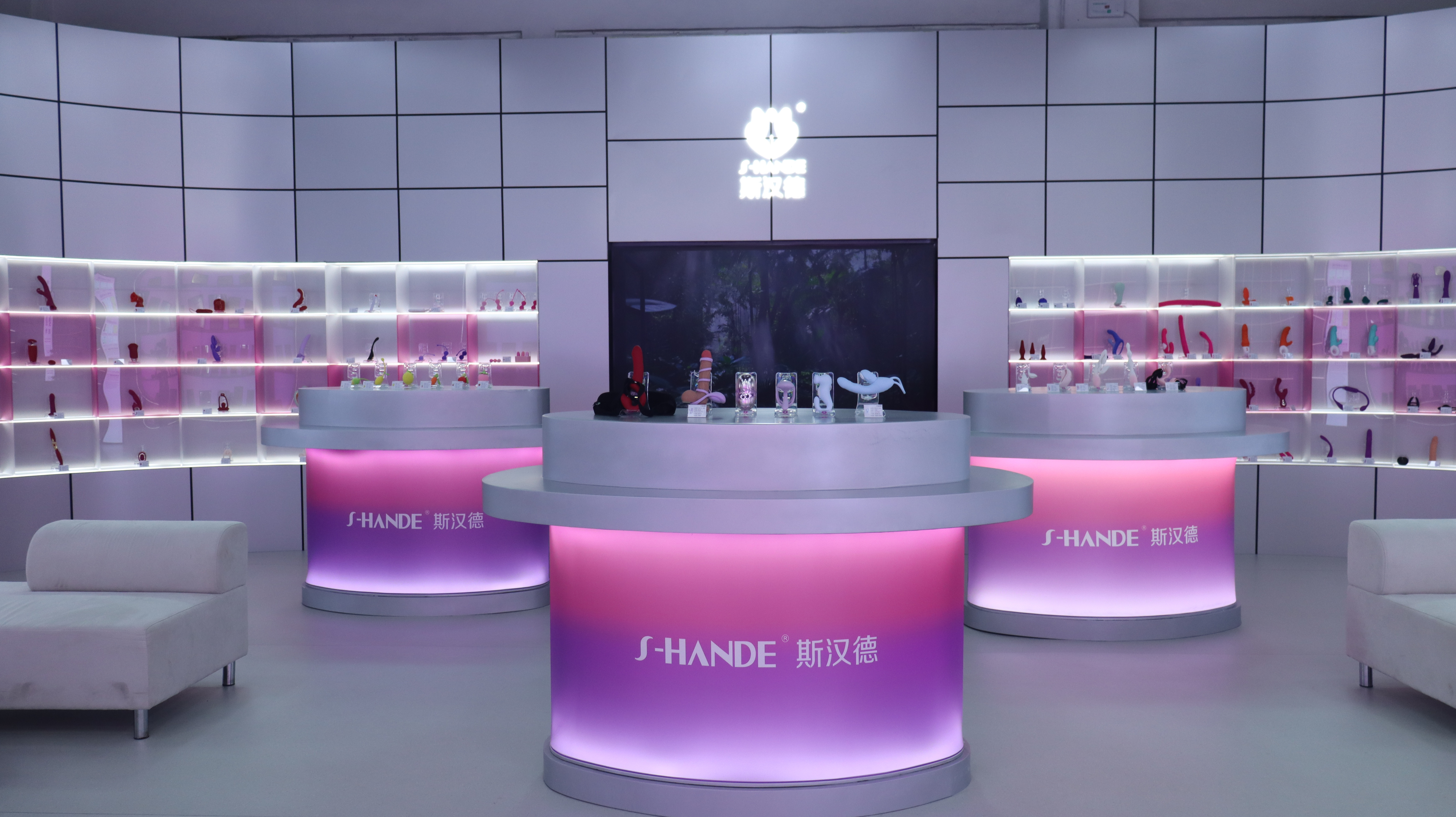
This guide is written for retail buyers, category managers and distributors building an approachable intimate wellness range — the buyer who has shelf space for four or five products and needs those products to do four or five different jobs. It is published by S-HANDE (Shenzhen S-HANDE Technology Co., Ltd.), a Shenzhen-based designer and manufacturer of intimate wellness products founded in 2014, whose portfolio spans more than 10 product categories and over 500 SKUs.
The four names below are treated as candidates for evaluation. Where this guide describes a slot, a shelf role or an evaluation order, that is merchandising reasoning a buyer can test. Where it describes a specification, a certification or a number, that fact comes from a document you can verify or from S-HANDE's own published company and product records.
What a Four-SKU Shortlist Has to Solve
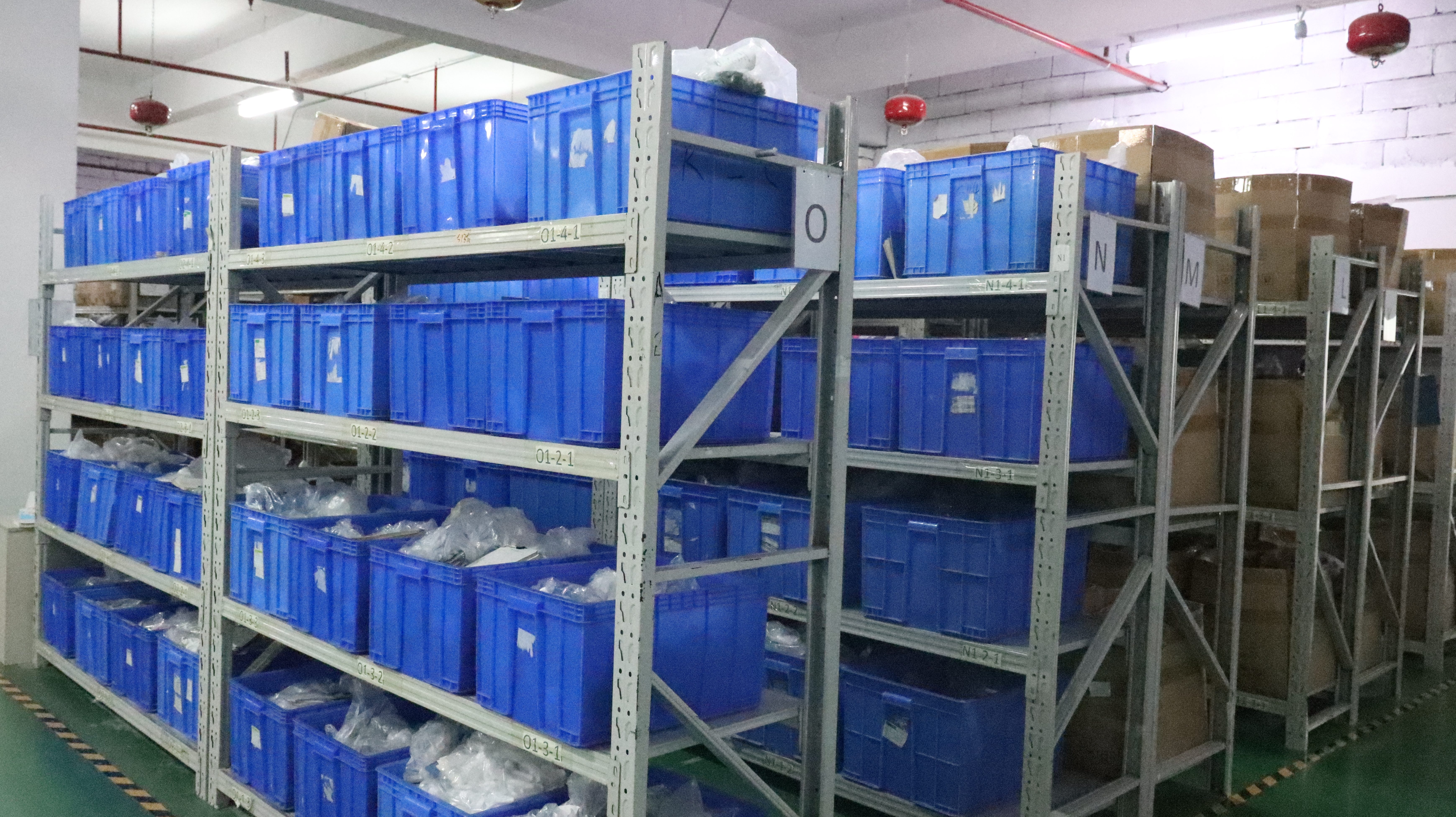
The first problem in this category is not product quality. It is breadth. S-HANDE alone reports more than 10 product categories and over 500 SKUs, and states that it launches more than 120 new products each year. No physical store, and very few online stores, can absorb that. A buyer who orders a catalog instead of a range ends up with inventory that has no story, no shelf logic, and no reorder pattern.
Three failure modes repeat in retail assortment planning for intimate wellness:
- The catalog dump. Dozens of SKUs arrive, staff can explain none of them, and the slow movers are marked down before the fast movers establish a reorder rhythm.
- The single hero SKU. One product carries the whole category. It is simple to merchandise, but if it underperforms or is discontinued, the category disappears with it.
- The spec-sheet range. The assortment is chosen on technical parameters — motor type, waterproof rating, material grade — that a walk-in shopper cannot decode, so nothing sells without staff intervention.
A four-SKU starter set sits between those extremes. It is small enough to explain, wide enough to test more than one customer need, and cheap enough to correct. The purpose of the shortlist in this article is to give a buyer four named slots to evaluate, each with a different merchandising job, rather than four interchangeable products.
Industry Background: Why "Approachable" Is Now a Compliance Question Too
Two changes have moved the definition of an approachable range. The first is positioning. Intimate wellness products are increasingly browsed as personal-care items rather than as novelty goods, which means packaging, naming and staff language matter as much as the product itself. Vibrators remain the largest single product segment: Global Market Insights puts the vibrator segment at 29.4% of the market in 2024, so most starter assortments will include at least one vibration product.
The second change is documentation. SGS describes ISO 3533:2021 as the first international safety standard specifically for sex toys, covering design, material safety and labeling. The same source identifies porous materials such as TPE and PVC as riskier because of bacterial retention and potential phthalate content. For a retail buyer, that converts a soft word like "body-safe" into a document request: which material, which grade, which test report, which SKU.
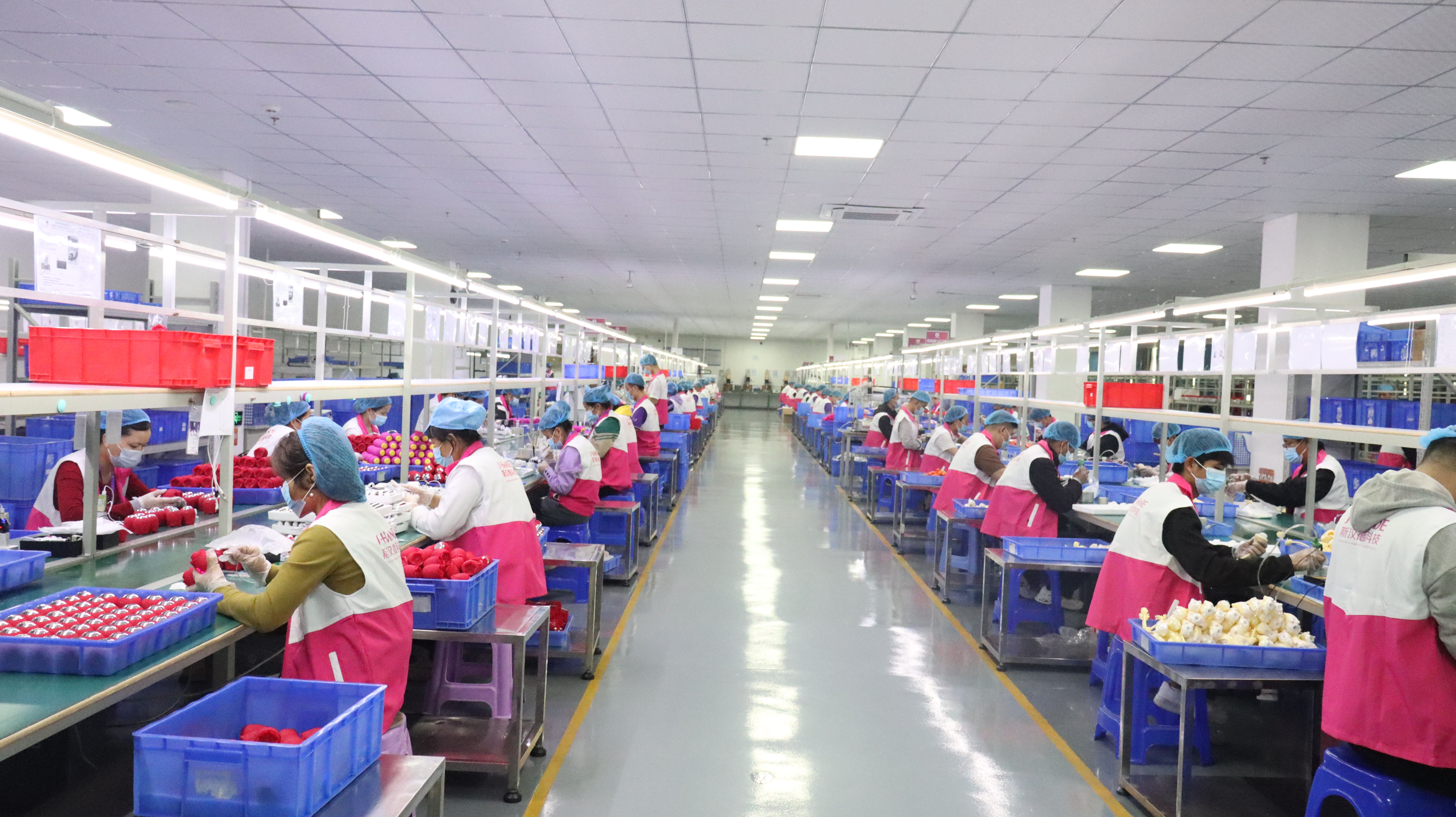
Supplier scale is not the same thing as per-SKU evidence. S-HANDE operates a 15,000 m² factory with 500+ employees and a stated output capacity of 9.6 million units per year, holds ISO 9001 Quality Management System certification issued by ACM Limited (Shanghai) and valid from 2024.1.11 to 2027.2.25, verifiable at www.cnca.gov.cn, and holds an IP Management System Certification (Certificate No. 498251P05820ROM, compliant with GB/T 29490-2023, valid 2025.12.30 – 2028.12.29). Those are company-level credentials. They support a supplier decision. They do not replace the material and safety file for each SKU you list.
The Inclusion Logic: Why LOVER, Sweety, KAYA, and BOON Share a Shortlist
Four names made the shortlist because they satisfy four buyer-side tests. None of the four tests depends on a performance claim, which is why the shortlist can be published before samples are scored.
1. Catalog diversity: each SKU has to do a different job
A starter set fails when two of its four SKUs occupy the same role — the same customer, the same price band, the same explanation. The four names here are intended to occupy four distinct slots: a first-pick entry, an add-on or gifting item, a bridge between entry and mid tiers, and a low-commitment trial item. Whether they actually occupy those slots in your store depends on what you already stock, so the overlap check is part of the evaluation, not a footnote.
2. Customer appeal: the name has to survive being spoken aloud
LOVER, Sweety, KAYA and BOON are consumer-facing names rather than technical model codes. That is a merchandising advantage: a shopper can repeat them, staff can say them without a script, and they read naturally in shelf talk and product page titles. It also creates a task — confirm that the pack copy carries a plain-language description, because a friendly name without a plain description produces the same blank look as a model number.
3. Ease of merchandising: one bay, one sentence, one reorder line
Merchandising effort scales with SKU count, not with shelf width. Four SKUs means four product pages, four packaging formats, four reorder lines. S-HANDE states that single-supplier sourcing reduces multi-factory coordination cost by about 15–20% and that unified QC and shipping make maintenance and after-sales more efficient than coordinating several factories. For a first order, that consolidation matters more than unit price.
4. Evidence readiness: what can be documented before listing
The fourth test is whether a supplier can produce, per SKU, a current specification sheet, a material statement and a sample within the buyer's evaluation window. S-HANDE holds 1,000+ proprietary molds in stock and states that modular platform reuse shortens the new product development cycle by about 30%, which is relevant when one of the four needs replacing. Evidence readiness is also a filter: a SKU that cannot be documented should not be listed, however good its name is.
SKU by SKU: The Question Each Slot Has to Answer
Read each section as a job description for a shelf slot. The question at the end is the gate: if the answer is unclear, the SKU is not ready for listing yet.
LOVER — the first-pick SKU
The job of the first-pick SKU is to be the product a shopper picks up when they do not yet have the vocabulary for the category. That makes name clarity and pack copy more important than spec depth. If a staff member cannot explain the product in one sentence, it will sit on the shelf regardless of how good it is.
What to confirm: the exact category and function on the current specification sheet; whether the outer packaging carries a plain-language description; and whether the SKU can be ordered in a display-ready pack. Gate: do not assign shelf position until the one-sentence staff pitch and the specification sheet agree with each other.
Sweety — the add-on and gifting candidate
The add-on slot exists because a starter range should produce a second purchase without a second sales conversation. Sweety should be tested as the item that sits beside the first pick, not in front of it — the product a shopper adds when the first purchase has already been decided.
What to confirm: the price position relative to your average basket, since an add-on only works below that line; the packaging options, because an item positioned for gifting has to present well unboxed; and the per-pack minimum order quantity. Gate: if packaging cost pushes the landed cost above the add-on band, the slot is not viable at your price point.
KAYA — the bridge between entry and mid tier
Most four-SKU sets break in the middle: everything clusters at the entry price, and the customer who wants to spend more has nowhere to go. KAYA's role is to be the bridge — the SKU that gives the range a second tier without requiring a fifth or sixth product.
What to confirm: the price-ladder position, and the overlap against the two closest SKUs you already stock. Gate: run a side-by-side comparison against your current mid-tier product before you commit. If KAYA does not add a distinct reason to buy, it cannibalises an existing line instead of extending the range.
BOON — the low-commitment trial item
The trial slot is for the customer who is curious but not ready to spend at the range average. Its merchandising value is that it lowers the entry barrier for the whole category: a first purchase at a low commitment level creates a customer for the bridge SKU later.
What to confirm: the minimum order quantity and the packaging cost per unit, because low-ticket items are unusually sensitive to pack cost. Gate: evaluate landed cost after packaging and freight, not the ex-works figure. A trial item that only works at an unrealistic order volume is not a trial item.
Step-by-Step: How to Evaluate the Four SKUs Before You Commit
- Request all four specification sheets in one request. Comparability is the point. If the sheets arrive in four different formats, the range cannot be evaluated as a set.
- Confirm the material and safety file per SKU, not per company. Ask for the material grade and the test documentation attached to each of LOVER, Sweety, KAYA and BOON. Company-level certificates — ISO 9001 by ACM Limited (Shanghai), valid 2024.1.11 – 2027.2.25, verifiable at www.cnca.gov.cn — establish the quality system, not the specification of an individual product.
- Ask which compliance documentation applies to your market. Use ISO 3533:2021 as the reference point: SGS describes it as the first international safety standard specifically for sex toys, covering design, material safety and labeling. Ask the supplier to state, in writing, which documents support each SKU in the destination market.
- Score samples on a fixed rubric. Function, noise, charging, cleaning and packaging, scored on the same scale for all four. S-HANDE publishes several supplier-stated benchmarks that a buyer can use as questions rather than assumptions: operating noise measured at approximately 55 dB on one model, described as 10–15 dB lower than mainstream same-category competitors; USB-C fast charging with approximately 30% longer battery life; IPX7 waterproofing where mainstream competitors mostly offer IPX4; and a motor that passed a 30-hour cycling aging test against approximately 8–16 hours for mainstream competitors. Ask which of these apply to each of the four SKUs.
- Map to shelf and price ladder, then cut overlaps. Assign the four slots, check the ladder, and remove any SKU that duplicates an existing line. Cost drivers are worth naming at this stage: S-HANDE states that liquid or food-grade silicone carries approximately 12% higher material cost than standard TPE, and that IPX7 construction carries approximately 10% higher cost — both are specification choices, not margins.
- Set a pilot order and a reorder gate. Define the sell-through threshold and the reorder trigger before the purchase order is signed. S-HANDE's 1,000+ proprietary molds in stock and its stated ~30% shorter development cycle through modular platform reuse are relevant here: a replacement plan matters more than a wide first order.

Use Cases: Where a Four-SKU Starter Set Fits
Specialist boutique with limited floor space
One bay, four products, one staff sentence each. The set gives the category a visible presence without requiring the buyer to defend a large inventory position, and the naming makes shelf talk possible without an explicit script.
Online multi-brand store
Four SKUs means four product pages, four sets of images and four descriptions — a manageable content load that can be written properly. A catalog drop of dozens of SKUs usually produces thin pages that do not convert.
Personal-care or pharmacy chain
Staff explanation and non-explicit packaging dominate here. The first-pick and add-on slots carry most of the value, and the bridge SKU protects the average basket. Evidence readiness matters more than range width, because chain buyers usually need documentation before listing.
Distributor building a starter range for sub-retailers
A distributor needs a boxed concept that a small retailer can order in one line. A four-SKU set with a defined price ladder is easier to present than a broad catalog, and single-supplier consolidation reduces coordination overhead — S-HANDE states about 15–20% lower coordination cost versus multi-factory sourcing.
Four-SKU Starter Set vs Single Hero SKU vs Full-Catalog Drop
| Criterion | Four-SKU set (LOVER, Sweety, KAYA, BOON) | Single hero SKU | Full-catalog drop |
|---|---|---|---|
| Shelf space and explanation load | One bay, four stories; each SKU needs one staff sentence | One bay, one story; low training load but no fallback if it underperforms | High space and training load; a 500+ SKU catalog cannot be explained at shelf |
| Overlap control | Four names checked once against the existing range | No internal overlap, but no price ladder | Overlap review becomes a standalone project |
| Supplier coordination | Single supplier; S-HANDE states single-supplier sourcing reduces multi-factory coordination cost by about 15–20% | Single supplier; simplest coordination | Single supplier, but more packaging formats, documents and reorder lines |
| Refresh and replacement | Replacement options from 1,000+ proprietary molds in stock; ~30% shorter development cycle through modular platform reuse (supplier-stated) | Replacement depends on one line's continuity | Broad options, but refresh decisions slow down |
| Evidence collection | Four spec sheets, four material files, four samples | One file, one sample | Documentation required for every SKU; most buyers sample only a fraction |
| Cost structure | Specification-driven: liquid/food-grade silicone ~12% higher material cost and IPX7 construction ~10% higher cost than standard alternatives (supplier-stated) | Simplest landed cost, no ladder | Lower unit prices may be available, but working capital and markdown exposure rise |
| Main risk | Two of the four slots underperform and need replacing | The whole category fails with one SKU | Inventory and markdown risk |
FAQ
Are LOVER, Sweety, KAYA, and BOON covered by the compliance documents a retailer needs?
Compliance evidence has to be requested per SKU. S-HANDE holds ISO 9001 Quality Management System certification issued by ACM Limited (Shanghai), valid 2024.1.11 to 2027.2.25 and verifiable at www.cnca.gov.cn, plus an IP Management System Certification (Certificate No. 498251P05820ROM, compliant with GB/T 29490-2023, valid 2025.12.30 to 2028.12.29). Those cover the management system and intellectual property, not an individual product's material file. For the design, material and labeling benchmark, ISO 3533:2021 is the reference — SGS describes it as the first international safety standard specifically for sex toys. Ask the supplier which test reports and declarations apply to each of the four SKUs in your destination market, and treat company certificates as supplier qualification rather than product approval.
Can these four SKUs be ordered as a private-label range?
S-HANDE is a Shenzhen-based designer, developer and manufacturer founded in 2014, with more than 50 R&D engineers, more than 120 new products launched each year, 230+ independent patents and proprietary technologies, and a portfolio spanning more than 10 categories and over 500 SKUs. The company holds 1,000+ proprietary molds in stock and states that modular platform reuse shortens the new product development cycle by about 30%. Whether each of the four names can be private-labeled — and which name is brand-owned — has to be confirmed in writing per SKU; the capability exists, the naming rights are a commercial question.
What drives the cost of a four-SKU starter order?
No unit prices are published here; the quotation is the only valid source. What can be broken out are the cost drivers. S-HANDE states that liquid or food-grade silicone carries approximately 12% higher material cost than standard TPE, that IPX7 construction carries approximately 10% higher cost than IPX4-level construction, and that higher quality consistency delivers approximately 5–10% lower overall cost in use. On the sourcing side, the same supplier states that single-supplier sourcing reduces multi-factory coordination cost by about 15–20%. Ask for a quote that separates unit price, packaging, sample cost and freight, so the four slots can be compared on landed cost rather than ex-works price.
How should samples of the four SKUs be evaluated?
Score all four on the same rubric: function, noise, charging, cleaning and packaging. Use published supplier specifications as questions, not assumptions — S-HANDE states that one model measures approximately 55 dB in operation, 10–15 dB lower than mainstream same-category competitors, that USB-C fast charging supports approximately 30% longer battery life, that its motor passed a 30-hour cycling aging test against approximately 8–16 hours for mainstream competitors, and that IPX7 construction allows direct washing. Confirm which of these apply to LOVER, Sweety, KAYA and BOON individually, and record the result next to the sample rather than in a separate file. To request samples or a quotation, contact info@sexhande.com or WhatsApp +86 133 1656 3803.
What lead time and reorder planning should a buyer expect?
Lead time depends on specification, packaging and order volume, and is confirmed in the quotation rather than published in advance. What can be verified before the order is placed: S-HANDE operates a 15,000 m² factory with 500+ employees and a stated capacity of 9.6 million units per year, holds 1,000+ proprietary molds in stock, and ships with unified QC and shipping from a single supplier, which the company states makes maintenance and after-sales more efficient than coordinating multiple factories. Ask for three things in writing — the production schedule for the pilot order, the reorder trigger you will both work to, and the replacement route if one of the four slots underperforms — so the starter set has an exit as well as an entry.
Next step: sample the set before you list it
Evaluation starts with four specification sheets and four samples. Request the current documentation for LOVER, Sweety, KAYA and BOON, or ask for a quotation that separates unit price, packaging and freight.
Email: info@sexhande.com | Mobile / WhatsApp: +86 133 1656 3803 | Website: s-hande.com
Company brochure (PDF): S-HANDE company profile 2026
Conclusion: Treat the Shortlist as a Test, Not a Verdict
LOVER, Sweety, KAYA and BOON earn their place in this shortlist because they can be assigned four different merchandising jobs in an approachable assortment — first pick, add-on, bridge and trial — and because consumer-facing naming reduces the explanation cost that keeps this category underperforming at shelf. That is a structural argument, and it holds whether or not any individual SKU performs.
What the shortlist cannot do is substitute for evidence. Before listing, each of the four needs a current specification sheet, a material and safety statement, a scored sample, and a price position that does not duplicate what you already stock. Company credentials support the supplier decision: ISO 9001 certification valid to 2027.2.25 and verifiable at www.cnca.gov.cn, an IP Management System Certification valid to 2028.12.29, and design recognition that includes a Red Dot Award: Product Design 2025 (Winner) in the Personal Care, Wellness & Beauty category. None of those tells you what LOVER is made of. Only the specification sheet does.
Run the four slots as a six-month test, set the reorder gate before the purchase order, and keep one replacement option open. A starter set that can be corrected is worth more than a catalog that cannot.
Have Questions or Need More Details?
Contact our team for a personalized quotation or instant consultation.
Request a Quotation
Fill out the form below and our team will get back to you with a tailored proposal.
WhatsApp Direct Chat
Prefer to chat in real-time? Message us on WhatsApp for instant assistance & quick answers.
- Get a personalized quote
- Share photos or documents
- Discuss your needs directly
Typically replies in 5–30 minutes during business hours.