
Sex Toy Parameter Matrix: Alice, Twin Blossoms, Carrots & Honey Pistil
Sex Toy Parameter Matrix: Alice, Twin Blossoms, Carrots & Honey Pistil
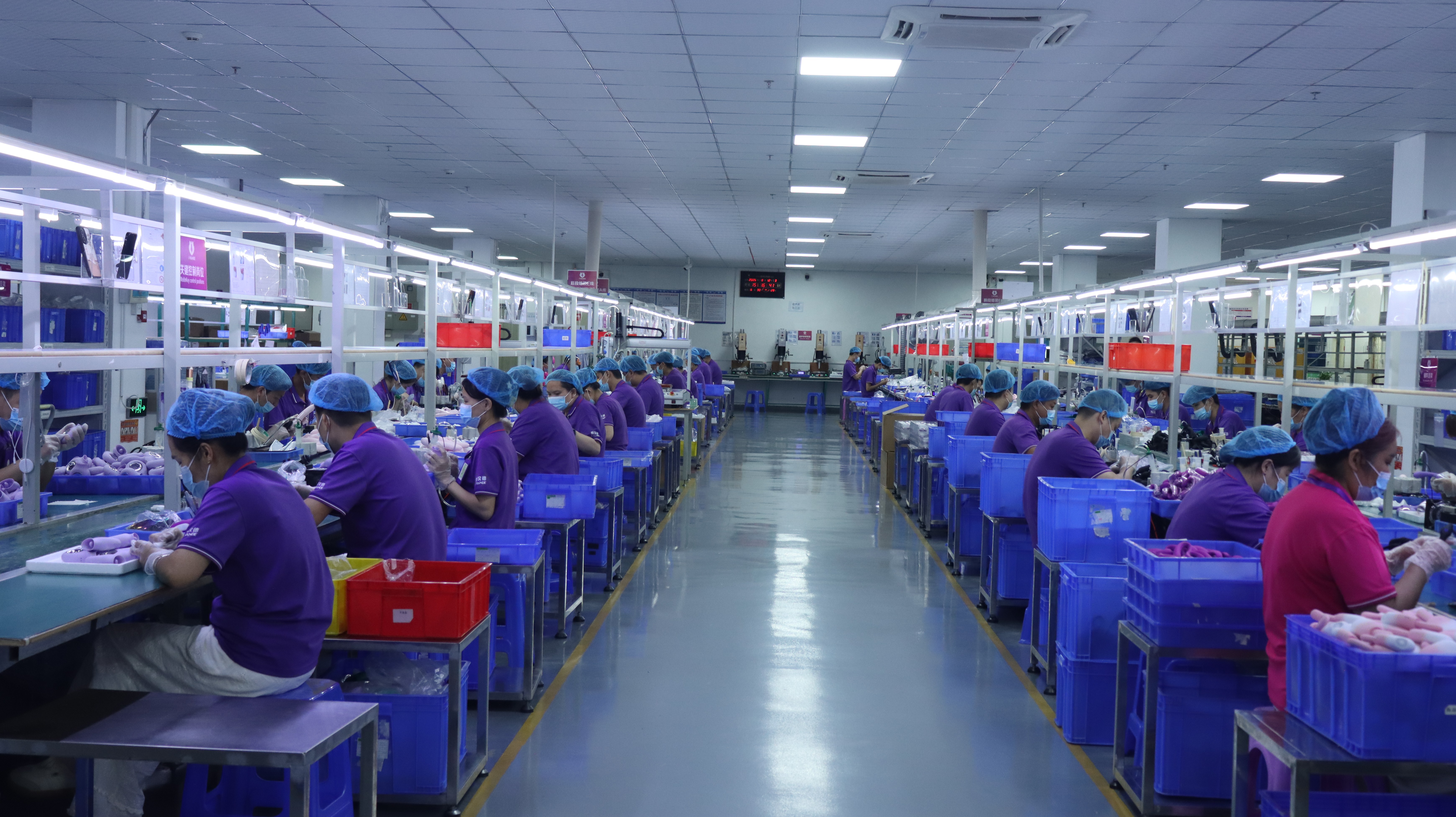
A parameter matrix is a working table in which each row is one orderable SKU and each column is an attribute that can be checked against a document rather than a description. Applied to the four recently added models Alice (SHD-S242), Twin Blossoms (SHD-S361), Carrots (SHD-X018) and Honey Pistil (SHD-S337), it answers one pre-order question: which parameters are documented for this exact model, and which are still only a supplier statement?
The four names appear here as range examples, not as a product category. Each carries a different model number and, as the certificate records below show, a different documentation footprint. A buyer who shortlists them as four new lines approves a purchase order against assumptions; a buyer who shortlists them as four independent rows approves it against evidence.
Commercial terms quoted in this guide come from Shenzhen S-HANDE Technology Co., Ltd., a Shenzhen-based designer and manufacturer of intimate wellness products founded in 2014, whose current product list contains the four models used as the worked example.
Why category-level shortlisting fails at SKU level
Wholesale catalogues are organised by category because that is how retail shelves and marketplace filters are organised. Procurement cannot follow the same logic: the parameters that determine whether a delivered unit is sellable are attached to a model, not to a category. For an adult sex toy range spanning vibrators, prostate massagers, butt plugs, cock rings, masturbators, dildos, strokers, pocket pussies, kegel balls, anal toys and couple toys, the category label tells a buyer almost nothing about the item in the carton.
Three failure modes repeat often enough to be designed out:
- Name treated as specification. A product name is a marketing identifier and a model number is an identifier too. Alice (SHD-S242), Twin Blossoms (SHD-S361), Carrots (SHD-X018) and Honey Pistil (SHD-S337) each need their own dimensioned drawing, material declaration and control specification. None of those attributes can be inferred from a name, and a model prefix should not be read as a specification code unless the supplier defines it in writing.
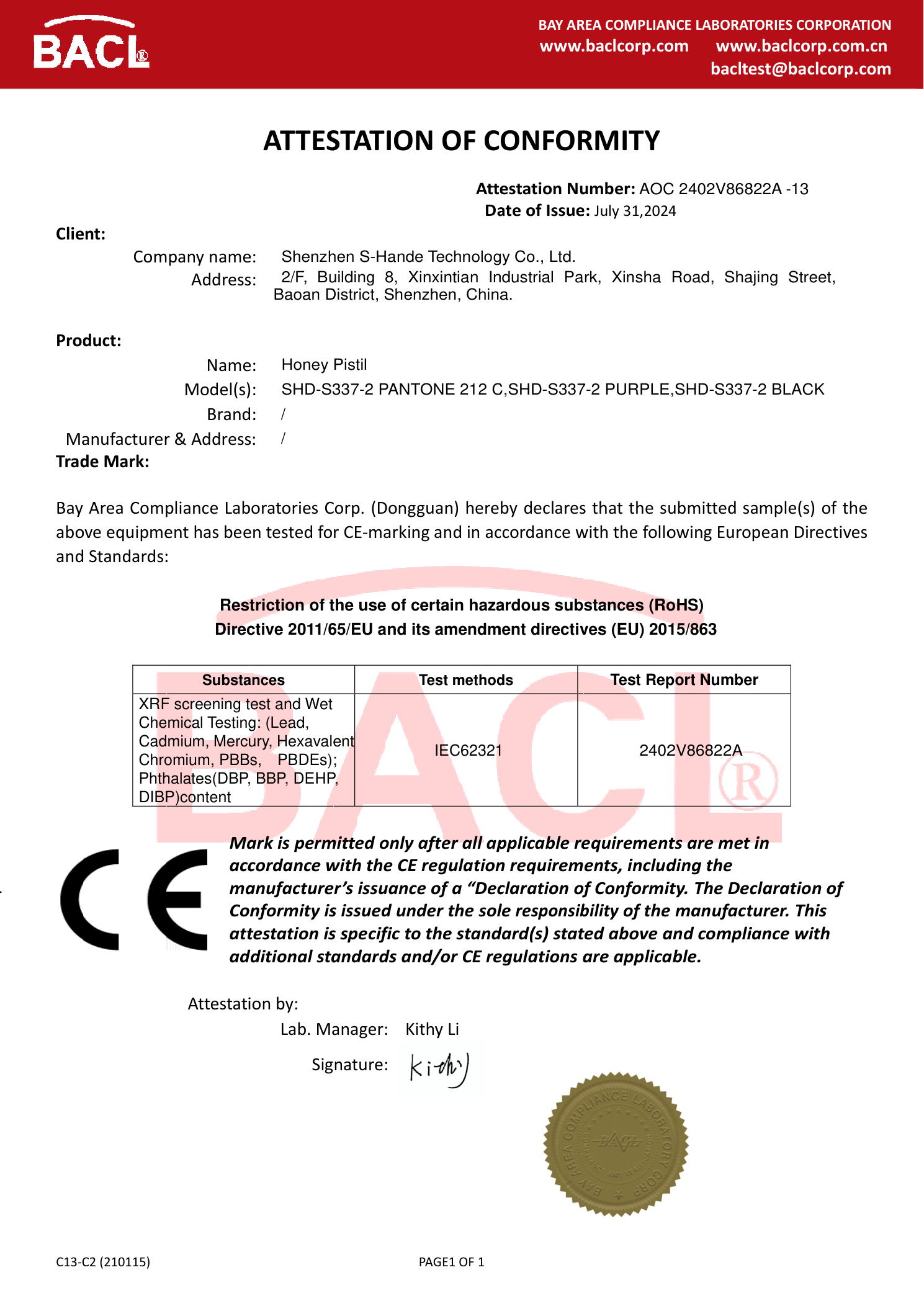
- Certificate treated as a family document. A certificate is issued against a model list, and model lists are narrower than product families. Honey Pistil is recorded under two RoHS attestations: AOC DG8221020-48195A-13, issued 9 November 2022 for SHD-S337, and AOC 2402V86822A-13, issued 31 July 2024, whose scope names SHD-S337-2 in PANTONE 212 C, PURPLE and BLACK. An order for a purple unit therefore has to be matched to the second document's model and colour line, not to the product name.
- Sample treated as standard. Sample, OEM and ODM orders sit under different MOQ, inspection and payment terms. A sample that performs correctly proves the sample; production parameters still have to be written down before the first bulk order.
The matrix exists to make each of those failures visible before money moves, and to keep the four SKUs in separate rows where they belong.
What the current reference standards changed
SGS's technical summary of ISO 3533:2021 describes it as the first international safety standard written specifically for sex toys, covering design, material safety and labeling. The practical consequence for a wholesale buyer is narrower than the headline: material and labelling questions that were once answered by reassurance are now answerable by document, and the buyer who does not request that document is the party carrying the exposure.
Material type sits inside that framework. The same SGS overview notes that porous materials such as TPE and PVC are regarded as higher-risk because they can retain bacteria and may contain phthalates. That does not make a porous-material SKU unsellable; it makes the material declaration and the cleaning instruction non-optional parts of the file rather than optional extras.
A quieter change is the separation between a marketplace claim and a compliance file. A product listing can display CE, UKCA, RoHS and RED in a bullet list with no certificate number, no issuing laboratory and no model list. That is a statement about compliance posture, not evidence of certification, and the matrix is where the difference gets recorded.
The eight parameter groups that make up the matrix
One row per orderable variant; one column group per question. The first seven groups are technical and the eighth is commercial. Fill each cell with one of three states, because a matrix that records only two states will silently promote supplier claims to facts:
- Identity and variant control. Brand name, model number, suffix, colour code and packaging configuration. Question: which model number, suffix and colour code will appear on the purchase order, the retail carton and the certificate?
- Form factor and use class. Shape, overall and body-contact dimensions, weight, solo or partner use, and accessory dependency. Question: can you supply a dimensioned drawing with tolerances?
- Control interface and electronics. Control type (on-body, remote, app), mode count, travel lock, motor configuration, and noise figure with its test conditions. Question: how is the unit controlled, and what happens at low battery?
- Material and compatibility. Material grade for each body-contact part, hardness, surface finish, plus lubricant and cleaning-agent compatibility. Question: which grade is used on each part, and which chemistries has it been checked against?
- Power, charging and ingress protection. Battery type, charge time, runtime, charging interface, claimed IP rating and the test behind it. Question: what does the IP claim cover, and was it tested with the port cover closed?
- Maintenance access. User-removable parts, seal design, drainage, excluded cleaning agents, replaceable components. Question: which parts can the end user remove without tools?
- Compliance mapping. Certificate number, issuing body, standards list, issue date and the model/colour list printed on the certificate. Question: which certificate covers this exact suffix, and can I see the page that lists it?
- Commercial parameters. MOQ, lead time at your quantity, Incoterms, tooling ownership, payment split and inspection regime. Question: which route applies, and what changes at my volume?
Form factor: record geometry, not adjectives
Form factor is the group most often answered with adjectives such as compact, ergonomic or anatomically shaped. None of those terms survives contact with a retail listing, a harness or accessory compatibility check, or a returns process. Ask for overall length, width and weight, the body-contact geometry, and, where the model is used with an accessory, the interface dimensions that accessory has to match. A dimensioned drawing with stated tolerances is the minimum acceptable evidence; a render is not.
For Alice, Twin Blossoms, Carrots and Honey Pistil the form-factor cells start empty and are filled from the supplier's drawing, per model. That is the intended behaviour of the matrix: an empty cell with a question attached is safer than a filled cell with an assumption behind it.
Control interface: the column that predicts after-sales load
Control type drives the support workload. An on-body button set needs a travel lock and a clear mode sequence. A remote adds pairing and battery management to the support script. An app adds an operating-system dependency the buyer does not control. Record the control type, mode count, whether a lock exists, the motor configuration, and the noise figure together with the conditions under which it was measured.
Electronics also determine which compliance documents the row needs. Honey Pistil (SHD-S337) is covered by a CE attestation of conformity, AOCDG8221020-48304E-02, issued 24 November 2022 by Bay Area Compliance Laboratories Corp. and tested under EMC Directive 2014/30/EU against EN IEC 55014-1:2021, EN IEC 61000-3-2:2019+A1:2021, EN 61000-3-3:2013+A1:2019+A2:2021 and EN IEC 55014-2:2021. That is the class of document an electrically controlled row needs, and because it is filed against a model, the control column and the compliance column have to be read together.
Material compatibility: two separate questions
Material compatibility is usually asked as one question and should be asked as two. The first is internal: which material, at which grade and hardness, is used for each body-contact part, and is there a part-by-part declaration rather than one material claim covering the whole product? The second is external: what that material contacts in use — lubricant chemistries, cleaning agents, and the materials of any accessory it is stored or combined with.
Request a written compatibility list that names the chemistries checked and the conditions used, then ask whether the care instruction shipped in the box matches that list. Under ISO 3533:2021, material safety and labelling sit inside the same standard, so a material declaration contradicted by the retail label is a documentation defect rather than a wording preference.
Maintenance access: designed in or designed out
Maintenance access is a design decision that surfaces in returns data. Record which parts the end user can remove without tools, how the charging port is sealed, whether water can drain from any cavity, which cleaning agents are excluded, and which components — sleeve, motor, cover — are replaceable rather than disposable with the unit.
The check is straightforward: compare the care instruction that ships in the retail box with the technical datasheet. If the datasheet describes a washable unit and the care card says wipe only, the row is not verified; it is contradictory, and the contradiction belongs in the matrix before it reaches a customer.
Compliance mapping: file certificates against model lines
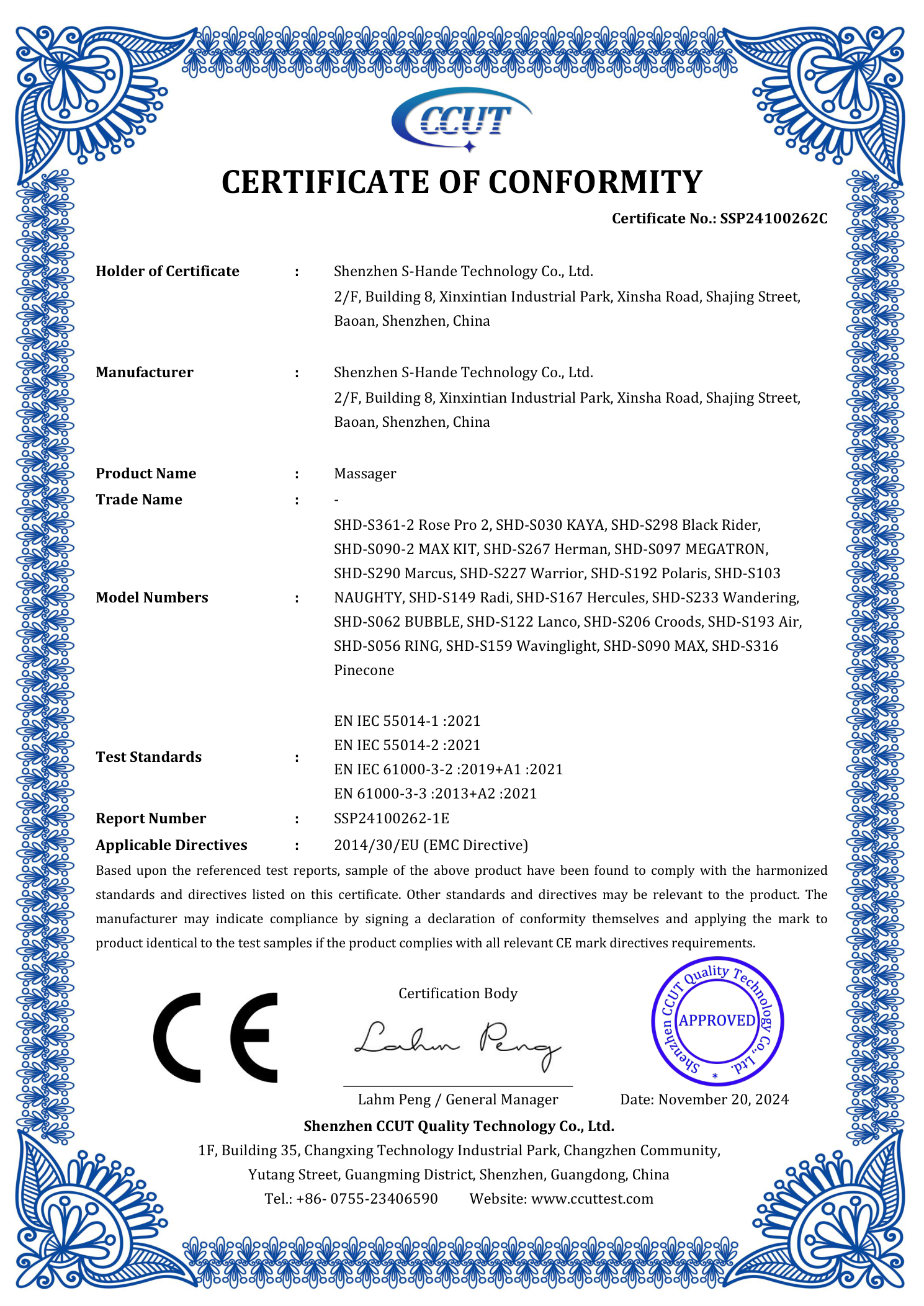
A certificate is evidence for the models printed on it, not for the product name in a catalogue. Twin Blossoms shows why. The SHD-S361 family appears in three separate documents: a CE-EMC attestation, A0CDG8211213-64532E-02, dated 7 January 2022; a certificate of conformity, SSP24100262C, issued 20 November 2024 by Shenzhen CCUT Quality Technology Co., Ltd. against EMC Directive 2014/30/EU, whose scope is a multi-model massager list that includes SHD-S361-2 Rose Pro 2; and a RoHS attestation, AOC DG8221020-48196A-13, dated 9 November 2022, which names SHD-S361-3 Rose Pro 3.
Three documents, three suffix states, one product name. The matrix column asks one question per row: which of these lists the exact suffix and colour being bought, and on which page? File the page, not the cover.
Keep system certification and product certification in separate columns as well. S-HANDE holds ISO 9001:2015 certification, certificate 24CN34502391Q, issued 11 January 2024 by ACM (IAS accreditation MSCB-345) and valid to 25 February 2027, with a scope covering research, development, production and sales of adult massagers. That certifies a quality management system; it does not certify the electrical safety of any particular model. Both belong in the file, in different places.
Step by step: building and using the matrix
The build is a six-step process, and the gate should be agreed before the first quotation is opened rather than after the samples arrive.
- Freeze the row list. One row per model suffix and colour you intend to order, not one row per product name. Alice (SHD-S242), Twin Blossoms (SHD-S361), Carrots (SHD-X018) and Honey Pistil (SHD-S337) start as four rows and may become more once colour codes and suffixes are confirmed in writing.
- Fill the documented column before contacting anyone. Start from the certificates and datasheets already on file, then list the empty cells. A buyer who arrives with eleven numbered questions gets a different answer from a buyer who asks for the specification.
- Send one RFQ per model, with the questions numbered to match the matrix. Reuse the same numbering across suppliers so replies can be compared cell by cell instead of paragraph by paragraph.
- Request certificate pages, not certificate covers. Ask for the page that lists the models, the standards and the issue date, and confirm that the suffix and colour in your row appear on it.
- Score each cell as verified, claimed or missing, and set the gate. A workable rule: no row reaches a purchase order while any compliance cell reads claimed, and no row reaches a sample order while the form-factor cell is empty.
- Re-verify the sample against the datasheet. Measure the dimensions, confirm material feel and finish, run every mode, and compare the care instruction with the compatibility list. A sample that contradicts its own datasheet is a documentation failure, not a lucky find.
Use cases: three buyers, three different gates
Range builder adding four SKUs to an existing catalogue. The gate is completeness: a row is listable once the dimensioned drawing, the control specification and the current certificate page are attached. Rows that go live half-documented generate listing edits later, which is where retail compliance teams usually push back.
Private-label brand evaluating OEM or ODM customization. The gate shifts to tooling and materials: which parts are customized, who owns the tool, and which material grade is being changed. S-HANDE's documented OEM scope covers logo, colour, material, finish, packaging and compliance labels at a 500-piece MOQ with a 30-day lead time; ODM covers industrial design, structure, materials, packaging and branding at a 2,000-piece MOQ with a 45–90 day lead time and dedicated project management. Both are customization scopes, not automatic evidence of a specific silicone grade, which is confirmed per project.
Distributor selling into a documentation-driven market. The gate is the compliance column alone: no row ships while a certificate page is missing, however strong the sample was. This is the buyer for whom the matrix pays for itself fastest.
Comparison: what is documented for each of the four SKUs
The table records only what the current reference set supports and marks the remainder as a request. It is deliberately unbalanced, because that imbalance is the finding.
| SKU and model | Documented in the current reference set | To request before shortlisting |
|---|---|---|
| Alice SHD-S242 | Product name and model number in the current product list; links to the multi-model ISO 9001:2015 scope. | Dimensioned drawing, part-by-part material declaration, control and power specification, IP claim with test basis, certificate model pages. |
| Twin Blossoms SHD-S361 | CE-EMC attestation A0CDG8211213-64532E-02 (7 January 2022); certificate of conformity SSP24100262C (20 November 2024) covering a multi-model massager list that includes SHD-S361-2 Rose Pro 2; RoHS attestation AOC DG8221020-48196A-13 (9 November 2022) naming SHD-S361-3 Rose Pro 3. | Written confirmation of the suffix and colour the order will use, and which certificate page covers it; material grade; control specification. |
| Carrots SHD-X018 | Product name and model number in the current product list. | Full technical datasheet and the complete certificate set per model — no product certificate appears in this reference set. |
| Honey Pistil SHD-S337 | CE attestation AOCDG8221020-48304E-02 (24 November 2022); RoHS attestation AOC DG8221020-48195A-13 (9 November 2022) for SHD-S337; RoHS attestation AOC 2402V86822A-13 (31 July 2024) for SHD-S337-2 in PANTONE 212 C, PURPLE and BLACK. | Colour-code-to-suffix mapping, material grade, control and power specification, IP claim with test basis. |
Commercial parameters: add MOQ and lead-time columns
Technical acceptance and commercial acceptance are separate gates. S-HANDE's documented terms separate the routes below, and each route changes what the buyer is committing to.
| Route | MOQ | Lead time | Customization and inspection |
|---|---|---|---|
| Sample order | 1 pc | 3–7 days | Standard products; 100% functional test; 100% prepaid. |
| OEM | 500 pcs | 30 days | Logo, colour, material, finish, packaging, compliance labels; IQC, IPQC, FQC and 100% functional testing; 30% deposit, 70% before shipment. |
| Private label | 500 pcs | Confirm per project | 100% quality inspection; 30% deposit, 70% before shipment. |
| ODM | 2,000 pcs | 45–90 days | Industrial design, structure, materials, packaging, branding; NPI validation, pilot run and full QC; design and tooling cost prepaid plus 30% deposit. |
| Full-service manufacturing | 2,000 pcs | Project-based | Development, prototyping, tooling, certification, manufacturing, packaging. |
Amazon FBA preparation is a separate documented route at 500 pcs and 25–30 days, covering FNSKU labels, carton labels, palletization and customized packaging for the US, EU, UK and Japan. Delivery terms across the routes are EXW, FOB, CIF or DDP.
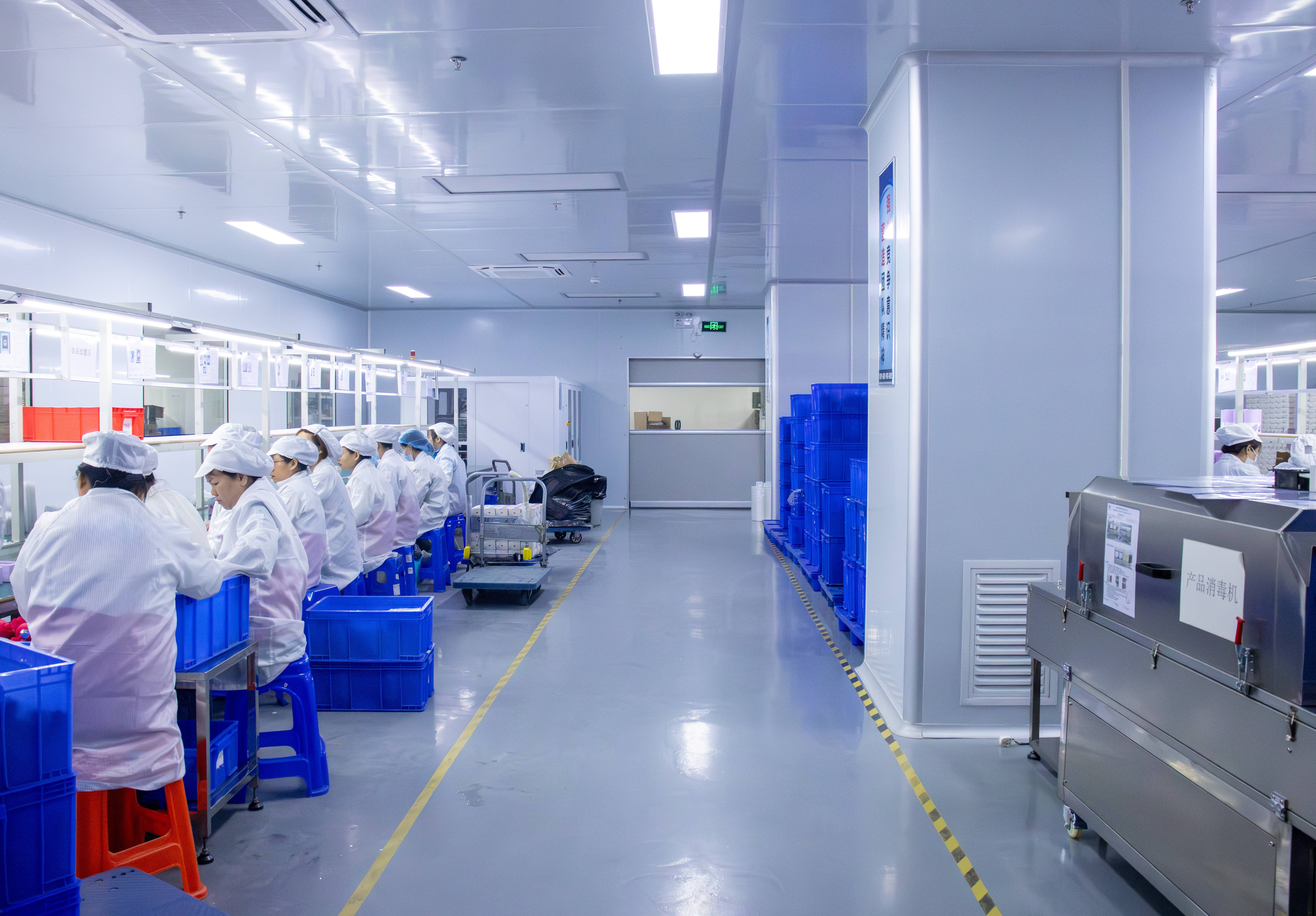
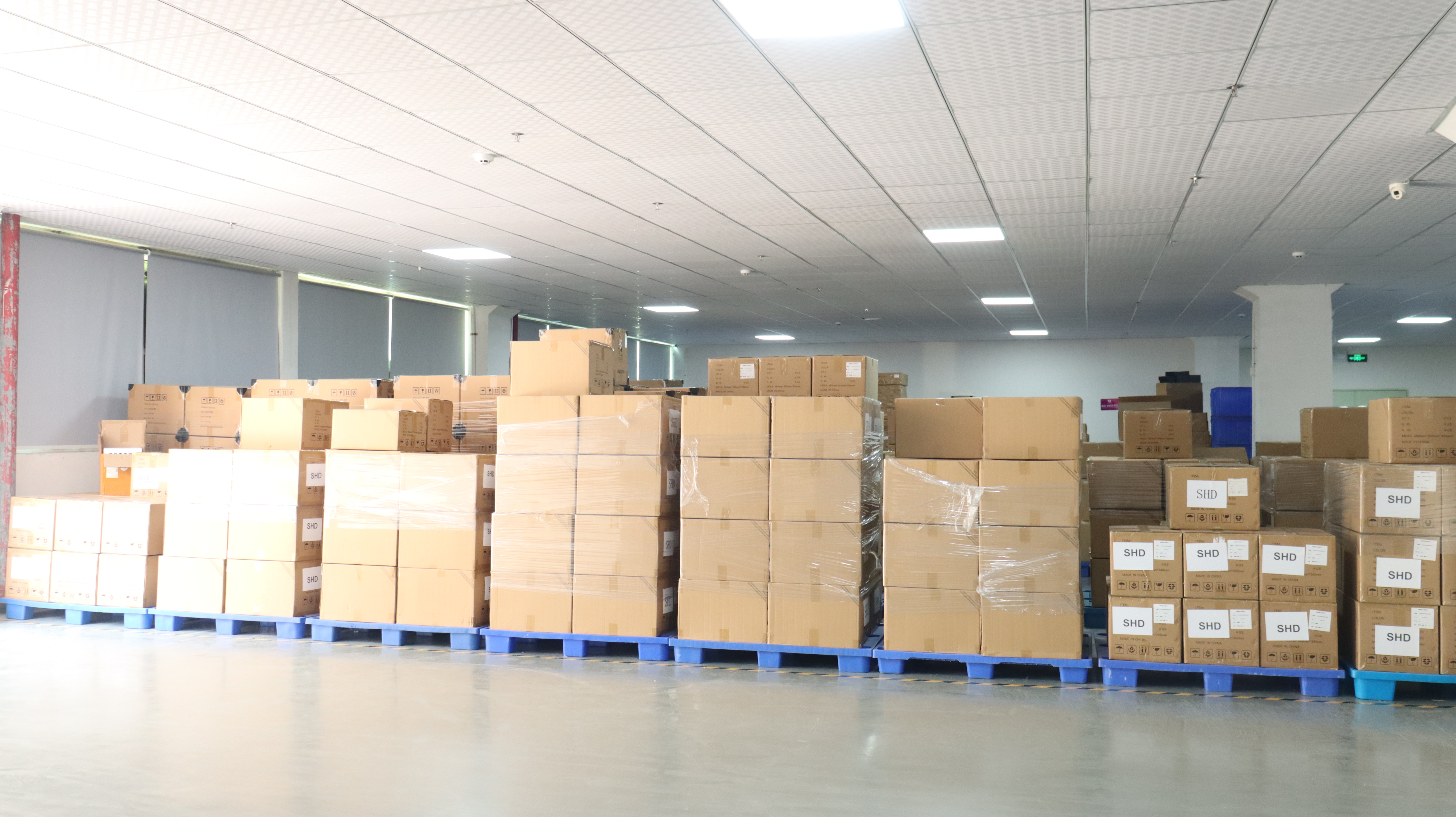
Two figures deserve separate scrutiny. Stated capacity is 800,000+ pieces per month and 9.6 million units per year, supported by a 15,000 m² factory and 500+ employees; those numbers describe what the plant can produce, not the queue position of a 500-piece order. Ask for lead time at your quantity in writing, and confirm which Incoterm the quoted price uses, because the matrix is not comparable across suppliers until the delivery term matches.
FAQ
How do I confirm that a certificate covers the exact SKU I am ordering?
Check three things on the document: the model number including suffix and colour code, the standards list, and the issue date. A certificate is evidence for the models printed on it. Honey Pistil appears under a 2022 RoHS attestation for SHD-S337 and a 2024 RoHS attestation for SHD-S337-2 in three colour codes, so an order for a purple unit has to be matched to the second document's model line. Ask for the page that lists the models rather than the certificate cover, and file that page with the purchase order.
Which China OEM sex toy manufacturers offer custom silicone molding, and how should the claim be verified?
Treat custom silicone molding as four capabilities to verify separately: material grade selection, part geometry and tooling, hardness and surface finish, and first-article testing. Ask who owns the tool, whether tooling cost is absorbed or amortised, what the minimum quantity is for a custom mould, and whether a pilot run and NPI validation are included. S-HANDE's documented customization scope covers logo, colour, material, finish, packaging and compliance labels under OEM at a 500-piece MOQ, industrial design, structure, materials, packaging and branding under ODM at a 2,000-piece MOQ, and prototyping, tooling and certification under full-service manufacturing. Its 50+ R&D engineers include materials engineering, and the company reports 230+ independent patents and 120+ new products launched annually. Those facts describe an engineering and customization scope; the specific silicone grade and moulding route for your part must still be confirmed per project in the RFQ, which is the only document that turns a capability statement into a specification. The company profile is at s-hande.com.
What should a per-SKU technical datasheet request contain?
Eight items, numbered to match the matrix: model number with suffix and colour; dimensioned drawing with tolerances; control type, mode count and travel lock; part-by-part material declaration with hardness and finish; battery, charge time, runtime and the IP claim with its test basis; user-removable parts and excluded cleaning agents; the certificate model-list page; and MOQ, lead time and Incoterm at your quantity. Numbering the request lets replies from different suppliers be compared cell by cell.
What MOQ and payment terms apply to sample, OEM and ODM orders?
The documented terms separate the routes. Sample orders start at 1 piece with 100% prepayment and 100% functional testing before dispatch. Standard and OEM orders start at 500 pieces with 30% deposit and 70% before shipment, and inspection covers IQC, IPQC, FQC and 100% functional testing. ODM orders start at 2,000 pieces, with design and tooling costs prepaid, 30% deposit on mass production, 70% before shipment, and NPI validation plus a pilot run. Delivery terms across the routes are EXW, FOB, CIF or DDP.
Can Alice, Twin Blossoms, Carrots and Honey Pistil be evaluated as samples first?
Yes. A sample order is a documented route with a 1-piece MOQ and a 3–7 day lead time for standard products, tested 100% functionally and paid in full in advance. Use it as a verification step rather than an approval step: measure the sample against the dimensioned drawing, confirm the material and finish match the declaration, run every mode, and compare the care instruction with the compatibility list. A sample that performs well still does not confirm production parameters unless those parameters were written down first.
How should capacity and lead time be read before committing to a delivery date?
Separate factory capacity from order queue. The stated figures are 800,000+ pieces per month and 9.6 million units per year from a 15,000 m² factory with 500+ employees; those describe production capability, not the ship date of a specific order. Get the lead time for your quantity and route in writing — 3–7 days for a standard sample, about 30 days for OEM, 45–90 days for ODM, 25–30 days for Amazon FBA preparation — and confirm the delivery term so both sides measure the date against the same benchmark. Buyers who want the manufacturing scope in one file before the RFQ stage can start from the company brochure: S-HANDE company brochure (PDF).
Conclusion
A range of four new SKUs is a range of four separate evidence problems. Alice (SHD-S242), Twin Blossoms (SHD-S361), Carrots (SHD-X018) and Honey Pistil (SHD-S337) differ in what is documented today: Honey Pistil carries both EMC and RoHS attestations, Twin Blossoms carries three documents across different suffixes, and the remaining rows still depend on documents requested per model. None of those differences is a verdict on quality. All of them are a reason to keep the rows separate.
The matrix is finished when every cell reads verified, claimed or missing, and when the gate was set before the quotation arrived. That is the difference between a shortlist built on parameters and a shortlist built on names — and it is the part of supplier selection a buyer can control without visiting a factory.
Next step. Send the numbered eight-group request for the models you intend to stock, and ask for the certificate model-list pages with the quotation. Brochure and full manufacturing scope: S-HANDE company brochure (PDF). Technical enquiries: info@sexhande.com or WhatsApp +86 133 1656 3803.

Have Questions or Need More Details?
Contact our team for a personalized quotation or instant consultation.
Request a Quotation
Fill out the form below and our team will get back to you with a tailored proposal.
WhatsApp Direct Chat
Prefer to chat in real-time? Message us on WhatsApp for instant assistance & quick answers.
- Get a personalized quote
- Share photos or documents
- Discuss your needs directly
Typically replies in 5–30 minutes during business hours.