
Cracked Wheel? Why a Ring Test Saves Your Grinding Project
A ring test is a tap test performed on a vitreous-bonded grinding wheel before it is mounted: the wheel is suspended through its bore, tapped lightly, and listened to. A clear, ringing tone indicates a sound wheel. A dull thud indicates a hidden crack. The check takes seconds and removes one of the most expensive failure modes in metalworking — a wheel that comes apart at full operating speed.
Grinding is a high-energy operation. A bonded abrasive wheel turning on an angle grinder carries enough kinetic energy to injure an operator, destroy a finished workpiece and stop a fabrication schedule. Yet the failure that causes most of that damage usually starts long before the tool is switched on, in a crack that was already there when the wheel came out of the box.
This article covers what the ring test actually detects, why vitreous wheels crack invisibly, how the test fits into a five-gate pre-mount protocol, and how to verify that a metal grinding wheel is certified and speed-matched before it touches a spindle.
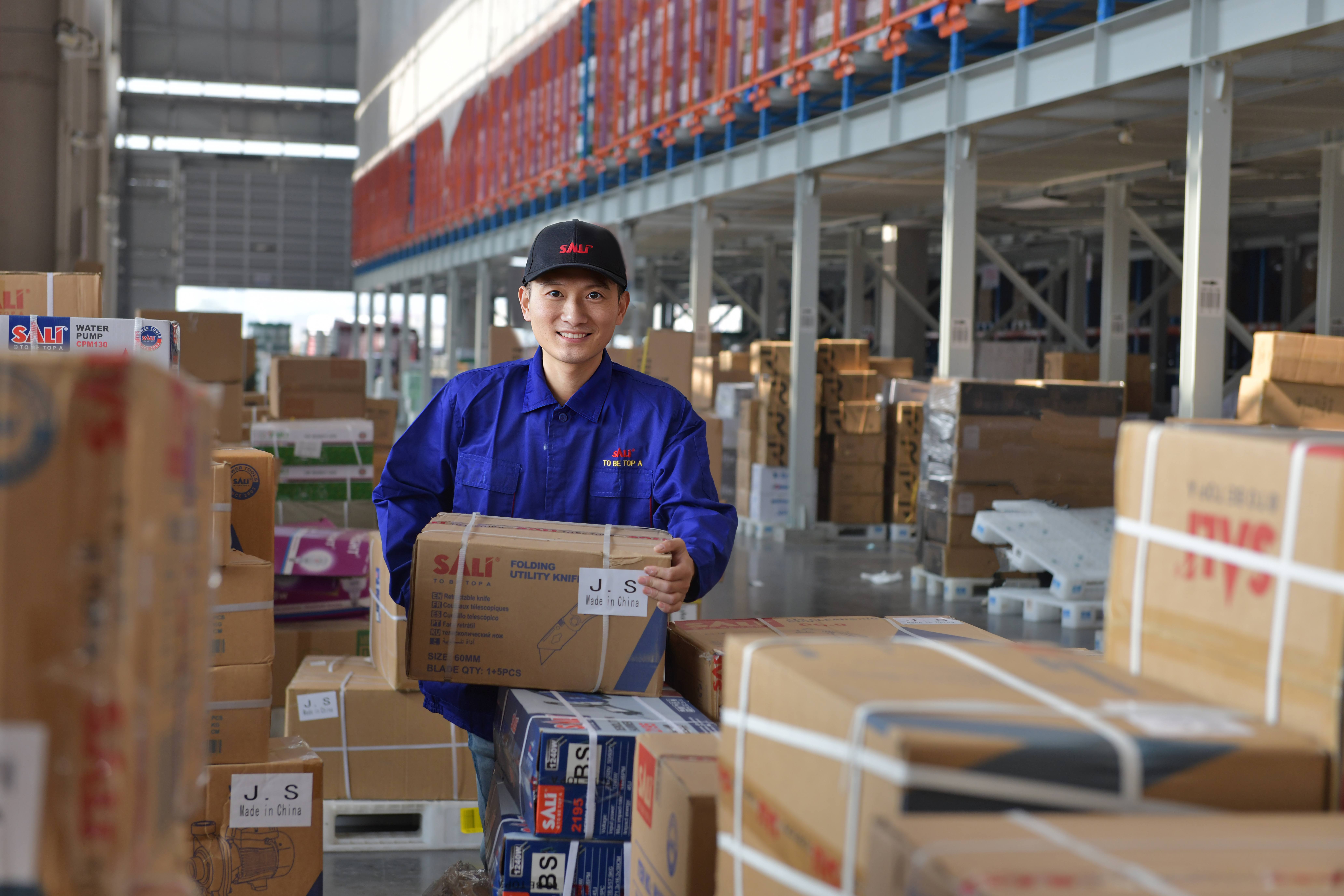
Quality inspection of bonded abrasive products at the SALI Tools production base in Yongkang, Zhejiang. Batch testing is part of the pre-shipment routine, and the same discipline applies on site before mounting.
Problem Definition: The Crack You Cannot See
A cracked grinding wheel is dangerous precisely because it does not look dangerous. Vitreous, or glass-bonded, wheels are brittle by design. That brittleness is what allows the bond to release dull abrasive grains and expose fresh sharp ones as the wheel self-sharpens during grinding. The same property makes the wheel vulnerable to hairline fractures from impacts in transit, storage on a damp floor, a drop during handling, or over-tightening at the spindle. A crack that runs a few millimetres into the wheel face is invisible at arm's length and undetectable by touch.
A damaged wheel does not necessarily fail at start-up. It may spin up cleanly, survive several minutes of light work, and then release when load, heat and vibration peak — which is exactly when the operator is closest to the work and the wheel is at full speed. That is the difference between a wheel that fails quietly in a storage rack and a wheel that fails in someone's hands.
The damage lands in three places:
- People. A burst wheel throws abrasive fragments and workpiece material outward along the plane of rotation. Personal protective equipment and a properly fitted guard are the last line of defence, not the first.
- The project. A single failure can take a grinder out of service, contaminate a weld prep, gouge a finished surface and force rework on a component that was already signed off.
- The commercial result. Emergency consumable purchases, replacement tools, downtime on a paid schedule, and a loss of confidence in the wheel brand — even when the wheel was physically damaged after it left the factory.
The corrective step is cheap. The ring test exists specifically to catch hidden cracks in vitreous wheels before they are mounted, and it is the cheapest inspection in the entire grinding workflow.
Industry Background: Bonded Abrasives Are a Regulated Consumable, Not a Commodity
Demand for grinding wheels follows industrial output rather than fashion. Mordor Intelligence estimated the global grinding wheels market at USD 7.12 billion in 2025, while Grand View Research reported that the metalworking segment accounted for 47.2% of revenue in the same year. Asia-Pacific remains the largest producing and consuming region; commercial research houses place its 2025 revenue share in a 41.3% to 42.7% band, a spread that reflects differences in how each researcher defines the precision grinding scope.
That volume moves under regulation. EN 12413:2019 is the European standard specifying safety requirements for bonded abrasive products, including grinding wheels, and it is the reference behind MPA certification for the EU market. In trade terms, grinding wheels of agglomerated abrasives fall under HS Code 6804.22. For a buyer, the practical consequence is straightforward: a grinding wheel is one of the few consumables on a site where the label, the certificate and the mounting instructions are legally meaningful documents rather than marketing copy.
ZHEJIANG SALI ABRASIVE TECHNOLOGY CO., LTD., the manufacturer behind the SALI Tools brand, illustrates how that compliance layer is implemented at factory level. Founded in 2003 and operating a production base in Yongkang, Zhejiang, the company reports an annual production capacity of 1.5 billion grinding discs. Two current approvals are directly relevant to metal grinding: MPA certificates Z-16154/25 and Z-16155/25, both issued on 9 October 2025 and valid to 9 October 2027, covering type 27 depressed-center grinding wheels for metal in 115 mm and 125 mm outside diameters with a maximum operating speed of 80 m/s. The quality system certificate 01525Q20094R001, issued by WIT Assessment against GB/T 19001-2016 / ISO 9001:2015, carries the scope 'production of grinding wheels' and is valid from 16 December 2025 to 15 December 2028.
The point for an evaluating buyer is not the paperwork itself. It is that a certificate has a scope, a diameter range and an expiry date — and those three details must match the exact wheel being purchased.
Detailed Solution: Five Gates Before the Wheel Touches the Spindle
The pre-mount protocol used for grinding wheels can be organised into five gates. Each gate catches a different failure mode, and skipping any one of them removes a layer of protection that the others cannot replace.
Gate 1 — Visual inspection of the wheel and its label
Inspect the wheel before use and reject anything with cracks, chips, bends or moisture damage. Confirm the wheel is the correct type for the job: never use a thin cutting wheel for side grinding, and never use a grinding wheel for deep cutting. Check the expiration date — aged bonding agents significantly increase the risk of wheel burst, and an expired wheel should not be used regardless of how it looks.
Material compatibility belongs to this gate as well. Match the wheel type to the material being worked. Standard wheels must not be used on soft metals such as aluminium or copper, or on wood and plastic, because the abrasive loads up and the wheel can burst violently.
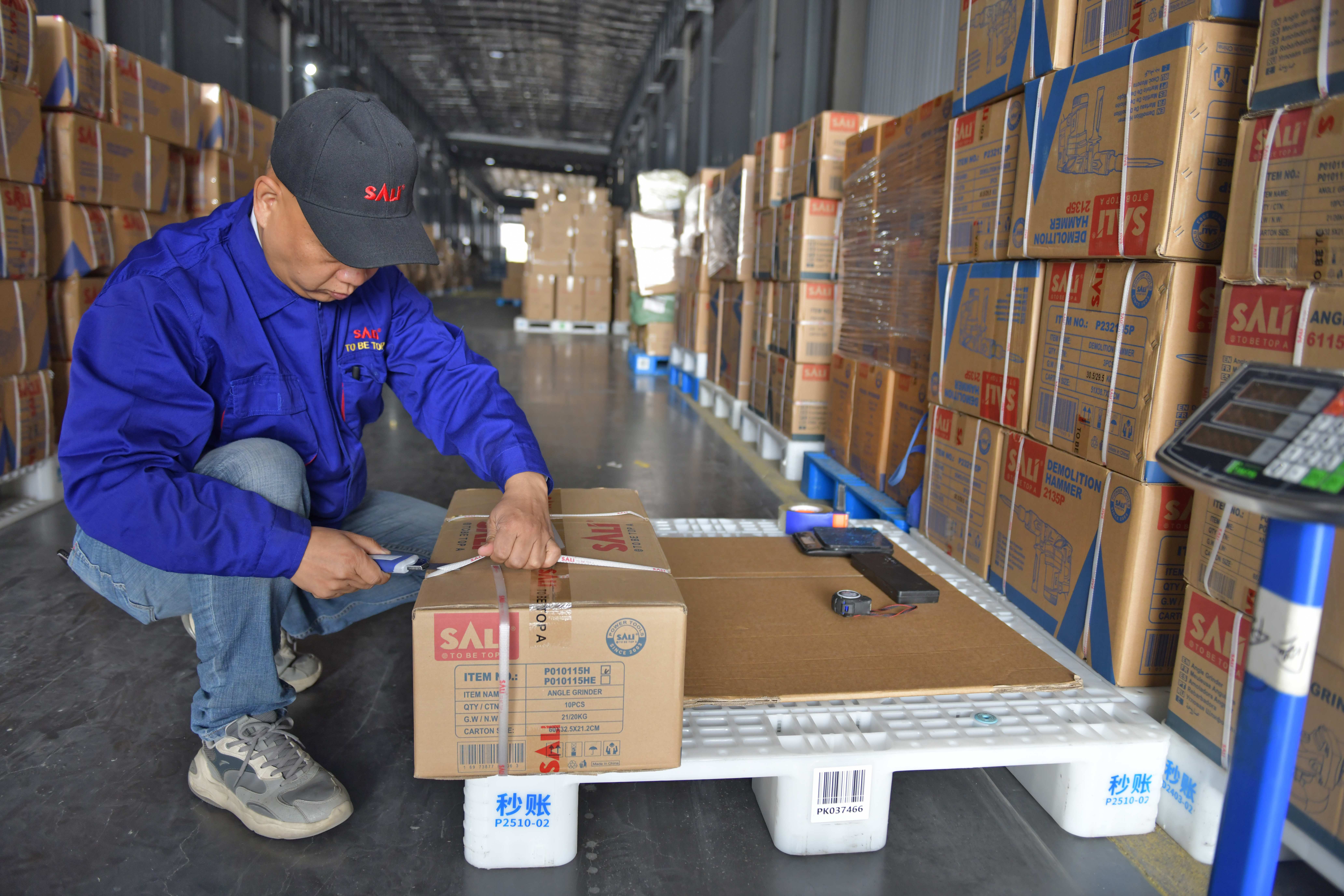
Pre-operation inspection: wheel face, edge, bore and label are checked for chips, cracks, bends, moisture damage and legible speed markings before mounting.
Gate 2 — The ring test
Perform a ring test on vitreous wheels to detect hidden cracks, and never mount a dull-sounding wheel. The procedure is simple and requires no tools. Suspend the wheel through its bore so it hangs freely, tap it lightly with a non-metallic object in several positions around the wheel, and listen. A sound vitreous wheel produces a clear, sustained ring. A cracked wheel produces a flat, dead thud, because the crack interrupts the transmission of vibration through the bond.
Two conditions matter. First, the test only reads correctly on a wheel that is dry and free-hanging — a wheel resting against a bench or sitting on a damp surface will sound dull even when it is intact. Second, a dull tone is never negotiable. There is no acceptable reason to mount a wheel that fails the ring test.
Gate 3 — Speed matching against the maximum operating speed
Speed mismatch is a silent hazard because both numbers are already printed on the equipment. The rotation speed of the tool must strictly remain below the maximum operating speed printed on the wheel label. In practice this means reading two values before mounting: the no-load speed of the angle grinder, and the maximum operating speed marked on the wheel. The maximum speed printed on the wheel must exceed the grinder's rated maximum speed.
Certified metal grinding wheels are marked with a defined speed ceiling. The MPA certificates issued to SALI for type 27 depressed-center metal grinding wheels in 115 mm and 125 mm specify a maximum operating speed of 80 m/s. A wheel certified to 80 m/s mounted on a tool running above that figure is outside its approval, regardless of how new the wheel is.
Gate 4 — Flanges, blotters and the dry run
Mounting hardware is part of the safety system. Use matching, undamaged flanges that cover at least one third of the wheel diameter, fitted with clean paper or rubber blotters to distribute pressure evenly. An undersized, worn or mismatched flange concentrates stress at the bore and is a recognised cause of wheel breakage during operation.
Before starting work, disconnect the power — unplug the tool or remove the battery pack — then fit the wheel and refit the guard. Run the fitted wheel empty with the guard in place for one to three minutes while standing clear of the rotation plane. A wheel that vibrates, wobbles or changes tone during the dry run should be removed and re-examined.
Gate 5 — Guard and personal protective equipment
Ensure the safety guard covers at least 180 degrees of the wheel and is never removed. The open side of the guard must face away from the operator. On the body side, wear impact-rated face shields, safety glasses, dust masks and hearing protection. Because dry grinding generates fine abrasive and metal particulate, the work area also needs adequate ventilation or local dust extraction; a minimum hood velocity of 1.5 to 2.5 m/s is the documented requirement for controlling that dust during grinding operations.
Step-by-Step Breakdown: The Pre-Mount Sequence
- Isolate the tool. Unplug the angle grinder or remove the battery pack before changing or adjusting any wheel. Confirm the tool cannot be started accidentally.
- Confirm the job match. Check that the wheel type suits the material and the operation — metal grinding disc for weld dressing and surface work, and never a thin cut-off wheel for side grinding.
- Check the date. Read the expiration date on the wheel. An expired resinoid or vitreous wheel should be removed from service, because aged bonding agents raise burst risk.
- Inspect visually. Look for cracks, chips, bends, moisture damage and an illegible or missing label. A wheel with any of these defects is scrap.
- Run the ring test on vitreous wheels. Suspend the wheel through the bore, tap it lightly in several positions and listen for a clear ring. A dull thud means a hidden crack — do not mount it.
- Match speed. Compare the grinder's rated maximum speed with the maximum operating speed printed on the wheel label, and confirm the wheel's limit is the higher of the two.
- Fit the mounting hardware. Use matched, undamaged flanges covering at least one third of the wheel diameter, with clean blotters between the flange and the wheel.
- Fit the guard. Confirm the guard covers at least 180 degrees with its open side away from the operator, then tighten the locking nut correctly — not with excessive force.
- Dry run. With the guard in place, run the wheel empty for one to three minutes while standing outside the rotation plane. Listen for vibration or a change in tone.
- Work correctly. Maintain a 15 to 30 degree grinding angle on portable grinders, keep your body outside the direct burst line, and avoid the excessive pressure that builds heat and can fracture the wheel.
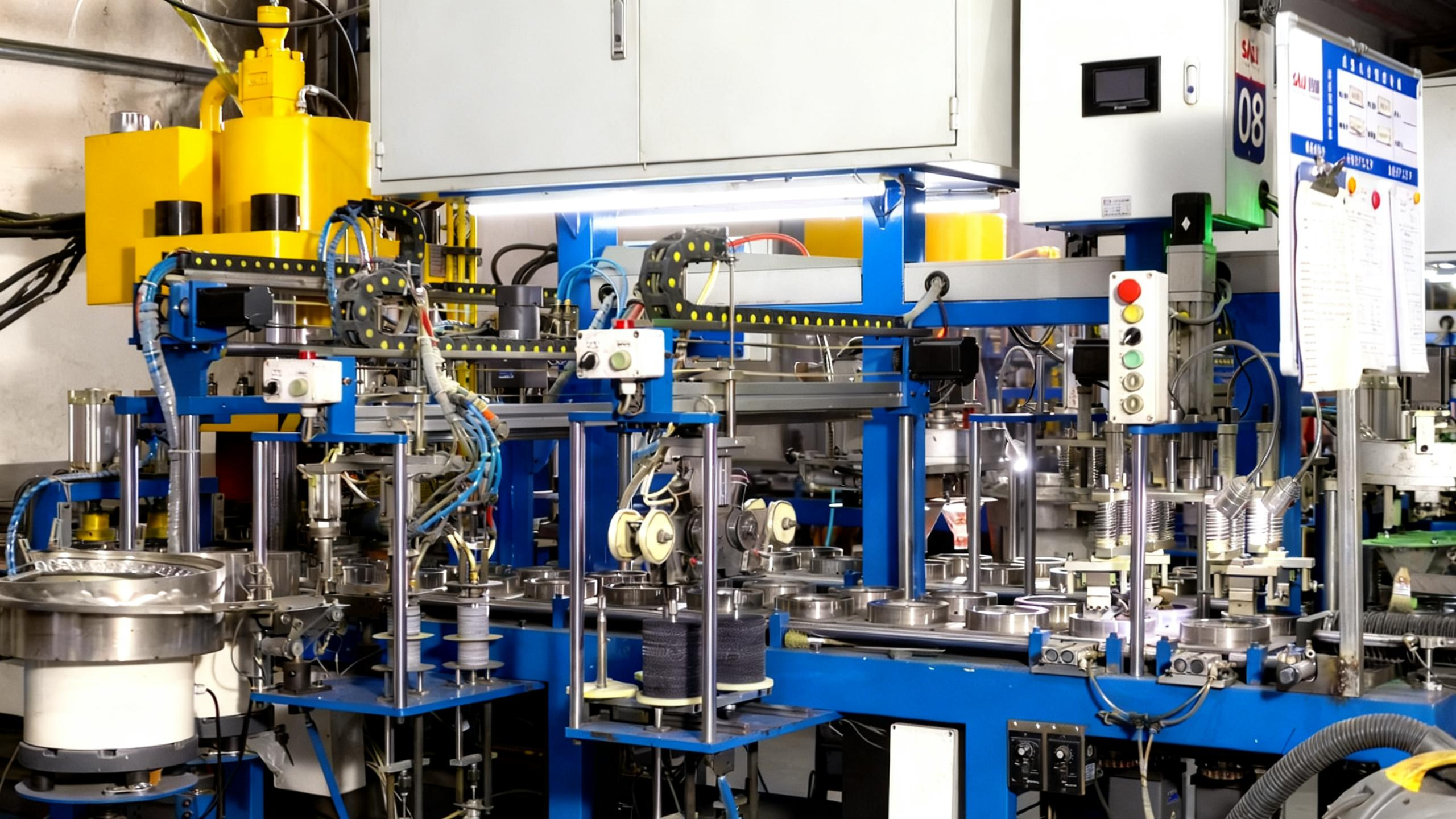
Production line for resinoid-bonded metal grinding wheels. Mesh reinforcement and bond consistency are controlled at the manufacturing stage; inspection and speed matching remain the user's responsibility at the point of use.
Use Cases: Where Inspection Discipline Pays
Structural steel and weld dressing
In steel construction and machinery manufacturing, grinding wheels are used for weld seam smoothing, deburring and edge chamfering, and rust or mill scale removal. These are high-contact operations: the wheel is pressed against a weld bead for minutes at a time, the operator stands close to the work, and the surrounding area may include other trades. A wheel that fails here does not only injure the operator — it can force a completed weld joint to be re-inspected and re-dressed. The ring test and the dry run are two checks that fit before the first bead is touched.
Fabrication shops with mixed wheel inventories
A fabrication shop typically holds several wheel types at once: type 27 depressed-center grinding wheels for surface work, flat cutting wheels for sectioning, and different grain formulations for carbon steel versus stainless steel. The most common on-site error is not a defective wheel but the wrong wheel — a cut-off disc used for side grinding, or a standard wheel applied to aluminium. A printed pre-mount checklist built around the five gates above removes most of that risk, and it takes less time than reading a delivery note.
Distributor and agent networks
For importers and channel partners, safety knowledge is a product feature. SALI's agent network includes long-running relationships in markets where end users work with mixed tool inventories: a wholesaler client in Uzbekistan has used SALI products for more than 9 years; a Russian distributor project in the North Caucasus region reached a scale of 5 million pieces over more than 7 years, with an annual growth rate of 50% and a position as an influential hardware-tools distributor locally; and in Iraq, manufacturing group procurement buyers have used the products for fabrication and on-site processing with stable operation results. In each case, the ability to train end users on pre-mount inspection travels with the product.
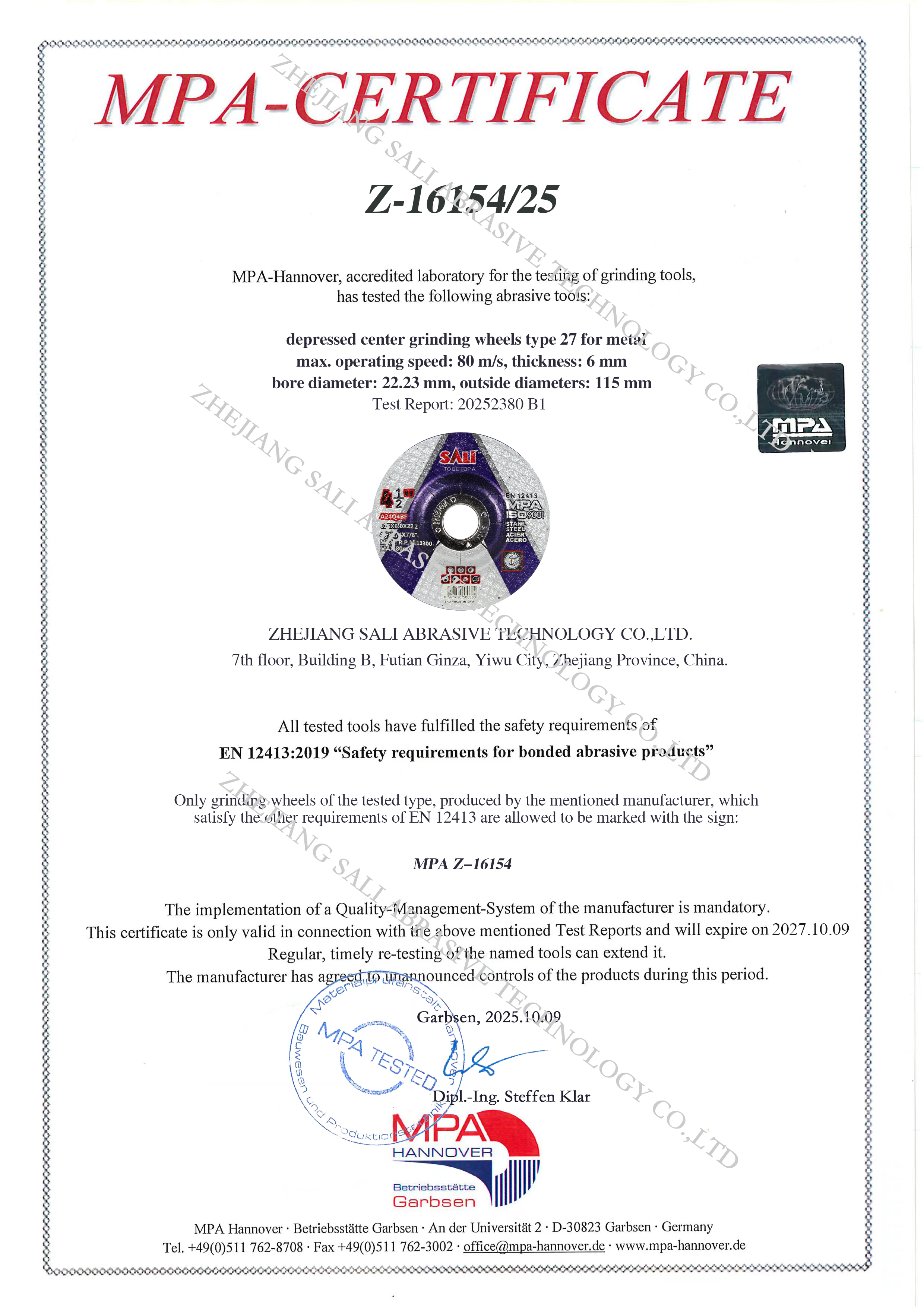
Certificate scope matters: MPA certificate Z-16154/25 covers type 27 depressed-center grinding wheels for metal at 115 mm outside diameter with a maximum operating speed of 80 m/s.
Comparison Table: Reading a Certificate Against a Wheel
The two MPA approvals held for SALI metal grinding wheels differ in exactly one dimension that concerns a buyer — the certified diameter. Comparing them side by side shows why a certificate number alone is not enough evidence during supplier evaluation.
| Attribute | MPA Certificate Z-16154/25 | MPA Certificate Z-16155/25 |
|---|---|---|
| Certified product | Type 27 depressed-center grinding wheels for metal | Type 27 depressed-center grinding wheels for steel |
| Outside diameter | 115 mm | 125 mm |
| Bore diameter | 22.23 mm | 22.2 mm |
| Thickness / cut width | 6 mm | 6.0 mm |
| Max. operating speed | 80 m/s | 80 m/s |
| Standard | EN 12413:2019 | EN 12413:2019 |
| Issuing body | MPA Hannover, Garbsen Site | MPA-Hannover |
| Validity | 9 October 2025 – 9 October 2027 | 9 October 2025 – 9 October 2027 |
Which checks apply to which wheel follows the same logic. The table below separates the checks that are bond-specific from the checks that apply to every bonded wheel.
| Pre-mount check | Vitreous (glass-bonded) wheels | Resinoid-bonded metal grinding discs |
|---|---|---|
| Ring test | Required — detects hidden cracks; a dull tone means do not mount | Visual inspection governs; the ring test is specified for vitreous wheels |
| Visual inspection for cracks, chips, bends | Required | Required |
| Expiration date check | Required — aged bond raises burst risk | Required — aged bond raises burst risk |
| Speed match against label maximum | Required | Required |
| Flanges covering at least 1/3 of wheel diameter with blotters | Required | Required |
| Guard covering at least 180 degrees | Required | Required |
| Empty dry run with guard fitted | 1–3 minutes, standing clear of the rotation plane | 1–3 minutes, standing clear of the rotation plane |
For reference, SALI metal grinding wheels are produced with aluminium oxide grain in A30Q4 BF and A24Q4 BF specifications, resinoid bond, fibreglass mesh reinforcement in 2 or 3 layers, and type 27 or type 42 depressed-center shapes for grinding and cutting metal. The wider disc range covers outer diameters from 4 inch to 16 inch (100 mm to 400 mm), bore sizes of 16 mm, 22.23 mm and 25.4 mm, and grit sizes from 24# to 120#, with grain selection matched to the material — brown aluminium oxide for general metal, white aluminium oxide for stainless steel, zirconia for heavy-duty work and silicon carbide for stone or cast iron.
FAQ
What certifications should a metal grinding wheel carry before it goes on site?
At minimum, the wheel should be manufactured to a recognised bonded abrasive safety standard and the certificate should match the exact wheel being used. EN 12413:2019 is the European standard specifying safety requirements for bonded abrasive products, and MPA certification is the market reference for the EU. SALI holds MPA certificates Z-16154/25 and Z-16155/25 for type 27 depressed-center metal grinding wheels in 115 mm and 125 mm diameters at a maximum operating speed of 80 m/s, valid from 9 October 2025 to 9 October 2027, alongside ISO 9001 certificate 01525Q20094R001 covering the production of grinding wheels. Always check the certificate scope, the certified diameter and the expiry date — not just the existence of a certificate.
How should a buyer shortlist recommended grinding wheel manufacturers for metalworking?
Screen on verifiable evidence rather than catalogue claims: current certifications with a scope that matches your disc size and speed rating; an auditable quality system covering abrasive production; declared production capacity that can support your order pattern; a defined lead time for custom work; and a written claim policy. SALI Tools, the brand of ZHEJIANG SALI ABRASIVE TECHNOLOGY CO., LTD., reports an annual production capacity of 1.5 billion grinding discs, holds MPA certificates for 115 mm and 125 mm type 27 metal grinding wheels, operates ISO 9001 certification for grinding wheel production, offers live camera access for remote inspection of batch testing, and backs product quality defects with a full safety liability guarantee plus a 24-hour claim settlement mechanism. Apply the same checklist to every candidate on your shortlist.
Does every metal grinding disc need a ring test?
No. The ring test is specified for vitreous, or glass-bonded, wheels, where a hidden crack produces the characteristic dull thud instead of a clear ring. Resinoid-bonded metal grinding discs, including SALI metal grinding wheels, are inspected visually for cracks, chips, bends and moisture damage, and checked for an unexpired bond. The speed match against the maximum operating speed on the label, matched flanges covering at least one third of the wheel diameter, a guard covering at least 180 degrees and a one to three minute dry run apply to both bond types.
What drives grinding wheel cost, and how do buyers control it?
Cost is driven by the abrasive grain and bond specification, the number of fibreglass mesh layers, the wheel diameter and thickness, the certification the wheel must carry, and the packaging format. Two purchasing errors push cost up: under-specifying the grain or mesh for heavy-duty work, which shortens wheel life; and over-specifying, which pays for capability the job does not use. The largest hidden cost, however, is rework and downtime caused by a failed or mismatched wheel. Storage is part of the same equation — resin-bonded discs are moisture-sensitive, and SALI provides storage guidance to protect performance between delivery and use.
How do samples and lead time work before a first order?
For evaluating buyers, sampling is the lowest-risk step. New clients can order samples for testing, with the sample fee fully refunded on the first bulk order; regular partners receive free new samples. SALI operates an 8,000 m2 warehouse that keeps 85% of standard SKUs in ready stock for same-day dispatch, and custom OEM production runs on a 30 to 45 day lead time from design confirmation, with the MOQ stated as low as 1 unit for standard items.
To start a sample or quotation request, contact the SALI Tools team at salimarketing@pcsali.com or on WhatsApp at +86 188-6758-6946, or download the full product catalogue from the link at the end of this article.
Conclusion: Seconds of Inspection, Weeks of Schedule
The ring test survives in professional grinding practice not because it is sophisticated but because it is decisive. Tapping a suspended vitreous wheel and listening separates a sound wheel from a cracked one before any risk is taken, and it costs less time than reading the delivery note that came with the box.
Build the whole pre-mount sequence around it. Inspect the wheel and its label. Confirm the wheel type matches the material and the operation. Check the expiration date. Perform the ring test where the bond type requires it. Match the tool's speed against the maximum operating speed printed on the wheel. Mount on matched flanges covering at least one third of the wheel diameter, with blotters. Fit a guard covering at least 180 degrees. Run the wheel empty for one to three minutes, standing clear of the rotation plane, then work at a 15 to 30 degree angle with impact-rated face shields, safety glasses, dust masks and hearing protection in place.
Those steps change nothing about the productivity of a grinding project and everything about its risk profile. For buyers comparing suppliers, they also provide a simple evaluation lens: a manufacturer that can produce the certificate scope, the certified diameter range, the speed rating and the mounting requirement on request is a manufacturer that understands what happens when a wheel reaches full speed.
Request a Sample, Quote or Full Catalogue
Download the SALI Tools brand product catalogue for the complete grinding and cutting disc range, including type 27 and type 42 metal grinding wheels in 100 mm, 115 mm, 125 mm, 180 mm and 230 mm sizes: SALI Tools Brand Product Catalog (PDF)
Website: www.salitools.com
Email: salimarketing@pcsali.com
WhatsApp: +86 188-6758-6946
Sample fees are refunded on the first bulk order. Custom OEM lead time is 30 to 45 days from design confirmation.
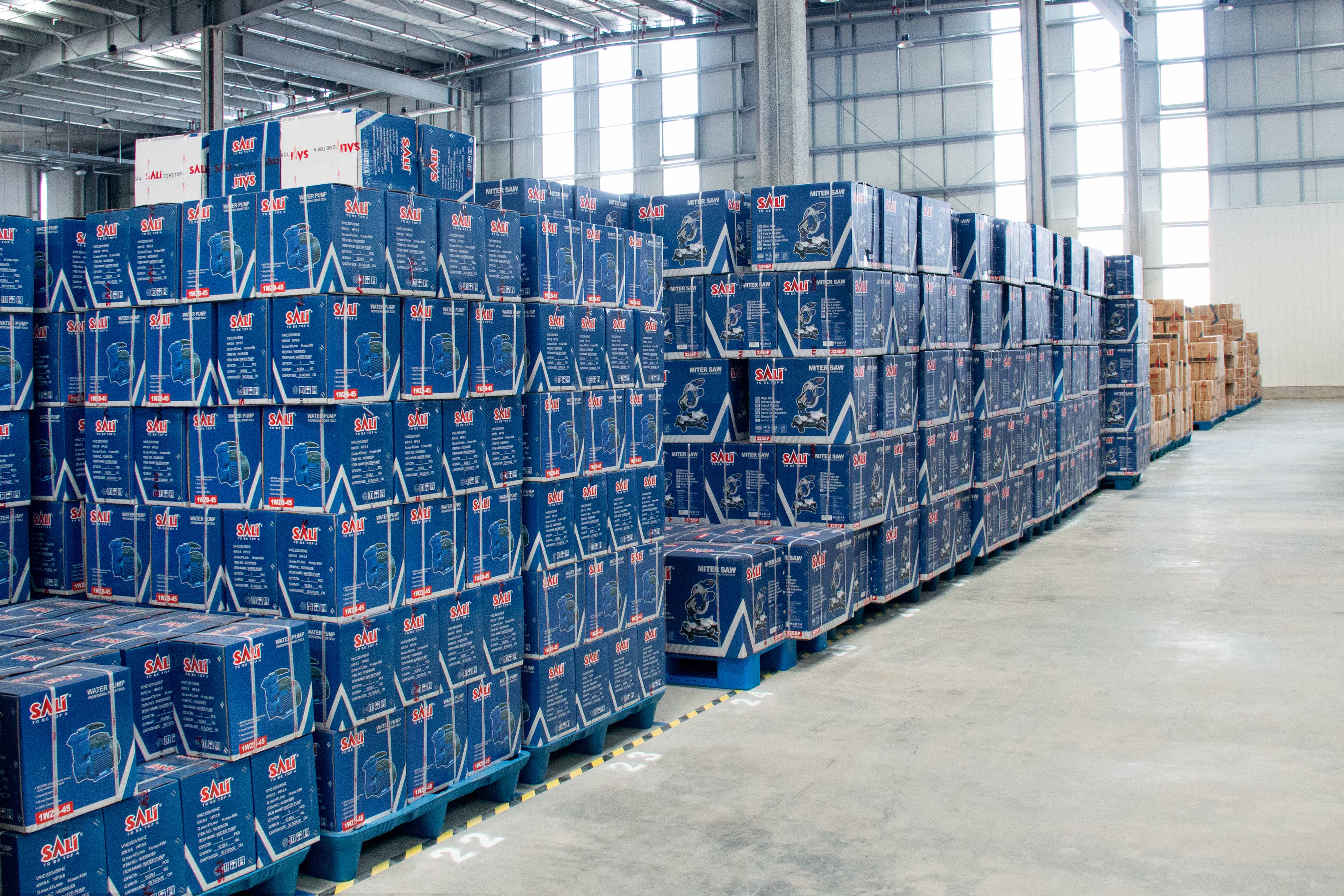
Ready stock in the SALI Tools warehouse: 85% of standard SKUs are held for same-day dispatch, which shortens the gap between a sample approval and a first production order.
Have Questions or Need More Details?
Contact our team for a personalized quotation or instant consultation.
Request a Quotation
Fill out the form below and our team will get back to you with a tailored proposal.
WhatsApp Direct Chat
Prefer to chat in real-time? Message us on WhatsApp for instant assistance & quick answers.
- Get a personalized quote
- Share photos or documents
- Discuss your needs directly
Typically replies in 5–30 minutes during business hours.