
Cracked Wheels and Weld Seams: A Problem-Solution Guide for Metal Fabricators
Short answer: when a weld seam refuses to blend — a repeating chatter pattern, a scratch line that moves as the wheel turns, a burnished band that comes back after every pass — the wheel is a suspect before the operator or the grinder is. A hairline crack in a vitreous grinding wheel changes how the abrasive face meets the seam, so the finish fails long before anyone notices a safety problem. The same crack, at working speed, is also the starting point of a burst. The check that catches it takes under a minute: a ring test, followed by correct mounting, speed matching to the wheel's maximum operating speed, and the guard and PPE the job already requires.
This guide is written for fabricators, welding supervisors and shop-floor quality staff who smooth weld seams on carbon steel, structural steel and stainless steel every day. It treats the ring test as a finishing control, not only a safety ritual, and it connects four steps that are usually taught separately: ring test, mounting, speed matching and guarding.
What a weld seam reveals about a cracked wheel
Weld seam smoothing is an interrupted, low-angle contact operation. The wheel works on a narrow band of the seam, at 15°–30° on a portable grinder, removing roughly 0.005–0.05 mm per pass. Because contact is concentrated and the seam is not flat, every revolution loads and unloads the same region of the wheel face. That is precisely the loading pattern a crack responds to.
A sound wheel behaves as one continuous elastic body. A cracked wheel does not: the two faces either side of the crack move slightly against each other under load, so the abrasive face loses its uniform contact with the workpiece. On a weld seam the result is easy to see before it is easy to explain.
- Rhythmic chatter marks that repeat at wheel rotation frequency, not at operator movement frequency.
- A scratch or bright line that stays in the same angular position as the wheel turns.
- Localised burn or blue tint where contact pressure concentrates at the crack edge.
- Vibration that gets worse as the wheel warms, because the crack opens under thermal and mechanical load.
- Uneven stock removal, so the fabricator over-grinds one part of the seam to reach the rest, thinning the section and adding rework.
All of these are finishing symptoms. The underlying condition is structural, and at operating speed the consequence is not cosmetic.
Where hidden cracks come from
Most cracked wheels are not cracked on the machine. They arrive that way. A vitreous wheel is a brittle, ceramic-bonded body, and the damage path usually runs through handling and storage rather than grinding.
Moisture and storage. Resin-bonded products are moisture-sensitive, and bonded abrasive wheels generally perform best in a controlled environment — for grinding operations the documented working window is 15°C to 25°C at 50% to 60% relative humidity. Storage on a concrete floor, in an unheated container, or next to a wash bay exposes the wheel to conditions that weaken bonding and raise fracture risk. SALI's storage guidance for resin discs is a cool, dry area below 60% relative humidity at 10°C to 30°C, off the floor, where performance is retained for three years.
Transport and handling. A wheel dropped flat, stacked under heavier goods, or levered out of a carton can take a hairline crack that closes again. Nothing shows on the outside.
Mounting damage. An oversized or burred bore, a damaged flange, or a blotter that has been omitted all concentrate stress at the centre. The crack then starts where the load is highest.
Overspeed. Every bonded wheel has a maximum operating speed (MOS) printed on its label. Running a grinder above that figure loads the wheel beyond its design envelope, and the resulting damage is cumulative rather than immediate.
For context on why this matters at shop level: metalworking was the leading application segment for abrasives, with a 47.2% revenue share in 2025 according to Grand View Research, and Mordor Intelligence estimated the global grinding wheel market at USD 7.12 billion in 2025. A consumable used at that scale is also a consumable inspected at that scale — and the inspection step is where most failures are still preventable.
The ring test: the pre-operation check that separates sound wheels from scrap
The ring test is a tap-and-listen check specified for vitreous grinding wheels. It detects hidden cracks that visual inspection cannot see. A sound vitreous wheel responds with a clear, ringing note; a cracked wheel gives a dull, flat sound, and a dull-sounding wheel must never be mounted or used.
How to perform it correctly
- Clean the wheel. Wipe off dust, dried coolant or metal fines. Contamination damps the note and produces a false dull reading.
- Support the wheel safely. Hold a large wheel loosely on a finger or a soft, non-metallic support through the bore, clear of any hard surface. Never tap a wheel resting flat on a bench.
- Tap lightly at 45°. Use a light, non-metallic object such as a screwdriver handle. Tap about 45° from the vertical, roughly 25–50 mm in from the outer edge.
- Listen at four points. Repeat at positions about 45° apart around the circumference, and rotate the wheel between taps.
- Judge the note, not the volume. The question is whether the tone is clear and sustained or flat and dead. Any dull point on the circumference condemns the wheel.
- Reject without argument. A cracked wheel is removed from service. It is not dressed, not downgraded to a lighter job, and not kept as a spare.
Scope note that prevents a common mistake. The ring test is specified for vitreous wheels — the ceramic-bonded wheels used on bench, pedestal and toolroom grinders. For resinoid-bonded depressed-centre discs, such as the T27 and T42 metal grinding discs used on angle grinders, the documented pre-use check is a visual inspection: reject any disc with cracks, chips, bends or moisture damage, and check the expiry date, because aged bonding significantly increases burst risk. Do not treat a visual pass as equivalent to a ring test on a wheel that requires one.
The ring test earns its place because it is fast, needs no instrument, and catches the failure mode that produces both the bad finish and the burst. It is a two-outcome test: a clear ring means the wheel may proceed to mounting; a dull note means it does not.
Mounting: flanges, blotters and the dry run
Correct mounting protects the crack-free wheel you just approved. Three rules carry most of the risk.
Flange coverage. Use matching, undamaged flanges that cover at least one-third of the wheel diameter, with soft paper or rubber blotters to distribute pressure evenly. Undersized or worn flanges bend the wheel at the bore and start the crack you will find next month.
Clean, flat seating. Remove burrs and dried slurry from the flange faces. A single trapped particle tilts the wheel, and a tilted wheel runs out of balance and concentrates load on one arc of the face.
The dry run. With the guard in place and the wheel fitted, run it empty for one to three minutes while standing clear of the rotation plane. This is the step most often skipped under schedule pressure, and it is the step that exposes a mounting error while nobody is in the burst line.
Two supporting practices belong here as well: disconnect the tool from power or remove the battery pack before changing a wheel, and confirm the wheel's bore matches the spindle — never bush a wheel to fit a spindle it was not made for.
Speed matching: the 30–80 m/s window and the label
Grinding removes metal through high-speed rotation, with surface speeds typically between 30 and 80 m/s. Within that window, the wheel's own maximum operating speed is the ceiling, and the label figure governs. The practical rule is one-directional: tool RPM must stay strictly below the MOS printed on the wheel label, never merely close to it.
Surface speed is not the number a fabricator reads on a grinder. Convert it deliberately. The table below converts a nominal 80 m/s surface speed into spindle RPM for common disc diameters; the values are calculated from those two inputs and rounded, and they are useful for sanity-checking a grinder's no-load speed against the disc on it.
| Disc size | Nominal diameter | Spindle speed at 80 m/s (calculated) | Typical weld-shop use |
|---|---|---|---|
| 4 in | 100 mm | ≈15,280 rpm | Light deburring, small fillets, restricted access |
| 4.5 in | 115 mm | ≈13,280 rpm | General weld seam smoothing and blending |
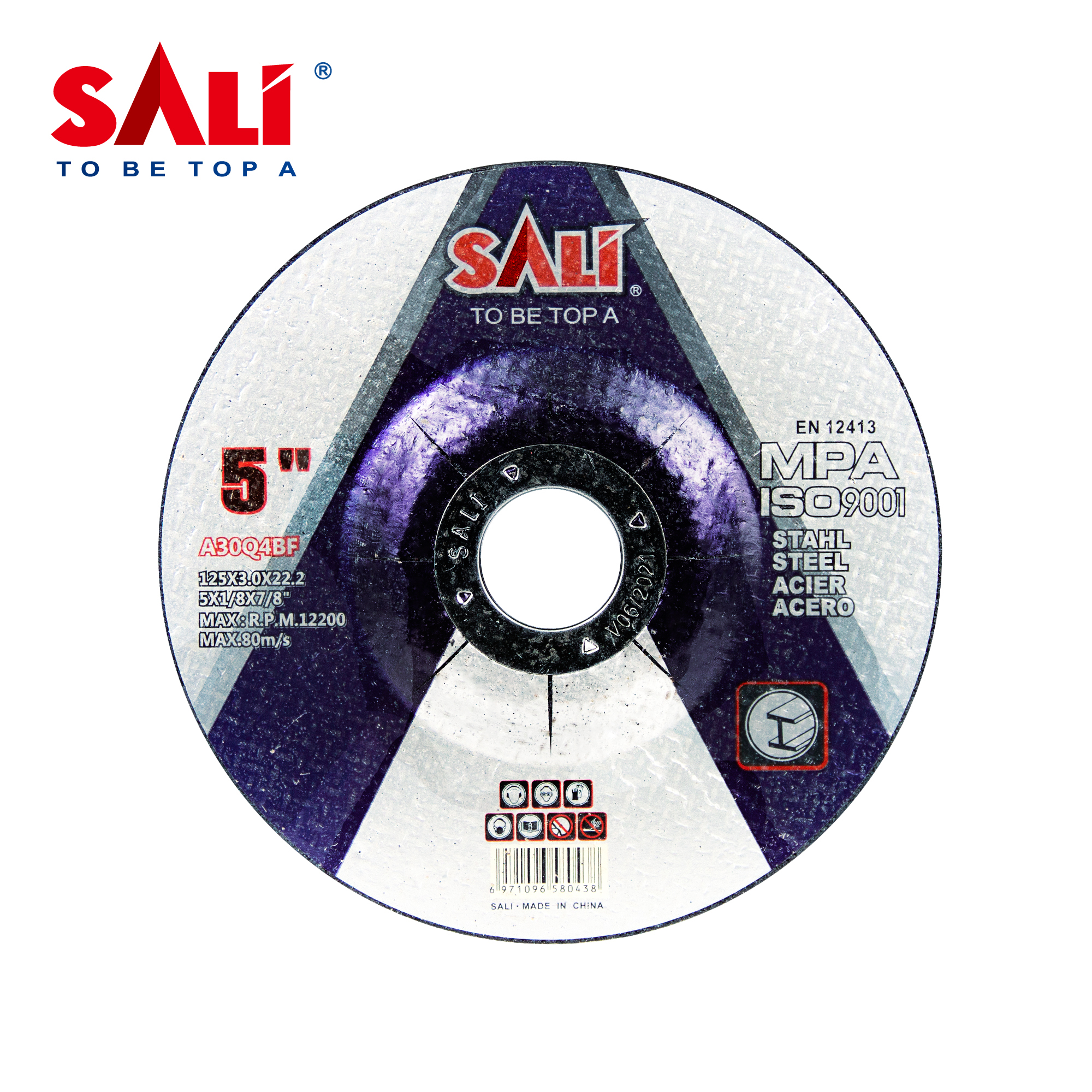
| 5 in | 125 mm | ≈12,220 rpm | Longer seams and faster surface coverage |
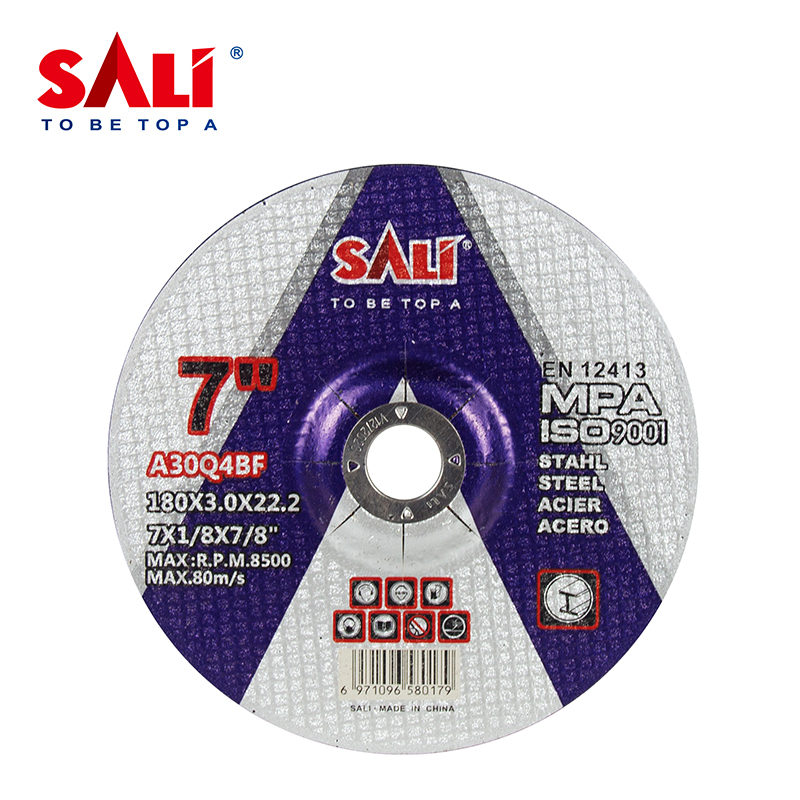
| 7 in | 180 mm | ≈8,490 rpm | Heavier stock removal on large fabrications |
| 9 in | 230 mm | ≈6,640 rpm | Structural steel, thick plate, pipeline work |
Read the table in one direction only: the calculated figure tells you roughly what a disc of that diameter is doing at the top of the working window. It does not raise any limit. If a grinder's no-load speed exceeds the MOS on the disc label, the disc does not suit that grinder.
SALI metal grinding discs are built on aluminium oxide grain in A24Q4 BF and A30Q4 BF formulations with a resinoid bond, and are rated for operation up to 80 m/s. Compliance is stated against EN 12413 and MPA safety standards — EN 12413:2019 being the European standard covering safety requirements for bonded abrasive products.
Guards and PPE: the 180° rule
Guarding is not a substitute for inspection, and inspection is not a substitute for guarding. Both belong in the same routine.
The safety guard must cover at least 180° of the wheel and must never be removed for convenience, for access to a tight corner, or to fit a larger disc. The open side faces away from the operator. Combined with standing off to the side, outside the direct burst line, the guard is what converts an unlikely event into a survivable one.
PPE for weld seam smoothing is specific, not generic: impact-rated face shield, safety glasses underneath, dust mask, and hearing protection. Dry grinding also produces abrasive particles and metal fines, so local exhaust ventilation matters — the documented target is continuous extraction with a minimum hood velocity of 1.5 to 2.5 m/s. Air movement is a control measure, not a comfort feature.
Step-by-step: a weld seam smoothing routine
The sequence below turns four separate checks into one routine that a shop can audit.
- Confirm the disc matches the job. Wheel type must match the material — standard metal discs on steel and weld joints. Never run a standard wheel on aluminium or copper, or on wood and plastic, where loading can cause violent failure.
- Check the date and the condition. Reject expired discs and any disc showing cracks, chips, bends or moisture damage.
- Ring-test vitreous wheels. Four taps at 45° around the circumference. Any dull note means rejection.
- Compare tool RPM with the label MOS. Tool speed stays below the printed maximum operating speed.
- Mount with correct hardware. Matching, undamaged flanges covering at least one-third of the diameter, with blotters and a clean bore.
- Dry run for one to three minutes. Guard fitted, standing clear of the rotation plane.
- Set the working angle. Maintain 15°–30° on a portable grinder, use controlled pressure rather than force, and let the self-sharpening bond renew the grain. Excessive pressure builds heat and raises fracture risk.
- Finish and check. Blend the seam, then inspect for chatter, burn and residual step before the part leaves the bench.
Symptom matrix: matching what you see to what to check first
When a seam will not clean up, work from the wheel outward rather than adding pressure.
| What you see | Likely cause | Check first |
|---|---|---|
| Dull, flat note when tapped | Crack in a vitreous wheel | Remove from service immediately; do not mount |
| Chatter repeating at wheel rotation frequency | Unbalanced wheel or damaged flange | Flange condition, blotters, clean seating |
| Bright scratch line fixed in one angular position | Localised face damage or embedded debris | Wheel face condition, wheel replacement |
| Burn or blue tint along the seam | Excessive pressure or heavy infeed | Working angle, depth of cut per pass |
| Vibration that increases with temperature | Crack opening under load | Stop the job; ring-test or replace |
| Poor removal with normal pressure | Glazed face or moisture-affected bond | Storage history, expiry date, disc condition |
Use cases where the sequence matters most
Structural steel and building construction. Long, straight seams on thick sections invite sustained pressure and heat. A cracked 230 mm wheel on a 9 in grinder is also the highest-energy failure in the shop, which is why speed matching and the guard matter more here than anywhere else.
Pipeline and energy infrastructure. Field grinding happens in conditions nobody designed for — humidity, temperature swings, dust. Storage discipline travels with the wheel or the inspection fails before the first pass.
Shipbuilding and offshore fabrication. High deposit rates mean high consumable turnover, so batch-to-batch consistency in balance and bond behaviour shows up directly in rework hours.
Industrial MRO and equipment overhaul. Mixed materials and one-off seams reward the symptom matrix, because the fastest diagnostic is usually to eliminate the wheel before adjusting technique.
At procurement scale, the same logic holds. A Middle East project involving a quantity of 10 million pieces, used for fabrication and on-site processing purposes, ran for five years with stable operation; a wholesaler in Uzbekistan has used SALI products for more than nine years, and by 2024 sales volume had increased 21 times compared with the first year as a SALI agent in 2018. Those outcomes are about supply continuity and consistent behaviour, which is what a shop actually depends on when it stops inspecting every disc individually.
Supply-side assurance: what sits behind a crack-free wheel
Inspection is the fabricator's last line of defence. The first line is the manufacturing process that made the wheel, and it is worth knowing what to verify.
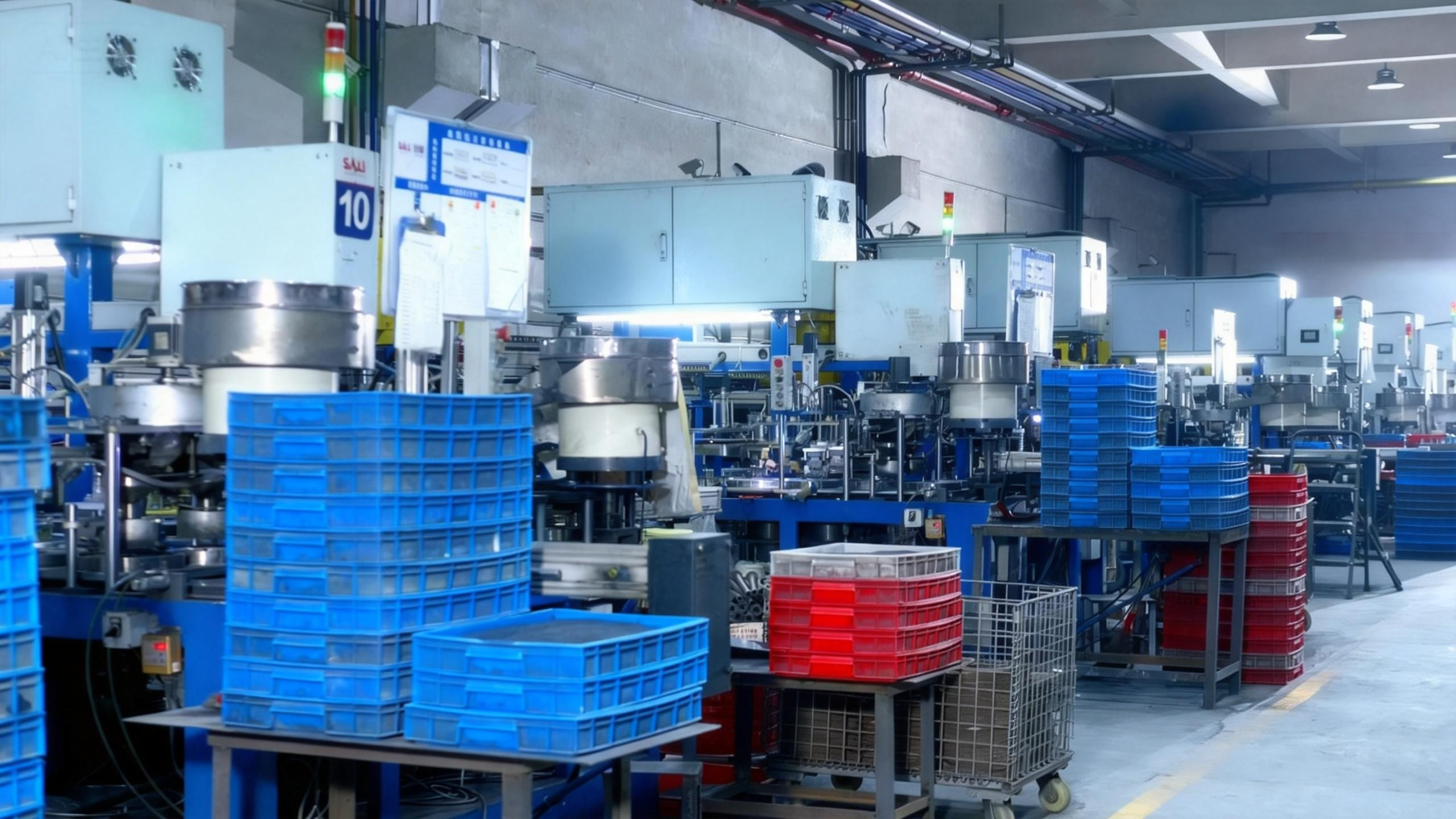
SALI Tools (ZHEJIANG SALI ABRASIVE TECHNOLOGY CO., LTD) was founded in 2003 and launched its own brand in 2010. Its Yongkang, Zhejiang production base covers a 30,000 m² construction area and runs an annual output of 150 million pieces, supported by a 30+ engineer R&D team. For a buyer, the relevant point is not the headline number but what the number implies: volume at that scale only works with standardised process control, because a variable process cannot be scaled without the defect rate scaling with it.
Documented controls a fabricator or importer can ask about:
- Reinforcement structure. SALI metal grinding discs use two to three layers of fiberglass mesh, a design choice aimed at burst resistance under grinding pressure.
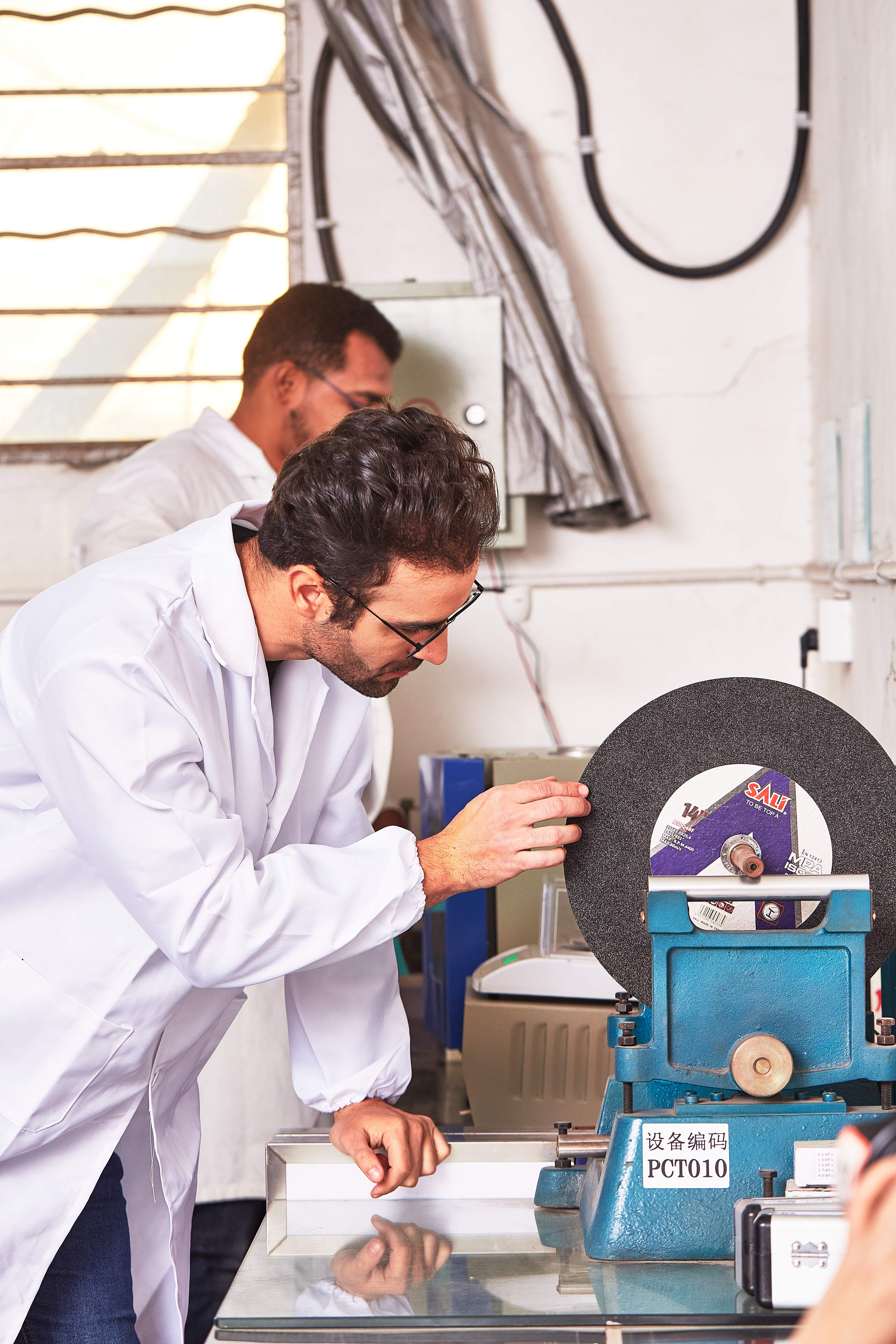
- Batch testing. Every production batch is inspected in an in-house testing lab, with remote camera access that lets customers watch real-time testing or request custom test metrics.
- Certification scope. Products carry MPA and EN 12413 compliance, alongside ISO 9001 and ISO 14001 management system certification.
- Customisation limits. Outer diameters from 4 in to 16 in (100–400 mm), bores of 16 mm, 22.23 mm and 25.4 mm, T27/T42 shapes, grit sizes from 24# to 120#, and grain options including brown aluminium oxide for metal and white aluminium oxide for stainless steel.
- Availability. Monthly capacity of 12.5 million pieces, 85% of standard SKUs held in ready stock across an 8,000 m² warehouse, same-day dispatch for regular orders, and 30–45 days for OEM production.
Conclusion
A weld seam that will not blend is diagnostic information. Before changing technique, change what you check: ring-test vitreous wheels at four points and reject any dull note; inspect resinoid discs for cracks, chips, bends and moisture damage and confirm the expiry date; mount with flanges covering at least one-third of the diameter and blotters in place; keep tool RPM strictly below the label's maximum operating speed; dry-run for one to three minutes with the guard fitted; and work at 15°–30° with a guard covering at least 180° plus a face shield, glasses, dust mask and hearing protection.
That sequence fixes the finish problem and removes the burst risk at the same time, which is why it belongs in one routine rather than two separate safety and quality procedures. Supply-side consistency is what keeps the routine short: the more predictable the wheel, the less often the check finds something.
Next step for buyers and shop supervisors. The full SALI Tools product range — grinding discs, cutting discs, flap discs and power tools — is documented in the SALI Tools brand product catalog, including disc models A0200001 through A0200034. Sample testing is available for new clients, with sample fees refunded on the first bulk order.
FAQ: cracked wheels and weld seam smoothing
Which standards and certifications should I check on a metal grinding wheel used for weld seam work?
Look for EN 12413 and MPA compliance on the wheel and its packaging. EN 12413:2019 is the European standard that sets out safety requirements for bonded abrasive products, and MPA is an established German testing designation for abrasive products. SALI metal grinding discs are stated as compliant with EN 12413 and MPA, and the company holds ISO 9001 and ISO 14001 certification. Also confirm the maximum operating speed printed on the label and that the disc's dimensions match the grinder.
Does the ring test apply to resinoid-bonded discs as well as vitreous wheels?
The ring test is specified for vitreous wheels, where a tap produces either a clear ring or a dull note that reveals a hidden crack. For resinoid-bonded depressed-centre discs used on angle grinders, the documented pre-use check is a visual inspection for cracks, chips, bends and moisture damage, together with a check of the expiry date — aged bonding agents significantly increase burst risk. Discard any disc that fails either check; do not downgrade it to lighter work.
Can SALI Tools supply the disc sizes and specifications a weld seam job needs, including private label?
SALI Tools offers OEM and ODM production across outer diameters from 4 in to 16 in (100–400 mm), bores of 16 mm, 22.23 mm and 25.4 mm, and both flat and depressed-centre shapes including Type 27 and Type 42. Grain options cover brown aluminium oxide for metal, white aluminium oxide for stainless steel, zirconia for heavy-duty work and silicon carbide for stone and cast iron, with grit sizes from 24# to 120# and single, double or triple fiberglass mesh. Customisation includes logo and private labeling, label artwork, disc body colour and custom cartons.
What drives cost per grind on a metal grinding disc?
Cost per grind is set by how much metal a disc removes before it stops cutting efficiently, not by the unit price alone. Three specification variables dominate: abrasive grain and grit size, bond hardness, and reinforcement structure. A disc that wears quickly forces more frequent changes and more operator time; a disc that is too hard for the application glazes and stops removing material. SALI's stated design intent for its metal grinding discs is an optimised resinoid bond matrix that reduces disc wear and lowers consumable cost per grind, with fibre reinforcement supporting structural integrity under grinding pressure.
How does sample testing work before a bulk order?
New clients can order samples for testing, and the sample fee is fully refunded on the first bulk order; regular partners are offered free new samples. SALI also provides remote camera access to its testing laboratory so buyers can watch real-time batch testing of burst speed, cutting efficiency and durability, or request customised test metrics. For a weld seam application, testing should cover seam blending quality, wheel balance at working speed, and wear rate on the specific steel grade in use.
What are the MOQ and lead time for standard and OEM grinding disc orders?
For SALI brand orders, the MOQ is as low as one unit in the ordering system, and one carton in practice (approximately 500–1,000 pieces). Standard SKUs held in ready stock — 85% of the range — can be dispatched the same day from the 8,000 m² warehouse. Custom OEM production runs 30 to 45 days from design confirmation to final delivery, with monthly capacity of 12.5 million pieces and an annual output of 150 million pieces. If you are specifying discs for a weld seam smoothing line, the catalog download above is the fastest way to match part numbers to sizes before requesting samples.
Have Questions or Need More Details?
Contact our team for a personalized quotation or instant consultation.
Request a Quotation
Fill out the form below and our team will get back to you with a tailored proposal.
WhatsApp Direct Chat
Prefer to chat in real-time? Message us on WhatsApp for instant assistance & quick answers.
- Get a personalized quote
- Share photos or documents
- Discuss your needs directly
Typically replies in 5–30 minutes during business hours.