
Cutting Disc Complaints After a Bulk Order: An MPA Scope Fix
Cutting Disc Complaints After a Bulk Order: Fixing Performance Problems with MPA Certificate Scope
A bulk order of cutting discs rarely fails all at once. It fails in a pattern. Three pallets arrive — flat cutting-off wheels in 115 mm, 125 mm, 180 mm and 230 mm, all on a 22.23 mm bore with a 1.2 mm cut width — and the first week looks normal. By the third week the shop floor has a list: some wheels cut clean and cool, others burnish the cut face, drift off the scribed line, or need a second pass on the same 3 mm wall. Consumption per shift creeps up, the rework bin fills, and purchasing is asked a question it cannot answer from a price list.
This article treats that question as a repair job, not a comparison. It does not rank suppliers or argue about which disc cuts fastest. It works through the sequence that actually closes a bulk-run complaint: pull the certificate, read its scope against what was delivered and how it is being run, then correct the specification so the same problem does not return on the next container.
For the Type 41 flat wheel range discussed here, the document at the centre of that sequence is MPA certificate No. Z-15486/25, issued by MPA Hannover, Garbsen Site. Its scope covers flat cutting-off wheels, type 41, for metal at 115 mm, 125 mm, 180 mm and 230 mm, with a 22.23 mm bore and a 1.2 mm cut width, at a maximum operating speed of 80 m/s, with EU applicability. If the complaint involves something outside that description — a different thickness, a depressed centre wheel, a stone cutting disc — the certificate is not wrong. It is answering a different question, and the first task becomes finding the document that covers the product actually on the floor.
Everything else in this guide sits downstream of that check.
The complaint pattern: three symptoms, one audit
Bulk-run complaints cluster into three symptom families, and the same audit resolves all three — provided the audit keeps two questions separate: what the product was certified to be, and what the application is doing to it.
- Cut quality drift. Burrs, discoloration on stainless, a wheel that wanders, or a cut that takes noticeably longer than it did on the sample. The certificate can confirm product type, material designation, thickness and rated speed. It cannot confirm that the grinder is square, the flange is flat, or the operator is cutting at 90°.
- Life shortfall. Fewer cuts per disc than the trial suggested. The certificate narrows this to a product-identity question — is this the same diameter, thickness and product type that was specified? Everything else is application: pressure, spindle speed, moisture exposure, stock age.
- Safety signals. Vibration, unusual noise, discoloration of the disc body, chipping at the bore. These are not performance complaints and should not be negotiated with the supplier over email. Quarantine the pallet, stop the machine, and check the speed rating against the tool before anything else.
A bulk order surfaces all of this because it changes three variables at once. The order is usually a matrix rather than a single size, so more product identities are in play. The consumption window is longer, so storage conditions and shelf age start to matter. And several grinders and operators share the stock, so the machine-side variables multiply. None of that means the discs are wrong. It means the audit has more places to look, and it needs an order.
Why certification comes before the supplier conversation
EN 12413:2019 is the mandatory European safety standard for bonded abrasive products, and it sets requirements for burst testing, marking and dimensional tolerances (CEN, European Committee for Standardization). MPA Hannover provides the independent safety testing — burst test and side load test — used for EU market entry, visualised by the "MPA Tested" mark.
That combination explains why a certificate scope is a stronger instrument than a supplier assurance. Because the standard covers marking and dimensional tolerances as well as burst behaviour, the scope attached to a certificate describes a defined product: this type, these diameters, this bore, this thickness, this speed. It is not a general endorsement of a factory, and it is not transferable to a size that was never listed. That is why "we are certified" is not an answer to a complaint, while "here is the scope, and here is where your item sits in it" is.
Resin-bonded grinding and cutting discs accounted for a 38.5% share of the global abrasive disc market in 2025, according to Dataintelo. Resin-bond behaviour is also the part of a cutting disc most exposed to handling: the bond is moisture-sensitive and has a shelf life, which is why storage and age belong in any complaint investigation alongside the certificate check. Thin profiles add a second factor. Industry guidance from Dome Abrasives defines ultra-thin cutting discs as 1.6 mm or thinner, with growing adoption of 1.0 mm and 0.8 mm for precision metal fabrication — so a 1.2 mm wheel sits inside that band, where lateral stiffness is limited and side load is poorly tolerated.
What certificate No. Z-15486/25 states, and where a complaint usually enters
The certificate is short enough to read in full, and reading it in full is the point. Five fields carry almost all of the diagnostic value.
Certificate reference
- Certificate number: Z-15486/25
- Issuing body and site: MPA Hannover, Garbsen Site
- Product covered: flat cutting-off wheels, type 41, for metal
- Diameters: 115 mm, 125 mm, 180 mm, 230 mm
- Bore: 22.23 mm
- Cut width: 1.2 mm
- Maximum operating speed: 80 m/s
- Market applicability: EU
| Scope line | What the certificate states | Where a bulk complaint usually starts |
|---|---|---|
| Product type | Flat cutting-off wheels, type 41 | A depressed centre (type 27) wheel added to the same purchase order |
| Application | Metal | Stone cutting discs or mixed-material use drawn from the same pallet |
| Diameters | 115 mm, 125 mm, 180 mm, 230 mm | A 100 mm (4 inch) size added, or a 115 mm line delivered where 125 mm was expected |
| Bore | 22.23 mm | Grinder fitted with a mismatched flange or locking nut assembly |
| Cut width | 1.2 mm | A thinner disc substituted on site for faster cutting, then judged against 1.2 mm expectations |
| Maximum speed | 80 m/s | Wheel mounted on a grinder whose rated no-load speed exceeds the wheel limit |
| Market applicability | EU | Use outside the EU without checking the local requirement set |
Step-by-step: closing a bulk cutting disc complaint in eight steps
Step 1 — Freeze the pallet and write the symptom down
Hold the remaining stock before anyone consumes more of it. Then record, per affected disc: the markings on the disc (EN 12413, MPA, maximum speed), diameter and thickness, the batch or date information on the packaging, the grinder model and its rated speed, the material grade and wall thickness being cut, and roughly how many cuts were achieved before the symptom appeared. A complaint without this record becomes a conversation about impressions, and it usually ends with a discount instead of a fix.
Step 2 — Request the certificate as a document, not a logo
A wheel carrying an MPA mark should be backed by a certificate someone can actually read: number, issuing body, site, product description, dimensions, speed and applicability. For the SALI Type 41 flat wheel range, that document is No. Z-15486/25 from MPA Hannover, Garbsen Site. SALI also states that every production batch is inspected in an in-house testing laboratory, with remote live-camera access for partners who want to watch batch testing. That is a useful verification channel, but it does not replace reading the scope — a live test shows you a batch behaving; the scope shows you what the certificate claims that batch is.

Step 3 — Confirm the product type in scope is the product on the floor
Type 41 is a flat cutting-off wheel. A depressed centre wheel, a grinding wheel, or a stone cutting disc carries a different product description and needs the certificate that covers it. This is the single most common source of a false complaint: a mixed purchase order, one certificate pulled, and a conclusion drawn about the wrong line item. If the disputed wheel is a stone cutting disc and the certificate in hand covers type 41 for metal, the paperwork is not deficient — it is simply not the paperwork for that wheel.
Step 4 — Match the dimensions line by line
Go through the delivered matrix against the scope: 115 mm, 125 mm, 180 mm, 230 mm; bore 22.23 mm; cut width 1.2 mm. A 1.0 mm or 1.6 mm disc, or a 100 mm (4 inch) disc, is outside the scope as described here, and no amount of supplier assurance changes that. If the order legitimately includes sizes beyond the list, ask which certificate covers them rather than assuming the existing one stretches.
Step 5 — Put the 80 m/s limit against the grinder's rating plate
Maximum operating speed belongs to the wheel. Rated speed belongs to the tool. The wheel limit has to sit above the tool's maximum no-load speed — a rule that applies to every wheel on site, certified or not. The next section converts 80 m/s into a number you can compare directly with a rating plate.
Step 6 — Confirm the market applicability matches where the wheels are used
The certificate states EU applicability, which matches EN 12413:2019 as the mandatory European standard for bonded abrasives. If the same wheels are used outside the EU, the certificate still evidences independent testing, but it does not automatically satisfy a different jurisdiction's requirement set. Verify locally instead of treating an EU document as a global licence — and record that verification in the order file, because it is the kind of gap that only surfaces after a complaint.
Step 7 — Rule out the causes the certificate cannot cover
A clean scope check clears the product; it does not clear the application. Storage, shelf age, material match, grinder condition and operator technique account for a large share of bulk-run complaints and none of them appear on a certificate. The section after next works through these in detail.
Step 8 — Close the complaint in writing and lock the specification
Record the disposition: which discs were replaced or credited, what the root cause was, and — most importantly — the locked size and type matrix that will be appended to the purchase specification for the repeat order. A complaint that ends with a replacement and no specification change will be back. A complaint that ends with the delivered matrix tied to a certificate scope has been converted into a procurement document other people can follow.
Turning 80 m/s into a grinder check
Surface speed and spindle speed are related by diameter, so the 80 m/s limit produces a different rpm ceiling for each wheel size. The conversion is arithmetic, not a product claim: n = 60,000 × v ÷ (π × D), where n is spindle speed in rpm, v is surface speed in metres per second, and D is diameter in millimetres. At v = 80 m/s, the ceilings for the sizes in scope calculate as follows, rounded to the nearest whole rpm.
| Wheel diameter | Calculated maximum spindle speed at 80 m/s | Practical check |
|---|---|---|
| 115 mm | 13,286 rpm | Compare with the grinder's rated no-load speed on the plate |
| 125 mm | 12,223 rpm | Same check; do not carry a 115 mm habit onto a 125 mm wheel |
| 180 mm | 8,489 rpm | Confirm the machine is rated for the larger diameter, not just the spindle |
| 230 mm | 6,642 rpm | Larger wheels on high-speed small grinders are a machine-mismatch, not a disc fault |
These figures are calculated values derived from the rated speed and the listed diameters; they are not measured test results. Their use is narrow and practical: if a grinder's rated speed exceeds the calculated ceiling for the wheel fitted to it, that grinder is the wrong machine for that wheel regardless of what any certificate says. This is also where a bulk order can quietly go wrong — the 115 mm discs suit the small grinders on the bench, then a 180 mm wheel gets fitted to the same grinder because the guard still closes.
For context on headroom, SALI states that its cutting discs are reinforced with 2–3 layers of high-tensile fiberglass mesh and that burst speed reaches 100 m/s or above, against the 80 m/s operating threshold used in MPA and EN 12413 testing. That is a margin above the rated limit, not a licence to exceed it: the 80 m/s figure remains the maximum operating speed, and operating above it moves the wheel outside the conditions it was certified for.
The four causes the certificate will never explain
Once the scope check is clean, the remaining explanations are physical. Four of them cover most bulk-run complaints.
Storage and moisture
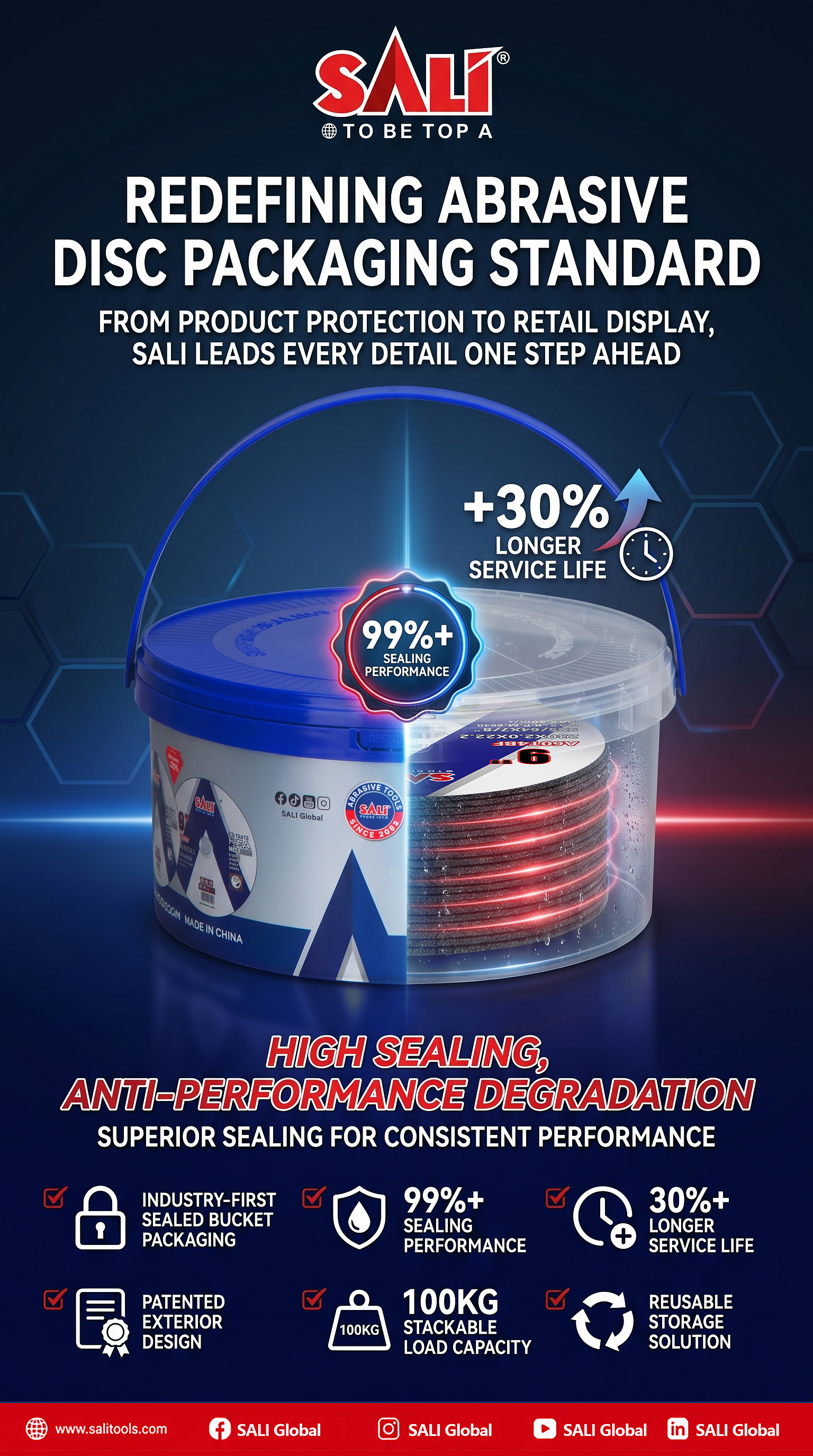
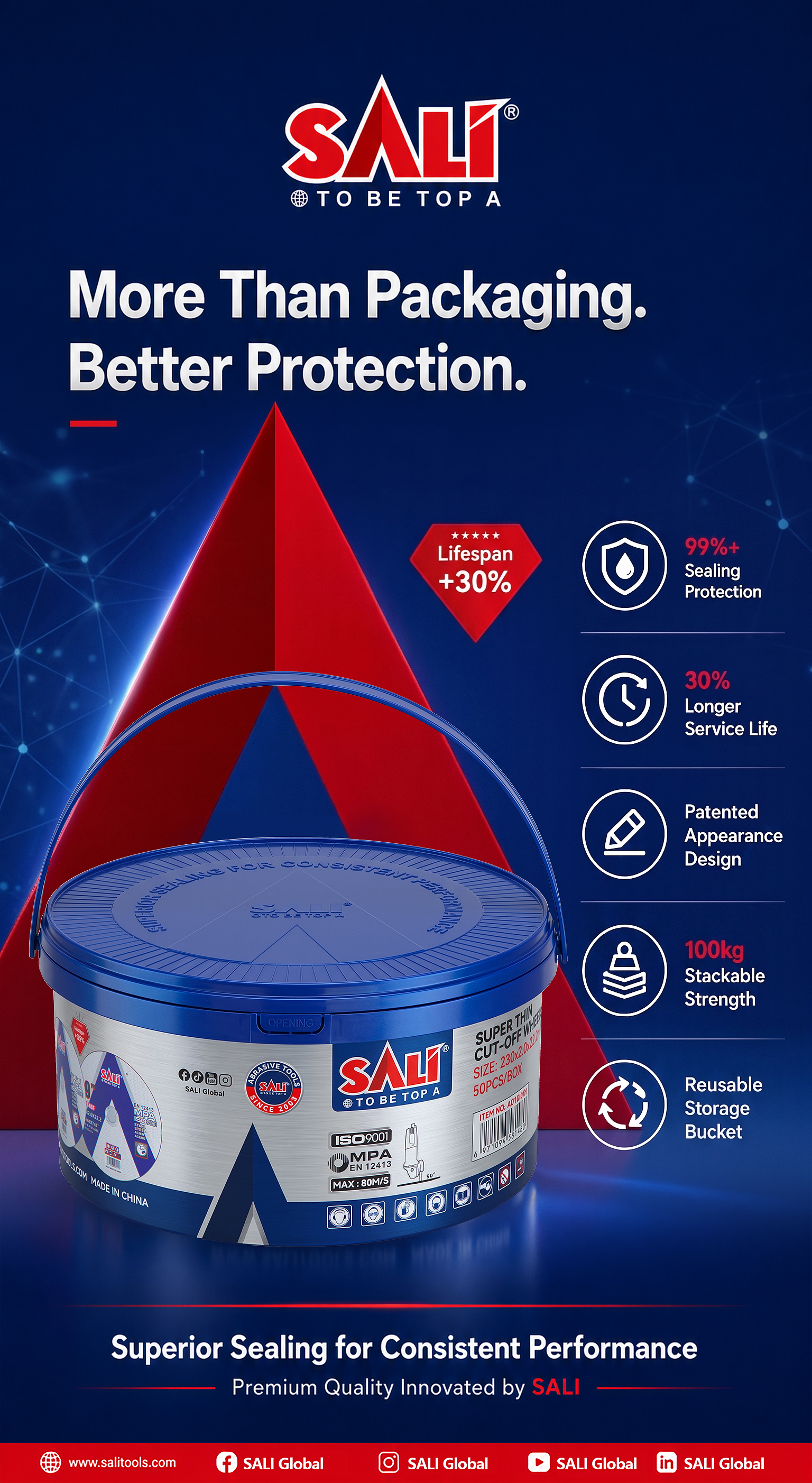
Resin-bonded discs are moisture-sensitive. SALI's guidance is to store them in a cool, dry area — below 60% relative humidity, between 10 °C and 30 °C — off the floor, with the note that discs retain optimal performance for three years under standard conditions; stock ships shrink-wrapped and moisture-protected. A pallet that spent a month in a humid yard before it reached the shelf is a plausible explanation for a bond that behaves differently from the sample. Packaging helps here: SALI's sealed bucket packaging is described as offering 99%+ sealing protection against moisture and dust, helping prevent disc deformation, with SALI's internal testing indicating 30%+ longer service life through enhanced moisture protection. The bucket is also resealable, reusable and rated for 100 kg stackable strength, which matters when bulk stock is stacked rather than shelved.
Age and stock rotation
Expired stock is a safety issue before it is a performance issue: aged bonding agents increase the risk of wheel burst. First-in-first-out rotation is the control, and a complaint investigation should check the delivery date against the batch in use before assuming anything about the disc formula.
Material match
For stainless steel (Inox), SALI uses high-purity white aluminium oxide with sulfur-free and chlorine-free bonds, intended to cut cool without burrs or discoloration; for carbon steel and cast iron, aluminium oxide (A) discs are specified. Running a standard disc on soft metals such as aluminium or copper, or on wood and plastic, causes loading, and loading can end in violent wheel burst — so "the wheel cuts badly on this job" sometimes means the wheel should never have been on that job.
Machine setup and technique
Flanges should be balanced and cover at least one third of the wheel diameter, with soft blotters for even pressure; the guard should cover at least 180° and stay in place. Thin cutting wheels must never be used for side grinding, deep cutting should never be attempted with a grinding wheel, and excessive pressure builds heat that shortens life and raises fracture risk. Radial cutting at 90° is the intended motion for a flat cutting-off wheel; an operator who has been edge-dressing with it has found the complaint before the auditor does.
Where this sequence pays for itself
Four buyer situations account for most of the value, and each has a different failure mode.
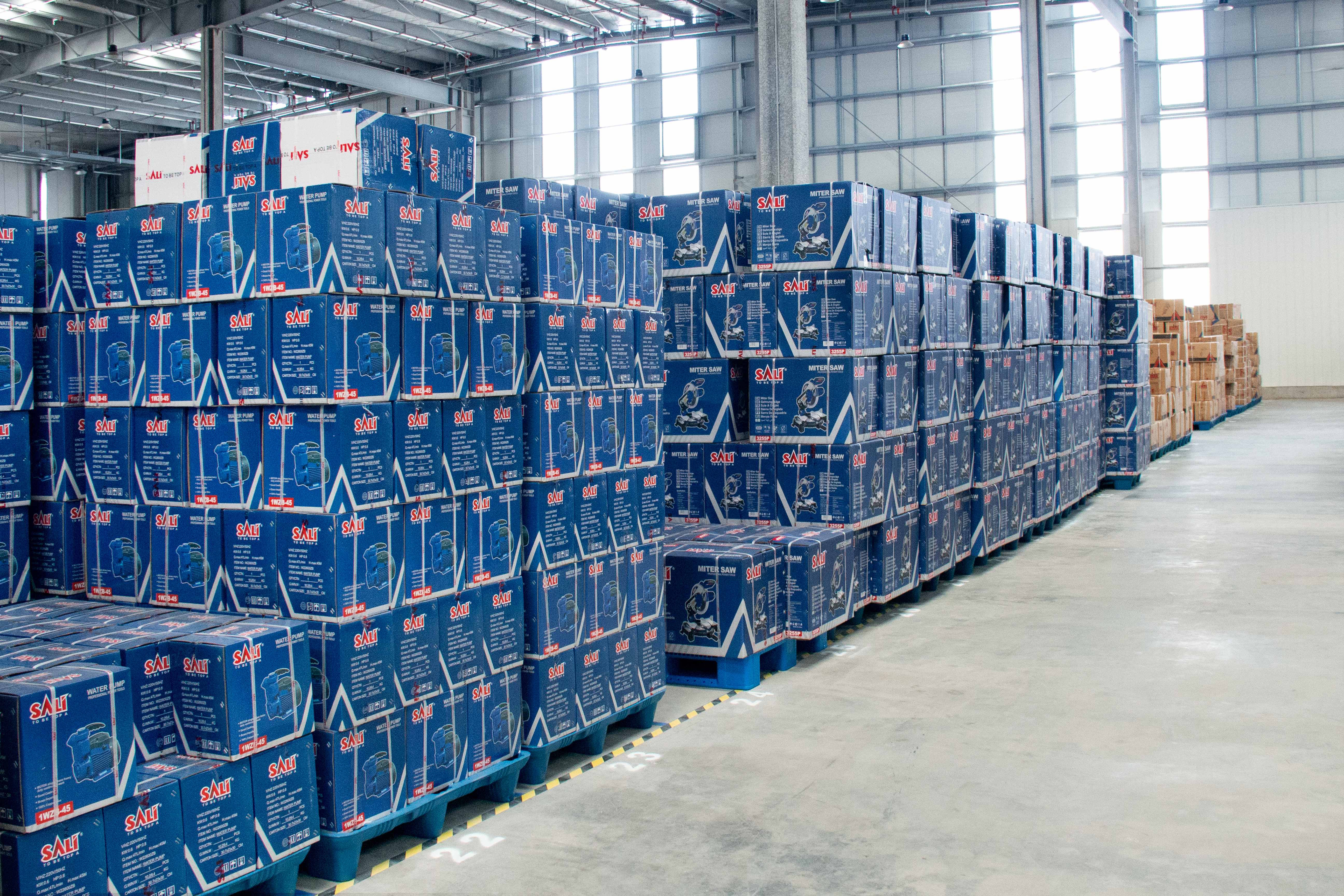
- A distributor running a four-size matrix from stock. The risk is a size substitution during picking, and the control is a picking list that mirrors the certificate scope. SALI states that 85% of standard SKUs are held in ready stock across an 8,000 m² warehouse with 12,000 m³ of capacity, which supports same-day dispatch for regular orders — fast movement only helps if the size on the picking list is the size on the certificate.
- A fabricator cutting carbon steel and 304 stainless on the same bench. The risk is one disc type migrating to the other material, and the control is a physical separation of the two stocks with the material designation visible on the label.
- An on-site processing contractor. The risk is environment: SALI's stated working range covers ambient temperatures from −20 °C to +45 °C, with standard resin-bonded discs not to be used in wet, raining or water-splashing conditions unless marked for wet cutting. A site complaint that follows a rainy week is a storage and handling question, not a bond question.
- A buyer whose purchase order mixes product types. The risk is the false complaint described earlier — one certificate pulled for a multi-type order. The control is one scope check per product description, documented separately.
Preventing recurrence: what the Middle East reference shows
The reference point for this approach is a Middle East fabrication and on-site processing project that consumed 10 million pieces over five years and reported stable operation across that period. The useful lesson is not the volume. It is the shape of the arrangement: a fixed size matrix, a certificate whose scope matches that matrix, batch testing behind each shipment, and a claim route that resolves deviations instead of absorbing them.
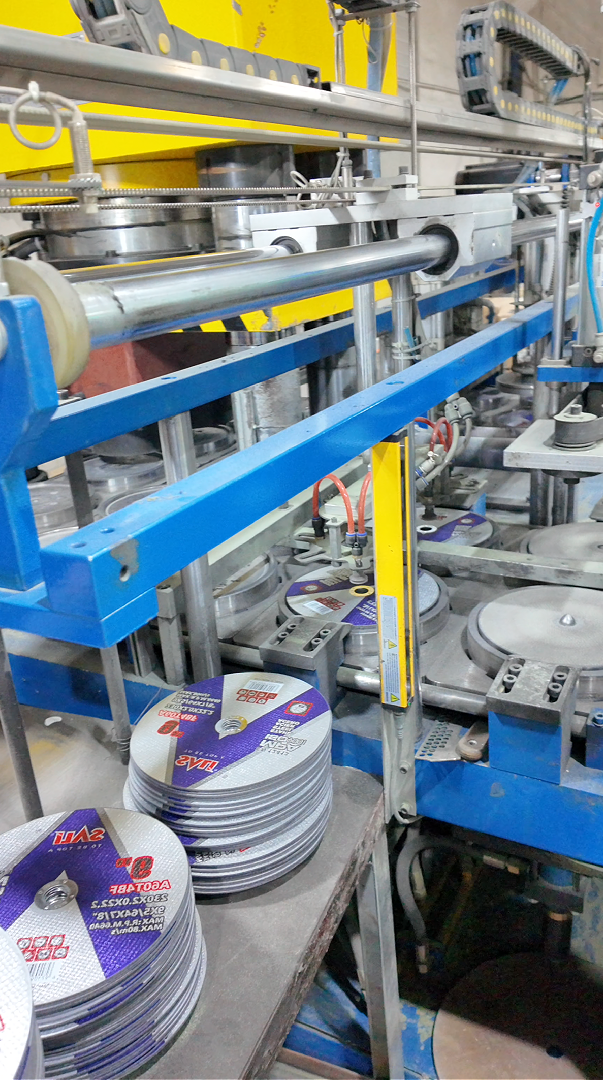
That structure is visible in how the supply side is organised. ZHEJIANG SALI ABRASIVE TECHNOLOGY CO., LTD (SALI Tools) operates a 30,000 m² facility with 150+ employees and reports annual output of 150 million pieces, holds ISO 9001 and ISO 14001 certification, and lists MPA, EN 12413 and EU safety standards among its product certifications. Every production batch is inspected in the in-house laboratory, and pre-shipment testing is run against MPA and EN 12413 criteria with burst speed at or above 100 m/s. Pre-shipment testing also supports live remote lab inspection or third-party audits such as SGS and BV — which is the mechanism that turns a certificate scope from a piece of paper into something a buyer can check before the container sails.
Frequently asked questions
Does MPA certificate scope cover every cutting disc in a bulk order?
No. A certificate scope lists specific products and dimensions. MPA certificate No. Z-15486/25, issued by MPA Hannover, Garbsen Site, covers flat cutting-off wheels, type 41, for metal at 115 mm, 125 mm, 180 mm and 230 mm, with a 22.23 mm bore, a 1.2 mm cut width and a maximum operating speed of 80 m/s, with EU applicability. If the order contains a different diameter, a different thickness, a depressed centre wheel or a stone cutting disc, that line item sits outside this scope and needs the certificate that covers it.
Can a mixed four-size Type 41 order be supplied from ready stock?
SALI states that 85% of its standard SKUs are held in ready stock across an 8,000 m² warehouse with 12,000 m³ of capacity, enabling same-day dispatch within 24 hours for regular orders. For SALI brand orders, the minimum order quantity is one carton per standard size. OEM minimums are set by size: 30 cartons for 107 mm, 115 mm and 125 mm; 50 cartons for 180 mm and 230 mm; 100 cartons for 350 mm and 400 mm.
What should we measure to judge whether an underperforming batch is costing us money?
Count cost per cut rather than unit price, because rework and downtime usually exceed the price difference between two discs. On the product side, SALI reports that a 115 × 1.2 mm industrial cutting disc achieves 35–45 continuous cuts on a 12 mm 304 stainless steel solid bar, delivering 85%–95% of top premium brands' lifespan at 40%–60% lower cost. On the shop-floor side, log cuts per disc on the actual workpiece, the number of second passes, and the minutes of machine downtime per shift — those three figures are what a complaint is really about.
How do we validate a corrected specification before releasing a repeat order?
Three checks are available. Pre-shipment, product is tested against MPA and EN 12413 criteria with burst speed at or above 100 m/s, and partners can join testing through live remote camera access or request a third-party audit such as SGS or BV. On arrival, a destination inspection window of 7–14 days allows quantity and performance sampling before the batch is released to the floor. If a defect appears later, claims are handled within 24 hours on photo or video evidence, with credit or replacement applied to the next order rather than a return shipment.
How quickly can a corrected order be resupplied?
Ready stock dispatches within 24 hours. Custom OEM production takes 30–45 days after artwork approval and deposit receipt. On terms, FOB applies to orders reaching USD 5,000, with a flat USD 200 operation fee below that threshold; EXW orders can be delivered to a designated Yiwu warehouse or collected directly from the factory warehouse. Buyers who want to review the full product range before fixing the size matrix can download the SALI Tools brand product catalog at https://cdn.socialarks.com/sbsp/25197/common/2026/0813/SALI%20Tools%20Brand%20Product%20Catalog.pdf.
Conclusion: fix the specification, not just the pallet
A bulk-order complaint is resolved in the order it arrived: first the document, then the dimensions, then the speed, then the application. Pull MPA certificate No. Z-15486/25, confirm that its scope covers flat cutting-off wheels, type 41, for metal at the diameters actually delivered — 115 mm, 125 mm, 180 mm and 230 mm on a 22.23 mm bore with 1.2 mm cut width — and check that the 80 m/s maximum operating speed and the EU applicability of the certificate match how and where the wheels are being run. If any line item falls outside that scope, the certificate has not failed; it has told you which question to ask next.
Then close the loop. Quarantine, test, replace or credit, and rewrite the purchase specification so the delivered matrix and the certificate scope are the same list. Five years of stable operation on a 10 million piece Middle East fabrication and on-site processing project is a reference for that discipline rather than for any single disc — the specification held, and the complaints had nowhere to start.
For buyers who want the documented position on certification, capacity and supply terms, the company profile and product range of ZHEJIANG SALI ABRASIVE TECHNOLOGY CO., LTD (SALI Tools) are published on the official site, and a sample or quotation request can be raised with the same specification sheet used in the audit.

Have Questions or Need More Details?
Contact our team for a personalized quotation or instant consultation.
Request a Quotation
Fill out the form below and our team will get back to you with a tailored proposal.
WhatsApp Direct Chat
Prefer to chat in real-time? Message us on WhatsApp for instant assistance & quick answers.
- Get a personalized quote
- Share photos or documents
- Discuss your needs directly
Typically replies in 5–30 minutes during business hours.