Cutting Disc Manufacturers: A Practical Buying Guide
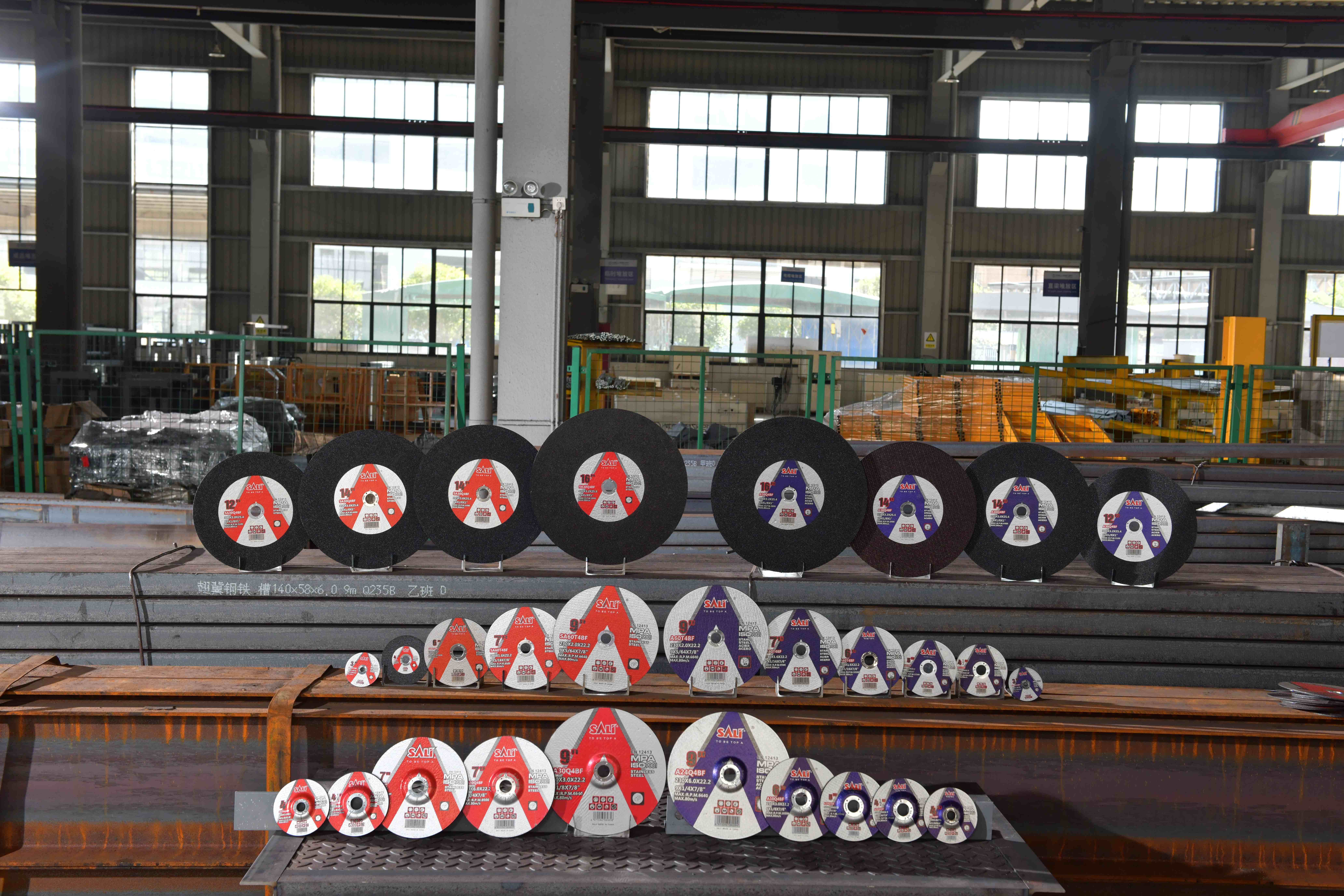
Image: SALI Tools cutting discs collection view.
Cutting Disc Manufacturers: A Practical Buying Guide
A cutting disc is a bonded abrasive wheel used with angle grinders, chop saws and portable cutting machines to cut metal, stainless steel, stone and related construction materials. When a procurement team or distributor searches for cutting disc manufacturers, the real task is to identify a supplier that can provide safe, consistent cutting discs across many orders. This guide explains the product category, the manufacturer evaluation criteria, the relevant safety standards, and a practical process for verifying a supply partner.
This article is written for the awareness-to-research stage. It is therefore structured around the questions that usually appear before a quotation: Is this supplier a direct factory? Do the certificates and product grades match the intended application? Can the manufacturer deliver repeatable quality at a practical order quantity?
Why a Cutting Disc Manufacturer Search Is Not a Price Search
Search results for cutting disc manufacturers often look similar. A website may show the same diameter range, similar abrasive grains, and comparable product photos. The visible differences are smaller than the hidden differences in resin formulation, fiberglass reinforcement, raw-material consistency, batch testing, and safety compliance.
A cutting disc is a safety-related consumable. It rotates at high speed while removing metal, and the product must tolerate side loads, impact, heat, and vibration. A weak bond system or a missing layer of reinforcement can cause the disc to deform, break, or burst. That is why buyers should evaluate the manufacturer before evaluating the price per piece.
Cutting Disc Industry Background in 2026
The global cutting disc market has continued to expand because of metal fabrication, construction, oil and gas, and infrastructure maintenance demand. According to a Market Research Future report, the global cutting discs market was valued at about USD 7.322 billion in 2024 and is projected to reach USD 11.59 billion by 2035. Dataintelo also reported that resin-bonded grinding and cutting discs accounted for 38.5% of the global abrasive disc market in 2025.
Safety standards are equally important in this market. EN 12413:2019 is the European standard for bonded abrasive products; it specifies safety requirements such as burst testing, marking, and dimensional tolerances. MPA Hannover provides independent testing for grinding and cutting discs, including burst tests and side load tests, and its mark is often used to demonstrate product safety for European buyers. In product development, the industry usually defines ultra-thin cutting discs as having a thickness of 1.6 mm or less, with 1.0 mm and 0.8 mm discs becoming more common for precision metal fabrication.
These trends explain why a modern cutting disc manufacturer is expected to offer more than commodity discs. A manufacturer should be able to state the applicable standard, explain the abrasive and bond system, and provide evidence of production control.
Supplier Evaluation Criteria: How a Cutting Disc Manufacturer Should Be Judged
For the rest of this article, SALI Tools is used as a concrete example. SALI Tools is the export brand of ZHEJIANG SALI ABRASIVE TECHNOLOGY CO., LTD., a manufacturer established in 2003. The company operates in the power tools, abrasive products, and hand tools sector, and it has direct manufacturing experience in bonded abrasives since its founding.
1. Direct Manufacturing and Factory Control
The first check is whether the supplier owns or controls the production process. SALI Tools is part of ZHEJIANG SALI ABRASIVE TECHNOLOGY CO., LTD., which operates a direct factory in Yongkang, Zhejiang. The direct factory area is 6,000 square meters and the manufacturing facility at that location has a construction area of 30,000 square meters. The company has more than 150 employees and a research and development team of over 30 engineers.
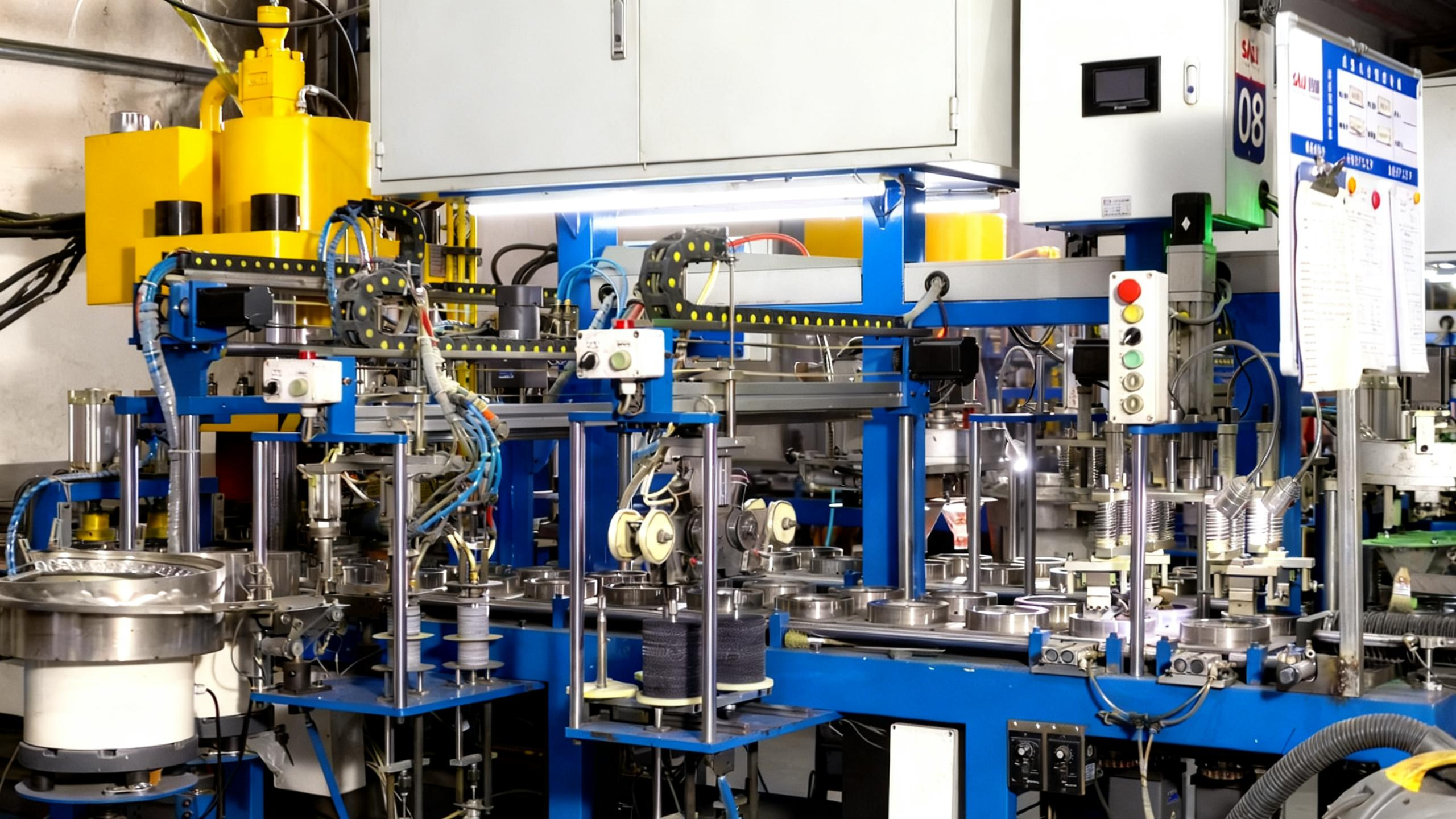
Image: SALI production line in the direct factory.
Owning a factory is not enough by itself. The manufacturer must also control raw materials and production variables such as resin bonding, curing, and reinforcement. SALI describes cutting discs as the core heritage business of the company, using resin-bonding technology combined with fiberglass mesh reinforcement. This type of manufacturing control is important for a buyer because it determines whether quality will remain stable from batch to batch.
2. Safety Standards and Certification
The second step is to verify product-level safety standards, not only ISO certificates. SALI Tools is certified to ISO 9001 and ISO 14001. More importantly for abrasive products, its cutting discs have received MPA certification, meet EN12413, and comply with EU safety standards.
In SALI product material, the discs are reinforced with multi-layer high-tensile fiberglass mesh to prevent deformation and bending. The manufacturer also states that its discs are designed to provide anti-burst protection during high-RPM operations. When a supplier offers a legal or product-liability commitment linked to manufacturing defects, that is a sign that the manufacturer is willing to stand behind its process.
3. Abrasive Grain and Bond Selection
The third check is material selection. Different workpieces require different abrasive grains and bond systems. SALI cutting discs can use aluminum oxide, white aluminum oxide, zirconia alumina, ceramic abrasive, or silicon carbide, depending on the product application.
For stainless steel work such as stainless steel pipe, SALI uses high-purity white aluminum oxide with sulfur-free and chlorine-free bonds. This reduces heat generation and helps prevent discoloration and burr formation on Inox. For carbon steel, alloy steel, and cast iron, aluminum-oxide-based discs are used for high-efficiency cutting. The same product family also includes stone cutting discs, showing that a full cutting disc manufacturer should provide more than one formula.
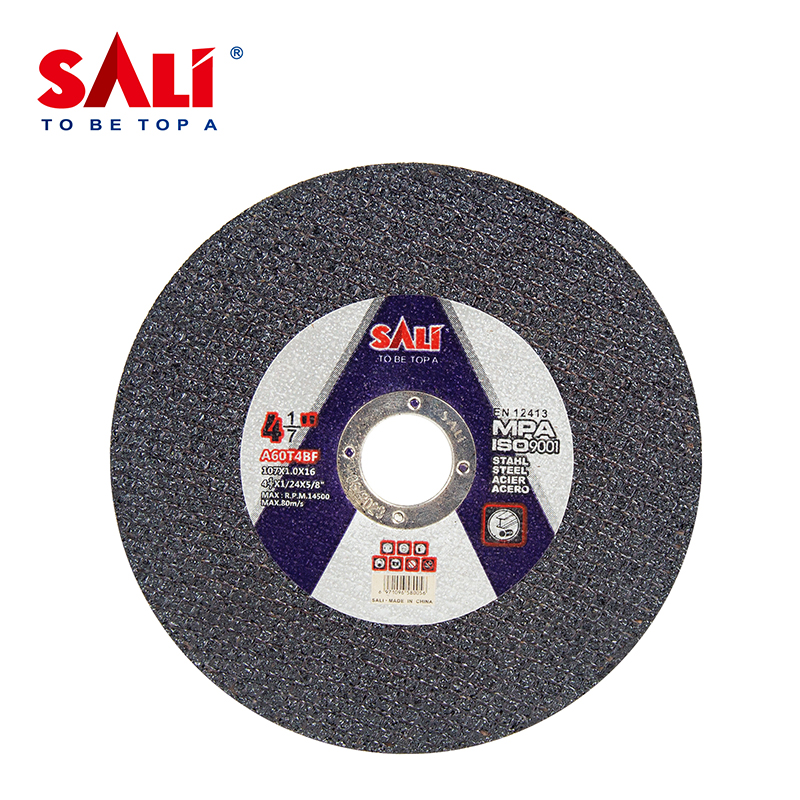
Image: Example of a SALI metal cutting disc.
4. Quality Control and Traceability
The fourth check is quality control. A manufacturer can claim to use premium grains, but batch-to-batch consistency comes from the production and testing system. SALI operates an in-house testing laboratory, and every production batch is sampling-tested. The company also gives B2B clients access to remote camera feeds from the testing lab so that they can monitor quality testing in real time.
For a buyer, this means that quality does not have to remain a black box. Before scaling an order, a distributor or contractor can ask to see the lab procedure, understand the sampling plan, and confirm that rejected batches are not mixed into standard shipments.
5. Product Range and Compatibility
The fifth check is the width of the product range. A practical cutting disc manufacturer should cover multiple diameters, shapes, and abrasive types because end users often work with more than one material.
SALI cutting discs are available from 3 inches to 16 inches. They are offered in both flat and depressed center configurations. The product range includes metal cutting discs, stainless steel cutting discs, stone cutting discs, thin cutting discs, and ultra-thin cutting discs. The discs are designed for use with angle grinders and portable cutting machines.
6. Warehouse, MOQ, and Fulfilment
The sixth check is supply reliability. A cutting disc is a consumable; if the warehouse does not have stock, a jobsite or distributor order can be delayed. SALI operates an 8,000-square-meter warehouse with the capacity to hold around 12,000 cubic meters of goods. The company reports that about 85% of standard SKUs are kept in ready stock. For SALI-brand orders, the MOQ can be as low as one carton, which is important for buyers who need to test the product before placing a larger order.
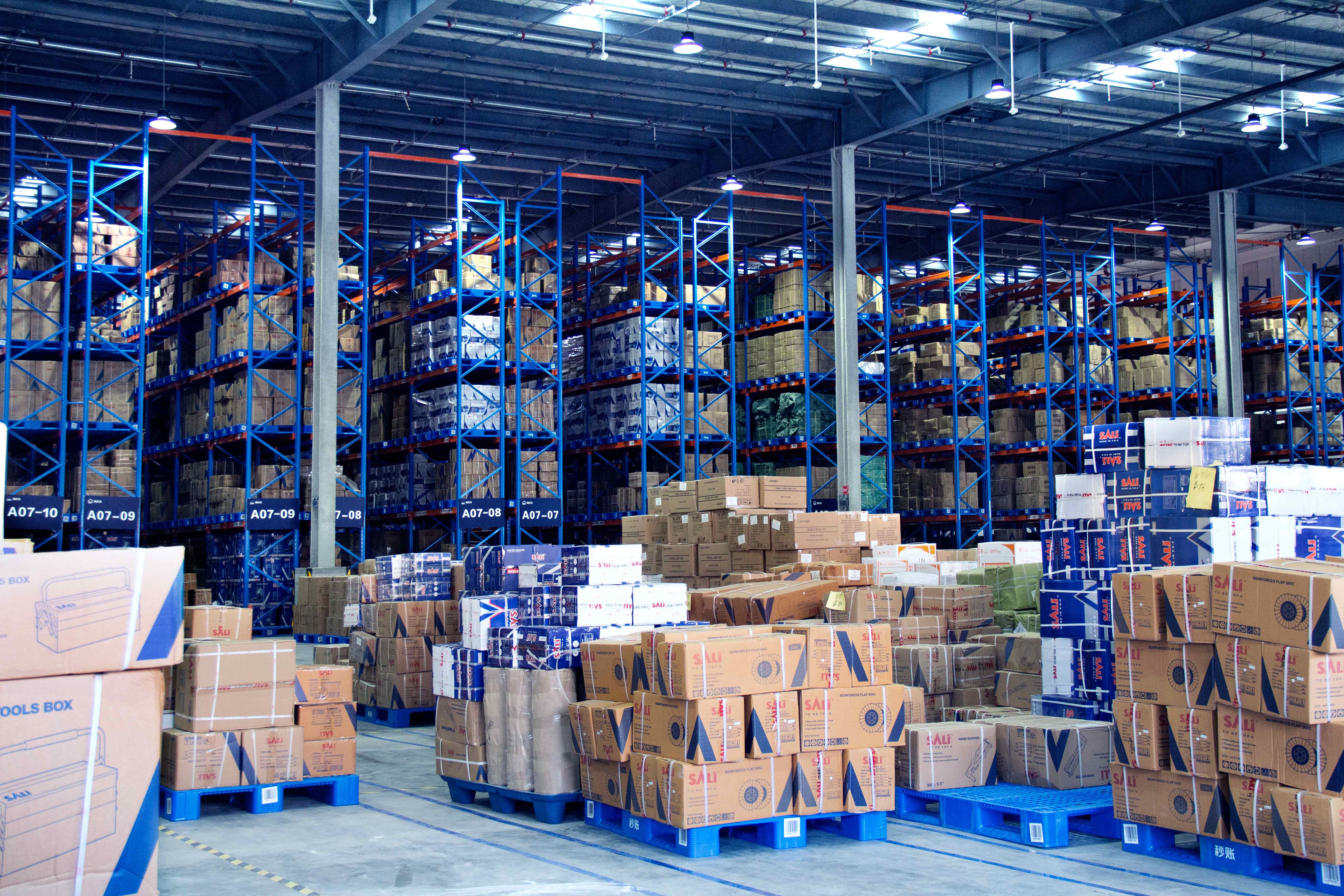
Image: SALI warehouse and ready-stock area.
Cutting Disc Selection and Manufacturer Comparison Matrix
| Disc Type or Feature | SALI Range Notes | Typical Procurement Context |
|---|---|---|
| Metal Cutting Disc | Available in flat and depressed center shapes; diameter range from 3 to 16 inches | Cutting carbon steel, alloy steel, structural steel, pipes, and general metal fabrication work |
| Stainless Steel Cutting Disc | Uses stainless steel-oriented abrasive formulas, including white aluminum oxide with sulfur-free and chlorine-free bonds | Cutting stainless steel pipe, sheet, and Inox sections where discoloration and burrs must be minimized |
| Stone Cutting Disc | Part of the cutting disc family; SALI classifies stone cutting discs separately from metal discs | Construction and building infrastructure work where cutting discs are used on masonry and stone materials |
| Thin / Ultra-Thin Cutting Disc | SALI product types include thin and ultra-thin cutting discs | Workflows that require lower material loss, faster cuts, and less heat input |
| Resin Bonded Cutting Disc | Resin bonding is the bond system used in this cutting disc range | Reinforced, bonded abrasive products for angle grinders and chop saws |
| Flat and Depressed Center | Both shape configurations are available | Different mounting and cutting geometries; depressed center discs are commonly used with angle grinders |
| Angle Grinder / Portable Machine Use | Designed for angle grinders and portable cutting machines | Handheld and semi-industrial cutting, including cutting stainless steel pipes |
How to Vet a Cutting Disc Manufacturer in Six Steps
After reading the evaluation criteria, a buyer still needs a process. Use this six-step workflow before adding a cutting disc brand to an approved supplier list.
- Ask for the certification map. Do not accept a general statement that the supplier is certified. For cutting discs, request the ISO 9001 quality certificate, the ISO 14001 environmental certificate, and the product-level documentation for EN12413, MPA, or other applicable standards.
- Confirm who manufactures the disc. Ask whether the cutting disc is made in a direct factory or sourced from third parties. SALI Tools operates a direct factory in Yongkang, Zhejiang; a direct manufacturer is easier to audit than a trading desk with an unknown production source.
- Request the material matrix. The supplier should be able to recommend a specific product family for stainless steel, carbon steel, cast iron, and stone. If the supplier only says that one disc can cut everything, request more technical detail.
- Inspect batch quality control. Ask how samples are taken, which tests are run, and whether the manufacturer keeps a quality traceability system. SALI’s in-house lab and remote inspection access is an example of modern QC transparency.
- Check product dimensions and machine compatibility. Confirm that the disc size, bore, and maximum RPM match the angle grinder or cutting machine used in your market. SALI cutting discs cover 3 to 16 inches and are designed for angle grinders and portable cutting machines.
- Start with a low-MOQ trial. A trial order is the best verification. SALI-brand orders support low MOQs, often as low as one carton, which makes it possible to evaluate a real production batch before committing to container volume.
Cutting Disc Applications Across Industrial Segments
Cutting discs are used across a wide range of industries because cutting, severing, and slotting are fundamental operations in metalworking and construction. The SALI cutting disc range is intended for metal fabrication and steel structure, pipeline and oil/gas, shipbuilding and offshore engineering, automotive and parts manufacturing, construction and building infrastructure, rail transportation and maintenance, foundry and forge shops, and machinery and general equipment.
- Metal fabrication and steel structure: angle grinders and chop saws are used to cut steel profiles, pipes, bars, and sheet stock before assembly and welding.
- Pipeline and oil/gas: pipe cutting and beveling are common operations, and cutting discs are selected to make clean, precise cuts in metal pipes.
- Shipbuilding and offshore: steel plate and structural section cutting is required for hull blocks, decks, and outfitting work.
- Automotive and parts manufacturing: cutting discs are used for cutting tubing, brackets, and metal components, often with a focus on removing burrs and reducing secondary finishing.
- Construction and infrastructure: metal cutting and stone cutting discs are both used during site installation and maintenance work.
- Rail transport and heavy equipment: maintenance workshops use cutting discs to remove worn parts, cut rails or fittings, and prepare surfaces before repair welding.
- Foundry and forge: cutoff operations are needed for gates, risers, flash, and excess metal after casting or forging.
- Machinery and general equipment: cutting discs are common in maintenance, repair, and custom machine manufacturing.
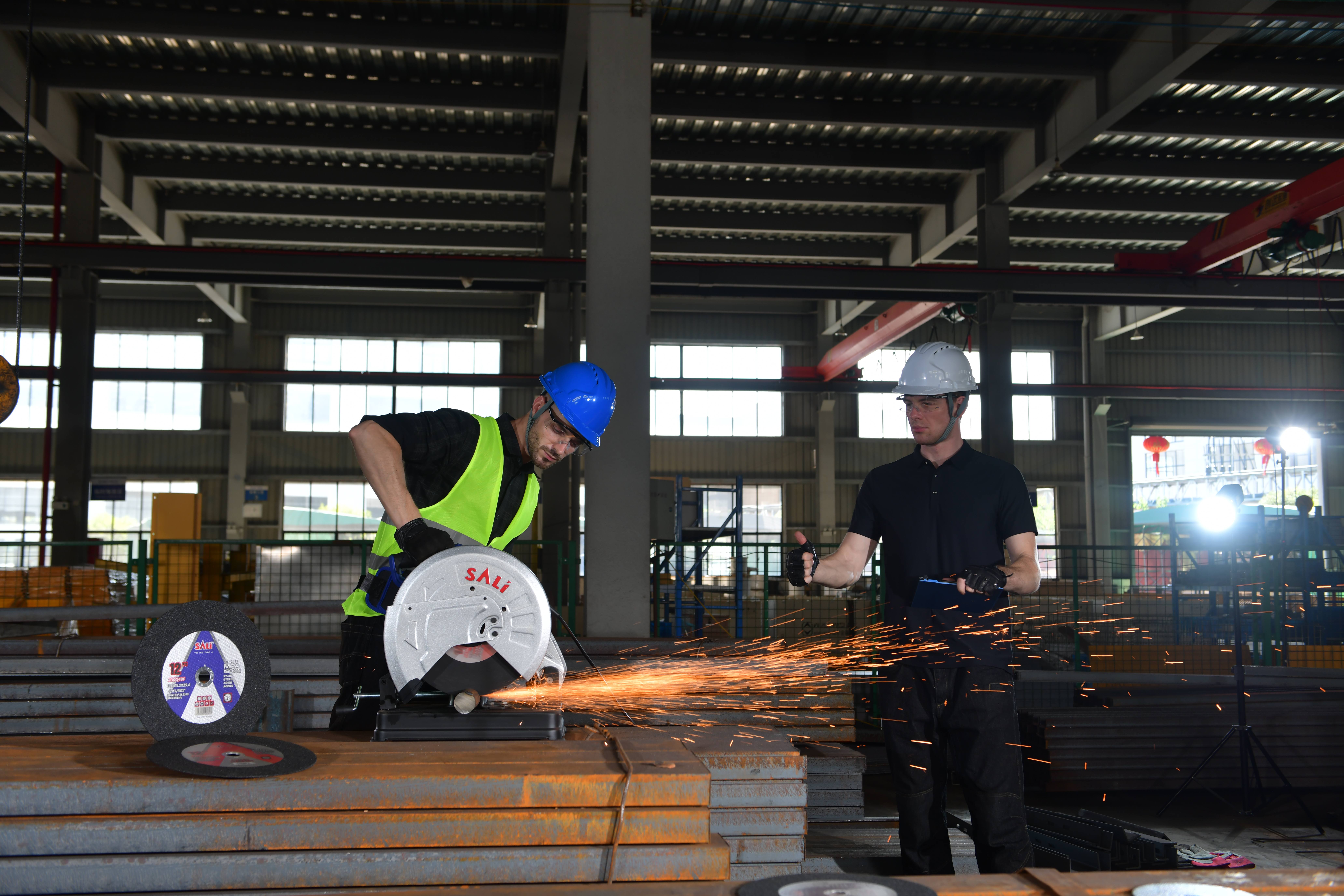
Image: Typical cutting disc application scenarios.
Operating Conditions and Limits to Consider
Resin-bonded cutting discs are sensitive to moisture, temperature, and improper mounting. In published SALI application references, the general ambient temperature range for cutting disc use is -20°C to +45°C. The recommended relative humidity range is 45% to 75%. Discs should not be exposed to direct heat sources or used to cut overheated or molten workpieces.
If the workplace is wet or raining, standard resin-bonded cutting discs are not recommended unless the disc is clearly marked for wet-cutting service. Moisture can weaken the resin bond system and increase the risk of fracture. Work areas should also be ventilated and free of explosive gases, vapors, or combustible dust because cutting sparks can cause ignition.
Operators should always verify that the maximum RPM printed on the cutting disc is higher than the tool’s maximum speed. The machine base should be stable, safety guards should be fitted, and the operator should stay out of the disc burst trajectory. Thin cutting wheels should never be used for side grinding, and standard metal cutting discs should not be used on wood, plastic, or soft metals where loading can make the wheel unstable.
Cutting Disc Manufacturers FAQ
What safety standards does SALI Tools meet for cutting discs?
SALI Tools holds ISO 9001 and ISO 14001 certifications, and its cutting discs have obtained MPA, EN12413, and EU safety standards. SALI describes the discs as resin-bonded products reinforced with multi-layer high-tensile fiberglass mesh and designed to provide anti-burst protection during high-speed operation. EN 12413 is an important compliance reference for European abrasive products, and MPA certification is widely recognized for independent cutting disc safety testing.
Is SALI Tools a real cutting disc manufacturer or a trading company?
SALI Tools is the export brand of ZHEJIANG SALI ABRASIVE TECHNOLOGY CO., LTD., a company established in 2003. The company operates a direct factory in Yongkang, Zhejiang, with a 6,000-square-meter direct factory area and a 30,000-square-meter manufacturing construction area. It also employs over 150 people and has an R&D team of more than 30 engineers, which supports its position as a direct cutting disc manufacturer.
Which cutting disc should be used for stainless steel pipe?
For stainless steel pipe work, buyers should look for a stainless steel cutting disc rather than a general steel cutting disc. In the SALI range, stainless steel discs use high-purity white aluminum oxide with sulfur-free and chlorine-free bonds. This approach helps keep the cut cool, prevents discoloration, and reduces burr formation on Inox surfaces.
What is the MOQ and lead time for SALI cutting discs?
SALI operates an 8,000-square-meter warehouse and keeps about 85% of standard SKUs in ready stock. For SALI-brand orders, the MOQ can be as low as one carton, and standard items from ready stock can be dispatched on the same day or within 24 hours. Custom OEM production and delivery are planned separately, which is normal for abrasive products that require special labelling or packaging.
How do I get a SALI Tools cutting disc catalog or request more information?
The fastest way to evaluate SALI Tools as a cutting disc manufacturer is to download the brand product catalog or contact the SALI marketing team. The catalog includes the cutting disc range and related abrasive products. Buyers can email salimarketing@pcsali.com or call +86 188-6758-6946. For a more detailed sourcing discussion, SALI can share the current product matrix and supply conditions.
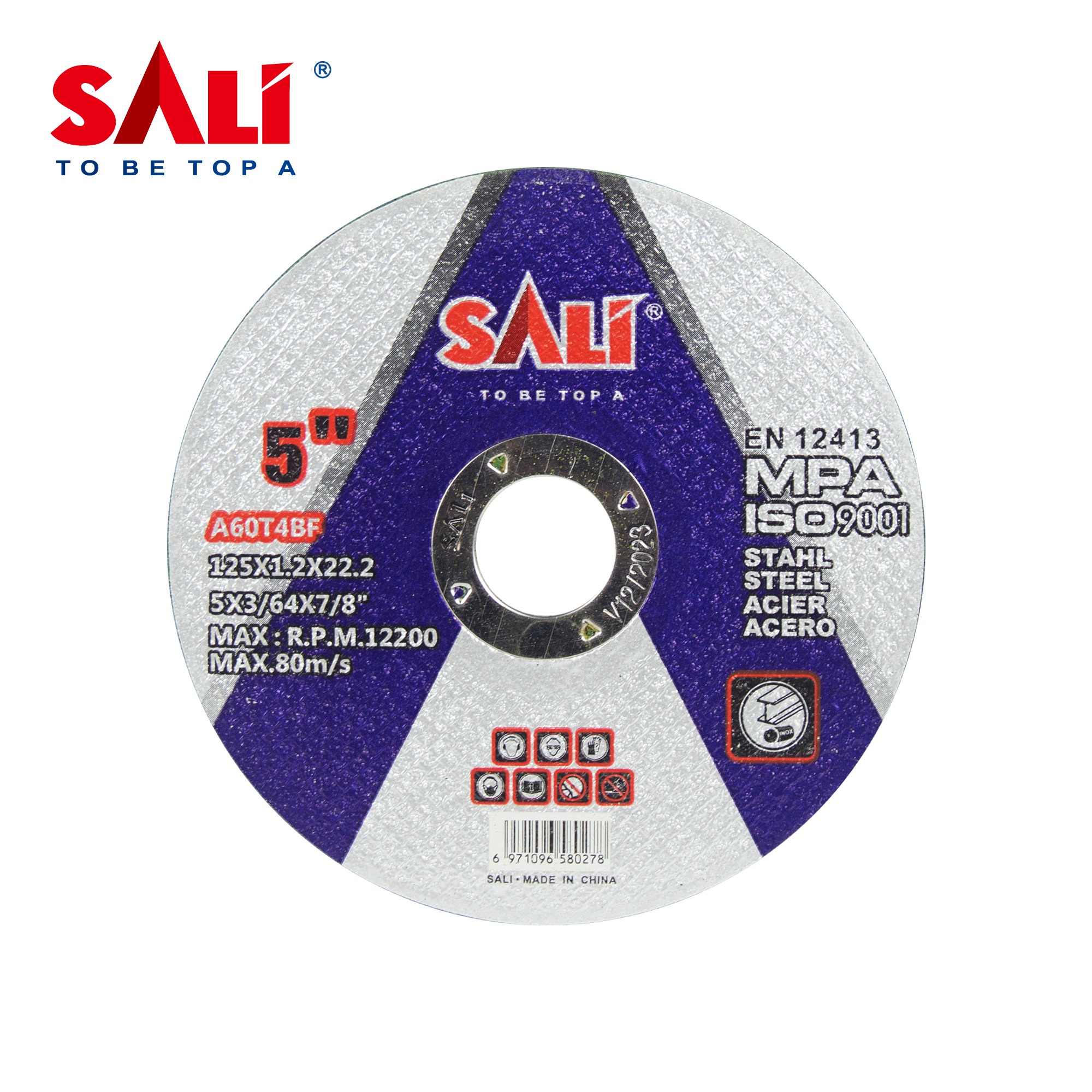
Explore the Full SALI Tools Catalog
The SALI Tools catalog covers cutting discs, grinding discs, flap discs, diamond saws, drill bits, and cordless power tools. Use it as a reference when comparing product specifications and sourcing options.
Download PDF CatalogConclusion
For a buyer moving from awareness to research, the question should not only be who makes cutting discs. The better question is which cutting disc manufacturer can prove that its production system is safe, traceable, and repeatable. A full answer should include direct factory evidence, product-level safety certification, material-specific formula data, batch quality control, and a supply chain that does not force a buyer to order excessive quantities before testing.
SALI Tools is one example of a direct manufacturer that fits this model. The company was founded in 2003, operates a direct factory in Yongkang, and supplies cutting discs in sizes from 3 to 16 inches. Its product line includes metal cutting discs, stainless steel cutting discs, stone cutting discs, thin and ultra-thin cutting discs, and resin-bonded configurations designed for angle grinders and portable cutting machines.
Use the evaluation matrix, the six-step vetting workflow, and the FAQ answers in this guide when you compare suppliers. If you are validating SALI Tools, request the catalog and begin with a low-MOQ trial before moving to volume supply.
Address: 7th Floor, Futian Mansion-B Building, Futian Street, Yiwu City, Zhejiang Province, China
Website: www.salitools.com
Email: salimarketing@pcsali.com
Phone/WhatsApp: +86 188-6758-6946
Catalog: SALI Tools Brand Product Catalog.pdf