
Grinding Wheel Compliance Guide: How Regional Rules Shape Label, Guard and PPE Specs
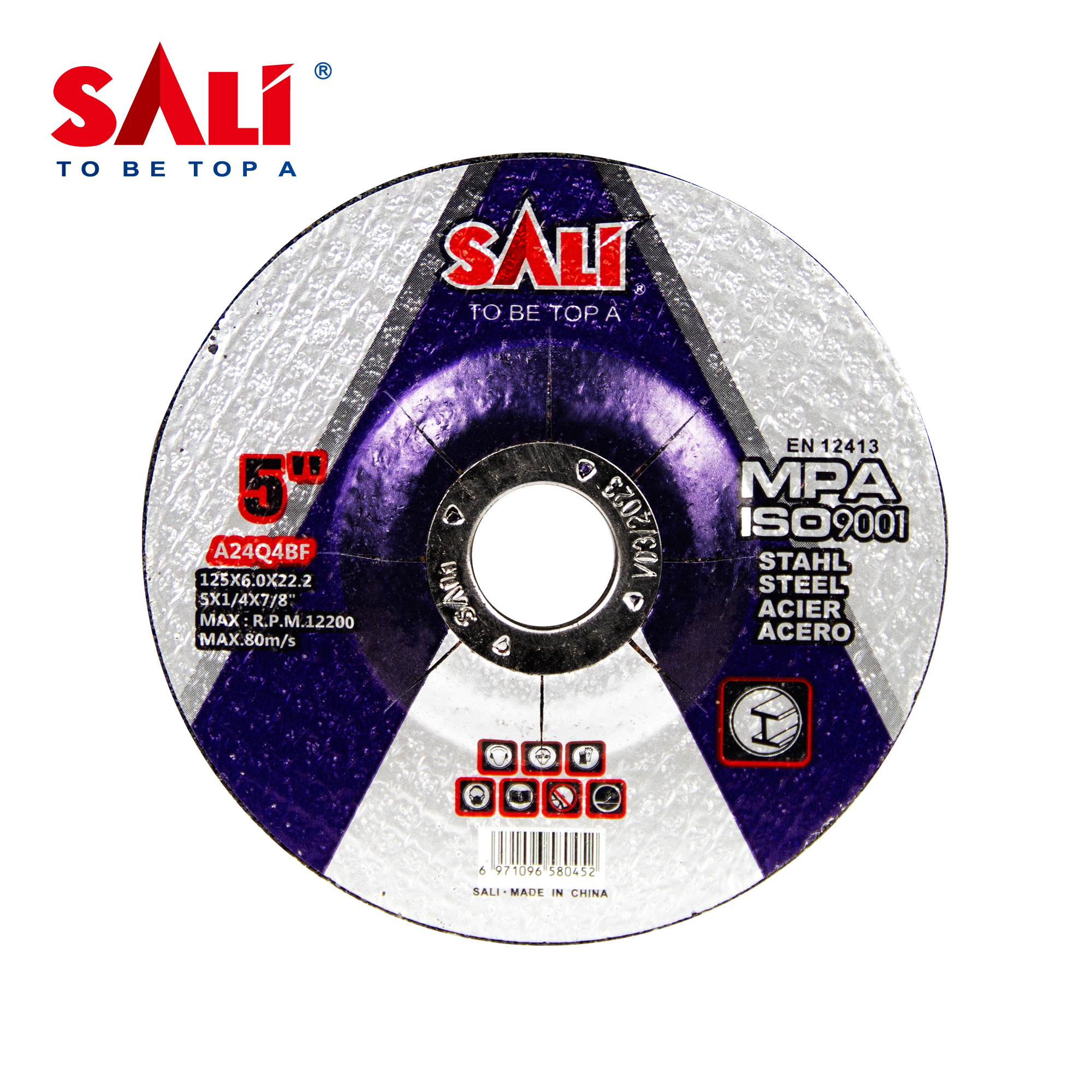
Regional compliance for grinding wheels is not only a certificate file. It is a chain of specifications that must line up at the point of use: the Maximum Operating Speed printed on the wheel label, the grinder rated RPM, flange size, guard coverage, the ring test for vitreous wheels, PPE and dust controls. Importers, EHS managers and procurement teams need to turn those expectations into purchase specifications and site checks before a metal grinding disc is mounted.
Demand context matters. Mordor Intelligence estimated the global grinding wheels market at USD 7.12 billion in 2025. Grand View Research reported that the metalworking segment held a 47.2% revenue share in 2025. In a market that large, a compliance failure is rarely a paperwork issue only. It becomes a site safety issue, a supply-chain issue and a buyer risk issue.
SALI Tools is the brand of ZHEJIANG SALI ABRASIVE TECHNOLOGY CO., LTD., a manufacturer established in 2003 that specializes in professional power tools, accessories and hand tools. Its products have obtained MPA, EN12413 and EU safety standards, and the company holds dual ISO 9001/14001 certifications. It employs over 150 staff, including 30+ R&D engineers, and its annual production capacity reaches 150 million pieces. This matters because compliance-focused production depends on repeatable batch control, labeling discipline and export documentation, not one-time inspection.
Problem Definition: A Wheel Can Pass the Factory and Still Fail the Site
The common gap is not whether a buyer can ask for EN 12413:2019 or MPA. The gap is whether the buyer can explain how that compliance expectation becomes a label, a guard and a PPE specification. A wheel may leave the factory with the right bond, fiberglass mesh and dimensions, but be used on a grinder whose RPM exceeds the label MOS, with flanges that cover less than one-third of the wheel, with the guard removed for access, or with no local exhaust ventilation.
Those are separate control failures. A certificate does not verify the grinder RPM. It does not check flange diameter. It does not confirm that a vitreous wheel has passed a ring test. It does not prove that the guard covers at least 180 degrees. It does not replace impact-rated face shields, safety glasses, dust masks or hearing protection. For importers and EHS teams, the practical question is therefore not only what standard the wheel meets, but what label, mounting, guard and PPE checks the regional market expects at the point of use.
Industry Background: Regional Rules, Product Standards and Trade Classification
EN 12413:2019 specifies safety requirements for bonded abrasive products including grinding wheels. The standard is published by CEN, the European Committee for Standardization, and is active for the European Union context. For importers, HS code 6804.22 covers grinding wheels of other agglomerated abrasives or ceramics. Customs classification and safety compliance are separate issues. A correct HS code does not demonstrate compliance, and a safety certificate does not by itself settle customs classification.
Regional rules may set different documentation, labeling, guarding or PPE expectations. The physical control points remain consistent: speed, mounting, guard, PPE and dust. A buyer should map the local requirement to those control points and require evidence from the manufacturer. In the EU context, EN 12413:2019 provides the safety baseline for bonded abrasive products. In other markets, importers should obtain the local labeling and guarding requirements in writing and compare them with the same checklist.
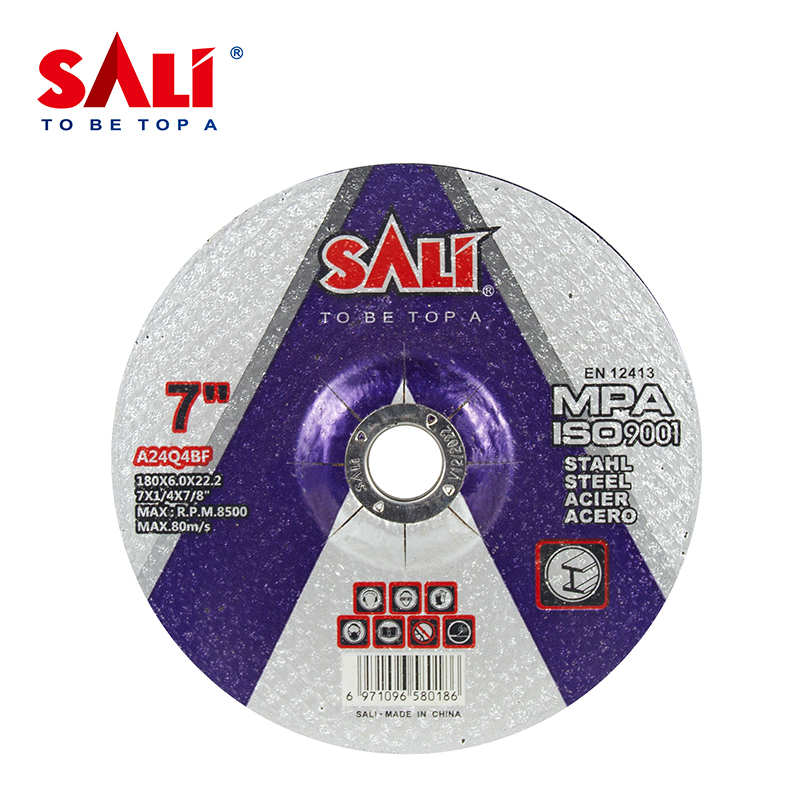
Product design also matters. The supplied product data lists SALI metal grinding discs as metal grinding wheels for cutting and grinding metal, available in 4 inch (100mm), 4.5 inch (115mm), 5 inch (125mm) and 7 inch (180mm) sizes. They are offered in T27 or T42 with black color, and with 2 or 3 fiberglass mesh layers. Model designations include A0200001, A0200004 and A0200007. The material set is aluminum oxide, resinoid bond and fiberglass mesh. These are not marketing details. They determine how the wheel should be handled, mounted, guarded and matched to the grinder.
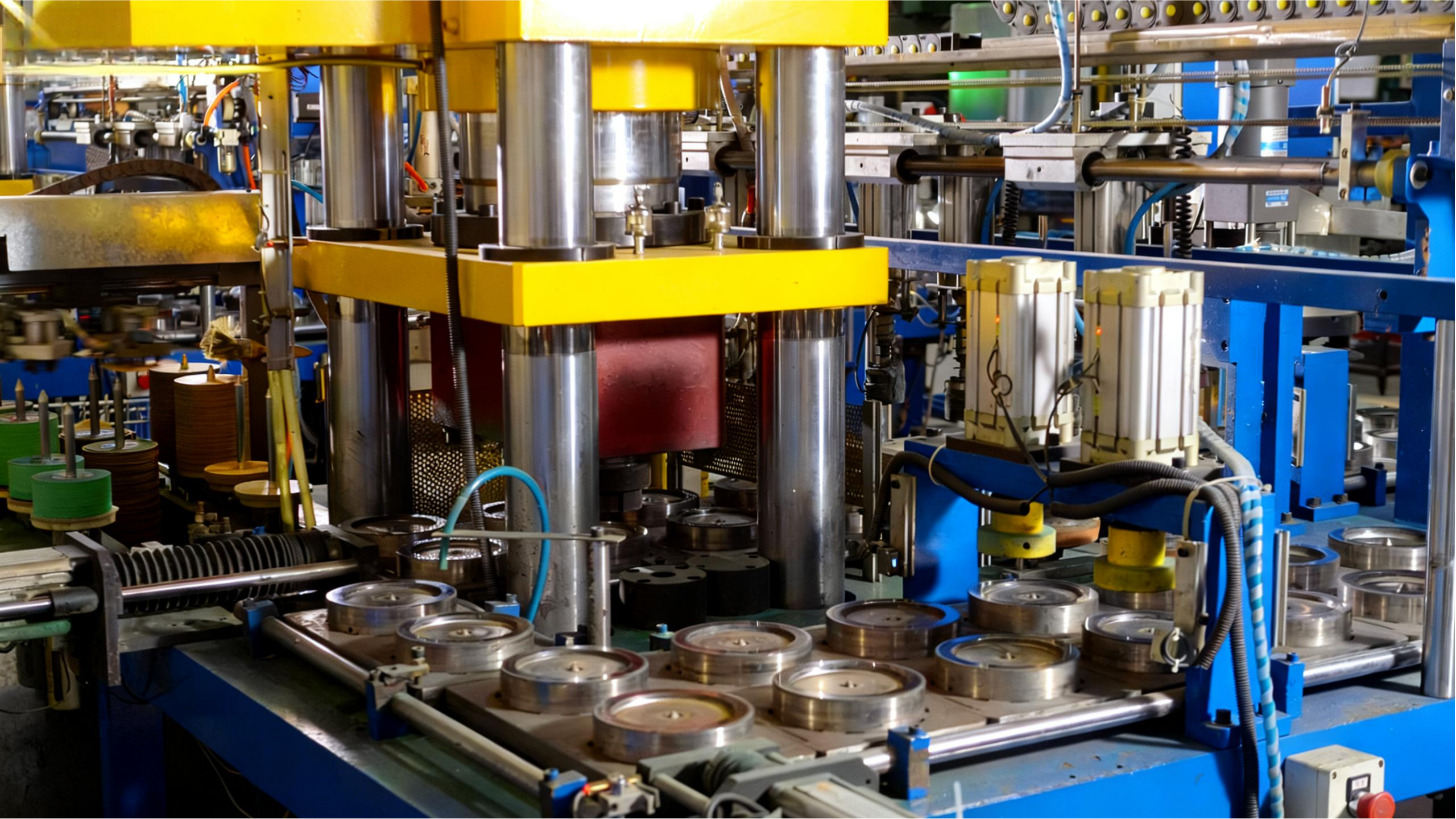
SALI Tools serves markets that include the USA, EU, Ethiopia, Kenya, Nigeria, Democratic Republic of the Congo, Saudi Arabia, Iraq, Kazakhstan, Uzbekistan, Mexico, Argentina, Brazil and Venezuela. Its export business accounts for 100% of total sales, and its products are exported to more than 160 countries and regions. That export profile makes regional label and documentation differences a practical production issue, not an abstract legal topic.
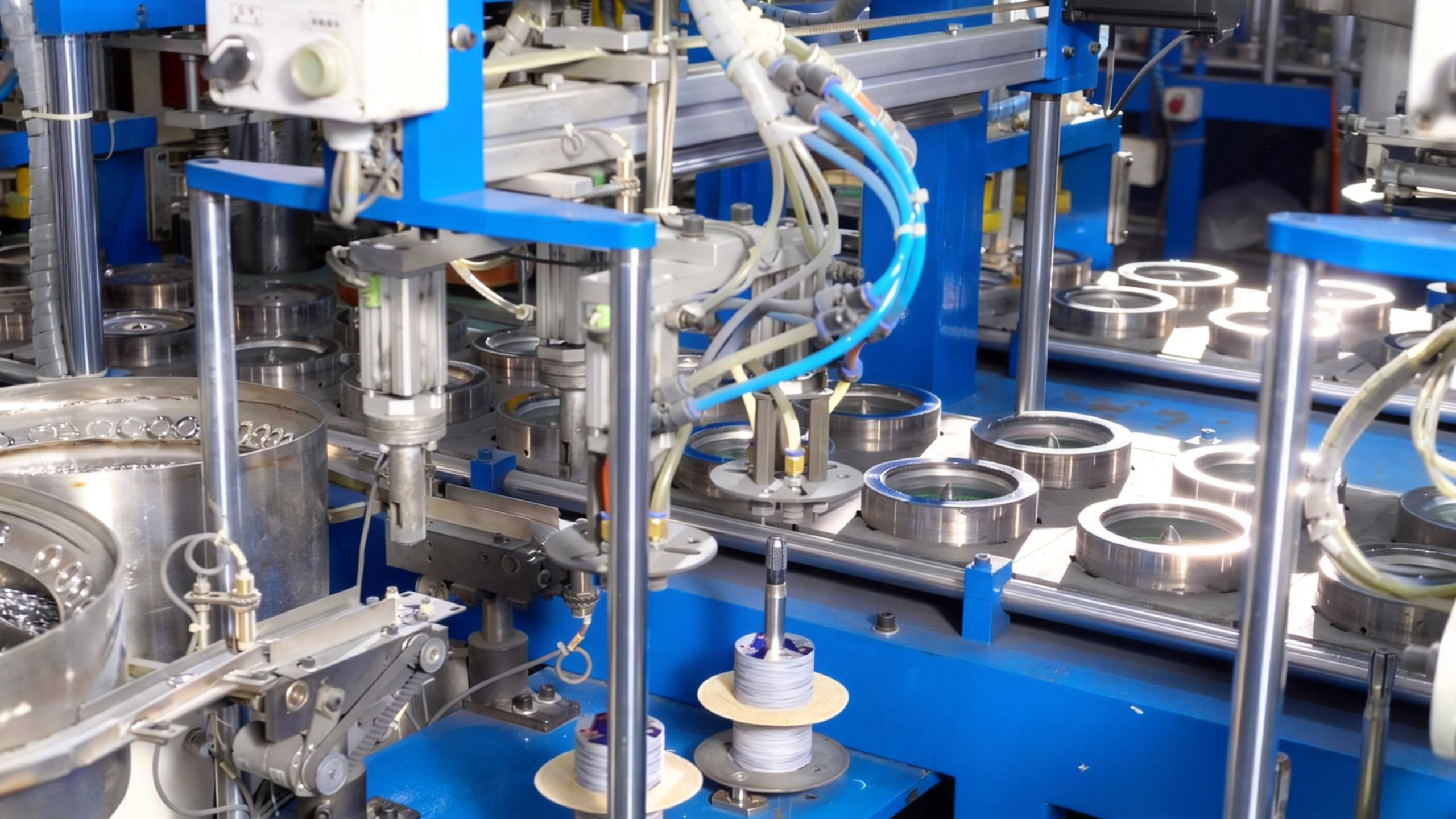
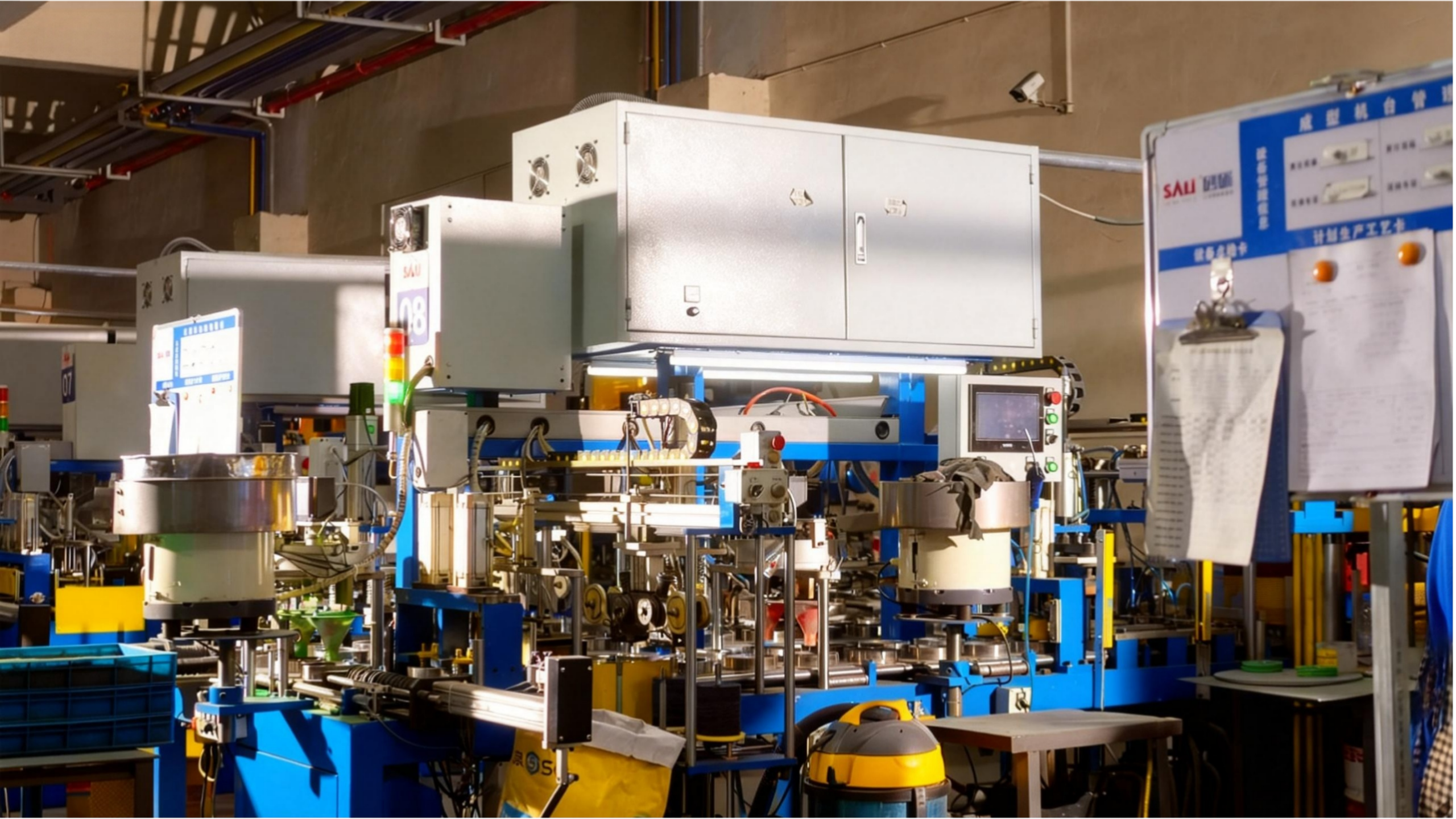
The company also operates a manufacturing facility covering 30,000 square meters and an annual production capacity of 150 million pieces. It employs over 150 staff, including 30+ R&D engineers. Its portfolio includes over 5,000 SKUs across cutting, grinding, polishing, drilling, fastening, measuring, lifting, welding and dismantling. For buyers, the relevant point is that compliance-focused production can be organized at scale when label control, batch testing and export documentation are built into the process.
Detailed Solution: The Compliance Control Chain for Metal Grinding Discs
1. Label and Maximum Operating Speed
Start with the wheel label. The label must show the Maximum Operating Speed, often called MOS. The grinder maximum RPM must stay strictly below the MOS printed on the wheel label. This check should be recorded for each wheel and grinder combination. A 4.5 inch (115mm) metal grinding disc and a 7 inch (180mm) metal grinding disc may have different speed limits, so a site rule written for one size should not be assumed to cover every size in the shop.
The label check is not about whether the label looks complete. It is about whether the printed MOS is compatible with the tool. The wheel should also be matched to the operation. A metal grinding disc is intended for grinding metal, not for deep cutting or for side grinding with a thin cut-off wheel. The supplied application guidance is direct: ensure tool RPM strictly stays below the MOS printed on the wheel label, and never use thin cut-off wheels for side grinding.
2. Flange Coverage and Mounting
Mounting is a specification, not a habit. Use balanced flanges that cover at least one-third of the wheel diameter, with soft blotters for even pressure distribution. The flanges should be matching and undamaged. Before work, run the fitted wheel empty with the guard in place for 1 to 3 minutes while standing clear of the rotation plane. This dry run checks mounting and balance. It does not replace the ring test for vitreous wheels or a damaged-wheel inspection.
For importers, flange coverage is a useful RFQ question because it links the wheel to the tool. A buyer can ask the supplier to state the recommended flange size for each disc diameter and to confirm that the mounting instructions cover blotters and dry-run steps. For 4 inch (100mm) and 4.5 inch (115mm) discs, the flange requirement should be checked against the actual grinder accessory, not assumed from the disc label alone.
3. Ring Test for Vitreous Wheels
Perform a ring test on vitreous wheels to detect hidden cracks. Never use a dull-sounding wheel. The ring test applies to vitreous wheels, not to every bonded wheel. For resinoid-bonded metal grinding discs, use the manufacturer inspection and handling instructions, and do not treat a ring test as a universal substitute for checking for cracks, chips, bends or moisture damage.
This distinction matters in training. If a site treats every wheel as if it were vitreous, workers may misunderstand the purpose of the test. If a site skips inspection because the product is resinoid-bonded, cracked or damaged discs may still reach the grinder. The safe approach is to follow the wheel type, the manufacturer instruction and the site rule together.
4. Guard Coverage at 180 Degrees or More
The guard is part of the specification. For portable grinding, ensure the safety guard covers at least 180 degrees and is never removed. The guard should be securely mounted, and the operator should stand outside the direct burst line. The open side of the guard should face away from the operator according to common site practice. A guard that is removed for access, modified for a tighter work angle or left loose is no longer a compliant setup.
Guard design also interacts with disc size and application. A 7 inch (180mm) metal grinding disc in a heavy fabrication shop will need a guard sized for that wheel and tool combination. A 4 inch (100mm) disc in auto repair may be used in a tighter space, but the 180-degree coverage rule does not disappear because the work area is small. Buyers should ask whether the guard is matched to the grinder model and whether the supplier instructions identify the correct guard position.
5. PPE and Dust Controls
PPE and dust controls are not add-ons. Always wear impact-rated face shields, safety glasses, dust masks and hearing protection. Use continuous local exhaust ventilation with a minimum hood velocity of 1.5 to 2.5 m/s to control dust. Proper air circulation prevents the accumulation of abrasive particles and metal fines during dry grinding.
The working environment also affects wheel condition. Grinding wheels operate best at temperatures between 15°C and 25°C and relative humidity of 50% to 60%. Extreme temperatures and excessive humidity weaken bonding agents and compromise structural integrity. When liquid coolants are used, maintain fluid pH between 7 and 9 to prevent chemical erosion of the bond. After wet operation, spin the wheel empty for 3 to 5 minutes to purge fluid and prevent unbalancing.
Operator technique belongs in the same control chain. Maintain a 15 to 30 degree grinding angle on portable grinders and stand off to the side, outside the direct burst line. Avoid excessive pressure that causes heat buildup or wheel fracturing. These checks are not separate from compliance. They are how compliance is maintained during the task.
Step-by-Step Breakdown: Turning Regional Expectations into a Site Check
- Define the wheel and the operation. Confirm whether the product is a metal grinding disc, a metal grinding wheel or another bonded abrasive. Record size, type, bond and intended application. The supplied data lists 4 inch (100mm), 4.5 inch (115mm), 5 inch (125mm) and 7 inch (180mm) sizes, T27 or T42 types, and 2 or 3 fiberglass mesh layers.
- Collect the compliance file. Request MPA, EN12413 and EU safety standard evidence where applicable, plus ISO 9001/14001 certification. Keep the document version, product model and batch reference together. Do not accept a certificate that cannot be linked to the supplied wheel.
- Check the label and the grinder. Confirm that the Maximum Operating Speed is printed and legible. Confirm that the grinder maximum RPM is strictly below the MOS. Record the wheel model, size, MOS and grinder RPM. Repeat the check for each wheel and grinder combination.
- Inspect the wheel before mounting. Look for cracks, chips, bends or moisture damage. For vitreous wheels, perform a ring test and reject a dull-sounding wheel. For resinoid-bonded metal grinding discs, follow the manufacturer inspection instruction and do not use a damaged wheel.
- Verify flanges and blotters. Use matching, undamaged flanges that cover at least one-third of the wheel diameter. Fit soft blotters for even pressure distribution. Confirm that the flange and blotter are correct for the disc size and grinder.
- Fit the guard and dry run. Ensure the guard covers at least 180 degrees and is never removed. Run the fitted wheel empty with the guard in place for 1 to 3 minutes while standing clear of the rotation plane.
- Set PPE and dust controls. Require impact-rated face shields, safety glasses, dust masks and hearing protection. Confirm local exhaust ventilation at a minimum hood velocity of 1.5 to 2.5 m/s. Check temperature and humidity conditions where the wheels are stored and used.
- Record, train and audit. Keep the label check, mounting check, guard check and PPE and LEV check in one pre-use record. Train operators on the 15 to 30 degree grinding angle and the ban on side grinding with thin cut-off wheels. Audit the setup at the start of each shift or job.
Use Cases: Where Compliance Specs Change the Buying Decision
Metal fabrication and weld repair
Weld seam smoothing and deburring put the wheel close to the operator and generate metal fines. A 4.5 inch (115mm) or 5 inch (125mm) metal grinding disc is common in these tasks, but the buyer should still confirm label MOS, flange coverage, guard coverage and LEV. The supplied application data lists weld seam smoothing, deburring and edge chamfering, rust and mill scale removal, casting and forging cleaning, and surface shaping as relevant functions.
Shipbuilding and offshore engineering
Heavy plate work and confined spaces raise the value of guard discipline and dust control. A 7 inch (180mm) metal grinding disc may be used for heavier removal, but the guard must cover at least 180 degrees and the operator should stand outside the burst line. PPE should include impact-rated face shields, safety glasses, dust masks and hearing protection. LEV should be checked at 1.5 to 2.5 m/s where dry grinding generates dust.
Pipeline and oil and gas maintenance
Field maintenance often mixes grinding with inspection and repair. The compliance file should link the wheel to the task, the grinder and the local site rule. HS code 6804.22 may be relevant for customs classification, but it does not replace the label, guard and PPE checks. The buyer should keep the product model, certificate reference and site check record together.
Automotive repair and general maintenance
Auto repair shops may use 4 inch (100mm) or 4.5 inch (115mm) discs in tight spaces. Small work areas make guard removal tempting, but the 180-degree guard rule still applies. A face shield and safety glasses should be worn together where the task calls for impact protection and eye protection. Dust masks and hearing protection should be available based on the task and site assessment.
Steel construction and infrastructure
Structural steel work often uses larger discs and higher removal rates. The buyer should confirm that flanges cover at least one-third of the wheel diameter, that blotters are fitted, and that the dry run is completed with the guard in place. For SALI metal grinding discs, the listed sizes go up to 7 inch (180mm), so procurement should not assume that a 9 inch wheel is part of the same product range unless the supplier confirms it in writing.
Comparison Table: Compliance Controls Buyers Should Verify
| Control area | What to verify | Specification basis | Evidence to keep |
|---|---|---|---|
| Label and speed | Maximum Operating Speed is printed and legible; grinder maximum RPM is strictly below the MOS. | Wheel label MOS; supplied application guidance on speed matching. | Photo of label, wheel model, grinder RPM, date and operator check. |
| Flange coverage | Balanced flanges cover at least one-third of the wheel diameter; soft blotters are fitted. | Supplied mounting guidance for grinding wheels. | Flange size, blotter condition, mounting check record. |
| Ring test | Vitreous wheels are ring tested; a dull-sounding wheel is rejected. | Supplied pre-operation inspection guidance. | Wheel type, ring test result, rejection log. |
| Guard coverage | Safety guard covers at least 180 degrees and is never removed. | Supplied operation and safety guidance. | Guard photo, grinder model, guard position check. |
| PPE | Impact-rated face shield, safety glasses, dust mask and hearing protection are used. | Supplied PPE and operation guidance. | PPE issue record and task risk assessment. |
| Dust control | Local exhaust ventilation provides a minimum hood velocity of 1.5 to 2.5 m/s. | Supplied working-condition guidance. | LEV check result, filter or airflow maintenance record. |
| Storage and coolant | Temperature 15°C to 25°C, relative humidity 50% to 60%; coolant pH 7 to 9; spin empty 3 to 5 minutes after wet operation. | Supplied working-condition guidance. | Storage log, coolant pH reading, post-wet-operation check. |
| Documentation | MPA, EN12413, EU safety standards and ISO 9001/14001 are linked to the product and batch. | Company certification facts and product compliance statements. | Certificate copy, product model, batch reference, supplier declaration. |
FAQ
How can buyers compare grinding wheel manufacturers on compliance readiness?
Buyers should ask for product-specific evidence, not a general company brochure. Request MPA, EN12413 and EU safety standard evidence where applicable, plus ISO 9001/14001 certification. Ask how the manufacturer controls label MOS, batch traceability and export documentation. SALI Tools, the brand of ZHEJIANG SALI ABRASIVE TECHNOLOGY CO., LTD., states that its products have obtained MPA, EN12413 and EU safety standards, and that it holds dual ISO 9001/14001 certifications. It employs over 150 staff, including 30+ R&D engineers, and its annual production capacity reaches 150 million pieces. Those facts are useful only when they are tied to the exact wheel model, label and market requirement under review.
How do I verify Maximum Operating Speed on a grinding wheel label?
Find the Maximum Operating Speed printed on the wheel label. Compare it with the maximum RPM marked on the grinder. The grinder maximum RPM must stay strictly below the wheel MOS. Record the wheel model, size, MOS and grinder RPM for each setup. Do not rely on a generic site rule for all disc sizes. A 4.5 inch (115mm) metal grinding disc and a 7 inch (180mm) metal grinding disc should each be checked against the tool they will run on.
What mounting and guard checks apply before grinding?
Use balanced flanges that cover at least one-third of the wheel diameter, with soft blotters for even pressure distribution. Fit the guard, confirm that it covers at least 180 degrees and do not remove it. Run the fitted wheel empty with the guard in place for 1 to 3 minutes while standing clear of the rotation plane. Inspect the wheel for cracks, chips, bends or moisture damage before mounting, and follow the wheel-type instruction for any ring test.
Do all grinding wheels need a ring test?
No. The supplied guidance calls for a ring test on vitreous wheels to detect hidden cracks, and a dull-sounding wheel should never be used. Resinoid-bonded metal grinding discs should be inspected according to the manufacturer instruction, but a ring test should not be treated as a universal substitute for checking damage. The buyer should confirm the wheel type and the correct inspection method before writing it into a site checklist.
What PPE and dust controls should be specified?
Specify impact-rated face shields, safety glasses, dust masks and hearing protection. For dust control, use continuous local exhaust ventilation with a minimum hood velocity of 1.5 to 2.5 m/s. Check storage and working conditions: 15°C to 25°C and 50% to 60% relative humidity are the stated best conditions for grinding wheels. If liquid coolants are used, keep fluid pH between 7 and 9, and spin the wheel empty for 3 to 5 minutes after wet operation. For a sample request, quote or catalog review, contact SALI Tools at salimarketing@pcsali.com or +86 188-6758-6946.
Conclusion: Compliance Is a Purchasing Specification and a Daily Check
Regional rules shape grinding wheel specifications through a practical chain: the label MOS, the grinder RPM, flange coverage of at least one-third of the wheel diameter, the ring test for vitreous wheels, guard coverage of at least 180 degrees, impact-rated face shields and safety glasses, dust masks, hearing protection and LEV at 1.5 to 2.5 m/s. Importers and EHS teams should write these checks into RFQs, receiving inspection and pre-use records.
SALI Tools’ 150+ staff, 30+ R&D engineers and 150 million-piece annual capacity show that compliance-focused production can be organized at scale. The buyer’s task is to verify the specific label, guard and PPE requirements for each market and each wheel size, and to keep the evidence linked to the product model and batch.
Next step: review the SALI Tools catalog, request a sample or send a specification inquiry. Contact salimarketing@pcsali.com or +86 188-6758-6946. Catalog download: SALI Tools Brand Product Catalog.
Have Questions or Need More Details?
Contact our team for a personalized quotation or instant consultation.
Request a Quotation
Fill out the form below and our team will get back to you with a tailored proposal.
WhatsApp Direct Chat
Prefer to chat in real-time? Message us on WhatsApp for instant assistance & quick answers.
- Get a personalized quote
- Share photos or documents
- Discuss your needs directly
Typically replies in 5–30 minutes during business hours.