Grinding Wheel vs. Alternative Abrasives: A Buyer's Comparison Guide
Choosing between a grinding wheel and an alternative abrasive is a decision about how metal is removed, not about which product is "better." A resinoid-bonded grinding wheel removes material through high-speed rotation, driving abrasive grain across the workpiece at surface speeds typically between 30 and 80 m/s, and it keeps cutting because its bond releases dulled grain as grinding resistance rises. Flap discs, abrasive belts and brushes remove metal under different contact conditions, and each is generally stronger in blending, finishing or cleaning work.
Buyers who match the abrasive format to the operation — instead of to habit or to unit price — get more predictable removal rates, fewer reworks and a safer shop floor. This guide covers the mechanics behind each format, the specification details that actually differ between suppliers, and a step-by-step evaluation sequence you can run before placing an order.
The real problem: format mismatch, not product quality
Most abrasive problems reported on a metalworking floor are not defective products. They are correct-looking products applied to the wrong operation. Three types of mismatch account for most of the waste.
1. Comparing formats that are not doing the same job
A bonded grinding wheel and a flap disc both attach to an angle grinder, which makes them look interchangeable. They are not. A bonded wheel presents a rigid abrasive face that removes material aggressively and holds an edge; a flap disc presents flexible cloth flaps that conform to a surface, producing a more even finish with much less stock removal per pass. Deciding between them on price per disc ignores the removal rate, the number of discs consumed per shift, and the rework cost of an over-ground joint.
2. Breaking the directional rule that keeps wheels intact
Bonded abrasives are dimensioned for the load direction they were designed to take. SALI's application guidance is explicit on two prohibited uses: never use a thin cutting wheel for side grinding, and never use a grinding wheel for deep cutting. The same guidance prohibits using a standard wheel on soft metals such as aluminium or copper, or on wood and plastic, because material loading can cause violent wheel burst. These are format rules, not brand rules.
3. Treating speed ratings as paperwork
The maximum operating speed printed on the wheel must exceed the angle grinder's rated maximum speed. A wheel that is correct in diameter, thickness and grain can still be the wrong choice if it is fitted to a tool that spins faster than the wheel's rating allows. Format, speed, flange and guard conditions have to be verified together, not separately.
Industry background: why this comparison matters commercially
Bonded grinding wheels are a large, metal-driven consumable category. The global grinding wheels market was estimated at USD 7.12 billion in 2025 according to Mordor Intelligence. A second commercial research source reports approximately USD 9.2 billion for the same year; the gap is generally attributed to differences in scope, specifically whether precision grinding applications are included. For buyers, the practical reading is that published market totals depend on the definition used, and supplier-level specification data is usually more decision-relevant than a headline number.
Metalworking is the dominant application. Grand View Research reports that the metalworking segment accounted for a 47.2% revenue share in 2025, which explains why most grinding wheel specification decisions in this category are made for carbon steel and stainless steel rather than for other materials.
Asia Pacific is the largest production and consumption region, with a reported revenue share of roughly 41.3% to 42.7% in 2025 across two commercial datasets cross-checked against Mordor Intelligence. That concentration is commercially relevant for sourcing: regional production density is one reason why lead times, freight costs and stock availability vary so widely between suppliers quoting the same disc specification.
Two classification and compliance anchors are worth knowing. Grinding wheels of agglomerated abrasives or ceramics fall under HS code 6804.22, which is used for landed-cost and duty modelling. And EN 12413:2019 specifies safety requirements for bonded abrasive products, including grinding wheels — the standard against which MPA approvals for this product category are issued.
What a bonded grinding wheel actually does
A grinding wheel removes metal through high-speed primary rotation. The drive spindle spins the wheel at surface speeds typically between 30 and 80 m/s, and that rotation imparts high kinetic energy to the abrasive grains on the wheel face — the energy required to shear off microscopic metal chips. This is why wheel integrity and speed rating matter more in bonded abrasives than in almost any other consumable used on a shop floor.
Feed movements: infeed, longitudinal and crossfeed
Removal is controlled by relative movement between wheel and workpiece. Depth-of-cut infeed sets removal thickness, usually 0.005 to 0.05 mm per pass; longitudinal and crossfeed movements then push the wheel along the length and width of the workpiece. A buyer comparing quotes should therefore compare infeed behaviour as well as price. A wheel that tolerates a controlled deeper infeed without excessive heat reduces the number of passes, and the number of passes is where labour cost accumulates.
The self-sharpening mechanism
Bonded wheels stay sharp because of their structure. As individual abrasive grains dull and grinding resistance rises, the increased mechanical stress fractures either the dull grain itself or the surrounding bond, dislodging worn particles to expose fresh, sharp grain. That self-sharpening cycle is what allows a bonded wheel to sustain a removal rate across a long working life, rather than glazing over and polishing the workpiece instead of cutting it.
What flap discs, belts and brushes do differently
The alternatives are not inferior products. They are different systems with different contact geometry, and each has operations where it outperforms a bonded wheel.
Flap discs
A flap disc mounts overlapping abrasive cloth flaps on a backing plate. The flaps flex, so the disc conforms to curved and uneven surfaces and tends to leave a more uniform scratch pattern than a rigid wheel. That flexibility is also the limit: less rigidity generally means less aggressive stock removal, so a flap disc is normally the better tool for blending and finishing after a grinding wheel has done the heavy work. In a fabrication shop, flap disc and grinding wheel are complements, not substitutes.
Abrasive belts
Belts run on stationary machines such as belt grinders and backstands. The long contact length distributes pressure across a wider area, which tends to deliver a consistent finish on flat surfaces and long edges. The trade-off is mobility: a belt machine cannot follow a weld into a structure the way a portable angle grinder can. Where the work can be brought to the machine, belts are a strong format for deburring and surface conditioning.
Wire and cup brushes
Brushes clean; they do not shape. They are used for rust, scale and paint removal, weld spatter cleanup and surface preparation before coating. A brush will not correct a weld profile, and additional pressure does not convert it into a stock-removal tool. Treating brushes as a grinding substitute is a common source of wasted labour hours.
Where the bonded wheel wins
A bonded wheel is the stronger format when the requirement is aggressive, repeatable stock removal with controlled geometry: weld seam smoothing, deburring and edge chamfering, rust and mill scale removal, casting and forging cleaning, and surface shaping and fitting. Because the abrasive is distributed through the wheel body rather than carried on a backing, the wheel presents a continuously renewed abrasive face for as long as the wheel lasts. That structural difference is what buyers are paying for.
SALI grinding wheel specification: what is actually orderable
SALI Tools — Zhejiang Sali Abrasive Technology Co., Ltd. — manufactures bonded abrasives and power tool accessories from Zhejiang, China, and has built its abrasive range around metalworking consumables. For buyers evaluating the format, the specification detail below is the part that has to line up with the operation.
- Product types: Type 27 depressed-center and Type 42 grinding wheels, black body colour, in the SALI grinding wheel range (models A0200001 through A0200035 series).
- Formulations: Aluminium Oxide A24Q4 BF and A30Q4 BF for metal grinding.
- Dimensions: outer diameter from 4" to 16" (100 mm – 400 mm); standard thickness 2.0–6.0 mm for grinding duty, with 1.0–1.6 mm ultra-thin options for cutting duty; bore diameters of 16 mm, 22.23 mm and 25.4 mm.
- Grain options: brown aluminium oxide (A) for metal, white aluminium oxide (WA) for stainless steel (Inox), zirconia (ZA) for heavy-duty work, and silicon carbide (C) for stone and cast iron; grit sizes 24# to 120# with matched bond hardness.
- Reinforcement: single, double or triple fiberglass mesh for anti-burst protection, plus a stainless steel centre ring with optional embossed logo and specification markings.
- Operating environment: grinding performance is specified for roughly 15–25 °C and 50–60% relative humidity; continuous local exhaust ventilation at 1.5–2.5 m/s hood velocity is required for dry grinding, and coolant systems should be held at pH 7–9. After wet operation, the wheel should spin empty for 3–5 minutes to purge fluid and prevent unbalance.
Certification a buyer can verify
- MPA certificate Z-16154/25 covers Type 27 depressed-center grinding wheels for metal, 115 mm outside diameter, 6 mm thickness, 22.23 mm bore, maximum operating speed 80 m/s, issued against EN 12413:2019, valid to 9 October 2027.
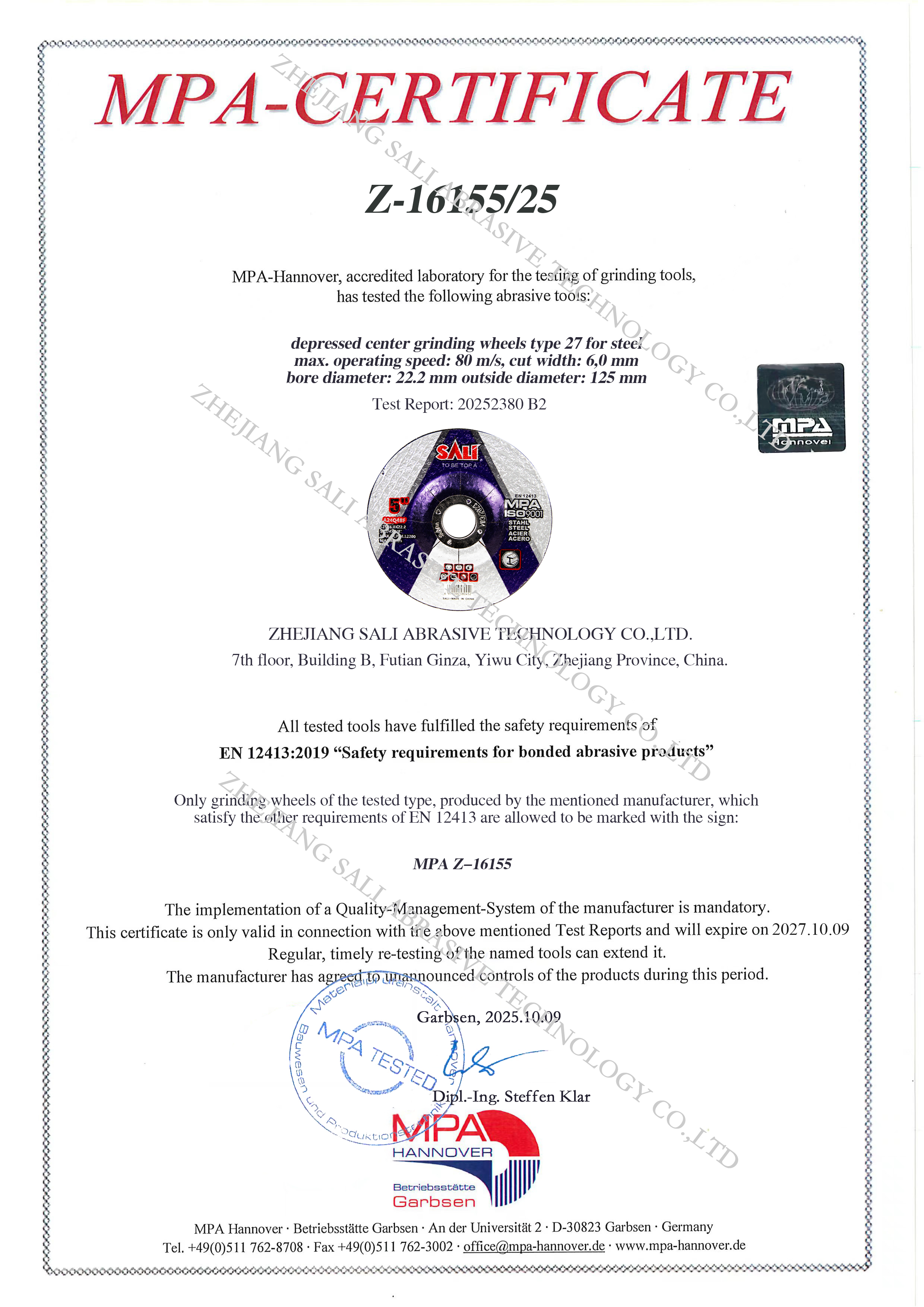
- MPA certificate Z-16155/25 covers Type 27 depressed-center grinding wheels for steel, 125 mm outside diameter, 6.0 mm width, 22.2 mm bore, maximum operating speed 80 m/s, issued against EN 12413:2019, valid to 9 October 2027.
- ISO 9001 quality management system certificate 01525Q20094R001, issued by WIT Assessment on 16 December 2025 against GB/T 19001-2016 / ISO 9001:2015, with the scope "production of grinding wheels," valid to 15 December 2028.
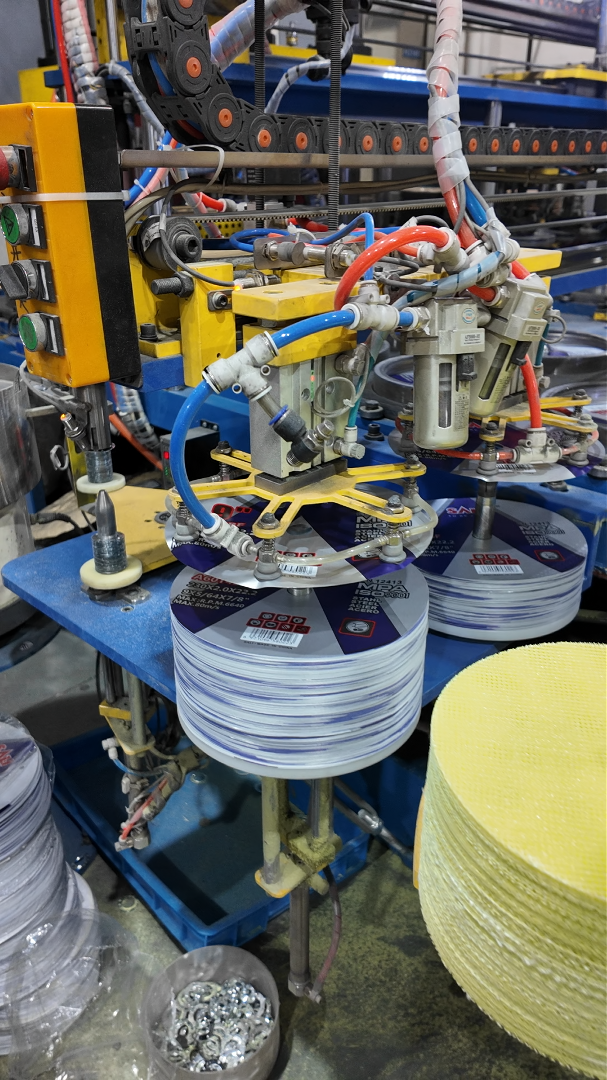
Production capacity behind those certificates is 1.5 billion grinding discs annually, with a monthly capacity of 12.5 million pieces and a 30-engineer R&D team supporting formulation changes. Every production batch is inspected in an in-house testing lab, and buyers can request remote camera access to watch burst-speed and durability testing in real time or ask for customised test metrics.
Step-by-step: evaluating a grinding wheel against alternatives
- Define the operation, not the product. Write down what the operator is actually doing: heavy stock removal, blending, finishing, or cleaning. Weld seam smoothing, deburring and chamfering, scale removal and casting cleaning are stock-removal tasks and point to a bonded wheel. Blending and surface conditioning point to a flap disc or belt. Surface cleaning points to a brush.
- Check the machine you already run. Portable angle grinders, chop saws and die grinders take bonded wheels; backstands and belt machines take belts. Choose the format your existing equipment supports before choosing the specification.
- Match shape and dimensions. Confirm the wheel type (Type 27 depressed center or Type 42), diameter, thickness and bore against both the tool and the joint geometry. For portable grinding with bonded wheels, SALI's operating guidance is a 15°–30° grinding angle with the operator standing outside the burst line.
- Match grain to material. Brown aluminium oxide for general metal, white aluminium oxide for stainless steel and Inox, zirconia for heavy duty, silicon carbide for stone and cast iron. Using the wrong grain type on stainless steel is a common cause of discoloration complaints in fabrication work.
- Verify speed rating and mounting hardware before anything else. The maximum RPM printed on the wheel must exceed the grinder's maximum rated speed. Use matched, undamaged flanges covering at least one-third of the wheel diameter with paper or rubber blotters; run the fitted wheel empty with the guard in place for 1–3 minutes; and keep the guard covering at least 180°, never removed.
- Verify certification and traceability. Ask for the certificate number and the standard behind it. For European-market bonded wheels that means EN 12413:2019 and MPA approval covering the exact size and type being purchased — not a generic quality statement. Ask how batches are tested and whether you can observe the testing.
- Validate with a sample before the container. Sampling is the cheapest part of the decision. SALI's sample policy is that sample fees for new clients are fully refunded on the first bulk order, and regular partners receive free new samples. The same performance-data discipline is applied across the bonded range: SALI publishes, for example, that a 115×1.2 mm industrial cutting disc achieves 35–45 continuous cuts on a 12 mm 304 stainless steel solid bar.
- Lock the commercial terms. Confirm MOQ, lead time, stock position and payment terms in writing. SALI holds 85% of standard SKUs in ready stock with same-day dispatch for regular orders, while custom OEM orders run 30 to 45 days from artwork approval and deposit. Standard SALI brand sizes start at one carton per SKU.
- Plan storage and replenishment. Resin-bonded discs are moisture-sensitive. Store them in a cool, dry area with humidity below 60% and temperature between 10 °C and 30 °C, off the floor; under standard conditions SALI resin discs retain optimal performance for three years.
Use cases: where bonded wheels earn their place
The function list for SALI grinding wheels covers weld seam smoothing, deburring and edge chamfering, rust and mill scale removal, casting and forging cleaning, and surface shaping and fitting. The industries behind those tasks include steel construction and infrastructure, metal fabrication and machinery manufacturing, welding and repair engineering, pipeline and oil and gas, automobile manufacturing and auto repair, shipbuilding and offshore engineering, and general hardware and maintenance work.
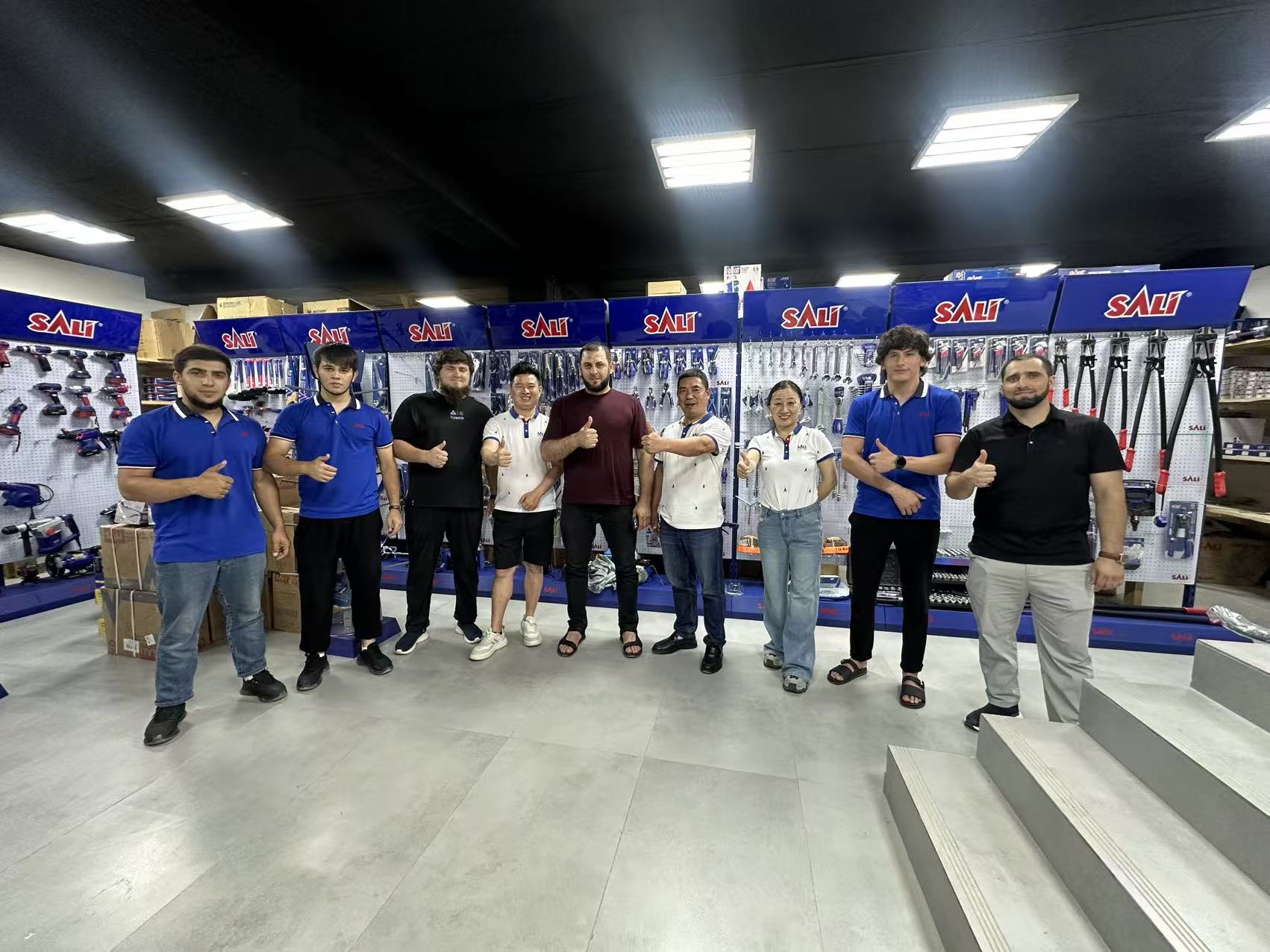
That spread shows up in buying patterns. A North Caucasus wholesale partner in Russia has worked with SALI for more than seven years on volumes of 5 million pieces, growing at an annual rate of 50%. An Ethiopian hardware tools agent moved from representing international tool brands to acting as a SALI agent, with 30 million pieces across a 20-year relationship and annual growth exceeding 50%. An Uzbekistan wholesaler's volume rose 21 times by 2024 compared with the agent's first year in 2018, on 10 million pieces purchased. A manufacturing group procurement buyer in Iraq, using abrasives for fabrication and on-site processing, has run 10 million pieces over five years with stable operation. In each case the highlights cited were the same three: high cost-performance, stable quality, and complete product specifications.
Comparison table: bonded grinding wheel vs alternative abrasives
| Decision dimension | Bonded grinding wheel (resinoid, Type 27 / Type 42) | Flap disc | Abrasive belt (stationary) | Wire / cup brush |
|---|---|---|---|---|
| Metal removal mechanism | Rigid abrasive face rotating at 30–80 m/s surface speed; self-sharpening bond releases dulled grain | Overlapping abrasive cloth flaps on a backing plate, flexing against the work | Abrasive cloth running on a machine with a long contact length | Wire or abrasive-impregnated bristles that scrub the surface |
| Typical strength | Heavy, repeatable stock removal with controlled geometry | Blending, light stock removal, contour work and finishing | Flat surfaces and long edges, where the work can be brought to the machine | Rust, scale, paint and spatter cleaning; pre-coating preparation |
| Conformity to contour | Low — rigid face | High — flaps flex | Medium — depends on contact wheel or platen | High |
| Edge and geometry control | High — wheel shape transfers to the workpiece | Medium | Medium to high on flat work | Not applicable |
| Heat management approach | Controlled infeed of 0.005–0.05 mm per pass, correct grain and bond, ventilation at 1.5–2.5 m/s, coolant at pH 7–9 | Light pressure with intermittent flap contact | Machine feed rate and contact pressure | Low heat, low removal |
| Equipment | Angle grinder, chop saw, die grinder | Angle grinder | Belt grinder / backstand | Angle grinder, bench motor |
| Verification before purchase | MPA certificates Z-16154/25 and Z-16155/25 to EN 12413:2019; ISO 9001 certificate 01525Q20094R001 | Confirm the manufacturer's specification and safety data for the exact size and format | Confirm the manufacturer's specification and safety data for the exact size and format | Confirm the manufacturer's specification and safety data for the exact size and format |
| Wrong choice when | The job is fine finishing or contour blending on thin or curved parts | The job is heavy weld removal or profile correction | The part cannot be brought to a stationary machine | The requirement is removing material rather than cleaning a surface |
Quantitative values shown for bonded wheels are taken from SALI product specifications, MPA certificates and application guidance. Alternative formats are compared by contact mechanics, because specification values differ by manufacturer and size.
FAQ: grinding wheels vs alternative abrasives
What certifications should a metal grinding wheel carry?
For European-market bonded abrasives, the safety standard is EN 12413:2019, and MPA approval is issued against it for specific sizes and types. SALI's Type 27 depressed-center grinding wheels hold MPA certificate Z-16154/25 for the 115 mm size and Z-16155/25 for the 125 mm size, both at a maximum operating speed of 80 m/s. The company also holds ISO 9001 certificate 01525Q20094R001 for the production of grinding wheels, issued on 16 December 2025 and valid to 15 December 2028. A certificate number and the exact size it covers is the minimum evidence a buyer should request; a general quality statement is not equivalent.
Can a supplier manufacture OEM grinding wheels for metal grinding discs under my own brand?
Yes — SALI provides OEM and ODM production services. Customisation covers brand and artwork (logo printing, private labelling, multi-colour paper labels, barcodes, QR codes and safety markings), disc body colour, and the specification itself: outer diameters from 4" to 16" (100–400 mm), thickness from 1.0 mm to 6.0 mm, bore sizes of 16 mm, 22.23 mm and 25.4 mm, flat Type 41 or depressed-center Type 42 / Type 27 shapes, and grain selection of brown aluminium oxide, white aluminium oxide, zirconia or silicon carbide at 24# to 120# grit. OEM minimum order quantities are 30 cartons for 107/115/125 mm, 50 cartons for 180/230 mm, and 100 cartons for 350/400 mm; special non-standard sizes must meet the minimum branding production run. OEM lead time is 30 to 45 days from design confirmation and deposit to final delivery.
What determines the cost of a metal grinding wheel order?
Three commercial levers matter more than the headline unit price. First, MOQ structure: SALI brand standard sizes start at one carton per SKU, and the minimum order quantity can be as low as 1 unit, which allows low-volume trial orders before committing to container volume. Second, terms: FOB applies to orders reaching USD 5,000, with a flat USD 200 operation fee below that threshold; EXW orders can be delivered to a designated Yiwu warehouse or collected at the factory warehouse. Third, payment: standard B2B terms are 30% T/T deposit with 70% balance against B/L copy, or 100% L/C at sight for large projects. Each of these changes the landed cost per disc, which is the number worth comparing.
Can I test grinding wheels before placing a bulk order?
Yes. New clients can order samples, and the sample fee is fully refunded on the first bulk order; regular partners receive free new samples. Every production batch is tested in-house, and SALI offers remote camera access so buyers can watch real-time batch testing — burst speed, cutting efficiency and durability — or request customised test metrics. If a performance issue appears during use, the 24-hour claim mechanism accepts photo or video evidence and responds with replacement units or a credit on the next order. The company states in its after-sales policy that it takes full liability for personal injury caused by product quality defects.
How quickly can metal grinding discs be delivered?
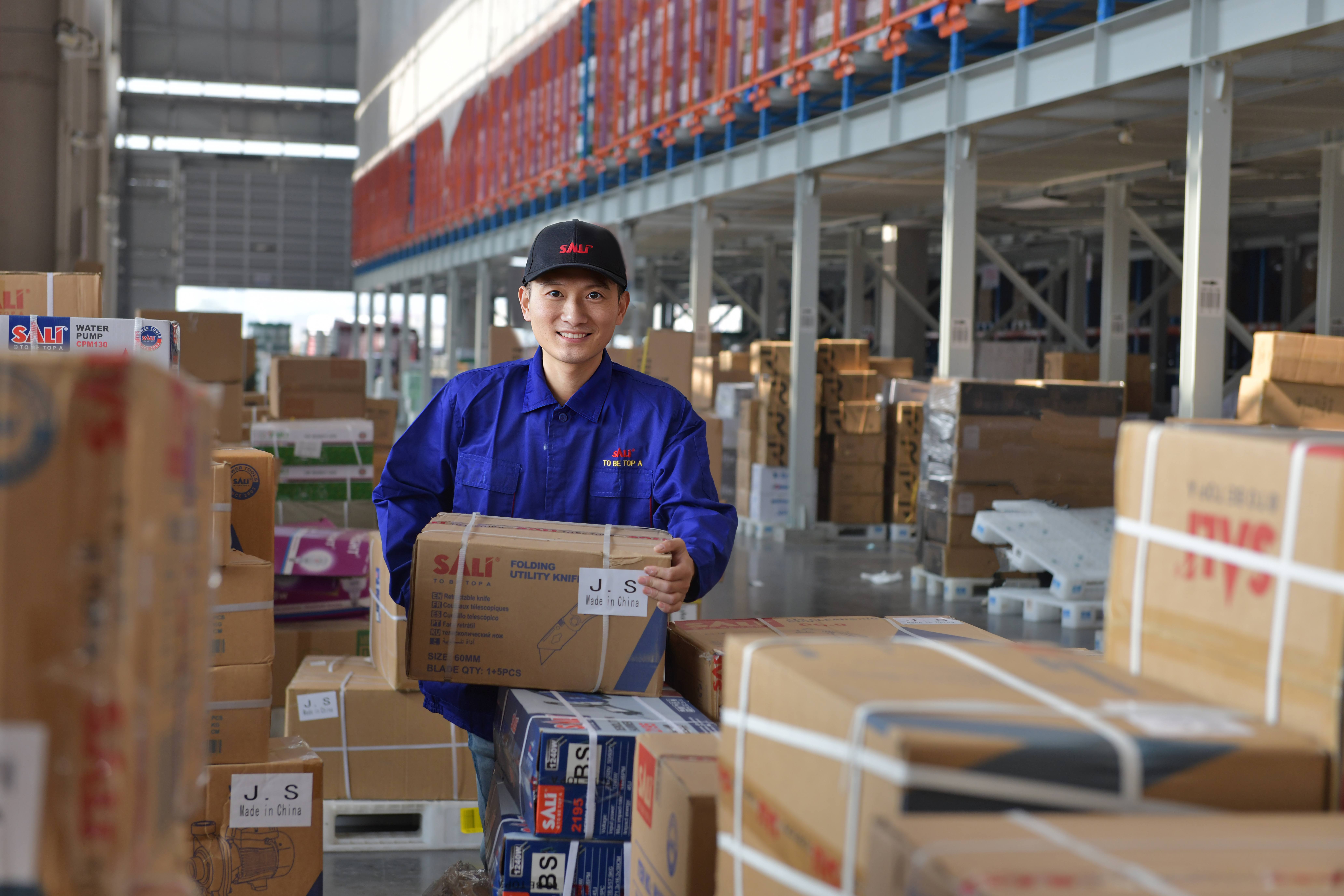
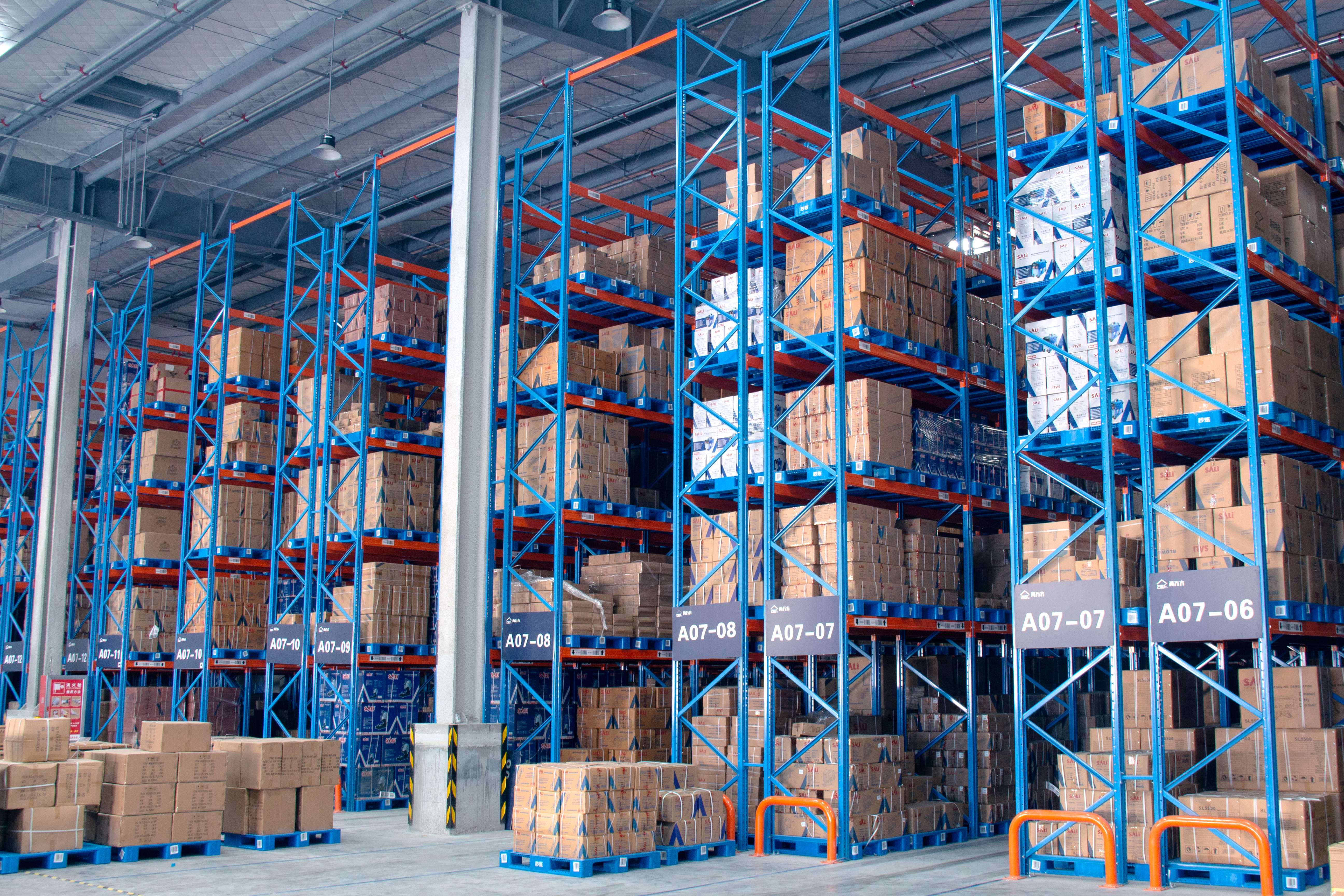
For ready stock, same-day dispatch is available within 24 hours: SALI operates an 8,000 m² warehouse with capacity for 12,000 m³ of goods and holds 85% of standard SKUs in ready stock. Custom OEM production and delivery take 30 to 45 days after artwork approval and deposit receipt. Pre-shipment testing is performed against MPA and EN12413 standards with burst speed at or above 100 m/s, and destination inspection is supported with a 7–14 day post-arrival window for quantity and performance sampling. To start a specification review, sample request or quotation, download the SALI Tools Brand Product Catalog or contact salimarketing@pcsali.com.
Conclusion: the decision rule to take to your next order
Grinding wheels and alternative abrasives are not competing for the same job. Bonded wheels earn their place where metal has to come off quickly and geometry has to stay controlled — weld seams, mill scale, castings, chamfers — and their advantage comes from high-speed rotation at 30–80 m/s, controlled infeed of 0.005–0.05 mm per pass, and a self-sharpening bond that keeps fresh grain exposed. Flap discs and belts win where flexibility, conformity and finish matter more than removal rate. Brushes clean surfaces; they do not shape them.
The buyer's decision rule is therefore: match the format to the operation, match the specification to the material and the machine, verify speed rating and certification by number, validate with a sample, and only then negotiate the commercial terms.
Next step: sample, specification or quotation
SALI Tools supplies metal grinding discs and bonded abrasives to distributors, importers and OEM brand owners in more than 160 countries, with OEM and ODM production, ready stock on 85% of standard SKUs, and a 24-hour claim response.
Download the SALI Tools Brand Product Catalog for full specifications, or contact the export team at salimarketing@pcsali.com / WhatsApp +86 188-6758-6946 to request a 115 mm or 125 mm Type 27 grinding wheel sample for your own test.
Website: www.salitools.com
Have Questions or Need More Details?
Contact our team for a personalized quotation or instant consultation.
Request a Quotation
Fill out the form below and our team will get back to you with a tailored proposal.
WhatsApp Direct Chat
Prefer to chat in real-time? Message us on WhatsApp for instant assistance & quick answers.
- Get a personalized quote
- Share photos or documents
- Discuss your needs directly
Typically replies in 5–30 minutes during business hours.