
How Grinding Wheels Work: Self-Sharpening Bonds and Abrasive Mechanics Explained
A grinding wheel removes metal with thousands of bonded abrasive grains driven across the workpiece at surface speeds typically between 30 and 80 m/s. It keeps cutting because the bond is engineered to fail in a controlled way: once a grain dulls and grinding resistance rises, the mechanical stress fractures the worn grain itself or the surrounding bond, dislodging the dull particle and exposing a fresh, sharp edge. That cycle is the self-sharpening mechanism, and it is the single reason two discs with identical dimensions can behave completely differently on the same angle grinder.
This explanation covers the bonded structure of a metal grinding disc, the mechanics of material removal, and the way grain and bond selection change real performance in two of the most common metalworking jobs: cleaning castings and smoothing welds.
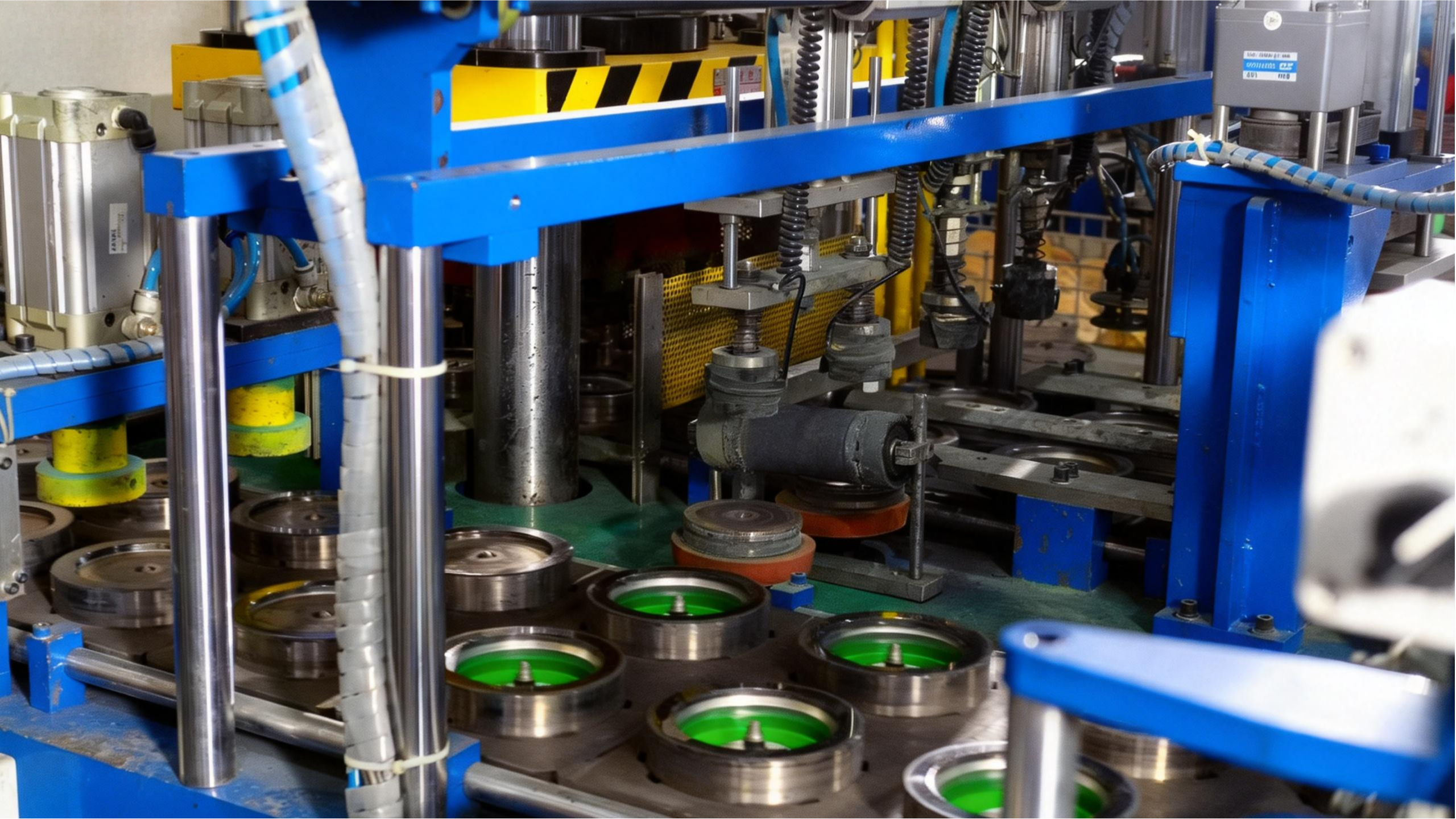
Problem Definition: Why a Grinding Disc Stops Cutting Before It Wears Out
Most grinding problems on a shop floor are renewal problems, not wear problems. A 125 mm depressed center wheel that has sat in a humid store room and a disc pressed last month can carry the same dimensions and the same marking, yet deliver very different results, because the variable is how the bond behaves after the first grains dull.
Two symptoms dominate, and both are often misread as a worn-out disc:
- Glazing. The abrasive grains flatten instead of fracturing. The bond holds them in position, the working face turns glossy, and cutting is replaced by rubbing. Energy that should shear a metal chip turns into heat in the workpiece.
- Loading. Soft or gummy material smears into the space between grains and clogs the working face. Loading is frequently reported on stainless steel and on castings with residual contamination.
Both conditions push the operator toward more pressure, which raises temperature further. On stainless steel that shows up as discoloration and lost corrosion resistance; on thin sections it shows up as distortion. The answer is not additional force. It is a wheel whose grain type, grit size, and bond hardness are matched to the operation, so the cutting face keeps renewing itself at normal pressure.
The Three-Phase Structure of a Bonded Grinding Wheel
A grinding wheel is a composite, not a solid. Three phases work together: abrasive grain, bonding agent, and the porosity between them. Each phase has a job, and changing any one of them changes the balance between cutting speed, surface finish, and wheel life.
Abrasive grain
SALI produces metal grinding discs across four abrasive families, and the grain choice is the first decision point in matching a wheel to a material:
- Brown Aluminum Oxide (A) for general metal, including carbon steel.
- White Aluminum Oxide (WA) for stainless steel (Inox), where a sulfur-free and chlorine-free bond system avoids contamination of the workpiece.
- Zirconia (ZA) for heavy-duty work that demands high stock removal under pressure.
- Silicon Carbide (C) for stone and cast iron.
Grain size is expressed as grit, and SALI tailors grit sizes from 24# to 120# together with bond hardness to balance cutting speed against wear resistance. Coarse grit removes material quickly and leaves a rougher surface; finer grit produces a smoother finish at a lower removal rate.
Bond and reinforcement
The bond is the matrix that holds the grain. In resinoid-bonded metal grinding discs, the bond is what makes the self-sharpening cycle possible: it must hold the grain firmly enough to cut, and release it readily enough that a dull grain does not stay in place. SALI builds this structure with single, double, or triple fiberglass mesh reinforcement for anti-burst protection at high RPM, a stainless steel center ring with optional embossed logo and specification text, and a choice of two body shapes: flat (Type 41) or depressed center (Type 42 / Type 27).
Porosity
The open space between grains carries chips away from the cut and allows coolant or air to reach the working face. Porosity is also where loading begins if the material being ground is soft enough to smear instead of chip.
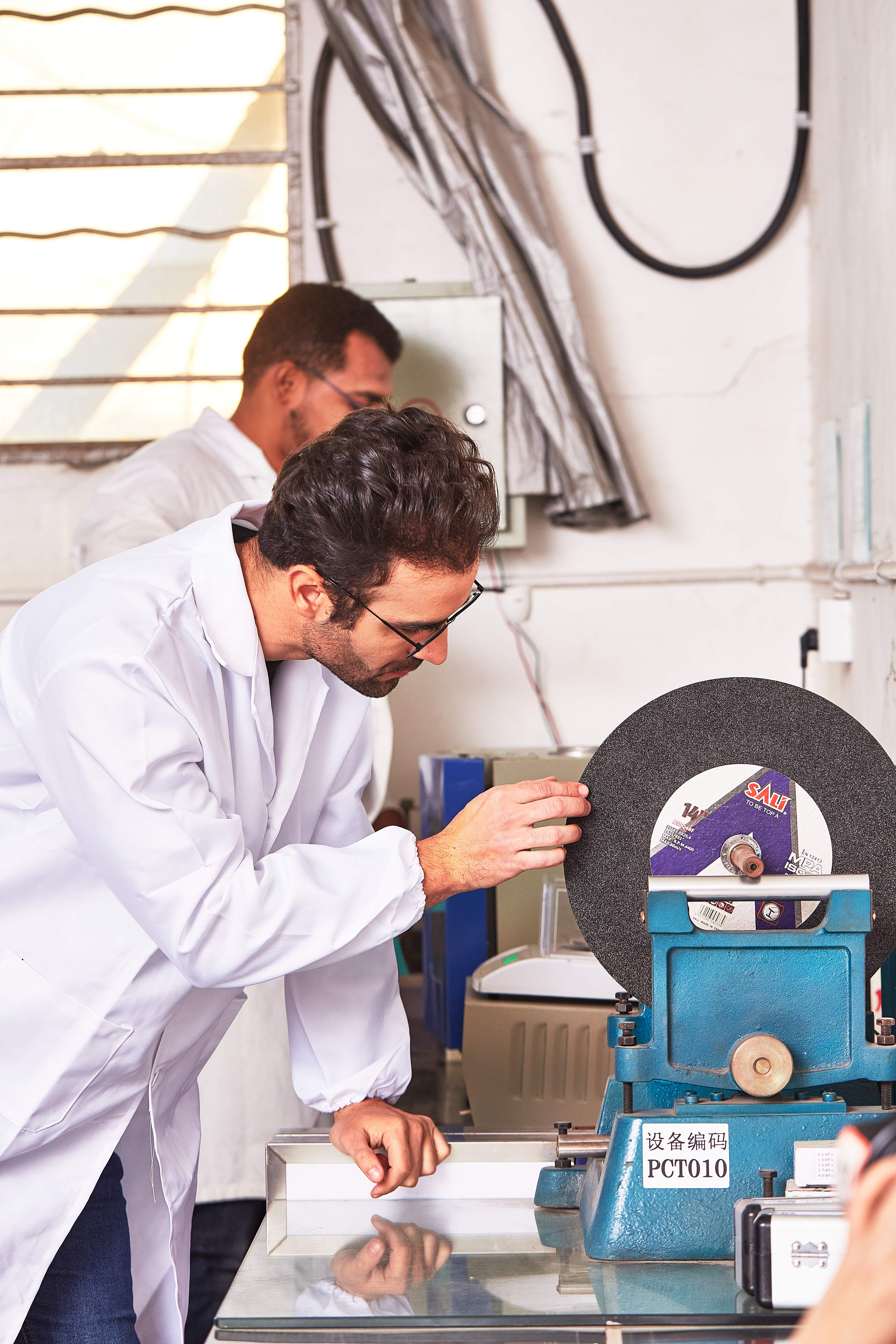
The Self-Sharpening Cycle: What Happens at the Contact Zone
A grinding wheel relies on a self-sharpening mechanism enabled by its bonded structure. The sequence repeats thousands of times per second of contact:
- Sharp grain engages. A newly exposed abrasive grain contacts the workpiece and shears a microscopic metal chip.
- The grain dulls. The cutting edge flattens, and grinding resistance rises.
- Stress builds at the grain–bond interface. The increased mechanical load concentrates on the dull particle and the bond immediately around it.
- Controlled fracture occurs. Either the dull grain fractures internally, or the bond around it breaks away.
- Fresh grain is exposed. Worn particles are dislodged and new sharp edges take over at the working face.
Step four is where wheel design decisions become visible on the shop floor. If the bond is too strong for the application, grains are retained after dulling, the face glazes, and the wheel rubs rather than cuts. If the bond releases grains too easily, the wheel wears quickly and loses form. The correct balance is application-specific, which is why one formula does not serve both heavy casting cleaning and final weld blending.
Material Removal Mechanics: Speed, Infeed, and Feed Movement
A grinding wheel performs material removal through high-speed primary rotation. The drive spindle spins the wheel at surface speeds typically between 30 and 80 m/s, and that rapid rotation imparts high kinetic energy to the abrasive grains on the wheel's surface, providing the core cutting force required to shear off microscopic metal chips.
To cover the entire target surface, relative feed movements are applied between the wheel and the workpiece:
- Depth-of-cut infeed sets the removal thickness, usually 0.005 to 0.05 mm per pass.
- Longitudinal feed pushes the wheel along the length of the workpiece.
- Crossfeed advances the wheel across the width of the workpiece.
On portable work with an angle grinder, the equivalent of infeed is operator pressure and contact angle. The recommended working angle on portable grinders is 15° to 30°. A shallower angle spreads the load and produces a broader, flatter blend; a steeper angle concentrates pressure and removes stock faster but concentrates heat in a narrow band.
Speed is a limit, not a target. SALI's MPA-certified Type 27 depressed center grinding wheels for metal are approved for a maximum operating speed of 80 m/s under EN 12413:2019. The maximum operating speed printed on the wheel must always exceed the maximum rated speed of the grinder it is mounted on.
Industry Background: Where Bonded Abrasives Sit in Metalworking
Bonded abrasives are a mature, high-volume consumable category, and the demand pattern explains why application-specific formulas matter commercially. The global grinding wheels market was estimated at USD 7.12 billion in 2025. Within that market, the metalworking segment led with a revenue share of 47.2% in 2025, and Asia Pacific dominated with a revenue share of roughly 41.3% to 42.7% in the same year.
The category is also highly standardized from a trade and safety perspective. Grinding wheels of other agglomerated abrasives or ceramics fall under HS Code 6804.22, while EN 12413:2019 sets the safety requirements for bonded abrasive products including grinding wheels. For a buyer, that means a disc is not simply a consumable commodity: it is a regulated safety product whose performance is defined by a declared specification.
Manufacturing scale is concentrated. SALI operates a direct factory in Yongkang, Zhejiang, on a 6,000 m² site with 30,000 m² of construction area, supported by more than 150 employees and more than 30 engineers, with monthly capacity of 12.5 million pieces. Production of grinding wheels is covered by an ISO 9001:2015 quality management system certificate (01525Q20094R001, issued by WIT Assessment, valid to 15 December 2028).
How Composition Decides Performance: Cleaning Castings vs. Smoothing Welds
The same physics produces very different requirements in the two jobs buyers ask about most.
Cleaning castings and forgings
Casting and forging cleaning is a high-load, high-interruption operation. The surface is uneven, the contact is intermittent, and the wheel is asked to remove scale, parting lines, and surface defects without losing form. What matters here:
- A tough grain that resists premature fracture. Zirconia (ZA) is positioned for heavy-duty work; Silicon Carbide (C) is positioned for cast iron and stone.
- A bond that holds grain long enough to survive impact. If the bond releases too readily on an interrupted cut, the wheel wears out of shape before the casting is cleaned.
- A thicker profile. Standard thickness of 2.0 to 6.0 mm gives the wheel mass and rigidity for stock removal, unlike the 1.0 to 1.6 mm ultra-thin profiles intended for cutting.
- A depressed center (Type 27) shape. The depressed center allows the wheel to be worked at an angle of 15° to 30°, which is the normal posture for casting cleanup with an angle grinder.
Smoothing welds and blending
Weld seam smoothing, deburring, and edge chamfering are finishing operations. The goal is to remove the bead without gouging the parent metal and without introducing contamination. What matters here:
- Grain chemistry matched to the base metal. For stainless steel (Inox), White Aluminum Oxide (WA) with a sulfur-free and chlorine-free bond system avoids the contamination and discoloration that carbon-steel-specific formulas can leave behind.
- A bond that renews the face at light pressure. Weld blending is done at low applied force; a wheel that only self-sharpens under heavy pressure will glaze and start polishing instead of cutting.
- Grit matched to the finish requirement. Coarser grit for rapid bead removal, finer grit for the final blend.
The practical conclusion is that wheel composition is not a secondary specification. It determines whether the self-sharpening cycle starts at the pressure the operator actually applies.
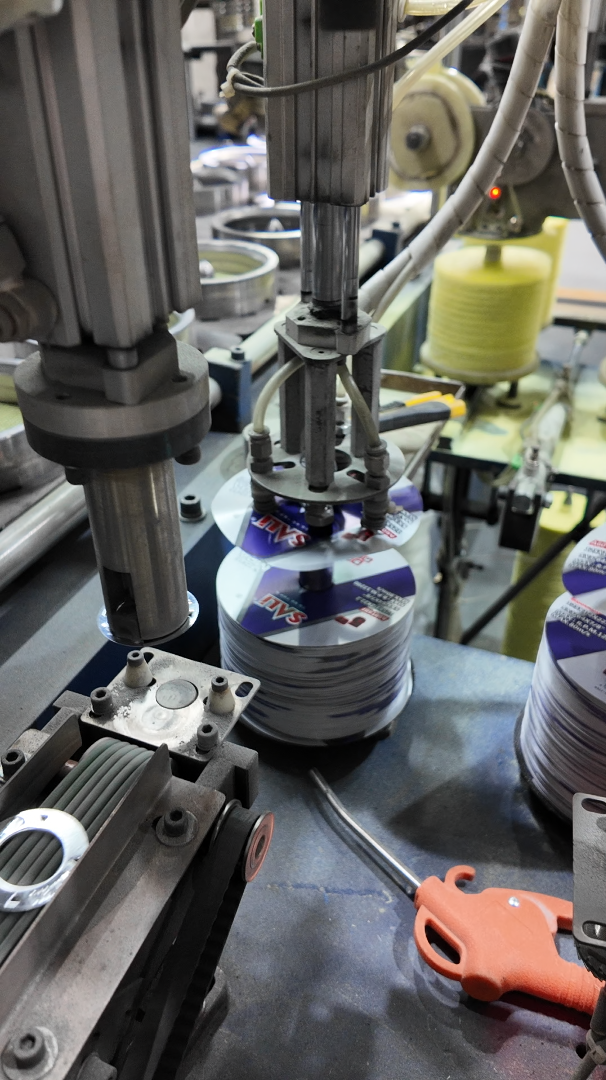
Step-by-Step: Turning the Mechanics into an Execution Workflow
Buyer stage moves from evaluation to execution at the point where a specification has to survive contact with a grinder. The workflow below follows the mechanics described above.
Step 1 — Define the operation, not the product
Name the function first: weld seam smoothing, deburring and edge chamfering, rust and mill scale removal, casting and forging cleaning, or surface shaping and fitting. Each function implies a different balance of grain toughness, grit, and bond hardness.
Step 2 — Select grain and grit
Match the grain family to the workpiece (A for metal and carbon steel, WA for stainless, ZA for heavy duty, C for cast iron and stone), then select grit within the 24# to 120# range according to removal rate versus finish.
Step 3 — Fix the geometry
Confirm outside diameter within the 100 mm to 400 mm (4 inch to 16 inch) range, thickness (1.0 to 1.6 mm ultra-thin, or 2.0 to 6.0 mm standard), bore (16 mm, 22.23 mm, or 25.4 mm), and shape (flat Type 41 or depressed center Type 42 / Type 27).
Step 4 — Verify speed compatibility
Compare the maximum operating speed on the wheel with the rated speed of the tool. SALI's MPA-certified Type 27 wheels for metal are rated at 80 m/s under EN 12413:2019.
Step 5 — Inspect and ring test
Perform a ring test on vitreous wheels to detect hidden cracks; a dull-sounding wheel should never be mounted. Inspect for chips, bends, or moisture damage, and check the expiration date, because aged bonding agents increase the risk of wheel burst.
Step 6 — Mount with matched hardware
Use balanced, undamaged flanges that cover at least one-third of the wheel diameter, with soft blotters for even pressure distribution. The safety guard must be fitted and cover at least 180°, with the open side facing away from the operator.
Step 7 — Dry run
Run the fitted wheel empty with the guard in place for 1 to 3 minutes before starting work, while standing clear of the rotation plane.
Step 8 — Control angle and infeed
Hold a 15° to 30° grinding angle on portable grinders and control pressure so the wheel renews its face instead of glazing. Never use thin cut-off wheels for side grinding, and avoid pressure that causes heat buildup or wheel fracturing.
Step 9 — Manage heat, dust, and coolant
Continuous local exhaust ventilation with a minimum hood velocity of 1.5 to 2.5 m/s is required to control dust during dry grinding. Where liquid coolants are used, maintain a fluid pH between 7 and 9 to prevent chemical erosion of the bond, and spin the wheel empty for 3 to 5 minutes after wet operation to purge fluid and prevent unbalancing.
Step 10 — Store correctly
Grinding wheels operate best between 15 °C and 25 °C with relative humidity of 50% to 60%. Resin-bonded discs are moisture-sensitive: storage below 60% relative humidity at 10 °C to 30 °C, off the floor, preserves optimal performance for up to 3 years.
Use Cases: Where the Mechanics Show Up in Production
The functions above map onto specific industries and working conditions:
- Structural steel and building construction — weld seam smoothing, edge chamfering, and mill scale removal on beams and plates.
- Pipeline and energy infrastructure — root pass and beveling preparation, plus heavy-duty weld grinding on pipe joints.
- Shipbuilding and offshore projects — large-surface rust removal and weld dressing in confined, high-volume conditions.
- Rail transit and heavy equipment manufacturing — surface shaping and fitting on castings and fabricated assemblies.
- Industrial MRO and equipment overhaul — deburring, contamination-free finishing, and repair of worn surfaces.
- Municipal and architectural metalworks — cosmetic blending where discoloration is not acceptable.
In each case, the wheel is matched to the tool. Angle grinders cover most field work at a 15° to 30° working angle; chop saws and die grinders cover 90° radial cutting and confined detail work respectively. The wheel is only one part of the system — matched flanges, locking nut sets, safety guards, and PPE determine whether the specification can actually be executed.
Comparison Tables: Grain Selection and Wheel Specification
The two tables below summarise the choice logic covered above. They use only declared product and certification data.
Table 1 — Abrasive grain selection by workpiece
| Grain | Workpiece it targets | Typical operation | Practical note |
|---|---|---|---|
| Brown Aluminum Oxide (A) | Carbon steel and general metal | Weld seam smoothing, deburring, rust and mill scale removal | General-purpose starting point for metal grinding discs |
| White Aluminum Oxide (WA) | Stainless steel (Inox) | Contamination-free finishing, cosmetic blending | Paired with sulfur-free and chlorine-free bond systems |
| Zirconia (ZA) | Heavy-duty metal removal | High-pressure stock removal, casting cleanup | Selected where the grain must resist premature fracture |
| Silicon Carbide (C) | Stone and cast iron | Casting and forging cleaning, surface shaping | Not a substitute for aluminium oxide on steel |
Table 2 — Declared specification range for metal grinding discs
| Parameter | Declared range | What it controls in service |
|---|---|---|
| Outside diameter | 100 mm to 400 mm (4 inch to 16 inch) | Reach and surface speed at a given spindle RPM |
| Thickness | 1.0–1.6 mm ultra-thin; 2.0–6.0 mm standard | Cutting speed versus rigidity for grinding |
| Bore | 16 mm, 22.23 mm, 25.4 mm | Compatibility with grinder spindle and flanges |
| Shape | Flat Type 41; Depressed Center Type 42 / Type 27 | Working angle; Type 27 supports 15°–30° grinding |
| Grit | 24# to 120# | Removal rate versus surface finish |
| Reinforcement | Single, double or triple fiberglass mesh | Anti-burst protection at high RPM |
| Maximum operating speed | 80 m/s (MPA-certified Type 27, EN 12413:2019) | Upper limit that must exceed the grinder's rated speed |
Supply-Side Reality: Why Composition Consistency Matters to Buyers
A formula is only useful if it repeats. For distributors and industrial buyers, the practical risk is batch-to-batch variation in bond hardness, which changes how a wheel self-sharpens and therefore changes operator perception of the brand. SALI's approach relies on 100% testing of production output, a three-dimensional marketing system spanning five continents, and exports to more than 160 countries and regions, with the SALI brand registered in more than 190 countries since its launch in 2010.
The Russian market provides a concrete example of what specification consistency looks like commercially. A wholesaler client in Russia has taken 5 million pieces over more than seven years and reports an annual growth rate of 50%, with high cost-performance, stable quality, and complete product specifications cited as the key highlights of the case. A manufacturing group procurement buyer in Iraq, purchasing 10 million pieces over five years for fabrication and on-site processing, cites professional-grade and industrial-grade products with consistent quality and worry-free after-sales support.
Stock depth supports execution. The Yiwu warehouse covers 8,000 m² with capacity for 12,000 m³ of goods, holding 85% of standard SKUs in ready stock and enabling same-day dispatch for regular orders, within a portfolio of more than 5,000 SKUs.
Frequently Asked Questions
1. What safety standard should a metal grinding wheel meet before it goes on a grinder?
EN 12413:2019 specifies the safety requirements for bonded abrasive products including grinding wheels. SALI's Type 27 depressed center grinding wheels for metal are MPA-certified under EN 12413:2019 at a maximum operating speed of 80 m/s, with production covered by an ISO 9001:2015 certificate (01525Q20094R001) valid to 15 December 2028. On the shop floor, the check is simpler: the maximum operating speed printed on the wheel must exceed the maximum rated speed of the grinder, the guard must be fitted and cover at least 180°, and the wheel must pass a visual inspection and ring test before mounting.
2. Can a manufacturer build a private-label metal grinding disc to a specific formula?
Yes. SALI provides OEM and ODM production services covering brand and visual customization (custom logo printing and private labeling, multi-colour paper labels, barcodes, QR codes and safety markings, and body colours such as black, red, green or blue), plus specification customization: outside diameter from 100 mm to 400 mm, thickness from 1.0–1.6 mm ultra-thin to 2.0–6.0 mm standard, bore of 16 mm, 22.23 mm or 25.4 mm, flat Type 41 or depressed center Type 42 / Type 27 bodies, grain selection across Brown Aluminum Oxide, White Aluminum Oxide, Zirconia and Silicon Carbide, and tailored grit sizes from 24# to 120# with matched bond hardness. Fiberglass reinforcement can be specified as single, double or triple mesh, and packaging can be customized from shrink wrap and colour boxes to printed 5-ply master cartons.
3. What is the minimum order quantity, and how do OEM volumes differ from stock orders?
The minimum order quantity is 1 unit, which allows low-volume orders and trial quantities on SALI brand stock items. OEM production has size-based minimums: 107 mm, 115 mm and 125 mm formats start at 30 cartons; 180 mm and 230 mm formats start at 50 cartons; 350 mm and 400 mm formats start at 100 cartons. On delivery terms, FOB applies to orders reaching USD 5,000, and orders below that threshold carry a flat USD 200 operation fee. Standard payment terms are 30% T/T deposit with 70% balance against B/L copy, or 100% L/C at sight for large projects.
4. Can a buyer test samples before committing to a bulk order?
Yes. New clients can order samples for testing, and the sample fee is fully refunded on the first bulk order; regular partners receive free new samples. Buyers who want evidence before sampling can also request remote access to the in-house testing laboratory camera to watch real-time batch testing, or commission a third-party audit such as SGS or BV. If a quality issue appears after delivery, the claim process is a 24-hour response based on photo or video proof, settled by replacement or credit on the next order. To start a sample or quotation request, contact the SALI Tools team through salitools.com or email salimarketing@pcsali.com.
5. What lead time applies to stock versus OEM grinding wheel orders?
Ready stock ships within 24 hours, supported by 85% of standard SKUs held in the 8,000 m² warehouse. Custom OEM orders run 30 to 45 days from design confirmation to final delivery, after artwork approval and deposit receipt. Production capacity is 12.5 million pieces per month, and pre-shipment acceptance testing is performed against MPA and EN 12413 standards, with a 7 to 14 day post-arrival window for quantity and performance sampling at destination.
Conclusion: The Bond Is the Specification
Grinding performance is decided at the contact zone, where a dull grain must be released before it can burn the workpiece. Surface speed of 30 to 80 m/s, infeed of 0.005 to 0.05 mm per pass, and a 15° to 30° working angle define the mechanical envelope; grain type, grit, bond hardness, and fiberglass reinforcement define whether the wheel can operate inside that envelope without glazing. Buyers who evaluate a metal grinding disc on those variables, rather than on dimensions alone, get predictable results in both casting cleaning and weld smoothing.
Next Step: Sample, Specification Sheet, or Full Catalog
ZHEJIANG SALI ABRASIVE TECHNOLOGY CO., LTD (SALI Tools) manufactures bonded abrasives and tools from Yongkang, Zhejiang, and exports to more than 160 countries and regions. The full product range, including metal grinding discs in Type 27 and Type 41 formats from 100 mm to 400 mm, is documented in the brand catalog.

Download the catalog: SALI Tools Brand Product Catalog (PDF)
Request a sample or quote: salimarketing@pcsali.com · Tel / WhatsApp +86 188-6758-6946 · Website www.salitools.com
Have Questions or Need More Details?
Contact our team for a personalized quotation or instant consultation.
Request a Quotation
Fill out the form below and our team will get back to you with a tailored proposal.
WhatsApp Direct Chat
Prefer to chat in real-time? Message us on WhatsApp for instant assistance & quick answers.
- Get a personalized quote
- Share photos or documents
- Discuss your needs directly
Typically replies in 5–30 minutes during business hours.