Match Your Cutting Disc Order to the Certificate Scope: A Type 41 Compliance Guide
"MPA certified" is not a specification. It is shorthand for a document, and every document has a numbered scope: a defined wheel type, a defined material group, a defined maximum operating speed, defined bore and outside diameters, a defined market and a fixed validity window. If the disc on your purchase order falls outside those lines, the certificate does not describe your product — even when the same supplier holds it. This guide shows how to align a Type 41 flat cutting wheel order with the actual scope of MPA certificate Z-15486A/25 issued by MPA Hannover (Garbsen Site), and how to keep that product safety certificate separate from the company's ISO 9001:2015 quality management certificate.
What "Certificate Scope" Actually Means for a Cutting Disc Order
Certificate scope is the boundary inside which a certification body's safety statement is valid. Outside that boundary, the statement is neither true nor false — it simply does not apply.
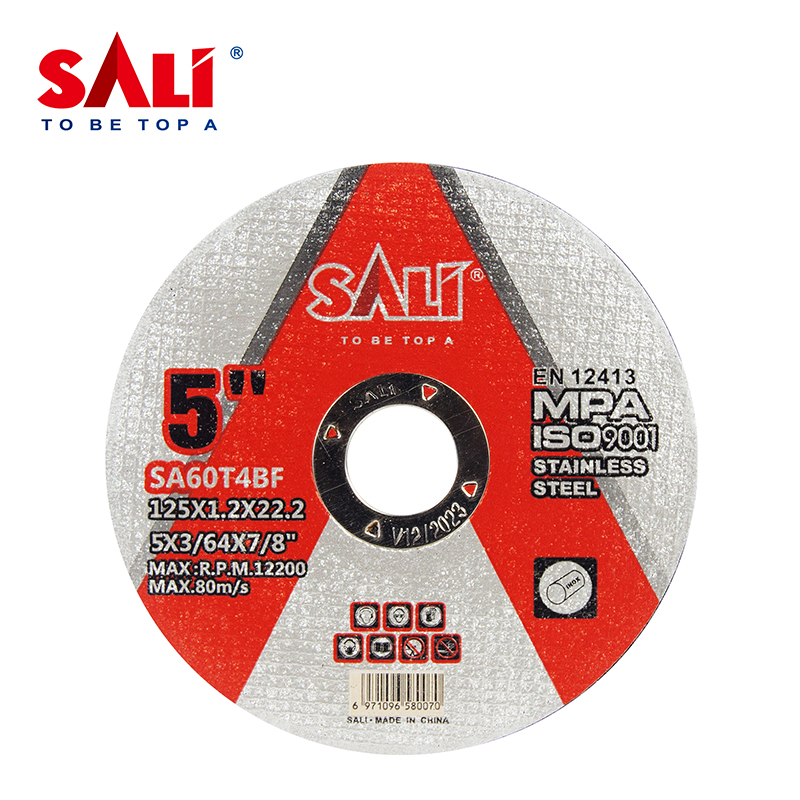
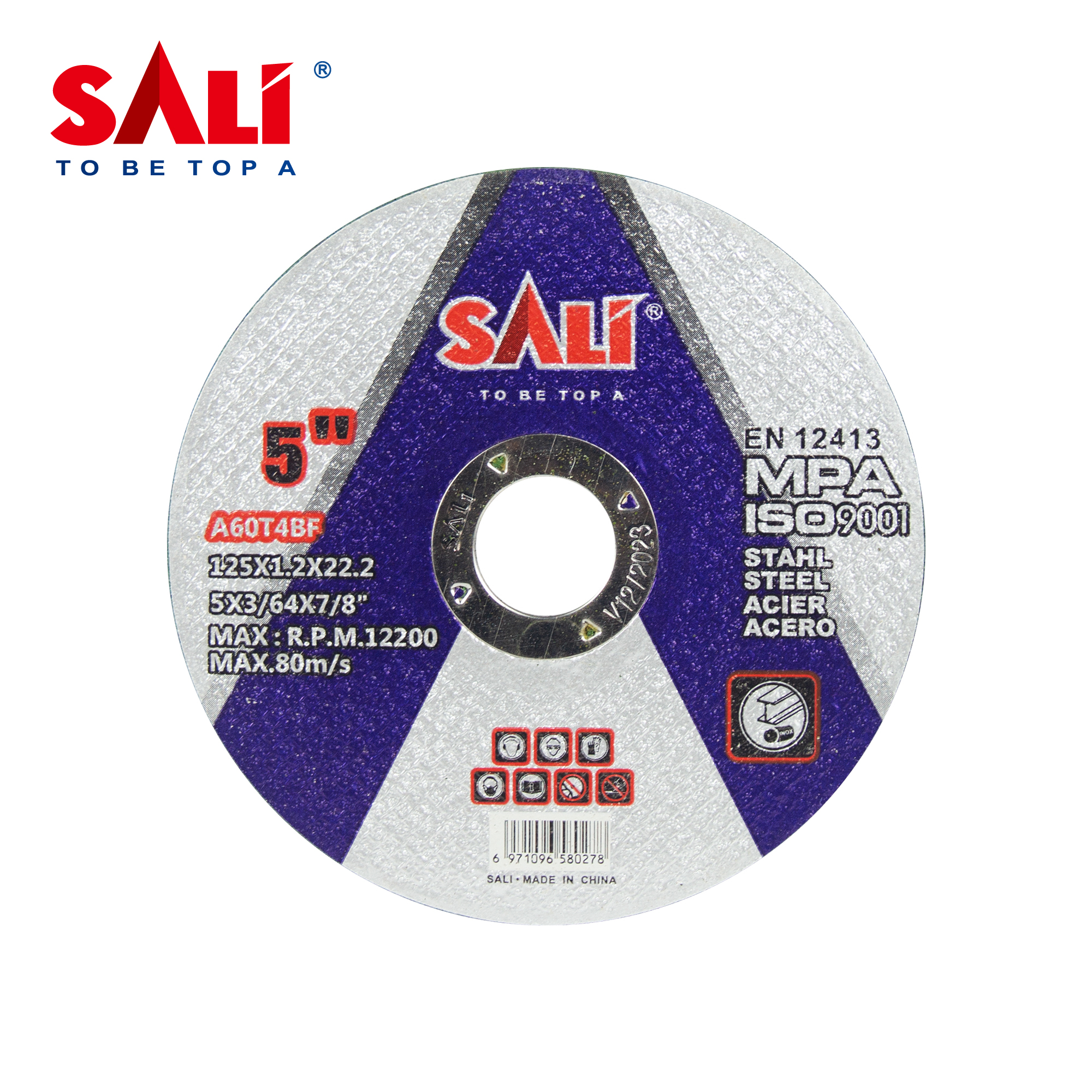
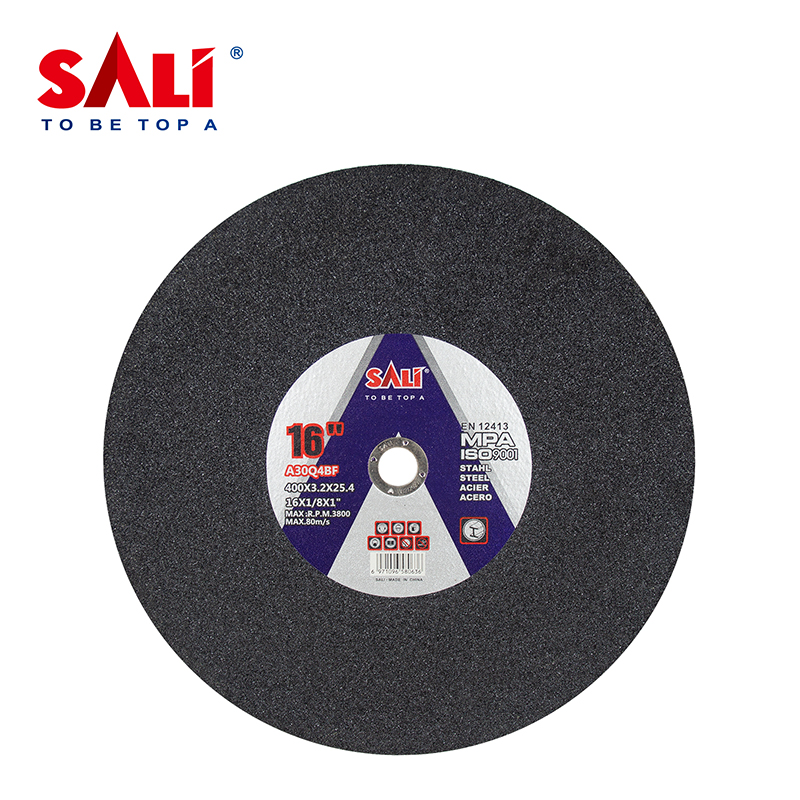
For bonded abrasives, that boundary is unusually granular. A Type 41 flat cutting-off wheel is a flat, unreinforced-hub wheel used for straight radial cutting on an angle grinder or a portable cutting machine. In product catalogues the same body shape is listed as a Flat Cutting Disc, distinct from the Depressed Center Cutting Disc family. A certificate may cover one shape but not the other, one diameter but not the next, and one speed ceiling but not a higher one.
That is why a compliance-driven buyer does not ask "are you MPA certified?" and stop there. The workable question is narrower: is the exact wheel I am buying listed inside the certificate you just sent me?
Why Scope Discipline Matters More in the EU Than Anywhere Else
EN 12413 is the mandatory European safety standard for bonded abrasive products. It sets requirements for burst testing, marking and dimensional tolerances, and it is the standard named on the certificate discussed in this guide.
Compliance in this market is evidenced, not asserted. MPA Hannover provides independent safety testing — burst test and side load test — that is used for EU market entry, and the result is commonly represented by the "MPA Tested" mark. Those tests are performed against a specific product description; they are not issued against a company in general.
The commercial weight behind this is easy to see. Resin-bonded grinding and cutting discs accounted for a 38.5% share of the global abrasive disc market in 2025, and the global cutting discs market was valued at approximately USD 7.322 billion in 2024, with projections toward USD 11.59 billion by 2035. In a category that large, a certificate that is quoted loosely becomes a liability rather than an asset — for the importer who resells on it and for the fabricator who mounts the wheel.
Reading MPA Certificate Z-15486A/25, Line by Line
The certificate held by ZHEJIANG SALI ABRASIVE TECHNOLOGY CO., LTD. — the manufacturer behind the SALI Tools brand — is identifiable and checkable. Its content, stated plainly:
| Certificate field | Entry on the certificate | What it means when you order |
|---|---|---|
| Applicable standard | EN 12413:2019 | The safety benchmark the tested wheels were assessed against |
| Certificate number | Z-15486A/25 | The identifier to quote on your PO and in your technical file |
| Issuing body | MPA Hannover (Garbsen Site) | An independent German testing authority, not a self-declaration |
| Product covered | Flat cutting-off wheels, type 41, for metal | Flat shape and metal use only — not depressed center, not stone |
| Max. operating speed | 80 m/s | The ceiling for every size listed on this certificate |
| Bore diameter | 22.23 mm | One bore only; a different bore is a different product |
| Outside diameters | 115 mm and 125 mm (cut width 1.2 mm); plus 180 mm and 230 mm | Four diameters, with the cut width explicitly stated for the two smaller ones |
| Market | EU | The certificate is written for European market placement |
| Validity | 2025-10-09 to 2027-05-23 | A fixed window; verification is a recurring task, not a one-off |
The three lines buyers misread most often
Diameter and cut width are a pair, not a list. The certificate describes 115 mm and 125 mm outside diameters at a 1.2 mm cut width, and separately lists 180 mm and 230 mm. A quotation that offers "any thin disc, 115 to 230 mm" is not automatically within scope, because cut width travels with the tested article. Ask for the diameter and cut width combination you actually intend to buy, in writing.
80 m/s is a ceiling for the listed sizes, not a target. The number must be matched downwards against tool speed, never upwards. A wheel is only correctly specified when the maximum speed marked on it exceeds the no-load speed of the grinder it will be mounted on.
Validity dates are the least glamorous and most frequently skipped detail. The current window runs to 23 May 2027. A certificate that has lapsed is not a certification; it is a historical document. For orders with long delivery or storage cycles, the certificate must still be valid when the goods are placed on the EU market.
What the certificate does not say
- It does not cover depressed center cutting discs.
- It does not cover stone, masonry or non-metal applications — the covered product is expressly "for metal".
- It does not cover bores other than 22.23 mm.
- It does not cover outside diameters beyond the four listed, even though a manufacturer may produce them.
- It does not speak to quality management, documentation control or traceability.
- It does not extend outside the EU market.
- It does not renew itself.
MPA Certificate vs ISO 9001:2015: Two Documents, Two Different Questions
Buyers regularly receive both documents in the same email and treat them as one compliance pack. They answer different questions, and mixing them up is the second most common scope error after the diameter assumption.
| Question | MPA certificate Z-15486A/25 | ISO 9001:2015 certificate 01525Q20094R001 |
|---|---|---|
| What question does it answer? | Is this specific wheel design safe at its rated speed? | Is the management system that produced it controlled and repeatable? |
| What is certified | A product: flat cutting-off wheels, type 41, for metal | A process: the quality management system |
| Issuing body | MPA Hannover (Garbsen Site) | WIT Assessment |
| Applicable standard | EN 12413:2019 | ISO 9001:2015 |
| Geographic relevance | EU market | Global market |
| Validity window | 2025-10-09 to 2027-05-23 | Governed by the certificate's own surveillance cycle |
| What it proves | Independent safety testing of a defined product scope | Systematic control of processes affecting quality |
| What it cannot prove | Anything about production consistency | Anything about burst performance or product safety |
The clean way to remember it: the MPA certificate tells you the wheel design survived testing. ISO 9001:2015 tells you the factory can make the same wheel the same way next month. A supplier who presents ISO 9001 as evidence of product safety has answered a question you did not ask. A supplier who presents an MPA certificate as evidence of process control has done the same thing in the other direction.
For completeness of the compliance file, SALI holds both ISO 9001 and ISO 14001 certifications, alongside MPA, EN 12413 and EU safety standard certifications on its product side — a document set that should be read separately, line by line, for each purpose.
From Paper Compliance to Production Control
A certificate is a snapshot of a design at test time. Whether the discs in your container match that design depends on the factory behind the paperwork — which is why the same question needs a second answer, this one about the plant.
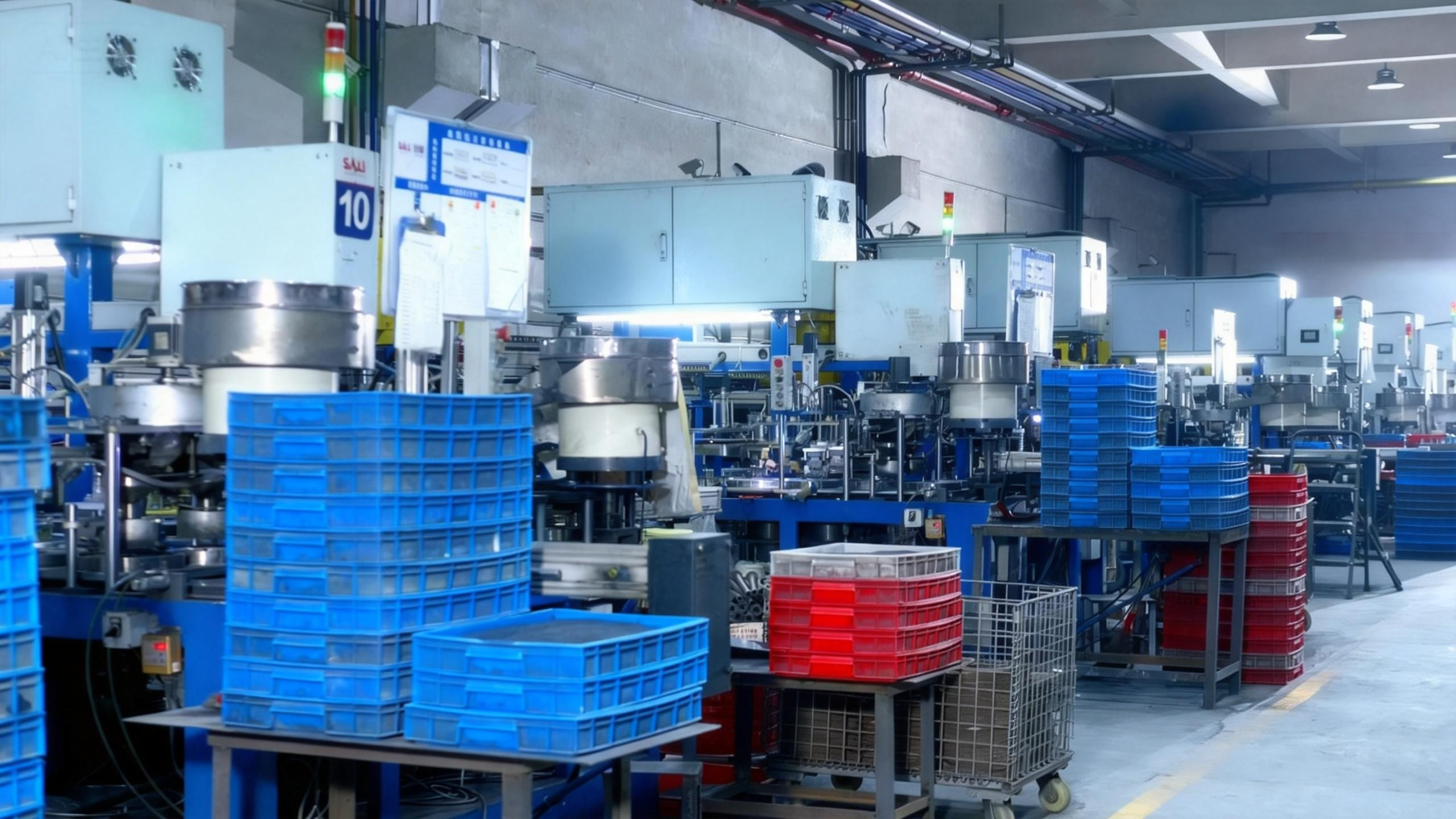
ZHEJIANG SALI ABRASIVE TECHNOLOGY CO., LTD. was established in 2003 and has more than 20 years of experience in manufacturing tools and abrasives. Its direct factory in Yongkang, Zhejiang covers a 6,000 m² factory area with a 30,000 m² construction area, employs over 150 staff, and maintains a research and development team of over 30 engineers. Annual production capacity for grinding discs is stated at 1.5 billion pieces, with overall annual production capacity reaching 150 million pieces.
Three verifiable controls sit between that capacity and a certificate claim:
- Batch-level testing. Every production batch is sampling-tested in an in-house testing laboratory.
- Remote inspection access. B2B clients can view live camera feeds of the testing laboratory to monitor quality testing in real time, and can request customized testing metrics.
- Reinforcement specification. SALI's published product information states that its cutting discs are reinforced with multiple layers of high-tensile fiberglass mesh, with burst speed limits stated as reaching at least 100 m/s against the 80 m/s threshold.
The company also states a full legal and product liability commitment for personal injury caused by manufacturing defects — a claim that only carries weight if the factory ownership and the batch records behind it can be demonstrated. When you ask a supplier to prove the paper matches the plant, those are the three things to request: ownership of the production site, the acceptance criteria applied at batch release, and access to the test record.
An Order-to-Certificate Checklist for Type 41 Buyers
Run this sequence before releasing a purchase order. It takes about fifteen minutes and prevents the most common scope failures.
- Fix the four product parameters first. Outside diameter, bore diameter, cut width and wheel shape. Write them into the enquiry as a single line item, not as a range.
- Open the certificate and find your diameter. For Z-15486A/25, that means 115 mm or 125 mm at 1.2 mm cut width, or 180 mm or 230 mm. If your diameter is not listed, stop treating the order as in-scope.
- Confirm the bore. 22.23 mm is the covered bore. A different bore is a different article requiring its own documentation.
- Confirm the shape. Type 41 flat only. A depressed center disc is outside this certificate even if it carries the same brand.
- Confirm the material group. Metal. Stone and masonry wheels are outside scope.
- Match speed downwards. Compare the 80 m/s maximum operating speed with the no-load speed of the grinder and with the speed marking on the wheel itself. The wheel marking must exceed the tool's rating.
- Check the validity window against your timeline. Certificate Z-15486A/25 runs from 2025-10-09 to 2027-05-23. If delivery, shipping or storage pushes market placement near or past that date, plan a re-verification step.
- Separate the two certificates in your file. MPA certificate for the product question, ISO 9001:2015 certificate 01525Q20094R001 for the process question. Label them accordingly so the next person in your organisation reads them correctly.
- Ask for factory evidence. Site ownership, production address, batch acceptance criteria and access to test records — remote camera inspection where offered.
- Record the confirmation in writing. A signed statement that the ordered diameter, bore, cut width and speed limit fall inside the certificate scope is worth more than a logo on a data sheet.
Where a Scope-Matched Type 41 Order Is Used
Scope matching is not paperwork for its own sake — it maps onto specific jobs where an out-of-scope substitution creates real exposure.
- Metal fabrication and steel structure. General cutting, site dressing and bevel preparation on carbon and alloy steel, where 115 mm and 125 mm at 1.2 mm are the working sizes on angle grinders.
- Stainless steel pipe and process work. Cooler cutting with contamination-free finishes where discoloration matters; SALI publishes a reference figure of 35–45 continuous cuts on a 12 mm 304 stainless steel solid bar with a 115 × 1.2 mm industrial cutting disc.
- Pipeline and oil/gas. Field cutting and root pass preparation, where discs are consumed away from the warehouse and documentation must survive the journey.
- Shipbuilding and offshore engineering. Heavy-duty cutting on larger diameters, where 180 mm and 230 mm wheels fall inside the certificate scope.
- Automotive and parts manufacturing, rail maintenance, foundry and forge shops, machinery and general equipment. Semi-industrial and industrial cutting where a mixed-size order is normal and therefore where scope confusion is most likely.
In all of these, the operating discipline around the wheel matters as much as its paperwork: verify the RPM marking against the tool, inspect for cracks, chips or moisture damage before mounting, respect the expiry date, keep the guard fitted with the open side away from the operator, and never use a thin cutting wheel for side grinding.

Ready Stock, Order Size and the Compliance Conversation
Compliance checks often stall on order size, because buyers assume a documentation-heavy conversation requires a container. It does not. SALI maintains 85% of standard SKUs in ready stock across an 8,000 m² warehouse, with MOQ for SALI brand orders as low as one carton and same-day dispatch for ready stock; custom OEM production and delivery run on a 30–45 day cycle.
That structure lets a buyer validate a scope-matched order at low volume before committing to a program — confirming the diameter, bore and cut width behave as expected on the actual shop floor, then scaling. For EU buyers specifically, it also means the certificate check can happen before the volume decision rather than after it.

Frequently Asked Questions
1. Does an "MPA certified" claim on a quotation cover every cutting disc size the supplier sells?
No. An MPA certificate covers a defined product scope, not a brand or a full catalogue. Certificate Z-15486A/25 covers flat cutting-off wheels, type 41, for metal, at a maximum operating speed of 80 m/s, with a 22.23 mm bore and outside diameters of 115 mm and 125 mm at 1.2 mm cut width, plus 180 mm and 230 mm, for the EU market, valid from 2025-10-09 to 2027-05-23. Any other diameter, bore, cut width or wheel shape falls outside that document, even if it appears in the same catalogue.
2. What is the difference between MPA certificate Z-15486A/25 and ISO 9001:2015 certificate 01525Q20094R001?
They answer different questions. MPA certificate Z-15486A/25, issued by MPA Hannover (Garbsen Site) against EN 12413:2019, is a product safety certification for a defined range of type 41 metal cutting wheels in the EU market. ISO 9001:2015 certificate 01525Q20094R001, issued by WIT Assessment for the global market, certifies the quality management system behind production. The first tells you the wheel design passed independent safety testing; the second tells you the factory controls its processes. Neither substitutes for the other.
3. What should I do if my order needs a cutting disc size outside the certificate's listed diameters?
Treat it as a separate documentation question rather than assuming coverage. SALI's cutting disc range extends from 3 inches to 16 inches in flat and depressed center configurations — a wider range than the certificate scope — so a size can be commercially available and still sit outside Z-15486A/25. Ask the supplier to state in writing which documentation applies to the specific diameter, bore, cut width and shape you are ordering, and for which market.
4. How do I confirm that compliance paperwork matches real production, not just a test report?
Ask three questions and require answers in writing: who owns the production site making the discs, what acceptance criteria apply at batch release, and can you see the test record or the testing process. SALI operates its own factory in Yongkang, Zhejiang — a 6,000 m² factory area with a 30,000 m² construction area, over 150 staff and a 30+ engineer R&D team — sampling-tests every production batch in an in-house laboratory, and offers B2B clients live remote camera access to that laboratory along with customized testing metrics on request.
5. What order size and lead time apply to a scope-matched Type 41 cutting disc order?
For SALI brand orders, the MOQ is as low as one carton per item (~500–1,000 pieces), with 24-hour dispatch on ready stock, supported by an 8,000 m² warehouse holding 85% of standard SKUs. Custom OEM orders run on a 30–45 day production and delivery cycle. A practical route for a first EU order is to validate the certificate-scope sizes at carton level, then scale once the diameter, bore and cut width are confirmed on your own equipment. To start that check, send your diameter, bore, cut width and target market to salimarketing@pcsali.com or reach the team on WhatsApp at +86 188-6758-6946.
Conclusion
The compliance question worth asking is not whether a supplier is certified, but whether your specific wheel is inside the certificate. For Type 41 flat cutting-off wheels for metal, that means checking four numbers — outside diameter, bore, cut width and maximum operating speed — against a document that also has a market and an expiry date.
MPA certificate Z-15486A/25 gives a checkable answer for 115 mm and 125 mm at 1.2 mm cut width with a 22.23 mm bore, plus 180 mm and 230 mm, at 80 m/s, for the EU market, valid to 23 May 2027. ISO 9001:2015 certificate 01525Q20094R001 answers the separate question of whether the factory can repeat that product. Hold the two apart, verify the factory behind them, and the paperwork stops being a logo on a quotation and starts being a purchasing control.
Check your order against the certificate scope
Send your diameter, bore, cut width and target market, and the SALI Tools team will confirm in writing whether the item falls inside MPA certificate Z-15486A/25 — and which additional documentation applies if it does not.
Website: www.salitools.com | Email: salimarketing@pcsali.com
Phone / WhatsApp: +86 188-6758-6946 | Address: 7th Floor, Futian Mansion-B Building, Futian Street, Yiwu City, Zhejiang Province, China
Download the full range reference: SALI Tools Brand Product Catalog (PDF)
Have Questions or Need More Details?
Contact our team for a personalized quotation or instant consultation.
Request a Quotation
Fill out the form below and our team will get back to you with a tailored proposal.
WhatsApp Direct Chat
Prefer to chat in real-time? Message us on WhatsApp for instant assistance & quick answers.
- Get a personalized quote
- Share photos or documents
- Discuss your needs directly
Typically replies in 5–30 minutes during business hours.