Reading Type 41 Cutting Disc Markings: EN 12413, MPA, 80 m/s
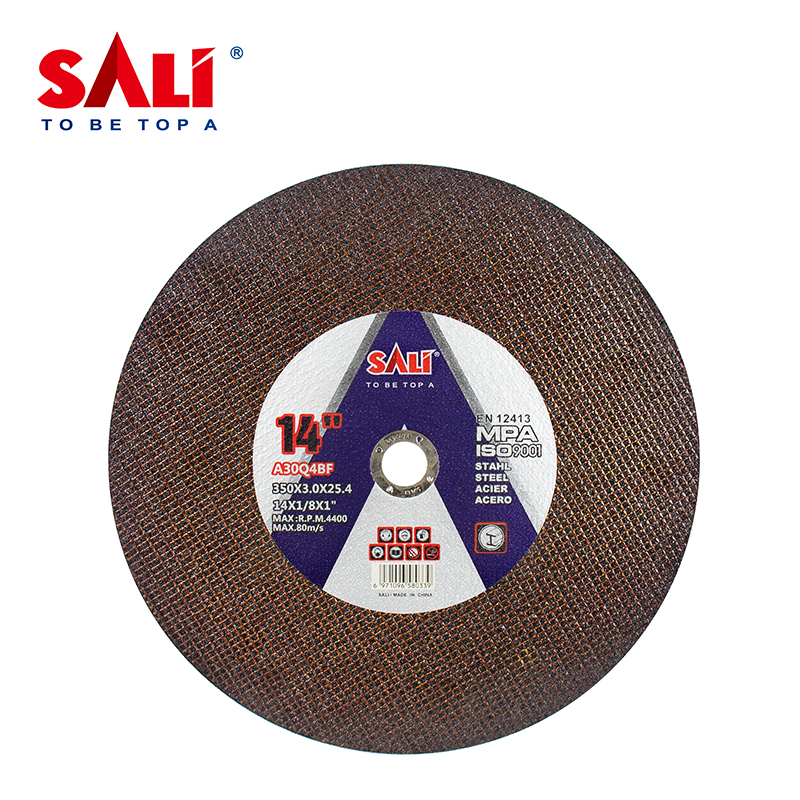
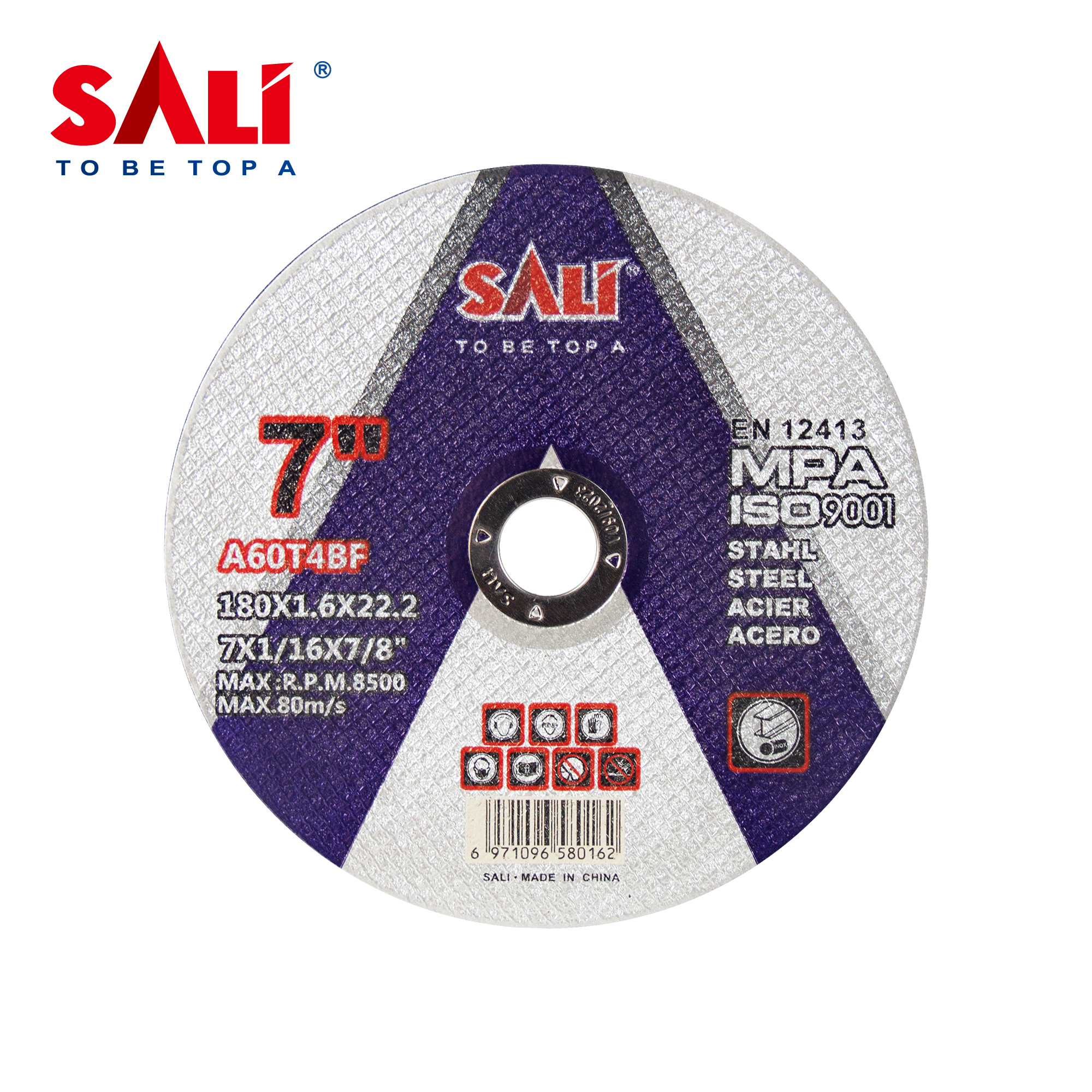
A Type 41 flat cutting-off wheel carries a small, fixed set of markings, and each one answers a different question. The 80 m/s figure is the maximum peripheral speed the wheel is rated to run at, not a spindle speed. EN 12413:2019 is the European safety standard that sets the burst-test, marking and dimensional-tolerance requirements sitting behind the label. An MPA Hannover certificate reference in the Z-series — Z-15486A/25 for the flat cutting-off wheel family discussed here — points to an independent test record, and the written scope of that record has to match the diameter and bore that actually arrive on site.
This page is a category explainer for buyers in the research and evaluation stage. It decodes the marking set, gives the order to read it in, and marks the boundary between what a mark proves and what it does not. It is not a product comparison and it does not rank brands.
Why marking errors survive goods-in inspection
Most marking failures are documentary rather than manufacturing. The disc itself is sound; the match between disc, carton and certificate is not. Three readings cause most of that mismatch.
- Unit confusion. A shop-floor reader compares the 80 m/s figure directly with a grinder's rpm and concludes either that the disc is far too slow or far too fast. Both quantities are limits, but they describe different things.
- Scope overreach. One MPA reference is assumed to cover every diameter and bore a supplier lists, when the certificate scope is written for defined combinations.
- Line-item myopia. Only the diameter is checked, so a disc with a different bore, a mislabelled carton or an expired batch passes receiving unnoticed.
Labels make this worse. They are small, use symbols and abbreviations, and are read at a receiving bay with a queue waiting. A disc separated from its carton also loses the outer label, which is often where the fuller marking set and batch code sit.
The two external references behind the label
EN 12413:2019 — the safety standard
CEN describes EN 12413 as the mandatory European safety standard for bonded abrasive products, specifying requirements for burst testing, marking and dimensional tolerances. For a buyer, the practical meaning is narrower than it looks: the mark declares conformity to a defined test and identification regime. It is not a performance grade, not a lifespan figure and not a ranking. Two discs that both carry EN 12413 can differ in cut count, heat generation and finish on the same workpiece.
MPA Hannover — the independent test
MPA Hannover provides independent safety testing — burst test and side load test — required for EU market entry, and that approval is often visualised by the MPA Tested mark. Certificates are issued in the Z-series, which is why a reference such as Z-15486A/25 is a document identity rather than a quality score.
The distinction that matters at evaluation stage is between independent testing and factory quality control. SALI, for example, runs in-house batch testing and gives clients remote camera access to its testing lab; that is manufacturer-side inspection. The MPA record is a separate, external layer. Neither replaces the other, and neither tells you the cut count on your material.
Resin-bonded grinding and cutting discs held a 38.5% share of the global abrasive disc market in 2025, according to Dataintelo, which is why this particular marking set is the one most fabrication buyers handle every week.
Marking by marking: what each line establishes
Wheel type and dimension line
Type 41 is the flat cutting-off wheel; Type 42 and Type 27 are depressed-centre wheels. SALI's customization documentation lists bore options of 16 mm, 22.23 mm and 25.4 mm, outside diameters from 100 mm to 400 mm (4 in to 16 in), and thickness from 1.0 mm to 1.6 mm for ultra-thin discs against 2.0 mm to 6.0 mm for standard discs. The dimension line on the label reads diameter × thickness × bore, so a 22.23 mm bore identifies which arbor the disc is made for before anything about the certificate is considered.
Speed line
80 m/s is the rated maximum peripheral speed. Some labels also print the equivalent spindle speed in rpm; where they do not, the conversion is set out further below.
Standard and certificate marks
EN 12413 identifies the standard; the MPA mark and its Z reference identify the independent test. Read them as a pair. The standard says which regime applies; the reference says which test record covers the product.
Abrasive and material line
Grain codes carry real information. Brown aluminium oxide (A) is the metal formulation in SALI's range, white aluminium oxide (WA) is used for stainless steel with a sulfur-free and chlorine-free bond, zirconia alumina (ZA) for heavy-duty work and silicon carbide (C) for stone and cast iron, with grit sizes from 24# to 120#. A marking that does not identify the abrasive gives the operator no basis for matching the disc to the workpiece.
Date, batch and expiry
Resin bonds are moisture-sensitive. A batch code plus a production or expiry date is what lets a receiver reject aged stock, and an aged bonding agent raises the risk of wheel burst — which is why never using expired wheels is a stated operating requirement rather than a housekeeping preference.
| Marking element | What it establishes | What it does not establish | Check at goods-in |
|---|---|---|---|
| Wheel type (41, 42, 27) | The shape: flat cutting-off wheel versus depressed centre | Whether the disc suits a specific material | Compare with the purchase order and with how the tool will be used |
| Dimension line (D × T × H) | Outside diameter, thickness and bore as one combination | That the size is inside a certificate scope | Match every delivered size, not just the first carton opened |
| Speed line (80 m/s) | The rated maximum peripheral speed | The permitted spindle speed on its own | Convert to rpm and compare with each tool's rating plate |
| EN 12413 | Conformity to the European bonded abrasive safety standard | A grade, lifespan or performance ranking | Confirm the mark is legible on disc and carton |
| MPA mark and Z reference | Independent burst and side-load testing for a defined scope | Coverage of every size the supplier sells | Match the certificate scope to the delivered diameter and bore |
| Abrasive line (A, WA, ZA, C) | The intended material family and bond formulation | Performance on a specific alloy or site condition | Check against the workpiece and the operator's task |
| Date and batch code | Production traceability and age of the disc | How the disc was stored after it left the factory | Check expiry and reject moisture-damaged packaging |
From 80 m/s to a number an operator can check
Peripheral speed and spindle speed are different quantities. At a fixed 80 m/s, the permitted spindle speed falls as diameter rises: n = 80 × 60,000 ÷ (π × D), with D in millimetres and n in revolutions per minute.
| Outside diameter | Bore in this family | Spindle speed at 80 m/s (calculated) |
|---|---|---|
| 115 mm | 22.23 mm | about 13,280 rpm |
| 125 mm | 22.23 mm | about 12,220 rpm |
| 180 mm | 22.23 mm | about 8,480 rpm |
| 230 mm | 22.23 mm | about 6,640 rpm |
Values are calculated from the formula above at 80 m/s and rounded down; the rpm printed on the disc always governs.
The operating rule from SALI's application guidance is straightforward: the maximum rpm printed on the wheel must exceed the angle grinder's maximum rated speed. Read the rating plate on the tool itself and compare it with the printed rpm where available, or with the converted figure where not.
The arithmetic explains why mixing diameters is dangerous rather than merely inconvenient. A 230 mm disc's limit of about 6,640 rpm is roughly half the 115 mm figure of 13,280 rpm, so a wheel sized for the larger diameter and run at a small-grinder speed is overspeeded by a factor of about two. Physical fit is not a safety test.
Headroom above the limit is a manufacturer design decision. SALI states that its cutting discs use two to three layers of high-tensile fiberglass mesh and reach a burst speed limit of at least 100 m/s, above the 80 m/s threshold. That is a company statement about its own construction, not a property conferred by the standard or by the mark.
Diameter and bore: where the dimension line meets certificate scope
An MPA certificate is written for a defined scope, and scope is expressed as dimension and bore combinations rather than as a product family name. For the flat cutting-off wheel family discussed here, the documented scope pairs a 22.23 mm bore with 115 mm, 125 mm, 180 mm and 230 mm outside diameters. A disc outside that set — a different bore, or a diameter that is not listed — is a separate scope entry and needs its own confirmation.
That produces a three-place check: disc label, carton label, certificate document. Where all three agree, the paperwork match is complete. Where the disc prints a reference that does not appear on the certificate supplied with the order, quarantine the batch and query it before issue rather than after a failure.
Private-label orders need the same discipline earlier in the process. SALI's OEM customization covers printed MPA, EN12413, ISO9001 and MSDS marks, multi-colour labels, barcodes, QR codes and safety markings, with production and delivery taking 30 to 45 days from design confirmation. The artwork proof is the last cheap moment to catch a scope mismatch; a marking set applied to a size the certificate does not cover is a documentary defect that travels with the goods into the market.
Six checks at goods-in
- Read type and dimensions first. Confirm 41 and the diameter × thickness × bore line against the purchase order and the packing list. Record what was delivered rather than what was ordered; on mixed pallets the two diverge.
- Read or convert the speed line, then compare it with every tool on site. The wheel's maximum rpm must exceed the grinder's rated maximum. If one stock item can end up on more than one tool, check it against the fastest tool in the building.
- Confirm the standard and certificate reference are legible. EN 12413 and the MPA Z reference should both be readable on the disc and repeated on the carton. An illegible reference cannot be verified, which makes it a documentary rejection rather than a cosmetic issue.
- Match the delivered sizes to the certificate scope. Check each diameter and bore combination in the delivery, not only the first one opened.
- Check date, batch and packaging condition. SALI advises cool, dry storage off the floor and states that its discs retain optimal performance for three years under standard conditions. Reject water-damaged cartons regardless of the date code, because moisture weakens the bond and raises fracture risk.
- File the evidence. Keep the certificate copy, receiving photographs and batch numbers together. Claims move faster with photographs or video of the issue; SALI operates a 24-hour claim response with replacement or credit on the next order once the issue is verified.
Where the reading changes the decision
Stainless steel pipe and precision fabrication
A general-purpose metal disc and a stainless disc are different products carrying different markings. For stainless steel (Inox), SALI uses white aluminium oxide with a sulfur-free and chlorine-free bond and states that this produces cool cuts without burrs or discoloration; carbon steel and cast iron use brown aluminium oxide. The abrasive line on the label is therefore a material decision, not a footnote. Application guidance sets the working envelope for this industry as radial cutting at 90° with angular work at 15° to 30°, matched equipment including angle grinders, chop saws and die grinders, and ambient conditions of -20 °C to +45 °C at 45% to 75% relative humidity. Standard resin-bonded discs are not for wet, rain-exposed or water-splashed cutting unless marked for it, because moisture weakens the bond system.
Structural steel, pipeline and site dressing
On steel structure, pipeline and maintenance work, the same disc may be asked to cut, dress a weld and bevel an edge. The marks that matter most here are type, dimension and speed, with certificate scope mattering again at the point where a site store issues a disc to a tool. Two checks travel well to a site: the speed comparison at issue, and a visual inspection for cracks, chips, bends or moisture damage before mounting.
Distributor and private-label programmes
For a distributor, the marking set is a contractual object, because the label the end customer reads is often the distributor's own. SALI's reported project cases describe volume and continuity rather than marking accuracy: a 30 million piece wholesale programme in Ethiopia running 20 years with annual growth above 50% after switching to a SALI agency; a 10 million piece programme in Central Asia running more than nine years, where the partner's 2024 volume was 21 times its 2018 starting point; and a 10 million piece fabrication and on-site processing programme in the Middle East running five years with stable operation and consistent quality reported by the client. Those cases support a claim about long supply relationships. They do not substitute for reading the certificate attached to a specific order.

Frequently asked questions
Does the EN 12413:2019 mark on a cutting disc mean it is approved for the EU market?
The mark declares conformity to EN 12413:2019, which CEN describes as the mandatory European safety standard for bonded abrasive products covering burst testing, marking and dimensional tolerances. That is a conformity declaration about a test and identification regime, not a performance grade. Buyers evaluating EU supply should also check that an MPA certificate reference exists and that its scope covers the delivered diameter and bore.
How do I verify that an MPA Hannover certificate covers the disc size I ordered?
Read the certificate scope, which is written as dimension and bore combinations. For the flat cutting-off wheel family discussed here, the documented scope pairs a 22.23 mm bore with 115 mm, 125 mm, 180 mm and 230 mm diameters; other bores or diameters are separate entries. Then match three places — disc label, carton label and certificate. If the reference on the disc does not appear in the paperwork, hold the batch.
What does the 80 m/s marking mean in practice, and how does it relate to my grinder's rpm?
80 m/s is the maximum peripheral speed the wheel is rated for, and spindle speed depends on diameter. Using n = 80 × 60,000 ÷ (π × D), the limits work out to about 13,280 rpm at 115 mm, 12,220 rpm at 125 mm, 8,480 rpm at 180 mm and 6,640 rpm at 230 mm, rounded down. The operative rule is that the maximum rpm printed on the wheel must exceed the grinder's maximum rated speed.
Can one Type 41 disc handle both stainless steel pipe and carbon steel?
Not from one formulation in SALI's range. Stainless steel (Inox) uses white aluminium oxide with a sulfur-free and chlorine-free bond, intended for cool cuts without discoloration, while carbon steel and cast iron use brown aluminium oxide and silicon carbide covers stone and cast iron. Matching the wheel to the material is a stated safety requirement, and standard discs must not be used on aluminium, copper, wood or plastic.
Is a certified cutting disc more expensive per cut?
Price per disc and cost per cut are different measures. SALI states that a 115 × 1.2 mm industrial cutting disc achieves 35 to 45 continuous cuts on a 12 mm 304 stainless steel solid bar, delivering 85% to 95% of top premium brands' lifespan at 40% to 60% lower cost. Treat those figures as the supplier's own and validate them on your workpiece before fixing a budget.
Can I test samples before a project order, and what lead time should I plan?
New clients can order samples for testing, with sample fees refunded on the first bulk order, and regular partners receive free new samples; clients can also request remote camera access to watch batch testing. For standard SKUs the MOQ is one carton of roughly 500 to 1,000 pieces, with 24-hour dispatch from an 8,000 m² warehouse holding 85% ready stock. Custom OEM orders run 30 to 45 days from design confirmation. The full range is listed in the SALI Tools product catalog.

Putting the marking set to work
Reading a Type 41 label is a short procedure with a long consequence. The order that works is fixed: type and dimension, then speed, then standard, then certificate scope, then date and batch. Put those five into a receiving template and most marking failures stop at the door, because each check rejects a different kind of error rather than repeating the same one.
Where a supplier cannot produce a certificate whose scope matches the size actually shipped, the answer is not a lower price. It is a different supplier — or, at minimum, a size change documented against a scope that does exist.
ZHEJIANG SALI ABRASIVE TECHNOLOGY CO., LTD, trading as SALI Tools, has manufactured abrasives and tools since 2003, holds ISO 9001 and ISO 14001 certification, and lists MPA and EN 12413 among its product certifications; its range is exported to more than 160 countries through www.salitools.com. Buyers who want to check the marking set against a physical disc, or who need a certificate copy for a specific diameter and bore, can request it with their sample or quotation enquiry at salimarketing@pcsali.com.

Have Questions or Need More Details?
Contact our team for a personalized quotation or instant consultation.
Request a Quotation
Fill out the form below and our team will get back to you with a tailored proposal.
WhatsApp Direct Chat
Prefer to chat in real-time? Message us on WhatsApp for instant assistance & quick answers.
- Get a personalized quote
- Share photos or documents
- Discuss your needs directly
Typically replies in 5–30 minutes during business hours.