
Dough Mixer Comparison Guide: Capacity, Power and Controls Across SAM Models
At the decision stage, a dough mixer is not selected by capacity label alone. Three variables have to be read together: the batch class from half-bag through five-bag, the motor-power envelope of 2.2 kW to 26 kW used in this comparison scope, and the equipment-weight envelope of 170 kg to 2,200 kg. The control panel then determines how the mixer fits daily batch workflow, while the mixing arm and bowl materials determine cleaning and maintenance routines.
This guide is written for buyers comparing SAMAG Bakery Equipment dough mixer classes. It separates what the available SAMAG documentation confirms from what must be confirmed in a written RFQ. That separation matters because the product documentation available for this review does not contain a model-level dough-mixer table for every capacity, motor power, weight, control-panel configuration or material detail. The comparison therefore gives a decision path and a verification checklist rather than inventing a specification table.
What the comparison has to solve
The practical problem is matching machine size to bakery output without over-specifying the wrong variable. A bakery that buys by bag label alone may miss the difference between flour weight, dough weight, bowl working capacity and finished batch yield. A buyer who buys by motor power alone may overlook duty cycle, voltage, phase, gearbox design, dough type and the actual control sequence. A buyer who buys by price alone may miss installation weight, cleaning time, maintenance access and the cost of an undersized or oversized batch.
For decision-stage procurement, the useful comparison is therefore a linked set of checks: batch weight per cycle, batches per shift, dough consistency, available power, floor loading, operator skill, cleaning routine and the control functions needed for repeatability. SAMAG's dough-mixer FAQ identifies capacity selection, power matching, operation, cleaning and daily maintenance as the core topics. That is a useful agenda, but it is not a model datasheet. Each agenda item has to be converted into an RFQ field.
What is verified about SAMAG before comparing mixer classes
SAMAG Bakery Equipment is the brand used here for WUXI SHUANGMAI BAKERY EQUIPMENT CO., LTD, a manufacturer and distributor of bakery equipment founded in 2002. The company profile supplied for this guide states a 20,000 m² factory, 110 employees, annual output of 10,000 units, five R and D engineers, a 10% export ratio and main markets including Global, Southeast Asia and Europe. Its listed product range includes bakery ovens, convection ovens, bread proofing boxes, dough mixers and dough sheeters.
Those are company-profile facts, not a dough-mixer model table. They support supplier screening and factory discussion. They do not establish the capacity, power, weight or control configuration of any individual SAM dough mixer. The company page also references safety testing, sample baking testing, CE and ISO 9001, but the available evidence does not include model-specific declarations, certificate scope, issuing body, validity dates or independent audit reports. Buyers should request those documents for the exact model under review.
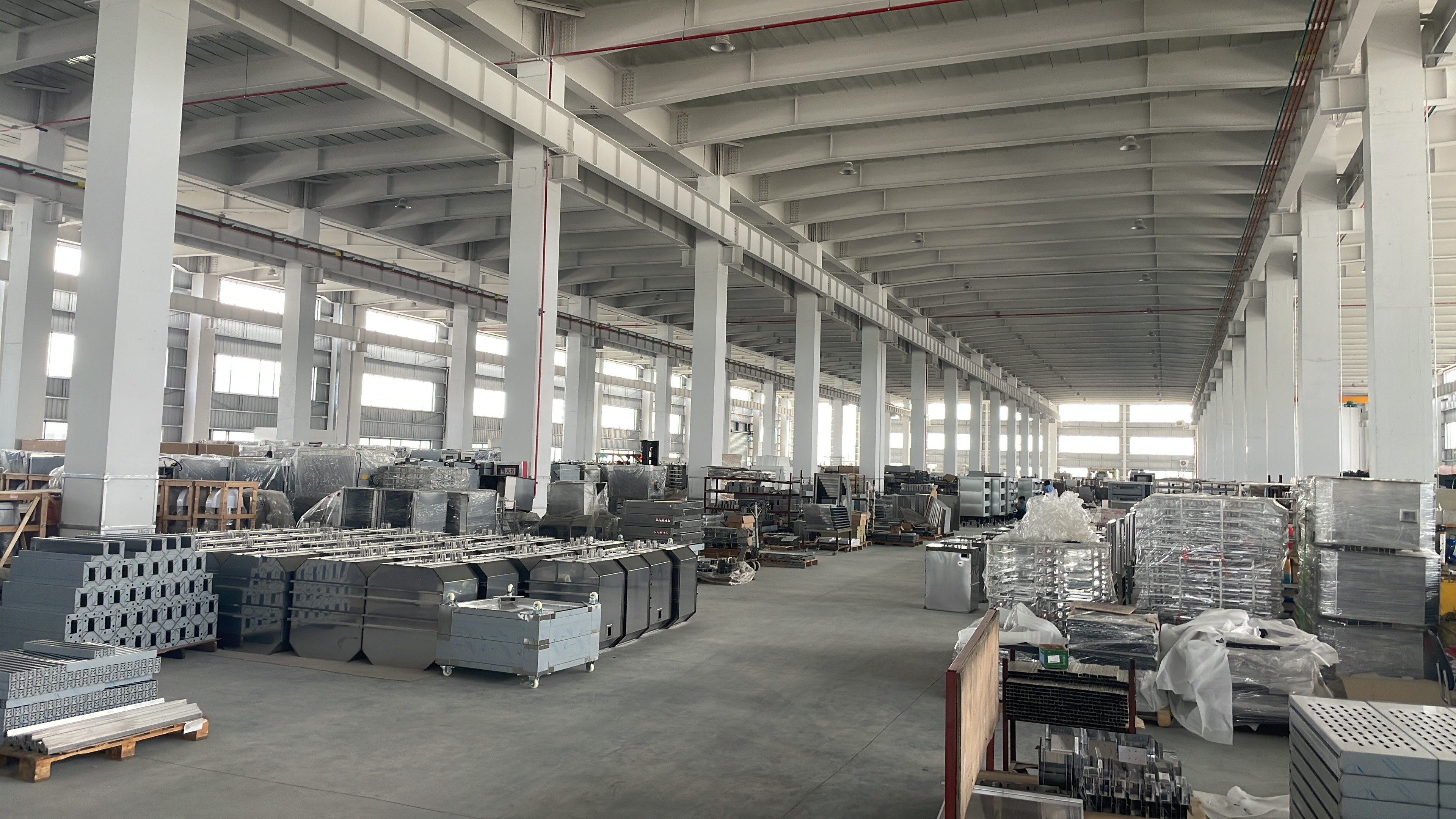
Factory evidence: the SAMAG company profile lists a 20,000 m² factory and 110 employees. The image is supplied in the company profile and supports manufacturing-context checks, not dough-mixer performance claims.
Capacity classes: half-bag through five-bag
Half-bag, one-bag, two-bag, three-bag and five-bag are capacity classes, not interchangeable specifications. Before comparing SAM models, ask the supplier to state the bag basis in kilograms of flour, the maximum dough weight per batch, the working bowl capacity, the recommended batch range and the minimum batch that still mixes correctly. A machine listed as a five-bag class may be intended for a different flour weight basis or dough hydration than the buyer assumes. The comparison should use the supplier's written capacity definition, not the class label alone.
The half-bag and one-bag end of the range is normally considered for lower-volume production, trial batches or bakeries with limited power and floor space. The three-bag and five-bag end is associated with higher-volume production and heavier dough loads, but the buyer should not infer output from the class label. Output depends on batch time, loading and unloading time, dough type, operator availability and the number of shifts. A larger bowl does not guarantee a proportionally larger finished output if the bakery cannot load, divide, proof or bake the batch in balance.
The capacity decision should start from the downstream constraint. If the oven, proofer and divider cannot absorb a five-bag batch, a smaller mixer may give better workflow. If the bakery runs one shift and needs a fixed number of dough pieces per day, the required batch count and batch size should be calculated first. The mixer class is then selected to fit that calculation, not the other way around.
Motor power: reading 2.2 kW to 26 kW correctly
The comparison scope for this guide uses a 2.2 kW to 26 kW motor-power envelope across the model classes. That range is useful as a screening field because it signals that the classes are not electrically equivalent. It is not a verified per-model SAMAG value in the evidence available here. For each model, confirm the nameplate power, voltage, phase, frequency, full-load current and whether the figure is a rated motor output or an input rating. Confirm the starting method and any protection required by the local electrical code.
Do not select by kilowatts alone. A lower-power mixer may be adequate for a light dough and a small batch; a higher-power mixer may be specified for heavier dough, larger batches or more frequent mixing. The actual load also depends on the bowl, the mixing arm, the gearbox ratio, the dough hydration and the operator's batch practice. Ask SAMAG to state the intended dough types and the maximum batch for each model, then compare that statement with the bakery's own dough schedule. If the supplier cannot provide a model-level duty statement, the kW figure is only a starting point.
Electrical planning should include more than the motor. The control panel, heaters if any, interlocks and any auxiliary equipment may affect the supply. The buyer should obtain a model-specific electrical drawing and confirm cable size, breaker rating, earthing and isolation requirements with a qualified electrical contractor. A mixer that fits the production plan but not the available power supply is not a practical selection.
Equipment weight: 170 kg to 2,200 kg and installation
The comparison scope also uses a 170 kg to 2,200 kg equipment-weight envelope. As with motor power, this is a screening range, not a confirmed per-model table. Equipment weight affects floor loading, unloading, moving, anchoring and service access. A light model may be moved with a pallet truck and installed on a normal bakery floor; a heavy model may require structural review, a crane or a specific lifting plan. The buyer should request the shipping weight, net weight, dimensions, center of gravity if available and recommended anchor or caster arrangement.
Weight is also a maintenance consideration. A heavier frame may be intended to damp vibration, but the buyer should not assume that mass alone solves stability. Confirm the foundation or floor requirement, the levelling method and the access needed to remove guards or the bowl. In a tight bakery, the ability to move the mixer for cleaning and service can matter as much as the nominal capacity.
Digital controls and batch workflow
The control panel turns a mechanical capacity choice into a workflow decision. The comparison scope for this guide describes a digital control panel with dual-timer displays, automatic and manual mode switching, forward and reverse mixing, and pulse start and stop. For any SAM model offered with that panel, the buyer should confirm which functions are standard, which are optional and how each function is intended to be used. The points below explain the workflow questions to ask; they do not assert that every SAM model has every feature.
Dual-timer displays
A dual-timer display, where fitted, gives the operator two independently set time values. Confirm whether the timers control two mixing stages, a total time and an interval, or another sequence. For batch workflow, dual timers can reduce the need for the operator to watch a clock and reset a single timer between stages. They can also make repeat batches easier to compare if the bakery records the settings. The buyer should ask for the timer range, resolution, whether settings are retained after power-off, and whether an alarm or automatic stop is included. Those details determine whether the panel supports consistency or simply displays time.
Automatic and manual mode switching
Automatic mode is useful when a validated batch sequence should run with minimal operator intervention. Manual mode is useful for development batches, adjustments or recovery when the dough does not behave as expected. The decision question is not whether automatic is better; it is whether the switch is permitted during a batch, what happens to the timer and motor state when the mode changes, and whether the change is logged or protected. For a bakery with mixed staff skill levels, the buyer should also confirm the access control, emergency stop and restart behaviour.
Forward and reverse mixing and pulse start/stop
Forward and reverse mixing can support different mixing or discharge tasks, but the supplier should state the intended production use and any duty limit. Confirm whether reverse is a full-load mixing direction or only a jog function, and whether the gearbox and motor are rated for repeated reversal. Pulse start and stop is useful for short, controlled movements during loading, unloading or positioning. Ask how long the pulse function can be used, whether it bypasses the timer, and what protection prevents accidental continuous operation. These details affect operator safety and maintenance as much as batch convenience.
Mixing arm materials: stainless steel, non-stick surface and cast iron
The comparison scope for this guide includes a food-grade stainless steel mixing arm with a non-stick surface and cast iron construction as material considerations. For SAM models, confirm which components actually use these materials and request the supporting documentation. A food-grade claim should identify the stainless-steel grade, the food-contact surface, the coating identity and the applicable food-contact compliance. A non-stick surface should have cleaning instructions that state which tools and chemicals are permitted. Cast iron should be identified by location and coating; it should not be assumed to be a food-contact surface without a specific design and finish.
Cleaning and maintenance follow from those details. Non-stick surfaces usually require non-abrasive cleaning to avoid scratches, and the buyer should confirm whether the surface can be washed with the rest of the bowl or must be cleaned separately. Cast iron components may need protection from prolonged moisture or caustic cleaning if they are not coated for food-area use. Stainless steel is easier to clean only when the grade, finish and welds are suitable. The RFQ should ask for the cleaning procedure, recommended chemicals, inspection points and spare-part availability for the arm, scraper and bowl.
Step-by-step selection method
- Define the batch. State the dough types, flour weight per batch, dough weight per batch, batches per shift and minimum batch. Ask SAMAG to confirm the model's working capacity against those figures.
- Set the daily output requirement. Calculate dough pieces or finished units per day, then check that the mixer batch time and loading time fit the oven, proofer and divider schedule. Do not size the mixer in isolation.
- Screen the power envelope. Use the 2.2 kW to 26 kW comparison range to separate classes, then confirm the model nameplate, voltage, phase, full-load current and starting method. Verify the electrical supply with a qualified contractor.
- Check the weight and installation. Use the 170 kg to 2,200 kg comparison range as a screening field, then obtain net weight, dimensions, floor loading, lifting points and service clearance for the exact model.
- Confirm the control functions. Ask whether dual timers, automatic/manual switching, forward/reverse mixing and pulse start/stop are standard or optional, and request the operating sequence for each.
- Verify materials and cleaning. Request the stainless-steel grade, non-stick coating details, cast-iron component list and written cleaning procedure. Confirm food-contact documentation where required.
- Request the commercial basis. Ask for price, Incoterm, lead time, warranty, installation, training, spare parts and payment terms for the exact configuration. Compare the same scope, not a headline price against a different package.
Use cases by workflow
A small retail bakery with limited space and single-phase or low-power supply may start with a half-bag or one-bag class, provided the supplier confirms the minimum batch and the dough types. The same bakery should check whether the control panel is simple enough for frequent recipe changes and whether the mixer can be cleaned without lifting heavy parts. A larger bakery with a fixed production schedule may need a two-bag or three-bag class to match its oven and proofer cycles. The decision should be based on the batch count and the downstream flow, not on the label alone.
A high-volume plant considering a five-bag class should verify power availability, floor loading, dough handling and service access before comparing price. The control panel becomes more important at this level because repeatability and batch records affect consistency across shifts. A bakery that runs multiple dough types may value manual mode and pulse functions for adjustments, while a bakery running one repeat recipe may value automatic mode and timer retention. Neither preference is universal; both should be tested against the actual production routine.
Comparison table: what to verify across SAM model classes
| Model class | Capacity to confirm | Power to confirm | Weight and installation | Controls to confirm | Workflow fit to test |
|---|---|---|---|---|---|
| Half-bag | Flour weight, dough weight, minimum batch and bowl working capacity | Nameplate kW, voltage, phase and starting method within the 2.2 to 26 kW screening range | Net weight within the 170 to 2,200 kg screening range, footprint and lifting method | Dual timer, auto/manual, forward/reverse and pulse availability | Low-volume batches, recipe trials and limited space |
| One-bag | Batch range and dough types; confirm the bag basis in kilograms | Rated motor output and full-load current for the exact model | Floor loading, service clearance and cleaning access | Timer retention, mode switching and emergency stop behaviour | Regular retail production with moderate batch changes |
| Two-bag | Maximum dough weight and batch time | Power at the intended duty, not only the kW label | Anchor or caster requirement and vibration isolation | Two-stage timing and reverse function limits | Bakery with balanced oven, proofer and divider flow |
| Three-bag | Working capacity, minimum batch and discharge method | Electrical drawing and protection for the installed supply | Structural review if required by the exact weight | Automatic sequence, manual override and pulse duty | Higher-volume production with multiple shifts |
| Five-bag | Verified batch data, dough handling and downstream balance | Full electrical schedule and starting current review | Lifting plan, floor loading and service access | Batch repeatability, settings retention and operator access | High-volume plant where mixer output matches line capacity |
The table is a verification framework. It does not assign unverified capacity, power, weight or control values to individual SAM models. The 2.2 to 26 kW and 170 to 2,200 kg figures are the comparison envelopes used by this guide; confirm each exact model in the RFQ.
Commercial comparison: price, energy, maintenance and total cost
SAMAG's supplied comparison statements include a reported 15% to 20% price advantage, 5% to 10% lower energy consumption, 10% lower total cost of ownership and less maintenance than other commercial bakery equipment. These are manufacturer-reported comparative claims. The available evidence does not identify the baseline competitor, the dough-mixer model, the configuration, the market, the measurement period or the test conditions. They should not be treated as verified savings for a specific bakery.
Use those claims as RFQ questions. Ask what is included in the price comparison, what energy boundary is measured, how maintenance is defined, and which model and configuration the claim refers to. A lower purchase price is not the same as a lower total cost if installation, spares, downtime or cleaning labor differ. A lower energy figure is not comparable unless the same batch, dough type and production period are used. The correct decision is to compare the same scope and request the calculation basis in writing.
FAQ
Which Chinese commercial bakery equipment manufacturers compare best with European factories for audit readiness?
No verified ranking can be supported by the documentation available for this review. SAMAG Bakery Equipment's company profile states a 20,000 m² factory, 110 employees, annual output of 10,000 units, five R and D engineers, a 10% export ratio and markets including Global, Southeast Asia and Europe. The company page also references safety testing, sample baking testing, CE and ISO 9001, but the available evidence does not include model-specific declarations, certificate scope, issuing body, validity dates or independent factory audit reports. European factory comparison data is also absent. For audit readiness, request the current ISO 9001 certificate and scope, CE declaration or test reports for the exact mixer model, factory audit evidence, calibration and inspection records, and traceability for food-contact materials. Treat a manufacturer's CE or ISO reference as a document-request trigger, not as verified certification of every model.
Conclusion
The defensible way to compare SAM dough mixer classes is to link capacity, power, weight, controls and cleaning in one decision record. Start with the required batch weight and daily output, then use the 2.2 kW to 26 kW and 170 kg to 2,200 kg comparison envelopes as screening fields rather than verified model values. Confirm the exact nameplate, installation weight and electrical requirements. Then review the control panel for the workflow the bakery actually runs, and verify the mixing-arm materials and cleaning procedure before committing to a model.
For a decision-stage purchase, the stronger comparison is not the one with the longest feature list. It is the one where every critical field is confirmed for the same model, the same dough schedule and the same commercial scope. Request a written RFQ that answers the capacity, power, weight, control, material, installation and after-sales questions in this guide.
To move from class comparison to a specified SAM model, request a written quotation with the model number, batch capacity, motor nameplate, net weight, control-panel functions, material documentation, installation requirements and warranty terms. The SAMAG bakery equipment brochure provides a starting reference. Company website: SAMAG Bakery Equipment.
Have Questions or Need More Details?
Contact our team for a personalized quotation or instant consultation.
Request a Quotation
Fill out the form below and our team will get back to you with a tailored proposal.
WhatsApp Direct Chat
Prefer to chat in real-time? Message us on WhatsApp for instant assistance & quick answers.
- Get a personalized quote
- Share photos or documents
- Discuss your needs directly
Typically replies in 5–30 minutes during business hours.