
Electric vs Gas 3-Deck Commercial Ovens: A Bakery Buyer Comparison Guide
Choosing between an electric and a gas 3-deck commercial oven comes down to three things a bakery buyer can verify before signing: the fuel available at the installation point, the number of trays needed in one bake, and whether the building can actually carry the machine — in electrical capacity, gas supply and floor load. Deck temperature control, chamber construction, door handling and safety features matter too, but they are specifications you should compare in writing across both fuel versions rather than assume from a brochure.
This guide compares electric and gas 3-deck ovens for bakery and food factory buyers, using SAMAG Bakery Equipment as the reference brand because several of its oven and proofer configurations are documented with displayed specifications. SAMAG Bakery Equipment is the brand of WUXI SHUANGMAI BAKERY EQUIPMENT CO., LTD, a Wuxi, China manufacturer and distributor founded in 2002 whose product range includes electric and gas ovens, convection ovens, proofing cabinets, dough mixers and dough sheeters.
Direct answer. If the site has a proven gas supply, a compliant flue and gas safety documentation, a gas 3-deck oven is usually the simpler route to lower running cost at high utilisation in markets where gas is priced below electricity. If the site has adequate three-phase power, no gas infrastructure and a preference for simpler servicing, an electric 3-deck oven is usually the simpler installation. Neither fuel is better in the abstract; the correct choice follows your batch size, your utility prices and your documentation requirements.
What the Buyer Is Actually Deciding
A 3-deck oven purchase is rarely a single decision. Most bakery and food factory buyers are settling five separate questions at once, and the fuel choice affects all of them:
- Batch size. How many trays must leave the oven together to feed the next process step — proofing, cooling, packing or delivery?
- Utility availability. Is there a gas line of adequate capacity, or only an electrical supply — and at what voltage and spare capacity?
- Site works. What installation work is needed: cabling, switchgear, gas piping, flue, air intake, and floor reinforcement?
- Running cost. What does a bake actually cost at local electricity and gas prices, at the utilisation level you expect rather than the level a supplier assumes?
- Documentation. What compliance, hygiene, electrical or gas-safety paperwork does your market, your customer or your auditor require for this specific model?
Answering those five in order usually eliminates one fuel option before any price negotiation begins. That is the point at which a comparison becomes useful.
Why 3-Deck Ovens Sit Where They Do in Commercial Bakery Equipment
Commercial bakery equipment is normally grouped into functional categories — ovens, mixers, dividers, sheeters, proofers and refrigeration — because each category performs a separate step in the production line. This taxonomy appears in supplier category listings and is useful for equipment discovery and line-layout planning, though it is a commercial grouping rather than an official industry classification.
A deck oven sits in the baking step, and the 3-deck format is the configuration most often used where a bakery needs more than one baking condition running at the same time. Multi-deck ovens in this class typically give each deck its own temperature setting, so a bakery can run a higher-temperature deck and a lower-temperature deck in the same machine. That is a configuration feature buyers should confirm on the specific model's datasheet, not assume from the number of decks.
For a documented example of the format: SAMAG's product listing includes the SAM-603M, described as a 3-layer, 9-tray electric deck oven with displayed electrical specifications of 380 V and 25.5 kW. That listing is supplier-displayed specification data for a specific model, and it is the only oven configuration in the supplied evidence with published electrical figures — which makes it a useful anchor for the electrical planning discussion below.
Electric and Gas 3-Deck Ovens: Where They Differ
The differences that decide a purchase are concentrated in installation and running cost, not in the baking action itself. Both versions bake in a chamber; the fuel determines what the building must provide.
Fuel and Utility Availability
This is the first filter. A gas 3-deck oven requires a gas supply at the installation point, at a pressure and flow rate the manufacturer specifies for that model. In a new-build factory, that is a design decision made early. In a leased shopfront or an upper-floor bakery unit, a gas connection may not exist and may not be permitted, which makes the electric option the practical route regardless of running-cost arithmetic.
The reverse case is equally common: a building with a limited electrical service, where adding a high-capacity three-phase circuit is either impossible or requires a transformer upgrade. In that situation, a gas oven can be the lower-cost installation even if the gas oven itself costs more.
Note that both options still need ventilation. An electric deck oven produces no combustion products, but it still releases heat into the bake room and needs adequate air movement. A gas oven needs combustion air and an exhaust path for flue products in addition to general ventilation.
Electrical Load and Installation
Electric deck ovens pull a substantial, continuous load. The documented SAM-603M figures — 380 V and 25.5 kW for a 3-layer, 9-tray electric deck oven — show the scale of planning involved. Before committing, ask for the same figures for the exact model and deck count you are buying, then check three things with an electrician:
- Whether your incoming supply and transformer capacity can carry the oven plus the rest of the line — mixers, proofers, refrigeration and lighting — running in the same period.
- Whether the cable run, isolator and protective devices are sized for the rated load, and where the isolation point will sit relative to the oven.
- Whether the supply is genuinely three-phase at the stated voltage, or whether a phase converter or supply upgrade would be required.
Electrical figures are configuration-specific. Do not transfer a 9-tray figure to a 6-tray model, and do not treat a supplier-displayed specification as an installation design; the final electrical design should come from your own electrical contractor working from the manufacturer's model datasheet.
Floor Loading and Installation Position
Floor loading is the specification buyers most often skip, and the one that is hardest to fix after delivery. A 3-deck oven concentrates weight into a small footprint supported on legs or a base frame, so the load on the floor is not simply the machine weight spread across the room — it is applied at a few points.
The supplied evidence does not include installation weights for the 3-deck oven range, so no verified kilogram figure can be quoted here, and a buyer should not accept an unverified number from any source. What a buyer can and should do is request, per model and per configuration:
- Net and gross installation weight of the exact model.
- Number and position of support points, and the load per point.
- Recommended minimum floor specification or slab thickness.
- Whether the unit can be levelled on an uneven floor, and what adjustment range the feet provide.
For any installation above ground level, give those figures to a structural engineer before the oven is ordered. For ground-floor installations on a normal industrial slab, the check is usually simpler, but it still needs the real numbers rather than an assumption.
Construction and Control Features to Compare Across Both Versions
Fuel is only one axis of comparison. Within the same fuel type, two ovens that look identical in a catalogue can differ substantially in build and control. The following features are worth putting side by side, in writing, for every shortlisted model regardless of fuel:
- Chamber and panel material. Stainless steel construction is commonly specified in commercial baking equipment because it supports cleaning and hygiene routines. Confirm the actual grade and the panels it applies to — chamber, exterior cladding, or both — rather than accepting the word 'stainless' on its own.
- Independent deck temperature control. Ask whether each deck has its own thermostat and its own heating control, and what the temperature range and control method are for each deck.
- Heat distribution method. Whether the oven relies on natural radiation and convection within the chamber, or on forced hot-air circulation, changes how evenly a deck bakes and how it behaves when fully loaded. Ask the supplier to state the method for the specific model.
- Door design. Door weight, hinge type and whether the door is counterbalanced or spring-buffered affects operator fatigue and steam release across a full shift. This is a handling detail worth testing in person on a sample bake.
- Safety protection. Ask what protective devices are fitted and whether they are modular or per-deck: over-temperature cut-out, thermal protection, electrical isolation, gas safety devices where applicable, and any alarm or interlock logic.
Treat all of the above as verification items. Each one should appear on the supplier's written specification for the exact model, and each one is more useful in a comparison than a generic feature list.
Operating Cost Structure
Running cost is where fuel choice most visibly diverges, and where it is most easily misread. The cost of a bake is the energy price in your market multiplied by the energy the oven consumes per bake, at your real utilisation. Because electricity and gas prices vary substantially between countries and between contract types, no single comparison holds across markets.
The practical method is to build the comparison on your own numbers: local industrial electricity tariff, local gas tariff, expected baking hours per day, expected number of full-load bakes, and the standby behaviour of the oven between batches. An oven that is switched on and off around shifts behaves very differently from one held at temperature all day.
Maintenance and Spare Parts
The maintenance profile differs by fuel. Electric ovens concentrate wear in heating elements, contactors, thermostats and wiring; gas ovens add burners, gas valves, ignition components and flue-related checks. Which is easier to live with depends on local service capability and spare-part lead time, not on the technology itself.
Ask each supplier for the recommended maintenance interval, the consumable and wear-part list, spare-part availability for the specific model, and the local service arrangement in your region. For a bakery running one oven as its only baking asset, spare-part lead time is often a bigger commercial risk than the difference in energy cost.
Compliance and Import Documentation
Compliance requirements follow the market you sell into, and they are model-specific. NSF/ANSI 4 sets minimum food protection and sanitation requirements for commercial cooking equipment, including proofing boxes and ovens; whether it applies to your installation depends on your destination market and customer requirements. Electrical safety and gas safety requirements likewise depend on jurisdiction.
For imported equipment, classification matters as well. Bakery ovens appear in the HS 2012 classification under headings 841720 and 841981, with 841720 covering bakery ovens of a non-electric type in the displayed classification context. That distinction is worth flagging to your customs broker: the classification path for a gas oven and an electric oven may not be identical, and the applicable code must be confirmed against the actual product construction and your national tariff schedule before landed cost is finalised.
On certification claims generally. Manufacturer statements about conformity are not the same as model-specific certification evidence. A supplier page stating that a company tests for and seeks conformity with CE and ISO 9001 describes a company-level intent; it does not establish a declaration of conformity, certification scope, issuing body or validity date for the model you are buying. Request the documents, check the model numbers on them, and verify the issuer independently.
3-Deck 6-Tray vs 3-Deck 9-Tray: Matching Tray Capacity to Batch Needs
Tray count is the second filter, and it is easier to decide than fuel. The naming is literal: a 3-deck 9-tray oven carries three trays per deck, and a 3-deck 6-tray oven carries two trays per deck. The difference is not the footprint of the oven body so much as the trays per bake — and therefore how much product leaves the oven in one cycle.
Choose the 9-tray configuration when your production is organised around full-load batches of one or two products, and when the downstream process — cooling, packing or delivery — can absorb nine trays at once. Choose the 6-tray configuration when you run a wider product mix in smaller quantities, when you want to bring individual decks on and off without running a partly loaded oven, or when the electrical supply is the binding constraint.
There is a real trade-off here that suppliers rarely state plainly. A larger oven run at partial load gives you flexibility at the cost of efficiency per bake; a smaller oven run at full load is efficient but constrains batch size. If your product mix changes daily, flexibility may be worth more than the per-bake efficiency difference. If you bake the same product at volume, batch capacity usually wins.
Deck, Convection and Rotary: Putting the 3-Deck in Context
A 3-deck oven is one option within a wider equipment line that typically includes mixers, proofers, sheeters and refrigeration. SAMAG's own product range illustrates the usual combination: electric and gas ovens, convection ovens, rotary ovens, bread proofing cabinets, dough mixers and dough sheeters, alongside single-door and double-door proofer, retarder and fermenter models displayed at 220 V / 2.3 kW and 220 V / 3.2 kW respectively.
The practical distinction for buyers is process fit. Deck ovens are commonly used where product needs to sit on a hearth or in pans with direct deck heat and where several bake profiles must run in the same session. Convection and rotary rack formats are generally selected where airflow-driven uniformity or larger batch handling across many trays is the priority. The right answer depends on your product range and your handling flow, and it is worth confirming the format decision before comparing fuel options within it — otherwise you may be optimising the wrong machine.
A Step-by-Step Selection Process
The sequence below keeps the decision verifiable at each stage and avoids committing to a fuel before the site constraints are known.
- Fix the batch requirement. Write down the maximum number of trays that must leave the oven together, based on your product mix and downstream capacity. This sets the 6-tray versus 9-tray question.
- Map the installation point. Record what fuel exists at the intended position: gas supply pressure and pipe size, or electrical supply voltage, phases and spare capacity.
- Screen fuel against utilities. If gas is unavailable or impermissible at the site, the decision is made. If power is the constraint, price the supply upgrade against the gas installation before choosing.
- Collect model datasheets. For each shortlisted model, obtain rated power or gas input, voltage and phase, net and gross weight, support-point loads, dimensions and required clearances.
- Verify floor loading. Pass the support-point loads to a structural engineer for any installation not on a ground-floor industrial slab.
- Design ventilation and flue. Confirm the exhaust and air-intake requirement for the chosen fuel with your mechanical contractor before the oven position is fixed.
- Build the running-cost model on your own tariffs. Use local energy prices and your real baking hours, not a supplier's illustrative percentage.
- Request documentation and a sample bake. Ask for the model-specific compliance documents and arrange a trial bake on the actual configuration, with the product you intend to make.
Comparison Table: Electric vs Gas 3-Deck Ovens
| Decision dimension | Electric 3-deck oven | Gas 3-deck oven | What to verify on site |
|---|---|---|---|
| Primary utility | Building electrical supply | Gas supply at the installation point | Available capacity, voltage or gas pressure |
| Documented example | SAM-603M, 3-layer 9-tray electric deck oven, 380 V / 25.5 kW (supplier-displayed) | No specific gas model data supplied | Request datasheet for the exact model and deck count |
| Combustion products | None | Yes — requires flue and combustion air | Exhaust route and air intake design |
| Installation works | Cable run, isolator, protective devices, possible supply upgrade | Gas piping, valves, flue, safety devices | Local code requirements for each trade |
| Running-cost driver | Local electricity tariff × energy per bake | Local gas tariff × energy per bake | Your tariffs, baking hours and standby behaviour |
| Maintenance focus | Heating elements, contactors, thermostats, wiring | Burners, gas valves, ignition, flue checks | Spare-part lead time and local service coverage |
| Access and permitting | Usually electrical inspection only | Typically gas safety inspection and approval | Whether gas is permitted at the unit at all |
| Documentation | Electrical safety and hygiene documents for the model | Gas safety plus hygiene documents for the model | Model numbers on every certificate or declaration |
Tray Capacity Comparison
| Dimension | 3-deck 6-tray | 3-deck 9-tray |
|---|---|---|
| Trays per deck | Two (from model naming) | Three (from model naming) |
| Maximum trays per bake | Six | Nine |
| Best fit | Mixed product range, frequent partial loads, constrained power supply | High-volume single-batch production, downstream handling sized for nine trays |
| Electrical data | Model-specific; request datasheet | Documented example: SAM-603M at 380 V / 25.5 kW |
| Planning risk | Batch ceiling reached sooner at peak periods | Higher installation weight and load per support point to verify |
How to Read Supplier Efficiency and Cost Claims
Buyers comparing 3-deck ovens will encounter supplier statements that the equipment uses 5%–10% less energy than other commercial bakery equipment, requires less maintenance than similar products, offers a 15%–20% price advantage, or delivers a 10% lower total cost of ownership than alternatives. SAMAG's own comparison material includes statements of this kind at company level.
These statements are supplier-provided positioning, not independently verified measurements. As supplied, they do not identify the comparison baseline, the tested configuration, the operating conditions, the market or the period. That does not make them meaningless — it means they are directional claims that should be converted into verifiable terms before they influence a purchase decision. Three practical tests:
- Comparable configuration. Ask which model and deck count the comparison refers to, and whether both ovens were tested at the same load, the same product and the same temperature profile.
- Comparable conditions. Energy figures depend heavily on utilisation, standby time and ambient conditions. Ask whether the percentage refers to a measured test or a design estimate.
- Comparable cost basis. A total-cost-of-ownership advantage depends on energy tariffs, maintenance labour rates and the assumed service life. Rebuild the calculation with your own inputs before accepting the direction of the result.
If a supplier can supply the underlying test conditions, the claim becomes useful evidence. If not, treat it as a negotiation point rather than a specification.
Where SAMAG Bakery Equipment Fits in This Comparison
SAMAG Bakery Equipment, the brand of WUXI SHUANGMAI BAKERY EQUIPMENT CO., LTD, is a Wuxi-based manufacturer and distributor founded in 2002. Its stated product range covers electric and gas ovens, convection ovens, rotary ovens, bread proofing cabinets, dough mixers and dough sheeters, with a domestic service structure of 17 offices across China and stated export activity to global, Southeast Asian and European markets. The company also states that it operates safety testing and sample baking testing and seeks conformity with standards such as CE and ISO 9001 — a company-level statement that should be supported with model-specific documentation during procurement, not treated as certification evidence on its own.
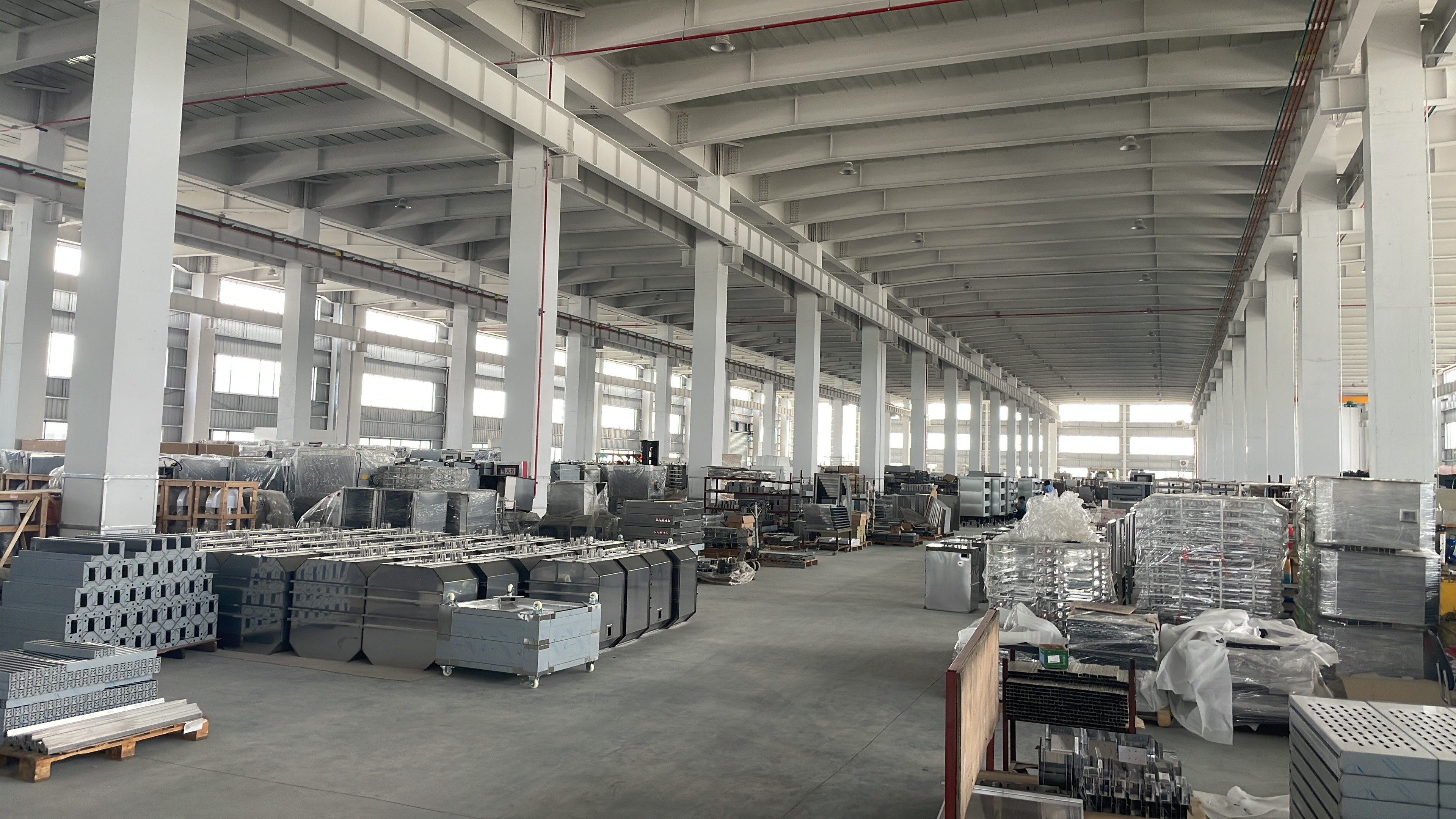
For buyers, the practical relevance is that both fuel versions sit within a single supplier relationship, which simplifies the comparison of installation data, documentation and after-sales terms. It does not by itself establish that one configuration is better suited to your bakery — that still depends on the utility, batch and floor-load checks described above. Where the SAMAG range is genuinely useful in an evaluation is in providing documented anchors: the SAM-603M's displayed 380 V / 25.5 kW specification for a 3-layer 9-tray electric deck oven, and the displayed 220 V / 2.3 kW and 220 V / 3.2 kW figures for the single-door and double-door proofer, retarder and fermenter models that would typically sit upstream of the oven in the same line.
Checking Audit Readiness: Chinese and European Suppliers Compared
Buyers often frame this as a country-of-origin question: which Chinese manufacturers are as audit-ready as European factories? Origin is not the right unit of comparison, because factories differ more within a country than between country averages, and a country label cannot be audited. What can be compared is the evidence pack each factory can produce for the specific model you intend to buy.
A workable audit-readiness comparison scores each candidate against the same six items:
- Model-level conformity documents. A declaration or certificate that names the exact model and configuration, with issuing body, scope and validity date — not a company-level statement.
- Test records. Evidence of electrical safety testing, gas safety testing where applicable, and hygiene-related design checks for the model.
- Production traceability. Whether the factory can trace a unit through incoming material, assembly and final inspection.
- Independent verification. Whether a third-party inspection or audit report exists, and whether the buyer can commission one.
- Process evidence. Documented sample-bake or trial-run procedures and the records they generate.
- Post-delivery commitment. Written spare-part availability, service response terms and technical documentation in the buyer's language.
Applied this way, the comparison produces a defensible shortlist rather than a national ranking. On the supplied evidence, SAMAG's position would be scored on its documented model specifications and its stated testing practice, with the conformity items pending until the underlying documents are produced and verified.
What to Put in the RFQ
Most comparison problems originate in a vague request. A 3-deck oven RFQ that specifies the following items produces answers you can actually compare:
- Deck count and trays per deck, with tray dimensions.
- Fuel type and, for electric models, rated voltage, phase and power; for gas models, gas type, input rating and supply pressure requirement.
- Net and gross weight, support-point count and load per point.
- Deck temperature range and control method per deck.
- Chamber and panel material specification by grade.
- Heat distribution method and door handling design.
- Safety devices fitted, listed individually.
- Compliance documents available for the specific model, with issuing body and validity.
- Recommended maintenance interval, wear-part list and spare-part lead time.
- Sample bake availability and the conditions under which it is conducted.
Frequently Asked Questions
Which Chinese commercial bakery equipment manufacturers compare best with European factories for audit readiness?
No manufacturer can be ranked as audit-ready on the basis of origin or a company statement, and the supplied evidence does not support a ranking. The defensible approach is to compare candidate factories on model-specific evidence: a conformity declaration naming the exact model with issuer and validity, test records for that model, production traceability, availability of third-party inspection, documented sample-bake procedures, and written spare-part and service commitments. A Chinese or European supplier that can produce all six for your model is audit-ready in practice; one that cannot is not, regardless of where it is based.
What electrical supply does a 3-deck 9-tray electric oven need?
It depends on the model. For the documented SAM-603M 3-layer, 9-tray electric deck oven, the supplier-displayed specification is 380 V and 25.5 kW. Treat that as a model-specific figure rather than a category rule: request the rated voltage, phase and power for the exact model you are buying, then have an electrician confirm that your incoming supply, cabling and protective devices can carry that load alongside the rest of your line. A 6-tray configuration should be assessed on its own datasheet, not by scaling the 9-tray figure.
Should I choose a 3-deck 6-tray or a 3-deck 9-tray oven?
Match the tray count to your downstream process. A 3-deck 9-tray oven carries three trays per deck and produces larger single batches, which suits volume production where cooling, packing or delivery can absorb nine trays at once. A 3-deck 6-tray oven carries two trays per deck and suits a wider product mix run in smaller quantities, or an installation where electrical capacity is the limiting factor. Running a large oven at partial load gives flexibility at the cost of efficiency per bake; running a small oven at full load is efficient but caps batch size at peak periods.
How do I compare the running cost of an electric and a gas 3-deck oven?
Build the comparison from your own inputs rather than from a supplier percentage. You need four figures: your local industrial electricity tariff, your local gas tariff, the number of baking hours per day, and the oven's behaviour between batches — held at temperature all day, or switched on and off around shifts. Multiply each fuel's energy price by the oven's consumption at your utilisation level, then add the maintenance and spare-part cost profile for each fuel. Supplier statements such as a 5%–10% energy advantage are useful as directional signals but should not replace this calculation, because they do not specify the comparison baseline or test conditions.
What documentation should I request before ordering?
Ask for four groups. First, model-level conformity documentation naming the exact model, with issuing body, scope and validity date — a company statement about seeking CE or ISO 9001 conformity is not a substitute. Second, model specifications covering weight, support-point loads, rated power or gas input, dimensions and clearances, so your floor-loading and utility checks can proceed. Third, customs classification guidance, since bakery ovens appear under HS 2012 headings 841720 and 841981 with 841720 covering non-electric bakery ovens in the displayed context, and the applicable code must be confirmed with a broker. Fourth, the maintenance schedule, wear-part list and spare-part lead time for your region.
Next step. Buyers comparing 3-deck electric and gas ovens can request the current SAMAG product specifications, model datasheets and the company brochure to support the checks in this guide. The SAMAG brand brochure is available for download, and configuration and quotation questions can be raised directly with the manufacturer through wxsamag.com.
Conclusion
The electric versus gas decision for a 3-deck commercial oven is a site-and-batch decision before it is a technology decision. Confirm what fuel the installation point can support, fix the trays per bake your downstream process needs, verify the support-point loads and utility capacity with the exact model datasheet, and only then compare running costs on your own tariffs. On the feature side, put independent deck temperature control, chamber material grade, heat distribution method, door handling and safety devices on the written specification for every shortlisted model, in both fuel versions.
Supplier efficiency and cost statements are worth collecting, but they become decision-grade only when the comparison baseline, configuration and test conditions are disclosed. Buyers who ask for those details, along with model-level conformity documents and a trial bake, end up comparing ovens rather than brochures — which is the only comparison that reliably predicts how the machine will perform in a working bakery.
Have Questions or Need More Details?
Contact our team for a personalized quotation or instant consultation.
Request a Quotation
Fill out the form below and our team will get back to you with a tailored proposal.
WhatsApp Direct Chat
Prefer to chat in real-time? Message us on WhatsApp for instant assistance & quick answers.
- Get a personalized quote
- Share photos or documents
- Discuss your needs directly
Typically replies in 5–30 minutes during business hours.