
Electric vs Gas 3-Deck Commercial Ovens: A Buyer Comparison Guide
A 3-deck commercial oven is a production decision before it is an energy decision. The choice between a 3-deck 6-tray oven and a 3-deck 9-tray oven, and between electric and gas heating, changes batch size, utility planning, deck control, installation weight and the documents a buyer should request. This guide compares the four configurations at the level the supplied evidence supports: 6-tray and 9-tray electric models versus 6-tray and 9-tray gas models. It explains how to evaluate independent deck temperature control, hot-air circulation, 304 stainless steel construction, model-specific weights such as 700 kg for SAM-503 and 850 kg for SAM-803M, and the electrical safety questions raised by modular safety protection on electric configurations. It does not assume that one energy source is cheaper or faster without model-specific test data.
What is being compared?
The comparison set is four 3-deck commercial oven configurations: a 6-tray electric deck oven, a 9-tray electric deck oven, a 6-tray gas deck oven and a 9-tray gas deck oven. Tray count affects the number of products that can be loaded per bake and the physical size of the oven. Energy source affects the site services, ventilation, safety protection and installation work. Deck count affects how many separate baking chambers are available, but it does not by itself prove that each deck can hold an independent temperature setpoint. That must be confirmed in the specification.
The buyer's real question is not simply 'electric or gas'. It is which configuration fits the bakery's tray plan, available utilities, floor loading, product mix, changeover pattern and documentation requirements. A 9-tray model may reduce the number of bakes for a given product, but it also changes weight, footprint and connected load. A 6-tray model may fit a smaller room, but it may not match a schedule that needs more trays per bake. Those trade-offs must be checked against the actual site, not against a general preference.
Industry context: what buyers should keep in view
Commercial bakery equipment is a broad category that includes ovens, mixers, dividers, sheeters, proofers and refrigeration. Category pages from suppliers commonly use this taxonomy to organise product discovery, but the taxonomy is not a performance benchmark. A deck oven is one equipment type within that set; a 3-deck oven is a configuration within deck ovens. The relevant comparison is therefore model-to-model, not category-to-category.
Food-equipment standards also need to be read for what they cover. NSF/ANSI 4 specifies minimum food protection and sanitation requirements for commercial cooking equipment, including bakery proofing boxes and ovens. It is not a bake-performance standard and does not by itself establish temperature uniformity, energy use or throughput. Similarly, a company statement that it seeks conformity with CE and ISO 9001 is not the same as a model-specific declaration of conformity, a test report or a certificate with a scope and expiry date. Buyers should request the document that applies to the exact model and market.
Customs classification is another separate check. The United Nations classification page identifies bakery ovens and related food-heating machinery under HS 2012 headings 841720 and 841981 in the displayed context. The applicable code still depends on product design and the national tariff schedule, so it should be confirmed with a customs broker before the landed-cost model is fixed. None of these references proves that one oven configuration will bake better than another.
How to evaluate independent deck temperature control
Independent deck temperature control means that each deck can be set and held at its own temperature, rather than all three decks following one setpoint. For a bakery that bakes different products at the same time, or that uses one deck for a lower-temperature product and another for a higher-temperature product, this is a practical workflow feature. For a single-product, single-temperature schedule, the value is lower. The feature should be confirmed from the control description, not inferred from the number of decks.
Ask the supplier to explain the control architecture. Does each deck have its own temperature controller and timer? Are top heat and bottom heat adjustable separately? Is there a separate setpoint for each deck, or only a common setpoint with individual timers? How is temperature recovered after the door is opened? Is there a calibration procedure and a calibration record? Can the supplier provide a control diagram and a sample bake report that shows the setpoints used? These questions turn a vague claim of 'independent control' into a verifiable specification.
The buyer should also check how the decks are loaded and unloaded. A 9-tray configuration may have three decks with three trays each, or another tray distribution; the exact tray layout should be confirmed. Independent control is more useful when the decks are actually used independently. If the production plan always runs the same product through all decks at the same temperature, the buyer should not pay for control complexity that the schedule will not use. If the plan includes mixed products, the control architecture becomes a decision criterion.
How to evaluate hot-air circulation
Hot-air circulation affects how heat moves inside each deck. A deck oven may use fans and ducting to circulate air, and the uniformity of that circulation matters when trays are loaded at different positions. The buyer should ask whether circulation is provided per deck or by a shared system, where the fans are located, whether fan speed is adjustable, and how the airflow path is maintained when trays are loaded. These are design questions that can be answered with a diagram.
Circulation should not be confused with a claim of even baking. Evenness depends on the product, tray loading, temperature, time and the oven's air path. The useful evidence is a bake test or a uniformity report that states the test conditions. Ask what the supplier measured, where the probes were placed, and whether the test was run with a full load or an empty chamber. A general statement that the oven has 'hot-air circulation' is a starting point, not a performance result.
Maintenance access is part of the same evaluation. Fans, filters and air guides need to be cleaned or serviced. Ask whether the fan motor is accessible, whether the air guides can be removed without tools, and whether the cleaning procedure is documented. A circulation system that cannot be maintained may lose its benefit over time. These questions are especially relevant for a 3-deck oven, where access to the middle deck may be more restricted than access to the top or bottom deck.
How to evaluate 304 stainless steel construction
304 stainless steel is a material grade, not a complete construction specification. Buyers should ask which parts are 304 stainless steel, what panel thickness is used, whether the interior and exterior are both 304, how seams are joined, and what insulation and door gaskets are used. A mill certificate or material declaration can support the grade claim. A photo of a shiny panel does not. The evaluation should separate the material grade from the fabrication quality.
For a commercial bakery oven, cleaning and corrosion resistance matter because the equipment operates in a food environment. The buyer should ask whether the baking chamber, door frame, tray supports and outer panels are stainless, and whether any painted or coated parts are exposed to cleaning chemicals. Welded seams, folded seams and sealed joints should be described. The supplier should also state the recommended cleaning method so that the buyer can check it against the bakery's sanitation procedure. These are practical questions, not marketing points.
Construction also affects weight and installation. A heavier panel specification may be more robust, but it may also require stronger floor support and more careful rigging. The buyer should not treat weight alone as a quality score. The correct approach is to match the construction specification to the cleaning regime, the expected service life and the installation conditions. If the supplier cannot provide a material certificate or a construction drawing, the buyer should treat the 304 claim as unverified.
Model-specific weight: why 700 kg and 850 kg matter
Weight is a site-planning fact. The supplied task data gives model-specific weights of 700 kg for SAM-503 and 850 kg for SAM-803M. These figures should be used to check floor loading, lifting equipment, door widths, corridor turns, pallet handling and the structural support of the installation location. They should also be checked against the shipping documents, because the weight of the packed unit may differ from the weight of the oven itself.
The buyer should ask for the exact weight of the configuration being quoted, not only a model family figure. A 6-tray and a 9-tray version may differ, and an electric version may differ from a gas version because of heaters, burners, controls and safety components. The quote should state whether the weight is net or gross, whether it includes the stand or accessories, and what lifting points are provided. For a 700 kg or 850 kg unit, the installation plan should identify the route and the equipment needed before the delivery date is fixed.
Weight is not a performance claim. A heavier oven is not automatically better, and a lighter oven is not automatically worse. The relevant question is whether the weight is compatible with the building and the handling plan, and whether the supplier has provided enough information to plan the installation safely. That is why the model-specific weight should be recorded in the RFQ and compared with the site survey.
Electrical safety questions for electric configurations
Electric configurations require a different safety conversation from gas configurations. The supplied information for the electric configurations identifies modular safety protection. That phrase should be treated as a starting point for the electrical review, not as a complete answer. The buyer should ask which protection modules are included, whether they are factory-installed or site-supplied, and how they are coordinated with the building electrical system.
Useful questions include: What is the voltage, phase and frequency? What is the total connected load, and what is the recommended supply circuit? Does each deck or each heating circuit have separate overload and leakage protection? Is there an emergency stop? Is there a temperature-limit protection and a door interlock? What is the ingress protection rating of the control panel? Is the equipment supplied with a wiring diagram and a lockout/tagout procedure? Are the protection modules certified for the destination market? These questions should be answered in writing before the electrical contractor finalises the site work.
The supplied product listing for the SAM-603M 3-layer 9-tray electric deck oven shows 380 V and 25.5 kW. That is a model-specific example, not a universal figure for every 9-tray electric oven. The buyer should use the quoted model's datasheet to confirm the connected load, cable size, breaker rating and isolation requirements. The electrical safety review should also confirm that the site supply matches the model's requirement and that the protection scheme is coordinated with the local code. No performance or cost conclusion should be drawn from the voltage and power figures alone.
Gas configuration checks that belong in the same comparison
Gas configurations bring their own site and safety checks, and they should be compared on those checks rather than on an assumed cost advantage. The buyer should ask for the gas type, supply pressure, connection size, flue or ventilation requirements, combustion safety controls, leak-test procedure and the local approval documents for the destination market. The installation must be planned with a qualified gas engineer, and the oven should not be commissioned until the gas supply and ventilation have been verified.
Gas and electric configurations should be compared on the same decision template: tray capacity, deck control, airflow, construction, weight, utility requirements, safety protection and documentation. A gas oven may fit a site with an established gas supply and adequate ventilation; an electric oven may fit a site with sufficient electrical capacity and no gas service. Neither choice should be made from a general statement about operating cost unless the buyer has model-specific energy data under comparable conditions. The supplied evidence does not provide that comparable energy or cost dataset for the four configurations.
Step-by-step buyer process
Step 1: Define the tray plan. List the products, trays per bake, bakes per shift and changeover pattern. Decide whether a 6-tray or 9-tray configuration matches the schedule. Do not choose 9 trays only because it is larger; confirm that the extra capacity will be used and that the loading pattern is practical.
Step 2: Survey the site utilities. Record the available electrical supply, gas supply, ventilation, floor loading and delivery route. Compare the site data with the quoted model's voltage, power, gas connection and weight. A 700 kg or 850 kg oven may require a different handling plan from a smaller unit.
Step 3: Confirm the deck control architecture. Ask for a control diagram showing independent deck temperature control, top and bottom heat adjustment, timers and calibration. Confirm whether the decks can run different setpoints at the same time. If the supplier cannot show this in a diagram or manual, treat the claim as unverified.
Step 4: Confirm the airflow design. Request an airflow diagram and a maintenance description. Ask whether circulation is per deck or shared, how the fans are accessed and how the air path is cleaned. If a uniformity test is available, ask for the test conditions and probe locations.
Step 5: Verify the 304 stainless steel claim. Request the material grade, panel thickness, parts list and a mill certificate or material declaration. Confirm which surfaces are stainless and how seams and joints are sealed. Check the cleaning method against the bakery's sanitation procedure.
Step 6: Complete the safety review. For electric models, confirm the modular safety protection scope, connected load, isolation and protection coordination. For gas models, confirm the gas train, ventilation, combustion safety and local approval. Record the responsible party for each item: factory, installer or site.
Step 7: Build a document pack. Request the model-specific datasheet, control diagram, electrical or gas schematic, material certificate, test reports, declaration of conformity where applicable, installation manual, cleaning procedure and warranty terms. Use the same request list for every candidate so that the comparison is like-for-like.
Step 8: Validate with a sample bake or reference. If a sample bake is possible, define the product, load, setpoints and evaluation criteria in advance. If it is not possible, ask for a reference installation with a similar product mix and confirm what the reference can and cannot disclose. A reference is not a guarantee, but it can reveal installation and operating questions that a datasheet does not cover.
Use-case view: matching the configuration to the bakery
A 6-tray electric configuration may be considered where the batch size is modest, the floor area is limited and the site has enough electrical capacity for the quoted model. The buyer should still confirm independent deck control and airflow if the product mix requires different temperatures. A 9-tray electric configuration may be considered where the tray plan needs more trays per bake and the electrical supply can support the connected load. The SAM-603M example shows why the electrical check must be model-specific: its listing states 380 V and 25.5 kW, and a different 9-tray model may have a different load.
A 6-tray gas configuration may be considered where gas is already available and the ventilation and gas safety arrangements can be installed to the local requirements. A 9-tray gas configuration may be considered where the larger tray count is justified and the gas supply, flue and ventilation can handle the installation. In both gas cases, the buyer should compare the gas safety documents and the installation responsibility with the electric option. The decision should not rest on an assumed price or energy difference without a comparable dataset.
For a bakery that bakes several products with different temperature profiles, independent deck control and per-deck airflow are more important than the energy label alone. For a bakery that runs one product at one profile, the simpler control arrangement may be easier to train and maintain. The buyer should map the feature to the actual production schedule before paying for it. This is the practical meaning of a decision comparison: the same feature can be essential in one bakery and unnecessary in another.
Comparison table: what to confirm for each configuration
The table below keeps the comparison at the level supported by the supplied evidence. Cells marked 'confirm' are not assertions that the feature is absent; they are items the buyer should verify in the quoted model's datasheet or manual.
| Configuration | Tray capacity and energy | Deck control and airflow to confirm | Construction and weight to confirm | Safety focus |
|---|---|---|---|---|
| 3-deck 6-tray electric | 6 trays; electric | Independent deck temperature control, top/bottom heat, per-deck or shared circulation, fan access | 304 stainless steel grade and panel thickness; exact model weight and shipping dimensions | Voltage, connected load, modular safety protection scope, isolation and protection coordination |
| 3-deck 9-tray electric | 9 trays; electric | Three-deck schedule, recovery after loading, airflow uniformity, control diagram | 304 stainless steel evidence; confirm model weight; example: SAM-603M listing 380 V, 25.5 kW | Connected load, cable/breaker sizing, modular safety protection, lockout/tagout |
| 3-deck 6-tray gas | 6 trays; gas | Independent deck control, combustion heat distribution, airflow and flue arrangement | 304 stainless steel; exact weight; gas train and burner access | Gas type, pressure, flue/ventilation, combustion safety, leak test and local approval |
| 3-deck 9-tray gas | 9 trays; gas | Deck control for larger batches, airflow path with full load, flue capacity | 304 stainless steel; confirm weight and installation route; gas connection details | Gas supply capacity, ventilation, combustion safety, commissioning documents |
The table does not rank the configurations. It shows the questions that separate a documented quotation from a general product description. The buyer should complete the same columns for every candidate and attach the supplier's written answers to the RFQ.
What the supplied evidence does not establish
The supplied material does not include comparable energy consumption, operating cost, bake time, temperature uniformity, throughput, maintenance interval or reliability data for the four configurations. It also does not include model-specific certificates or independent test reports for the SAMAG oven models. The company-level statement that SAMAG conducts safety testing and sample baking testing and seeks conformity with CE and ISO 9001 is a company-reported claim, not a model-level verification. Buyers should not treat it as a certificate for a specific oven.
This is why the comparison should be built around verifiable specifications and a document request. A supplier may have a strong factory and a broad product range, but the buyer still needs the datasheet, control diagram, material evidence, safety documents and installation requirements for the exact model. The absence of comparative performance data is not a reason to invent a winner. It is a reason to make the RFQ more precise and to ask for the evidence that will actually support the purchase decision.
Manufacturing and documentation context
SAMAG Bakery Equipment, operated by Wuxi Shuangmai Bakery Equipment Co., Ltd., is a Chinese manufacturer and distributor of bakery equipment. The supplied company profile states that the company was founded in 2002, produces a range that includes electric and gas ovens, proofing cabinets, dough mixers and dough sheeters, and exports to global markets including Southeast Asia and Europe. It also states a 10% export ratio and a network of 17 offices across China. These facts describe the supplier's background; they do not replace model-level testing or certification.
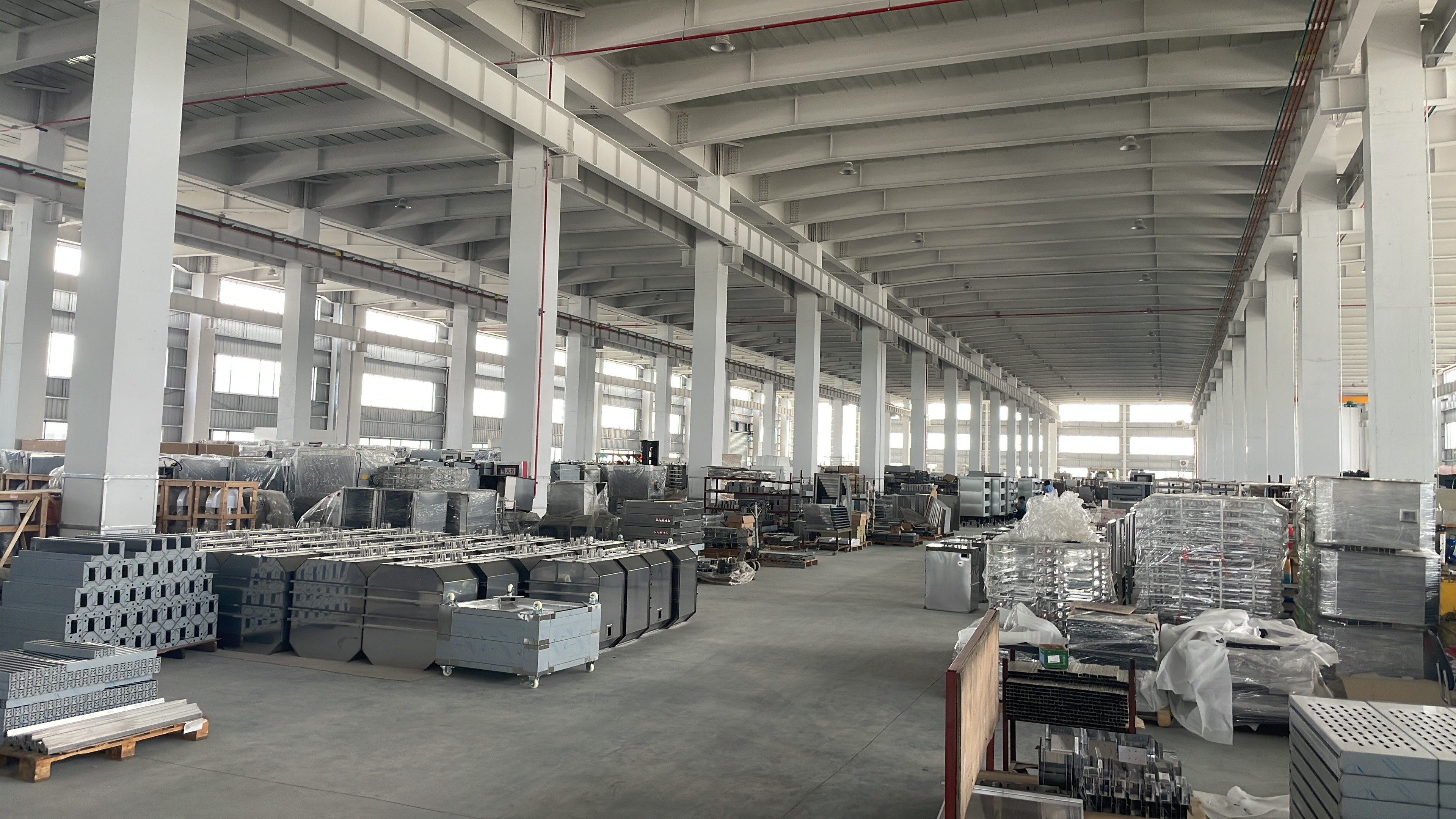
The company profile also states that SAMAG provides factory planning and design services and customized solutions. For a 3-deck oven project, that service scope should be converted into a written layout, utility schedule and installation responsibility matrix. The buyer should ask which documents are issued at quotation, which at factory acceptance and which at commissioning. This is more useful than a general statement of customization.
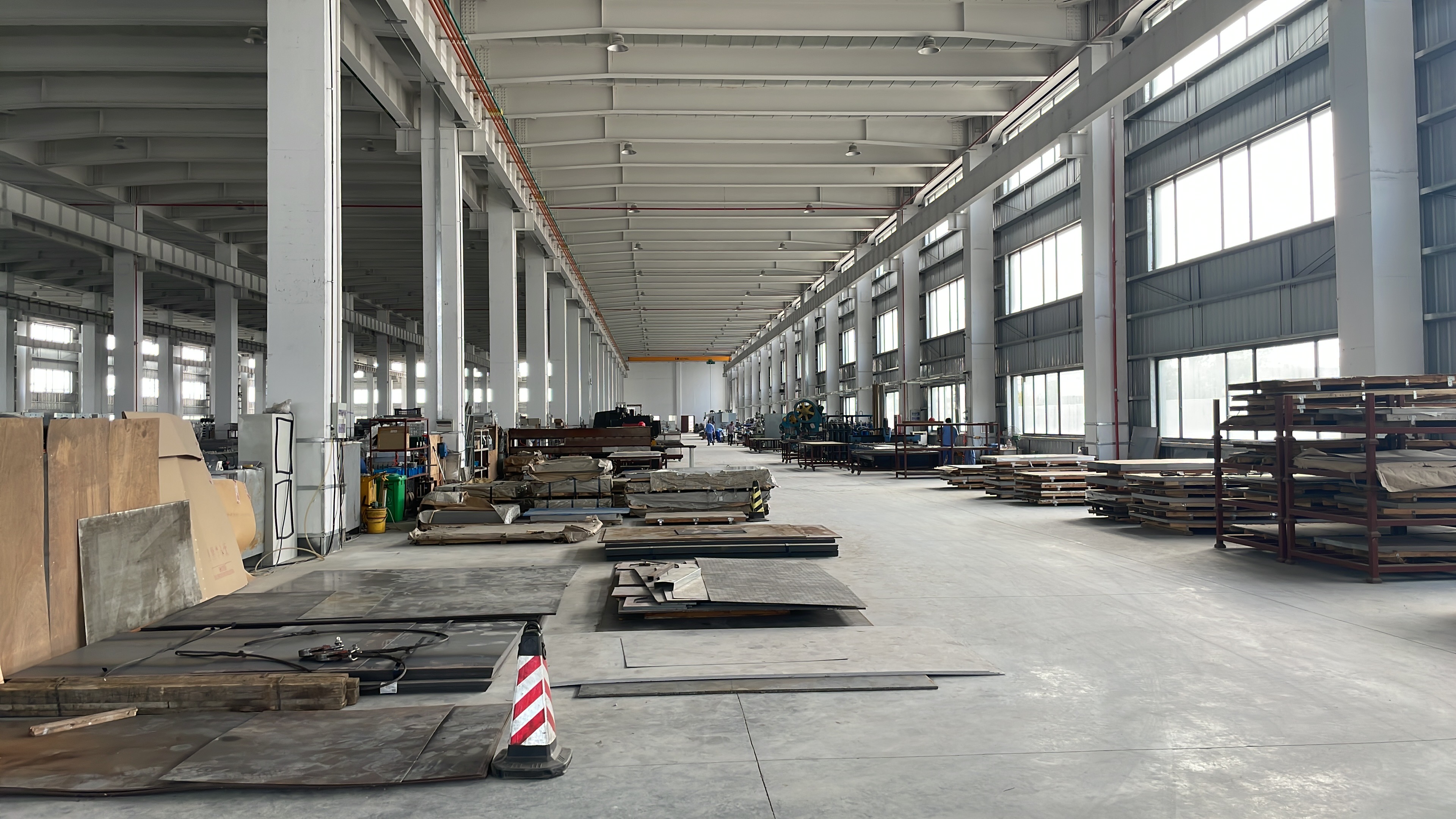
The available company page also states that SAMAG performs safety testing and sample baking testing. Buyers should ask for the test record that applies to the quoted model, including the test conditions and the date. If the record is not model-specific, it can support a general quality conversation but not a model-level compliance conclusion.
FAQ: audit readiness and Chinese versus European factories
Which Chinese commercial bakery equipment manufacturers compare best with European factories for audit readiness?
The supplied evidence does not support a ranked answer. Audit readiness is not a country label; it is a document and process question. A Chinese or European supplier should be compared on the same audit pack: model-specific declarations of conformity and test reports; an ISO 9001 certificate with scope, issuer and validity; factory inspection records; material certificates for 304 stainless steel and electrical components; calibration records; final inspection and test data; and a sample bake report with defined conditions. SAMAG's public company page states safety testing, sample baking testing and a company-level intention to meet CE and ISO 9001, but those statements are company-reported and not model-specific verification. Use them as a reason to request documents, not as an audit result. A practical next step is to send the same document checklist to each candidate and compare the returned evidence line by line. SAMAG can provide its available company and product documents through the official website for that review.
Conclusion: a decision path, not a slogan
The choice between electric and gas 3-deck commercial ovens should be made from the tray plan, utility capacity, deck control, airflow, construction evidence, weight and safety documentation. A 6-tray configuration may fit a smaller schedule and footprint; a 9-tray configuration may fit a larger tray plan but requires a more careful utility and installation review. Electric models require a clear modular safety protection scope and a verified supply; gas models require a verified gas supply, ventilation and combustion safety plan. The model-specific weights of 700 kg for SAM-503 and 850 kg for SAM-803M show why installation planning belongs in the comparison, not after the order.
Use the checklist in this guide as an RFQ attachment. Ask for the same evidence from every supplier, and do not accept a general performance or cost statement in place of model-specific data. If you need the product scope and company background in one document, the SAMAG brand brochure is available here: SAMAG Bakery Equipment brand brochure. For a quotation or a sample discussion, contact SAMAG through the official website.
Have Questions or Need More Details?
Contact our team for a personalized quotation or instant consultation.
Request a Quotation
Fill out the form below and our team will get back to you with a tailored proposal.
WhatsApp Direct Chat
Prefer to chat in real-time? Message us on WhatsApp for instant assistance & quick answers.
- Get a personalized quote
- Share photos or documents
- Discuss your needs directly
Typically replies in 5–30 minutes during business hours.