Electric vs Gas 3-Deck Ovens: Tray, Weight & Workflow
Electric vs Gas 3-Deck Ovens: Tray, Weight & Workflow
Choosing between an electric and a gas 3-deck commercial bakery oven usually comes down to four points a buyer can verify before ordering: how many trays you need per bake (6 or 9), whether the site can supply the required power or fuel gas together with the ventilation that goes with it, whether the floor and access route can carry a 700–850 kg oven, and whether three independently controlled decks genuinely match your product mix. SAMAG Bakery Equipment (Wuxi Shuangmai Bakery Equipment Co., Ltd., founded 2002, based in Wuxi, Jiangsu, China) lists 3-deck 6-tray and 9-tray ovens in electric and gas configurations, built on a 304 stainless steel body with hot-air circulation, independent deck temperature control and modular safety protection.
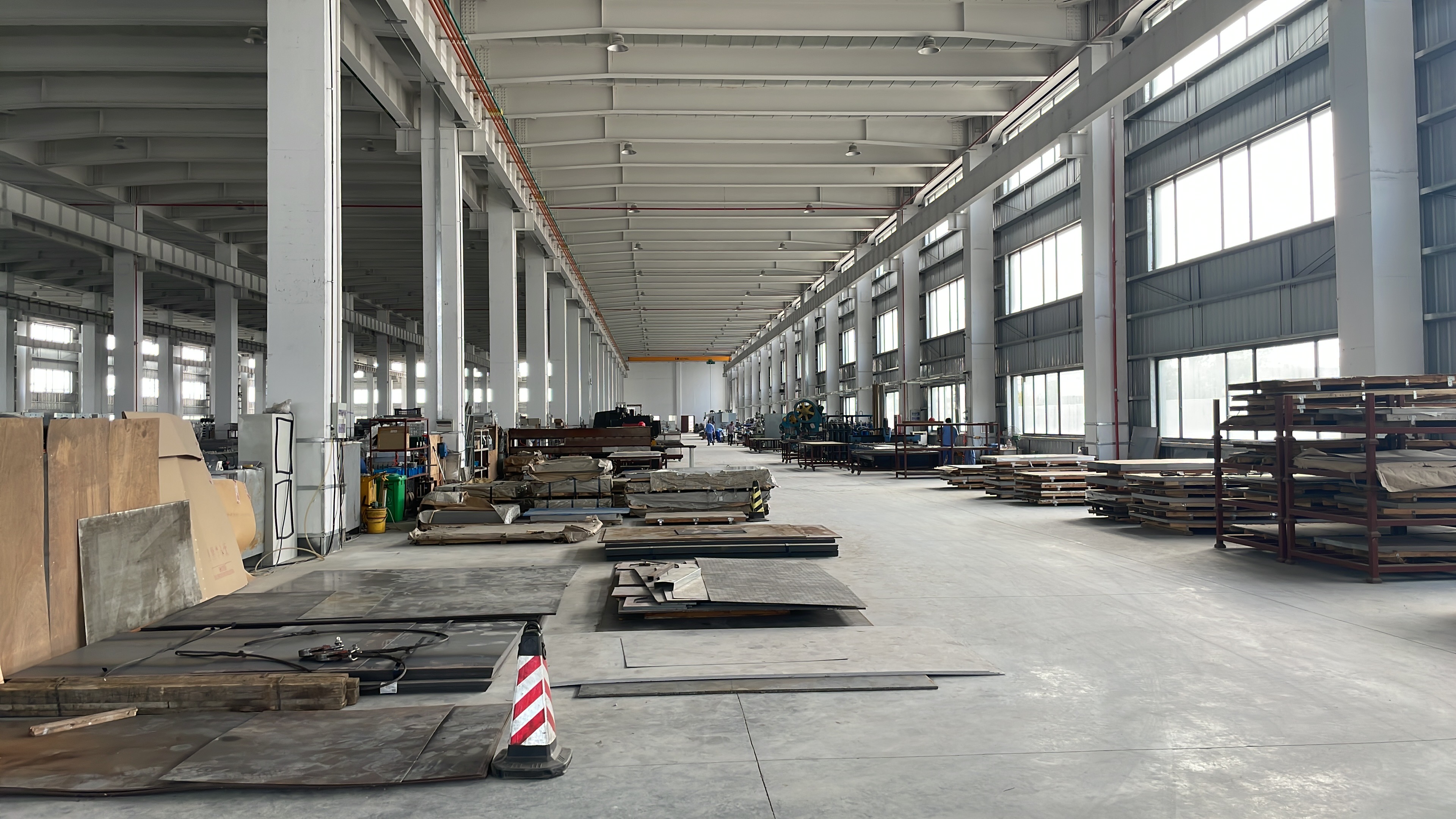
SAMAG bakery equipment manufacturing facility, Wuxi, China.
This comparison sets those documented facts against the decisions a bakery, food factory or equipment distributor has to make at order stage. It also separates what the specification actually states from what still has to be confirmed in a formal RFQ, because the electric-versus-gas question is frequently answered with general assumptions that no datasheet ever supported.
What the electric vs gas decision really involves
Most oven enquiries open with a running-cost question: which energy source is cheaper? That question cannot be closed from a catalogue. Running cost depends on the local electricity tariff or gas price, the bake schedule, the oven's rated input, and how the unit is vented, serviced and loaded. What a buyer can close before ordering is the set of constraints that decide which configuration is installable and operable at all.
Three constraints do most of that work:
- Utility availability. An electric deck oven needs a supply that matches its listed electrical specification. The SAMAG product listing for the 3-deck, 9-tray electric model SAM-603M shows 380 V and 25.5 kW — a figure that belongs in the electrical planning conversation with a qualified electrician. A gas model instead needs a fuel supply and a route for combustion products.
- Trays per bake. A 3 deck 6 tray oven and a 3 deck 9 tray oven differ in how much product leaves the chamber per load, which changes how many bakes a shift needs and how the oven interacts with proofing and mixing capacity. The per-deck tray arrangement should be confirmed on the datasheet for the exact model.
- Physical installation. The listed weights for these 3-deck models run from 700 kg to 850 kg, which is a floor-loading, access-route and rigging question rather than a specification footnote.
Everything else — body construction, deck control, safety features — is largely shared across the range described here, so it rarely settles the energy question on its own.
Industry background: why three decks, and why the energy source is a site question
Multi-deck ovens exist because bakeries seldom produce one product at a time. Three independent baking chambers let a shop or plant run different products, or different stages of the same product, in one unit without waiting for a single cavity to cool, reset and recover. The 3-deck ovens described here provide independent deck temperature control, which is the feature that makes parallel use practical. Without per-deck control, a three-deck oven behaves like one large chamber with two extra doors.
Hot-air circulation is the second shared characteristic. Moving heated air through the chamber is a design approach to reducing the temperature differences a static chamber can develop between the front and rear of a tray. It is a construction feature, not a promise about bake uniformity on its own: tray loading, fan setting and recipe still determine the result.
Body material matters for different reasons. A 304 stainless steel body is a common choice for equipment that sees daily cleaning, humidity from proofed dough and repeated thermal cycling; grade 304 is a standard austenitic stainless steel with recognised corrosion resistance in food-handling environments.
The energy source is a site decision, not a product tier. Where a building has a gas supply and suitable ventilation, gas bakery oven configurations are installable. Where it does not, or where the electrical service is adequate and a gas line would become a construction project, electric configurations are installable. Neither fact makes one oven better than the other in the abstract.
For importers, one administrative point is worth settling early. The United Nations classification page places bakery ovens and related food-heating machinery under HS 2012 headings 841720 and 841981 in its displayed context. Product-level classification depends on construction and on national tariff schedules, so it should be confirmed with a customs broker before the order rather than after the shipment.
The configurations under comparison
Two product dimensions define the range discussed here: three decks, and a tray count of 6 or 9. Within that frame, both electric and gas versions are listed. Model-level weights are documented as follows.
| Model | Listed weight | Configuration confirmed in supplied data |
|---|---|---|
| SAM-503 | 700 kg | 3-deck range; tray count and energy type to be confirmed per order |
| SAM-603M | 800 kg | 3-layer, 9-tray electric deck oven; listed at 380 V / 25.5 kW |
| SAM-803 | 760 kg | 3-deck range; tray count and energy type to be confirmed per order |
| SAM-803M | 850 kg | 3-deck range; tray count and energy type to be confirmed per order |
Table 1. Listed weights for the 3-deck models referenced in this comparison. Confirm whether a figure is net or packed weight before planning rigging and floor loading.
Two points about that table matter more than the numbers. First, the weights sit within a narrow band, so the difference between models matters less than the building: floor construction, lift capacity, door widths and the route from the loading bay all need review. Second, weight does not identify tray count or energy type. The only configuration detail confirmed in the supplied product listing is the SAM-603M's 3-layer, 9-tray electric arrangement at 380 V / 25.5 kW. For SAM-503, SAM-803 and SAM-803M, the tray count and energy option for a specific order should be written into the RFQ instead of being inferred from the model number.
Electric or gas: a dimension-by-dimension comparison
The table below compares what an electric and a gas 3-deck oven each ask of the building and the operation. It is a screening framework for the decision, not an energy-performance test.
| Decision dimension | Electric 3-deck | Gas 3-deck | What to confirm |
|---|---|---|---|
| Energy supply | Requires an electrical service matching the listed rating | Requires a fuel gas supply line | Voltage, capacity, cable and protection, or gas line capacity and pressure |
| Ventilation | No combustion products; still needs heat and steam extraction per local code | Combustion products must be exhausted | Canopy or flue design and local code requirements |
| Weight and floor | 700–850 kg across the listed models | Same platform weights | Structural review, floor level, access route, lifting plan |
| Deck control | Independent deck temperature control across three decks | Independent deck temperature control across three decks | How many products will genuinely run in parallel |
| Body and heat transfer | 304 stainless steel body, hot-air circulation | 304 stainless steel body, hot-air circulation | Cleaning routine, door seals, tray handling |
| Maintenance competence | Electrical controls, fans and heating elements | Gas train, burners and flue; gas-qualified technician | Local service availability and spare parts |
| Operating cost | Driven by the local electricity tariff and bake schedule | Driven by the local gas price and bake schedule | Your own tariff model, not generic claims |
| Practical fit | Sites with adequate power and no gas line | Sites with gas supply and proven ventilation route | Building constraints first, product preference second |
Table 2. Screening dimensions for electric and gas 3-deck configurations. Shared features are described from the documented range; site requirements are general engineering conditions and must be verified locally.
Read the table as a filter rather than a verdict. If a site cannot provide 380 V at the required capacity, an electric model may drop out of the shortlist before any discussion of baking quality begins. If there is no gas supply and no viable route for combustion products, a gas bakery oven configuration does the same. In many projects the building narrows the choice to one energy type, and the remaining work is tray count, deck configuration and documentation.
The maintenance row deserves equal weight. A gas oven that no local technician can service safely becomes a production risk regardless of its purchase price, and the same is true of an electric oven whose control components sit weeks away in a supply chain the buyer has not checked. Service capability is a procurement criterion, not an afterthought.
Step-by-step: matching a configuration to your workflow
Work through the following sequence before requesting a quotation. Each step produces an input the supplier can respond to, which shortens the specification cycle.
- Start from the bake plan, not the oven. List your products, batch sizes and the number of bakes per shift, then convert that into trays per load. If your largest regular batch and shift rhythm fit inside 6 trays, a 3 deck 6 tray oven covers the requirement. If the batch structure or the shift length needs 9 trays per load, plan around the 9-tray frame and confirm the per-deck tray layout on the datasheet.
- Check what the site can actually supply. Confirm voltage, capacity, cable and protection against the listed rating — the SAM-603M is listed at 380 V / 25.5 kW. If gas is the candidate, confirm the supply line and the exhaust route with whoever is responsible for the building, not with the oven supplier alone.
- Verify floor loading and access route before the quotation. A 700–850 kg unit has to travel from the truck to its final position and then sit on a floor that can carry it. Ask for net and packed weight plus the unit footprint, and check door widths and turning space.
- Decide how many products will run simultaneously. Independent deck temperature control only returns value when you use it in parallel. A shop baking one product line at one temperature gains less from the feature than a bakery running bread, viennoiserie and a third line inside the same production window.
- Agree the safety and control package in writing. The range described here includes modular safety protection. The RFQ should state which modules are included in the delivered configuration rather than assuming every option is standard.
- Confirm the documentation set. Model-specific declarations, test documentation, installation requirements and the spare-parts list belong in the order documents. A company-level statement is not a substitute for model-level paperwork.
- Size the rest of the line to the oven. Oven capacity that outruns proofing or mixing capacity simply moves the bottleneck. Check proofing cabinet capacity, dough mixer throughput and the output of any dough sheeter, dough divider or dough moulder against the number of loads you plan per shift.
Use cases: which configuration fits which operation
Neighbourhood and retail bakeries
A retail shop with a compact product range and a predictable daily bake often finds a 6-tray, three-deck unit sufficient, because the load per bake is modest and the schedule leaves room for several cycles. Independent deck control still earns its place here: one deck can hold a lower-temperature product while another runs hotter. Where a gas supply already exists, a gas bakery oven configuration avoids an electrical upgrade; where it does not, the electric version avoids a gas installation project.
Central kitchens and food factories
A food factory with repeatable SKUs and long production windows is usually sizing for loads per shift rather than product variety, which points toward the 9-tray frame. At that scale the constraint moves to the plant: electrical capacity for a unit such as the SAM-603M at 380 V / 25.5 kW, floor loading for an 800–850 kg installation, and the maintenance arrangement that keeps the oven in service across shifts.
Hotels, catering and institutional kitchens
These sites often bake in bursts around service times and frequently occupy buildings where a new gas line is impractical. In that situation the electric configuration, combined with confirmed extraction capacity, is the workable route, and the tray count should follow the largest single service requirement rather than average daily volume.
Distributors and importers
A distributor stocking or reselling these ovens is buying a specification package as much as a machine. Confirm the model-to-tray-to-energy mapping for each SKU you intend to hold, keep net and packed weights on file for freight and installation quotes, and confirm the customs classification for the actual construction of each unit before quoting landed cost.
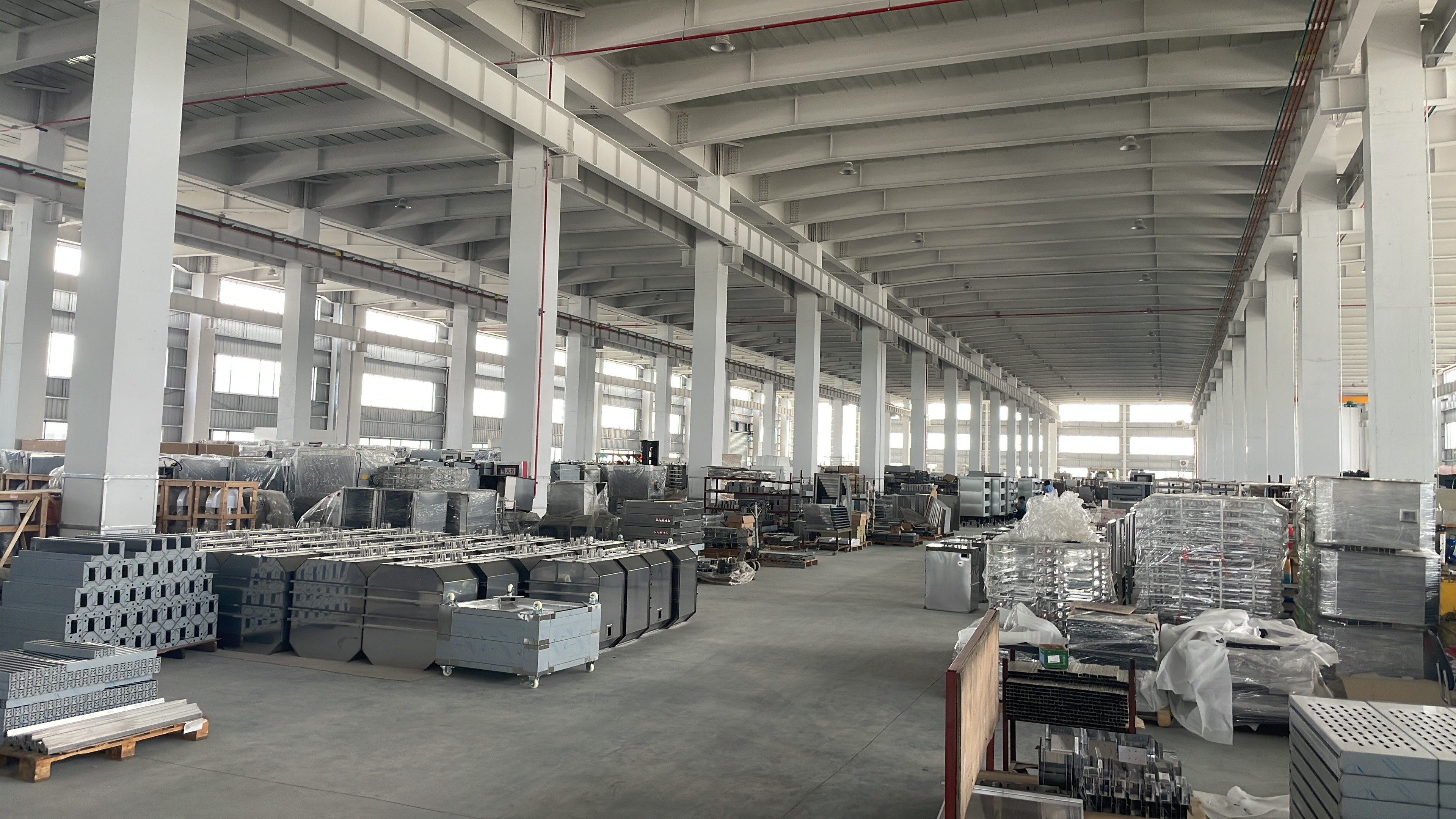
Production site for SAMAG bakery equipment, including deck ovens, proofing cabinets, mixers and dough sheeters.
Cost and value claims: what is documented, and what to verify
SAMAG reports several comparative figures for its commercial bakery equipment. As stated by the manufacturer, they are: a 15%–20% price advantage compared with other commercial bakery equipment; a 10% lower total cost of ownership compared with alternatives; 5%–10% lower energy consumption than other commercial bakery equipment; and lower maintenance requirements than similar products.
Three cautions apply, and a careful buyer should apply them to any supplier's figures. The claims are company-reported and were not independently benchmarked for this comparison. The baseline — which alternative equipment the percentages are measured against — is not specified. And none of the figures is an electric-versus-gas differential, so they cannot be used to choose between the two energy types. Ask the supplier to state the basis in writing, then build your own model from local tariffs, your bake schedule and the maintenance arrangements you can actually obtain.
The practical conclusion is narrower than a headline percentage: the cost case for electric or gas is constructed from site data, and a comparative figure only becomes useful once its baseline and scope are stated.
Limitations of this comparison
Some things are deliberately not asserted here. No bake-quality test, energy-consumption test, throughput figure, price, lead time or model-specific certification document for these ovens was available in the verified material behind this guide. The comparison therefore covers documented configuration, listed weights, the listed electrical specification for one model, and shared construction and control features. It does not establish that either energy type bakes better, runs cheaper or lasts longer in your building.
Two standards questions are also worth separating. Some buyers ask for evidence of conformity with food-equipment standards such as NSF/ANSI 4, which addresses food protection and sanitation requirements for commercial cooking equipment; conformity is market- and model-specific and has to be documented. Electrical and gas safety requirements depend on the destination market. SAMAG's company page states that it performs safety testing and sample baking testing and seeks conformity with standards such as CE and ISO 9001 — that is a company statement, and the documents worth requesting are the model-level declarations and test records that apply to your specific order.
Frequently asked questions
Which Chinese commercial bakery equipment manufacturers compare best with European factories for audit readiness?
This guide does not rank manufacturers, and no verified comparative audit data for Chinese versus European factories was available for it. Audit readiness is better treated as a document question than a nationality question: a supplier is ready for audit when it can produce model-specific declarations of conformity, test records, material statements such as the 304 stainless steel body specification, installation requirements and a traceable spare-parts list for the exact model being purchased. SAMAG states that it conducts safety testing and sample baking testing and seeks conformity with standards such as CE and ISO 9001; those are company statements, so the model-level documents should be requested and checked rather than assumed.
Should I choose a 3 deck 6 tray oven or a 3 deck 9 tray oven?
The choice follows trays per load, not shop size. Convert your largest regular batch and your shift rhythm into trays needed per bake. If 6 trays per load covers the batch and the number of cycles fits your shift, the 6-tray frame is sufficient. If the batch or the shift structure needs 9 trays per load, plan for the 9-tray frame; SAMAG's SAM-603M is listed as a 3-layer, 9-tray electric model at 380 V / 25.5 kW and 800 kg. Confirm the per-deck tray layout and the energy option for your specific model in the RFQ.
Is electric or gas better for a 3-deck commercial bakery oven?
Neither is better in general; the building decides. An electric oven requires an electrical service matching its listed rating and needs no combustion exhaust, although heat and steam extraction are still required. A gas oven requires a fuel supply plus a route for combustion products, and it needs gas-qualified service available locally. If the site has gas and suitable ventilation, gas is installable; if it has adequate power and no gas line, electric is installable. Where both are possible, compare the local tariff model and the maintenance arrangements rather than relying on a general claim.
What do the model weights mean for installation planning?
The listed weights are SAM-503 at 700 kg, SAM-603M at 800 kg, SAM-803 at 760 kg and SAM-803M at 850 kg. Each figure feeds three checks: floor loading at the final position, the access route from the delivery point (door widths, corridors, turning space) and the lifting or rigging method. Ask whether the published figure is net or packed weight, because rigging and freight planning depend on the difference, and request the unit footprint with the quotation.
What cost figures can I rely on when comparing configurations?
Treat supplier percentages as company-reported until the basis is documented. SAMAG reports a 15%–20% price advantage versus other commercial bakery equipment, a 10% lower total cost of ownership, 5%–10% lower energy consumption and lower maintenance requirements, but the comparison baseline is not specified and none of these figures is an electric-versus-gas differential. Use them as questions for the supplier, and build the decision on your own electricity or gas tariff, your bake schedule and the service costs you can verify locally.
Can I validate bake results before placing an order?
Ask for a trial bake and define its scope in advance: which model and energy type will be used, which recipes and tray loadings will be tested, who attends, and what documentation you will receive afterwards. SAMAG states that it performs sample baking testing, and confirming the exact conditions turns that into usable evidence for your own product rather than a general demonstration.
What should I confirm about delivery and installation before committing?
No lead times are published in the verified material used for this guide, so delivery should be agreed in writing per configuration. Confirm the delivery point and unloading responsibility, the access route and lifting method for a 700–850 kg unit, who performs installation and commissioning, the electrical or gas connection responsibilities on site, and the spare-parts and service arrangement after start-up. Send your bake plan, site utilities and installation constraints with your enquiry so the configuration can be matched to them rather than quoted in isolation.
Conclusion: choose the configuration your site and schedule can support
The electric-versus-gas question is a site question wearing a product costume. Decide first whether the building can supply 380 V at the required capacity or a gas line with a workable exhaust route; then size the oven from trays per load, choosing between the 6-tray and 9-tray frames; then check that a 700–850 kg installation can reach its position and sit safely; and finally confirm that independent deck temperature control, the 304 stainless steel body, hot-air circulation and the modular safety protection package are specified for the exact model on the order. Document the model-level declarations, net and packed weights, and the service arrangement in writing before you commit.
Next step. If you are specifying a 3-deck oven for a bakery or food factory, prepare your bake plan, available electrical or gas supply, floor and access constraints, and any documentation requirements. That set of inputs is enough to narrow the shortlist to a specific model and energy type.
Download the SAMAG product brochure (PDF) for the wider equipment range, including deck and rotary ovens, proofing cabinets, dough mixers and dough sheeters.

Have Questions or Need More Details?
Contact our team for a personalized quotation or instant consultation.
Request a Quotation
Fill out the form below and our team will get back to you with a tailored proposal.
WhatsApp Direct Chat
Prefer to chat in real-time? Message us on WhatsApp for instant assistance & quick answers.
- Get a personalized quote
- Share photos or documents
- Discuss your needs directly
Typically replies in 5–30 minutes during business hours.