
After the Purchase Order: Scent Diffuser Partnerships That Scale
After the Purchase Order: Scent Diffuser Partnerships That Scale
A commercial scenting project does not end when the purchase order is sent. For hotels, shopping malls, retail chains, and distributors, the decision to install scent diffusers is also a decision to build a long-term supply relationship. This guide is written for buyers in the Decision and Execution stages: teams that know the product category, have selected a commercial scent diffuser approach, and now need a manufacturer that can support rollout, refill, quality consistency, and expansion.
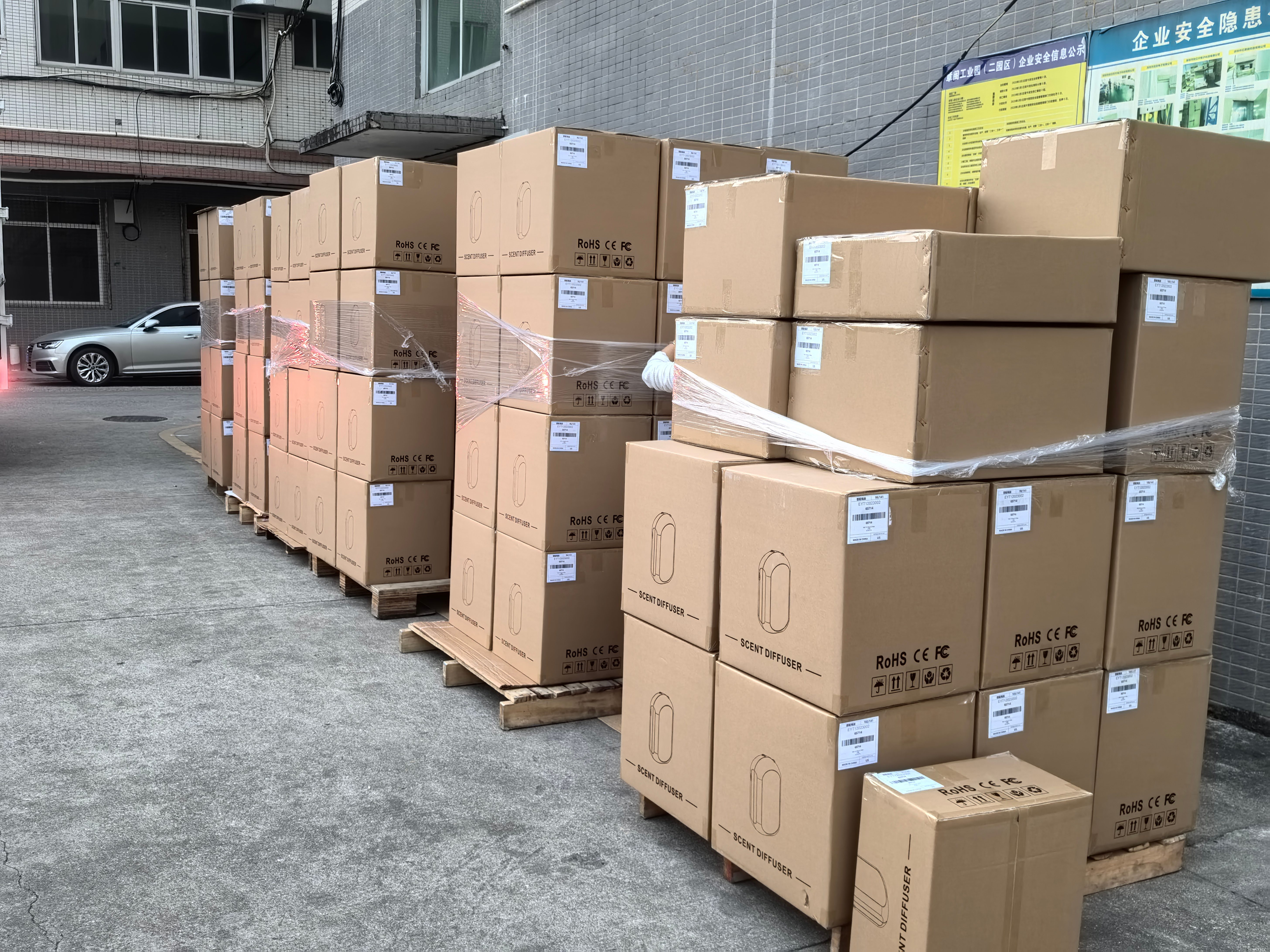
Outbound shipment preparation at the SCENTSEA facility in Shenzhen.
Why the Execution Phase Decides Project Success
Commercial scent diffuser rollouts are exposed to recurring operational risks. Based on the quality-control data monitored at SCENTSEA's production and testing stage, the most common failure points are oil leakage, nozzle clogging, unstable atomization, fragrance oil incompatibility, abnormal noise, and transportation damage.
Each of these failures has a cost. A clogged nozzle can interrupt scenting in a lobby or mall corridor for days. An oil leak can damage flooring or furniture. An incompatible fragrance oil can reduce atomization efficiency and force an early change to the oil supply plan. For a distributor managing dozens of client sites, these failures multiply service visits, replacement shipments, and customer complaints.
This is why evaluation criteria in the execution phase should go beyond the datasheet. Buyers need evidence that the manufacturer can design out the most common failure modes and verify each unit before it is packed.
Scent Diffuser Demand Is Growing, and Compliance Is Tightening
The market for commercial scenting is supported by a clear growth trend. Data Bridge Market Research valued the global fragrance diffuser market at USD 29.61 billion in 2024, with a projection of USD 38.10 billion by 2032. Intel Market Research puts the global HVAC scent diffuser market at USD 1.01 billion in 2024, with a CAGR of 4.5% expected through 2034. North America represented approximately 43.87% of global fragrance diffuser revenue in 2024.
Technology choice is also visible in the data. Nebulizing diffusers, commonly described as waterless or cold-air diffusers, hold approximately 22.6% of the ambient scent diffuser market. Commercial operators favor this category because the oil is atomized directly into the air without water dilution, producing a stronger scent signal in high-ceiling or high-traffic spaces.
Safety regulation is another factor. IFRA 51, introduced in 2023, set stricter global safety standards for fragrance ingredients used in diffusers, including limits related to inhalation safety. For importers, the commonly used HS code for fragrance diffusers and prepared room deodorizers is 33074900. Buyers who verify both hardware certification and oil compliance reduce the risk of rejection at customs or in the local market.
SCENTSEA as a Long-Term Scent Diffuser Partner
SCENTSEA, officially Shenzhen Scentsea Technology Co., Ltd, is a scent diffuser manufacturer based in Shenzhen, China. Founded in 2021, the company develops, manufactures, and markets scent machines and fragrance oils, and operates as a direct factory with OEM/ODM value-added services. It occupies a 3,000 m² production facility with around 30 employees and a four-engineer R&D unit. Annual output capacity is 100,000 units, and monthly production capacity is 8,000 units with a typical lead time of 25–35 days.
For buyers planning a rollout, the breadth of the product line is one of the first practical advantages. Instead of sourcing multiple types of hardware from different suppliers, a distributor can standardize on one factory for several installation scenarios:
- Wall plug-in scent diffuser (S01): plastic body, 150 ml capacity, 30–100 m² coverage, 110–240 V, 1.5 W, noise below 38 dB. Suited to homes, toilets, and stores.
- Tower scent diffuser (S02): all-aluminum body, 100 ml bottle, DC 5 V, 1.5 W, noise below 30 dB. Suited to offices, stores, and beauty salons.
- Battery-operated scent diffusers (P01, P03): 500 ml or 150 ml, DC 5 V, powered by D batteries or Type-C, 2.5 W, noise below 35 dB. Designed for toilets and elevators where power points may be limited.
- Electric plug-in scent diffuser (P02): 300 ml, DC 12 V, 6.5 W, 150–350 m², noise below 30 dB. Suited to toilets, corridors, and shops.
- Commercial steel scent diffusers (A300, T2, T3): capacities from 500 ml to 1000 ml, coverage from 500 to 1600 m², DC 12 V, power from 10 to 15 W. A300 is suited to hotels, shopping malls, and retail stores; T2 is also used in cinemas; T3 is specified for shopping malls, hotels, and airports.
- Floor-standing aluminum scent diffuser (H5000): 1000 ml, 800–1300 m², DC 12 V, 20 W, noise below 45 dB. Designed for hotel lobbies, office building lobbies, and large public areas.
- HVAC scent diffuser (AC-MAX): 5 L capacity, 2500–3500 m², DC 12 V, 48 W, split structure. Suitable for shopping malls, banks, and airports that use existing HVAC air distribution.
- Advertising scent machine (SC19): 18.5-inch digital screen, 1920×1080 resolution, 500 ml, 110–240 V AC, 30 W, noise no higher than 30 dB. Combines scent diffusion with digital signage for shopping malls, hotels, and banks.
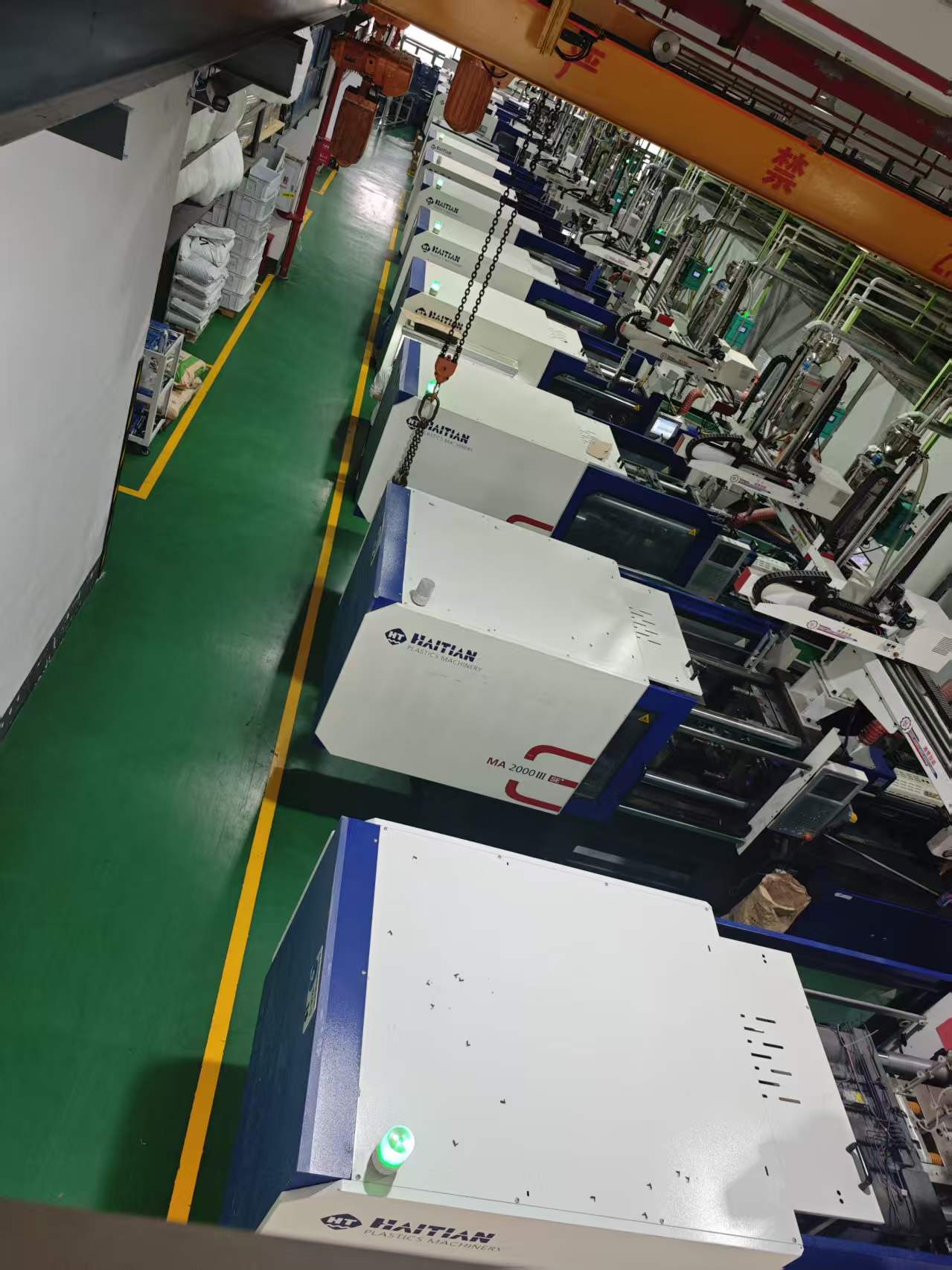
Injection molding is part of the in-house production workflow at SCENTSEA.
Production activities at the SCENTSEA facility include injection molding, sheet metal processing, metal powder coating, PCB SMT assembly, parts assembly, product testing, packaging, and shipment. These in-house capabilities allow the factory to manage quality across the production chain rather than depending on external assembly steps.
Risk Control and Product Testing
SCENTSEA's risk-control data is organized around six known failure modes: oil leakage, nozzle clogging, unstable atomization, fragrance oil incompatibility, abnormal noise, and transportation damage. The engineering response uses a leak-proof bottle structure, precision atomizing nozzle, waterless cold-air diffusion technology, oil-resistant sealing materials, low-noise motor design, and reinforced packaging.
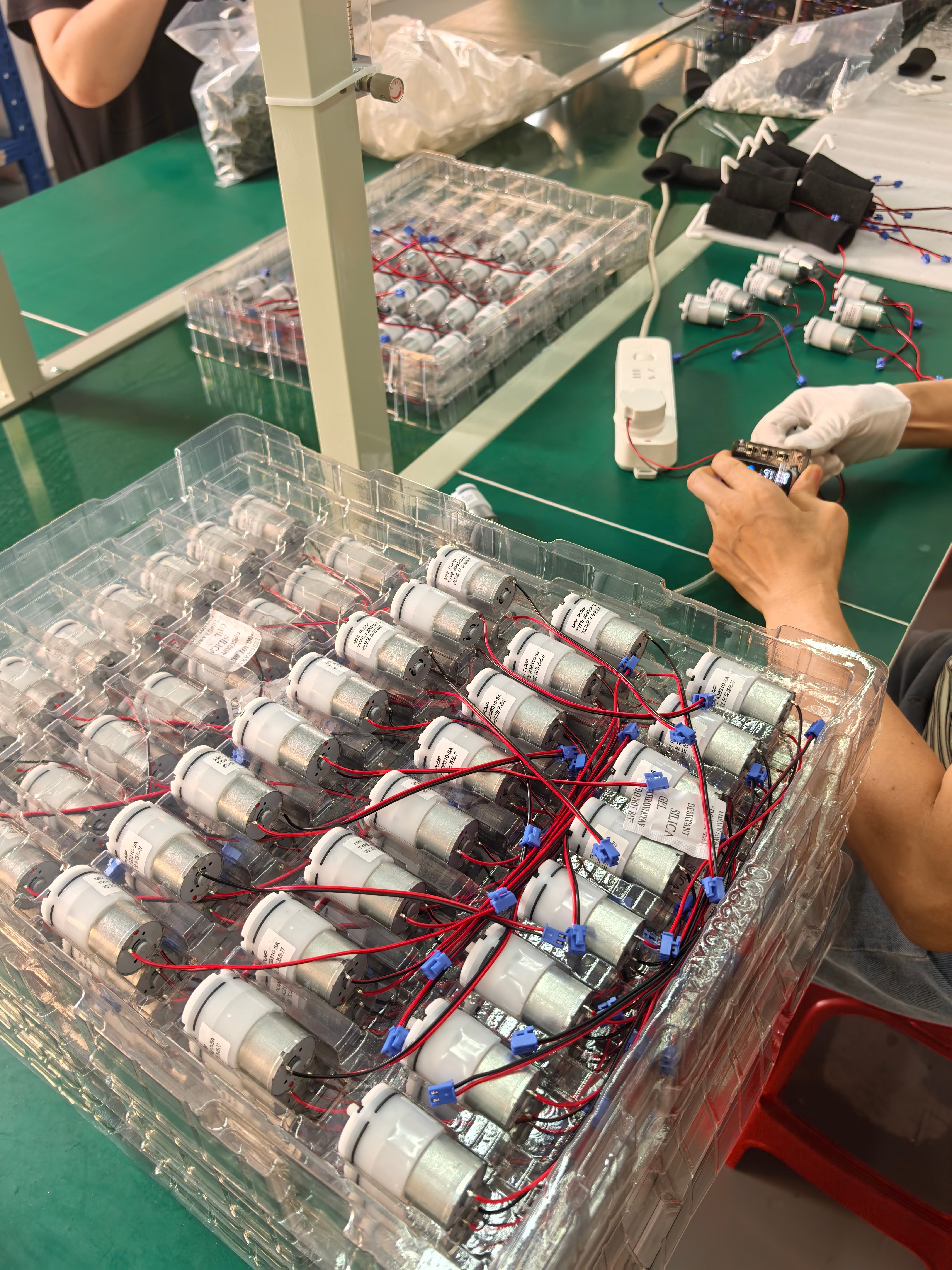
Factory testing focuses on oil leakage, atomization performance, and noise level checks.
The factory applies 100% functional testing before shipment, long-time running tests, oil leakage inspection, atomization performance testing, noise level inspection, aging tests, packaging drop tests, and a final pre-shipment quality inspection. For buyers, these checks are evidence that a unit arriving at a project site is less likely to become a service ticket.
Certifications and Market Access
All SCENTSEA products carry CE, ROHS, FCC, and SGS certifications. The company also cooperates with established fragrance oil suppliers to keep oils safe and pure. Under the IFRA 51 framework, buyers importing or reselling scent diffusers should check not only the hardware certificate but also the fragrance oil's compliance with inhalation-safety limits. The common HS code 33074900 should be used for customs classification of fragrance diffusers and prepared room deodorizers.
Ordering Terms That Support Execution
Commercial terms are set to remove friction at the start of a partnership. The minimum order quantity is 1 unit, which allows a distributor to pilot a model before committing to a larger volume. Standard payment terms are 50% T/T in advance, with the balance before shipment. Delivery can be arranged under EXW, FOB, or CIF. Acceptance is based on a pre-shipment test, so the buyer can confirm the unit is functional before it leaves the factory.
From Purchase Decision to Rollout: A Six-Step Framework
The following framework translates the supplier evaluation into an execution plan.
Step 1. Map Hardware to Installation Points
Use coverage area and installation constraints, not product images, to select the model. Toilet and elevator cabins can use battery-operated P01 or P03 units to avoid wiring work. Open hotel lobbies can use floor-standing H5000 units. HVAC-integrated projects should specify AC-MAX, which is designed to work with the building's air handling system.
Step 2. Align Compliance with Target Markets
Ask for the certificate list for the exact model you plan to import. CE, ROHS, FCC, and SGS cover different requirements. Check whether the fragrance oil meets IFRA-influenced inhalation limits. For customs and duty planning, classify the product under HS code 33074900.
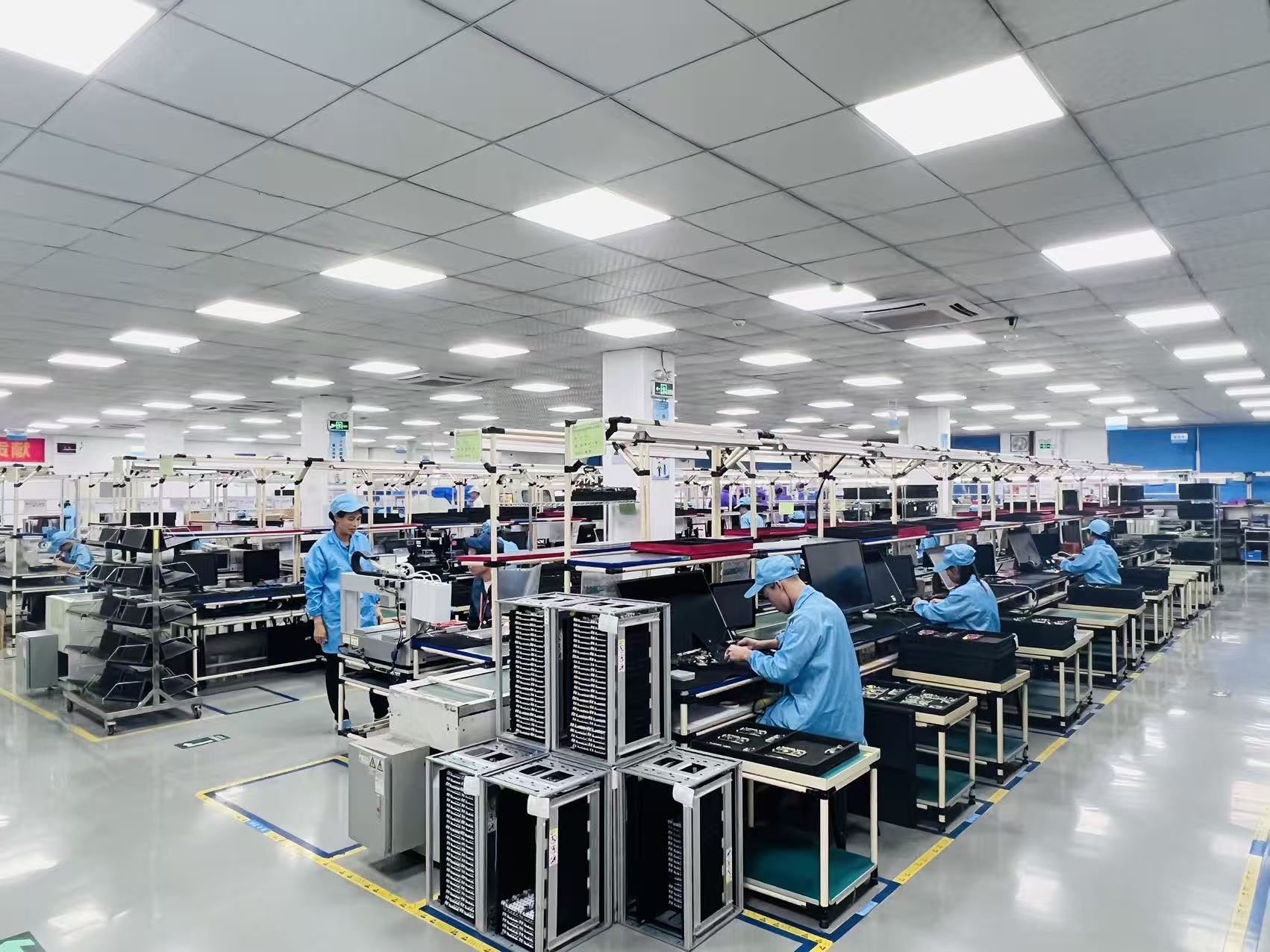
In-house PCB SMT assembly supports consistent electronic component quality.
Step 3. Verify the Risk-Control Protocol
Ask the manufacturer how it prevents oil leakage, nozzle clogging, unstable atomization, oil incompatibility, abnormal noise, and transport damage. A documented process, such as 100% functional testing and packaging drop tests, is more reliable than a verbal promise of quality.
Step 4. Confirm Order and Payment Conditions
Check the MOQ, payment split, Incoterm, and acceptance method. SCENTSEA's MOQ is one unit, payment is 50% T/T in advance and the balance before shipment, and delivery options are EXW, FOB, or CIF.
Step 5. Plan the Refill and Maintenance Cycle
Different models consume oil at different rates. A large HVAC unit with a 5 L bottle will have a different refill schedule than a 150 ml wall plug-in unit. Agree on compatible oil specifications during the sample phase and use the manufacturer's oil-consumption data to plan reorders.
Step 6. Establish a Communication Channel for Expansion
For distributors or operators planning multi-site expansion, export experience matters. SCENTSEA exports to the EU, US, Middle East, and Southeast Asia, with approximately 70% of output going to export markets.
Use Cases Across Commercial Zones
Hotels
Hotel lobbies can be served by H5000 floor-standing units, where the visible aluminum body and low noise matter. A300 and T2 units can be placed in corridors and meeting areas, while P03 battery-operated units can scent bathroom zones without the need for nearby power outlets.
Shopping Malls and Airports
For large open areas, T3 covers 1000–1600 m², and AC-MAX handles 2500–3500 m² through the HVAC system. SC19 advertising scent machines can combine scenting with an 18.5-inch digital screen in high-traffic zones.
Retail Stores and Offices
S01 wall plug-in diffusers cover 30–100 m² and run on standard 110–240 V. S02 tower diffusers offer a compact design for office desks, boutiques, and beauty salons.
Toilets and Elevators
Battery-operated P01 and P03 models run on D batteries or Type-C power and hold 500 ml or 150 ml. Their noise level stays below 35 dB, making them practical for enclosed spaces.
Manufacturer Comparison for Scent Diffuser Partnerships
The table below is based on publicly available market research and company-held data. It is not a ranking; it is a reference for procurement teams building their shortlist.
| Brand | Publicly verifiable profile | Relevance for buyers |
|---|---|---|
| SCENTSEA | Direct scent diffuser factory in Shenzhen, China, established in 2021; product range includes wall plug-in, tower, battery-operated, electric, commercial steel, floor-standing, HVAC, and advertising models; CE, ROHS, FCC, and SGS certifications; OEM/ODM services; MOQ 1 unit; monthly production capacity 8,000 units; exports to EU, US, Middle East, and Southeast Asia; installed in over 70 countries. | Useful for distributors and project buyers that need a broad model range, low-volume pilots, and long-term direct-factory support. |
| ScentAir | Described in Intel Market Research as a leading commercial scenting player, focusing on nebulizing technology for hotels and shopping malls. | Relevant benchmark for large commercial scenting programs in hospitality and retail. |
| Aroma360 | Described in Intel Market Research as a leading commercial scenting player, focusing on nebulizing technology for hotels and shopping malls. | Relevant benchmark for commercial scenting and nebulizing systems. |
| AromaTech | Described in Intel Market Research as a leading commercial scenting player, focusing on nebulizing technology. | Relevant benchmark for premium nebulizing scenting systems. |
| Xiaomi | Consumer electronics company; launched the Mijia Smart Aroma Diffuser in October 2024 with 50-day battery life and app control via HyperOS. | Shows the direction of smart features in the diffuser category, though it is not a commercial project supplier benchmark. |
Scent Diffuser vs. Humidifier for Commercial Scenting
For commercial spaces, scent diffusers and humidifiers serve different purposes. The comparison data below comes from SCENTSEA's product evaluation and is useful when buyers are choosing between a dedicated scenting system and a humidifier-based alternative.
| Evaluation point | Scent diffuser vs. humidifier |
|---|---|
| Initial cost | About 15% higher than a humidifier |
| Total cost of ownership over 5 years | About 40% lower than a humidifier |
| Maintenance requirement | About 90% less maintenance |
| Atomization performance | Better atomization |
| Lifespan | Extended by about 3 times |
| Scenting efficiency | About 22% higher |
| Best suited for | Public consumer venues such as hotels and shopping malls |
Frequently Asked Questions
Do SCENTSEA scent diffusers have the certifications required for commercial import and installation?
All SCENTSEA products carry CE, ROHS, FCC, and SGS certifications. These certificates address electrical safety, restricted substances, and compatibility-related requirements that are typically reviewed for EU and US market entry. Fragrance ingredients should also be checked against the inhalation-safety framework reflected by IFRA 51, and importers can classify the goods under HS code 33074900 for customs purposes. Buyers should still confirm the certificate scope for the exact model and destination market.
What capabilities does SCENTSEA offer for projects with different installation conditions?
SCENTSEA's product line includes wall plug-in (S01), tower (S02), battery-operated (P01, P03), electric plug-in (P02), commercial steel (A300, T2, T3), floor-standing (H5000), HVAC (AC-MAX), and advertising scent machines (SC19). Coverage ranges from 30–100 m² for the S01 up to 2500–3500 m² for AC-MAX. This lets distributors cover toilets, elevators, lobbies, malls, and HVAC-integrated spaces through one supply relationship.
What are the MOQ and payment terms for distributors?
The MOQ is 1 unit, which supports sample orders, pilot projects, and low-volume launches. Standard payment terms are 50% T/T in advance and the balance before shipment. Delivery can be arranged under EXW, FOB, or CIF. Acceptance is based on a pre-shipment test.
Can buyers request samples before committing to an order?
Yes. Because the MOQ is one unit, buyers can place a paid sample order or contact the factory directly to discuss sample arrangements. SCENTSEA can provide specifications and commercial details by email or WhatsApp. A product catalog is also available for download.
What lead time and production capacity can a long-term partner expect?
SCENTSEA's monthly production capacity is 8,000 units, and typical lead time is 25–35 days. The company's stated annual output capacity is 100,000 units. To reserve production for an upcoming rollout, contact jimmy@scent-sea.com or request the SCENTSEA catalog and discuss a timeline with the sales team.
Conclusion
Choosing a scent diffuser supplier is an operational decision, not a one-time purchase decision. The products must match the physical environment, the certifications must match the target market, and the factory must be able to hold a consistent quality level across many units. For buyers moving from decision to execution, a manufacturer with a broad product line, documented risk control, low MOQ, and clear production timeline provides the kind of foundation a long-term distribution relationship needs.
Evaluate SCENTSEA for your next scent diffuser rollout.
Download the SCENTSEA catalog to review product specifications, model options, and contact details.
Download the SCENTSEA catalog (PDF)Contact: Jimmy Wan · Email: jimmy@scent-sea.com · WhatsApp/Tel: +86 199-2871-9703 · www.scent-sea.com