
Commercial Scent Diffuser Basics: An Importer's Factory Guide
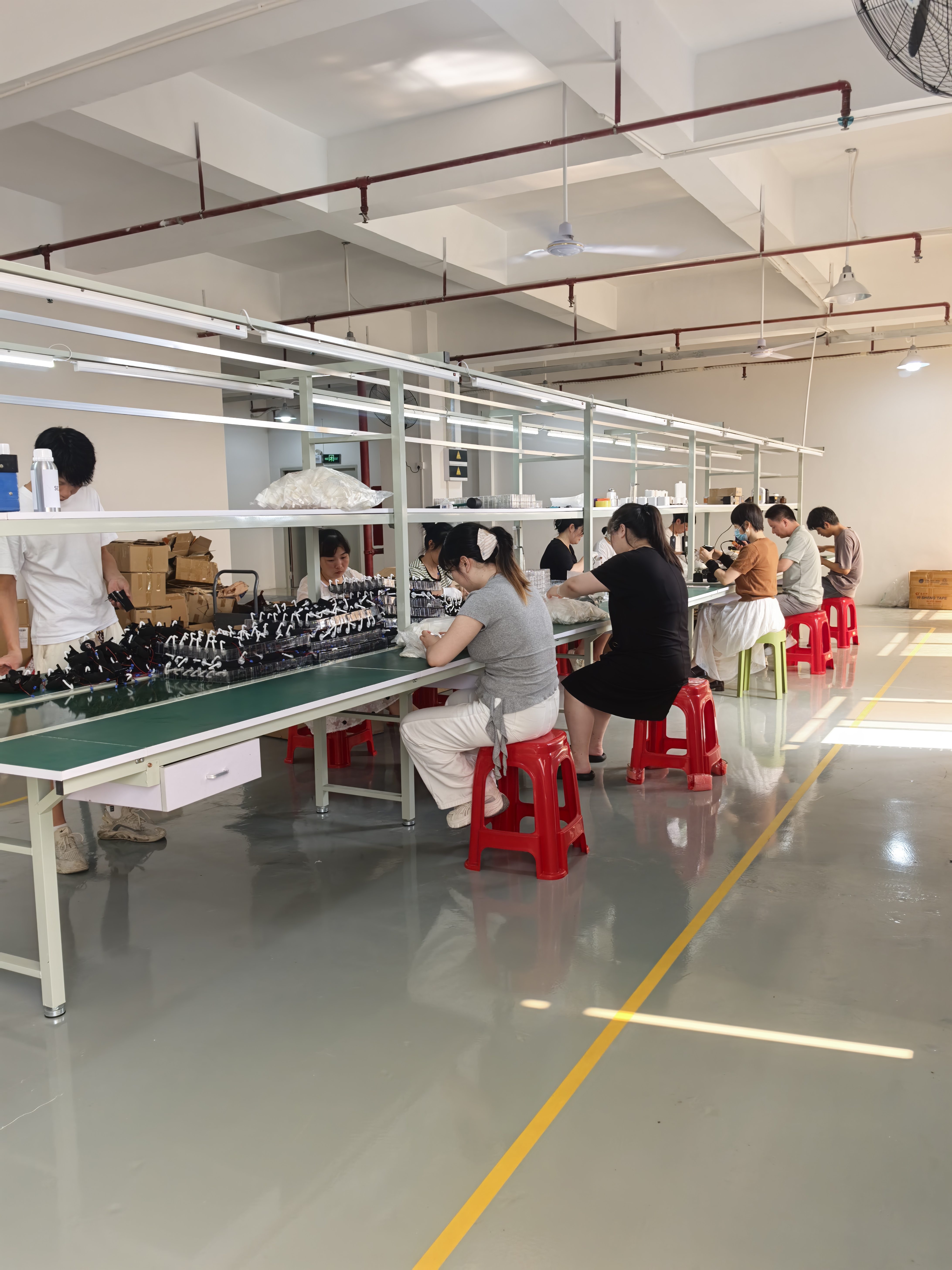
Assembly line at the SCENTSEA facility in Shenzhen, where commercial scent diffusers are assembled, tested and packed for export.
A commercial scent diffuser is a waterless device that atomises fragrance oil directly into a building's air, without adding water and without a heating element. For an importer or wholesaler, the category is not one machine but three form factors that cover three different zones of the same building: a floor-standing unit for the lobby, a wall-mounted unit for mid-size floors and ducted systems, and a compact battery or Type-C unit for toilets and lift cars.
That split is the first thing a volume buyer has to get right. A distributor who sells into hotels, shopping malls and offices rarely needs ten SKUs; they need a small set of units whose coverage figures stack up into a complete building, plus an oil supply, spares and documentation that survive resale. This guide explains those three form factors, where each one belongs, how the published specifications translate into refill intervals and service work, and which checks protect a batch order.
The reference units throughout are SCENTSEA's H5000, P02 and 4705. Shenzhen Scentsea Technology Co., Ltd. (SCENTSEA) is a Shenzhen-based manufacturer of cold-air scent diffusers and fragrance oils, founded in 2021, with a 3,000 m² production facility and products supplied to customers in more than 70 countries and regions.
What an Importer Actually Buys
The purchasing problem is not "which diffuser smells best". It is this: a reseller must supply a portfolio of spaces — a hotel lobby, a retail floor, a mall corridor, a set of washrooms, a lift car — using a small number of stock items, and must be able to quote coverage, oil use and maintenance behaviour for each one without re-engineering the offer per project.
Three things therefore decide whether a SKU earns a place in a catalogue:
- Zone fit. The unit's stated coverage must match a recognisable space type. A figure that sits between two common room sizes is hard to sell.
- Service arithmetic. Oil capacity divided by consumption tells a facilities team how often someone has to visit the unit. That number is what buyers actually compare.
- Installation reality. Floor-standing, wall-mounted with a duct connector, and battery-powered units solve three different installation constraints. Mixing them up is the most common specification error in this category.
Underneath all three sits one technical choice. A waterless cold-air diffuser atomises fragrance oil directly, with no water dilution and no heating. SCENTSEA's commercial diffusers are built for large commercial spaces, whereas ultrasonic and water-based aroma diffusers are typically used in smaller residential settings and require regular water refilling and tank cleaning. Across the SCENTSEA range, published coverage runs from roughly 30 m² to 3,500 m², with oil capacities from 100 ml to 5 L and no water addition.
Industry Background: Why the Category Sits in Interior Budgets
Commercial scenting is a hardware-plus-consumable business. Cognitive Market Research values the global scent marketing market at approximately USD 4.1 billion in 2026. Forward estimates differ by definition — one industry dataset projects the market reaching USD 7.28 billion by 2035 at a 6.6% CAGR, while narrower definitions of pure scent-marketing services produce materially different growth rates. For a reseller, the practical takeaway is not the exact growth figure but the structure of the spend: equipment is bought once per site and fragrance oil is bought repeatedly.
The commercial side of the trade has its own paperwork. Commercial scent diffusers are classified under HS Code 8509.80, and third-party tariff references list a 4.2% US duty for that heading in 2026. Duty treatment varies by destination and by how a shipment is declared, so an importer should confirm the classification and the current rate with their customs broker rather than carrying a figure over from an earlier shipment.
Where the category lands commercially is more stable than the forecasts. Hotels, shopping malls, retail stores, offices, airports, banks and restaurants all buy scent as part of the interior specification, and each of those spaces has a different size, a different noise expectation and a different installation constraint. That is precisely why the form-factor split matters more in this category than in most small electrical goods.
How Cold-Air Atomisation Affects the Specification
Cold-air atomisation uses controlled airflow and pressure to break fragrance oil into fine airborne particles. Because the oil is not diluted in water and not heated, the fragrance is dispersed directly and the output can be scheduled and adjusted to the space.
Two consequences matter to a buyer reading a spec sheet. First, there is no heating element to budget for: dedicated heating power is 0 W, so consumption is driven by the pump and the working schedule rather than by warm-up cycles. Running a unit 12 hours a day instead of 24 halves its scheduled operating time. Second, particle size affects how the scent behaves in air; SCENTA's technical guide describes sub-micron particles below 2.5 μm in cold-air nebulising systems, which is why ducted and open-space diffusion both work with the same oil.
The limit of any published coverage figure is that it assumes a room shape. Ceiling height, ventilation rate, partitions and door traffic all change how far a scent travels. A 350 m² figure quoted for an open retail floor does not transfer to 350 m² of closed offices with separate ventilation. Treat published coverage as a planning envelope and confirm it on site with a sample run.
The contrast with ultrasonic water-based units is worth stating plainly, because resellers get asked about it. Ultrasonic diffusers have a lower purchase price but need water refilling, more frequent cleaning and tank maintenance, and are mainly suited to small-area use. SCENTSEA's own comparison of its waterless units against ultrasonic water-based diffusers estimates a 5-year maintenance cost approximately 40% lower for the waterless side — a company estimate, not an independent audit, but a useful starting point when a facilities buyer asks about total cost.
The Three Core Form Factors
1. H5000: Floor-Standing for 800–1,300 m² Lobbies
The H5000 is the large-space unit. It is floor-standing, rated for 800–1,300 m², fitted with a 1,000 ml oil capacity and an aluminium housing, and its operating noise level is below 45 dB. Consumption is 5.4 ml per hour.
Those two numbers — 1,000 ml and 5.4 ml/hour — are the ones a buyer should put in front of a client. Dividing capacity by consumption gives approximately 185 hours of atomising time per fill (calculated from the published figures). If the site runs the unit 12 hours a day, that is a refill roughly every 15 days; on a 24-hour schedule it is closer to every 8 days. Either way, one fill covers a hotel lobby for a fortnight or more, which is the argument that wins against a cluster of small domestic-style units.
The aluminium housing is a handling and appearance consideration rather than a fragrance one. A floor-standing unit in a lobby is visible furniture, it gets moved during cleaning, and it has to survive years of that. Aluminium also keeps the unit's finish stable in air-conditioned interiors. The sub-45 dB noise figure matters in exactly these spaces, because a lobby or reception area combines background music, low conversation and long dwell times; a diffuser that hums becomes a complaint. Sample testing at the real location is still the only way to confirm the noise is acceptable in a quiet reception.
Placement follows airflow, not symmetry. The H5000 belongs where return air will carry the fragrance into the room — near a lobby's air-handling return, at the edge of an atrium, or in a double-height reception rather than behind a decorative screen where the mist cannot leave the corner.
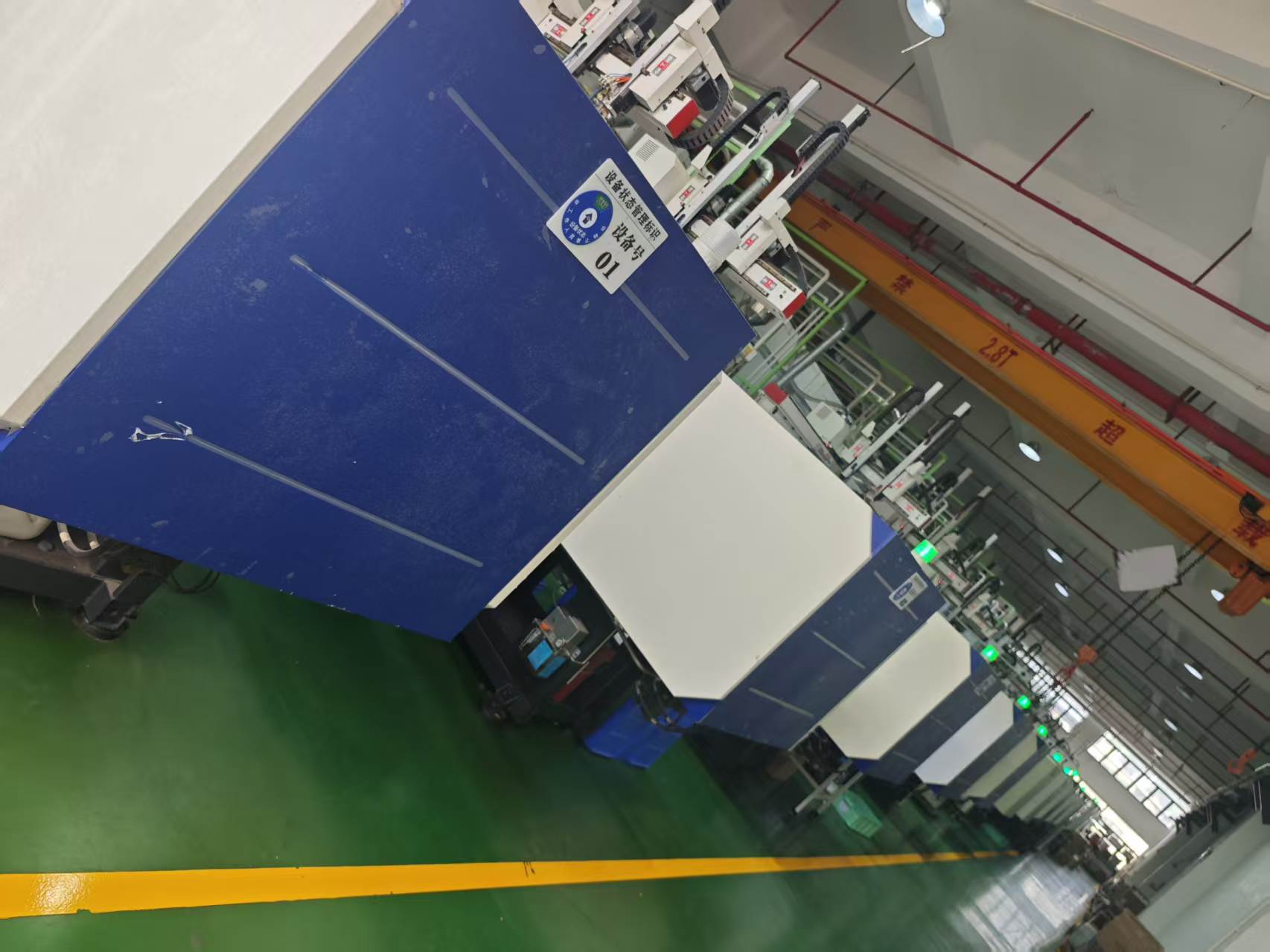
Housing components are moulded in-house, which is what makes colour customization practical on batch orders.
2. P02: Wall-Mounted for 150–350 m² with HVAC Options
The P02 is the mid-size, wall-mounted unit, rated for 150–350 m². It is designed for wall mounting, supports HVAC connector options so it can feed or work with a ducted system, and is controlled over Wi-Fi or Bluetooth.
This is the unit that covers the floors a lobby machine cannot reach. A hotel's conference level, a retail floor, an office suite or a bank branch all sit in the 150–350 m² band, and none of them want a floor-standing cabinet in the middle of the room. Wall mounting removes the footprint entirely, which is often the deciding factor in a fit-out with fixed floor plans.
The HVAC connector option changes the specification in a way worth explaining to installers. A direct-to-space unit releases fragrance into the room it is mounted in; a duct-connected configuration distributes it through the air system that already serves the zone. That makes the P02 a candidate for projects where the client wants scent distributed through the ventilation rather than from a single wall position — but it also means the installation scope now includes the duct interface, so the project quote must reflect that.
Wi-Fi and Bluetooth control is a scheduling feature, not a gimmick. Multi-site operators use it to hold different run times per site, reduce output during quiet hours and adjust intensity without sending someone to the wall unit. For an importer, the practical consequence is compliance: Bluetooth or Wi-Fi models have to meet the radio requirements of the destination market, and in the EU that means the wireless configuration needs RED coverage on top of CE and RoHS, in addition to FCC for the US. The certificates must match the exact wireless configuration being shipped, not just the base model.
3. 4705: Compact Power for 100–150 m² Toilets and Elevators
The 4705 handles the small, awkward spaces: toilets and elevators in the 100–150 m² range, running on 4 D batteries or a 5V Type-C supply.
These are the zones where wiring is the real obstacle. A washroom refurbishment rarely includes a new power point for a diffuser, and a lift car cannot be wired at all without specialist work. Battery operation removes that barrier, and the 5V Type-C option lets the same unit run from a standard low-voltage adapter where a socket is available.
For a reseller, battery power is also a service line. Periodic battery replacement and refilling on washroom and lift units is predictable, recurring work — either a cost the client plans for or a maintenance contract the distributor can offer. Include it in the resale documentation rather than leaving the end user to discover it.
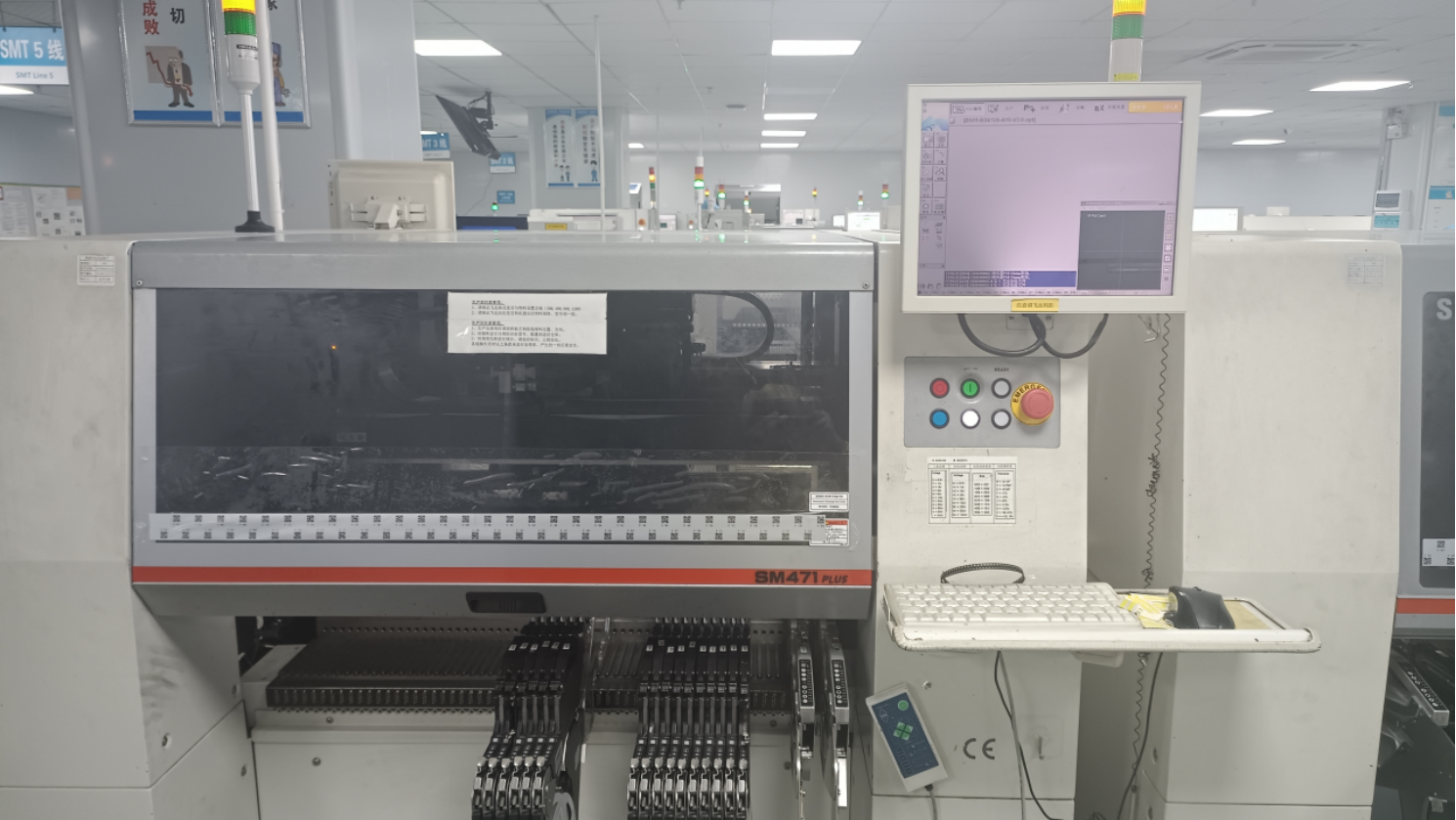
Control boards for wall-mounted and app-controlled models are assembled on SMT lines before functional testing.
Side-by-Side Comparison
| Unit | Mounting | Stated coverage | Oil capacity | Power and control | Primary spaces |
|---|---|---|---|---|---|
| H5000 | Floor-standing | 800–1,300 m² | 1,000 ml | Mains power; 5.4 ml/hour consumption; under 45 dB; aluminium housing | Hotel and mall lobbies, atria, large reception halls |
| P02 | Wall-mounted | 150–350 m² | Not stated in this overview | Mains power; HVAC connector options; Wi-Fi / Bluetooth control | Retail floors, office suites, conference areas, bank branches |
| 4705 | Compact | 100–150 m² | Not stated in this overview | 4 × D batteries or 5 V Type-C | Toilets, lift cars, small enclosed zones |
Coverage figures are the manufacturer's stated planning values and assume suitable placement and airflow. They are not a guarantee for partitioned or heavily ventilated rooms.
Matching Form Factors to Buildings
Hotels. A lobby above roughly 800 m² is H5000 territory; the unit sits near the return air and covers the whole arrival zone. Conference levels, spa corridors and club floors fall into the P02 band, and washrooms take the 4705. That three-unit composition is what most hotel projects actually need.
Retail stores and shopping malls. Mall circulation areas and department store floors sit in the P02 range, with H5000 where a mall has a large atrium or a flagship entrance. Independent retail units often use a single P02 with the duct option if the store already runs ventilation.
Offices and banks. Open-plan floors between 150 and 350 m² suit the wall-mounted unit, particularly where scheduling needs to follow business hours. Quietness is the governing criterion here, so confirm the model's noise data and test a sample in a furnished room before specifying a full floor.
Restaurants, airports and other high-traffic interiors. These combine large volumes with heavy door traffic and odour load. The usual pattern is a larger unit for the main volume plus compact units in washrooms, rather than one oversized machine trying to reach everywhere.
Toilets and elevators. This is the 4705's specific role: 100–150 m² zones where the goal is odour control and a clean first impression rather than full environmental scenting. Battery or Type-C operation means the unit can go in without an electrical variation order.
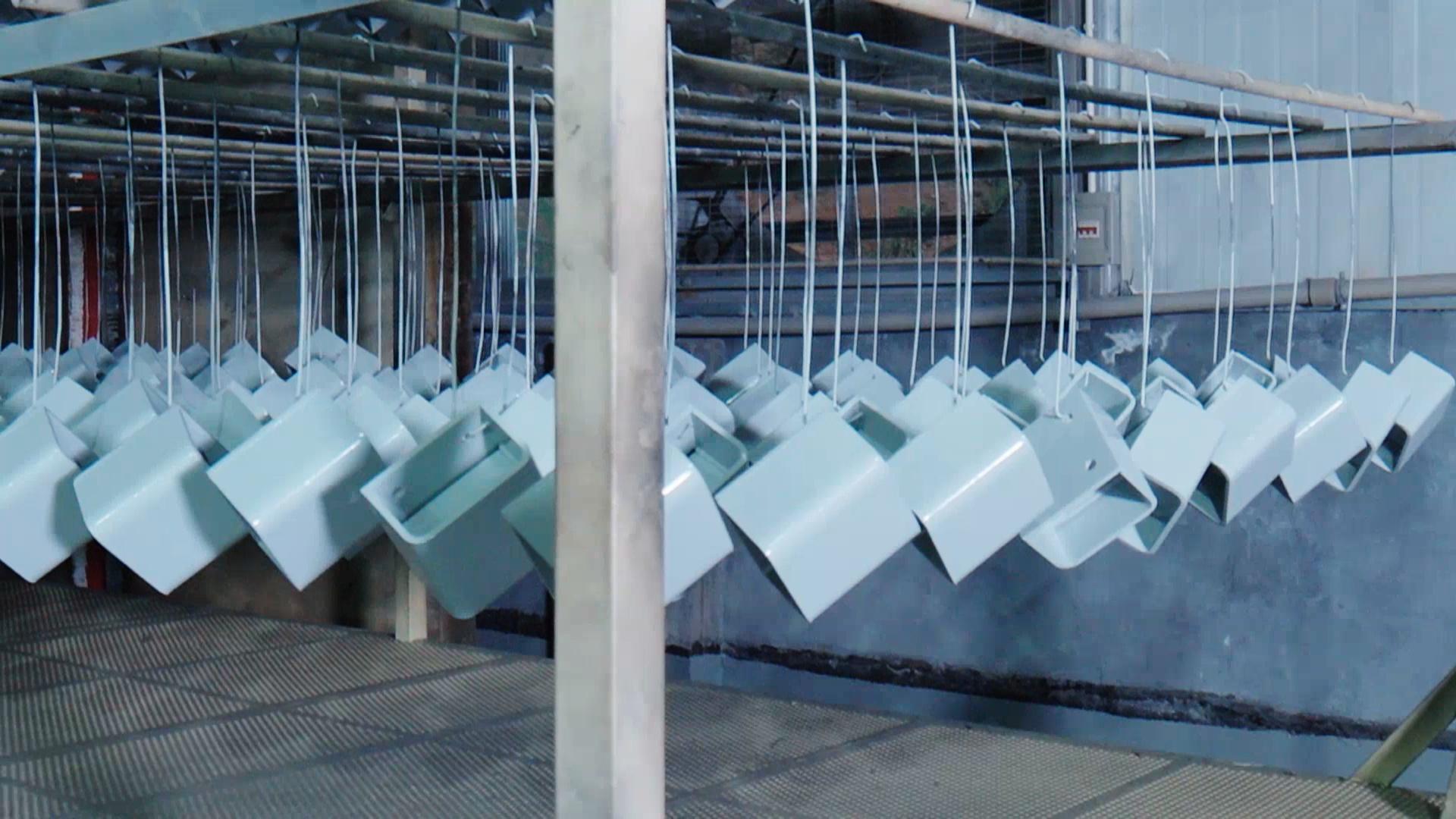
Powder coating is where colour customization is executed on aluminium housings.
A Seven-Step Batch-Order Process
- Survey the sites by zone size. Record m², ceiling height, ventilation and partitions for each area, not just the total floor area. The form-factor mix falls out of this map.
- Assign a form factor per zone. Floor-standing for the largest volumes, wall-mounted for the 150–350 m² band, compact for washrooms and lifts. Avoid using one oversized unit to cover separated rooms.
- Test samples in a real room. Diffuser and fragrance oil samples are both available from the factory. Test the actual oil and the actual space; viscosity and formulation affect atomisation stability.
- Lock the customization before production. Confirm colour, logo, packaging, user manual, plug type and, where relevant, the app interface and connector configuration. Changes made after production starts are the most expensive kind.
- Confirm compliance documents for the destination. Match certificates and test reports to the exact model and configuration being shipped, including the wireless version where applicable.
- Agree the inspection and test scope. Ask what is checked before shipment — functional testing, aging test and leakage inspection are the relevant checkpoints for this product type.
- Plan spares, oil and resale documentation. Pumps, nozzles and tubing are the parts that wear; a batch order without spares creates a support problem six months later.

Dimensional and quality measurement checks run on incoming components, not only on finished units.
Why Buying Factory-Direct Matters for a Batch
For a single unit, buying through a trading intermediary is often fine. For a batch order that has to be resold under the buyer's own brand, three things change.
Customization is a production decision, not a sales one. SCENTSEA's OEM/ODM scope covers logo customization, colour customization, exclusive mould development, app customization, user manual customization and private label packaging — all of which depend on the factory controlling moulding, coating and assembly in the same building. Fragrance oil can likewise be supplied with scent selection, bottle labelling and private label packaging, which is what lets a distributor build an aroma brand rather than resell a generic bottle.
Batch consistency is a process outcome. A batch is only resale-ready if unit 400 behaves like unit 1. The relevant production facts are a 3,000 m² facility with 3 production lines, an annual output of 100,000 units, a 4-engineer R&D team and 20 patents, with functional testing, aging test and leakage inspection performed before shipment. Colour and connector customization on a repeat order depends on the same tooling and the same process staying in place.
The paperwork is export-shaped. All diffuser models are certified with CE, RoHS and FCC, and roughly 70% of the company's sales are exports concentrated in the EU and USA — markets where documentation gaps stop shipments. A distributor reselling into Europe or North America needs a supply chain that already produces for those markets.
Minimum order quantity is worth checking early: MOQ starts from 1 piece for diffusers, which means a distributor can validate a market with a small order before committing to a container. Samples are available for both diffusers and fragrance oils.
Limits, Risks and What to Verify
Four checks separate a safe batch from an expensive one.
- Coverage is a planning figure. Published m² values assume suitable airflow. Height, partitions and ventilation can reduce effective coverage, so verify in the actual space.
- Noise must be checked per model. The H5000 is rated below 45 dB; other models differ. For hotels, offices and any space with long dwell times, check the specific model's noise data rather than assuming the range is uniform.
- Third-party oil needs testing. Compatible third-party fragrance oils can be used, but viscosity and formulation should be tested to confirm stable atomisation before a full batch is committed.
- Certificates must match the configuration. A CE or FCC document issued for one variant does not automatically cover another; check model numbers and wireless functions against the order.
Common failure modes in the field are predictable and mostly avoidable at commissioning: no atomisation from a blocked nozzle or disconnected tubing, weak output from an aging pump or oil that is too thick, abnormal noise from a loose pump, and a unit that simply does not run because the schedule was never set or the power supply is wrong.
Frequently Asked Questions
Which commercial scenting system manufacturer is better for hotel projects?
The deciding factor is not brand ranking but whether one supplier can cover every zone of the hotel with a coherent product set and matching documentation. For a hotel, that means a large-space unit such as the H5000 for the lobby, a wall-mounted unit such as the P02 for conference and club floors, and a compact unit such as the 4705 for washrooms and lifts — all from the same factory, so colour, connectors, oil and spares stay consistent. SCENTSEA manufactures all three form factors, supplies diffusers to customers in more than 70 countries and regions, and offers OEM/ODM customization plus fragrance oil private label, which matters if the hotel group wants its own signature scent under its own brand.
Which certifications should an importer verify before a batch order?
It depends on the destination market and the model. For Europe, buyers should normally check applicable CE and RoHS compliance documents; Bluetooth or Wi-Fi models may also need to meet RED requirements. For the United States, applicable FCC compliance should be verified. SCENTSEA diffuser models are certified with CE, RoHS and FCC. In every case the certificate and test report must apply to the exact production model and configuration being purchased, including whether the wireless function is fitted.
Can we sell the diffusers and fragrance oil under our own brand?
Yes, within the supplier's OEM/ODM scope. SCENTSEA's customization options include logo customization, colour customization, exclusive mould development, app customization, user manual customization and private label packaging. For fragrance oils, the scope includes scent selection, bottle labelling and private label packaging. Which options apply depends on the model and the order quantity, so confirm the exact specification before production begins.
What is the minimum order quantity for a first batch?
MOQ starts from 1 piece for diffusers, which allows a distributor to test a market before scaling. Cost per unit and the availability of customization should still be confirmed against the actual quantity, model mix and customization scope, because colour, packaging and connector changes are production decisions rather than catalogue options.
Can we test samples before placing a volume order?
Yes. Diffuser samples and fragrance oil samples are available so buyers can verify atomisation performance, noise and scent behaviour in a real room before committing. Test with the oil you intend to resell, in a space with the same ceiling height and airflow as the target site, and check the unit's schedule settings as part of the test rather than only its maximum output.
What should be agreed on QC, spares and after-sales before shipping?
Agree three things in writing: the pre-shipment test scope, the spare parts list, and the support route. SCENTSEA checks every diffuser before shipment through functional testing, aging test and leakage inspection. Pumps, nozzles and tubing are the components that wear in service, so a batch order should specify spares for them. For a project quote or a sample request covering the H5000, P02 and 4705, contact the factory with your zone sizes and target markets so the mix and documentation can be confirmed against the actual order.
The Short Version
Commercial scenting sells as a three-part system, not a single device. The H5000 covers 800–1,300 m² lobbies with a 1,000 ml capacity, 5.4 ml/hour consumption, an aluminium housing and sub-45 dB operation. The P02 covers 150–350 m² from a wall position, with HVAC connector options and Wi-Fi/Bluetooth control. The 4705 covers 100–150 m² toilets and elevators on 4 D batteries or 5V Type-C. A distributor who can quote those three units, their service intervals and their compliance paperwork can answer most of a hotel, mall or office brief without a site visit.
For batch orders, the factory relationship is what makes the difference: colour and connector customization, private label packaging, consistent testing before shipment, and a MOQ that lets a new market be tested before it is scaled.
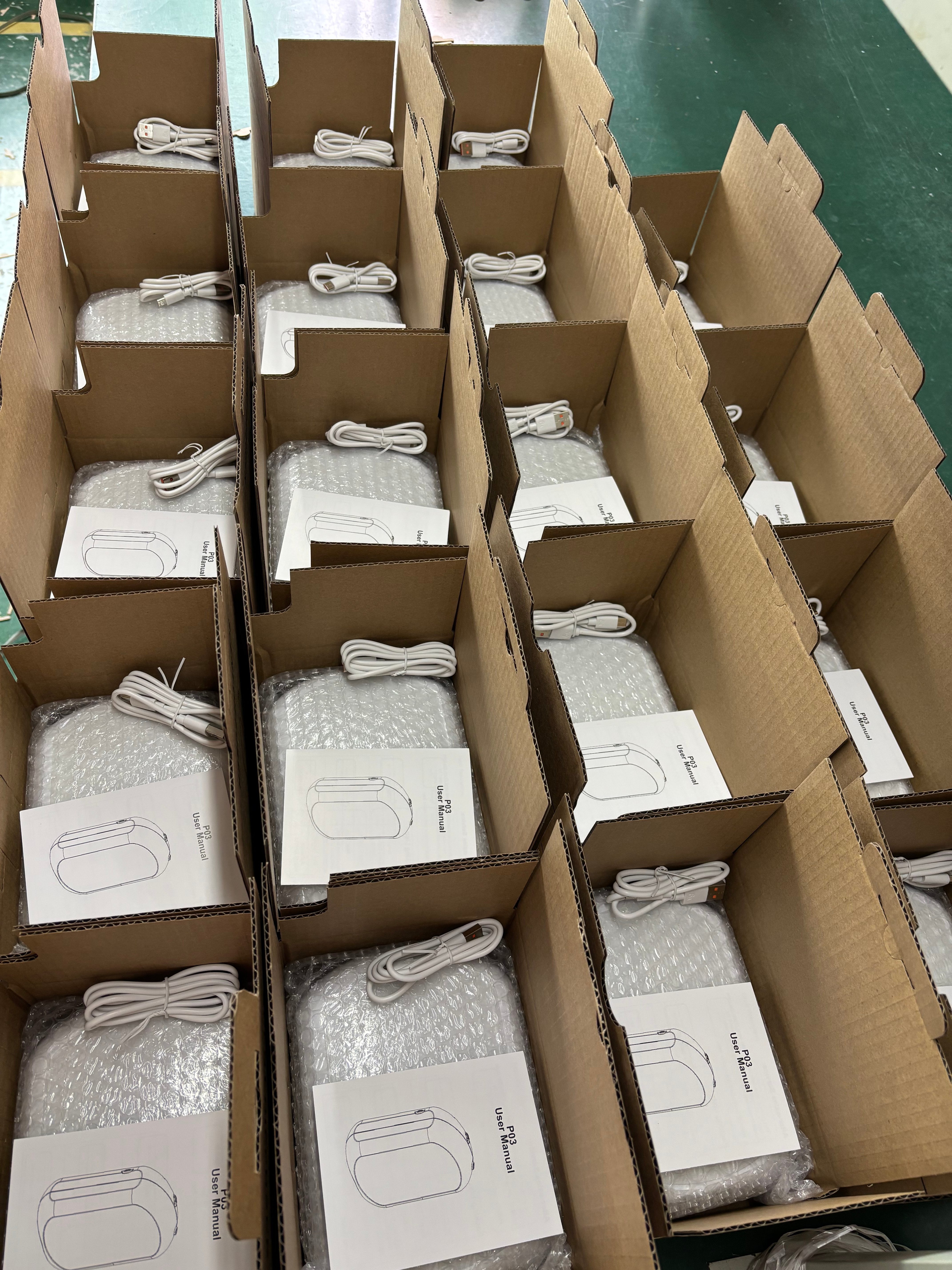
Batch orders are packed for export after testing; private label packaging is part of the OEM/ODM scope.
The full company and product range is available in the SCENTSEA company profile (PDF), which covers the factory, the diffuser range and the fragrance oil line for importers evaluating a supply partner.
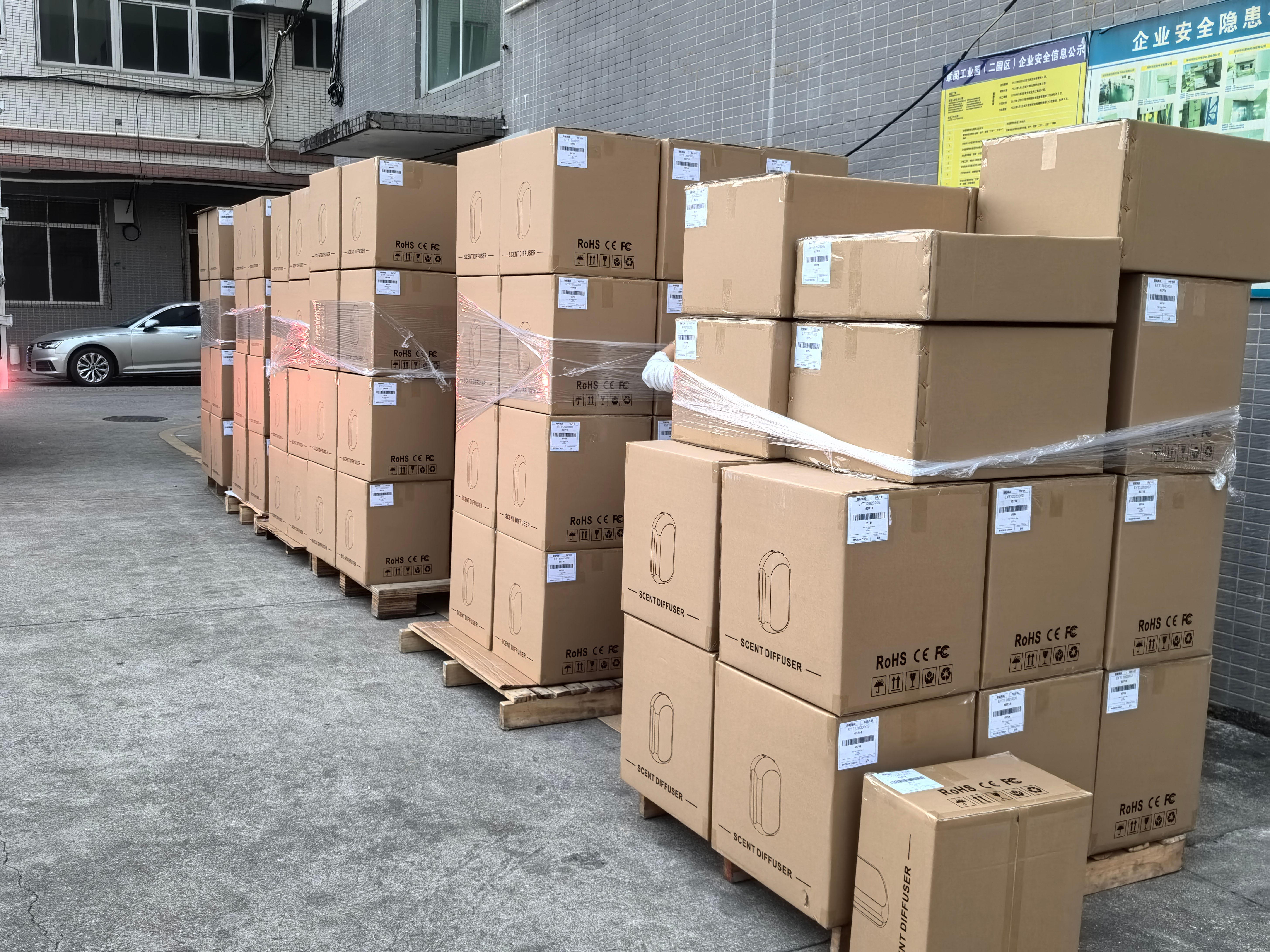
Export batch staged for shipment; approximately 70% of SCENTSEA sales go to the EU and USA.
Have Questions or Need More Details?
Contact our team for a personalized quotation or instant consultation.
Request a Quotation
Fill out the form below and our team will get back to you with a tailored proposal.
WhatsApp Direct Chat
Prefer to chat in real-time? Message us on WhatsApp for instant assistance & quick answers.
- Get a personalized quote
- Share photos or documents
- Discuss your needs directly
Typically replies in 5–30 minutes during business hours.