
Commercial Scenting 101: Understanding Ambient Scent Marketing Solutions for Business Spaces
Commercial Scenting 101: Understanding Ambient Scent Marketing & Commercial Scenting Solutions
Commercial scenting is the practice of distributing a consistent fragrance through professional diffuser systems in business and public environments. It is also called scent marketing, ambient scenting, or commercial scent branding, and it is used by hotels, retail stores, shopping malls, offices, banks, airports and other indoor venues to improve the guest experience, reinforce brand identity and control unwanted odors.
Commercial scenting solutions have moved from a premium hospitality extra to a mainstream consideration for any business that welcomes visitors. A professional commercial scenting system typically includes a commercial scent diffuser, a compatible fragrance oil, a control method such as an app or timer, and an installation plan matched to the space. Below is a full introduction to how commercial scenting works, what types of scenting systems exist, which spaces benefit most, and what buyers should look for when evaluating scenting suppliers.
What Is Commercial Scenting?
Commercial scenting is the use of specialized fragrance diffusion equipment to distribute fragrance oil into the air of a commercial interior. Unlike consumer aroma diffusers, which are designed for small rooms and light use, commercial scenting equipment is engineered for longer operating hours, larger coverage areas, and more consistent output.
The function of commercial scenting is to diffuse fragrance oil into the air through cold-air atomization, creating a consistent and pleasant scent in residential and commercial spaces. It helps improve the indoor atmosphere, enhance customer experience, support scent marketing, and control unwanted odors.
Commercial scenting is commonly chosen as part of a broader scent marketing strategy. In retail, hospitality and other brand environments, a recognizable ambient scent can become part of the customer's memory of the space.
Industry Background: Why Commercial Scenting Is Growing
Commercial and public venues increasingly use scent as part of the overall customer experience. Research on scent marketing indicates that ambient fragrance can influence how long customers stay in a space. According to industry data published in 2025, scent marketing in retail environments can increase customer dwell time by an average of 15 minutes.
The market has followed this interest. The global scent marketing market is valued at approximately USD 4.1 billion in 2026, and it is projected to reach USD 7.28 billion by 2035, representing a forecast CAGR of 6.6% over the 2026–2035 period.
For hotels, malls, retail chains, banks and offices, the operational question is no longer whether scent matters, but how a fragrance program should be deployed. That decision requires choosing among several types of commercial scenting systems.
What Are the Main Types of Commercial Scenting Systems?
Commercial scenting hardware is generally divided by installation method and application scale. Each type has a specific role in a scenting strategy.
1. HVAC Scenting Systems
HVAC scenting systems connect directly to the building's central air handling system. They deliver fragrance through the existing airflow, which makes them suitable for very large spaces and multi-zone buildings.
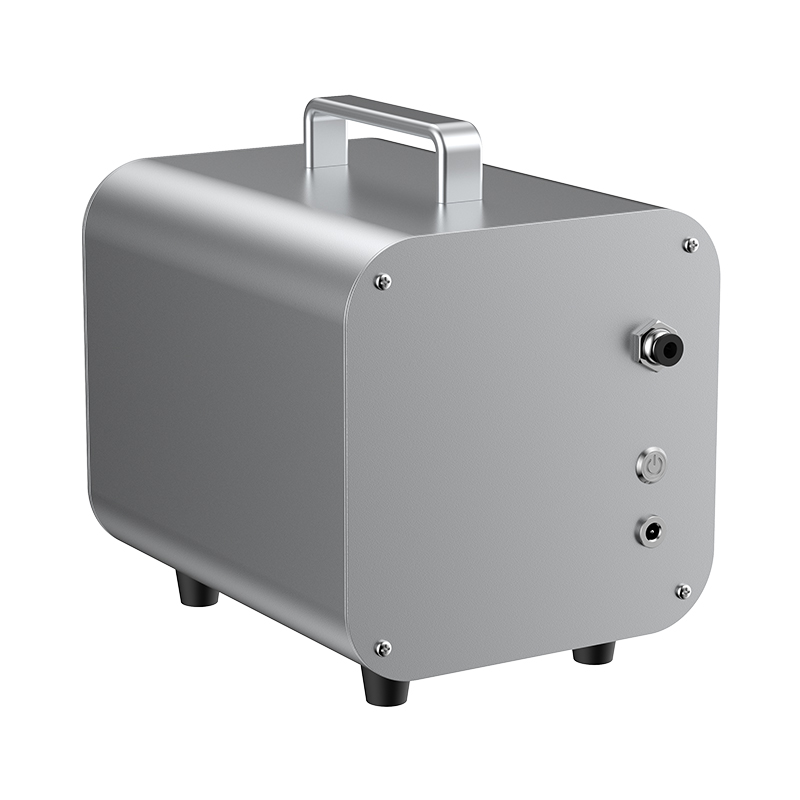
A representative model is the AC-MAX, an HVAC scent diffuser designed for use in shopping malls, banks, and airports. The AC-MAX uses a split-type structure with a separate machine and oil tank, has a 5L fragrance oil capacity, and covers approximately 2,500–3,500 m². It connects directly to central HVAC ducts and delivers fragrance through the building's airflow system.
One advantage of a dedicated HVAC scenting system is reduced maintenance frequency. The AC-MAX's 5L oil capacity and oil consumption of 6ml ±5% per hour significantly reduce refill intervals compared with smaller machines.
2. Large-Area Standalone Scent Diffusers
Standalone commercial scent diffusers are self-contained machines that disperse fragrance directly into the surrounding air. They are used when HVAC integration is not available or when a venue wants a targeted scent zone.
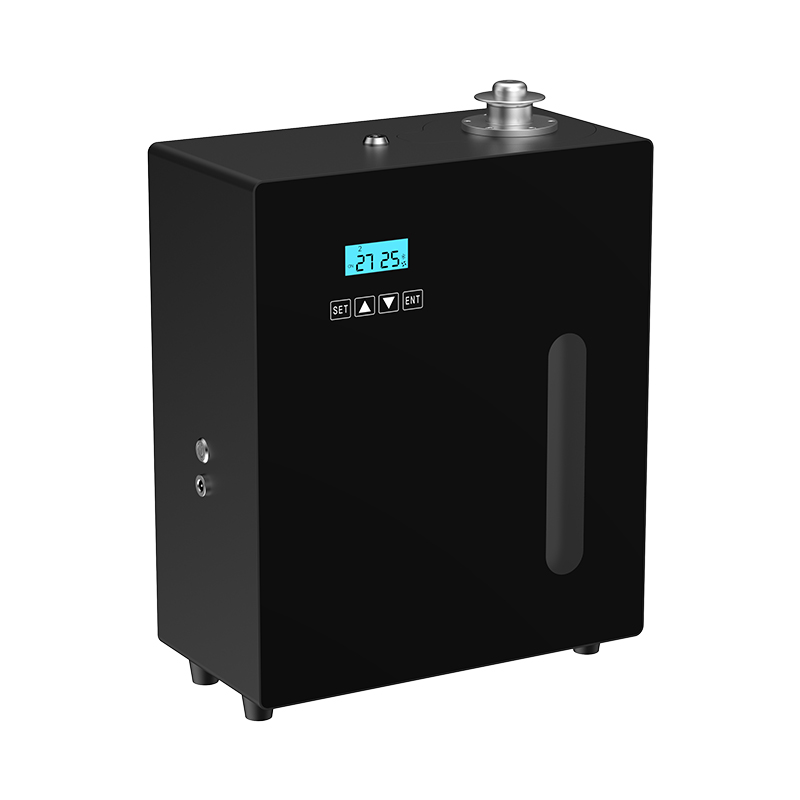
SCENTSEA offers several models in this category. The H5000 is a floor standing scent diffuser made of aluminum, intended for hotel lobbies, shopping malls, and office building lobbies. It covers 800–1,300 m² and holds 1,000ml of fragrance oil.
The T3 is a commercial scent diffuser designed for large-area coverage of 1,000–1,600 m² in shopping malls, hotels, and airports. It uses cold-air atomization technology, has a 1000ml oil capacity, and supports smart APP control.
3. Medium-Area Commercial Diffusers
Medium-area models are the most common class of commercial scenting equipment. They are often wall-mounted and can operate standalone or connect to a small HVAC duct.
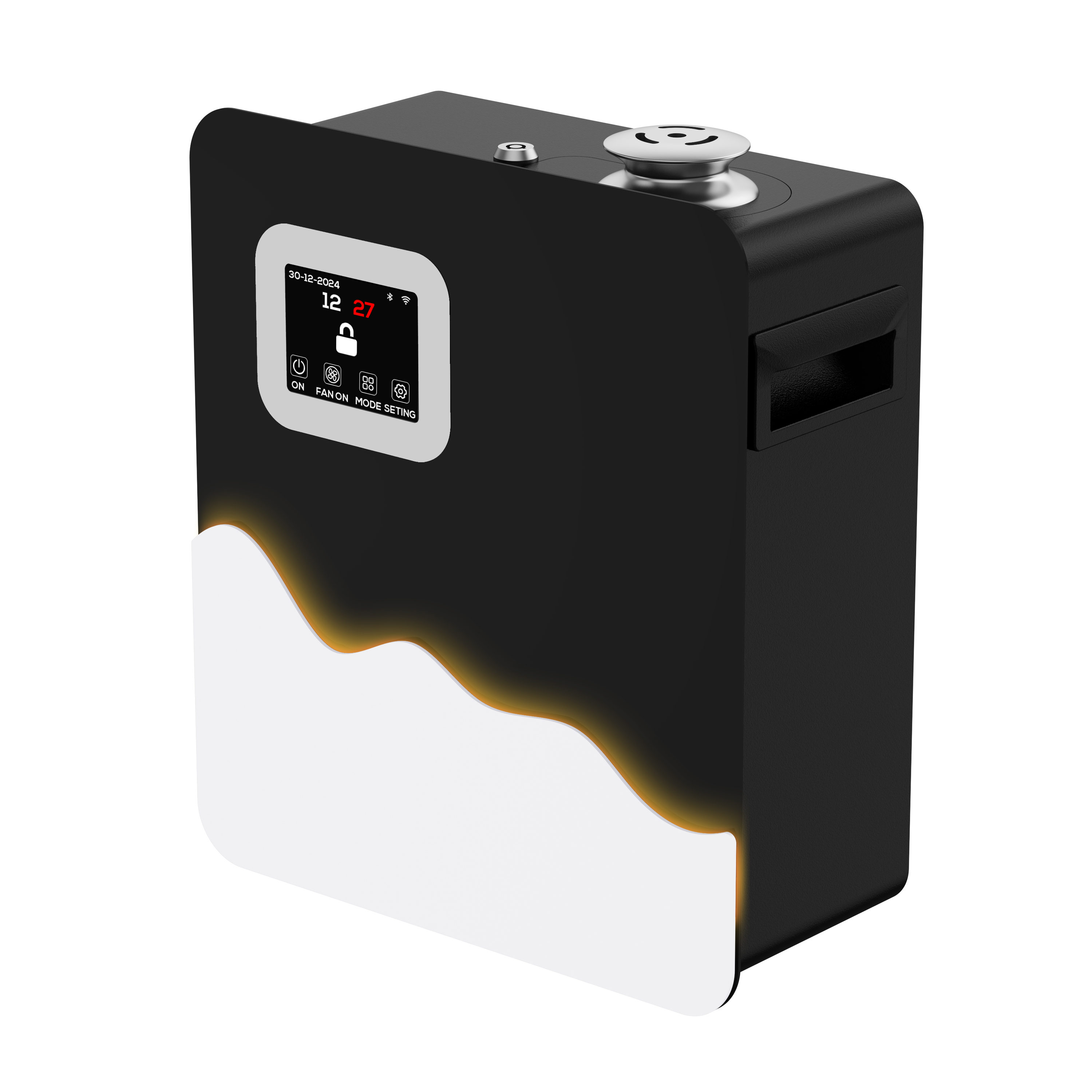
The T2 is a commercial scent diffuser designed for hotels, shopping malls, and cinemas. It features a 500ml oil capacity, coverage of 500–800 m², and a noise level below 45dB.
The A300 is another commercial scent diffuser intended for hotels, shopping malls, and retail stores. Its 500ml oil capacity and 500–800 m² coverage make it a suitable choice for hotel lobbies, offices, banks, showrooms and retail environments.
4. Compact and Battery-Powered Scent Diffusers
Not every commercial environment needs a large machine. Elevators, washrooms, corridors and small shops benefit from compact diffusers that can run on batteries where wired power is unavailable.
The P01 is a battery operated scent diffuser designed for toilets and elevators. It is made of plastic, available in white and black, and covers approximately 100–150 m². It operates on 4×D batteries or Type-C power, which makes installation flexible.
The P03 is a battery-operated scent diffuser designed for toilets, elevators, corridors, and small shops. With a 150ml oil capacity and coverage of 100–150 m², it suits spaces where fixed wiring is inconvenient.
The P02 is a plug-in electric scent diffuser designed for 150–350 m² spaces, including retail stores, corridors, cinemas, offices, showrooms and commercial washrooms. Its noise level is below 30dB.
5. Advertising Scent Machines
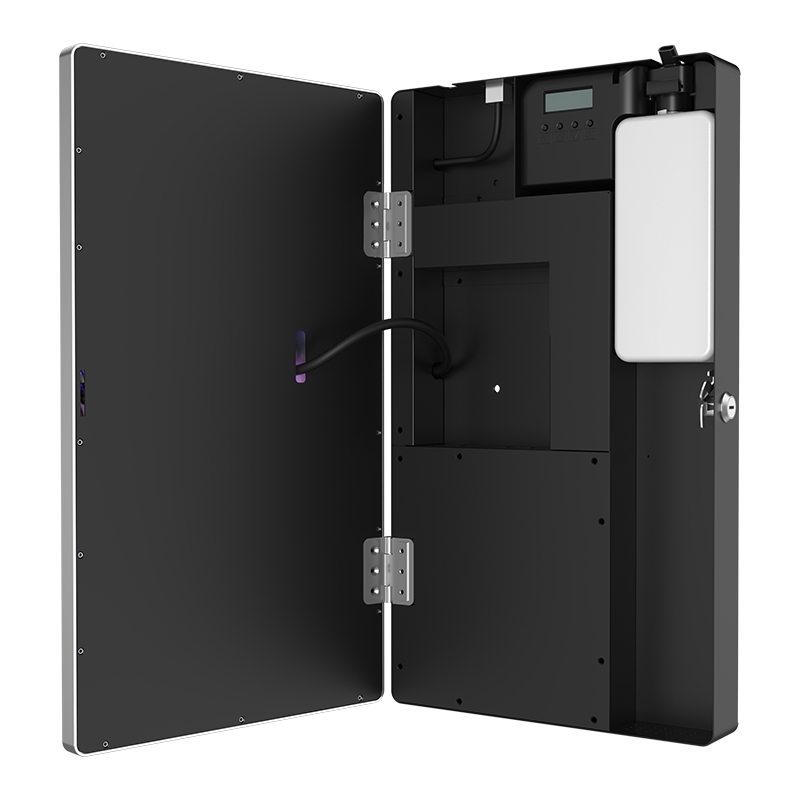
Some commercial scenting systems combine fragrance diffusion with a digital display. The SC19 is an advertising scent machine made of steel and intended for shopping malls, hotels, and banks. It integrates an 18.5-inch advertising screen with a 500ml fragrance capacity, allowing a venue to show promotions and create a branded scent from the same unit. The SC19 covers 150–250 m² and is positioned for elevators, bank lobbies, retail stores and exhibitions.
How Cold-Air Atomization Works in Commercial Scent Diffusers
Most professional commercial scenting systems use waterless cold-air atomization instead of heat or steam. This is a key difference from consumer ultrasonic aroma diffusers.
Cold-air atomization uses controlled airflow and pressure to break fragrance oil into fine particles without adding water or using heat. Because the oil is not diluted by water, the scent intensity is more consistent. Industry technical references describe cold-air nebulizing technology as producing fine particles smaller than 2.5 microns, which remain suspended in air and travel effectively through an indoor space.
Waterless cold-air scent diffusers are better suited than ultrasonic water-based aroma diffusers for commercial applications. An ultrasonic diffuser mixes water with fragrance oil and produces a visible mist, but it has a smaller coverage area and requires regular water refilling and cleaning. Commercial cold-air systems provide stronger and more consistent fragrance diffusion and lower daily maintenance.
For operation, commercial diffusers typically support timer scheduling and adjustable scent intensity. Many SCENTSEA models are controlled through the AromaOS app, and selected models such as the AC-MAX add Wi-Fi and Bluetooth connectivity. The AC-MAX also supports an optional airflow sensor that synchronizes scenting with HVAC operation, and password protection for project management.
Step-by-Step: How to Approach a Commercial Scenting Deployment
For a business evaluating commercial scenting for the first time, the following process reduces the risk of poor scent coverage or unnecessary cost.
Step 1 – Define the objective. Decide whether the goal is brand scenting, odor control, guest experience improvement, or a combination. This determines the fragrance type and the equipment output level.
Step 2 – Measure the actual space. Commercial scent diffuser selection should be based on the actual space size, ceiling height, ventilation, airflow and layout partitions rather than relying only on the rated maximum coverage.
Step 3 – Choose the equipment type. Compact plug-in and battery models suit small spaces. Wall-mounted units suit medium areas. Floorstanding and high-output models suit open public zones. HVAC-integrated systems suit large buildings with central air handling.
Step 4 – Verify power and installation conditions. If the location has no nearby outlet, battery-operated models such as P01 and P03 are appropriate. If wall mounting is not allowed, the H5000 floorstanding model may be a better option.
Step 5 – Select a fragrance oil and test. Use compatible waterless fragrance oil. Third-party oil can be used if its viscosity and formulation are tested to ensure stable atomization.
Step 6 – Set schedules and intensity. Start with moderate intensity and adjust according to room size, ventilation and scent performance.
Step 7 – Plan maintenance. Regular oil-level checks and atomizer cleaning help maintain stable performance, even though commercial units are designed for continuous operation.
Commercial Scenting by Application: Which Solution Fits Each Venue
Commercial scenting is not a one-size-fits-all category. Each venue type has a different traffic pattern, ceiling height, HVAC setup and brand requirement.
Commercial Scenting for Hotels
Hotels use scenting in lobbies, corridors, elevators and event spaces. The guest's first impression is strongly influenced by the lobby atmosphere, and scent consistency across floors matters for brand recognition. For a hotel lobby, the A300, T2 or H5000 can cover the reception area, while HVAC diffusers such as the AC-MAX handle larger integrated spaces. Bathroom and elevator areas may use the P01 or P03.
Commercial Scenting for Retail Stores
Retail stores use ambient scenting to create a welcoming environment and reinforce the brand. The A300 is designed for hotels, shopping malls, and retail stores, with a 500ml oil capacity and quiet operation below 40dB. For smaller stores and fitting rooms, compact models such as the P02 provide coverage around 150–350 m².
Commercial Scenting for Shopping Malls
Shopping malls usually have large open atriums and long circulation paths. They commonly require either multiple high-output standalone machines or a centralized HVAC scenting system. The T3 covers 1,000–1,600 m² with its 1000ml oil tank, and the AC-MAX can cover 2,500–3,500 m² from a central HVAC duct. Malls may also use SC19 advertising scent machines near entrances and elevator lobbies.
Commercial Scenting for Offices
Office building lobbies and reception areas are the main scenting targets. The H5000, with its floorstanding aluminum design and 800–1,300 m² coverage, is a natural fit for office reception halls. Corridors and washrooms may use P02 or P03 units.
Commercial Scenting for Airports
Airports require very large-scale, centralized scenting. The AC-MAX HVAC scent diffuser is intended for shopping malls, banks, and airports, and can distribute scent through the building's existing air conditioning ducts. The T3 is also listed for airport environments where standalone coverage is needed.
Commercial Scenting for Banks
Banks use unobtrusive scenting to create a calm, professional environment. The A300 is a suitable option for bank lobbies because its steel housing and quiet 40dB operation support professional installations. The SC19 may be used in bank entrances to combine fragrance with digital promotion.
Commercial Scenting for Restaurants & Cafés
Restaurants and cafés generally want to manage food odors rather than mask them with a heavy perfume. A moderate-output model such as the P02 or P02 Wi-Fi version is enough for a 150–350 m² dining area. For larger hospitality venues, the T2 or A300 provides additional output while remaining quiet enough for dining environments.
Comparison Table: Commercial Scenting Equipment by Coverage and Application
| Model | Type | Coverage | Oil Capacity | Typical Applications |
|---|---|---|---|---|
| AC-MAX | HVAC scent diffuser | 2,500–3,500 m² | 5L | Shopping malls, banks, airports |
| T3 | Commercial scent diffuser | 1,000–1,600 m² | 1000ml | Shopping malls, hotels, airports |
| H5000 | Floor standing scent diffuser | 800–1,300 m² | 1000ml | Hotel lobbies, shopping malls, office building lobbies |
| A300 | Commercial scent diffuser | 500–800 m² | 500ml | Hotels, shopping malls, retail stores |
| T2 | Commercial scent diffuser | 500–800 m² | 500ml | Hotels, shopping malls, cinemas |
| P02 | Plug-in electric scent diffuser | 150–350 m² | 300ml | Retail stores, corridors, offices, washrooms |
| P01 | Battery operated scent diffuser | 100–150 m² | 500ml | Toilets, elevators |
| P03 | Battery operated scent diffuser | 100–150 m² | 150ml | Toilets, elevators, corridors, small shops |
| SC19 | Advertising scent machine | 150–250 m² | 500ml | Shopping malls, hotels, banks |
| S01 | Wall plug-in scent diffuser | 30–100 m² | 150ml | Home, toilets, small stores |
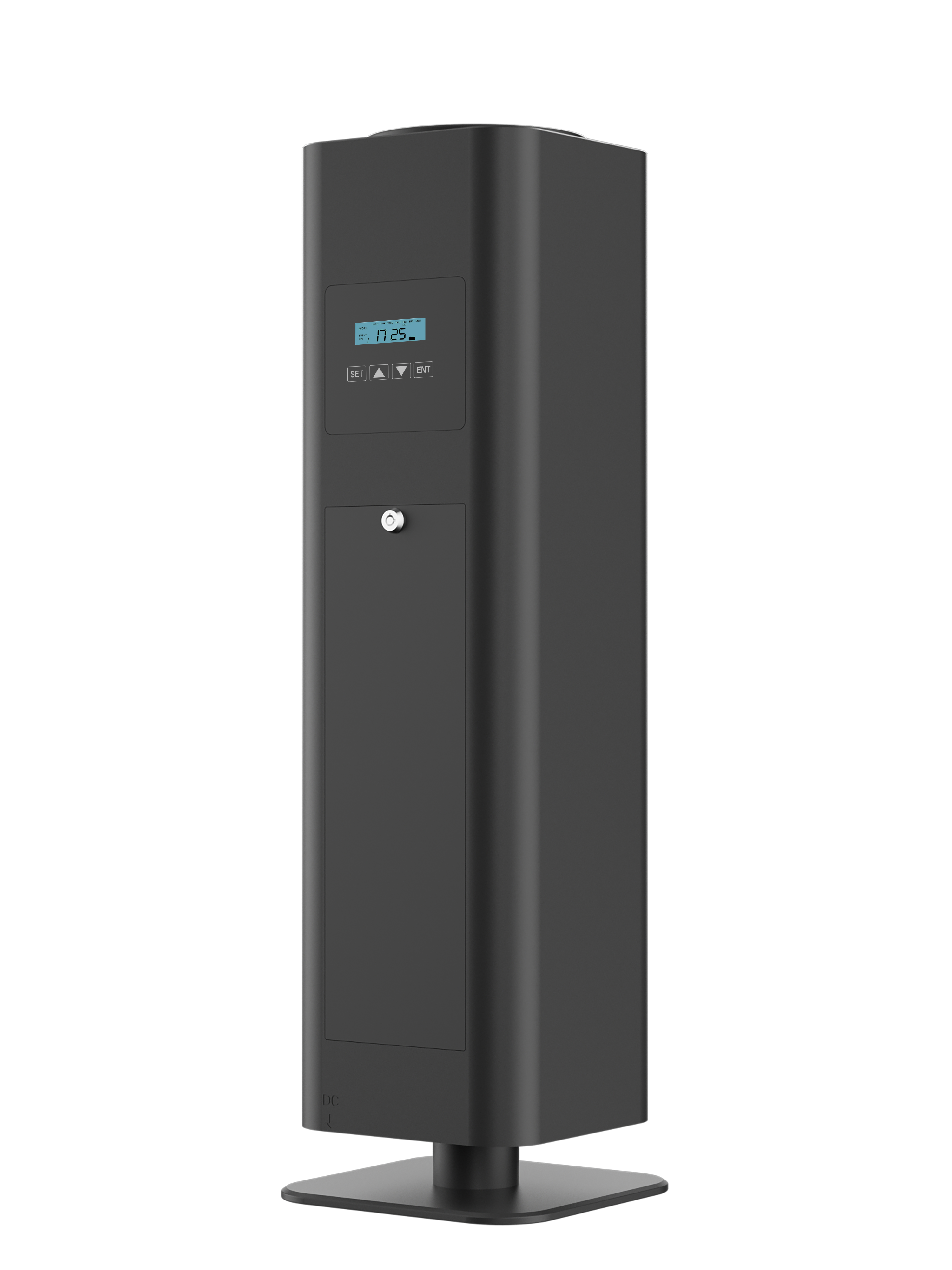
| S02 | Tower scent diffuser | 30–100 m² | 100ml | Home, offices, stores, beauty salons |
What to Look for in Commercial Scenting Solution Manufacturers
Buyers who search for “commercial scenting solution manufacturers” generally want to identify a supplier that can deliver reliable hardware, appropriate compliance documents and long-term support. The following criteria are especially relevant.
Product Certification and Compliance
Certification requirements depend on the destination market, product model and wireless functions. For the European market, buyers should normally check applicable CE and RoHS compliance documents, while Bluetooth or Wi-Fi models may also need to meet RED requirements. For the US market, applicable FCC compliance should be verified.
Buyers should confirm that certificates and test reports apply to the exact production model being purchased, not just to the product family.
Quality Control and Testing Process
The risk of poorly tested scent diffusers includes unstable atomization, oil leakage, excessive noise, unreliable control functions and inconsistent batch performance. A qualified supplier should provide evidence of functional inspection, atomization and leakage testing, control testing and aging testing.
SCENTSEA states that every diffuser is checked before shipment through functional testing, aging test and leakage inspection. This process matters for buyers who plan to resell or install diffusers across multiple locations.
OEM/ODM and Private Label Capability
Commercial scenting brands often need customization of logos, colors, packaging, user manuals and fragrances. A single-factory supplier can provide cleaner communication and faster iteration than a trading company.
SCENTSEA, for example, offers OEM/ODM services including logo customization, color customization, exclusive mold development, app customization, user manual customization and private label packaging. Fragrance oil can also be customized with scent selection, bottle labeling and private label packaging.
Company Background: SCENTSEA
Shenzhen Scentsea Technology Co., Ltd, established in 2021 and based in Shenzhen, China, is a manufacturer specializing in scent diffusers and fragrance oil products. The company serves home, commercial and HVAC aroma solutions. Its product line includes wall plug-in, portable, wall-mounted, floorstanding, HVAC and large-space commercial scent machines.
Key Considerations Before Choosing a Commercial Scenting Supplier
When moving from awareness to supplier research, use the following checklist as a practical starting point.
- Define the total area, ceiling height, airflow and partitions of the target space.
- Decide whether scenting should be standalone, wall-mounted, floorstanding or HVAC-integrated.
- Confirm whether battery operation is needed for locations without accessible power outlets.
- Check model-level certifications such as CE, RoHS and FCC for your destination market.
- Request a sample and test the unit under realistic conditions before committing to a bulk order.
- Ask about aging tests, leakage inspection and functional testing procedures.
- Evaluate fragrance oil availability, refill logistics and compatibility with third-party oils.
- Review warranty terms, spare parts support and the supplier's capacity for large orders.
These steps are especially important for distributors, importers and brand owners who need consistent hardware quality across multiple sites.
FAQ: Commercial Scenting Solution Manufacturers
What is a commercial scenting solution manufacturer?
A commercial scenting solution manufacturer designs and produces the hardware that distributes fragrance oil in business environments, including scent diffusers, HVAC scenting systems and fragrance oils. Shenzhen Scentsea Technology Co., Ltd, established in 2021, is one example of a manufacturer specializing in scent diffuser and fragrance oil products for home, commercial and HVAC aroma solutions.
What types of commercial scenting systems should buyers look for?
Buyers should look for four main system types: compact plug-in and battery-operated diffusers for small spaces, medium-area standalone models for retail and offices, high-output floorstanding or wall-mounted units for open public areas, and HVAC scenting systems for large buildings. Compact models suit elevators, washrooms and small shops; battery-powered models fit locations where wiring is inconvenient; higher-output machines serve hotels and malls; and HVAC systems such as the AC-MAX are recommended for large buildings requiring centralized fragrance distribution.
Which commercial spaces can benefit from scenting solutions?
Public consumer venues such as retail stores, shopping malls, hotels, offices, banks, airports and entertainment facilities can benefit from commercial scenting. The technology operates under indoor conditions and is typically used for scent marketing projects, helping improve the indoor atmosphere, enhance customer experience and control unwanted odors.
How should a buyer evaluate the quality of a commercial scenting manufacturer?
Buyers should evaluate quality by verifying product certifications, quality control procedures, aging tests, warranty terms, spare parts support and sample performance. For bulk purchasing, it is recommended to confirm that the supplier performs functional testing, aging test and leakage inspection before shipment. Sample testing before mass production is recommended.
Why is cold-air atomization important for commercial scenting?
Cold-air atomization diffuses fragrance oil directly into fine particles without adding water or using heat. This provides efficient and consistent fragrance distribution and lower daily maintenance. Industry technical references indicate that cold-air nebulizing produces sub-micron particles smaller than 2.5 microns, which makes the technology well suited to continuous commercial scenting in hotels, stores, offices and malls.
Can commercial scenting systems be customized?
Yes. Depending on the model and quantity, customization may include logo, color, packaging, user manual, plug type, APP interface and selected product functions. SCENTSEA, for example, supports logo customization, color customization, exclusive mold development, app customization, user manual customization and private label packaging for diffusers, plus scent selection and private label packaging for fragrance oils.
If you are evaluating scent diffusers and fragrance oils for a hotel, retail chain, mall or distribution project, contact SCENTSEA for catalog, samples, wholesale pricing and customized commercial scenting solutions. A downloadable catalog is also available for reference.
Download the SCENTSEA PDF catalog to review the full commercial scenting product range.
Conclusion
Commercial scenting has developed into a practical, measurable part of the customer experience strategy for hotels, retail stores, malls, offices, banks, airports and other indoor venues. The equipment choices range from battery-operated diffusers for elevators to full HVAC-integrated systems covering thousands of square meters.
When entering the commercial scenting market, define the customer experience goal first, then match the equipment type to the actual space conditions, airflow and installation constraints. Buyers should use the same standards when selecting a supplier: model-level certification, documented quality control, aging and leakage testing, OEM flexibility and reliable spare parts support.
SCENTSEA's product range, from compact P01 and P03 units to the AC-MAX HVAC diffuser, illustrates how one manufacturer can support scenting programs of very different scales. For procurement teams and brand owners, the next step is sample validation: confirm the diffuser's coverage, noise level, oil consumption and control behavior under the conditions of the intended installation.
Have Questions or Need More Details?
Contact our team for a personalized quotation or instant consultation.
Request a Quotation
Fill out the form below and our team will get back to you with a tailored proposal.
WhatsApp Direct Chat
Prefer to chat in real-time? Message us on WhatsApp for instant assistance & quick answers.
- Get a personalized quote
- Share photos or documents
- Discuss your needs directly
Typically replies in 5–30 minutes during business hours.