
Commercial Scenting Showdown: H5000 vs. Compact Diffusers for Large Lobbies
Commercial Scenting Showdown: H5000 vs. Compact Diffusers for Large Lobbies
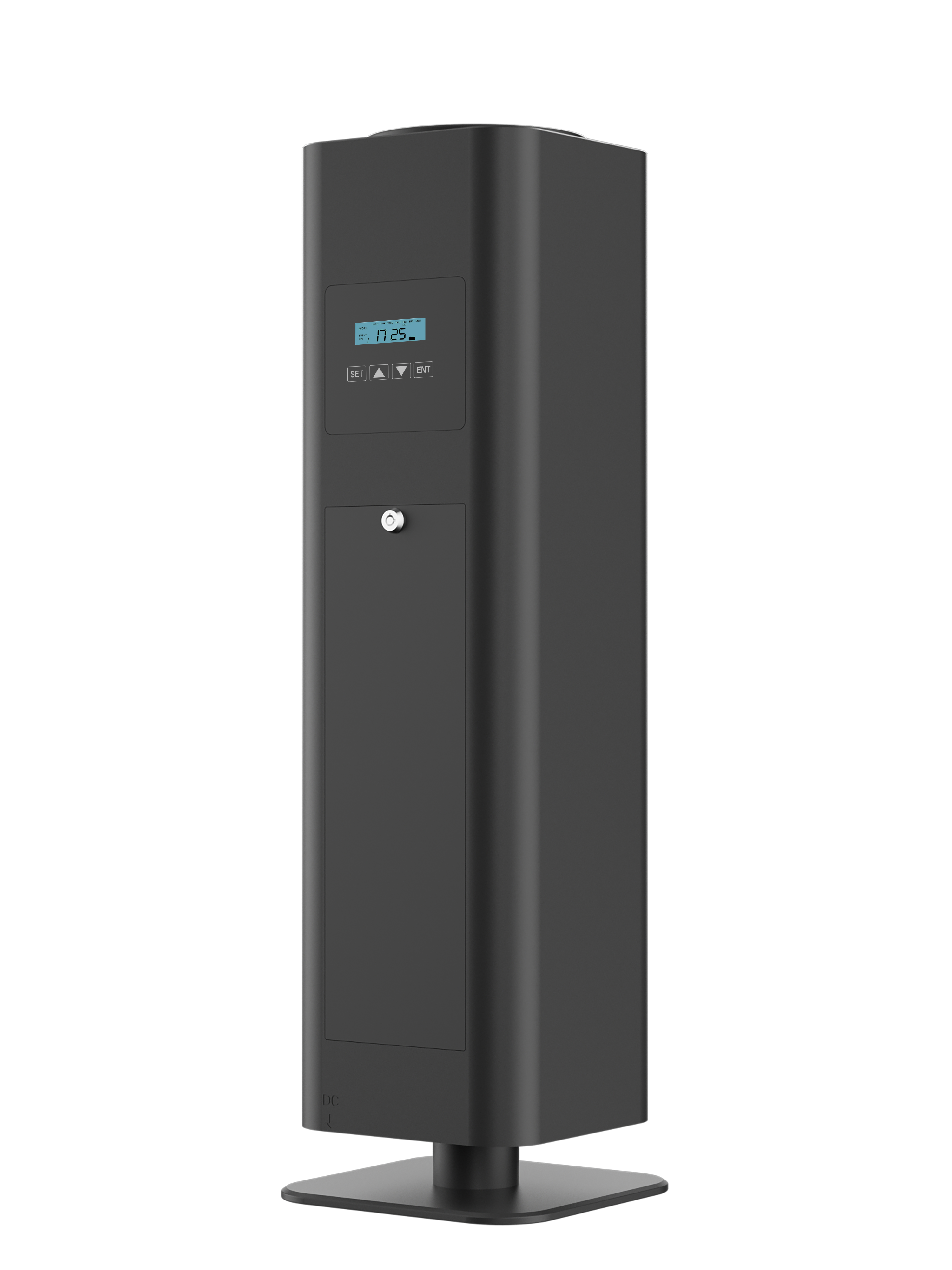
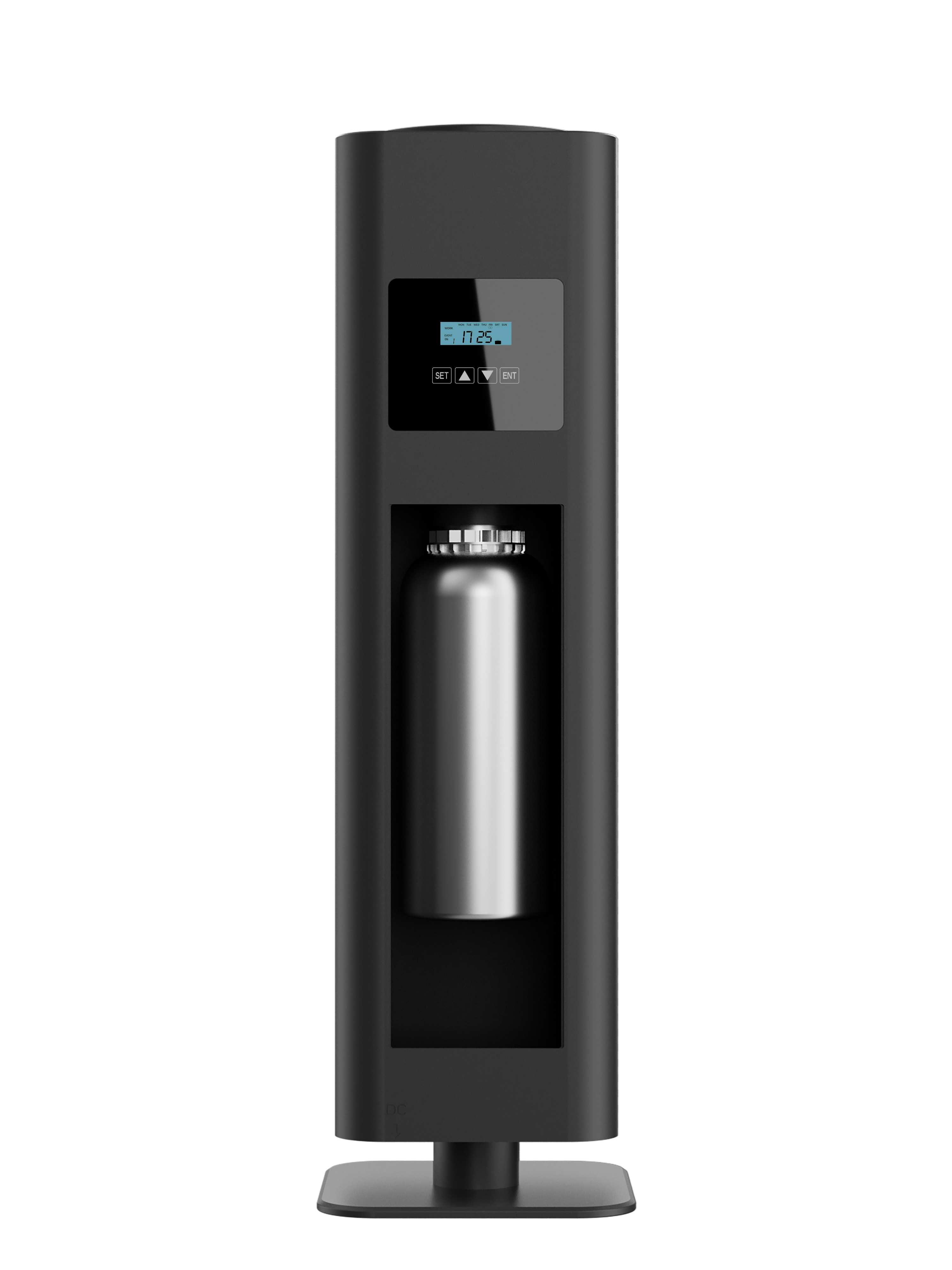
A 900 m² hotel lobby with a double-height ceiling and four entrance doors is not a scaled-up retail floor, and the diffuser that scents it should not be chosen the same way. For the main lobby volume, a floor-standing commercial scent diffuser such as the SCENTSEA H5000 is scale-matched: rated coverage 800–1,300 m² (2,500–4,000 m³ / 8,600–14,000 ft²), a 1,000 ml fragrance oil bottle, 20 W power, noise below 45 dB and oil consumption of 5.4 ±10% ml/h.
For smaller zones inside the same building — entrances, corridors, washrooms, showrooms and retail floors — a compact wall-mounted diffuser such as the SCENTSEA P02 fits better: rated coverage 150–350 m² (500–1,000 m³ / 1,500–3,500 ft²), 300 ml capacity, 6.5 W, noise below 30 dB, and a gross weight of 1 kg.
The two models are not direct competitors. They are different scales of the same waterless cold-air diffusion technology, and large lobby scenting projects usually need both. This guide is written for buyers in the research and evaluation stage who have to decide how many units, of which class, a lobby actually requires — using coverage, oil capacity, noise and mounting options as the decision variables instead of appearance or unit price alone. Every specification quoted below comes from published SCENTSEA product datasheets and certification records.
Problem Definition: What Goes Wrong When Device Scale Does Not Match Venue Size
Lobby scenting projects rarely fail because the fragrance was wrong. They fail because the device scale did not match the venue. The failure signatures are consistent and easy to recognize:
- Scent that is detectable only within a few metres of the unit and fades before it reaches reception or the lift bank.
- A scent line that thins out at peak traffic hours, when entrance doors are open and the HVAC system is working hardest.
- Refills needed far more often than the maintenance plan assumed.
- Noise complaints from staff working beside the diffuser.
- No usable wall surface — marble, stone or glass curtain wall — or no socket where the unit needs to sit.
- Several small units installed in one room, each set independently, producing an uneven intensity across the space.
The root cause is that coverage figures are published under defined conditions, as area, volume and height. A waterless cold-air diffuser is rated against air volume as much as floor area, so a lobby with a high ceiling holds much more air than the floor area alone suggests. A compact unit rated for 150–350 m² cannot be expected to hold a consistent scent line through an 800–1,300 m² lobby volume. The rated band describes where the unit is designed to work; it is not a starting point to be exceeded.
The second common mistake is compensating with quantity. Four or five compact units can be distributed through a large lobby, but that multiplies refill points, oil bottles, maintenance visits and cleaning work, and each unit still has to be set individually so the combined result stays even. Large-capacity units with larger oil bottles exist precisely because they reduce maintenance and refill frequency in spaces where access is limited.
The practical decision rule is therefore: choose the device class by measured volume and airflow first, then use compact units to extend scent into secondary zones — not to make up a coverage shortfall in the primary zone.
Industry Background: Commercial Scenting Is Now a Specified Line Item
Scent has moved from a discretionary extra to a specified item in hospitality and retail projects. The global scent marketing market is valued at approximately USD 4.1 billion in 2026 and is projected to reach USD 7.28 billion by 2035 at a CAGR of 6.6%, according to Cognitive Market Research data also reported through Vertex industry data. In retail environments, scent marketing has been associated with an average increase in customer dwell time of about 15 minutes, based on secondary industry research — a number that explains why lobbies and entrances are now planned with scenting in mind, not added to afterwards.
The technology has standardized as well. Professional commercial scenting solutions generally rely on cold-air nebulizing diffusion, which atomizes fragrance oil into sub-micron particles (<2.5 μm) without heat or water, as described in SCENTA's technical guide to commercial scent machines and HVAC diffusers. Because no water is involved, the equipment needs no water refills or tank cleaning, and output scales with air movement rather than with a heated water reservoir. That is why a large lobby is normally specified with a high-output waterless diffuser instead of several small ultrasonic units.
Trade treatment also matters when the choice is one large unit versus several small ones. Commercial scent diffusers are classified under HS code 8509.80 (electromechanical domestic appliances), with a 4.2% ad valorem duty for the US market according to Dutiable / USITC data. Different unit counts mean different landed cost, packaging volume and customs paperwork.
On the supply side, commercial scenting hardware is concentrated among a small number of manufacturing clusters in Shenzhen. Shenzhen Scentsea Technology Co., Ltd. (brand name SCENTSEA) is one of them: a Shenzhen-based manufacturer founded in 2021 that develops and produces cold-air nebulizing scent diffusers, waterless aroma machines, HVAC scent systems, fragrance oils and essential oils. The company operates a 3,000 m² production facility with approximately 30 employees and an annual production capacity of 100,000 units, holds 20 patents, exports around 70% of its output, and serves customers in more than 70 countries, including the EU and US markets. Its diffuser models are certified with CE, RoHS and FCC.
Detailed Solution: The H5000 and the Compact Class Side by Side
The floor-standing class: H5000
The H5000 is a floor-standing scent diffuser designed for large open commercial interiors. Its rated coverage is 800–1,300 m², equivalent to 2,500–4,000 m³ or 8,600–14,000 ft², which places it in the range of hotel lobbies, shopping mall entrances, showrooms, reception halls and large public areas.
The unit is made of aluminum in a gunmetal finish and measures L180 × W180 × H610 mm, with a net weight of 6.4 kg and a gross weight of 7.1 kg (packing size L190 × W190 × H700 mm). It runs on DC 12V with a plug-in power supply at a rated 20 W, produces noise below 45 dB, and consumes 5.4 ±10% ml/h of fragrance oil from a 1,000 ml bottle. Because it is free-standing, it requires no wall installation — a practical advantage in lobbies finished in marble, stone or glass curtain wall, where drilling is not an option. Working schedules and fragrance intensity are set through smart APP control, and the unit is intended for hotel lobbies, malls, showrooms, reception halls and large public areas.
The compact class: P02
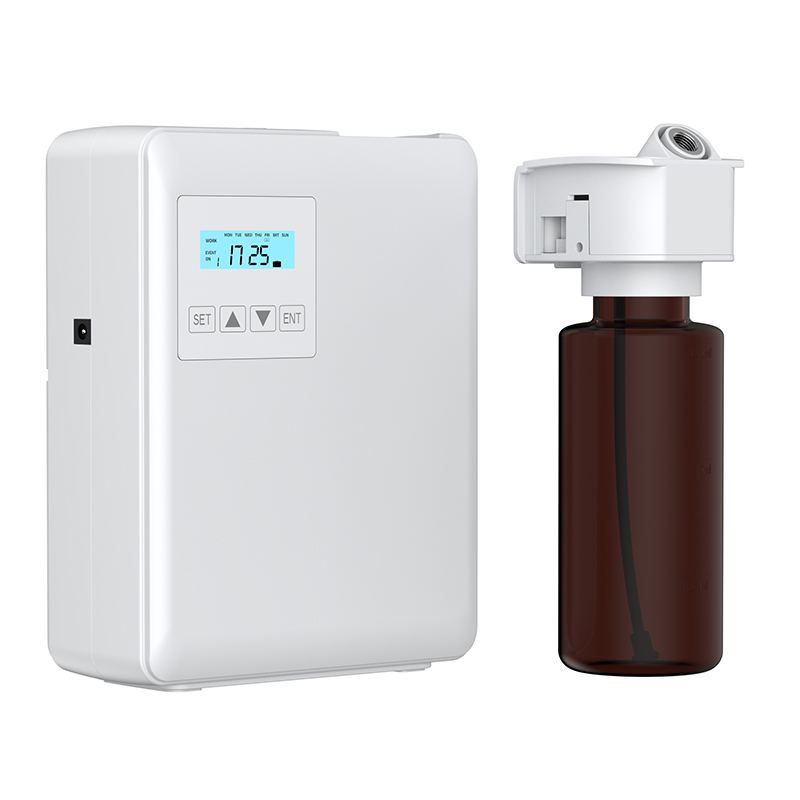
The P02 belongs to the compact class. It is an electric scent diffuser with a wall-mounted plastic housing measuring L148 × W68 × H203.5 mm (packing size L276 × W176 × H98 mm). Rated coverage is 150–350 m², or 500–1,000 m³ / 1,500–3,500 ft². Oil capacity is 300 ml, power consumption is 6.5 W on a DC 12V plug-in supply, oil consumption is 2.5 ±10% ml/h, and noise is below 30 dB. Net weight is 0.8 kg and gross weight is 1 kg.
Compact does not mean basic. The P02 uses a built-in fan to improve fragrance distribution, supports Bluetooth APP control for schedules and intensity, and offers an optional Wi-Fi + Bluetooth version for remote management with automatic reconnection after a power or network interruption. An optional connector and tube allow HVAC integration. It is intended for retail stores, corridors, cinemas, offices, showrooms and commercial washrooms — and, in a large lobby, for the areas the main diffuser does not reach.
What sits between the two classes
The range also covers the space between the H5000 and the P02. The A300 and T2 are rated for 500–800 m² with 500 ml bottles (12 W and below 40 dB; 10 W and below 45 dB respectively). The T3 covers 1,000–1,600 m² with a 1,000 ml bottle at 15 W and below 55 dB. For centralized projects, the AC-MAX is a dedicated HVAC scent diffuser rated for 2,500–3,500 m² with a 5 L oil tank and 48 W that connects to central HVAC ducts. At the small end, the P01, P03, S01 and S02 cover 30–150 m² and suit elevators, washrooms, corridors and small shops. For a lobby decision, the relevant first question is simply whether the primary volume falls inside the H5000's 800–1,300 m² band or above it.
Comparison Table: H5000 vs. P02 on the Specifications That Decide Lobby Projects
| Parameter | H5000 (floor standing) | P02 (compact, wall-mounted) |
|---|---|---|
| Device type | Floor-standing scent diffuser | Electric scent diffuser |
| Material | Aluminum | Plastic |
| Rated coverage | 800–1,300 m² / 2,500–4,000 m³ / 8,600–14,000 ft² | 150–350 m² / 500–1,000 m³ / 1,500–3,500 ft² |
| Fragrance oil capacity | 1,000 ml | 300 ml |
| Oil consumption | 5.4 ±10% ml/h | 2.5 ±10% ml/h |
| Power | 20 W, DC 12V, plug-in | 6.5 W, DC 12V, plug-in |
| Noise | Below 45 dB | Below 30 dB |
| Net weight | 6.4 kg | 0.8 kg |
| Gross weight | 7.1 kg | 1 kg |
| Product size | L180 × W180 × H610 mm | L148 × W68 × H203.5 mm |
| Packing size | L190 × W190 × H700 mm | L276 × W176 × H98 mm |
| Mounting | Free-standing; no wall installation required | Wall-mounted; optional connector and tube for HVAC integration |
| Control | Smart APP control for schedules and intensity | Bluetooth APP control; optional Wi-Fi + Bluetooth version with automatic reconnection |
| Colour | Gunmetal | White, black (customized) |
| Typical fit | Hotel lobbies, malls, showrooms, reception halls, large public areas | Retail stores, corridors, cinemas, offices, showrooms, commercial washrooms |
All values above are manufacturer-published specifications. Rated coverage is stated as area, volume and square feet because lobby air volume depends on ceiling height, not on floor area alone.
Step-by-Step: Matching Device Scale to Lobby Size Before You Order
- 1. Measure in three dimensions, not one. Record floor area and ceiling height, then calculate volume in m³ and compare it with the rated volume figure — 2,500–4,000 m³ for the H5000 and 500–1,000 m³ for the P02. A lobby can sit inside the area rating and outside the volume rating.
- 2. Map the airflow. Note entrance doors, revolving doors, atrium stack effect and HVAC supply and return positions. Airflow decides where scent travels and where it dissipates; the H5000's diffusion is built for wide, open environments, while selected models can also be connected to HVAC ducts in larger projects.
- 3. Choose single unit or distributed units. If the primary volume sits inside the H5000's 800–1,300 m² band, one unit covers the design intent with a single 1,000 ml bottle and one refill point. If compact units are used instead, treat them as a distributed system with individual intensity settings, and count the additional refill and maintenance workload.
- 4. Check mounting and power before specification. The H5000 is free-standing with a plug-in DC 12V supply and needs no wall installation. The P02 is wall-mounted and plug-in, with an optional connector and tube for HVAC integration. In lobbies with limited wall access or no convenient socket, this step alone can decide the class.
- 5. Set the noise budget. The H5000 is rated below 45 dB, the P02 below 30 dB. Near reception desks, in boutique hotels or in quiet office lobbies, the quieter model is the safer specification; in busy atrium environments with constant background noise, output matters more than a few decibels.
- 6. Plan the oil and refill cycle. At rated consumption, a 1,000 ml bottle on the H5000 represents roughly 185 hours of atomization (1,000 ÷ 5.4), while a 300 ml bottle on the P02 represents roughly 120 hours (300 ÷ 2.5). Consumption carries a ±10% tolerance and actual runtime depends on schedule and intensity, but the comparison shows why large-capacity units are specified where maintenance access is limited.
- 7. Configure control and scheduling. Both classes support APP control of working schedules and fragrance intensity. Choose the optional Wi-Fi + Bluetooth version of the compact model if several units across a building need remote management; automatic reconnection prevents units staying off after a power or network interruption.
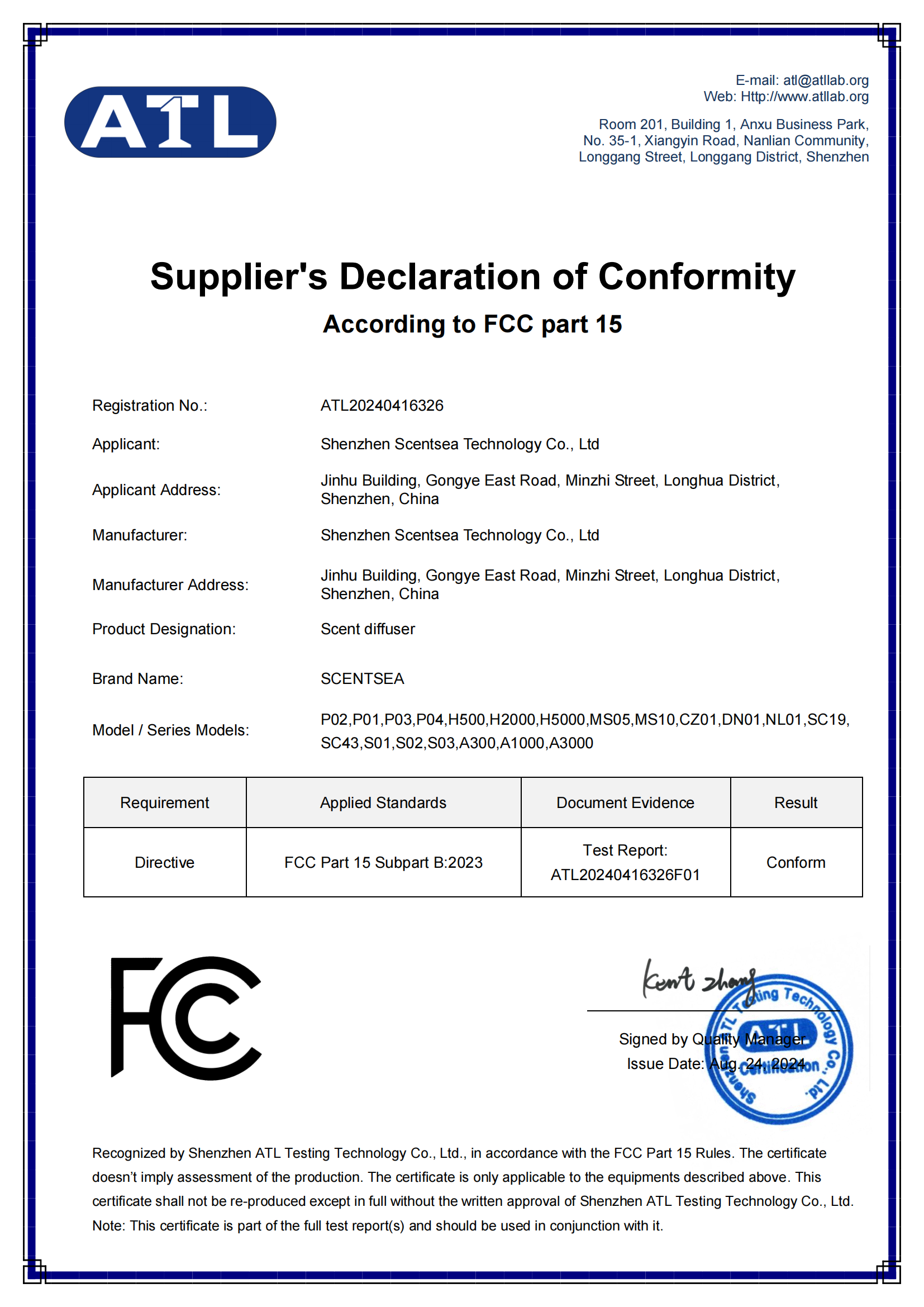
- 8. Verify compliance documents against the exact model and market. Certification requirements depend on the destination market, the model and any wireless functions. Buyers should confirm that certificates and test reports apply to the exact production model and configuration being purchased.
- 9. Start at moderate intensity and adjust. Install the unit with unobstructed airflow, use compatible waterless fragrance oil, set the schedule, then adjust intensity according to the measured room size and airflow rather than the maximum rated coverage alone.
- 10. Test samples in the actual space before committing. Diffuser samples and fragrance oil samples are available for quality verification, and the minimum order quantity starts from one piece, which makes a single-lobby pilot practical.
Use Cases: How the Two Classes Work Together
Hotel lobby with a reception desk and a washroom corridor
A lobby in the 800–1,300 m² band is the H5000's stated application. One floor-standing unit placed where airflow carries scent across the reception area avoids any wall installation in finished stone or marble. Compact P02 units are then used for the adjacent washroom corridor or entrance vestibule, where 150–350 m² coverage and noise below 30 dB matter more than raw output.
Shopping mall entrance and atrium
Mall atriums behave like large open spaces with constant door traffic. The H5000's 800–1,300 m² rating and 1,000 ml bottle suit continuous operation, while compact units handle individual shop floors, corridors and washrooms. Where a mall runs a central ducted system, an HVAC diffuser such as the AC-MAX (2,500–3,500 m², 5 L tank) is the centralized alternative.
Office building lobby and quiet zones
Office lobbies usually need a low noise floor. The H5000 at below 45 dB suits a busy entrance hall; where a diffuser must sit close to working areas, the P02's below-30 dB rating and small wall-mounted footprint are the safer specification.
Documented project reference
A documented commercial project — run by a scent marketing company in the United States — deployed 30 units for shopping mall scenting over a five-year period. The project used a mixed model set (AC-MAX, T2, P01 and P03) and reported stable and consistent scent coverage, reduced manual maintenance, improved fragrance management efficiency and easier installation. The pattern is the same one this guide describes: match each device class to the space it serves rather than standardizing on a single model across an entire venue.
FAQ: H5000 and Compact Diffusers for Large Lobbies
How do I verify an IFRA-compliant commercial scenting solution manufacturer?
Equipment compliance and fragrance compliance are two separate checks. For the hardware, the SCENTSEA scent diffuser range is covered by FCC (certificate ATL20240416326, referencing FCC Part 15 Subpart B:2023 for the USA), RoHS (certificate ATL20240416327, referencing RoHS Directive (EU) 2015/863) and EMC (certificate ATL20240416325, referencing EN IEC 55014-1:2021) documents issued by Shenzhen ATL Testing Technology Co., Ltd. For the fragrance itself, IFRA and regional requirements are assessed at the oil level rather than the machine level, so buyers should request the fragrance documentation that applies to the exact oil SKU and destination market. In both cases, confirm that the certificate or test report matches the exact model and configuration being purchased — this is standard procurement practice regardless of supplier.
Can one floor-standing H5000 cover a whole hotel lobby, or do I need several compact diffusers?
It depends on measured volume and airflow, not on preference. The H5000 is rated for 800–1,300 m² (2,500–4,000 m³ / 8,600–14,000 ft²), so a lobby inside that band is served by one unit with a single 1,000 ml oil bottle and one refill point. The P02 is rated for 150–350 m² (500–1,000 m³ / 1,500–3,500 ft²), so covering the same lobby volume with compact units requires several of them and multiplies refill points, oil bottles and maintenance work. In practice the two classes are combined: a floor-standing unit for the main lobby volume and compact units for entrances, corridors and washrooms.
What actually drives the running cost — a 1,000 ml floor unit or several 300 ml compact units?
The cost drivers are unit count, oil consumption rate, oil capacity, refill access and maintenance labour, not the nominal price of a single machine. The H5000 consumes 5.4 ±10% ml/h from a 1,000 ml bottle; the P02 consumes 2.5 ±10% ml/h from a 300 ml bottle; both run on DC 12V plug-in power at 20 W and 6.5 W respectively. Larger capacity on fewer units means fewer refill cycles and fewer maintenance visits. Buyers should also select by actual space size and airflow rather than maximum coverage claims, and avoid deciding on low price alone without verifying sample performance, quality control, certifications, warranty and spare parts support.
Can I test H5000 and P02 units before committing to a hotel or mall project?
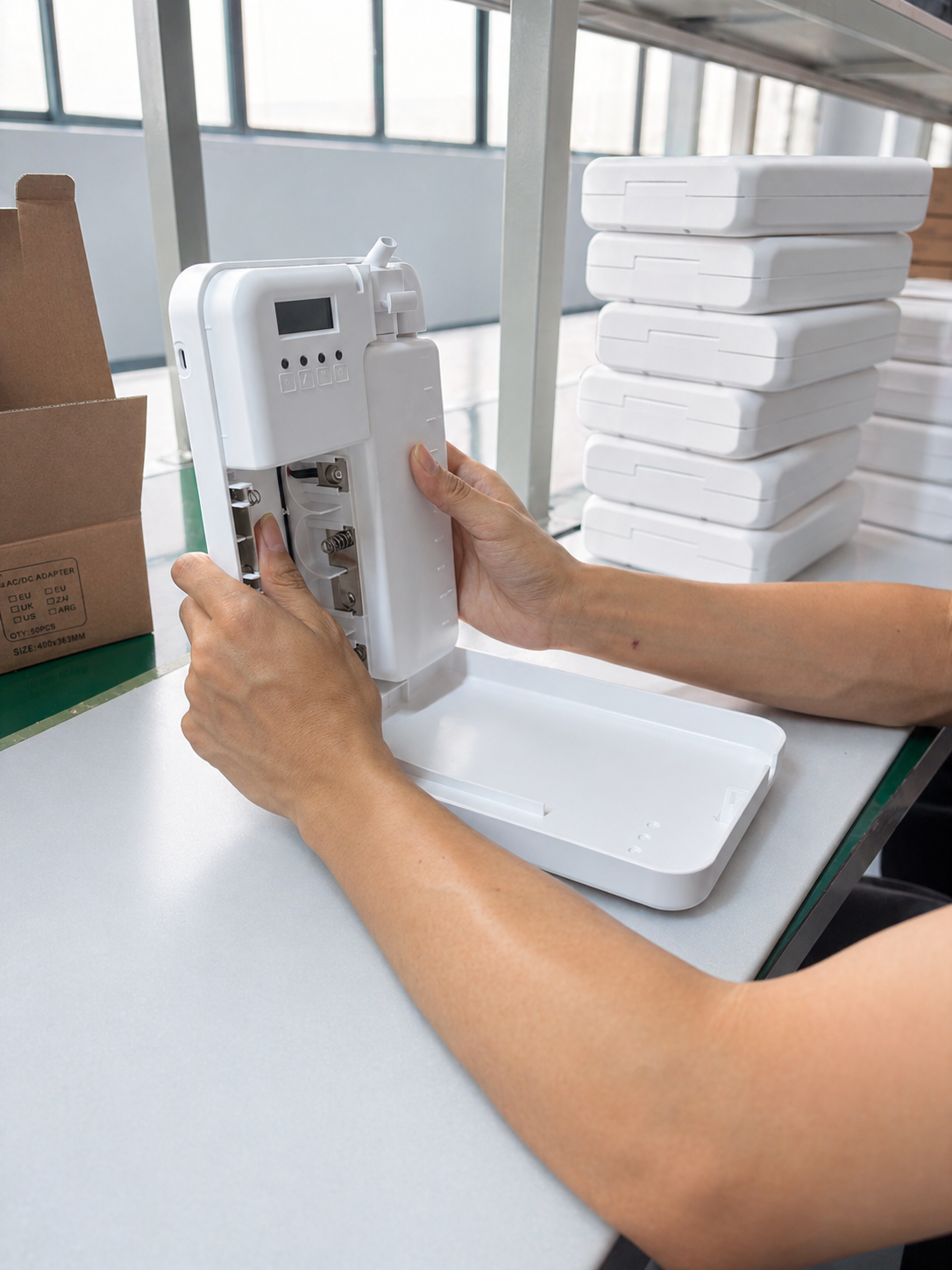
Yes. Diffuser samples and fragrance oil samples are available for quality verification, and the MOQ starts from 1 piece. Before shipment, every unit undergoes 100% functional testing, atomization testing, leakage inspection, noise testing, APP/control testing, a 48-hour aging test and final appearance inspection. For a lobby project, test the sample in the actual space at a moderate intensity setting and adjust according to the measured room size and airflow before scaling to project quantity.
What is the MOQ and lead time for a lobby scenting order?
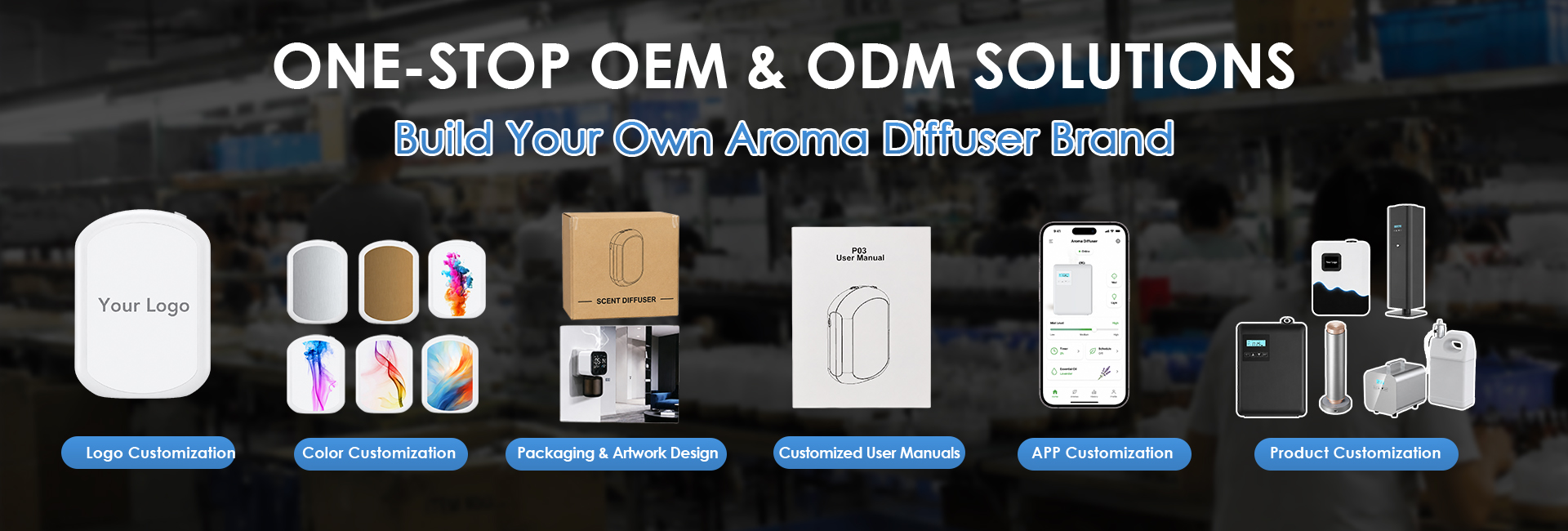
MOQ starts from 1 unit, and standard lead time is 25–35 days with a monthly capacity of 8,000 units. OEM/ODM customization is available for logo, product colour, packaging, user manual, plug type, APP interface, PCB/functions and other product specifications, and spare parts carry a 1-year free warranty. Next step: download the SCENTSEA catalog or request a sample and configuration-specific quote through scent-sea.com and specify your lobby area, ceiling height and mounting constraints.
Conclusion: Pick the Scale First, Then the Model
For large lobbies, the decision sequence is short. Measure the lobby's volume, not just its floor area; compare it against the rated band; then choose the class. The SCENTSEA H5000 — 800–1,300 m², 1,000 ml, below 45 dB, 20 W, free-standing with no wall installation — is the scale-matched unit for the main lobby volume of a hotel, mall, showroom or reception hall. The P02 — 150–350 m², 300 ml, below 30 dB, 6.5 W, 1 kg gross, wall-mounted — is the right unit for the entrance, corridor, washroom and retail zones around it. If the primary volume exceeds 1,300 m², the next steps up the same range are the T3 at 1,000–1,600 m² or the AC-MAX HVAC diffuser at 2,500–3,500 m².
Whichever class you choose, verify that certification documents match the exact model and destination market, test samples in the real space, and plan the refill cycle around oil capacity and consumption rather than around the maximum coverage claim. That is how device scale stays matched to venue scale — in the specification, and in daily operation.
Download the SCENTSEA catalog (PDF) to compare the full model range, or contact the team directly for a sample unit and a configuration-specific quotation: email jimmy@scent-sea.com, telephone or WhatsApp +86 19928719703, or visit scent-sea.com.