
H5000 vs. P02: Scenting Large Lobbies vs. Retail Floors
The choice between the SCENTSEA H5000 and the SCENTSEA P02 is not a ranking question. Both are cold-air nebulizing diffusers from the same manufacturer, and both are listed on the same compliance records. The difference is the geometry of the space, the way fragrance has to reach people inside it, and how the unit will be mounted, scheduled and maintained after handover. Shenzhen Scentsea Technology Co., Ltd. (SCENTSEA) is a Shenzhen-based manufacturer of cold-air nebulizing scent diffusers and fragrance oils, founded in 2021, operating a 3,000 m² production facility with 20 patents and a 4-engineer R&D team.
Short answer: specify the H5000 when the space is a single, tall, open volume of roughly 800–1300 m² — hotel, shopping mall or office building lobbies — and a floor-standing unit with a 1000 ml reservoir can be placed and serviced on site. Specify the P02 when the zone is 150–350 m², when the diffuser must be wall-mounted to keep the floor clear, or when fragrance has to be delivered through an HVAC connector or tubing, with Wi-Fi and Bluetooth control and automatic reconnection after a power or network interruption.
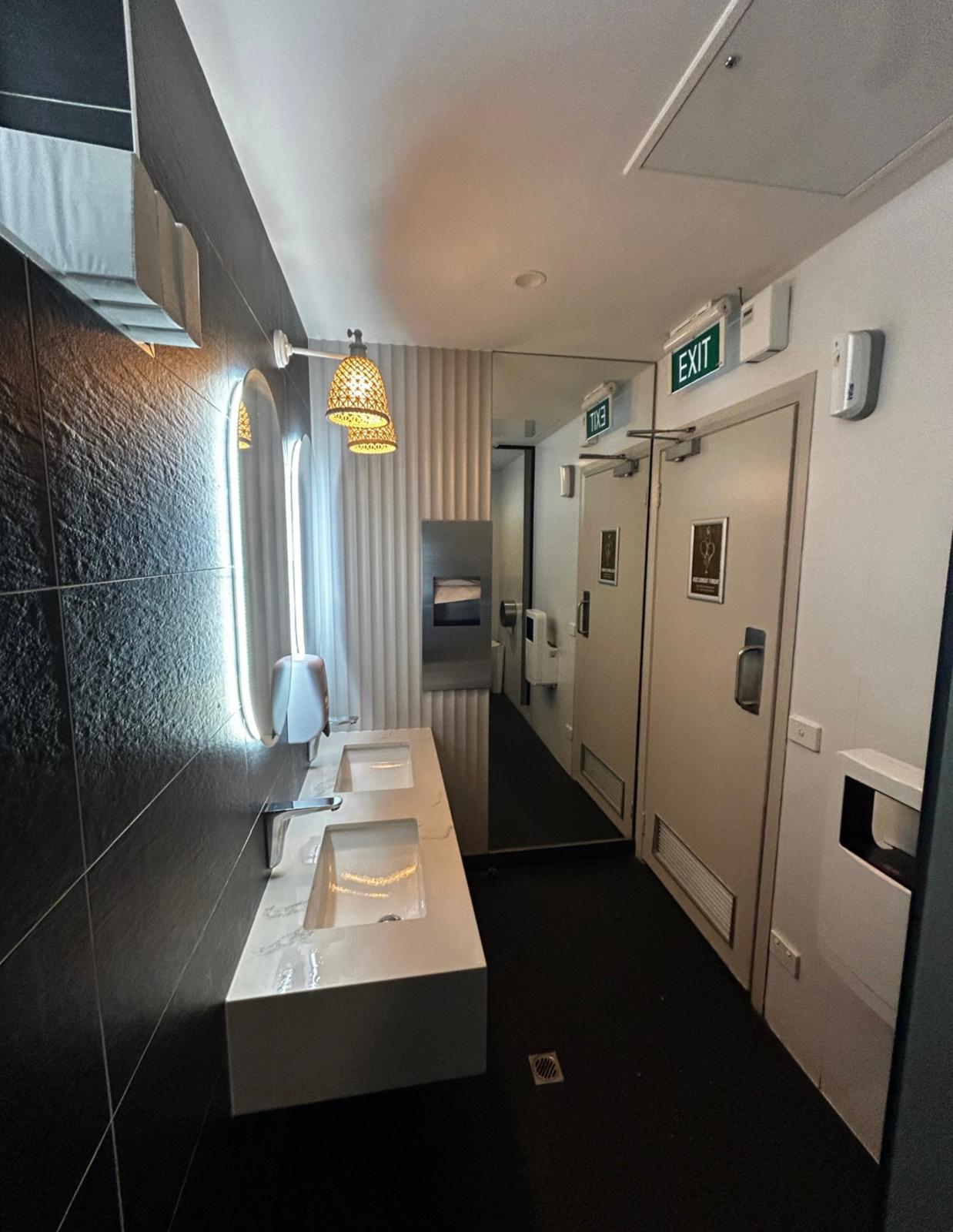
SCENTSEA P02: a wall-mounted commercial scent diffuser rated for 150–350 m², with HVAC connector and tube integration, Wi-Fi and Bluetooth control, and automatic reconnection after a power or network interruption.
The real decision: one open volume or several controlled zones
Lobbies and retail floors fail in opposite ways, and that is what separates the two models. A hotel or office lobby is usually a single high-ceiling volume with a fixed air pattern: entrance doors pulling air in, a reception desk, seating, and often a lift bank. Fragrance released anywhere in that volume is diluted across the whole space, so the diffuser needs reserve output and a reservoir large enough that nobody has to intervene during business hours.
A retail floor is the opposite. It is partitioned, merchandised, and split into zones with different traffic and different ceilings — a shopfront, a fitting area, a stock room, a counter. Scent only needs to be correct in specific zones, the floor has to stay clear for customers and cleaning equipment, and the diffuser is rarely within arm's reach. That is why the P02 supports wall mounting and duct or tube delivery rather than maximum open-volume output.
Problem definition: five selection errors that look like equipment faults
Most complaints raised after a commercial scenting installation are traceable to specification rather than hardware. The patterns below repeat across lobbies and retail environments.
- Under-sized unit in a large lobby. Scent is acceptable at the entrance but faint at seating areas or the lift bank, so operators raise intensity and over-saturate the near field.
- Over-sized output in a small zone. A high-output unit placed in a 200 m² shopfront creates a heavy concentration close to the diffuser that staff notice more than customers do.
- Wrong delivery path. The diffuser faces open air while the actual customer dwell area sits behind a partition, inside a room, or downstream of a duct run.
- Mounting conflict. A floor-standing cabinet is specified where no safe floor position exists, or a compact unit is placed at ankle height where the fragrance never enters the breathing zone.
- Loss of control. After a power cut or a network drop, a unit stays offline until someone physically resets it — a real cost in multi-site retail where no technician is on site.
Coverage ratings are not room measurements. A rated range describes a single open volume under normal conditions. Ceiling height, partitions, door traffic and HVAC airflow change the result. Confirm the final position with a sample unit and an on-site walk-through before specifying a floor.
Industry background: why commercial scenting projects are being specified more tightly
Commercial scenting has moved from a discretionary marketing extra to a specified building service, and the numbers behind it are now tracked as a market in their own right. The global scent marketing market is valued at approximately USD 4.1 billion in 2026 and is projected to reach USD 7.28 billion by 2035 at a CAGR of 6.6%, according to Cognitive Market Research and forecast data reported by Vertex. Estimates differ by definition — one alternative source puts growth at 10.16% for a narrower scenting scope — which is a reminder to check the definition behind any market figure used in an internal business case.
The hardware behind those projects is also standardising. Cold-air nebulizing diffusion atomizes fragrance oil into sub-micron particles below 2.5 μm without heat or water, a mechanism documented in SCENTA's commercial scent machine guide. Because nothing is diluted in water and nothing is heated, output can be scheduled and adjusted to a space rather than to a tank. That matters in lobbies, where a scent profile has to hold for ten or twelve hours a day, and in retail, where the profile may need to be lighter during quiet trading hours.
Two practical procurement facts sit alongside the technology. Commercial scent diffusers are classified under HS Code 8509.80, and the US import duty for that code is 4.2% according to USITC-derived data published by Dutiable. On the demand side, scent marketing in retail environments has been reported to increase customer dwell time by an average of 15 minutes — a secondary-source figure that is useful for framing a pilot but should not be treated as a guaranteed outcome for a specific site.
Detailed solution: what each diffuser is engineered to do
Both models use the same underlying diffusion principle. They differ in output envelope, mounting, delivery path and control resilience — and those four differences decide which one belongs in which space.
H5000: floor-standing diffusion for 800–1300 m² lobbies
The H5000 is a floor-standing commercial scent diffuser constructed from aluminum and rated for 800–1300 m². It is intended for hotel lobbies, shopping mall areas and office building lobbies — spaces where one unit has to serve a large, open, continuously occupied volume.
Three specifications carry most of the decision weight. First, the 1000 ml fragrance oil capacity combined with 5.4 ml/h consumption yields roughly 185 hours of cumulative atomization from a full reservoir, which on a twelve-hour daily schedule translates into about two weeks of runtime between refills. For a lobby where refilling means interrupting a reception area, that reserve is the difference between a routine service visit and an operational nuisance. Second, operation below 45 dB at 20 W keeps the unit compatible with lobbies that contain seating, a reception desk or a cafe counter, where equipment noise is noticed. Third, the floor-standing format places the diffusion point in the main air mass of a tall room rather than at the wall, and it keeps the reservoir accessible for service.
Where the H5000 is the wrong specification: retail units with several small rooms, spaces under roughly 800 m² where a single high-output unit would concentrate fragrance near the discharge point, and locations where no safe floor position exists within the scenting zone.
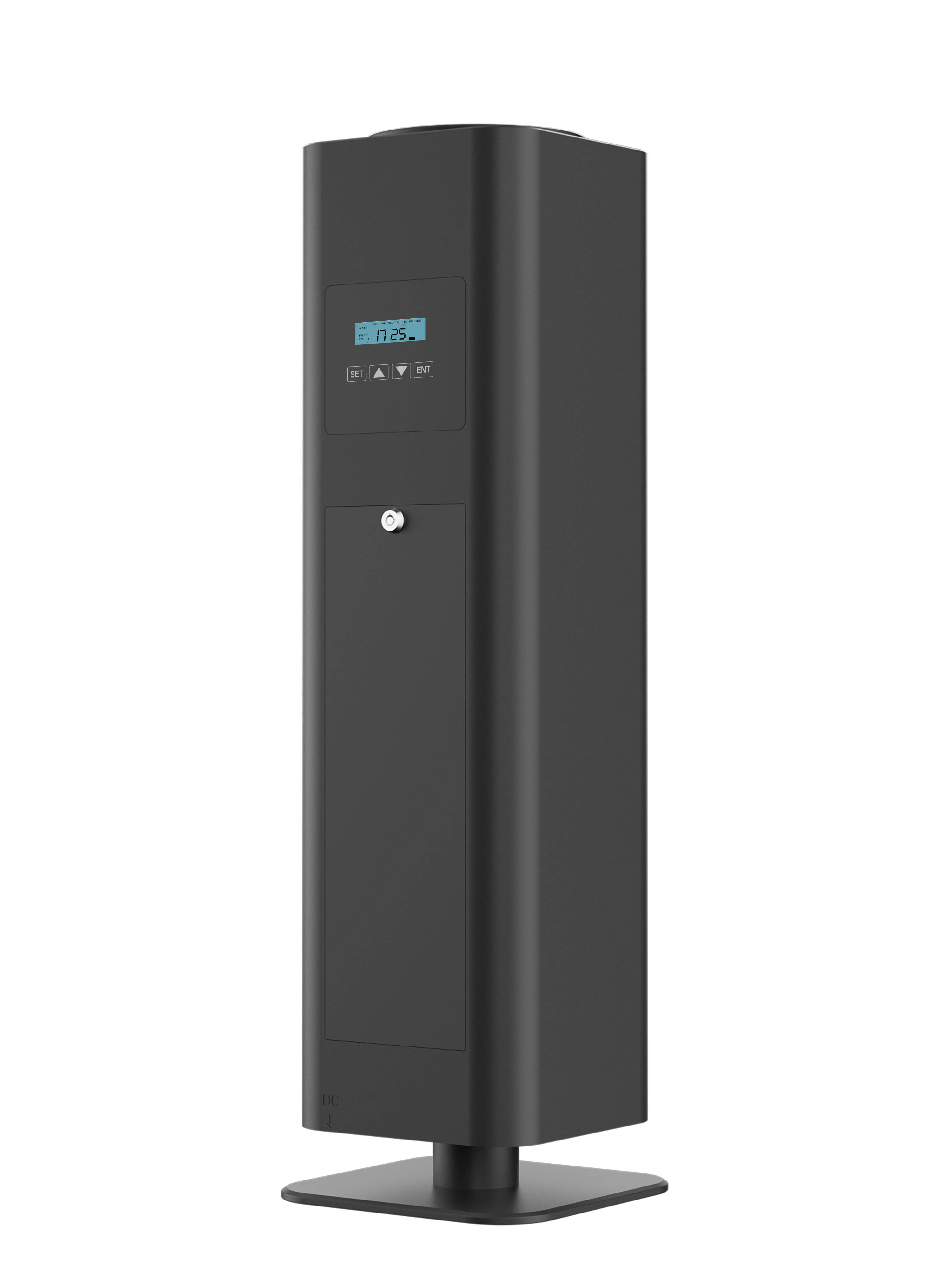
SCENTSEA H5000: aluminum-housed, floor-standing diffuser rated 800–1300 m², with a 1000 ml oil reservoir, 5.4 ml/h consumption, 20 W power draw and operation below 45 dB.
P02: wall-mounted delivery for 150–350 m² retail and controlled zones
The P02 is a wall-mounted commercial scent diffuser rated for 150–350 m². It supports an HVAC connector and tube integration, Wi-Fi and Bluetooth control, and automatic reconnection after a power or network interruption. It is the better match for smaller retail floors and for controlled zones where the diffuser should not stand on the sales floor.
Each of those features answers a specific retail constraint. Wall mounting removes the unit from the shop floor, where floor space is revenue space and where cleaning equipment and trolleys pass at skirting height. HVAC connector and tube integration allow fragrance to be released into a duct run or delivered through tubing to a zone the diffuser does not face — the fitting room corridor, a back-of-house passage, or a second room behind a partition. Wi-Fi and Bluetooth control allow schedules and intensity to be adjusted without physically reaching the unit. Automatic reconnection matters most in multi-site operations: after a power failure or a network outage, the diffuser restores its link instead of waiting for a manual reset, so the scenting schedule resumes without a site visit.
Where the P02 is the wrong specification: a single open lobby well above 350 m², where one wall-mounted unit cannot build sufficient concentration across the volume, and any application requiring the reservoir capacity or output reserve of a floor-standing machine.
Step-by-step breakdown: specifying and commissioning the right unit
The sequence below works for a single hotel lobby, a retail chain, or a mixed-use building with both space types.
- Measure usable volume, not floor footprint. Record floor area, ceiling height, partition layout, door traffic and the position of supply and return air grilles. A 900 m² lobby with a six-metre ceiling behaves very differently from a 900 m² retail hall with a three-metre ceiling and shelving.
- Compare the measured zone with the rated range, then stay inside it. Zones of 800–1300 m² map to the H5000; zones of 150–350 m² map to the P02. Treat the upper figure as a ceiling, not a target, and split large or irregular floors into more than one scenting zone rather than pushing a single unit to its limit.
- Decide the delivery path before the model. If fragrance can be released into the open volume where customers actually stand, direct diffusion is enough. If the target zone sits behind a partition, in a separate room, or downstream of ductwork, the project needs the P02's HVAC connector and tube integration.
- Choose mounting that fits daily operations. Floor-standing suits a lobby with a safe, serviceable floor position away from door draughts and direct customer flow. Wall mounting suits retail, where the floor must stay clear and the discharge point should sit in the breathing zone rather than near the floor.
- Size the reservoir against the service interval. On the H5000, 1000 ml at 5.4 ml/h gives roughly 185 hours of cumulative atomization; match the refill interval to the site's service schedule and adjust the working hours rather than over-filling the reservoir. Confirm oil consumption for the P02 configuration being quoted before committing to a refill plan.
- Plan controls and resilience. For multi-site retail, specify the P02's Wi-Fi and Bluetooth control and rely on automatic reconnection after power or network interruption instead of assuming staff will reset units. Record who owns the schedule and who changes it seasonally.
- Validate with a sample and a walk-through. Test a sample unit in the actual space, check the corners, the entrance and the seating areas, and confirm that noise levels are acceptable at the reception or counter position before placing a bulk order.
Use cases: matching the model to the space
Hotel lobby (H5000)
A hotel lobby combines a high ceiling, a reception desk, seating and continuous door traffic. The H5000's 800–1300 m² rating, 1000 ml reservoir and sub-45 dB operation at 20 W fit this profile, and the floor-standing format allows one diffusion point to serve the whole volume with a serviceable reservoir.
Shopping mall and office building lobby (H5000)
Mall entrance halls and office tower lobbies are large, open and continuously occupied, and they are exactly the applications the H5000 is intended for. For large venues that need centralised distribution instead, the manufacturer's range also includes the AC-MAX HVAC scent diffuser, which is a separate model from both units discussed here.
Retail floor and boutique zones (P02)
A 150–350 m² retail floor with a shopfront, counter and fitting area is the P02's core application. Wall mounting keeps the unit out of the customer path, Wi-Fi and Bluetooth control allow the schedule to be tuned to trading hours, and tube or duct integration reaches rooms the unit does not face.
Bank branches, restaurants and controlled zones (P02)
Branch banking areas, restaurant dining rooms and similar controlled zones rarely exceed a few hundred square metres and are usually fitted out with wall or ceiling services. The P02's HVAC connector, tube integration and automatic reconnection after power or network interruption make it the practical choice where the diffuser should be concealed and the site has no technical staff.
Mixed-use buildings (both)
A tower with a lobby and a retail podium can use both models in one project: an H5000 for the main lobby volume and P02 units for the retail arcade, back-of-house corridors and separate tenancies, each with its own schedule.
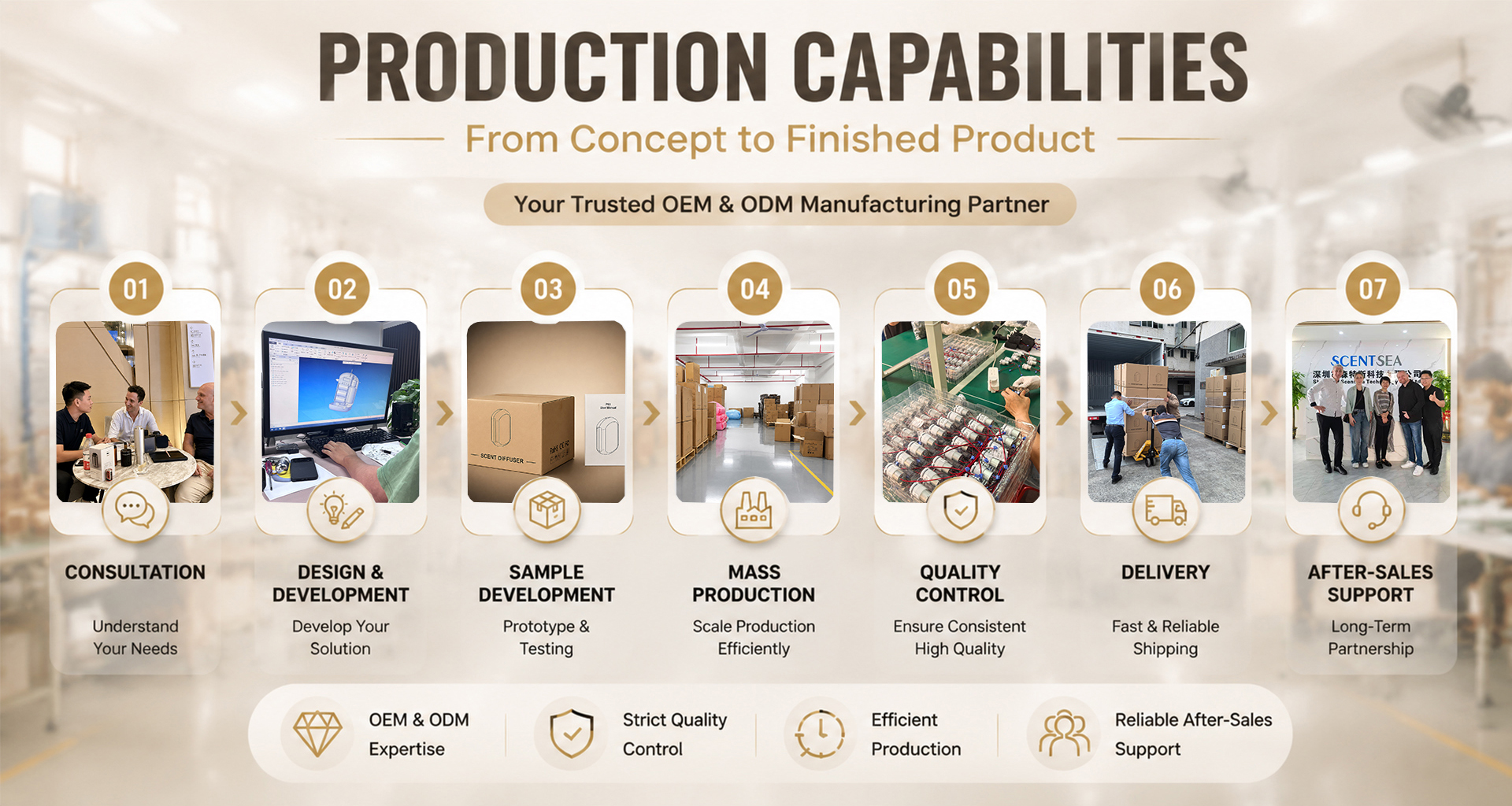
Production flow at Shenzhen Scentsea Technology Co., Ltd., where H5000 and P02 units are assembled, tested and packed before shipment.
H5000 vs. P02: comparison table
| Decision factor | H5000 | P02 |
|---|---|---|
| Rated coverage | 800–1300 m² | 150–350 m² |
| Mounting format | Floor-standing | Wall-mounted |
| HVAC connector / tube integration | Not part of this configuration | Supported |
| Wireless control | — | Wi-Fi + Bluetooth |
| Recovery after power / network interruption | — | Automatic reconnection |
| Fragrance oil capacity | 1000 ml | — |
| Oil consumption | 5.4 ml/h | — |
| Noise level | Below 45 dB | — |
| Power | 20 W | — |
| Housing material | Aluminum | — |
| Typical space | Hotel, shopping mall and office building lobbies | Smaller retail floors and controlled zones |
Dashes indicate figures not published in the product data used for this comparison. Confirm configuration-specific values with the manufacturer before final specification.
Shared manufacturing, compliance and customization base
Choosing between the two models does not change the supplier behind them. Both the H5000 and the P02 appear on the manufacturer's FCC, RoHS and EMC certification records, so a project switching from one model to the other does not restart the compliance conversation.
The compliance file includes an FCC certificate issued on 24 April 2024 by Shenzhen ATL Testing Technology Co., Ltd. against FCC Part 15 Subpart B:2023 for the US market, a RoHS certificate referencing RoHS Directive (EU) 2015/863, and EMC test coverage citing EN IEC 55014-1:2021, EN IEC 55014-2:2021, EN IEC 61000-3-2:2019/A1:2021 and EN 61000-3-3:2013/A2:2021. Buyers specifying wireless variants should also confirm radio-equipment requirements for the destination market, since Bluetooth and Wi-Fi functions fall under separate rules in some regions.
Production and customization follow the same route for both units. OEM and ODM services cover logo, product color, packaging, user manual, plug type, APP interface and PCB or function changes, supported by a 4-engineer R&D team and 20 patents. Monthly capacity is 8,000 units with a lead time of 25–35 days, and every unit passes 100% functional testing, atomization testing, leakage inspection, noise testing, APP and control testing, a 48-hour aging test and a final appearance inspection before shipment.
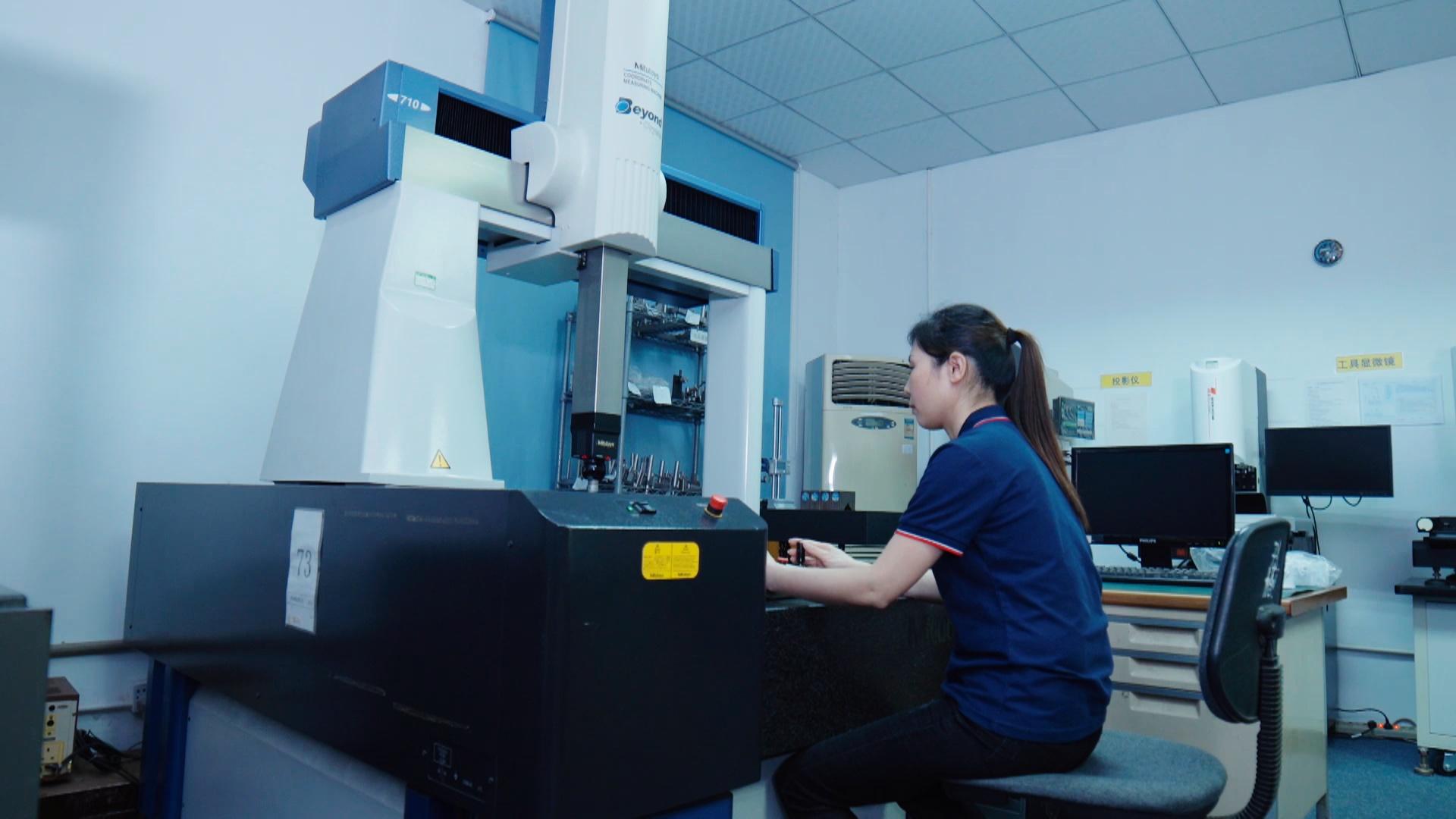
Quality measurement equipment used during incoming, in-process and pre-shipment inspection of commercial scent diffusers.
FAQ
What compliance documents should be verified for the H5000 and P02 before ordering?
Both models are listed on the manufacturer's FCC, RoHS and EMC certification records. The FCC certificate (ATL20240416326) was issued on 24 April 2024 by Shenzhen ATL Testing Technology Co., Ltd. against FCC Part 15 Subpart B:2023 for the US market. The RoHS certificate (ATL20240416327) references RoHS Directive (EU) 2015/863, and the EMC documentation (ATL20240416325) cites EN IEC 55014-1:2021, EN IEC 55014-2:2021, EN IEC 61000-3-2:2019/A1:2021 and EN 61000-3-3:2013/A2:2021. Buyers should confirm that the documents match the exact production model and configuration being purchased, and should additionally verify radio-equipment requirements for markets where the Bluetooth or Wi-Fi functions of the P02 apply.
Can the H5000 or P02 be customized for an OEM commercial scenting system?
Yes. The manufacturer offers OEM and ODM production covering logo, product color, packaging, user manual, plug type, APP interface and PCB or function changes. Customization is supported by a 4-engineer R&D team and 20 patents, with a minimum order quantity starting from 1 unit. Because the P02 includes wireless functions, customization requests that touch the APP interface or control board should be scoped with the factory before samples are confirmed.
What are the purchasing terms for a commercial scenting project?
The minimum order quantity is 1 unit. Delivery terms are EXW, FOB or CIF, and payment terms are 50% T/T in advance with the balance before shipment. Acceptance is based on a pre-shipment test, so the specification — model, coverage zone, mounting and control requirements — should be agreed in writing before production starts, since a change of model after production affects both the test criteria and the delivery schedule.
Can samples be tested before committing to a multi-site rollout?
Diffuser samples and fragrance oil samples are available for quality verification. Every unit is checked before shipment through 100% functional testing, atomization testing, leakage inspection, noise testing, APP and control testing, a 48-hour aging test and a final appearance inspection. For a lobby or retail pilot, test the sample in the actual space and confirm that the fragrance oil formulation atomizes stably — compatible third-party oils can be used, but viscosity and formulation should be validated first.
What lead time and capacity apply to a scheduled rollout?
Lead time is 25–35 days, with monthly capacity of 8,000 units and annual output of 100,000 units. A one-year free warranty covers spare parts. For phased retail rollouts, sequence orders against the installation calendar rather than the launch date, and keep a small spare-unit buffer on hand for sites where a diffuser is out of service. To start, request the SCENTSEA catalog and specify your zone sizes, mounting constraints and HVAC conditions for a model recommendation.
Conclusion: the decision rule in one paragraph
Choose the H5000 when the project is a single open volume of roughly 800–1300 m² — a hotel, shopping mall or office building lobby — where a floor-standing aluminum unit with a 1000 ml reservoir, 5.4 ml/h consumption, 20 W power draw and sub-45 dB operation can be placed and serviced. Choose the P02 when the project is a 150–350 m² retail floor or controlled zone that needs wall mounting, HVAC connector or tube integration, Wi-Fi and Bluetooth control, and automatic reconnection after a power or network interruption. When a building contains both space types, split the project into zones and specify each zone separately rather than forcing one model to cover both.
Next step: match the model to your floor plan
Send your zone measurements, ceiling heights, mounting constraints and HVAC layout to the SCENTSEA team for a model recommendation, sample arrangement and quotation. Download the product catalog for full model listings and specifications.
Download the SCENTSEA catalog (PDF)
Website: www.scent-sea.com
Email: jimmy@scent-sea.com | Tel / WhatsApp: +86 19928719703
Shenzhen Scentsea Technology Co., Ltd., Block A, Jinxing Building, Longhua District, Shenzhen, China
Have Questions or Need More Details?
Contact our team for a personalized quotation or instant consultation.
Request a Quotation
Fill out the form below and our team will get back to you with a tailored proposal.
WhatsApp Direct Chat
Prefer to chat in real-time? Message us on WhatsApp for instant assistance & quick answers.
- Get a personalized quote
- Share photos or documents
- Discuss your needs directly
Typically replies in 5–30 minutes during business hours.