
RoHS Compliance for Scent Diffuser Importers: Match the Certificate to the Bulk Order

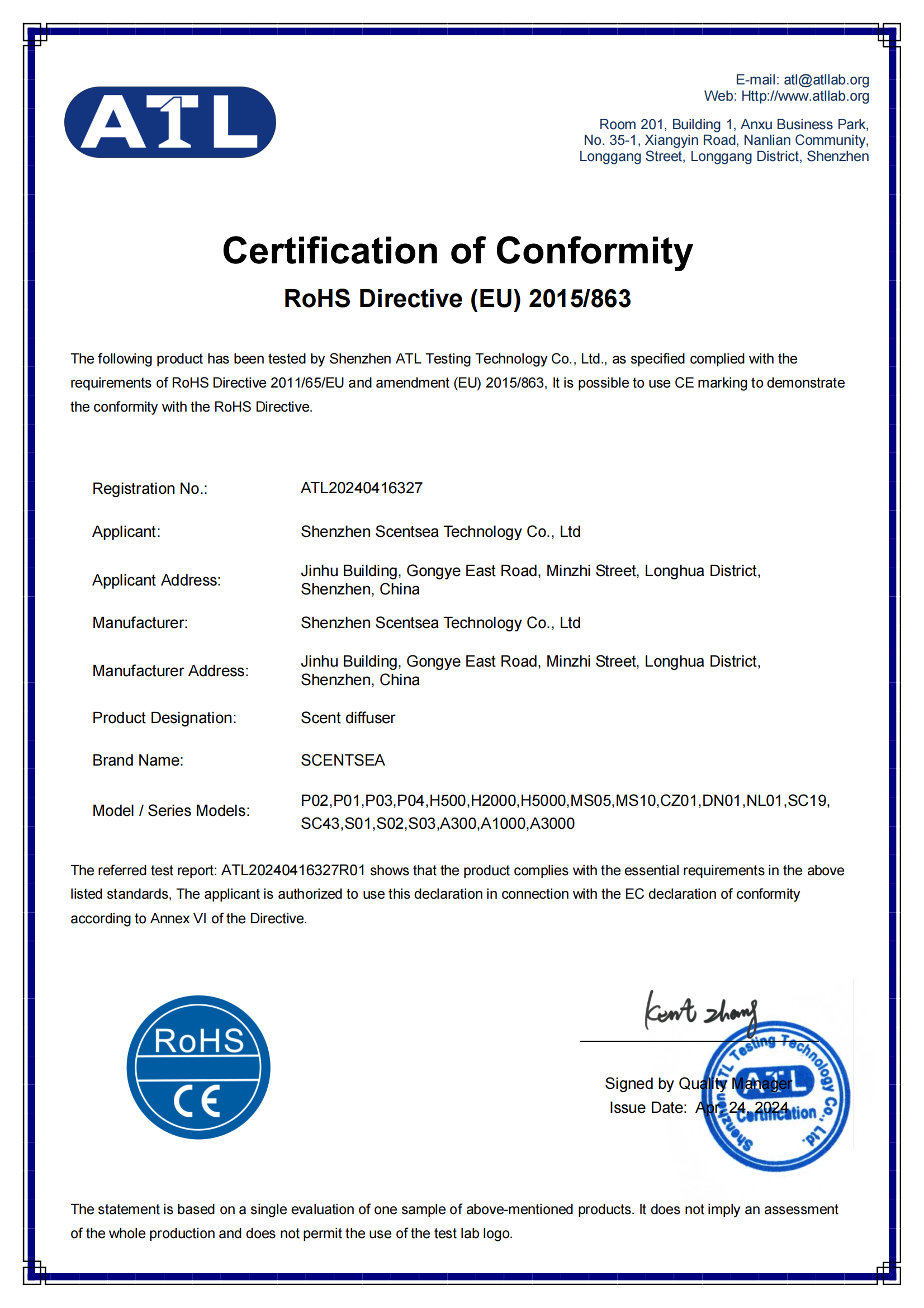
An importer's RoHS file is only as strong as the match between three things: the certificate, the purchase order, and the units inside the container. When those three disagree, the certificate stops being evidence and becomes paper. For a wholesale order of the SC19 advertising scent machine, the record to hold is RoHS certificate ATL20240416327, issued on 24 April 2024 by Shenzhen ATL Testing Technology Co., Ltd. against RoHS Directive (EU) 2015/863 — and the work is confirming that the model, the configuration and the shipment it describes are the ones you actually bought.
This guide is for importers, wholesalers and private-label distributors buying factory-direct scent diffusers for resale in the EU. It covers what the certificate must say, where it most often stops matching a bulk order, which companion documents belong in the same procurement file, and how the delivery term — EXW, FOB or CIF — changes what you should be holding before the goods leave.
What matching the certificate to the bulk order actually requires
A match is three separate checks. Passing one does not pass the others.
- Model match. The certificate's product list names the exact model on the purchase order — not a sibling model, not a series name, not a similar product.
- Configuration match. The electrical build of the unit you ordered — input voltage, plug type, control board and functions — sits inside what the test record describes.
- File match. The numbered document itself, with issuer, standard citation, issue date and product list, is in your hands in a form a customs broker, a distributor or a facility client can read.
Most importers complete the first check and assume the rest. The expensive failure is usually the second: a genuine certificate, for the right model, describing a build that is not the build on the water.
Four mismatch patterns worth screening for: the right standard attached to the wrong model; the right model with a changed configuration; a valid certificate number with no document behind it; and a compliance sentence on a product page that was never a certificate at all.
The RoHS record behind an SC19 order
Here is the record as it should arrive in your procurement folder — not as a paragraph in a quotation email, but as a document with fields you can read against the order.
| Field | Value on the record |
|---|---|
| Certificate type | RoHS |
| Certificate number | ATL20240416327 |
| Issuing laboratory | Shenzhen ATL Testing Technology Co., Ltd. |
| Standard cited | RoHS Directive (EU) 2015/863 |
| Market | EU |
| Scope | scent diffuser |
| Issue date | 24 April 2024 |
| Expiry date recorded | 2099-12-31 |
| Models linked to the record | SC19 (product ID 4717), AC-MAX, T3, T2, A300, P03, P02, P01, H5000, S02, S01 |
Two rows carry most of the weight. The number is what makes the document verifiable: ATL20240416327 can be put to the issuing laboratory rather than taken on trust from a sales message. The last row is where matching happens in practice — this RoHS record is tied to eleven model designations rather than to the SC19 alone.
That structure is normal for a product family tested as a series, and it is also why mismatches happen. A supplier can honestly send you the company's RoHS certificate while the line item you ordered is a different member of the family, or a member whose build has since changed.
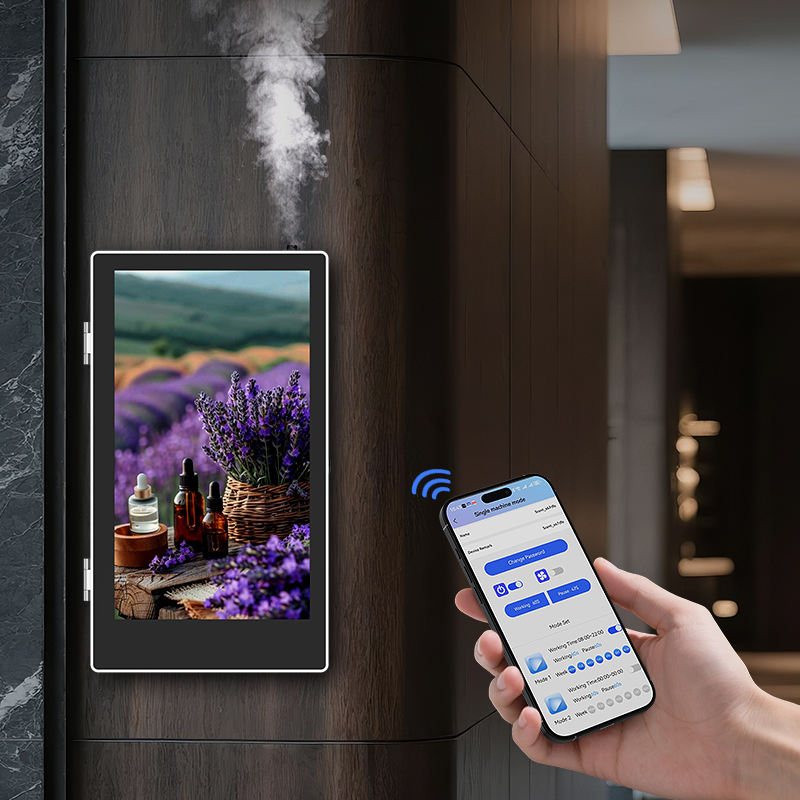
The SC19 order line should therefore read like a specification rather than a product name. The model is an advertising scent machine with an 18.5-inch 1920×1080 display, EMMC 8G internal storage, an aluminium and steel housing, 500 ml fragrance capacity, 110–240 V AC input at 30 W, declared oil consumption of 6 ml ±5% per hour, a noise level of ≤30 dB, net weight 6.5 kg, dimensions L280 × W63.5 × H495 mm, in a black and silver finish. Those are the details a certificate has to be read against. A purchase order that says only model and quantity gives the document nothing to match.
Reading the scope line — and the configuration trap
The scope field on this record reads scent diffuser. That phrase is the boundary of what the document covers, and the boundary is narrower than it looks.
Inside it: the housing materials, the PCB, wiring, connectors, display module and the electrical assembly of the listed models. Outside it: anything the record does not list — and, critically, any configuration that was not the configuration tested.
This matters because customization on a scent diffuser is not all cosmetic. The factory's OEM/ODM programme covers logo, product colour, packaging, user manual, plug type, APP interface and PCB or functions. Read that list in two halves:
- Appearance and packaging — logo, colour, carton, manual. These change what is printed and packed, not what the declaration describes.
- Electrical build — plug type, PCB, control functions, APP interface. These change the part of the product a restricted-substance declaration is actually about.
The practical rule: before a private-label run, ask in writing whether the certificate still describes the unit that will ship. If the answer is that the certificate covers the model, ask the follow-up — which configuration was tested, and does the ordered plug type and control board fall inside it. A supplier who can answer that precisely owns the document. One who forwards the same PDF for every enquiry does not.
Why the certificate and the purchase order drift apart
Compliance language is cheap to publish; test records are not. Manufacturer pages typically carry a claim — Guangdong Baixiang Environmental Technology Co., Ltd., for instance, states on its homepage that its products meet CE, FCC, EMC and RoHS. That may be entirely accurate, but a homepage sentence and a numbered record with a named issuing laboratory are different artefacts, and only one of them travels with a customs entry.
Drift happens in four ordinary situations:
- The file was never model-specific. A series certificate is sent for a model that does not appear on its list.
- The build moved after testing. A plug type, control board or display was changed for a market or a customer, and the record was not revisited.
- The document aged out of relevance. The number is real, but nobody has checked whether it still corresponds to the current build.
- The file never left the factory. The certificate exists; it simply was not handed over with the shipping documents.
For a reseller the exposure sits downstream, not only at the border. Distributors, hotel groups and mall operators increasingly ask for the compliance file as part of their own procurement, and a missing or mismatched record stalls a delivery schedule for reasons that have nothing to do with how the product performs.
Customs classification is the other half of the same conversation. Aroma diffusers are classified under HS code 8509.80 for import and export purposes, so the invoice description, the product name and the certificate scope should describe the same goods in the same words.
The document pack for an EU-bound wholesale order
RoHS is one document in a set. For a bulk order of SCENTSEA diffusers the supplier position is that all diffuser models are certified with CE, RoHS and FCC, and the numbered records behind that statement are the following.
| Document | Number | Standard cited | Market | What it establishes |
|---|---|---|---|---|
| RoHS | ATL20240416327 | RoHS Directive (EU) 2015/863 | EU | Restricted-substance declaration for the listed models |
| EMC | ATL20240416325 | EN IEC 55014-1:2021; EN IEC 55014-2:2021; EN IEC 61000-3-2:2019/A1:2021; EN 61000-3-3:2013/A2:2021 | EU | Emission and immunity testing of the electrical unit |
| FCC | ATL20240416326 | FCC Part 15 Subpart B:2023 | USA | Unintentional-radiator compliance for the US market |
All three were issued on 24 April 2024 by Shenzhen ATL Testing Technology Co., Ltd., and each record carries an expiry field of 2099-12-31. Treat that date as meaning no scheduled expiry on the document — not as meaning no further checks are needed. A record still has to correspond to the build you are shipping and to the standard version your market applies when the goods are imported.
One gap to close yourself: if the model you order includes Bluetooth or Wi-Fi control, radio equipment requirements are a separate question from RoHS and EMC. Buyers should verify wireless compliance separately for the exact model and configuration, since a Bluetooth or Wi-Fi variant may need to meet RED requirements in the EU. The safe assumption is that a document set issued for a non-wireless build does not automatically extend to a wireless one.
A four-stage verification workflow
The file is easiest to control if the matching checks are attached to four points in the order cycle rather than saved for arrival.
Stage 1 — before the purchase order
- Request the certificate as a file, not a screenshot: number, issuer, standard, issue date, product list.
- Read the model name against the product list, line by line.
- Check that the issuing laboratory named on the record is a testing body, not the seller.
- Ask which configuration was tested, in writing.
Stage 2 — on the purchase order
- Write model, configuration and quantity as separate lines. Do not let a series name stand in for a model.
- Add a documentation clause naming the records you expect: RoHS ATL20240416327, EMC ATL20240416325 for the EU, FCC ATL20240416326 for the US.
- If customizing, add a written statement that the ordered configuration is covered, or that updated records will be issued.
Stage 3 — before shipment
- Match the certificate to the final build and to the plug type ordered.
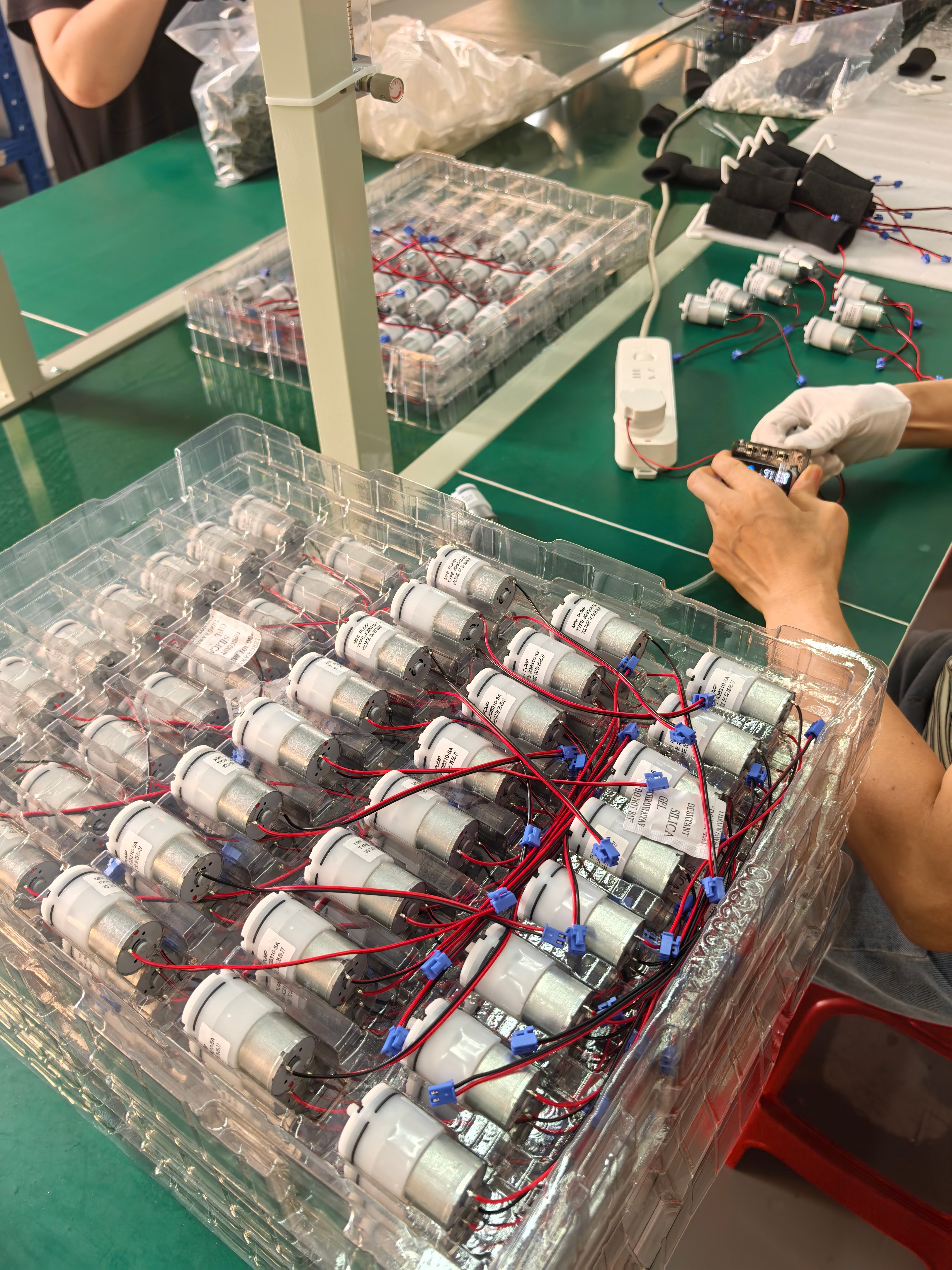
- Request the pre-shipment inspection record alongside it. The certificate describes conformity of the design; the inspection record describes the units. Scentsea runs 100% functional testing, atomization testing, leakage inspection, noise testing, APP and control testing, a 48-hour aging test and a final appearance inspection before shipment — that record is the batch-level evidence.
- Confirm the invoice description and HS code against the certificate scope.
Stage 4 — on arrival
- File the certificate with the entry paperwork and keep the exact version received, with its date.
- Pass a copy downstream to distributors or facility clients who request it as part of their own procurement.
- Record which model each file version covers, so the next reorder is checked against the right document.
Where EXW, FOB and CIF sit in the procurement file
The delivery term does not change what the product must comply with. It changes who holds the documents, and when.
| Term | Delivery point | What the buyer should be holding |
|---|---|---|
| EXW | Seller's premises | The complete document pack at collection. Under EXW the buyer handles export and import formalities and cannot wait for the seller to act. |
| FOB | On board, named port of shipment | The document pack before the container is loaded; the seller clears export. |
| CIF | On board, named port of shipment, with seller paying freight and insurance to the named destination port | The document pack travelling with the transport documents. Risk passes at shipment even though the seller arranged the freight. |
FOB and CIF are sea and inland-waterway terms; EXW can be used with any transport mode. Under all three, the compliance file is a handover item rather than an after-sales request. The predictable failure is that goods arrive, the broker asks for a RoHS record, and the buyer discovers the file in the folder describes a sibling model.
Volume, customization and what to lock in writing
Documentation discipline has to survive the step from sample to bulk order, and that step is where factory capability and paperwork meet.
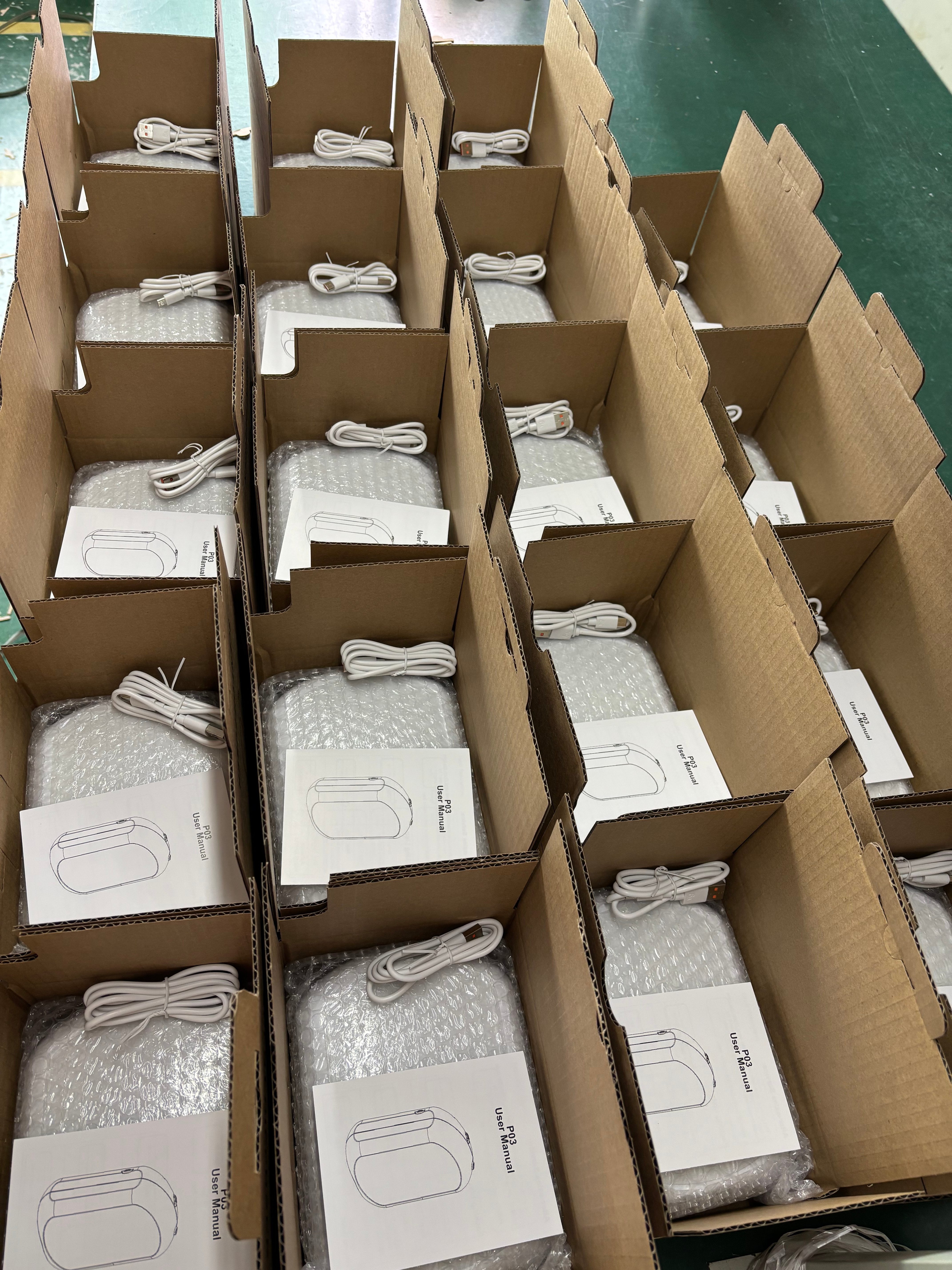
Shenzhen Scentsea Technology Co., Ltd. is a Shenzhen-based manufacturer founded in 2021, operating a 3,000 m² facility with three production lines and 20 patents, around 30 employees, four R&D engineers and an annual output of 100,000 units. Roughly 70% of output is exported, the EU and the USA are its main markets, and its products have been supplied to customers in more than 70 countries and regions. For a reseller, the numbers that matter for scheduling are these: monthly capacity of 8,000 units, a lead time of 25–35 days, and an MOQ that starts at 1 unit for diffusers.
Two of those facts interact directly with compliance. A 25–35 day lead time is long enough that a documentation query raised late will delay a shipment, so raise it at quotation stage. And a monthly capacity of 8,000 units means a large order may span several production runs — so the confirmation you want in writing is not that the certificate covers the model, but that every unit in this order is built to the configuration covered by ATL20240416327, or a defined statement of what did change.
Ask for three things in writing before a private-label run:
- Which tested configuration the certificate's product list corresponds to, for the exact model ordered.
- Which of the requested customization items touch the electrical build — plug type, PCB, control functions, APP interface — and which are appearance or packaging only.
- Whether updated test records will be issued if those electrical items change, and on what timeline relative to the 25–35 day production window.
Diffuser samples and fragrance oil samples are available, which is the cheapest way to close a configuration question: verify the sample's plug type and control functions against the certificate description before the bulk run starts. After-sales terms belong in the same folder — the standard cover is a one-year free warranty on spare parts.
What the RoHS certificate does not prove
Keeping the document's boundary visible protects you from over-claiming to your own customers.
- It is not the CE marking itself. RoHS is one strand; EMC, and radio equipment where applicable, are separate strands with separate documents.
- It is not a performance statement. Coverage of 150–250 m² (500–800 m³ / 1,500–2,500 ft²), a 30 W power draw or a ≤30 dB noise level for the SC19 come from the product specification, not from the RoHS record.
- It is not a batch report. It describes a tested configuration; the shipped units are evidenced by the pre-shipment inspection record.
- It does not cover fragrance oil. The scope is the scent diffuser, and the product list contains diffuser models; fragrance oil is a separate product line with its own documentation.
- It does not replace your own market check. Requirements depend on the destination market, the product model and its wireless functions, and the file should be confirmed against the exact production model being purchased.
FAQ: matching a RoHS certificate to a scent diffuser order
Does RoHS certificate ATL20240416327 cover the SC19 advertising scent machine?
Yes. The record is issued against RoHS Directive (EU) 2015/863 by Shenzhen ATL Testing Technology Co., Ltd. on 24 April 2024, its scope is scent diffuser, and the SC19 — product ID 4717 — is one of the eleven models linked to it, alongside AC-MAX, T3, T2, A300, P03, P02, P01, H5000, S02 and S01. Coverage of the model is not the same as coverage of a changed configuration, which is the next question.
We are ordering a custom plug type and a modified control board. Is the existing certificate still valid for those units?
That has to be put to the supplier in writing, and the answer depends on what was tested. Plug type, PCB and control functions are customization items that change the electrical build; logo, colour, packaging and user manual changes do not. Ask which configuration the tested build corresponds to, and whether updated records will be issued for the modified build before shipment. Do not assume a certificate issued for a standard build extends to a modified one.
Which documents should accompany an EU-bound bulk order besides RoHS?
The RoHS record ATL20240416327 and the EMC record ATL20240416325, the latter citing EN IEC 55014-1:2021, EN IEC 55014-2:2021, EN IEC 61000-3-2:2019/A1:2021 and EN 61000-3-3:2013/A2:2021. For US-bound shipments, add FCC ATL20240416326 against FCC Part 15 Subpart B:2023. All three are issued by Shenzhen ATL Testing Technology Co., Ltd. and dated 24 April 2024. If the ordered model has Bluetooth or Wi-Fi control, treat radio compliance as a separate item to verify.
What are the order terms for a bulk run — MOQ, monthly capacity and lead time?
MOQ starts at 1 unit for diffusers, monthly capacity is 8,000 units, and the lead time is 25–35 days. Because a documentation query is usually answered faster than a production slot is scheduled, raise it with the quotation rather than after the purchase order is confirmed.
How should we verify a sample before committing to volume?
Diffuser samples and fragrance oil samples are available. Check the sample against the order line — plug type, control functions, display, housing finish — and against the configuration the certificate describes. Ask for the inspection record with the shipping documents as well: 100% functional testing, atomization testing, leakage inspection, noise testing, APP and control testing, a 48-hour aging test and a final appearance inspection are completed before shipment, and that record is what evidences the units actually shipped.
How do EXW, FOB and CIF change what we should hold at handover?
The compliance obligation does not change; the handover point does. Under EXW the buyer handles export and import formalities and needs the full pack at collection. Under FOB the seller clears export and delivers on board, so the pack should reach you before loading. Under CIF the seller also pays freight and insurance to the destination port, but risk passes at shipment, so the documents belong with the transport documents rather than after them. Whichever term you use, request samples, the complete certificate set and the current company profile before the order is confirmed — the catalogue and company profile can be downloaded from the link at the end of this article.
Conclusion: a matching exercise, not a filing exercise
RoHS compliance for a scent diffuser importer is decided by whether three things line up: the certificate, the order line and the shipment. Certificate ATL20240416327, issued by Shenzhen ATL Testing Technology Co., Ltd. against RoHS Directive (EU) 2015/863, gives you a verifiable number and a named product list; the SC19 gives you a model to check against it; and the purchase order gives you a configuration that must fall inside the tested build. Keep those three aligned, carry EMC ATL20240416325 and — for US-bound goods — FCC ATL20240416326 in the same folder, and settle the delivery-term handover before the container is booked.
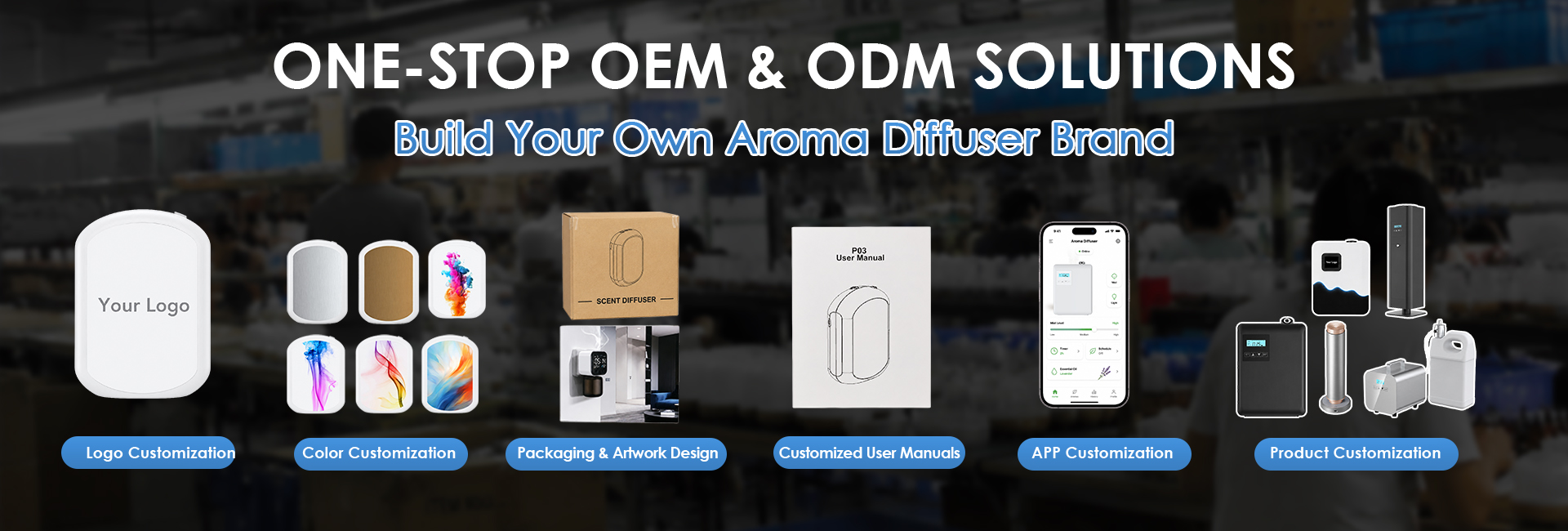
Shenzhen Scentsea Technology Co., Ltd. manufactures the SC19 and the rest of its diffuser range in Shenzhen, supplies customers in more than 70 countries and regions, and supports OEM/ODM customization, samples and volume orders. The full company profile is available for download here: SCENTSEA Company Profile (PDF).
Documentation note: certificate numbers, standards and dates in this article reflect the records supplied for the SC19 and its related diffuser models. Always confirm the certificate, the tested configuration and the destination-market requirements against the exact production model being purchased.
Have Questions or Need More Details?
Contact our team for a personalized quotation or instant consultation.
Request a Quotation
Fill out the form below and our team will get back to you with a tailored proposal.
WhatsApp Direct Chat
Prefer to chat in real-time? Message us on WhatsApp for instant assistance & quick answers.
- Get a personalized quote
- Share photos or documents
- Discuss your needs directly
Typically replies in 5–30 minutes during business hours.