
Scent Diffuser Portfolio Guide for Importers & Wholesalers
Scent Diffuser Portfolio Guide for Importers & Wholesalers
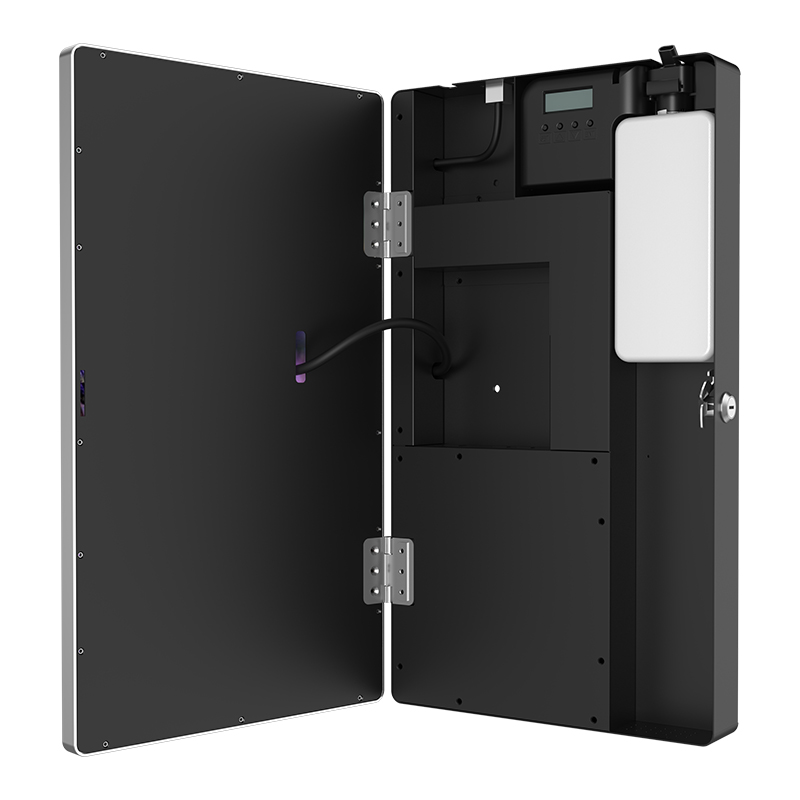
The SC19 advertising scent machine sits in the mid tier of an importer portfolio: fragrance diffusion plus an 18.5-inch display for indoor public venues.
An importer's scent diffuser portfolio is a small, deliberate set of factory models in which every unit answers a different downstream installation job. Wholesalers rarely lose money because a machine atomizes badly; they lose it by stocking a model that does not match the spaces their customers actually install into, or by quoting a delivery term they cannot repeat on the next order.
This guide is written for importers, wholesalers and private-label distributors building a resale catalogue, not for end users. It maps the SCENTSEA range to three downstream tiers — P03 battery-operated units for toilets, elevators, corridors and small shops; the SC19 advertising scent machine (catalogue unit 4717) for indoor public venues; and T2 for larger mall projects, supported by T3, H5000 and AC-MAX where coverage or duct layout demands them. It then covers factory-direct batch supply, the difference EXW, FOB and CIF make to your landed cost, and the three checks that decide whether a SKU earns its place: scent coverage, maintenance load and control mode.
Why one scent diffuser model cannot carry a resale catalogue
A resale catalogue fails in two directions. Stock one model and you will quote it into spaces it cannot serve — a 100–150 m² battery unit proposed for a mall concourse, or a duct-connected HVAC machine proposed for a washroom. The returns and the reputation damage land on you, not on the factory. Stock too many SKUs and you carry slow-moving inventory, several spare-parts sets and several control apps, so support cost rises faster than margin.
The practical answer is tiering. Each tier should map to a repeatable downstream job with a stable installation profile, a predictable refill interval and one control method the customer can operate without calling you. Breadth beyond that is optional; the three tiers plus one project line cover most commercial enquiry an importer receives.
Scope note: this is a portfolio-planning guide, not a brand ranking or a competitor benchmark. Every model figure below is the factory's published specification. Coverage claims across different suppliers are not standardized, so no comparison with another brand's numbers is made or implied here.
The commercial scenting category an importer is buying into
Commercial research cited in the evidence pack behind this guide puts the global fragrance diffuser market — all types, including home units — at USD 29.61 billion in 2024 (Data Bridge Market Research). The same research reports ultrasonic diffusers at a 38.5% revenue share in 2024 while expecting nebulizing types to grow fastest, driven by professional-grade requirements in hotels, and projects a 9.22% CAGR for the smart aroma diffuser segment from 2026 to 2034.
Those are category-level commercial projections, not evidence of demand in your territory or your customer list. Their practical use is narrower: they tell you that waterless and smart-controlled commercial units are the part of the category with professional buyers behind them, which is the part an importer can resell with a service story rather than on price alone.
Shenzhen Scentsea Technology Co., Ltd. (SCENTSEA) is a Shenzhen-based manufacturer founded in 2021 that produces cold-air nebulizing scent diffusers and fragrance oils. The company operates a 3,000 m² facility with three production lines, four R&D engineers and 20 patents, states CE, RoHS and FCC certification across its diffuser models, and reports supply to customers in more than 70 countries and regions, with 70% of output exported and main markets in the EU and USA.
On the trade side, a 2026 tariff reference from Dutiable classifies aroma diffusers under HS code 8509.80 and indicates a 4.2% US duty rate for that heading. Confirm your own duty and import-VAT position for each destination before you price a portfolio, because duty is charged on the classification, not on the tier.
The three-tier portfolio: mapping factory models to downstream jobs
The tiers below are a planning structure, not a price ladder. A model belongs in the tier that matches the installation problem it solves, and the same customer may buy from two tiers in one year.
Tier 1 — battery-operated and plug-in models for constrained spaces
Tier 1 covers the spaces where wiring is the obstacle. The P03 battery operated scent diffuser is a plastic wall mounted unit rated 100–150 m² / 300–500 m³ / 1000–1600 ft², with a 150 ml oil capacity, 5 V power from three D-cell batteries or Type-C, 2.5 W, noise under 35 dB and a net weight of 0.35 kg. It runs AromaOS app scheduling and intensity control, uses waterless cold-air atomization, and has a lockable front cover — a detail that matters in public washrooms. The factory lists toilets, elevators, corridors and small shops as its application set.
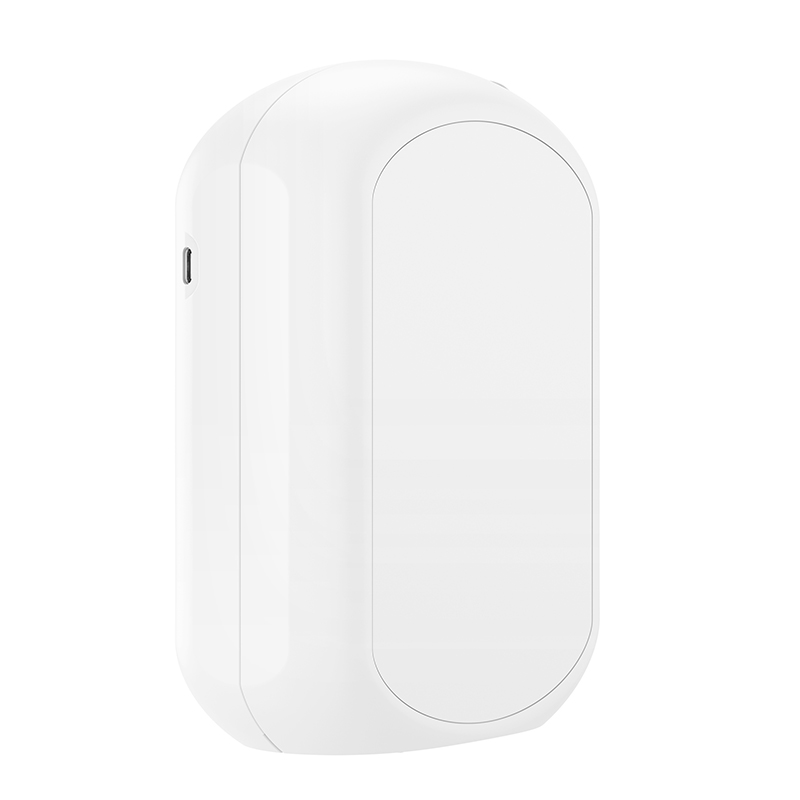
P03: battery or Type-C power, 150 ml tank, lockable wall-mounted housing for toilets, elevators and corridors.
The P01 uses the same 100–150 m² / 300–500 m³ rating but carries a 500 ml tank, four D-cell batteries or Type-C, 2.5 W, noise under 35 dB and a net weight of 0.55 kg, with the same lockable cover and AromaOS control. For an importer the pairing is simple: P03 for frequent small-space turnover, P01 where a customer wants fewer refill visits in an elevator lobby or washroom corridor.
Two further Tier 1 options widen the catalogue. The S01 is a direct wall plug-in with a 150 ml tank, 30–100 m² coverage, 110–240 V input, 1.5 W, noise under 38 dB and a 0.2 kg body, controlled by Bluetooth app plus button and a front display for time, temperature and humidity; the factory lists home, toilet and store use, which makes it the low-complexity entry SKU for small-shop and light retail customers. The P02 is the plug-in step up: 300 ml, 150–350 m² / 500–1000 m³ / 1500–3500 ft², DC 12 V, 6.5 W, noise under 30 dB, oil consumption 2.5 ± 10% ml/h, Bluetooth app with an optional Wi-Fi plus Bluetooth version, automatic reconnection after power or network interruption, and an optional connector and tube for HVAC integration.
Resale note: P03 and P01 remove the electrician from the sale because no fixed wiring is required. That shortens installation time at the customer site, but it moves a consumable into your after-sales plan — batteries. Quote the first battery set with the unit instead of absorbing it later.
Tier 2 — indoor public venues and mid-size retail
Tier 2 is where the machine becomes visible and coverage demand grows. The SC19 advertising scent machine — catalogue unit 4717 — is an aluminium and steel unit rated 150–250 m² / 500–800 m³ / 1500–2500 ft², with a 500 ml tank, 110–240 V AC input, 30 W, noise at or below 30 dB, 6.5 kg and a black-and-silver finish. Its differentiator is the integrated 18.5-inch display at 1920×1080 with 8 GB internal storage, so one unit can diffuse fragrance and carry brand or promotional content at the same time. The factory positions it for shopping malls, hotels and banks, with an application list covering elevators, bank branches, office lobbies, retail stores, shopping malls and exhibitions.
The A300 covers the same venue type without the screen: 500–800 m² / 1500–2500 m³ / 5000–8500 ft², steel housing, 500 ml tank, DC 12 V, 12 W, noise under 40 dB, oil consumption 4 ± 10% ml/h, a TFT colour touchscreen plus app control, and standalone, wall-mounted or HVAC-connected installation. The factory lists hotel, shopping mall and retail store applications. For a wholesaler, SC19 and A300 are the same sale with two arguments: media value versus coverage and price simplicity.
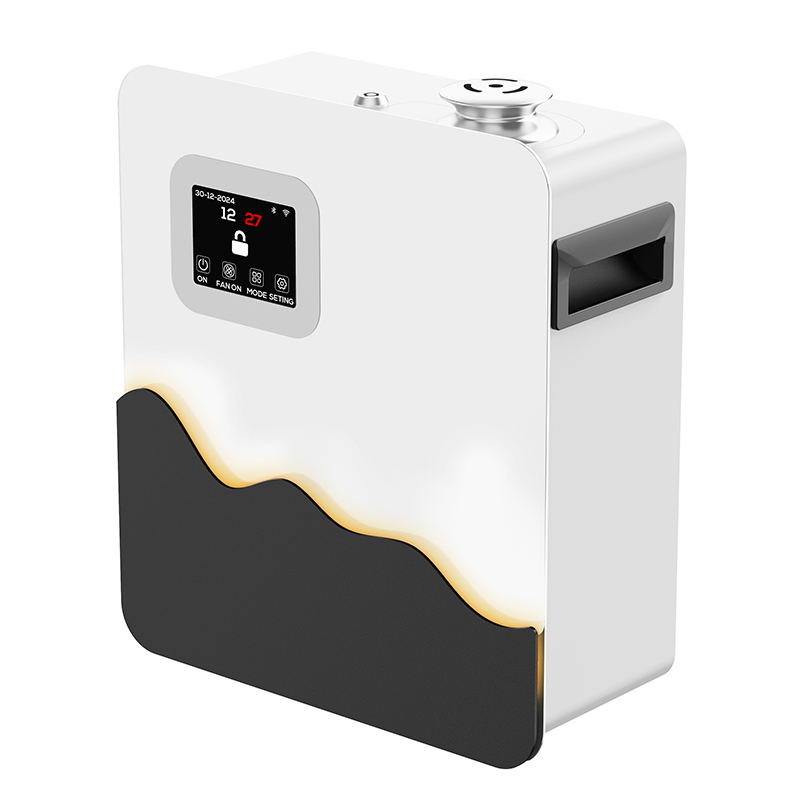
A300: steel commercial scent diffuser rated 500–800 m², with touchscreen and app control for hotel, mall and retail projects.
Tier 3 — project models for larger malls and HVAC layouts
Tier 3 is where a product sale becomes a project sale. T2 is the model the factory positions for larger mall projects, and it appears among the models linked to the U.S. shopping-mall deployment record described later in this guide. The specification set supplied for this article does not include T2's coverage rating, tank capacity or control configuration, so treat T2 as a project-line model to be confirmed against the current datasheet before you quote it: request the T2 specification sheet, the installation drawing and a sample unit as part of your first order.
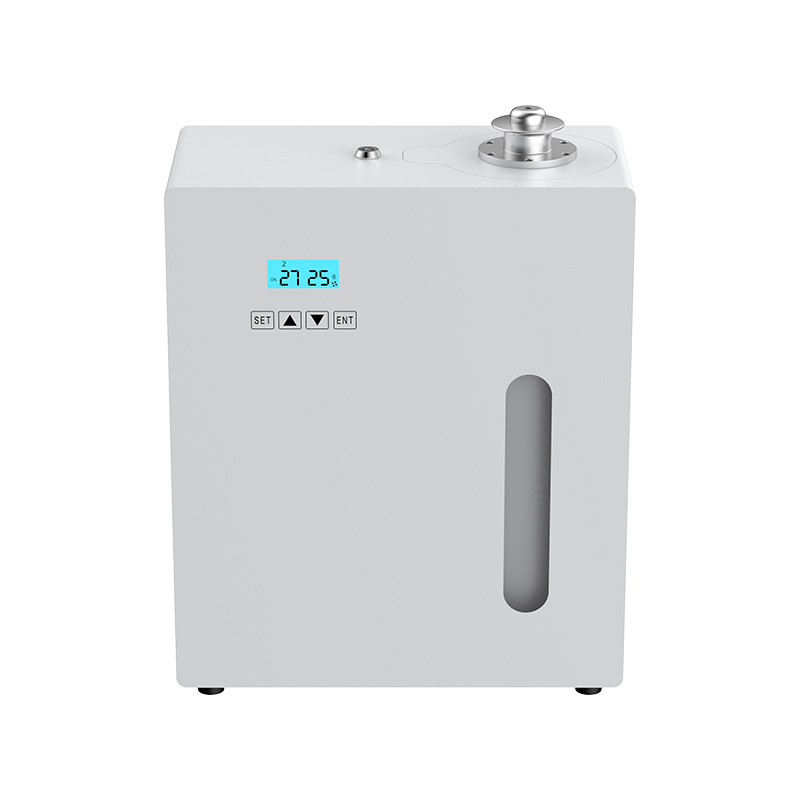
T3: acrylic panel and steel casing, 1000 ml tank, rated 1000–1600 m² for large halls and high-traffic malls.
Three more models complete the tier. The T3 is rated 1000–1600 m² / 3000–5000 m³ / 10000–17000 ft² with a 1000 ml tank, DC 12 V 2 A input, 15 W, noise under 55 dB and 4.6 ± 10% ml/h consumption, controlled by app for schedules and intensity. The H5000 is a floor standing scent diffuser in aluminium rated 800–1300 m² / 2500–4000 m³ / 8600–14000 ft², with a 1000 ml tank, DC 12 V, 20 W, noise under 45 dB, 5.4 ± 10% ml/h and a gunmetal finish, so no wall installation is required. The AC-MAX is the duct-based HVAC scent diffuser: 2500–3500 m² / 8000–10000 m³ / 25000–35000 ft², a split machine and 5 L oil tank, DC 12 V, 48 W, noise under 45 dB, 6 ± 5% ml/h, aluminium body with plastic bottle, Wi-Fi and Bluetooth control, password protection for project management and an optional airflow sensor that synchronizes scenting with HVAC operation.
Tier 3 caution: AC-MAX is a different sales conversation. It connects to central HVAC ducts and needs a mechanical or HVAC contractor on the customer side plus a duct survey before installation. Do not send it as an upgrade quote to a customer who asked about a plug-in unit; the installation scope is not comparable.
The portfolio at a glance
| Model | Form / housing | Rated coverage | Oil tank | Power | Control | Downstream job |
|---|---|---|---|---|---|---|
| P03 | Wall mounted, plastic | 100–150 m² / 300–500 m³ | 150 ml | 5 V, batteries or Type-C, 2.5 W | AromaOS app | Toilets, elevators, corridors, small shops |
| P01 | Wall mounted, plastic | 100–150 m² / 300–500 m³ | 500 ml | 5 V, batteries or Type-C, 2.5 W | AromaOS app | Toilets, elevators, lower refill frequency |
| S01 | Direct wall plug-in, plastic | 30–100 m² / 100–300 m³ | 150 ml | 110–240 V, 1.5 W | Bluetooth app and button | Home, toilets, small stores |
| P02 | Wall mounted, plastic | 150–350 m² / 500–1000 m³ | 300 ml | DC 12 V, 6.5 W | Bluetooth app, optional Wi-Fi | Corridors, shops, small retail |
| A300 | Steel, wall or standalone | 500–800 m² / 1500–2500 m³ | 500 ml | DC 12 V, 12 W | Touchscreen and app | Hotels, malls, retail stores |
| SC19 (4717) | Aluminium and steel, 18.5-inch display | 150–250 m² / 500–800 m³ | 500 ml | 110–240 V AC, 30 W | App and display content | Indoor public venues, banks, lobbies |
| T3 | Acrylic panel and steel | 1000–1600 m² / 3000–5000 m³ | 1000 ml | DC 12 V 2 A, 15 W | App scheduling | Large halls, malls, event venues |
| H5000 | Floor standing, aluminium | 800–1300 m² / 2500–4000 m³ | 1000 ml | DC 12 V, 20 W | App scheduling | Hotel lobbies, open retail floors |
| AC-MAX | Split unit, HVAC duct connection | 2500–3500 m² / 8000–10000 m³ | 5000 ml | DC 12 V, 48 W | Wi-Fi and Bluetooth, password protection | Centralized HVAC projects |
Selection check one: scent coverage against the real space
Rated coverage is a ceiling, not a promise. The factory's own selection guidance is to judge a space by its actual size, ceiling height, airflow, partitions and installation conditions rather than by the maximum coverage figure alone. A double-height mall atrium rated at 500–800 m² of floor area behaves like a much larger volume, which is why the specifications publish m³ alongside m²; where ceilings are high, plan on the volume figure.
Two importer-side checks follow. First, confirm the electrical reality of the site: the P03 and P01 run on 5 V battery or Type-C supply, the P02, A300, T3 and H5000 on DC 12 V, the S01 on 110–240 V, and the SC19 on 110–240 V AC — these are not interchangeable at the wall. Second, do not compare coverage figures across suppliers. Verified comparison notes for this category flag that different sellers publish coverage using different room models and units, so a 600 m³ claim from one seller and an 800 m³ claim from another cannot be subtracted from each other. Compare volume figures, power and tank size instead, then test.
Selection check two: maintenance load and refill intervals
Maintenance is where a portfolio either scales or consumes your team. The measurable part is oil consumption, and the published rates let you compare service intervals between SKUs. Using the factory figures, 500 ml ÷ 4 ml/h gives roughly 125 hours of atomization for the A300, 500 ml ÷ 6 ml/h roughly 83 hours for the SC19, 300 ml ÷ 2.5 ml/h roughly 120 hours for the P02, 1000 ml ÷ 4.6 ml/h roughly 217 hours for the T3, 1000 ml ÷ 5.4 ml/h roughly 185 hours for the H5000, and 5000 ml ÷ 6 ml/h roughly 833 hours for the AC-MAX. These are calculated values assuming continuous atomization at the rated rate; the consumption tolerances published with each model (±10%, or ±5% on the SC19 and AC-MAX) and your programmed schedule will move real intervals, so use them to rank SKUs against each other rather than as a service promise.
The non-measurable part is what the service call actually involves. The factory's maintenance guidance centers on regular oil-level checks and atomizer cleaning, and its troubleshooting sequence runs through power supply, working schedule, pump terminal connection, nozzle blockage, pump tube condition and fragrance oil viscosity before any component is replaced. A thicker or impure oil can show up as weak atomization, which is why sample testing of the oil matters as much as sample testing of the machine. Every unit is checked before shipment through functional testing, atomization testing, leakage inspection, noise testing, app and control testing, a 48-hour aging test and final appearance inspection, and the factory supports one year of free warranty on spare parts — worth stating explicitly in your own resale terms, because your customer will hold you to it.
Selection check three: control mode and who operates it
An app controlled scent diffuser creates a support relationship whether you want one or not. The range splits into four control profiles: AromaOS app on the P03 and P01, Bluetooth app on the P02 and S01, touchscreen plus app on the A300, app scheduling on the T3 and H5000, and Wi-Fi plus Bluetooth with password protection and an optional airflow sensor on the AC-MAX.
The selection rule is to match the profile to the operator, not to the brochure. A hotel engineering team can run scheduled groups and app-based intensity changes; a single small-shop owner will use buttons and a front display. Where a scent marketing company installs on behalf of a venue, the AC-MAX password protection keeps project settings out of reach of venue staff, which is a genuine resale argument rather than a technical footnote. For private-label distributors, note that OEM/ODM support covers the app interface and user manual, so instructions can be localized instead of shipping an app your customers cannot read.
Building the portfolio in six steps
- Audit downstream jobs, not products. List the space types your existing customers actually operate — washrooms and elevators, corridors and small shops, bank branches and lobbies, retail floors, malls, ducted buildings — and count repeat enquiries per type.
- Assign one model per job, plus a project line. P03 and P01 for constrained spaces, P02 and S01 for plug-in retail and light commercial, A300 and SC19 for indoor public venues, T3, H5000 and T2 for large floors, AC-MAX for ducted buildings.
- Check coverage on volume, not floor area. Where the ceiling is high or the layout is partitioned, size on the m³ rating and keep the higher tier in reserve for the quote.
- Calculate refill intervals per SKU. Convert tank capacity and rated consumption into atomization hours, then compare against the service visit your customer can absorb.
- Fix the control method. Decide who programs schedules, who changes intensity and who holds the app account before the unit ships.
- Lock compliance, delivery term and order plan. Confirm model-specific certification documents, choose one delivery term for all quotations, and book the first mixed sample order before committing to a batch.
Batch supply and delivery terms: EXW, FOB and CIF
Factory-direct supply is what makes a resale margin possible, but the term you buy on changes your landed cost more than a small unit-price difference does. Before comparing two quotations, confirm that both use the same term and the same named port, because an EXW price and a CIF price are not comparable numbers.
- EXW (Ex Works). The factory makes the goods available at its premises. You arrange export clearance, freight, insurance and import duty. It is usually the lowest quoted price and the highest administrative load, and it suits importers with their own forwarder and consolidated cargo.
- FOB (Free On Board). The factory delivers the goods on board the vessel at the named port of shipment and handles export clearance. Risk transfers at that point, and you pay ocean freight, insurance and import charges. It is the most common structure for importers who want control of the freight leg.
- CIF (Cost, Insurance and Freight). The factory pays cost, freight and insurance to the named destination port, which makes landed-cost estimation simpler, while risk still transfers when the goods are on board at origin. Import duty and import VAT remain yours, and for aroma diffusers the classification reference to check is HS 8509.80.
The supply facts behind those terms matter as much as the terms themselves. The minimum order quantity starts from one unit for diffusers, so a first order can be a mixed sample set across tiers rather than a container commitment. Monthly capacity is listed at 8,000 units with a lead time of 25–35 days, and OEM/ODM support covers logo, product colour, packaging, user manual, plug type, app interface and PCB or function changes. Export markets listed are the EU, US, Middle East and Southeast Asia, and samples of both diffusers and fragrance oils are available for quality verification.
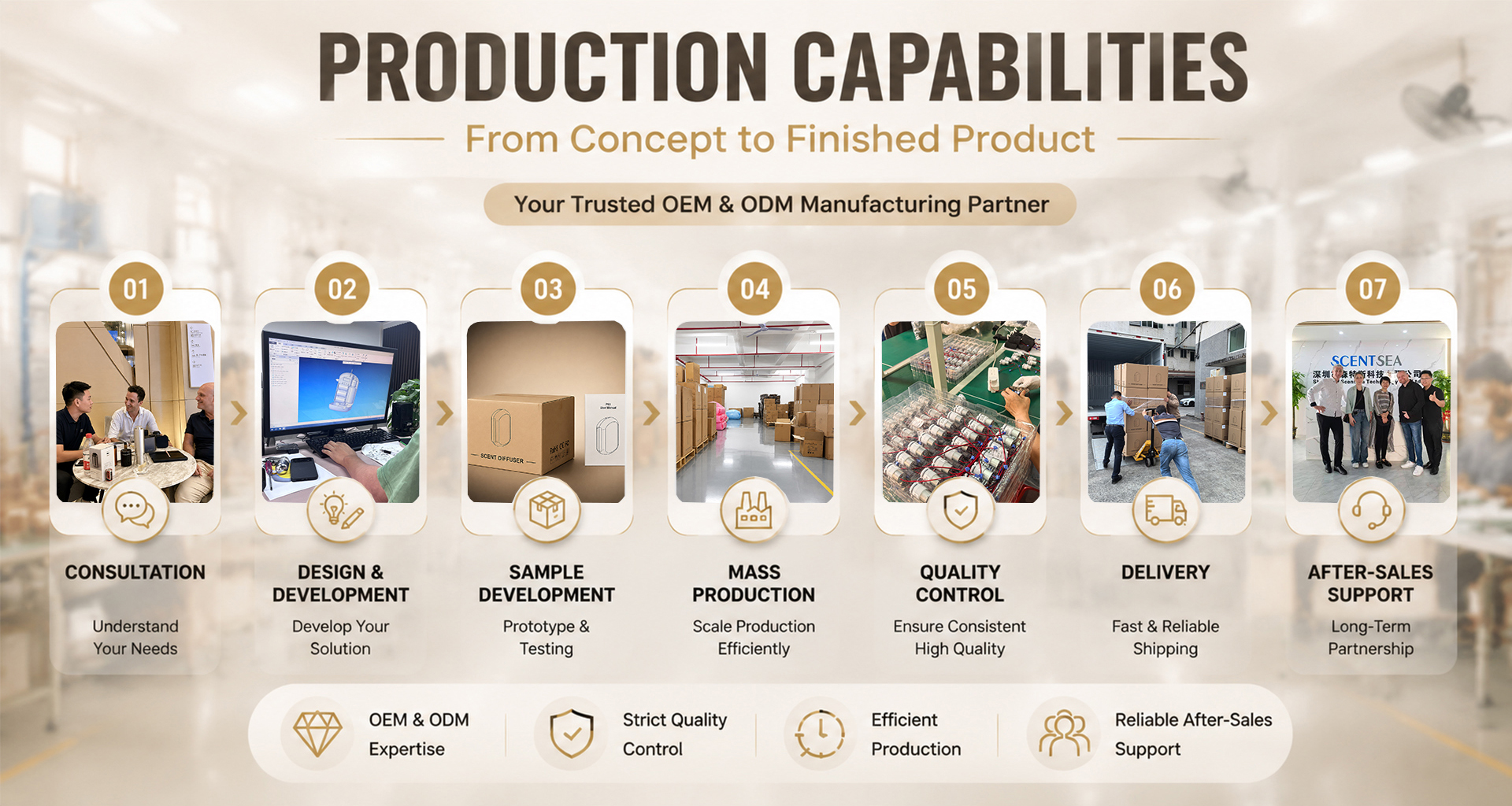
Production flow: every unit passes functional, atomization, leakage, noise and control testing plus a 48-hour aging test before packing.
On compliance paperwork, company documentation states CE, RoHS and FCC certification across the diffuser range. Buyers should still confirm that the certificate and test report name the exact model and configuration being shipped, and the factory's own compliance guidance notes that Bluetooth and Wi-Fi models may additionally require RED compliance for the EU market. A CE certified scent diffuser is only useful to you if the certificate matches the unit in the carton.
Three downstream scenarios and the models that fit them
Washrooms, elevators and corridors in hotels, offices and retail. These spaces have no convenient power and constant public access, so the installation profile — not the coverage figure — decides the sale. P03 handles it with battery or Type-C power, a 150 ml tank, 100–150 m² coverage and a lockable cover; P01 raises the tank to 500 ml where refill visits are the constraint. Both run AromaOS scheduling, which lets a facilities team run scent only during trading hours.
Indoor public venues: bank branches, office lobbies, retail floors, exhibitions. Here the machine is seen as well as smelled. The SC19 rated at 150–250 m² with its 18.5-inch display lets a venue carry campaign content on the same unit, which is why the factory positions it for malls, hotels and banks. Where the buyer wants coverage and a professional finish without a screen, the A300 at 500–800 m² with a steel housing and touchscreen control is the simpler quote.
Larger mall and ducted projects. Multi-floor retail usually needs several scenting points plus a control routine rather than one machine. T3 at 1000–1600 m² and H5000 at 800–1300 m² in floor-standing form cover large open floors, T2 is the model positioned for larger mall projects subject to datasheet confirmation, and AC-MAX serves buildings where the fragrance should travel through the existing HVAC ducts instead of a room unit.
A documented mall deployment: 30 units over five years
The factory's case record for the U.S. market describes a scent marketing company and scenting service provider running commercial scenting in shopping malls with 30 units over a five-year period. The recorded results are stable and consistent scent coverage, reduced manual maintenance, improved fragrance management efficiency and a better customer experience, with the deployment highlighting strong atomization, stable operation, smart app control, adjustable scent intensity, low maintenance and easy installation. The case record is linked to the commercial range that includes T2, P01, P03 and AC-MAX; it does not specify a single model for all 30 units.
Read that record for what it actually shows. It is a documented deployment in the mall scenario over a multi-year period, and it tells an importer that the service-provider channel — not only direct venue sales — is a viable route for a portfolio. It is not evidence of market-wide performance, not a guarantee of the same result in another building, and not a comparison against other manufacturers. Use it as a reference point when a customer asks whether app-controlled commercial scenting can be sustained across many sites, and pair it with your own sample testing.
FAQ for importers and wholesalers
What compliance documents should an importer collect before reselling these scent diffusers?
Collect the certificate and test report that name the exact model and configuration you are buying, not a generic company certificate. Company documentation states CE, RoHS and FCC certification across the diffuser range; the factory's compliance guidance adds that Bluetooth and Wi-Fi models may also need RED compliance for the EU and that FCC compliance applies to the US market. Certificates should match the production model, and the documents should be checkable against the carton you receive.
Which models cover toilets and elevators compared with larger mall projects?
P03 and P01 cover toilets, elevators and corridors at 100–150 m² with battery or Type-C power and lockable wall-mounted housings. P02 extends this to 150–350 m² on DC 12 V for corridors and small shops. A300 and SC19 serve indoor public venues at 500–800 m² and 150–250 m² respectively, T3 and H5000 handle 1000–1600 m² and 800–1300 m² open floors, T2 is positioned for larger mall projects subject to datasheet confirmation, and AC-MAX covers 2500–3500 m² where fragrance is delivered through HVAC ducts.
What order quantities, capacity and warranty terms apply?
Minimum order quantity starts from one unit for diffusers, so a first order can be mixed across models. Monthly capacity is listed at 8,000 units, lead time is 25–35 days, OEM/ODM is available for logo, colour, packaging, user manual, plug type, app interface and PCB or function changes, and one year of free warranty applies to spare parts. Because quantities and customisation vary by model, confirm the specific combination for the SKUs you plan to list before publishing prices.
How should an importer test samples before a batch order?
Order the sample set, not a single unit. Test atomization behaviour and residue, noise against the published figures (under 35 dB on P03 and P01, under 30 dB on P02 and SC19, under 40 dB on A300, under 45 dB on H5000 and AC-MAX, under 55 dB on T3), app pairing and scheduling, leakage after transport, and coverage in a real room of the size you intend to quote. Test your intended fragrance oil at the same time, since viscosity and formulation affect atomization, and confirm that the machine you receive matches the specification sheet you sell from.
How much maintenance does a resale portfolio create?
Plan on two routine tasks per unit: oil-level checks and atomizer cleaning, with nozzle and tubing inspection if atomization weakens. Larger tanks reduce visit frequency — the 1000 ml T3 and H5000 and the 5 L AC-MAX are the lowest-maintenance commercial options, while the 150 ml P03 trades tank size for installation flexibility. Battery replacement belongs in the cycle for P03 and P01. Stock a small spare-parts holding, since one year of free warranty on spare parts covers the part, not the labour visit.
How should repeat orders be planned around lead time?
Work backwards from your customers' installation dates using the 25–35 day lead time plus shipping and customs under your chosen term, and keep the 8,000-unit monthly capacity in view if you take on a multi-site project. Place the first order as a mixed sample set, then move to batch orders once the model mix is proven. To start, request the current catalogue, a sample unit per tier and current wholesale pricing, and include the T2 specification sheet if you intend to quote mall projects.
Conclusion: a portfolio is a service plan, not a stock list
A workable importer portfolio for scent diffusers holds three tiers and one project line: P03 and P01 where wiring is the obstacle, P02 and S01 where a plug-in unit is enough, A300 and SC19 for indoor public venues, T3, H5000, T2 and AC-MAX for larger and ducted buildings. Every one of those choices is then validated three times — coverage on volume, refill interval on oil consumption, and control mode against the person who will actually operate the app — before price is discussed.
Delivery terms finish the picture. Choose one term for all your quotations, confirm the named port and what the price includes, classify the goods correctly, and keep the model-specific paperwork with the shipment. That combination — the right tier for the job, a service interval your customer can absorb, and a delivery term you can repeat — is what a resale channel can defend when a competitor quotes a lower unit price.
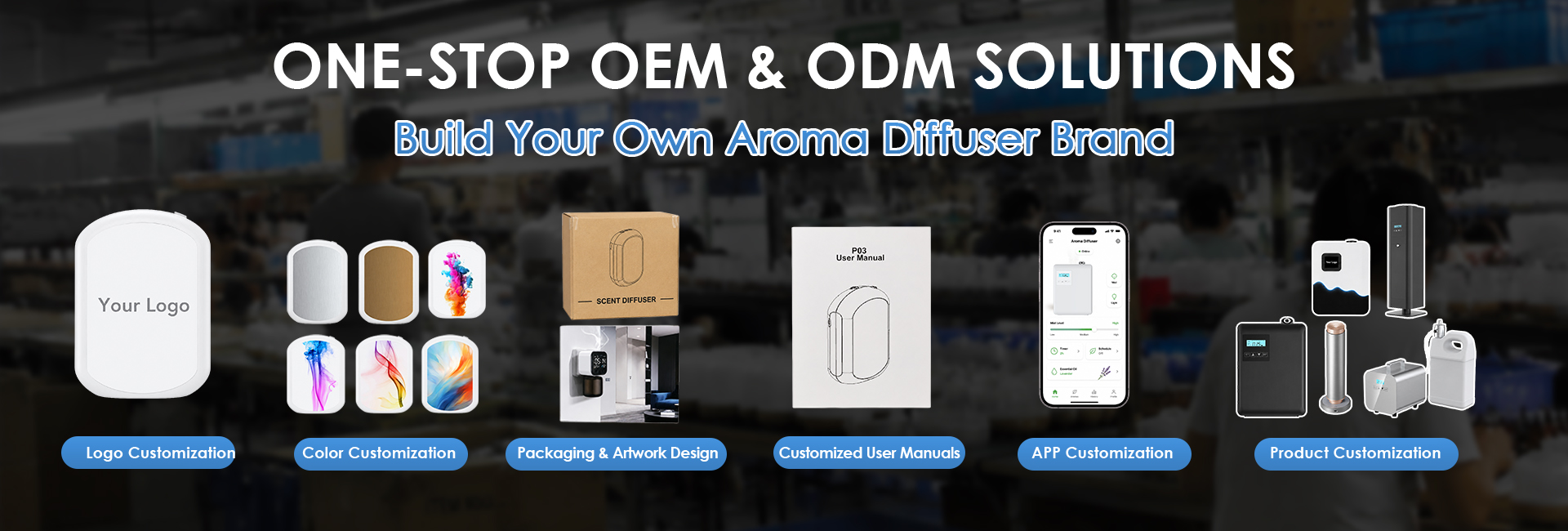
Sample units, private-label packaging and catalogue support can be requested before a batch commitment.
For a mixed sample order, private-label packaging or the current catalogue, contact the factory directly, or review the SCENTSEA company profile (PDF) for facility, certification and product-range details before finalizing your first portfolio list.
Have Questions or Need More Details?
Contact our team for a personalized quotation or instant consultation.
Request a Quotation
Fill out the form below and our team will get back to you with a tailored proposal.
WhatsApp Direct Chat
Prefer to chat in real-time? Message us on WhatsApp for instant assistance & quick answers.
- Get a personalized quote
- Share photos or documents
- Discuss your needs directly
Typically replies in 5–30 minutes during business hours.