
T2 vs. T3 Commercial Scent Diffusers: Which One Fits Your Business?
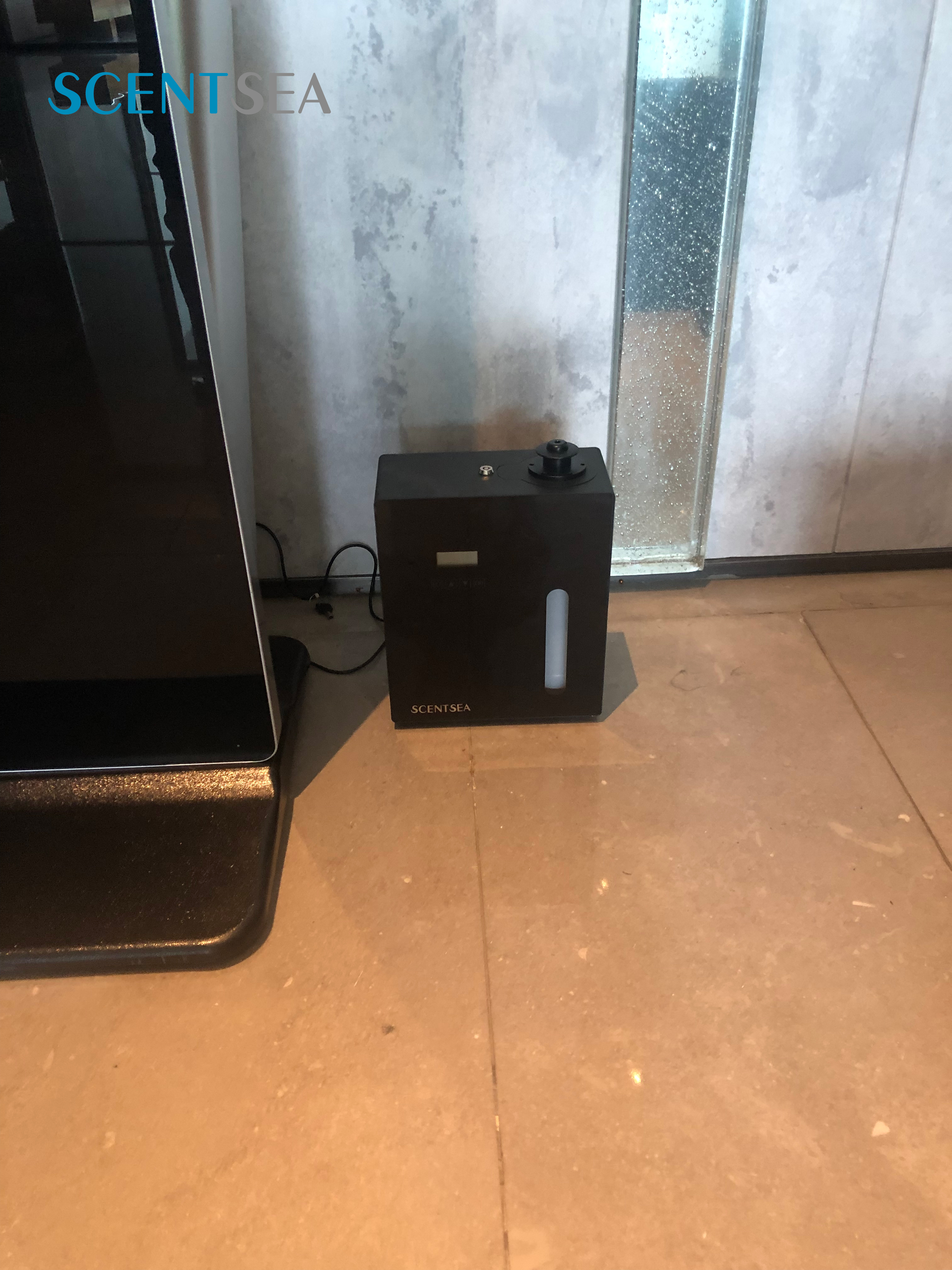
SCENTSEA T2 commercial scent diffuser — 10W rated power, 500 ml fragrance oil capacity, rated noise below 45 dB.
Quick answer: If the zone you need to scent is roughly 500–800 m² and people sit or stand close to the machine, the T2 — 10W, rated below 45 dB, 500 ml oil capacity — is usually the better fit. If the zone is around 1,000–1,600 m², or the unit can be placed away from quiet seating, the T3 — 15W, rated below 55 dB, 1,000 ml oil capacity — delivers the higher scent load that space requires. Both are waterless cold-air commercial scent diffusers from SCENTSEA, both use an acrylic front panel with a steel casing, and both run on DC 12V 2A.
Why the T2 vs. T3 Decision Is Really About Space, Power and Noise
The T2 and the T3 come from the same SCENTSEA commercial platform, so this is rarely a brand-versus-brand question. It is a fit question. Three variables decide it: how large the zone is, how close people are to the diffuser, and how the unit will be refilled and serviced over the following years.
Coverage sets the first boundary. The T2 is rated for 500–800 m² (1,500–2,500 m³ or 5,000–8,500 ft²). The T3 is rated for 1,000–1,600 m² (3,000–5,000 m³ or 10,000–17,000 ft²). Between roughly 800 m² and 1,000 m² there is a gap between the two published ranges, and projects that land in that band should be verified with airflow data and a site sample rather than a datasheet alone.
Noise sets the second boundary. The T2 is rated below 45 dB and the T3 below 55 dB. In a quiet hotel lobby, a boutique retail floor or a cinema foyer, that difference changes where a unit can be installed — and in some zones whether a higher-output unit should be installed at all.
Do not select on maximum rated coverage alone. Room size, ceiling height, ventilation, airflow and partitions all change how fragrance actually distributes. A 15W unit placed in a partitioned space can perform worse than a 10W unit placed where air moves. The T2 and T3 numbers are published ratings; the room decides the result.
Industry Background: Why Waterless Cold-Air Scenting Fits Commercial Projects
The fragrance diffuser category is large and still expanding. Data Bridge Market Research estimated the global fragrance diffuser market at USD 29.61 billion in 2024, and projects the smart aroma diffuser segment to grow at a CAGR of 9.22% between 2026 and 2034.
The technology mix inside that market is shifting. Ultrasonic diffusers held a 38.5% revenue share in 2024, but nebulizing (cold-air) diffusers are expected to grow fastest, driven largely by professional-grade requirements in hotels. That is the segment the T2 and T3 belong to.
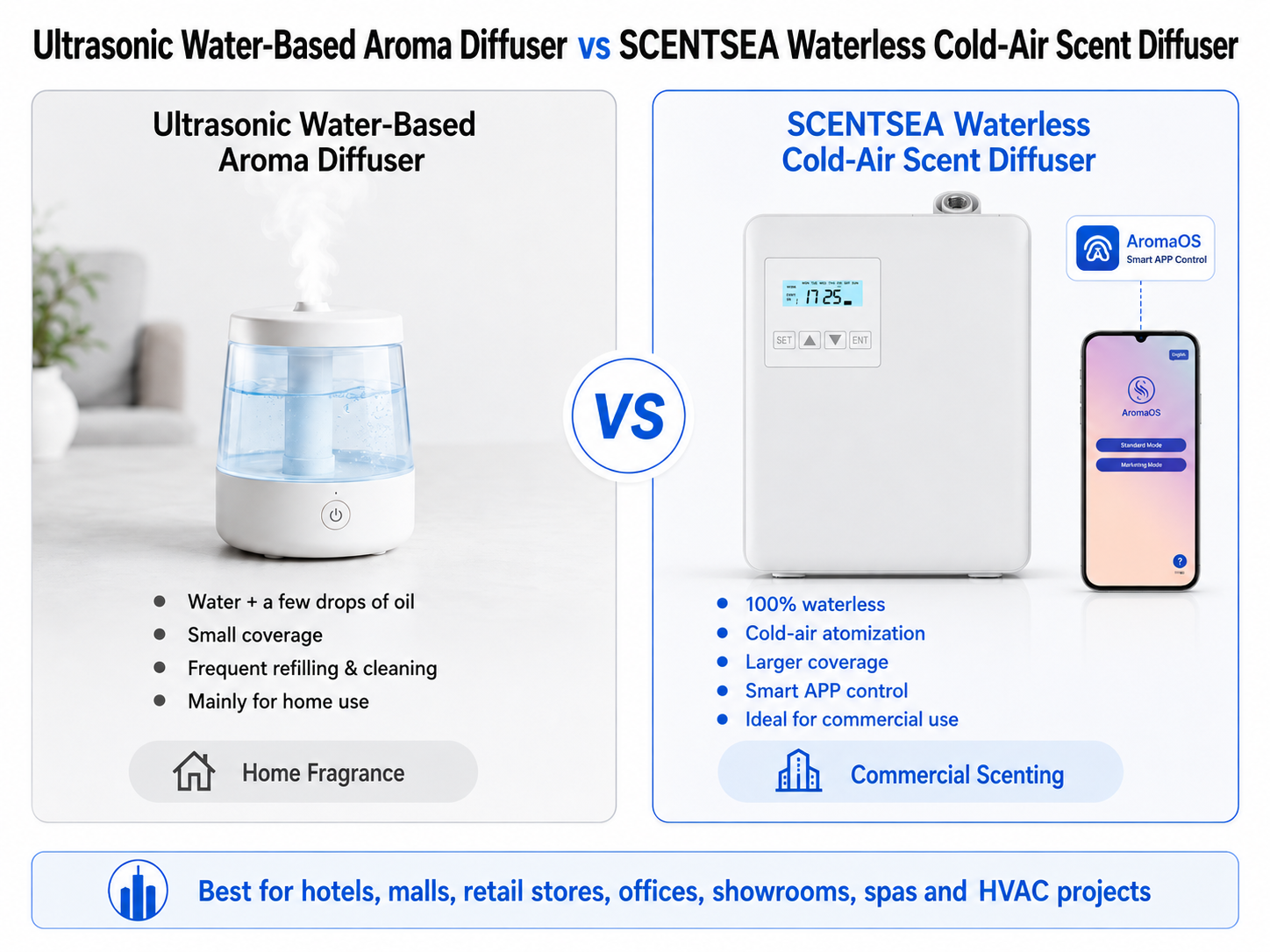
Cold-air atomization diffuses fragrance oil directly, without water dilution or heating, which is why it suits continuous commercial scenting.
Waterless cold-air atomization explains that shift. SCENTSEA commercial scent diffusers atomize fragrance oil directly into fine airborne particles using controlled airflow and pressure — no water, no heat, and 0 W of dedicated heating power. Across the SCENTSEA range, coverage runs from approximately 30 m² to 3,500 m² with fragrance oil capacities from 100 ml to 5 L and 0% water addition. An ultrasonic water-based aroma diffuser works the other way round: it mixes oil with water in a tank, which suits small residential spaces but requires more frequent refilling and cleaning, and its five-year maintenance cost can be roughly 40% higher than a comparable waterless cold-air unit.
Shenzhen Scentsea Technology Co., Ltd. (SCENTSEA) is a Shenzhen-based manufacturer founded in 2021 that develops and produces cold-air nebulizing scent diffusers, waterless aroma machines, HVAC scent systems and fragrance oils, with a 3,000 m² production facility and a 4-engineer R&D team. Its diffuser range carries CE, RoHS and FCC certification, and product documentation also references SGS testing. T2 and T3 sit in the middle of that range as plug-in electric scent diffusers for hotel, retail and public-venue projects.
For import planning, aroma diffusers are classified under HS Code 8509.80. Because the T3 is heavier and packs larger than the T2 — 5.9 kg gross versus 4 kg, and a 315 × 165 × 360 mm carton versus 275 × 140 × 320 mm — freight and customs calculations will differ between the two models on any container-level order.
The T2 and T3 Side by Side: Materials, Dimensions and Core Specifications
Both models share a materials platform — an acrylic front panel with a steel casing — and both are plug-in units running on DC 12V 2A. The differences are in reservoir size, output, coverage, rated noise and physical footprint.
T2 — 10W, rated below 45 dB, 500 ml
- Rated power: 10W; power supply DC 12V 2A (plug-in)
- Rated noise: below 45 dB
- Coverage: 500–800 m² / 1,500–2,500 m³ / 5,000–8,500 ft²
- Fragrance oil capacity: 500 ml; consumption 3 ml ±10%/h
- Net weight 3.5 kg; gross weight 4 kg
- Product size: L215 × W100 × H260 mm; packing size L275 × W140 × H320 mm
- Colours: white, black (customised)
- Listed industries: hotel, shopping mall, cinema
T3 — 15W, rated below 55 dB, 1,000 ml
The T3 uses the same acrylic-and-steel construction and the same DC 12V 2A supply, but it is built around a larger reservoir and a stronger atomization output:
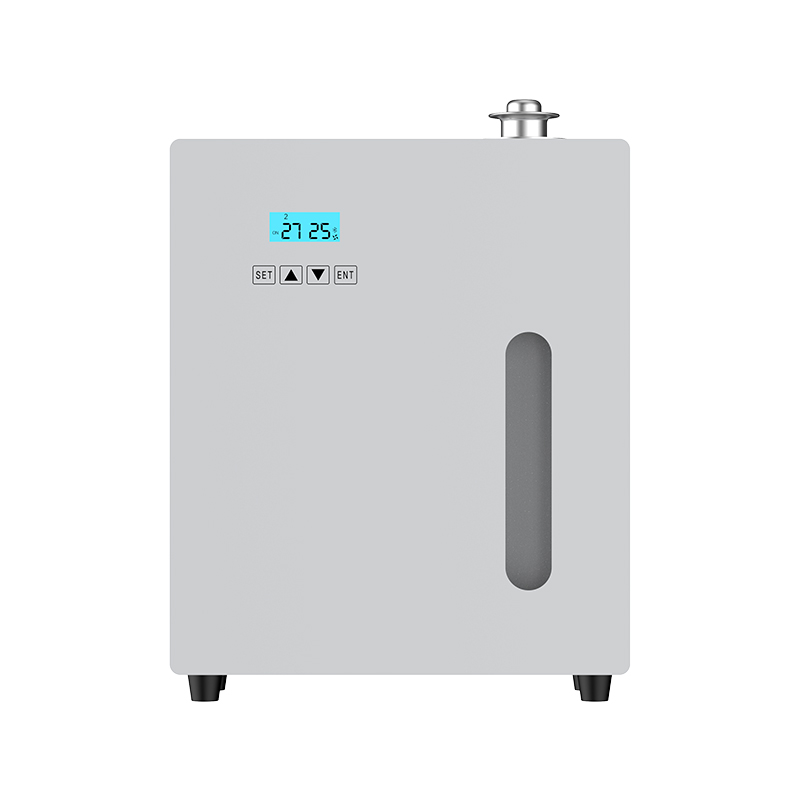
The SCENTSEA T3 commercial scent diffuser — 15W rated power, 1,000 ml oil capacity, rated for 1,000–1,600 m².
- Rated power: 15W; power supply DC 12V 2A (plug-in)
- Rated noise: below 55 dB
- Coverage: 1,000–1,600 m² / 3,000–5,000 m³ / 10,000–17,000 ft²
- Fragrance oil capacity: 1,000 ml; consumption 4.6 ml ±10%/h
- Net weight 5.3 kg; gross weight 5.9 kg
- Product size: L250 × W125 × H300 mm; packing size L315 × W165 × H360 mm
- Colours: white, black (customised)
- Listed industries: shopping mall, hotel, airport
What Stays the Same, and Why That Matters for a Multi-Zone Rollout
Because the T2 and T3 share casing construction, supply voltage and colour options, a single project can mix both models without splitting the maintenance and spare-part routine. Both are listed as customisable in white or black, which matters when the diffuser stands in a visible public area rather than in a plant room.
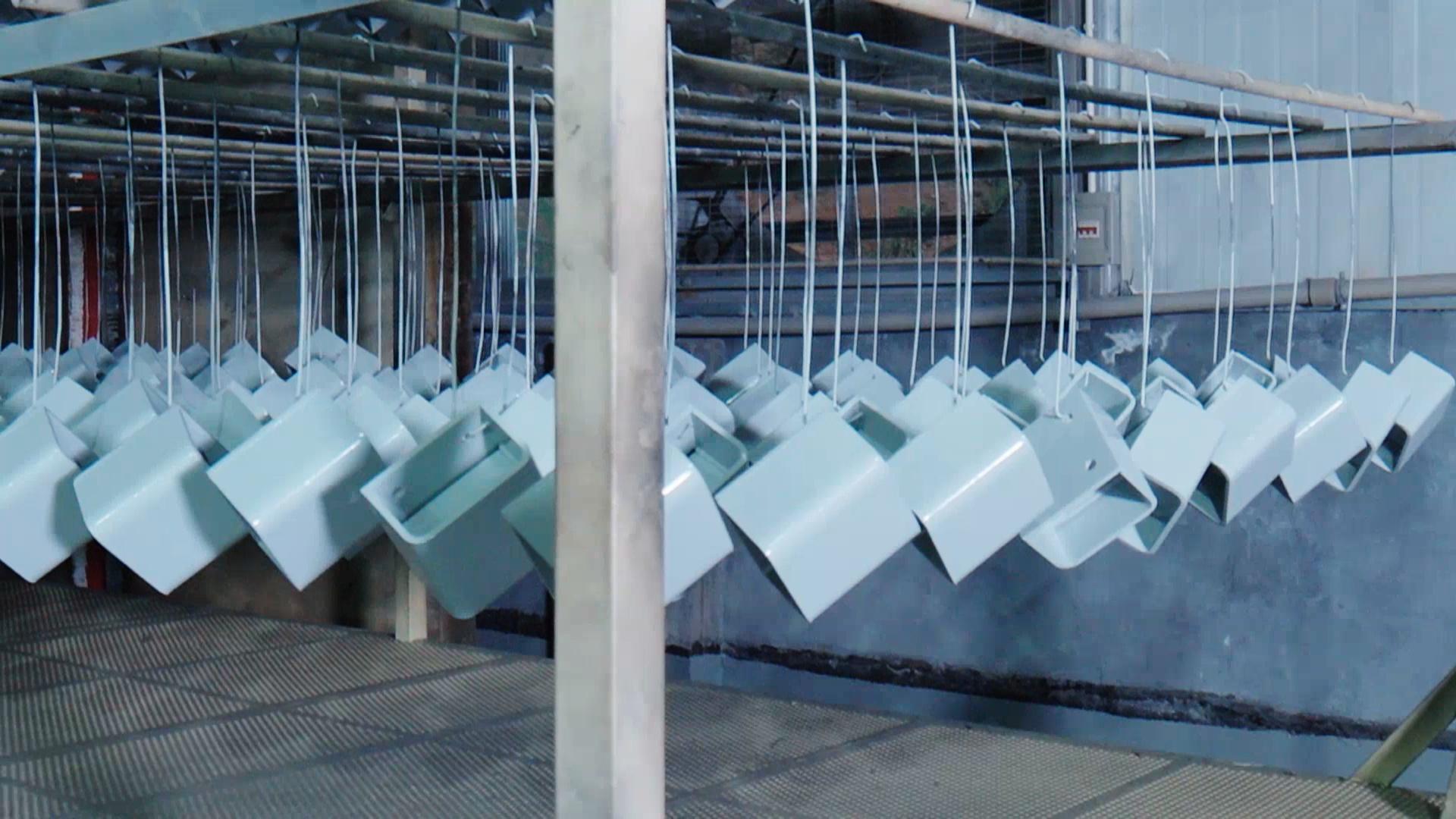
Steel casings for the T2 and T3 are powder coated in-house at SCENTSEA's Shenzhen facility.
What 10W vs 15W Actually Changes
Rated power is not a quality score. In a cold-air nebulizing diffuser, the wattage mainly reflects how much airflow and pressure the atomization system can deliver — and therefore how much area the unit is rated to cover. The T3's 15W output sits behind a coverage rating of 1,000–1,600 m², roughly double the T2's 500–800 m².
That extra output is not free. Oil draw rises from 3 ml ±10%/h on the T2 to 4.6 ml ±10%/h on the T3, and the rated noise ceiling rises from below 45 dB to below 55 dB. On neither model is there a heating element: dedicated heating power is 0 W, because cold-air atomization does not evaporate oil with heat.
Practical rule. Single zones up to 800 m² point to the T2. Open volumes from about 1,000 m² point to the T3. Zones between 800 m² and 1,000 m², or zones with heavy partitioning, high air-change rates or strong HVAC turbulence, should be tested with a sample rather than decided on paper.
What <45 dB vs <55 dB Changes in Placement
Both figures are rated ceilings rather than measured averages, and actual noise varies with output setting and mounting surface. Even so, they create two different placement rules for the same building.
Zones suited to the T2's lower rated noise (below 45 dB): reception desks, lobby seating areas, retail counters, cinema foyers and queuing lines, boutique floors and small shops where guests remain within a few metres of the unit.
Zones suited to the T3's higher output (below 55 dB): mall atria, large hotel lobbies with high ceilings, airport terminal areas, corridors without seating, and back-of-house or plant areas. Keep the unit off hard resonant surfaces such as thin metal shelving or glass panels, and away from quiet seating zones.
For hotels, offices and any other quiet environment, buyers should check model-specific noise data and test samples on site. That instruction applies to the T2 and the T3 equally.
Step-by-Step: Choosing Between the T2 and the T3
- Measure the zone, not the lease. Record floor area, ceiling height, partitions and air-change characteristics for each area separately. One building usually contains several different zones.
- Set a noise budget per zone. Identify where guests sit or stand within a few metres of the diffuser. Those zones drive the <45 dB unit.
- Match the coverage rating to the zone. 500–800 m² points to the T2; 1,000–1,600 m² points to the T3; 800–1,000 m² requires airflow verification and a sample.
- Calculate refill logistics. The T2 holds 500 ml and draws 3 ml ±10%/h; the T3 holds 1,000 ml and draws 4.6 ml ±10%/h. Compare the achievable interval between refills against your service team's route.
- Confirm installation conditions. Both models are plug-in DC 12V 2A units. Keep the unit upright, avoid overfilling, and keep fragrance oil away from electronic components.
- Verify compliance paperwork for the destination market. Check CE, RoHS or FCC documentation as applicable, and confirm that the certificate and test report match the exact production model you are buying.
- Test samples in the real site. Run the unit on the intended schedule. SCENTSEA notes that running 12 hours per day instead of 24 hours reduces scheduled operating time by 50%, which changes both electricity and fragrance consumption.
- Plan the rollout. Standardise on as few models as possible across a multi-site project, and build the order schedule around typical production lead time of 25–35 days.
- Know the boundary of this comparison. If a zone exceeds 1,600 m² or requires centralised duct distribution, neither the T2 nor the T3 is the right unit — SCENTSEA's AC-MAX HVAC scent diffuser is designed for that scale. Projects that need battery-operated units for elevators and restrooms, or compact wall-mounted units for corridors, sit outside this two-model choice as well.
Use Cases: Where Each Model Fits
Hotel scent diffuser projects
In a hotel, the lobby and lounge usually carry the brand signature and guests linger there, so the T2's lower rated noise suits seating-level placement, while a large high-ceiling lobby in the 1,000–1,600 m² band points to the T3 placed outside the seating envelope. Both models are listed for hotel applications.
Shopping mall scent diffuser projects
Malls typically need both models: T2 units for individual retail floors, tenant zones and counter areas, and T3 units for atria and other open volumes. Because both share casing construction and voltage, mall operators can keep one spare-parts routine across the site.
Cinemas
Cinema is a listed industry for the T2. Foyers, ticket halls and concession areas are zones where the lower rated noise and 500–800 m² coverage fit the space, and where guests are stationary near the unit.
Airports and large public buildings
Airport is a listed industry for the T3. Terminal and concourse areas are large, open and rarely quiet, which is where the higher output and 1,000–1,600 m² coverage are used. For buildings that need fragrance pushed through air-handling ducts rather than released from a floor unit, the project shifts to an HVAC scenting system instead.
T2 vs. T3 Comparison Table
| Specification | T2 | T3 |
|---|---|---|
| Diffusion technology | Waterless cold-air atomization | Waterless cold-air atomization |
| Material | Acrylic panel + steel casing | Acrylic panel + steel casing |
| Fragrance oil capacity | 500 ml | 1,000 ml |
| Coverage (m²) | 500–800 m² | 1,000–1,600 m² |
| Coverage (m³) | 1,500–2,500 m³ | 3,000–5,000 m³ |
| Coverage (ft²) | 5,000–8,500 ft² | 10,000–17,000 ft² |
| Rated power | 10W | 15W |
| Power supply | DC 12V 2A, plug-in | DC 12V 2A, plug-in |
| Rated noise | Below 45 dB | Below 55 dB |
| Oil consumption | 3 ml ±10%/h | 4.6 ml ±10%/h |
| Net / gross weight | 3.5 kg / 4 kg | 5.3 kg / 5.9 kg |
| Product size | L215 × W100 × H260 mm | L250 × W125 × H300 mm |
| Packing size | L275 × W140 × H320 mm | L315 × W165 × H360 mm |
| Colours | White, black (customised) | White, black (customised) |
| Listed industries | Hotel, shopping mall, cinema | Shopping mall, hotel, airport |
All specifications as published by SCENTSEA for the T2 and T3 commercial scent diffuser models.
Long-Term Considerations: Refills, Spare Parts and Rollout Consistency
For a hotel group, mall operator, distributor or systems integrator, the purchase decision is the start of a maintenance relationship, not the end of it. Three long-term factors separate a good T2/T3 choice from a costly one.
Refill and service cadence. The T2's 500 ml reservoir and 3 ml ±10%/h draw and the T3's 1,000 ml reservoir and 4.6 ml ±10%/h draw produce different service intervals. Higher oil consumption on the T3 does not automatically mean more visits, because the reservoir is also twice the size — but the service route must be planned against real zone-by-zone runtime, including scheduled hours rather than 24-hour operation. Maintenance frequency depends on usage and fragrance oil, and regular oil-level checks and atomizer cleaning help maintain stable performance.

Quality measurement equipment used during the SCENTSEA diffuser inspection process.
Spare parts and failure risk. Buying the right model is only half the risk profile. Key quality risks on commercial scent diffusers include unstable atomization, oil leakage, excessive noise and inconsistent batch performance, which is why supplier evaluation should cover warranty terms, spare-parts support and pre-shipment testing rather than price alone. SCENTSEA checks every diffuser before shipment through functional testing, an aging test and leakage inspection.
Supply continuity. SCENTSEA's monthly production capacity is 8,000 units with a typical production lead time of 25 to 35 days, and the minimum order quantity is 1 unit, which allows both trial orders and repeat rollout orders. The manufacturer exports to the EU, US, Middle East and Southeast Asia, with an export ratio of 70% and supply to customers in more than 70 countries and regions.
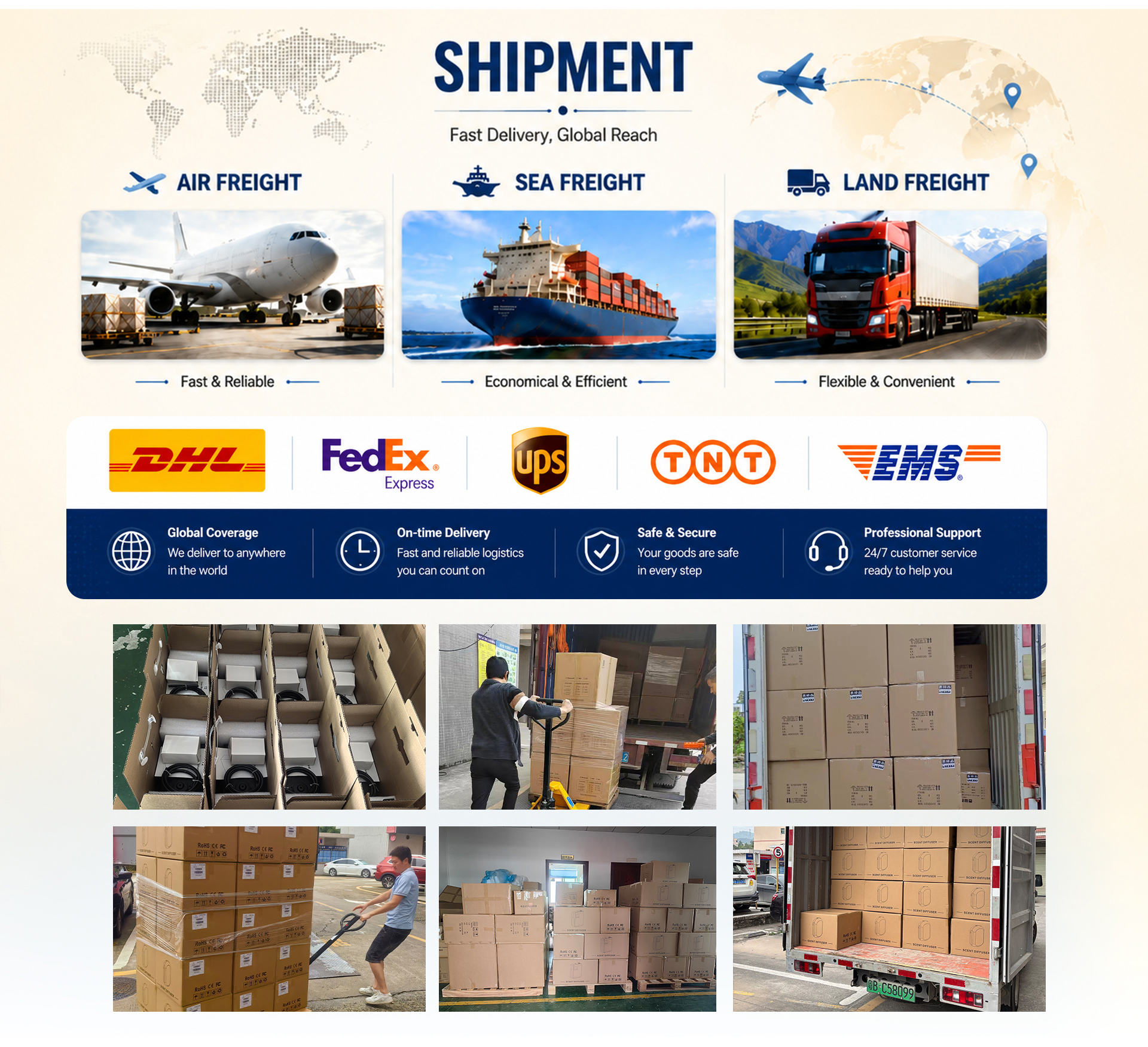
Preparing a commercial scent diffuser order for shipment.
For distributors and resellers, SCENTSEA supports OEM/ODM programmes including logo customisation, colour customisation, exclusive mould development, app customisation, user manual customisation and private label packaging, with the same options available on fragrance oils. Customisation options depend on the model and order quantity. The practical question for a channel partner is therefore not only which model sells first, but which model keeps a client on the same platform for the following five years.
Frequently Asked Questions
Are the T2 and T3 compliant for EU and US import?
Certification requirements depend on the destination market, the product model and whether wireless functions are included. SCENTSEA's diffuser range carries CE, RoHS and FCC certification, and product documentation also references SGS testing. For the European market, buyers should normally check applicable CE and RoHS documents, while Bluetooth or Wi-Fi models may also need to meet RED requirements. For the US market, applicable FCC compliance should be verified. Always confirm that the certificate and test report match the exact production model and configuration being purchased, because a document issued for one variant does not automatically cover another.
What is the practical difference between 10W on the T2 and 15W on the T3?
The wattage difference shows up as output, coverage and noise rather than as a quality gap. The T2 runs at 10W and is rated for 500–800 m² with noise below 45 dB; the T3 runs at 15W and is rated for 1,000–1,600 m² with noise below 55 dB. The T3 also draws more fragrance oil per hour (4.6 ml ±10%/h versus 3 ml ±10%/h). Neither unit uses a heating element — dedicated heating power is 0 W on SCENTSEA cold-air diffusers. Choose the lower-output model where people are close to the machine, and the higher-output model where the air volume is large and the unit can be placed away from quiet seating.
How should I compare project cost between the T2 and the T3?
Compare cost per scented zone, not cost per unit. The T3 covers roughly twice the area of the T2, so one T3 may replace two T2 units in an open space — but it also draws more oil per hour and packs larger and heavier, which affects freight, storage and handling. On the service side, waterless cold-air diffusers require no water refilling, and their five-year maintenance cost can be approximately 40% lower than that of water-based ultrasonic units. SCENTSEA quotes project pricing on request rather than publishing list prices, with a minimum order quantity of 1 unit for diffusers, delivery terms EXW, FOB or CIF, payment terms of 50% T/T in advance with the balance before shipment, and pre-shipment testing as the acceptance criterion.
Can I test a T2 and a T3 before committing to a rollout?
Yes. SCENTSEA supplies diffuser samples and fragrance oil samples for quality verification, and the minimum order quantity starts from 1 piece for diffusers, so a single unit can be tested in the actual zone before a multi-site order is placed. This matters most for the 800–1,000 m² band between the two rated ranges, and for spaces with heavy partitioning or strong airflow. Testing both models side by side on the intended schedule is the fastest way to decide which one fits your business, and you can request samples or a project quote directly from SCENTSEA.
What lead time and order volume should I plan for?
Typical production lead time is 25–35 days, and SCENTSEA's monthly production capacity is 8,000 units, with a minimum order quantity of 1 unit. Orders ship to the EU, US, Middle East and Southeast Asia. Plan rollout orders so that each site receives its units together with the corresponding fragrance oil and spare-parts allocation, rather than in separate shipments. To confirm availability for your project dates, request a quote and a sample through jimmy@scent-sea.com or WhatsApp +86 19928719703, or download the SCENTSEA catalog for the full model range.
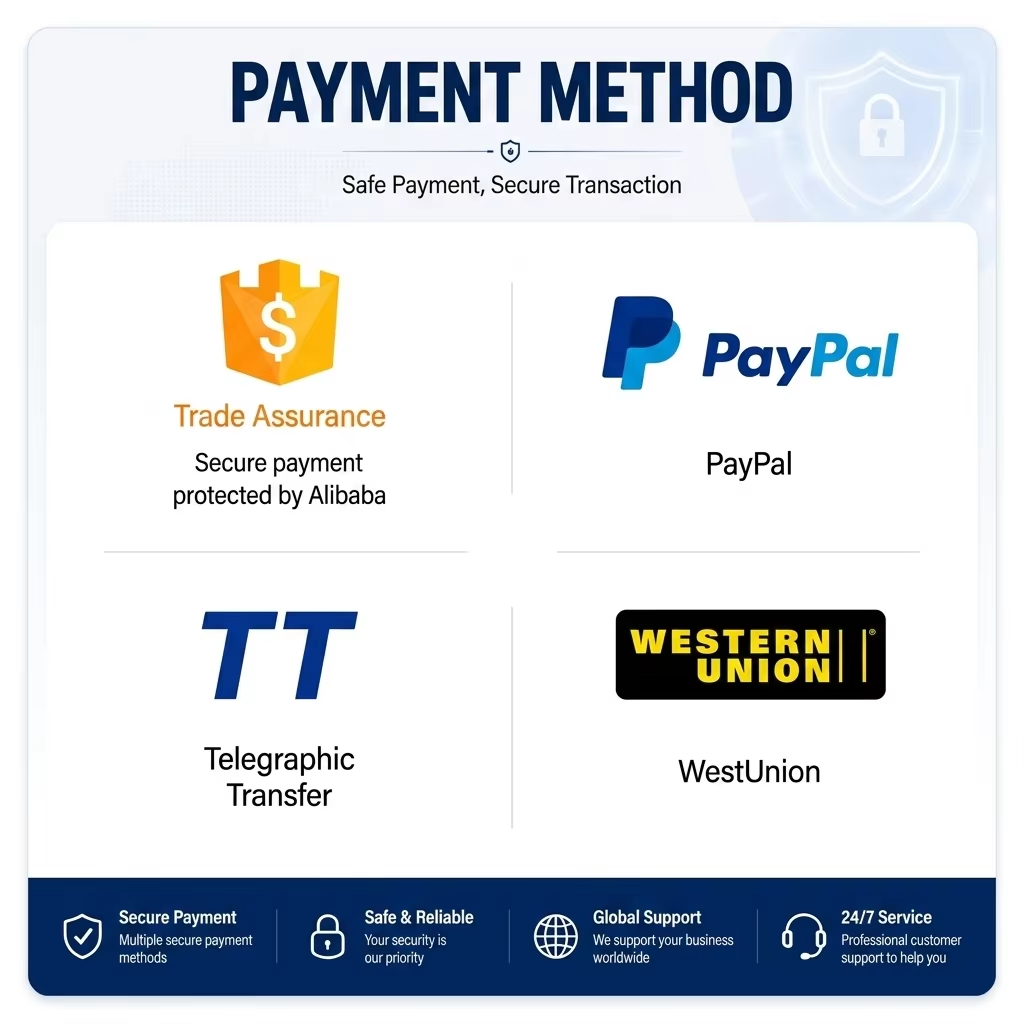
Project orders: minimum order quantity from 1 unit, EXW/FOB/CIF delivery, 50% T/T in advance with balance before shipment.
Conclusion: Match the Model to the Zone, Not the Other Way Around
The T2 and the T3 are not competing products. They are two output levels on the same waterless cold-air platform: acrylic panel with steel casing, DC 12V 2A supply, white or black housing. The T2 is the quieter 10W unit rated for 500–800 m², best placed where guests sit close to the diffuser. The T3 is the stronger 15W unit rated for 1,000–1,600 m², best placed in large open volumes where a rated noise level below 55 dB is acceptable.
If your project falls inside those two ranges, the decision comes down to three checks: measure the real zone, test both models on site, and confirm that the compliance documents match the exact model you order. If your zone exceeds 1,600 m² or needs duct-based distribution, look at an HVAC scenting system instead of trying to stretch these two models.
To compare the T2 and T3 for a specific project, request samples or a quote from SCENTSEA at jimmy@scent-sea.com / +86 19928719703, review the full model range at SCENTSEA, or download the catalog below.
Download the SCENTSEA product catalog (PDF)
Have Questions or Need More Details?
Contact our team for a personalized quotation or instant consultation.
Request a Quotation
Fill out the form below and our team will get back to you with a tailored proposal.
WhatsApp Direct Chat
Prefer to chat in real-time? Message us on WhatsApp for instant assistance & quick answers.
- Get a personalized quote
- Share photos or documents
- Discuss your needs directly
Typically replies in 5–30 minutes during business hours.