
The RoHS Paper Trail: What EU Scent Diffuser Importers Should Receive With Every Bulk Shipment
An EU importer receiving a bulk scent diffuser shipment should be able to answer four questions from the paperwork inside the carton, without emailing the factory: which certificate covers this product, which standard it was tested against, which laboratory issued it, and which model designation on the certificate matches the SKU sitting in the warehouse. If any of those four answers requires a follow-up email, the paper trail is not finished.
For shipments from Shenzhen Scentsea Technology Co., Ltd. (SCENTSEA), a scent diffuser and fragrance oil manufacturer founded in 2021 and based in Shenzhen, China, the RoHS record in that set is certificate number ATL20240416327, issued by Shenzhen ATL Testing Technology Co., Ltd. against RoHS Directive (EU) 2015/863, with an issue date of 24 April 2024 and a recorded expiry of 2099-12-31. The certificate scope is written as "scent diffuser", and its related-product list runs across eleven models, including the SC19 advertising scent machine (product ID 4717) and the AC-MAX, T3, T2, A300, P03, P02, P01, H5000, S02 and S01 units.
What follows is a buyer-side guide to that set: what each document should contain, how to check the scope against the exact SKU you resell to installers, where the trail usually breaks, and what to request before a repeat order. It is written as documentation practice for importers and wholesalers. It is not legal advice, and it does not replace your own regulatory review for the market you sell into.
The problem: a compliance claim is not a paper trail
Most bulk inquiries close with a sentence in the quotation: CE, RoHS and FCC certified. That sentence is a claim. It is not a document, and it does not survive contact with the person who eventually asks your installer customer for evidence — the facility manager of a hotel, the operations team of a shopping mall, the landlord of an office building.
The gap usually appears in one of three forms. In the first, a document exists but names a different model, a series, or a predecessor product that was renamed before export. In the second, a document exists and the model matches, but the standard string or the version is missing, so nobody can tell which revision of the requirement was tested. In the third, what arrives is a logo, a badge, or a screenshot of a certificate cover rather than a record with a number, a laboratory, a date and a model list.
For an importer, all three have the same practical consequence: the document cannot be forwarded. You end up holding a compliance claim you cannot pass downstream, and the installer who bought from you ends up holding the same claim one step further from the source.
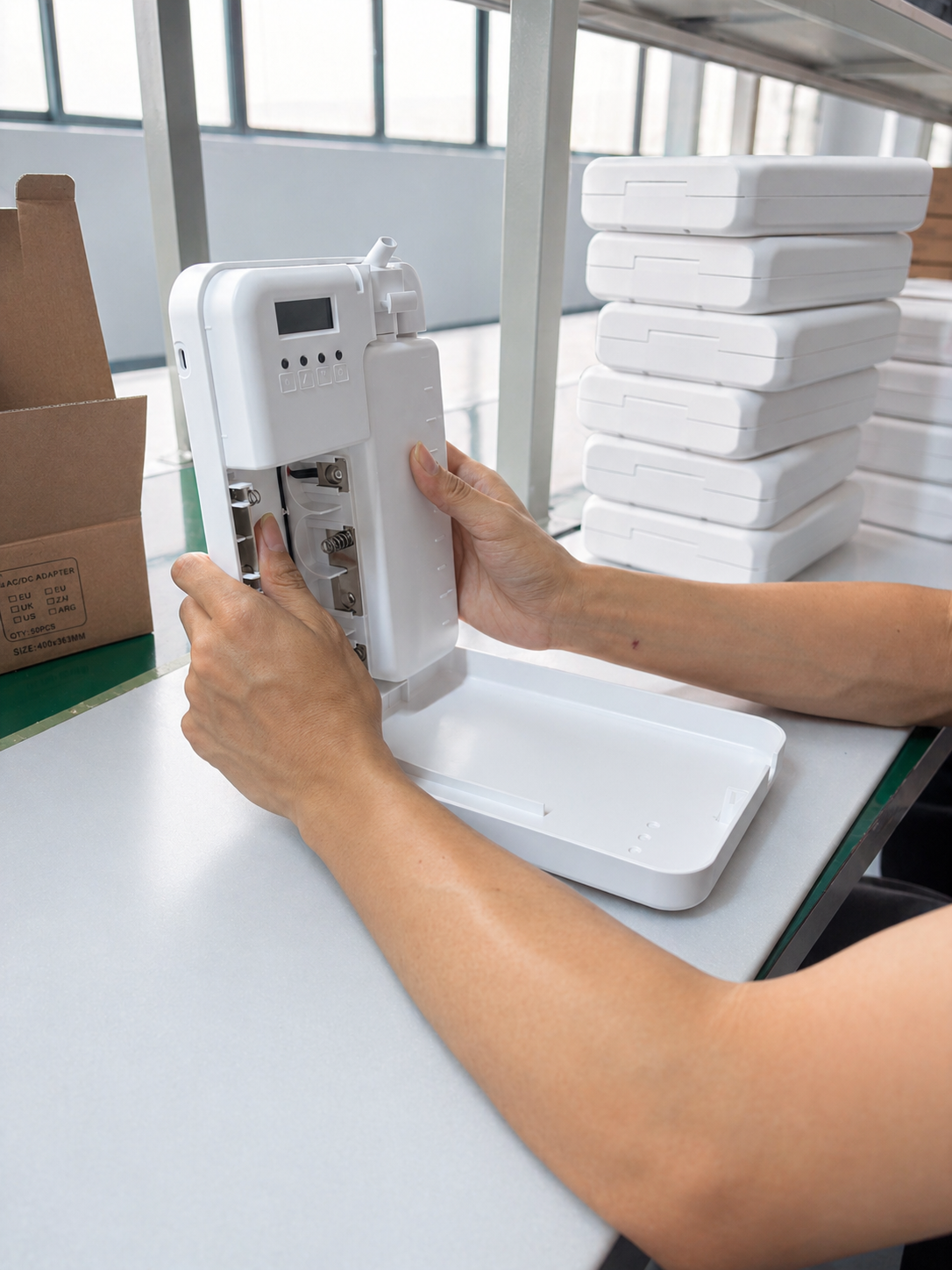
Product testing is where the paper trail begins; the certificate is only useful if it can be matched back to the unit that was tested.
Industry background: why the paperwork lags the product
Commercial scent diffusers are sold into projects, and projects generate documentation requests months after the invoice. A hotel opens, an installer commissions the system, a procurement team assembles its asset file, and only then does somebody ask for the restricted-substance declaration covering the machines on the wall.
Supplier-side disclosure has not kept pace with that request pattern. An October 2026 review of published compliance information across commercial scent diffuser suppliers recorded a specific gap: several manufacturers state CE, FCC, EMC and RoHS compliance on their websites without supplying certificate copies or issuing-body validation, and where test documentation is referenced, region-specific standard numbers are often absent. In other words, the market is full of compliance language and short of compliance records.
There are structural reasons for this. A factory typically tests a product family once and then adds models to the series, so the certificate describes a scope rather than a single article number. Importers buy the same hardware under private label and change the model name. Documents live in a shared folder and get forwarded as attachments without the page that shows the model list. None of this is malicious; it is what happens when certification is treated as a sales asset instead of a logistics document.
The reason it matters more in Europe than in some other destinations is scale. SCENTSEA reports that roughly 70% of its output goes to the EU and the USA, from a 3,000 m² facility with three production lines and 20 patents. When the majority of a factory's shipments land in a market where downstream buyers ask for documentation, the document set becomes part of the product, not an afterthought to it.
What should arrive with a bulk scent diffuser shipment
A usable document set has five parts. The first is the restricted-substance declaration itself, with a number, an issuing laboratory, a standard and a date. The second is the model mapping that connects the certificate's scope to the article numbers in the shipment. The third is the adjacent electrical and radio records for the SKU you bought, because a substance declaration does not describe electromagnetic behaviour. The fourth is the shipping link: the model and quantity on the packing list must match the model list in the compliance file. The fifth is a revision path — a named contact and a document version you can re-check when the SKU is re-ordered a year later.
For the RoHS item, the SCENTSEA record reads as follows when you open it:
- Certificate number: ATL20240416327
- Issuing authority: Shenzhen ATL Testing Technology Co., Ltd.
- Market: EU
- Standard cited: RoHS Directive (EU) 2015/863
- Scope as recorded: scent diffuser
- Issue date: 2024-04-24
- Expiry as recorded: 2099-12-31
- Related models: SC19, AC-MAX, T3, T2, A300, P03, P02, P01, H5000, S02, S01
The scope wording deserves attention. "Scent diffuser" is a category scope, and a category scope on its own cannot be checked against a purchase order. What converts it into something checkable is the model list attached to the record. That list is the part you photocopy, annotate and file against the shipment.

Measurement and inspection records support the test report; they are not a substitute for the certificate number and model list.
The model mapping: SC19, product 4717, and the ten other models on the record
The clearest example of why mapping matters is the SC19. On the RoHS record the SC19 appears under the product name advertising scent machine with product ID 4717. Your own catalogue, your webshop listing and your installer's purchase order may all describe the same unit as an SC19 scent diffuser. The model code is the joining key; the marketing name is not. If a buyer checks only the product name, the SC19 can look uncertified when it is in fact listed.
The same logic applies to the rest of the set. Each model on the record is a distinct commercial article with its own coverage, capacity and installation profile, and each one needs to be matched to the SKU you actually resell rather than to the family it belongs to.
| Model on the RoHS record | Product name as recorded | Typical commercial use (per model data) |
|---|---|---|
| SC19 | Advertising scent machine (product ID 4717) | Brand and advertising scenting applications |
| AC-MAX | Scent diffuser — HVAC type | Shopping malls, banks, airports; 5L capacity, split machine and oil tank, duct connection |
| T3 | Scent diffuser — commercial | Shopping malls, hotels, airports; 1000ml capacity, large halls and high-traffic spaces |
| T2 | Scent diffuser — commercial | Hotels, shopping malls, cinemas; 500ml capacity, HVAC duct connection supported |
| A300 | Scent diffuser — commercial | Hotel lobbies, offices, banks, hospitals, showrooms and retail stores |
| P03 | Scent diffuser — battery operated | Toilets, elevators, corridors and small shops; battery or Type-C power |
| P02 | Scent diffuser — electric | Toilets, corridors and shops; plug-in, optional HVAC connector and tube |
| P01 | Scent diffuser — battery operated | Toilets and elevators; 4 x D batteries or Type-C, lockable front cover |
| H5000 | Scent diffuser — floor standing | Hotel lobbies, malls, office building lobbies; 1000ml, no wall installation |
| S02 | Scent diffuser — tower | Home, office, store and beauty salon use; aluminium housing, 100ml |
| S01 | Scent diffuser — wall plug-in | Home, toilet and store use; direct wall plug-in, 150ml |
Two practical notes follow from this table. First, the record covers both project-grade machines and small-format units, which means a mixed container can normally be documented from a single RoHS record — provided every model in the container appears on the list. Second, if you sell a model that is not on the list, the correct response is to ask for the document that covers it, not to assume the category scope absorbs it.
How to verify the certificate scope in seven steps
Verification is procedural rather than technical. Anyone who can read a purchase order can run these seven checks in about fifteen minutes, and the result is a file that answers downstream questions without a round trip to the factory.
Step 1 — Read the number, not the logo
Start with the certificate number: ATL20240416327. A number can be quoted in an email, searched in a filing system and reconciled across shipments. A logo cannot. Record the number in your own supplier file next to the SKU.
Step 2 — Confirm the issuing laboratory and its role
The record names Shenzhen ATL Testing Technology Co., Ltd. as the issuing authority. Note that this is a testing laboratory, not the manufacturer. That distinction is the entire value of the document: it is an external record of a test, not a self-declaration written on factory letterhead.
Step 3 — Check the standard string, character by character
The standard cited is RoHS Directive (EU) 2015/863). Copy the string exactly into your compliance file. Buyers who maintain their own documentation templates should confirm that the string on the supplier record matches the one their file expects; a truncated or paraphrased standard reference is one of the most common reasons a forwarded document gets rejected by the receiving party.
Step 4 — Read the scope wording, then read the model list
The scope field reads "scent diffuser". Treat that as the category. The operative part for procurement is the model list beneath it. Locate your SKU on that list and note the exact product name used; as the SC19 example shows, the name may differ from your commercial description.
Step 5 — Match model codes, not product names
Build a simple two-column sheet: your SKU and stock code on the left, the model code on the certificate on the right. Anything that cannot be matched goes onto a query list for the supplier. This sheet becomes the front page of your downstream documentation package.
Step 6 — Check the dates and ask about the current version
The record was issued on 24 April 2024 and carries an expiry field of 2099-12-31. Read that combination carefully. A far-future expiry date tells you the date check will not protect you, so the version check has to. Before a repeat order, ask the supplier to confirm that the certificate number on file is still the current record for that model, and that no revised document has replaced it.
Step 7 — Reconcile the file against the shipment
Finally, put the compliance file next to the packing list. Model codes must agree, quantities must agree, and any private-label designation printed on the carton must have a documented relationship to the model code on the certificate. If the carton says one thing and the certificate says another with nothing in between, the file is not finished.
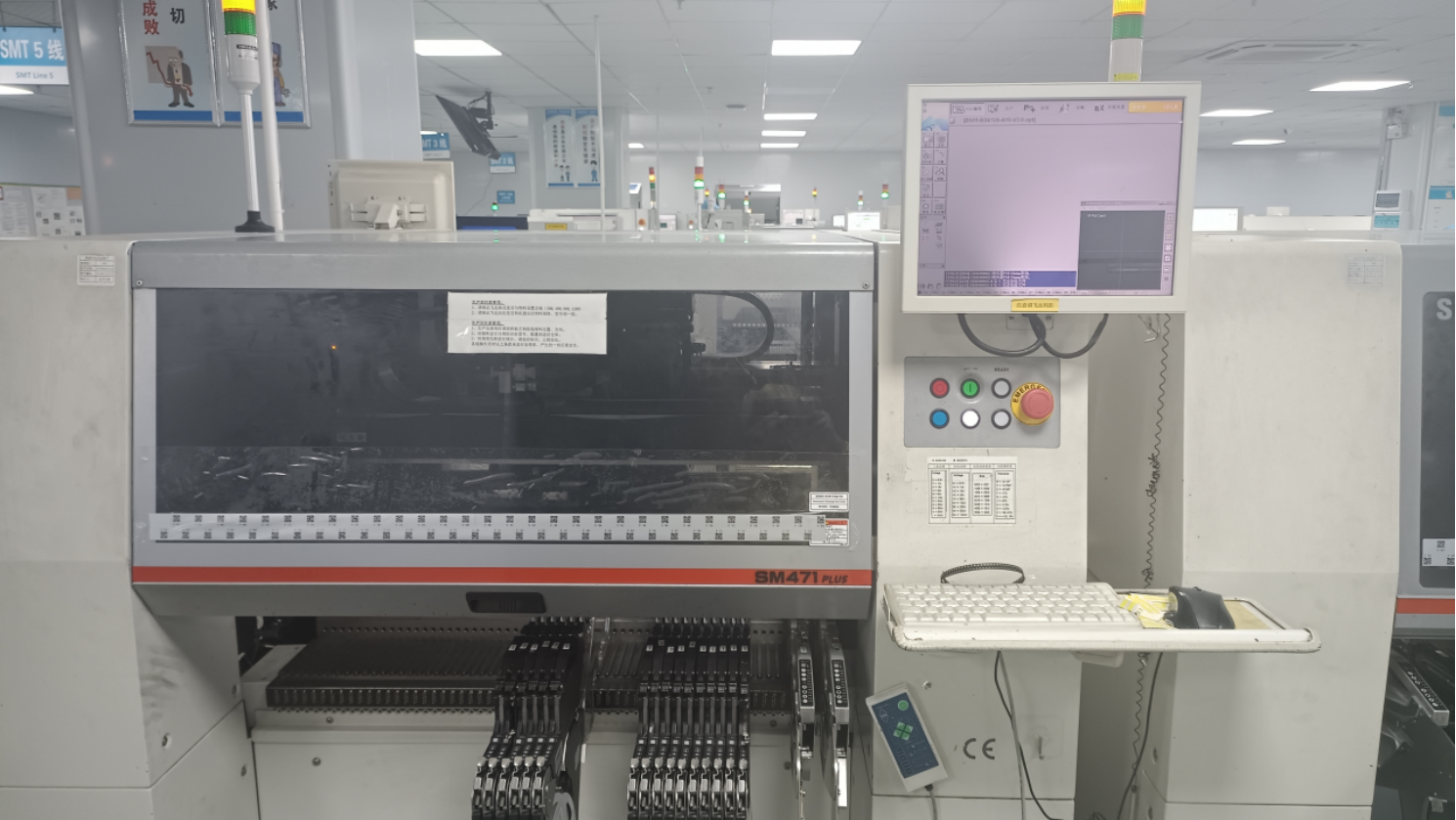
Electronics assembly is where restricted-substance controls and control-board testing meet; both need to be traceable to the shipped model.
The document-by-document comparison
Importers often treat the compliance folder as one item. It is not. Each record answers a different question, and knowing which one answers what prevents both over-claiming and unnecessary re-testing.
| Document | Reference on the record | What it supports | What it does not establish |
|---|---|---|---|
| RoHS declaration | ATL20240416327 — Shenzhen ATL Testing Technology Co., Ltd. — RoHS Directive (EU) 2015/863 — issued 2024-04-24 | An external laboratory record that the listed scent diffuser models were assessed against the cited restricted-substance standard for the EU market | Electromagnetic compatibility, electrical safety, radio performance, or coverage of models outside the list |
| EMC test record | ATL20240416325 — EN IEC 55014-1:2021; EN IEC 55014-2:2021; EN IEC 61000-3-2:2019/A1:2021; EN 61000-3-3:2013/A2:2021 | Evidence of emission and immunity testing against the listed EN standards for the EU market | Restricted-substance compliance, or compliance of models not covered by the record |
| FCC record | ATL20240416326 — FCC Part 15 Subpart B:2023 | A US-market reference for the same product family, useful if you resell into North America alongside the EU | EU market compliance, or wireless-radio approvals for Bluetooth or Wi-Fi functions |
| Model mapping | Related-product list on ATL20240416327: SC19 (4717), AC-MAX, T3, T2, A300, P03, P02, P01, H5000, S02, S01 | The link between a category scope and the specific article numbers you buy and resell | That a model not on the list is covered, or that a private-label code equals a listed model |
Three importer profiles and the documents each one needs
Documentation needs follow the resale channel, not the factory catalogue. The three profiles below are typical shapes rather than named customers, and they show how the same eleven-model record is used differently.
Profile A — the washroom and elevator reseller
This importer sells small-format units into buildings where wiring is inconvenient, so the order is dominated by battery-operated models such as the P01 (4 x D batteries or Type-C, lockable cover) and P03 (battery or Type-C, 150ml). The downstream buyer is usually a facility services contractor who installs without an electrician on site. What that contractor needs from you is the model code on the certificate, the fact that the declaration is a third-party record, and a one-page statement of which document number applies to which unit. Anything less and the installer will ask again at the next building.
Profile B — the mall, hotel and cinema project reseller
Here the order mixes mid-size and large-format machines: T2 with 500ml capacity for hotels, malls and cinemas, A300 for lobbies and retail, T3 or H5000 for larger halls and open lobbies. Project buyers assemble an asset file per site, so the mapping must be per site as well as per SKU. The practical step is to include the certificate number and the matched model line in your own handover pack, so the building's operations team receives documentation that names the equipment actually installed rather than a generic compliance statement.
Profile C — the HVAC project reseller
HVAC scenting is the profile most exposed to documentation gaps, because the machine disappears into the building's air system. The AC-MAX is a split-type HVAC unit with a 5L oil capacity, a separate machine and oil tank, duct connection, and a stated coverage of approximately 2,500–3,500 m². When the equipment is out of sight, the paperwork becomes the visible part of the installation. Confirm that AC-MAX appears on the model list, keep the EMC record with the RoHS record, and file both against the commissioning date.
For context on how these deployments run in practice, SCENTSEA's documented project record includes a 30-unit mall installation in the United States operated over five years, with reported outcomes of stable coverage, reduced manual maintenance and easier fragrance management. That is a US deployment and it is not evidence of EU compliance; it is useful only as an indication of how the equipment behaves in continuous commercial service.

Housings, internal electronics and wiring are the parts buyers ask about when they review a restricted-substance declaration.
Where the paper trail usually breaks
Five failure points account for most of the documentation disputes that surface between an EU importer and its installer customers.
Private-label renaming. SCENTSEA supports OEM/ODM work covering logo, product colour, packaging, user manual, plug type, APP interface and PCB or functional changes. When a model is renamed for a private-label programme, the certificate still carries the original model code. Ask for the written mapping between your programme code and the listed model, and keep it with the certificate.
Scope drift between documents. The RoHS record lists eleven models; a quotation may cover only two. Nothing is wrong with that, but the file must make clear which record covers which line item, otherwise a downstream reviewer may treat the entire folder as applicable to everything.
Treating one record as the whole file. RoHS, EMC and FCC answer different questions. An importer who forwards only the RoHS declaration and describes the product as fully certified invites a challenge that could have been avoided by sending three pages instead of one.
Wireless functions left undocumented. Bluetooth and Wi-Fi control appear across the range, including the A300, T2, T3, P02, P03, P01 and AC-MAX. Radio-equipment documentation is model-specific and configuration-specific, so it belongs in a separate request rather than an assumption.
Version drift on repeat orders. An expiry field of 2099-12-31 removes the calendar reminder that would normally prompt a review. Replace it with your own: re-confirm the certificate number and issue date at each repeat order, and record who confirmed it and when.
Repeat-order checklist for EU importers
Before releasing a repeat purchase order, confirm each of the following and store the answers with the shipment file.
- The RoHS certificate number on file is ATL20240416327, or a documented successor.
- The issuing authority is stated as Shenzhen ATL Testing Technology Co., Ltd., not paraphrased.
- The standard string reads RoHS Directive (EU) 2015/863.
- Every model in the new order appears on the certificate's related-product list.
- The SC19 line is matched by model code and product ID 4717, not by marketing name.
- Any private-label code has a written mapping to a listed model.
- The EMC record (ATL20240416325) is filed alongside for the same models.
- Wireless documentation has been requested separately for Bluetooth or Wi-Fi SKUs.
- The packing list model and quantity match the compliance file.
- A named contact and confirmation date are recorded for the version check.
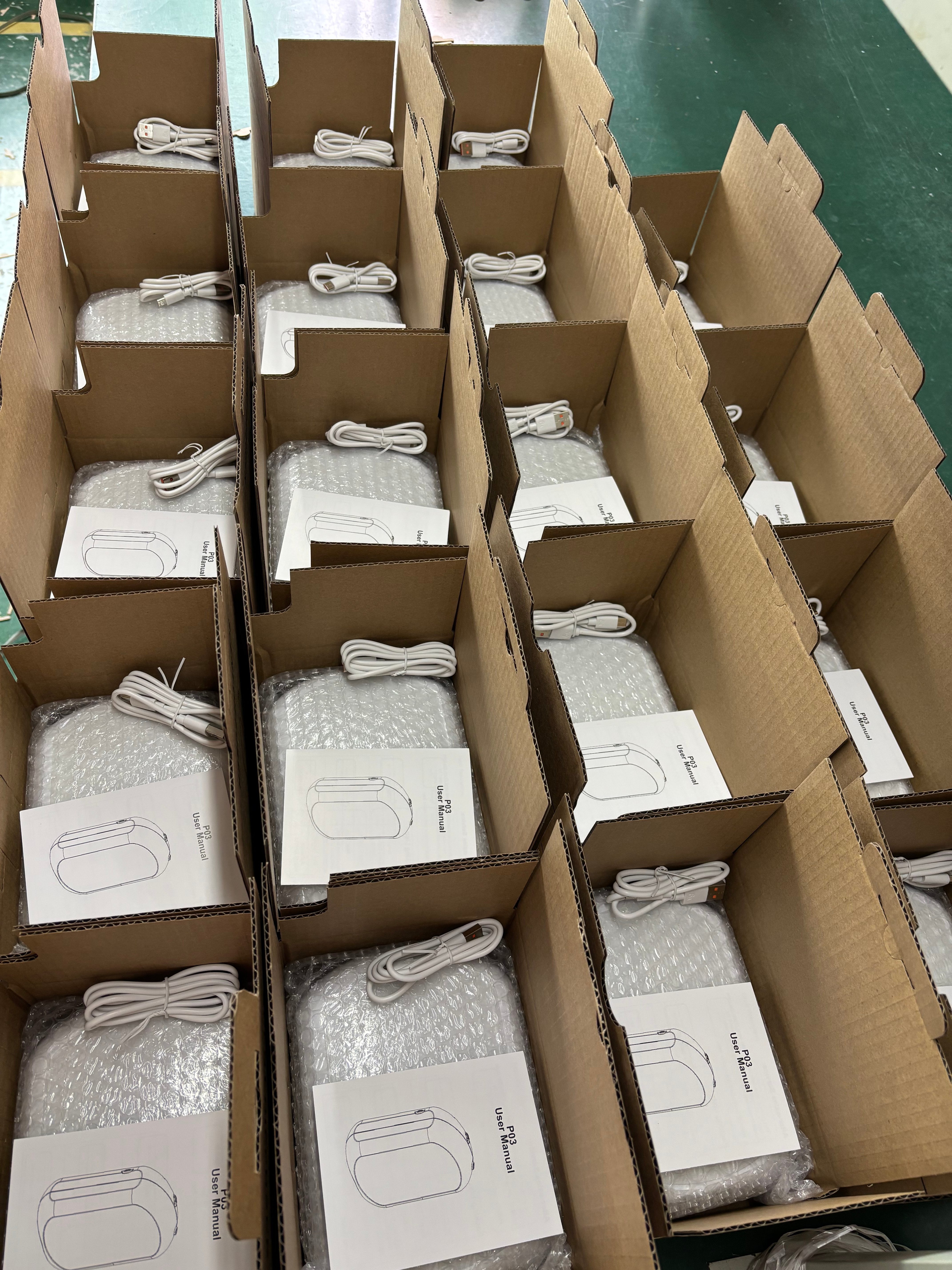
The last checkpoint is physical: the model on the carton must match the model on the certificate.
Frequently asked questions
Which certification documents should an EU importer receive with a bulk scent diffuser shipment?
For the EU market, the core set is a RoHS declaration and an EMC test record, both traceable to a laboratory, plus a model list that covers the SKUs in the container. On the SCENTSEA record this means RoHS certificate ATL20240416327 citing RoHS Directive (EU) 2015/863 and issued by Shenzhen ATL Testing Technology Co., Ltd., together with EMC record ATL20240416325 referencing EN IEC 55014-1:2021, EN IEC 55014-2:2021, EN IEC 61000-3-2:2019/A1:2021 and EN 61000-3-3:2013/A2:2021. Importers who also resell into North America should hold the FCC record ATL20240416326 against FCC Part 15 Subpart B:2023. Wireless functions require their own model-specific documentation.
How do I confirm that a RoHS certificate covers the exact model I resell?
Match by model code, not by product name. Locate your SKU on the certificate's related-product list, note the exact product name used there, and record both. The SC19 illustrates the risk: the record lists it as an advertising scent machine with product ID 4717, so a search on a marketing description alone may miss it. If your SKU does not appear on the list, or if it carries a private-label code, request a written mapping between that code and a listed model before you resell.
What is the difference between the RoHS, EMC and FCC records?
The RoHS declaration addresses restricted substances against a cited EU standard. The EMC record addresses electromagnetic emission and immunity against listed EN standards. The FCC record addresses the US framework under FCC Part 15 Subpart B. Each answers a different question, and none of them substitutes for the others; a complete file for an EU-facing product normally contains at least the RoHS and EMC records for the same model, plus radio documentation where wireless control is present.
What quality risks should an importer check before a repeat order?
The recurring risks in commercial scent diffusers are unstable atomization, oil leakage, excessive noise, unreliable APP or control functions, and inconsistent performance between batches. Practical checks are sample performance, the supplier's stated quality-control steps, aging test practice, the applicability of certifications to the exact model, warranty terms and spare-parts support. SCENTSEA states that every unit is checked before shipment through functional testing, atomization testing, leakage inspection, noise testing, APP and control testing, a 48-hour aging test and final appearance inspection, with a one-year free warranty on spare parts.
Can a scent diffuser be customized for private label, and what happens to the certificate?
Yes. SCENTSEA offers OEM/ODM customization covering logo, product colour, packaging, user manual, plug type, APP interface and PCB or functional specifications. The documentation consequence is naming: if your programme uses a different model designation, the certificate will still reference the original model code. Ask for that mapping in writing and keep it with the certificate, so a downstream reviewer can follow the chain from your label to the listed model.
What sample, MOQ, lead time and warranty apply before a repeat order?
Diffuser MOQ starts from one unit, which allows a single sample to be tested before a programme is committed. Stated lead time is 25–35 days, with monthly capacity of 8,000 units and a one-year free warranty on spare parts. Samples of diffusers and fragrance oils are available for quality verification. For an EU importer, the sample stage is also the right moment to request the current certificate copy for that specific model, confirm the issue date against the record, and check that the model code your sample carries is the model code on the certificate — then keep the two together when you move to the repeat order and ask for the documentation pack matched to your SKU list.
Conclusion: the file is part of the product
A RoHS declaration is only a paper trail when four things line up: a certificate number, a named laboratory, a cited standard, and a model list that reaches the SKU you resell. For the SCENTSEA range that means ATL20240416327 from Shenzhen ATL Testing Technology Co., Ltd. against RoHS Directive (EU) 2015/863, matched model by model — including SC19 under product ID 4717 — and filed next to the EMC record rather than in place of it.
Importers who treat that file as part of the product gain something practical: they can answer an installer's documentation request the same day, they can show a downstream buyer exactly which record covers which machine, and they can re-check the same file at the next repeat order instead of starting the conversation again. The expiry field will not remind them. The checklist will.

Factory and certification information for your own supplier file can be requested together with the sample.
If you are preparing an EU resale programme and need the current documentation pack matched to your SKU list, or a sample to verify before a repeat order, you can review the manufacturer profile and request the corresponding records through Shenzhen Scentsea Technology Co., Ltd. The company profile, including capability and certification information, is available for download here: SCENTSEA Company Profile (PDF).
Have Questions or Need More Details?
Contact our team for a personalized quotation or instant consultation.
Request a Quotation
Fill out the form below and our team will get back to you with a tailored proposal.
WhatsApp Direct Chat
Prefer to chat in real-time? Message us on WhatsApp for instant assistance & quick answers.
- Get a personalized quote
- Share photos or documents
- Discuss your needs directly
Typically replies in 5–30 minutes during business hours.