Top 4 Industrial Dust Collectors for High-Efficiency Filtration: Ranked by Performance
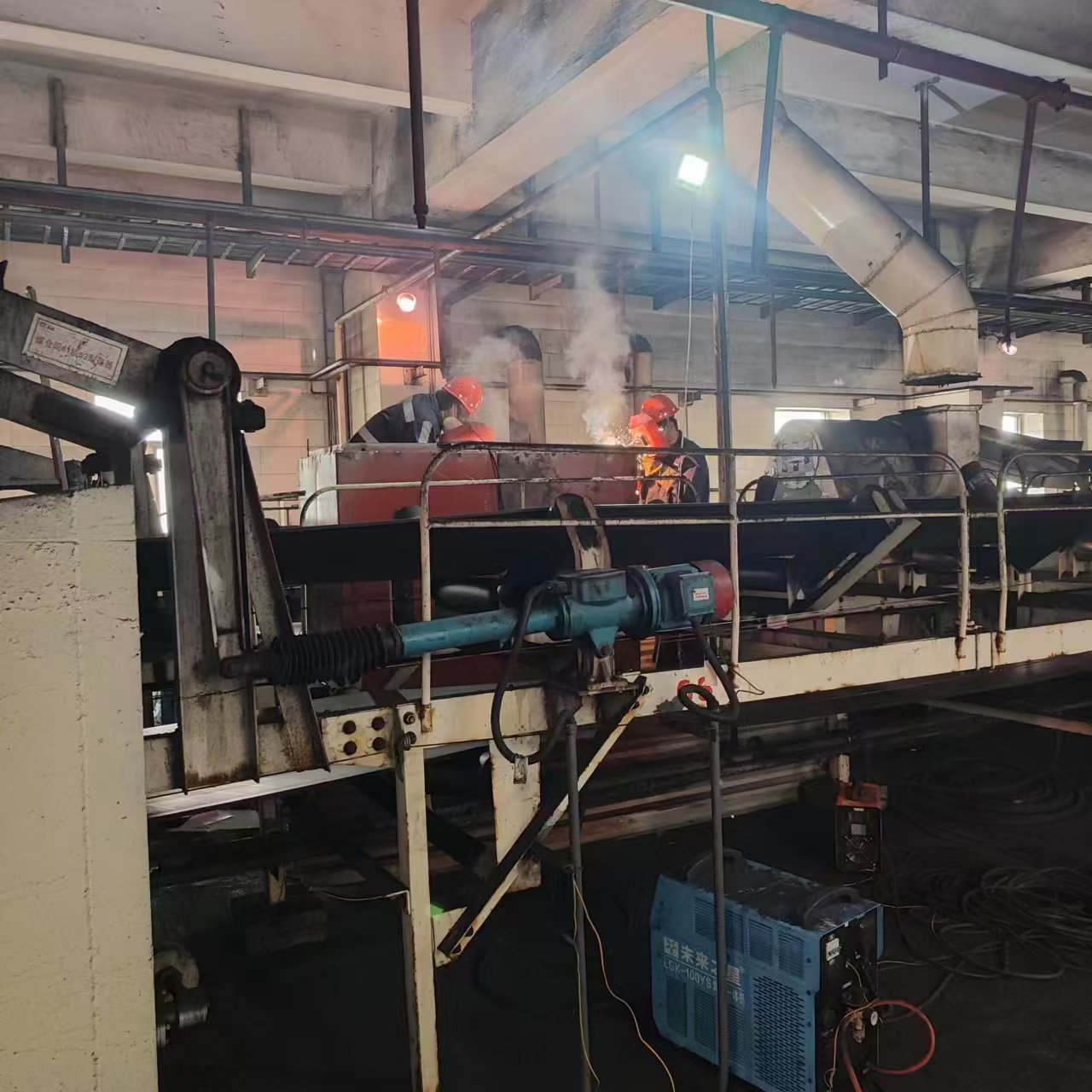
On-site maintenance of the dust collector on the coal conveyor belt at a power plant.
Short answer: Ranked strictly by filtration performance, the four models covered here are the DMC-200 pulse bag filter (highest purification efficiency, >99.5%, filtration accuracy <1 µm), the WESP-10000 wet electrostatic precipitator (≥95% purification efficiency with outlet dust concentration of ≤20 mg/m³), the LTMC-5000 cartridge dust collector (versatile general-duty filtration), and the LXC-800 cyclone dust collector (mechanical pre-filter and high-temperature duty up to ≤300°C). All four are manufactured and supplied by Hebei Outai Environmental Protection Equipment Co., Ltd., the company behind the SENOTAY brand.
This ranking is written for plant engineers, maintenance managers, importers and procurement teams who are comparing industrial dust collectors and want a defensible starting point rather than a catalog listing. Each position is explained by published efficiency data, particle-size capability, temperature and moisture tolerance, airflow capacity and material options — not by marketing claims. Where a specification is not stated in the underlying source data, it is left blank rather than estimated.
Why Filtration Efficiency Alone Does Not Decide a Purchase
A dust collector with a higher efficiency percentage is not automatically the correct choice for a given dust stream. Efficiency figures are only comparable when the measurement basis is comparable, and in industrial filtration the basis rarely is.
Four practical constraints usually reshape a ranking before a purchase order is written:
- Inlet dust loading. A unit rated above 99.5% may still be the wrong fit if the upstream dust load is so high that the filter media blinds quickly, while a lower-efficiency mechanical separator placed ahead of it solves the problem.
- Particle size and dust character. Sub-micron fume behaves very differently from coarse mineral dust, and sticky or hygroscopic dust behaves differently again.
- Temperature and moisture. Fabric media and cartridge media have thermal limits, and wet streams introduce condensation, corrosion and sludge handling requirements.
- Combustible dust safety. Where the dust is combustible, protection measures — not efficiency percentages — determine whether an installation is acceptable.
For that reason, the ranking below is presented as a performance order plus a stated duty for each unit. The correct system is usually a combination: a pre-cleaning stage, a primary filtration stage, and a material specification matched to the gas stream.
Industry Background: A Large and Still Expanding Filtration Market
Dust collection is a mature but growing equipment category, driven by tightening emission limits and by the sheer scale of industrial output.
Grand View Research valued the global industrial dust collector market at approximately USD 9.58 billion in 2024. Within that market, baghouse dust collectors held the dominant position, capturing a 26.8% revenue share in 2024 according to the same source — a useful signal for buyers because it indicates that fabric filtration remains the mainstream technology for high-efficiency particulate capture, not a legacy option.
Demand is geographically concentrated. Fortune Business Insights reported that the Asia-Pacific region accounted for a 41.8% revenue share of the global industrial dust collector market in 2025, while the North American market was valued at USD 2.44 billion in 2025 by the same research firm. Mordor Intelligence estimated China's industrial output — a direct driver of dust collection demand — at USD 5.3 trillion in 2024.
Two points of caution when reading market numbers. First, published market size estimates diverge between research firms; the figures above are attributed to their specific sources and should be treated as directional. Second, market size does not tell you which collector to buy. That decision is made at the level of model specification, which is where this ranking operates.
How These Four Models Were Ranked
The ranking uses five criteria, applied in this order of weight:
- Published purification efficiency — the primary sort key.
- Outlet dust concentration or filtration accuracy — what the unit actually delivers downstream, expressed as mg/m³ or as a particle size cut-off.
- Dust-stream compatibility — temperature ceiling, moisture and corrosion tolerance, and suitability for sticky or fine particulate.
- Airflow capacity and material options — whether the unit can be sized to a real facility and built in the material the stream requires.
- Role in the dust control chain — whether the unit is a primary filter, a polishing stage or a pre-cleaner.
One clarification matters for procurement: do not infer airflow capacity from a model number. Model designations in this category do not follow a universal numbering convention, and the only airflow figure confirmed in the source data used for this article is the DMC-200's 9,600–14,400 m³/h. Always request the sizing sheet for the specific unit and the specific dust stream.
The Ranking: Four Industrial Dust Collectors by Filtration Performance
1. DMC-200 Pulse Bag Filter — Highest Purification Efficiency
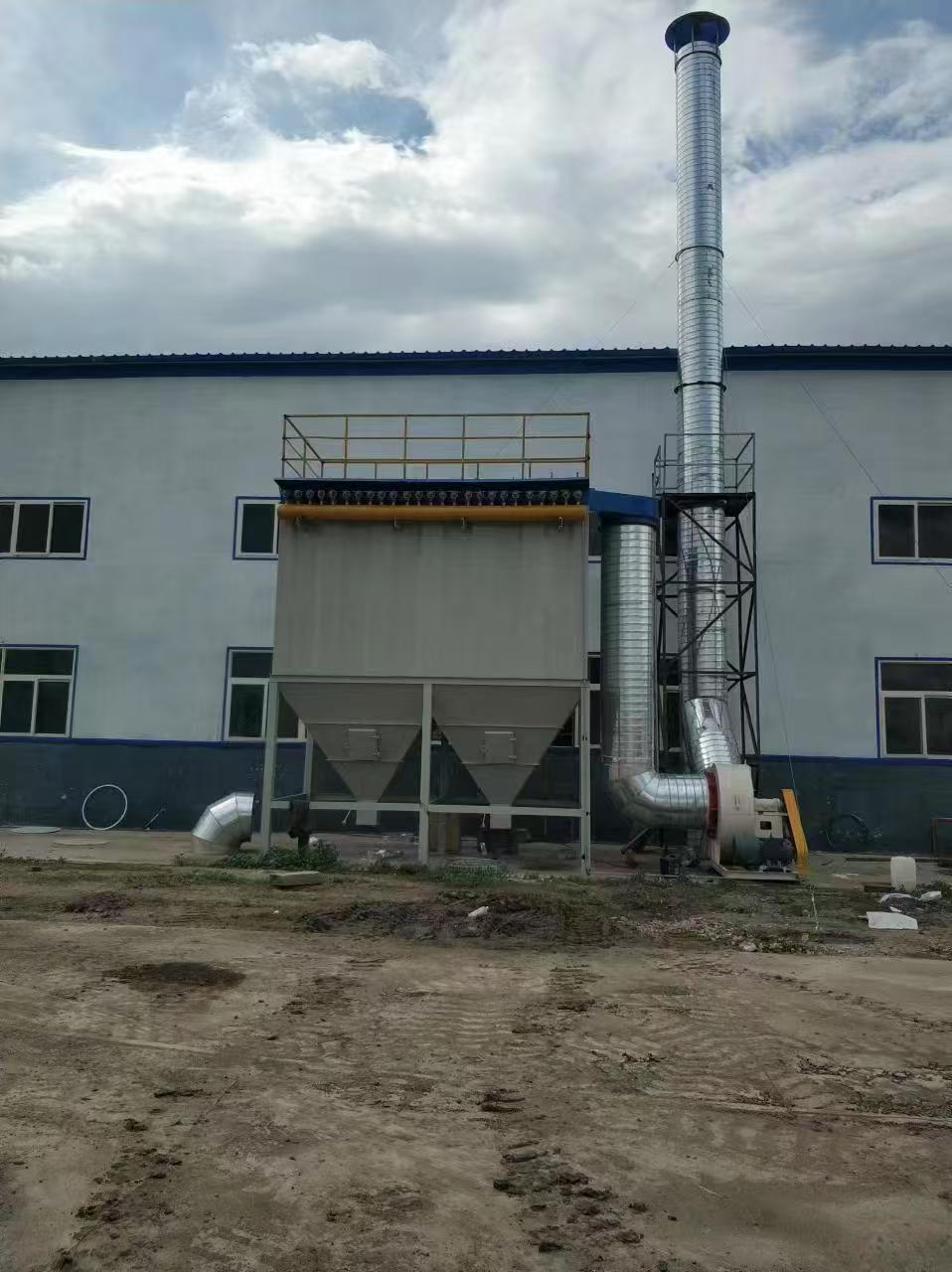
Baghouse dust collectors for the rubber products industry.
The DMC-200 is a pulse jet bag filter, and it takes first place because it combines the highest published purification efficiency in this set with the finest stated filtration accuracy.
Confirmed specifications:
- Type: pulse bag filter
- Gas flow rate: 9,600–14,400 m³/h
- Filtration area: 160 m²
- Purification efficiency: >99.5%
- Filtration accuracy: <1 µm
- Fan power: 18.5 KW
- Material: carbon steel / SS304
- Applicable industries: steel, cement, metallurgy, building materials, food processing, grain drying, mining, casting, and similar sectors
Why it ranks first. The <1 µm filtration accuracy is the decisive figure. Sub-micron particulate is the fraction that drives visible stack opacity and the fraction that mechanical separators cannot capture. A unit that is rated both above 99.5% efficiency and below 1 µm accuracy answers the hardest part of the dust control problem in a single stage, which is why baghouse filtration remains the dominant technology category by revenue share worldwide.
Where it belongs. Applications requiring high purification before discharge — cement and building materials handling, metallurgical and casting operations, grain drying, and general process dust where the target is a clean stack rather than bulk material recovery. Material choice matters here: carbon steel covers ordinary dry, non-corrosive streams, while SS304 should be specified where corrosion or wash-down is a factor.
Limits to acknowledge. Fabric media is not unlimited in temperature, and very sticky or highly hygroscopic dust can blind bags if it reaches the media without pre-conditioning. In high-temperature or high-spark streams, the DMC-200 should be preceded by a mechanical pre-cleaner such as the LXC-800.
2. WESP-10000 Wet Electrostatic Precipitator — Best for Wet and Difficult Streams
Second place goes to the WESP-10000, a wet electrostatic precipitator rated at ≥95% purification efficiency with an outlet dust concentration of ≤20 mg/m³. It sits below the DMC-200 on nominal efficiency but above it on one specific and important measure: the ability to hold a low outlet concentration on streams that dry media cannot survive.
Why the position is justified. Wet electrostatic precipitation handles what fabric filtration struggles with — moisture-laden gas, sticky or adhesive particulate, fine aerosols and corrosive compounds. Because the collection electrode is continuously washed, there is no filter cake to blind and no media to replace on a wear schedule. The trade-off is a lower headline efficiency number than a well-run baghouse.
Where it belongs. Chemical and rubber processing, streams with condensable or oily particulate, and any application where the gas is already wet or where dry dust handling would create a secondary problem. It also functions as a polishing stage downstream of a primary collector when the discharge limit is tight and the dust is difficult.
Limits to acknowledge. Wet systems require water treatment and sludge handling, and the wetted components must be specified in corrosion-resistant material. Operating cost is concentrated in water circulation and power supply maintenance rather than in filter media replacement. Buyers should confirm the corrosion specification against the actual gas composition before ordering.
3. LTMC-5000 Cartridge Dust Collector — The Versatile Generalist
The LTMC-5000 is a cartridge dust collector, and it holds third place because it is the most adaptable unit in this set for ordinary industrial duty rather than the strongest performer in any single extreme.
Why the position is justified. Cartridge collectors use pleated media, which packs a large filtration surface into a compact housing. That makes them practical where floor space is constrained, where the dust load is moderate, and where maintenance is performed by in-house staff rather than a specialist crew. Cartridge replacement is a routine, low-skill task compared with bag replacement inside a large baghouse.
Where it belongs. Mixed manufacturing environments, metalworking and welding-type dry fume where the particulate is fine but the loading is not extreme, and facilities that want a single collector type across several similar workstations. The compact footprint also makes it a reasonable candidate for indoor installation where a full baghouse structure would not fit.
Limits to acknowledge. Cartridge media is generally less tolerant of high temperature and of very abrasive or highly loaded dust than heavy baghouse fabric. For high-load or high-temperature streams, the LTMC-5000 is best used downstream of a cyclone pre-filter rather than as the only stage.
4. LXC-800 Cyclone Dust Collector — Pre-Filter and High-Temperature Duty
The LXC-800 is a cyclone dust collector and takes fourth place in a performance ranking by filtration efficiency — but that position requires careful reading. Cyclones separate particulate by centrifugal force rather than by filtration media, so their efficiency on fine particulate is inherently lower than a bag or cartridge filter. They earn their place in a system for two other reasons.
High-temperature tolerance. The LXC-800 is suited to service temperatures up to ≤300°C, a range that exceeds what most fabric and cartridge media can accept directly. That makes it the correct first stage when hot gas leaves a kiln, dryer, furnace or similar process.
Pre-cleaning and protection. Placed upstream of a baghouse or cartridge collector, a cyclone strips out the coarse fraction and any entrained sparks or glowing particles before they reach the media. The result is a much lower dust load on the primary filter, longer media life and reduced fire risk.
Limits to acknowledge. A cyclone is not a compliance device on its own for fine particulate. It should be specified as a pre-cleaner or as a bulk material recovery stage, with a media-based filter downstream to meet the actual emission target.
Step-by-Step: Applying This Ranking to Your Facility
The ranking becomes useful only when it is applied in sequence. The following six steps reflect the order in which the four units should be considered.
- Measure the gas stream. Establish the actual airflow volume and the dust loading at the collection point. Airflow determines which models can be sized to the job; the DMC-200, for reference, covers 9,600–14,400 m³/h.
- Record temperature and moisture. If the gas exceeds the working range of fabric or cartridge media, the LXC-800 (≤300°C) or a wet system must be placed first in the chain.
- Define the outlet target. If the requirement is fine particulate control close to the detection limit, the DMC-200 or the WESP-10000 is the primary candidate. If the requirement is bulk recovery, lower-efficiency separation may be sufficient.
- Decide the number of stages. High-load or high-temperature streams generally need two stages: an LXC-800 pre-cleaner followed by a DMC-200 or LTMC-5000 primary filter.
- Specify the material. Choose carbon steel for ordinary dry service and SS304 for corrosive or wash-down conditions, and confirm the wetted-path specification for any wet system.
- Confirm the commercial and service terms. Check delivery terms, acceptance criteria and after-sales coverage before finalizing, because these determine total cost of ownership as much as the equipment price does.
Use Cases: Where Each Rank Fits in Real Installations
Rubber and mixing operations. In Indonesia, two DMC-200 pulse bag filter units were installed for an end customer to collect the dust generated by mixing equipment. The installation uses two sets of dust collectors, and the customer reports stable operation with low noise and low energy consumption as the notable operating characteristics. This is a representative case for the rank-1 position: moderate airflow, continuous duty, and a requirement for consistent capture rather than bulk material recovery.
Power generation and coal handling. Dust collectors on coal conveyor belts are maintained in place while the plant continues to operate, which places a premium on serviceable design and predictable maintenance intervals. On-site service capability matters more here than a marginal difference in efficiency.
Cement, metallurgy and casting. These sectors typically combine high temperature, high dust load and abrasive particulate — the classic two-stage configuration of an LXC-800 cyclone upstream and a DMC-200 baghouse downstream.
Metalworking and welding. Fine dry fume at moderate loading is the natural duty of the LTMC-5000 cartridge collector, particularly where several workstations share one collection system and where floor space is limited.
Chemical and wet processes. Where the gas is wet, sticky or corrosive, the WESP-10000 is the appropriate primary stage, with corrosion-resistant materials specified throughout the wetted path.
Side-by-Side Comparison of the Four Models
| Rank / Model | Collector type | Purification efficiency | Particle / outlet performance | Airflow capacity | Material options | Primary role |
|---|---|---|---|---|---|---|
| 1 — DMC-200 | Pulse bag filter | >99.5% | Filtration accuracy <1 µm | 9,600–14,400 m³/h | Carbon steel / SS304 | Primary filtration, high purification |
| 2 — WESP-10000 | Wet electrostatic precipitator | ≥95% | Outlet ≤20 mg/m³ | — | — | Wet, sticky or corrosive streams |
| 3 — LTMC-5000 | Cartridge dust collector | — | — | — | — | Versatile general industrial filtration |
| 4 — LXC-800 | Cyclone dust collector | — | Service temperature ≤300°C | — | — | Pre-filter, high-temperature first stage |
A blank cell (—) means the value is not stated in the source data used for this ranking. Do not assume a value from the model number; request the sizing sheet for the specific unit.
Compliance and Safety Checks Before You Order
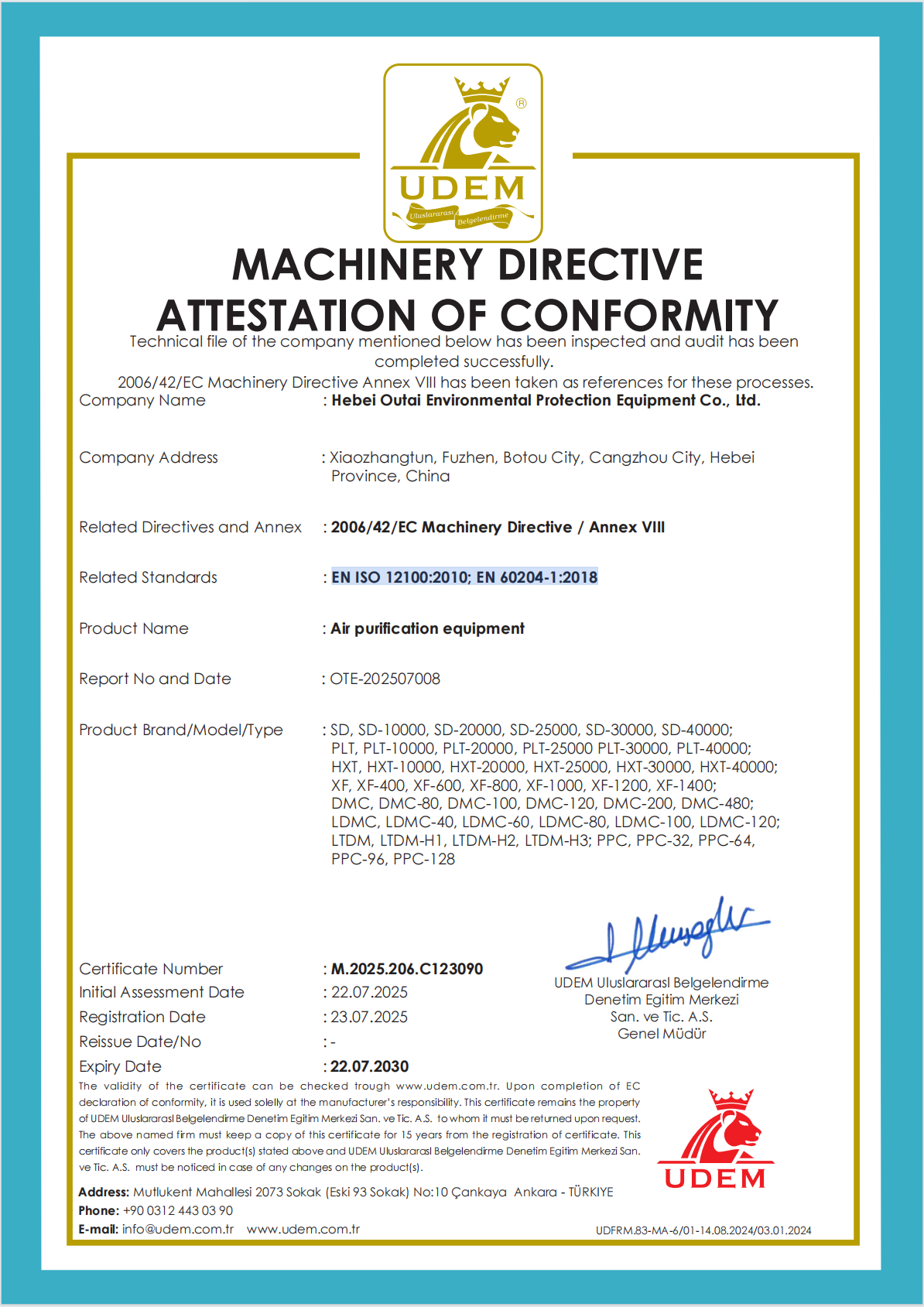
CE certification documentation covering the DMC-200 industrial dust collector.
The DMC-200 is covered by a CE certificate issued under EU rules. The documented details are:
- Certificate number: M.2025.206.C123090
- Issuing authority: UDEM
- Market: European Union
- Scope: 2006/42/EC Machinery Directive / Annex VIII
- Standards applied: EN ISO 12100:2010; EN 60204-1:2018
- Issue date: 2025-07-22; valid to 2030-07-23
Buyers should note two separate compliance layers. The first is machinery and electrical safety, covered above. The second is dust hazard safety. NFPA 68 provides guidelines for dust collector safety through deflagration venting to prevent explosions, and NFPA 654 is the primary standard for preventing fires and dust explosions from the manufacturing and handling of combustible particulate solids. If the dust in your process is combustible, the venting and explosion-protection design of the collector is not optional, and it is not satisfied by an efficiency rating alone.
A third practical compliance checkpoint is acceptance testing. Procurement terms for this equipment set pre-shipment testing as the acceptance criterion, which means the performance evidence is generated before the unit leaves the factory rather than after installation.
Behind the Ranking: Manufacturing, Customization and Service
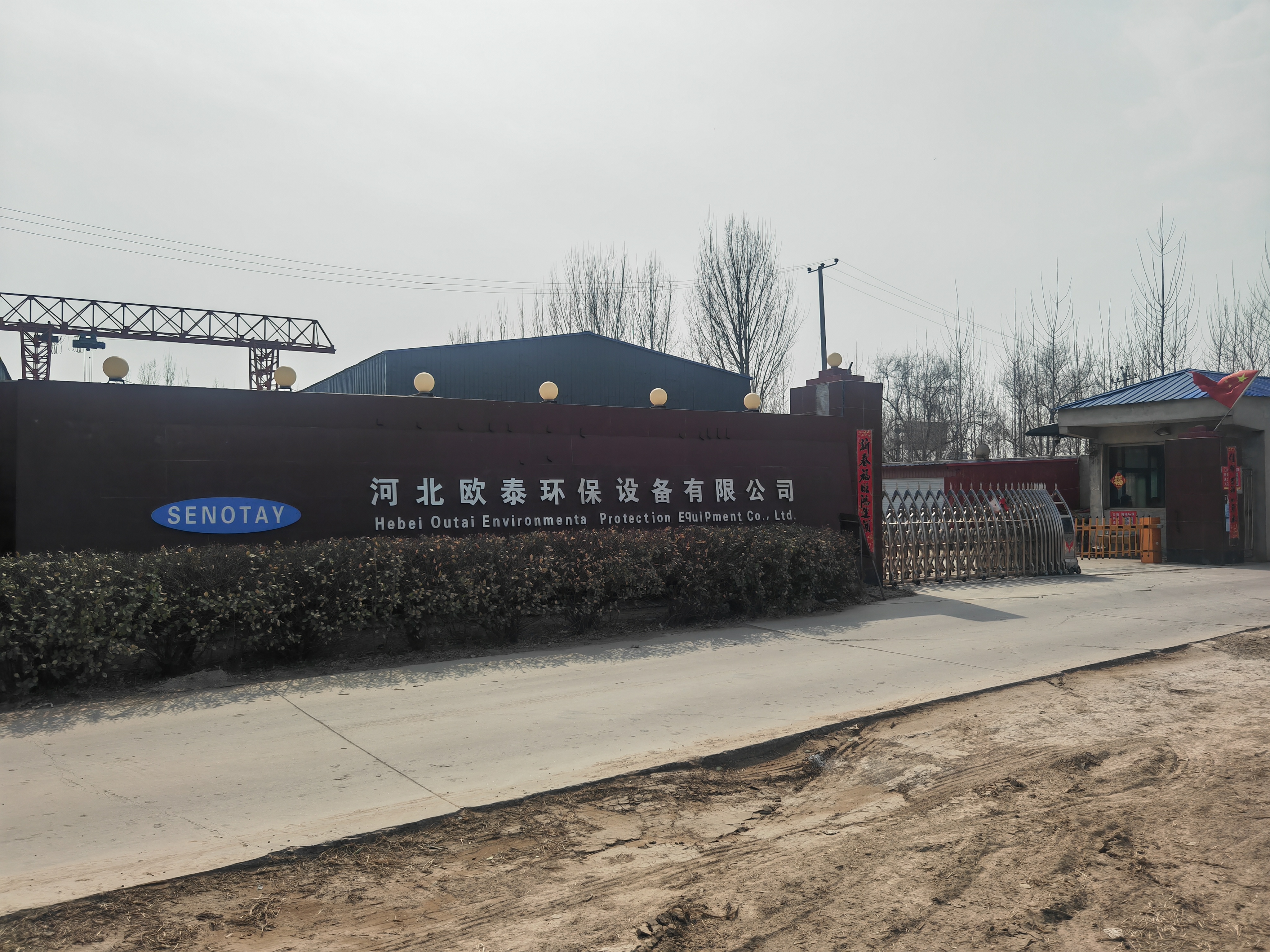
Hebei Outai Environmental Protection Equipment Co., Ltd., the manufacturer behind the SENOTAY brand.
All four models are produced by Hebei Outai Environmental Protection Equipment Co., Ltd., an industrial filtration equipment manufacturer based in Botou City, Hebei Province, China, operating under the SENOTAY brand. The company was founded in 2015 and produces a complete range of filtration equipment — pulse bag filters, electrostatic precipitators, cyclone dust collectors, wet dust collectors and filter cartridge collectors — together with dust removal accessories such as filter bags, bag cages, pulse solenoid valves, and air filters and regulators, plus conveying and purification equipment including screw conveyors, star-shaped unloaders, industrial blowers, motor reducers and VOC purifiers.
Manufacturing profile. The facility covers 6,000 m² with 30 employees and a 5-engineer R&D team. Annual output is stated at 100,000 PCS, with a monthly capacity of 200 sets. Approximately 70% of production is exported, with main markets in Central Asia, Southeast Asia, the Middle East, Russia, Africa and Europe. Quality control is based on 100% testing.
Customization terms. The manufacturer offers OEM and ODM production services, with ODM scope including voltage and logo customization. Minimum order quantity is 1 set, and lead time is 15–45 days. Material selection — carbon steel, SS304, or stainless grades for corrosive duty — is confirmed against the actual gas stream rather than assumed from a standard catalog page.
Service model. SENOTAY positions itself as a full engineering partner rather than an equipment-only supplier, following a four-stage lifecycle approach: on-site design (engineers analyze airflow volumes, dust particle characteristics and compliance targets), custom manufacturing to specification with testing, installation and commissioning with operator training, and ongoing maintenance covering scheduled service, spare parts and system upgrades. Technical support includes both remote assistance and on-site service. The company states that its technical standard delivers filtration efficiency up to 99.9% for engineered configurations, with bespoke airflow optimization intended to reduce energy cost.
For buyers comparing suppliers, the practical question is not whether a manufacturer can supply a collector, but whether it can size it correctly, document it for compliance, and support it after commissioning. Those three capabilities are what the ranking above assumes.
Frequently Asked Questions
Do these industrial dust collectors meet CE and combustible dust safety requirements?
The DMC-200 industrial dust collector is covered by CE certificate M.2025.206.C123090, issued by UDEM under the 2006/42/EC Machinery Directive / Annex VIII, against EN ISO 12100:2010 and EN 60204-1:2018, valid from 2025-07-22 to 2030-07-23. Separately, combustible dust installations must address NFPA 68 (deflagration venting to prevent explosions) and NFPA 654 (preventing fires and dust explosions from combustible particulate solids). Buyers should confirm that the certificate scope covers the exact configuration ordered, and that dust hazard protection is designed for the specific material being collected.
Can these dust collector models be customized for voltage, branding or material?
Yes. The manufacturer offers OEM and ODM production services, and ODM scope includes voltage and logo customization. Material specification is confirmed per project — the DMC-200 is available in carbon steel or SS304, and stainless grades are specified where the gas stream is corrosive or the process requires wash-down. Custom engineering also covers airflow optimization and configuration changes to suit the dust particle characteristics and compliance target of a specific facility, rather than a fixed catalog build.
What drives the cost of these four dust collector systems?
The source data for this ranking does not publish list prices, so cost should be evaluated by driver rather than by headline figure. The main cost drivers are collector type (a wet electrostatic precipitator carries water treatment and power supply costs that a bag filter does not), material of construction (carbon steel versus SS304 or higher stainless grades), airflow capacity and therefore physical size, filter media consumption over the service life, and fan power — the DMC-200, for example, uses an 18.5 KW fan. Commercial terms are also part of the comparison: MOQ is 1 set, delivery terms available are EXW / FOB / CIF / DAP / DDP, and payment terms are 50/50.
Can I validate a unit before committing to full-scale procurement?
The minimum order quantity is 1 set, which allows a single unit to be evaluated rather than committing to a full multi-unit installation upfront. Acceptance is based on pre-shipment testing, and quality control across production is 100% test, so the performance evidence is generated at the factory before dispatch. Buyers with a representative dust sample should supply the dust characteristics and target emission limit during the design stage so the unit can be sized and configured against real conditions rather than a generic specification.
What is the lead time and ongoing support for these models?
Lead time is 15–45 days depending on configuration and order volume, against a stated monthly capacity of 200 sets. After-sales support includes remote assistance and on-site service, with scheduled maintenance, spare parts supply and system upgrade capability as part of the lifecycle service model. Export markets include the Middle East, Central Asia, the European Union, Southeast Asia and the Americas. To move from this ranking to a sized recommendation, you can download the SENOTAY product brochure or send your airflow, dust characteristics and outlet target to info@senotay.com for a tailored configuration.
Conclusion
Ranked by filtration performance, the order is clear: the DMC-200 pulse bag filter leads on purification efficiency (>99.5%) and sub-micron accuracy (<1 µm) across a 9,600–14,400 m³/h airflow range; the WESP-10000 follows for wet and difficult streams at ≥95% efficiency with ≤20 mg/m³ outlet concentration; the LTMC-5000 cartridge collector covers versatile general industrial duty; and the LXC-800 cyclone serves as pre-filter and high-temperature first stage up to ≤300°C.
The ranking is a starting point, not a final specification. Efficiency percentages only become meaningful once the airflow, temperature, moisture, particle size and dust combustibility of the actual stream are known — and in many plants the correct answer is two of these units working in series rather than one working alone.

Next step: share your airflow volume, dust type, operating temperature and target outlet concentration with the SENOTAY engineering team, and request a sized recommendation against the ranking above. Download the SENOTAY product brochure, or contact Wei John at info@senotay.com, phone +86-317-8288592, or WhatsApp +86 15831871808. Hebei Outai Environmental Protection Equipment Co., Ltd., Xiaozhangtun, Fuzhen Town, Botou City, Cangzhou City, Hebei Province, China — www.senotay.com.
Have Questions or Need More Details?
Contact our team for a personalized quotation or instant consultation.
Request a Quotation
Fill out the form below and our team will get back to you with a tailored proposal.
WhatsApp Direct Chat
Prefer to chat in real-time? Message us on WhatsApp for instant assistance & quick answers.
- Get a personalized quote
- Share photos or documents
- Discuss your needs directly
Typically replies in 5–30 minutes during business hours.