
Water Bottle Rack Basics: Racks, Towers, Buckets, and Jug Racks
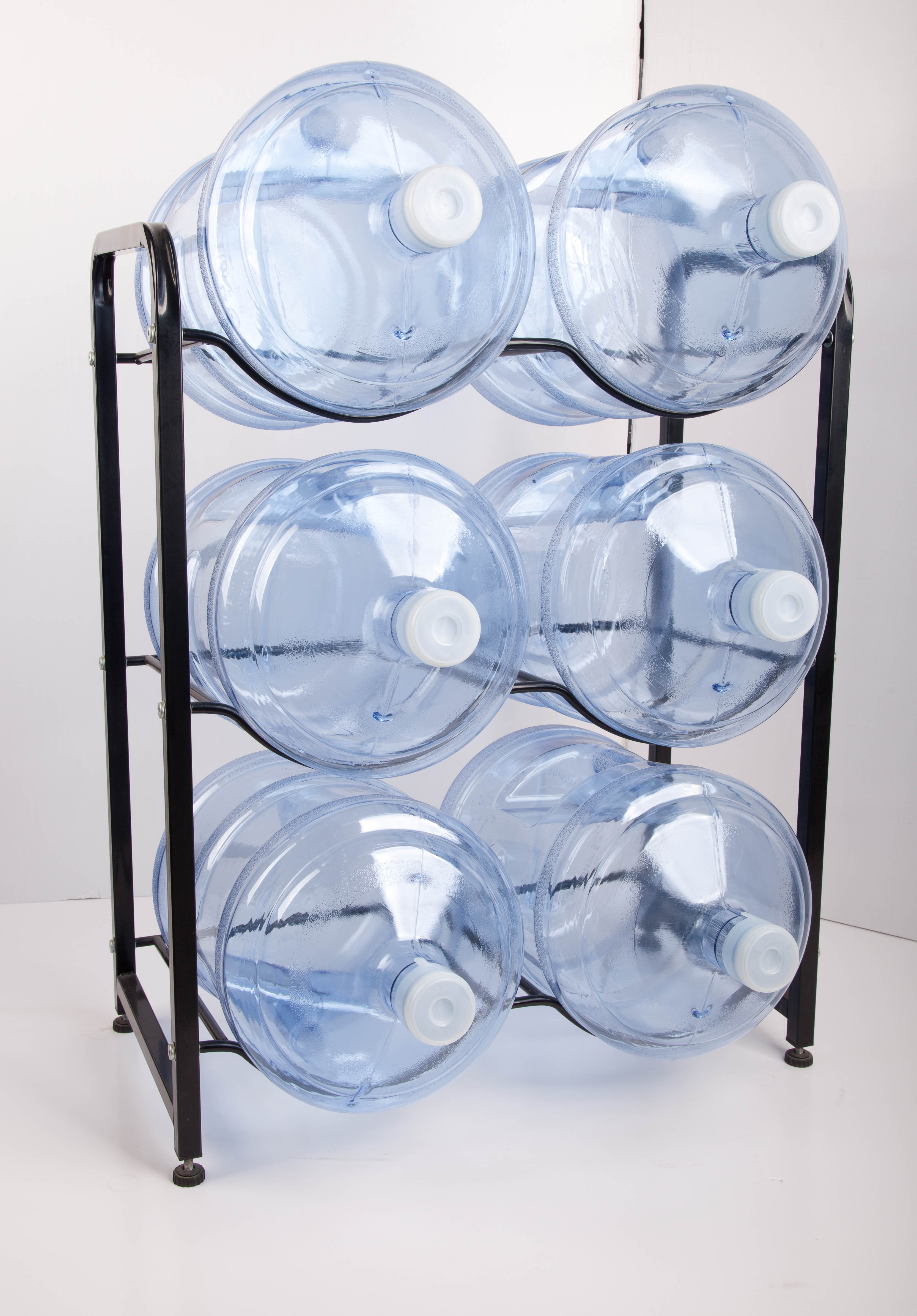
A water bottle rack is a stand that holds 5-gallon water bottles for convenient dispensing and storage. Around that definition sit three other items that catalogues list together and buyers regularly mix up: the water bottle storage tower, the PC or PE water bucket that actually contains the water, and the alternative term 'water jug rack'. This explainer separates the four, maps the rack formats used in the SHAFON Water Solutions range, and places carbon steel, wooden, PC and PE components where they belong. It is a terminology and structure reference, not a buying guide.
What a water bottle rack is, and what it is not
A water bottle rack is a stand that holds 5-gallon water bottles for convenient dispensing and storage. The same product family is sold as a water jug rack, water jug holder, 5-gallon water bottle rack or water bottle storage rack. 'Jug rack' is the more common wording in UK and Commonwealth markets, while 'bottle rack' is widely used in North America; the object described is the same.
The rack is not the container. The container is a water bucket, moulded in food-grade PC or PE, and the two are specified on different scales. A rack is described by tube or wire size, height geometry and bottle count. A bucket is described by volume and dimensions. That difference matters because the two products are often ordered together yet are not interchangeable, and a rack specification says nothing about the bucket that will sit on it.
The rack is also not automatically a tower. SHAFON Water Solutions, a China-based B2B supplier of water dispensing and storage products established in 2015 with business roots dating back to 2008, lists a separate product named Water Bottle Storage Tower (SF-PSB-01) beside its rack models, and lists storage racks in carbon steel (SF-WBR-03) and wood (SF-WBR-01) as further separate entries in the same portfolio.
Why four terms end up in one conversation
When 'rack', 'storage rack', 'holder' and 'tower' appear in the same listing set, two specific errors follow. The first is comparing a bucket's litre figure with a rack's bottle count, which measures two different things. The second is expecting a storage frame to carry a spigot: in this range the PP spigot or faucet belongs to the dispensing-stand models, while the storage racks are specified as storage products.
A reliable reading order is function, then format, then material. Function asks whether the item dispenses water, stores bottles, or contains water. Format asks whether it is tabletop, raised, vertical, multi-tier, foldable or a storage rack. Material asks whether the frame is steel tube, steel wire or wood, and whether the container is PC or PE. Applied in that order, the vocabulary stops competing and the specification becomes readable.
The category boundary, item by item
The table below is a naming map rather than a ranking. Each row answers a different question about a water station, which is why the entries sit side by side in a catalogue without being alternatives to one another.
| Term | What it refers to | Models listed in the SHAFON range |
|---|---|---|
| Water bottle rack / water jug rack | Stand that holds 5-gallon bottles for dispensing and storage | SF-BR-01A, SF-BR-02A (foldable); SF-BR-03A (raised); SF-BR-04A, SF-BR-06A, SF-BR-09A (tabletop); SF-BR-11A, SF-BR-11C, SF-BR-11G (vertical); SF-BR-12A, SF-BR-17A, SF-BR-20A (multi-tier); SF-BR-22A (storage rack with platform) |
| Water Bottle Storage Tower | A distinct product entry in the range, listed separately from the rack models | SF-PSB-01 |
| Carbon steel / wooden storage rack | Storage rack products listed alongside the rack line | SF-WBR-03 (carbon steel); SF-WBR-01 (wood, 330 × 450 × 560 mm) |
| PC / PE water bucket | The container that holds the drinking water | SF-PCB-18.9L, SF-PVB-20L, SF-PSB-18L (PC); SF-PEB-18.9LN (PE) |
| Faucet, spigot, cap, base | Dispensing and sealing accessories supplied with or alongside the above | PP faucets and PP spigots, bottle caps, bottle bases |
Read across a single row and the item is unambiguous. Read down the first column and a pattern appears: only two of the five rows dispense water, one contains it, and two exist to hold it in place. That is the boundary the terminology keeps blurring.
Industry background: a light-industry hardware category
Water bottle racks belong to light-industry hardware. Frames are welded from steel tube or steel wire and finished by electrostatic powder coating or chrome plating, with a PP spigot added to dispensing models. Buckets are injection-moulded in PC or PE. The category serves households, offices, water stations, bottled-water distribution businesses, wholesale warehouses, retail display, hospitality, food service, education, healthcare, logistics and public facilities — settings that differ mainly in how often a bottle is lifted and how much floor space is available.
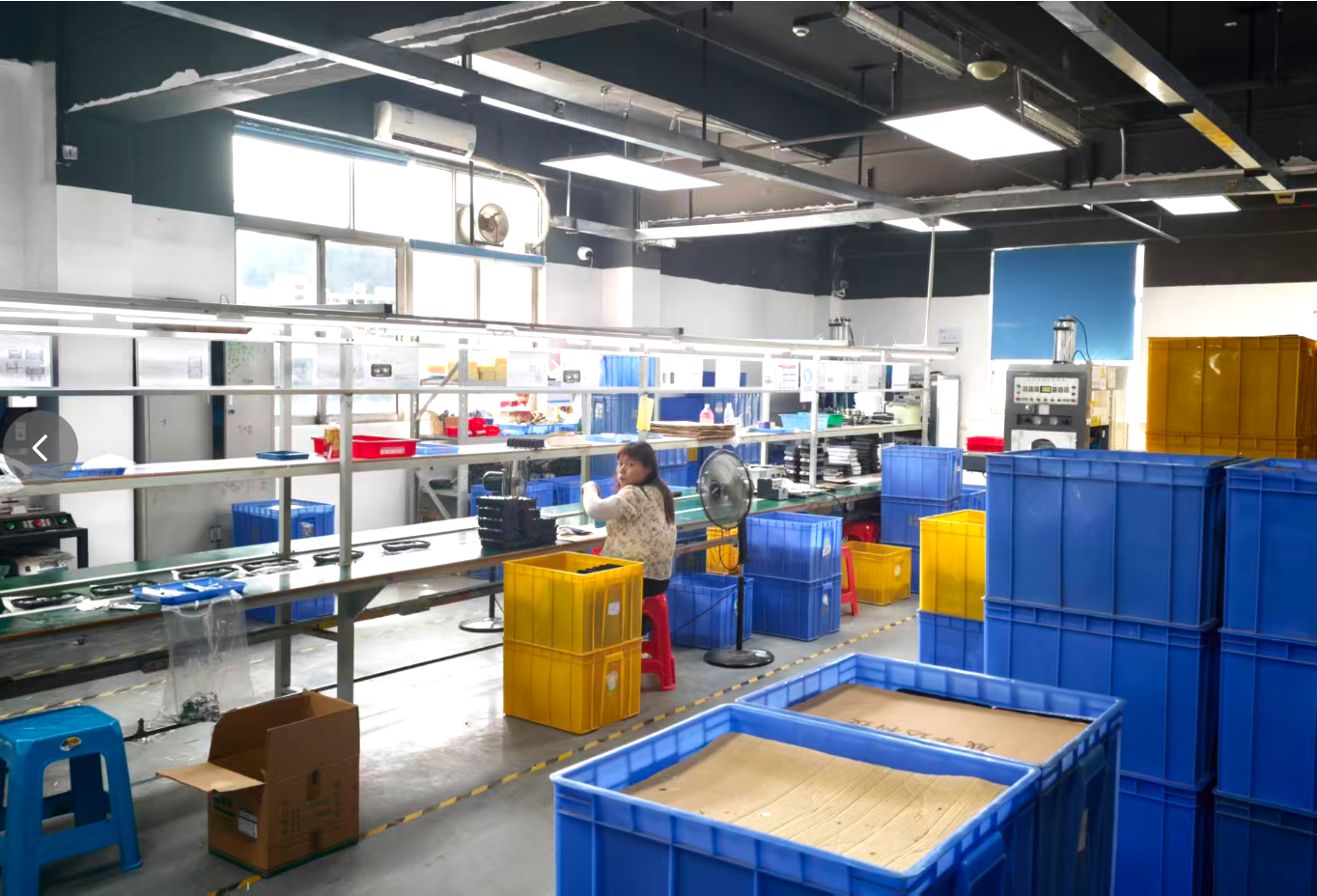
SHAFON Water Solutions operates in this segment with a 5,000 m² facility, 20 employees and a 4–5 person R&D engineering team, reporting annual output of 240,000 water bottle racks and 9,000,000 water buckets. Monthly capacity is stated as 20,000–30,000 racks and 750,000 buckets. Export accounts for 80–90% of business across 30+ countries, including the USA, Mexico, the UK, Saudi Arabia, Southeast Asia, Africa, the Middle East and Europe. The company works with qualified manufacturing partners to coordinate product development, material selection, manufacturing, quality control, packaging and export delivery.
Quality control is integrated into that sourcing and production process: material verification, dimensional checks, structural inspections, surface-finish evaluation, assembly checks and pre-shipment inspection as applicable. For a category built on welded frames and moulded containers, those checks are the practical link between a catalogue drawing and the item that arrives.
The rack formats in the range
Six formats appear in the supplied product data. Their differences are geometric rather than cosmetic: height determines whether a bottle can be dispensed without lifting it off the stand, and row or tier arrangement determines how many bottles fit on a given floor area.
| Format | Model | Size | Structure and material | Capacity / fit |
|---|---|---|---|---|
| Tabletop, one-piece | SF-BR-06A | 24 × 19 cm; front height 105 mm, rear height 170 mm | Q195 steel wire, chrome plating, PP spigot; one-piece moulded and welded | Tabletop dispensing; chrome-plated anti-rust finish |
| Raised U-type | SF-BR-03A | 34 × 19.5 cm; front height 400 mm, rear height 430 mm | 13 × 13 × 0.9 mm steel tube, phosphating treatment and electrostatic powder spraying, PP spigot | 5 cm higher than standard; fits large buckets for easy dispensing |
| Vertical | SF-BR-11C | 340 × 340 × 1,080 mm | 20 × 20 × 0.8 mm steel tube, electrostatic powder spraying; detachable shelves | 4 × 5-gallon bottles |
| Multi-tier, double-row 3-tier | SF-BR-17A | 330 × 650 × 760 mm | Q235 steel tube 20 × 20 × 0.6 mm, powder coating | 6 × 5-gallon bottles |
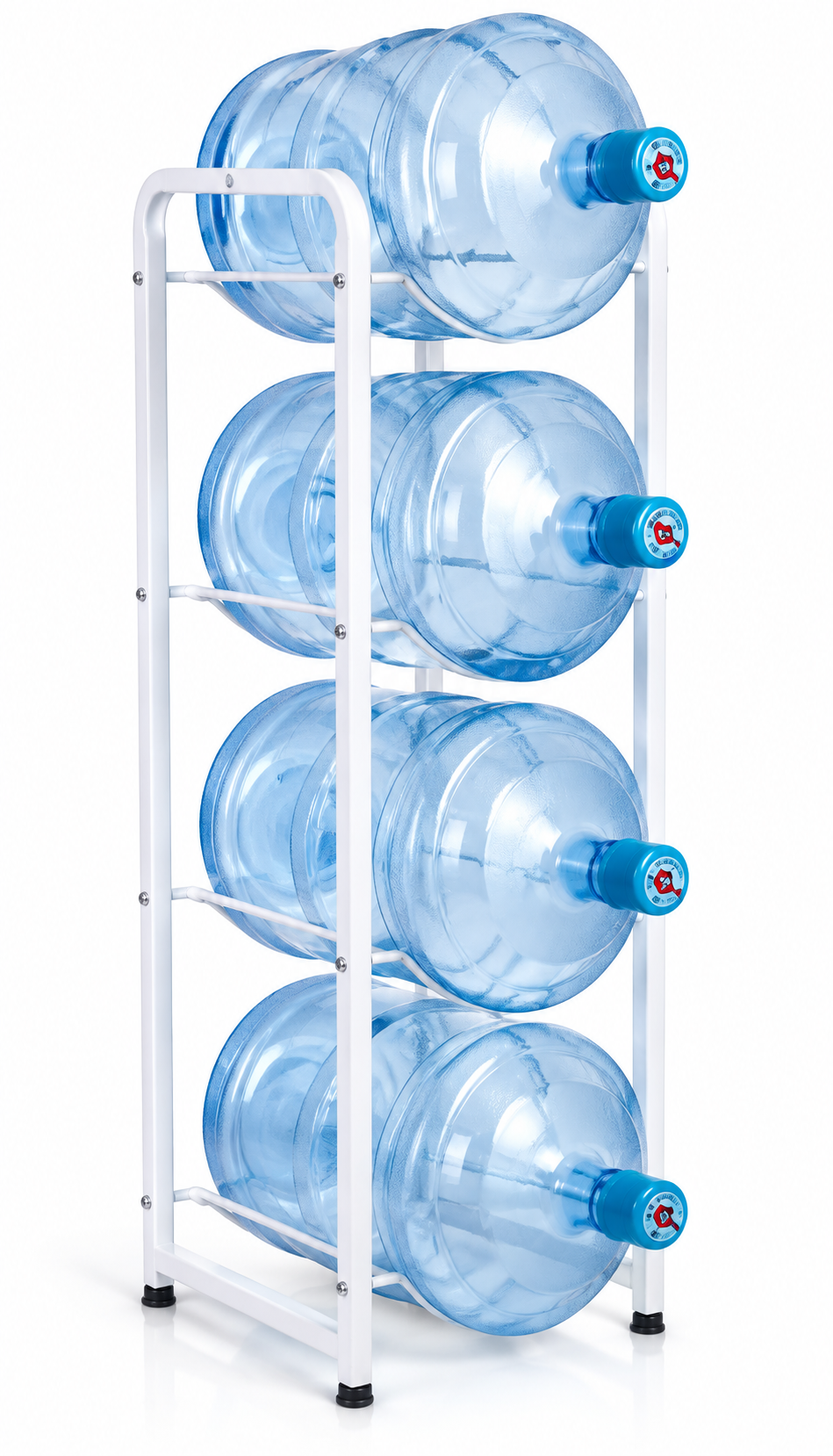
| Multi-tier, triple-row 4-tier | SF-BR-20A | 330 × 965 × 1,060 mm | Q235 steel tube 20 × 20 × 0.6 mm, powder coating | 12 × 5-gallon bottles |
| Storage rack with platform | SF-BR-22A | 330 × 350 × 730 mm | 20 × 20 × 0.6 mm steel tube, powder coating | 2 × 5-gallon bottles plus storage platform |
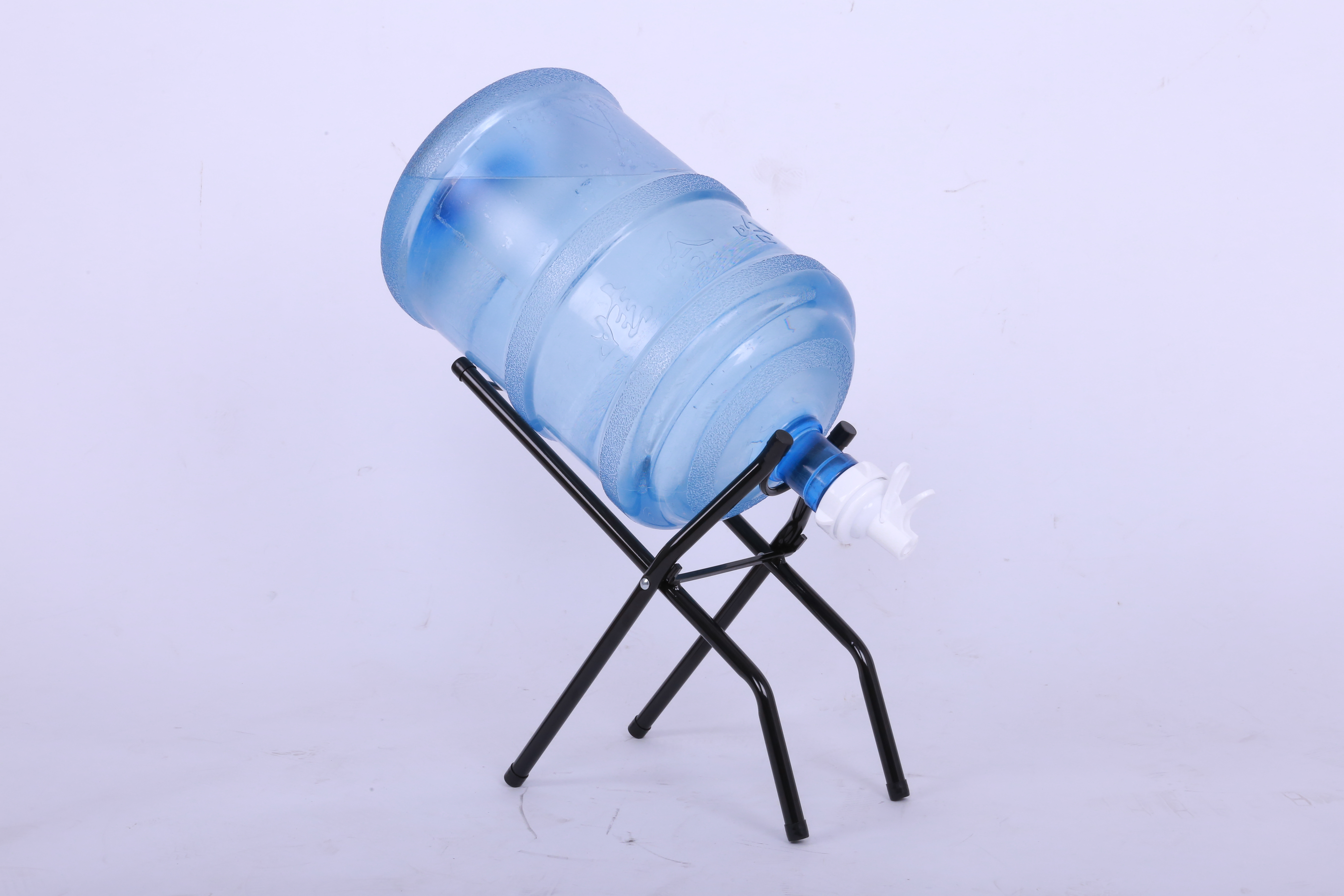
| Foldable | SF-BR-01A, SF-BR-02A | Flat-pack format | Foldable frame | Packs flat; about 30 sets per carton |
The tabletop models put the bottle at counter level. On SF-BR-06A the 105 mm front and 170 mm rear heights create the tilt that lets water flow to the spigot, and the one-piece moulded and welded frame carries a chrome-plated finish with a PP spigot. The raised U-type moves the same idea upward: SF-BR-03A sets the bottle at 400 mm front and 430 mm rear, 5 cm higher than a standard stand, so a large bucket clears the floor and can be dispensed without lifting.
Vertical and multi-tier formats solve a different problem — how many bottles fit in the floor area available. SF-BR-11C trades floor space for height at 340 × 340 mm and 1,080 mm tall, holding four bottles on detachable shelves. The multi-tier racks grow sideways instead: SF-BR-17A adds a second row for six bottles at 330 × 650 mm, and SF-BR-20A extends to three rows and four tiers for twelve bottles at 330 × 965 mm. All three multi-tier models use Q235 steel tube at 20 × 20 × 0.6 mm with powder coating.
Two formats sit at the edges of the group. SF-BR-22A is described as a storage rack with a platform, holding two bottles while adding shelf space — the format that matches the 'rack with top shelf' wording a buyer may be using. The foldable models SF-BR-01A and SF-BR-02A change the shipping geometry rather than the standing geometry: the frame folds, packs flat, and ships roughly 30 sets per carton.
Where carbon steel and wooden storage racks fit
The storage side of the range is separate from the 5-gallon dispensing stands. The Wooden Storage Rack SF-WBR-01 is a single-tier wooden storage rack at 330 × 450 × 560 mm, available in beech, pine or oak, specified for household and living-room use with multi-purpose storage and a modern style. The Carbon Steel Storage Rack SF-WBR-03 is listed as a storage rack alongside it.
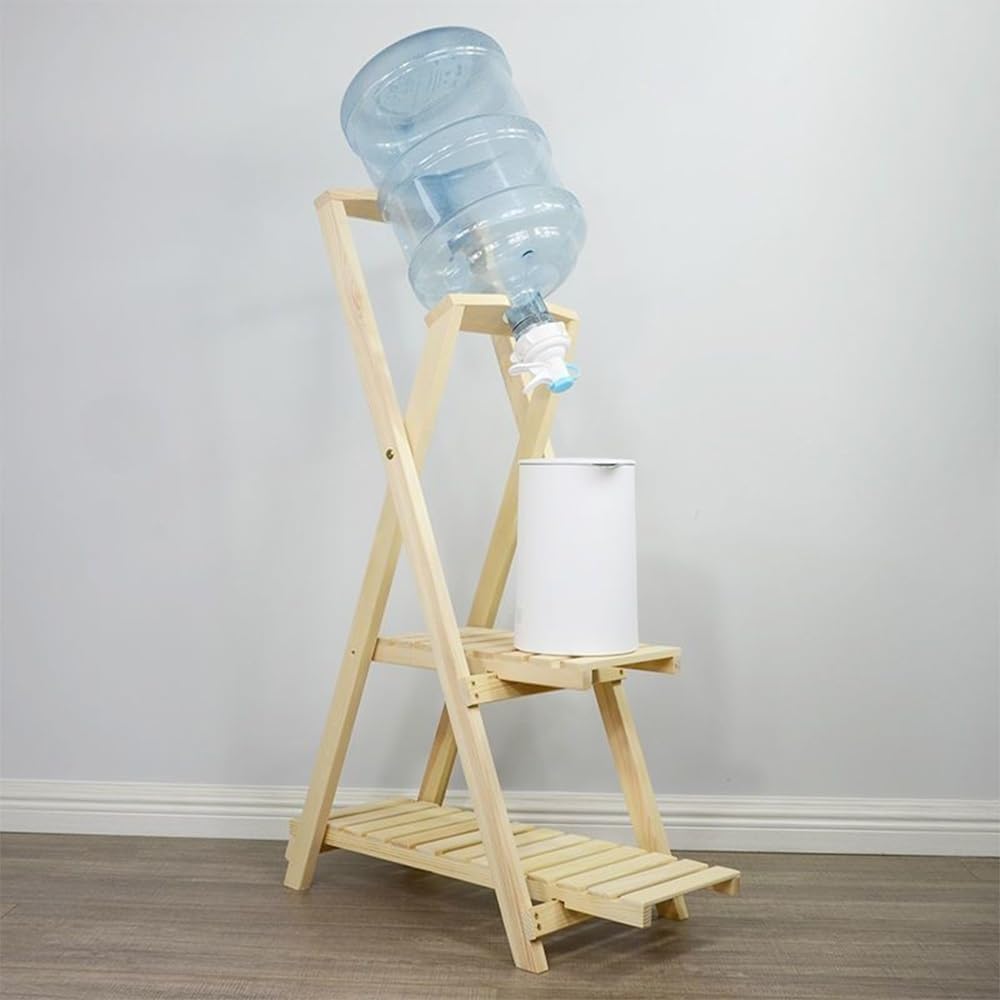
The practical distinction is placement. The wooden unit is specified for living-room and household settings, where the frame is visible furniture rather than utility hardware, and the material options are part of that role. Where a 5-gallon bottle has to be dispensed, the SF-BR series is the relevant group, because bottle counts and tube sizes are stated on those models. Reading a storage rack entry as if it were a dispensing stand is one of the commoner catalogue mismatches, and the model prefixes make the difference visible: WBR for the storage racks, BR for the 5-gallon bottle racks, PSB for the storage tower and the PC square bucket.
Rack versus jug rack: a naming difference, not a specification difference
The two terms refer to the same product family — a stand that holds 5-gallon water bottles for convenient dispensing and storage. The variation is regional. 'Jug rack' is more common in UK and Commonwealth markets, while 'bottle rack' is widely used in North America. A buyer who searches one term will not automatically see listings written in the other, even though both describe the same frame, tube size and bottle count.
For that reason, specification language travels better than naming. Tube dimensions such as 20 × 20 × 0.6 mm or 13 × 13 × 0.9 mm, a front height of 400 mm, a four-bottle vertical layout or a six-bottle double-row tier layout mean the same thing in every market. When a request is written around dimensions and bottle counts rather than around 'rack' or 'jug rack', the ambiguity disappears before a quotation is prepared.
Why water buckets are specified in food-grade PC or PE
Food-contact-grade PE and PC materials can be used for drinking-water containers when the specific material and the finished product meet the applicable food-contact requirements of the destination market. Faucets use food-grade PP with food-grade silicone sealing rings. Ordinary plastic is not food-grade, so the material claim has to be verified at raw-material level rather than judged from appearance — a transparent container is not automatically a food-grade container.
The bucket set covers both materials and four shapes. SF-PCB-18.9L is a 26 × 48 cm round PC bucket at 18.9 L, the classic 5-gallon size that fits water bottle racks. SF-PVB-20L is a vertical PC bucket at 26 × 26 × 40 cm and 20 L, where the vertical design saves floor space. SF-PSB-18L is a square PC bucket at 41 × 23 × 26 cm and 18 L with a transparent finish. SF-PEB-18.9LN is the PE entry. In the selection logic supplied for the range, PC is described as transparent and attractive while PE is drop-resistant and economical, with 3–12 L indicated for household use and 15–25 L for commercial and water-station use.
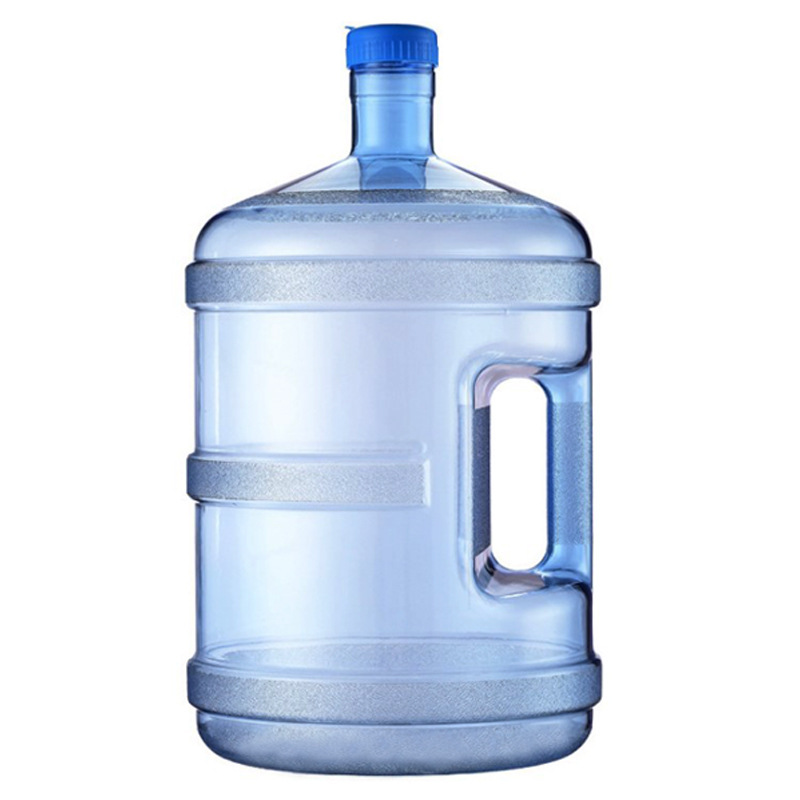
Documentation follows the material and the market. The LFGB food contact material test report EFHZ26031380-CG-01+Rev1, issued by EUROFINS and dated 2026-05-28, was assessed against LFGB Section 30 and 31, the BfR Recommendation, Regulation (EU) No 10/2011 and its amendments, and Regulation (EU) No 2024/3190. Its stated scope is food contact safety for the water bucket, and the same record lists SF-PCB-18.9L, SF-PVB-20L, SF-PSB-18L, SF-PEB-18.9LN, SF-PSB-01, SF-WBR-01 and SF-WBR-03 among applicable products.
How to read a rack specification: seven checks
The seven points below are the ones the supplied data actually documents. They are reading aids for a specification sheet, in the order the information normally appears.
- Tube or wire size. The range uses 13 × 13 × 0.9 mm, 20 × 20 × 0.6 mm and 20 × 20 × 0.8 mm steel tube, plus Q195 steel wire on the tabletop model. Diameter and wall thickness are stated per model, not per category, so they should be read from the individual sheet.
- Front and rear height. A tabletop model sits at 105 mm front and 170 mm rear; a raised U-type at 400 mm front and 430 mm rear. The front-to-rear difference creates the dispensing tilt, and the absolute height determines whether a large bucket clears the floor.
- Structure type. One-piece moulded and welded frames, frames with detachable shelves, and foldable frames behave differently in use and in packing, and the difference is stated in the model description.
- Bottle count and row or tier layout. Stated counts in the range are 2, 4, 6 and 12 bottles. Row and tier numbers explain where the count comes from: two rows of three, three rows of four.
- Finish. Powder coating offers broad colour options and good surface protection when properly applied; chrome plating gives a bright metallic appearance. Corrosion performance for either finish depends on substrate preparation, coating or plating quality, thickness and the service environment.
- Weld integrity and base width. Weld quality and base width are the structural variables that sit behind a stated bottle count, and both are inspection points before shipment.
- Accessory compatibility. Matching PP faucets, bottle caps, bottle bases and other accessories can be shipped in one order with the racks, which keeps the dispensing set complete rather than assembled from separate shipments.
Packaging belongs to the same reading. Foldable types ship flat in OPP bag or paper card packaging, while one-piece types ship assembled in individual boxes. A buyer comparing two formats on price alone is often comparing two different shipping volumes rather than two different frames.
Where these formats are used
Residential water storage takes place in indoor kitchens and utility rooms, where the matched equipment is a bucket plus a rack and the stated requirement is safe materials with small capacity and light weight. Corporate offices use pantry and break-room settings with a rack, bucket and faucet assembled as one drinking-water station.
Bottled-water distribution is the more demanding setting: indoor bottle storage with frequent handling, matched as bucket, bottle cap and rack. Wholesale distribution involves warehouse storage and bulk handling, and the multi-tier formats — six bottles on SF-BR-17A, twelve on SF-BR-20A — are the entries whose stated capacity matches that pattern. Hospitality settings are matched with a foldable rack, bucket and faucet, which reflects the value of a frame that packs flat between seasonal setups rather than a change in function.
Compliance, capacity and order parameters
Two documents are supplied for this portfolio. ISO 9001 certificate ECI25Q00869R0S was issued on 2025-09-25 by Beijing Guoyouxincheng Certification Service Co., Ltd. against GB/T19001-2016/ISO9001:2015, valid to 2028-09-24, with a scope covering wholesale of auto spare parts, plastic products, hardware products and daily necessities sales including import and export of goods. It is a company-level quality management system certificate rather than a product certificate. The LFGB report described above covers food contact safety for the water bucket. Other testing is coordinated according to product material, function and destination market requirement.
Pre-shipment inspection for racks covers quantity, tube or wire specifications, surface finish with no rust and no scratches, weld integrity, faucet assembly, packaging and shipping marks, backed by in-production inspection. Those are the checkpoints a buyer can ask to see evidence of, and they map directly to the specification points listed earlier.
Order parameters are stated by supply mode. Stock supply has a minimum of 200–300 pcs for water bottle racks and water buckets, with shipment within 5 days. OEM work covering logo, colour, packaging and product matching has a minimum of 500 pcs and a 15-day lead time. ODM work covering product development and structure or appearance design has a minimum of 1,000 pcs and a 30-day lead time. Rack capacity is 20,000–30,000 per month and bucket capacity 750,000 per month. Because MOQ and lead time shift with the mode, quotation follows the model, the quantity band, the customization level and the packaging rather than being fixed at category level.
Frequently asked questions
What certifications are available for water bottle racks and water buckets?
It depends on the product and the destination market. ISO 9001 certificate ECI25Q00869R0S was issued on 2025-09-25 by Beijing Guoyouxincheng Certification Service Co., Ltd. to GB/T19001-2016/ISO9001:2015, valid to 2028-09-24, with a scope covering wholesale of auto spare parts, plastic products, hardware products and daily necessities sales including import and export of goods; it is a company-level quality management system certificate, not a product certificate. For the buckets, the LFGB food contact material test report EFHZ26031380-CG-01+Rev1 from EUROFINS, dated 2026-05-28, was assessed against LFGB Section 30 and 31, the BfR Recommendation, Regulation (EU) No 10/2011 and Regulation (EU) No 2024/3190. Further testing is coordinated according to product material, function and market requirement.
How can a buyer evaluate load capacity and structural stability, including load testing?
Four documented variables carry most of the answer: tube or wire diameter and wall thickness, weld quality, base width and tier count. The range states 13 × 13 × 0.9 mm, 20 × 20 × 0.6 mm and 20 × 20 × 0.8 mm steel tube, and Q195 steel wire on the tabletop model, with bottle counts of 2, 4, 6 and 12. Product drawings and loading references can be shared on request. Where a project needs a formal load test, it should be written as a specification — test load, method, acceptance criteria and the report format required — so that the documentation supplied matches the requirement instead of being inferred from the product name.
Are water bottle racks supplied assembled or knocked down?
Foldable types ship flat, in OPP bag or paper card packaging; one-piece types ship assembled in individual boxes. All models are described as easy to set up on arrival. The packing difference also changes the shipping volume, so the two formats are not equivalent when freight is calculated per set.
Do foldable racks reduce packaging volume and freight cost?
Foldable racks pack flat at about 30 sets per carton, roughly 60–70% less shipping volume than one-piece racks, which reduces ocean freight cost per set. The saving comes from the packing geometry of the folding frame, not from a lighter specification, so the model's tube size and bottle count still need to be checked separately.
Can a rack specification be confirmed with samples before a bulk order?
Yes. Samples are available before bulk orders. For OEM projects, the product type, quantity, target market, rack colour, logo, packaging requirement and any specific dimensions are confirmed on drawings and samples before bulk production, which is also where questions about spigot fitting, bottle size and carton configuration are usually settled.
What are the minimum order quantity and lead time?
Stock supply: 200–300 pcs for water bottle racks and water buckets, shipment within 5 days. OEM, covering logo, colour, packaging and product matching: 500 pcs at 15 days. ODM, covering product development and structure or appearance design: 1,000 pcs at 30 days. Rack capacity is 20,000–30,000 per month. A buyer can request the current quotation and model list for a specific rack format and packaging combination to confirm which band applies.
Conclusion: keep the four terms apart and the rest follows
Water bottle racks, water bottle storage towers, PC or PE water buckets and jug racks belong to one supply chain but answer four different questions. A rack dispenses and holds; a tower is a separate storage entry; a bucket contains the drinking water and carries the food-contact documentation; and 'jug rack' is a regional name for the same stand, not a different product. Once those boundaries are clear, the remaining variables are ordinary ones: format and footprint, tube size and height geometry, finish, bottle count, packing method, and the MOQ and lead time attached to each supply mode.
Need the full model list or a quotation?
SHAFON Water Solutions can share product drawings, loading references and the rack and bucket model list for a specific configuration. The downloadable brochure with the current product list is available here: Quotation of Smart Water Solution (PDF). Contact: azhang@shafonwater.com, tel +86 133 4598 9797, or visit www.shafonwater.com.
Have Questions or Need More Details?
Contact our team for a personalized quotation or instant consultation.
Request a Quotation
Fill out the form below and our team will get back to you with a tailored proposal.
WhatsApp Direct Chat
Prefer to chat in real-time? Message us on WhatsApp for instant assistance & quick answers.
- Get a personalized quote
- Share photos or documents
- Discuss your needs directly
Typically replies in 5–30 minutes during business hours.