
Acetyl Tributyl Citrate Supplier Evaluation: Capacity, Batch Consistency, and Delivery Terms
A quotation for Acetyl Tributyl Citrate tells you what a supplier is willing to ship. It does not tell you whether the same specification will arrive in month six, in the volume your line consumes, under the delivery and payment terms written into the purchase order. Once a buyer has moved past sample testing, the useful question changes from who sells ATBC to which supplier can repeat a qualified batch on a predictable schedule and on contract terms your purchasing team can accept.
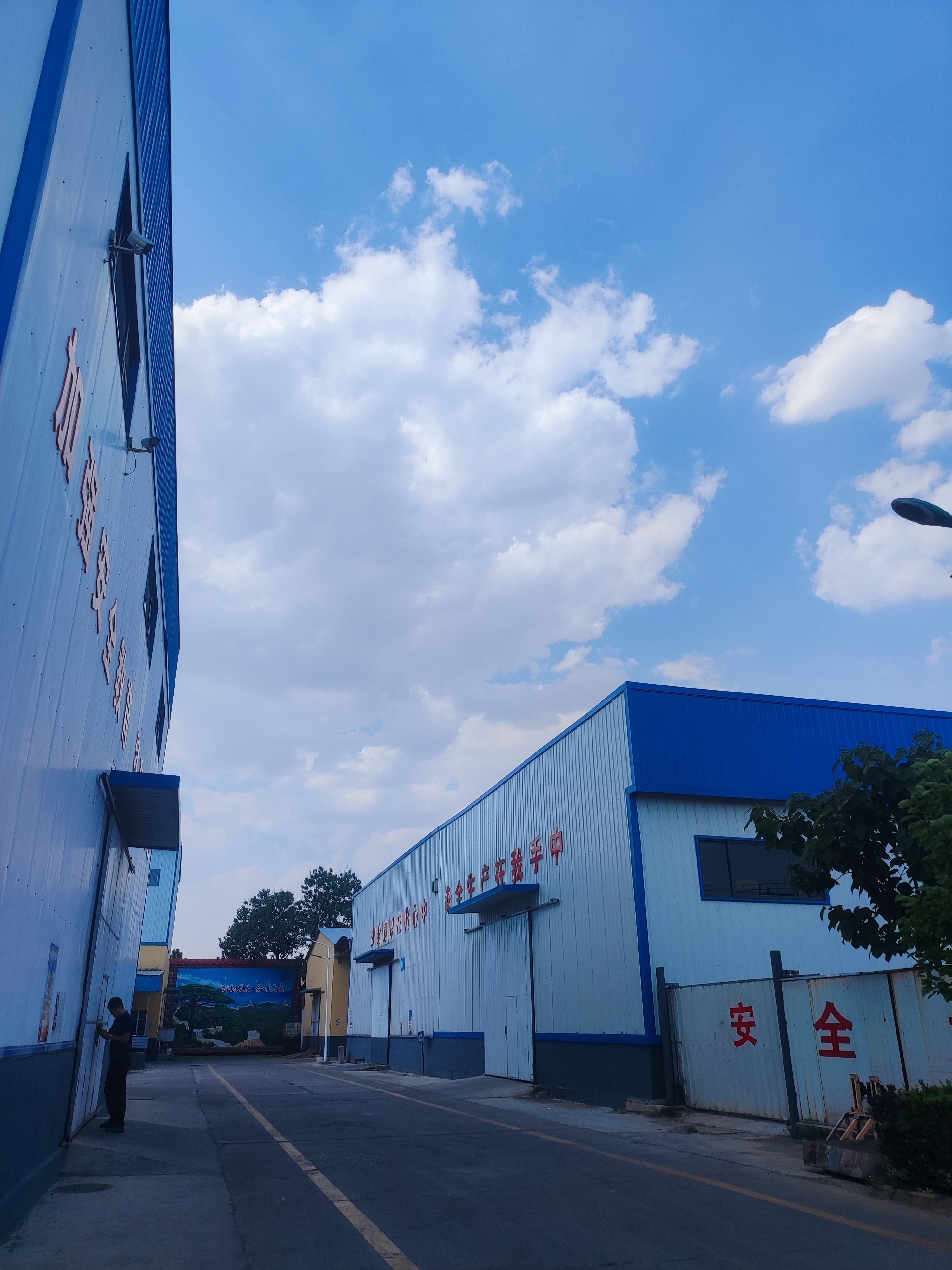
Acetyl Tributyl Citrate (ATBC, CAS 77-90-7) is a citrate ester plasticizer used as a non-phthalate alternative in PVC soft products, food-contact film, and medical articles. Shandong Kexing Chemical Co., Ltd., founded in 2006 and based in Dongying, Shandong, is a manufacturer of plasticizers, plastic and rubber flame retardants, and plastic additives whose product range covers ATBC, TBC, TEC, DOTP, ESO, DOA, DOS, DBS, DINP, DOP, and DBP. Roughly 50% of its output is exported to Europe, the USA, Japan, South Korea, and the Middle East.
This evaluation guide is written for the stage after the technical specification has been agreed. It covers three verification tracks — capacity, batch consistency, and delivery terms — and closes with a scorecard that lets a buyer compare supplier responses on the same scale.
Why a Passing Sample Does Not Predict a Passing Supply
A sample validates one batch, produced under one set of conditions, at one point in time. It answers a formulation question: does this material perform in the application? It does not answer the three questions that determine whether a supply relationship survives its first year.
- Can the supplier actually allocate capacity to this specification? A stated annual output is not the same as the volume reserved for one buyer's grade and one buyer's delivery rhythm.
- Will batch two, five, and twelve match batch one? Repeatability is proved by documentation across production dates, not by a single certificate.
- Do the quoted delivery and payment terms match how the buyer's own purchasing process works? A term that looks favourable in isolation can create a documentation or cash-flow gap at the port of discharge.
For a plasticizer going into food packaging or a medical PVC article, these three questions carry extra weight, because the downstream acceptance decision depends on traceable paperwork rather than on the material's appearance or odour.
Industry Background: A Concentrated Market That Shifts Verification to the Buyer
The ATBC market is growing and remains concentrated. The global market for Acetyl Tributyl Citrate is estimated to grow from USD 258.92 million in 2025 to USD 439.46 million by 2034, driven by its role as a bio-based, phthalate-free plasticizer (Data Insights Reports). Global consumption is estimated at 128,000 metric tons in 2025, with medical applications holding a 34% share and food packaging accounting for 29% (Data Insights Reports).
Supply is dominated by a small number of producers. Jungbunzlauer holds approximately 18% of the global ATBC market share, followed by Mitsubishi Chemical Corporation with a 14% share (Data Insights Reports). In a structure like this, many buyers — particularly mid-sized converters and brand owners buying below threshold volumes — do not transact directly with the leading producers. They deal with regional manufacturers, trading houses, or blended supply chains instead. The practical consequence is that the burden of proving repeatability moves to the buyer, who must verify a supplier that may or may not control the production behind the material.
The regulatory baseline is well defined and should be treated as a fixed input to any evaluation. ATBC (CAS 77-90-7) is approved by the FDA as a food additive and flavoring agent adjuvant under 21 CFR 172.515, 175.105, 178.3910, and 181.27. Combined, medical and food packaging applications account for a clear majority of global consumption, which means documentation quality is not a side issue — it is part of the product.
Detailed Solution: Three Verification Tracks
Track 1 — Capacity: Separating Stated Output from Usable Output
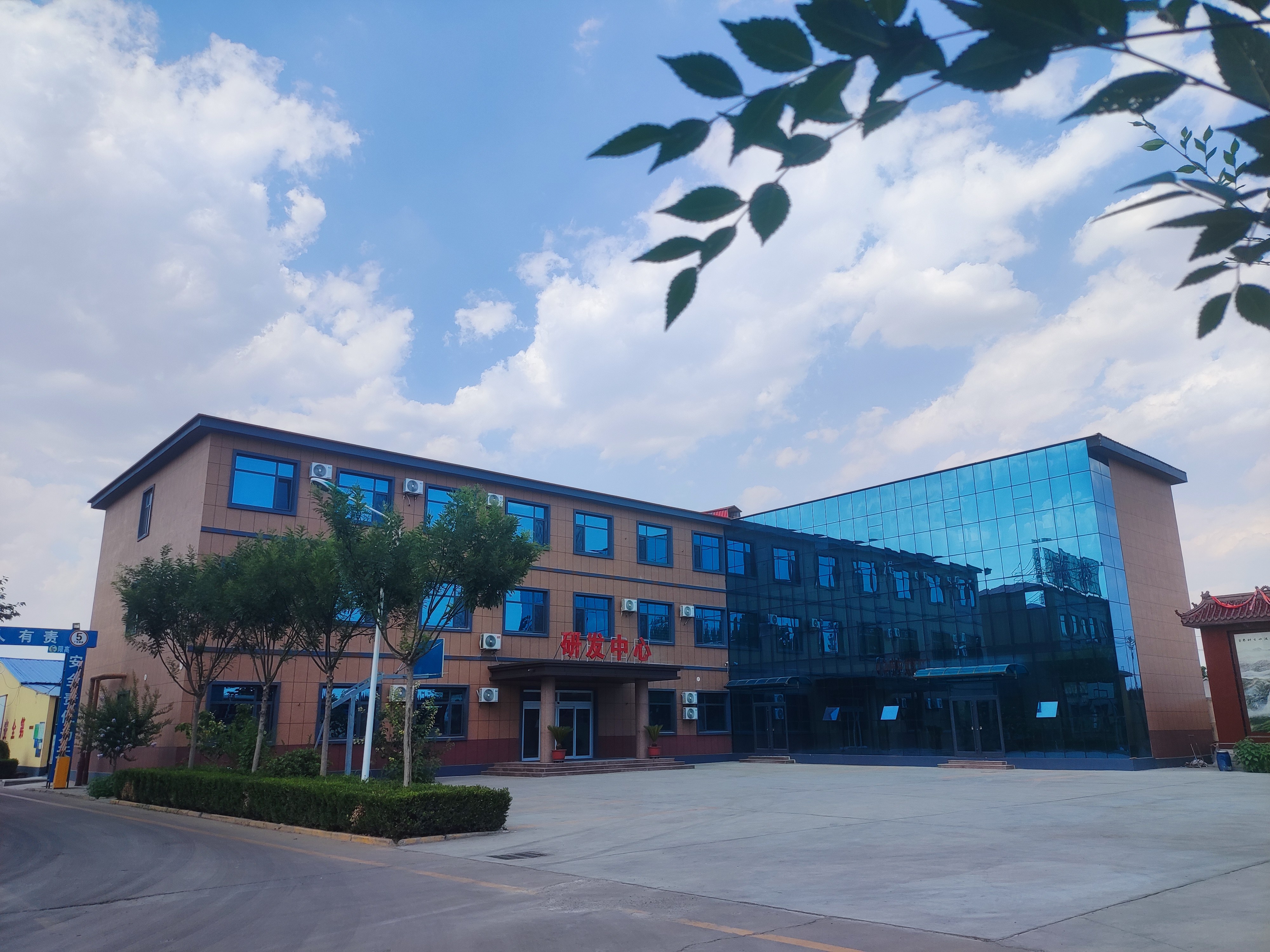
Capacity verification starts with a written declaration and ends with an allocation commitment. Request the supplier's production facts in a comparable format: founding year, site area, headcount, annual output, and technical staffing.
Shandong Kexing Chemical Co., Ltd., for example, reports a founding year of 2006, a factory area of 666 m², 200 employees, an annual output of 20,000 units, and an R&D team of 15 engineers. Those figures are the starting point of a conversation, not the end of one. Four clarifications convert them into usable information:
- Ask for the unit behind the output figure. A capacity stated in units must be converted into the unit the buyer purchases in, so that the number can be checked against monthly consumption.
- Ask what share of capacity is allocated to your specification. Total site output includes every grade in the product range. The relevant number is the portion reserved for one grade, one packaging format, and one delivery schedule.
- Ask who owns technical adjustment during scale-up. A 15-engineer R&D team, supported by cooperation with universities as described in the company profile, is the function that resolves a deviation between pilot and bulk material. Identify the responsible contact before the first bulk order, not after.
- Ask how the site is physically verified. A documented site visit, a live video walkthrough, or an audit by a third party converts a claim into evidence.
Track 2 — Batch Consistency: What Evidence Actually Proves Repeatability
Batch consistency is proved by documents that span production dates. A single certificate of analysis demonstrates that one batch was tested; a series of them demonstrates that the process is under control.
Shandong Kexing Chemical Co., Ltd. states a factory test report as its acceptance criterion. That is a workable basis, but only if the buyer defines what the report covers before the purchase order is issued. A practical request list:
- Test reports from at least three different production batches, not one.
- Confirmation that the same test method and the same testing arrangement were used across those batches.
- A named specification against which each report is measured, so that the buyer's own incoming inspection can use the same reference.
- Written confirmation of how a non-conforming batch is handled — replacement, rework, or credit — and within what commercial window.
Consistency also has a storage dimension. ATBC should be held under normal sealed storage, avoiding long-term exposure to temperatures above 150°C. A supplier whose warehouse practice contradicts that requirement introduces variability that no certificate will capture.
For buyers comparing plasticizers at the same time, the property differences between citrate and phthalate chemistries set the baseline expectation for what consistency testing should protect. The finished PVC glass transition temperature with ATBC is approximately -60°C, against approximately -35°C with DOTP, and ATBC is compliant with FDA/REACH food-grade requirements. ATBC carries a higher cost than DOTP but allows a lower processing temperature and therefore lower energy consumption during production. Those are the properties a buyer is paying to have repeated.
Track 3 — Delivery Terms: Reading the Quote Against Your Purchasing Terms
Delivery terms are where most supply relationships quietly fail. The comparison is straightforward once both sides are written down. Shandong Kexing Chemical Co., Ltd. publishes the following purchasing terms and acceptance criteria:
- MOQ: 1T
- Delivery terms: FOB, CIF
- Acceptance criteria: Factory test report
- Payment terms: 30% deposit, 70% payment upon receipt of the bill of lading
Each line has an operational meaning the buyer should test:
- A 1T minimum order sets the floor for a trial shipment and determines which transport configuration is economic. It also defines the smallest unit in which a new grade can be validated.
- FOB and CIF are not interchangeable for planning purposes. Under FOB the buyer controls booking and the freight forwarder; under CIF the supplier arranges carriage and insurance. The choice changes who absorbs delay risk between the loading port and the buyer's warehouse.
- A factory test report as the acceptance criterion means third-party inspection is not included by default. If the buyer's own quality system requires an independent inspection or a pre-shipment sample retained at the port, that must be negotiated into the contract explicitly.
- A 30/70 split settled against the bill of lading places the balance payment before cargo release to the buyer. Document accuracy, sailing confirmation, and the speed of document transmission therefore become commercial risks, not administrative ones. Buyers should confirm which documents are issued, in what form, and within what timeframe after departure.
Track 4 — Supply Continuity and Storage Discipline
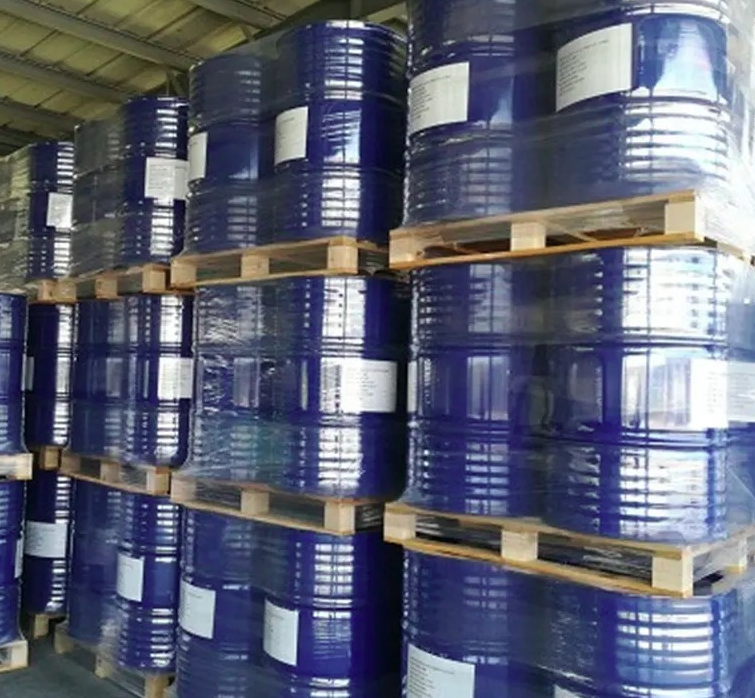
Long-term supply depends on how the supplier handles the material between production and loading. The identified risk for this product family is leakage and volatile vapor emission. The corresponding control method is a closed feeding and sealed storage system, supported at the enterprise level by gas detectors and regular tank and pipeline inspection.
For the buyer, this converts into two verification points: ask how the product is transferred and stored on site, and ask what inspection regime supports that claim. A supplier that can describe a closed system and a routine inspection cycle is describing a process, not a promise.
Comparison Table: ATBC Against DOTP on Procurement-Relevant Factors
When ATBC is evaluated alongside a phthalate alternative, the following factors usually decide the choice. Only the differences documented in the product comparison are listed here.
| Factor | ATBC (Acetyl Tributyl Citrate) | DOTP |
|---|---|---|
| Regulatory positioning | Non-phthalate; compliant with FDA/REACH food-grade requirements | Phthalate-based alternative |
| Glass transition temperature of finished PVC | Approximately -60°C | Approximately -35°C |
| Cost position | Higher than DOTP | Lower-cost reference in this comparison |
| Processing behaviour | Lower processing temperature, lower energy consumption during production | Comparison reference |
| Best fit | Food packaging, children's toys, medical PVC articles, cold-resistant flexible products | Not the focus of this comparison |
| Storage requirement | Normal sealed storage; avoid long-term exposure above 150°C | Not the focus of this comparison |
A Practical Supplier Scorecard for Comparing ATBC Responses
Scorecard discipline matters more than the weighting itself. The point is to ask every shortlisted supplier the same questions and to demand the same category of evidence, so that responses become comparable. Weights below can be adjusted to the buyer's own risk profile.
| Evaluation dimension | Weight | Evidence to request | Signal that weakens the response |
|---|---|---|---|
| Regulatory and product identity | 15% | CAS reference, FDA/REACH positioning, SGS and ISO documentation | Documentation offered only after the order is confirmed |
| Stated capacity versus buyer demand | 15% | Founding year, site area, headcount, annual output, unit definition | Output quoted without a defined unit |
| Cross-batch consistency | 20% | Factory test reports from several production dates | Only one report available, or reports without a named specification |
| Acceptance documentation | 10% | Written acceptance criterion and non-conformance procedure | Acceptance described verbally only |
| Delivery terms | 10% | Quoted Incoterm, loading port, document set | Incoterm stated without port or document detail |
| Payment terms | 5% | Deposit and balance structure, document against which balance is settled | Payment milestones left undefined |
| Packaging and shipment configuration | 10% | Packaging format, net weight, pallet arrangement | Format answers given only at order stage |
| Storage and risk control | 5% | Storage system description, inspection regime | No description of on-site handling |
| Export experience | 5% | Share of output exported, destination markets served | No export track record to the buyer's region |
| Responsiveness and traceability | 5% | Named technical and commercial contacts | Single unnamed point of contact |
Applied consistently, the scorecard changes the conversation. A supplier with a strong sample result but a weak score on consistency documentation and delivery detail is a high-risk choice for an annual contract, even though its material performed well in the trial.
Step-by-Step: Running the Evaluation
- Write the acceptance criterion before sending the inquiry. Define what the factory test report must contain and which specification it is measured against. If a third-party inspection is required, state it at this stage rather than after the order.
- Put the capacity questions in writing. Founding year, site area, headcount, annual output with unit, R&D staffing, and the share of capacity available to your grade.
- Request multi-batch documentation. Ask for factory test reports from separate production dates, produced by the same method, and compare the spread rather than the single values.
- Map the quote against your own Incoterms. Decide whether FOB or CIF fits your freight and insurance arrangements, and confirm which party absorbs delay between loading port and warehouse.
- Check the payment structure against your cash-flow cycle. A 30% deposit with 70% on the bill of lading commits funds before cargo release; confirm document turnaround and accuracy obligations.
- Run one trial order at the stated minimum before committing to volume. A 1T minimum order is designed for exactly this purpose — validating packaging, documentation, and transit behaviour on your own site.
Use Cases: Where the Evaluation Emphasis Shifts
Food packaging film
Where the finished article touches food, the weight of the evaluation moves to Track 2 and the acceptance documentation. Multi-batch test reports and a written acceptance criterion matter more than a marginal difference in unit price, because the downstream compliance file depends on them.
Medical PVC articles
Medical applications account for 34% of global ATBC consumption. Buyers in this segment typically require traceability across batches and a named technical contact who can respond to a deviation. The capacity question becomes secondary to the consistency question.
Children's toys, artificial leather, and inks
In these applications, cost-per-part and processing behaviour dominate. A lower processing temperature and lower energy consumption during production are real advantages, but they only hold if the material arrives at a consistent specification. Consistency is the precondition for the cost benefit.
FAQ
What regulatory documentation should an ATBC supplier provide?
ATBC (CAS 77-90-7) is approved by the FDA as a food additive and flavoring agent adjuvant under 21 CFR 172.515, 175.105, 178.3910, and 181.27. Shandong Kexing Chemical Co., Ltd. states that its products are certified by SGS, REACH, ISO 9001, ISO 14001, and OHSAS 18001. Buyers should attach the applicable regulatory clause to their purchase terms, so that the acceptance criterion references a defined standard rather than a general compliance statement.
How can I confirm that a stated ATBC production capacity is real?
Convert the claim into a checkable number. Shandong Kexing Chemical Co., Ltd. reports a founding year of 2006, a factory area of 666 m², 200 employees, an annual output of 20,000 units, and an R&D team of 15 engineers. Ask for the unit behind that output figure, the share of capacity available for your grade, and confirmation of how the site can be verified — through a visit, a live walkthrough, or a third-party audit.
What delivery and payment terms apply to an ATBC order?
The stated terms are a MOQ of 1T, delivery terms of FOB and CIF, an acceptance criterion of a factory test report, and payment terms of 30% deposit with 70% payable upon receipt of the bill of lading. Because the balance is settled against a document rather than against cargo release, buyers should confirm the exact document set issued, in what form, and within what timeframe after departure.
Can a sample result serve as the acceptance basis for bulk orders?
No. The stated acceptance criterion is the factory test report, not a sample result. A sample validates one batch; bulk acceptance depends on reports from multiple production dates measured against a named specification. Buyers should request reports from several batches and confirm in writing how a non-conforming batch is resolved.
What is the practical next step once the terms are agreed?
Place one trial order at the 1T minimum, on either FOB or CIF terms, and validate packaging, documentation turnaround, and transit behaviour at your own site before committing to scheduled volume. To start that process, request a sample and a quotation, or download the company brochure for the full product list and contact details.
Conclusion
Supplier evaluation in the decision and execution stage is an exercise in converting claims into documents. Capacity becomes verifiable when the output figure is attached to a unit and an allocation. Batch consistency becomes verifiable when test reports from multiple production dates are compared against a named specification. Delivery terms become verifiable when the quoted Incoterm, document set, and payment milestones are mapped against the buyer's own purchasing process.
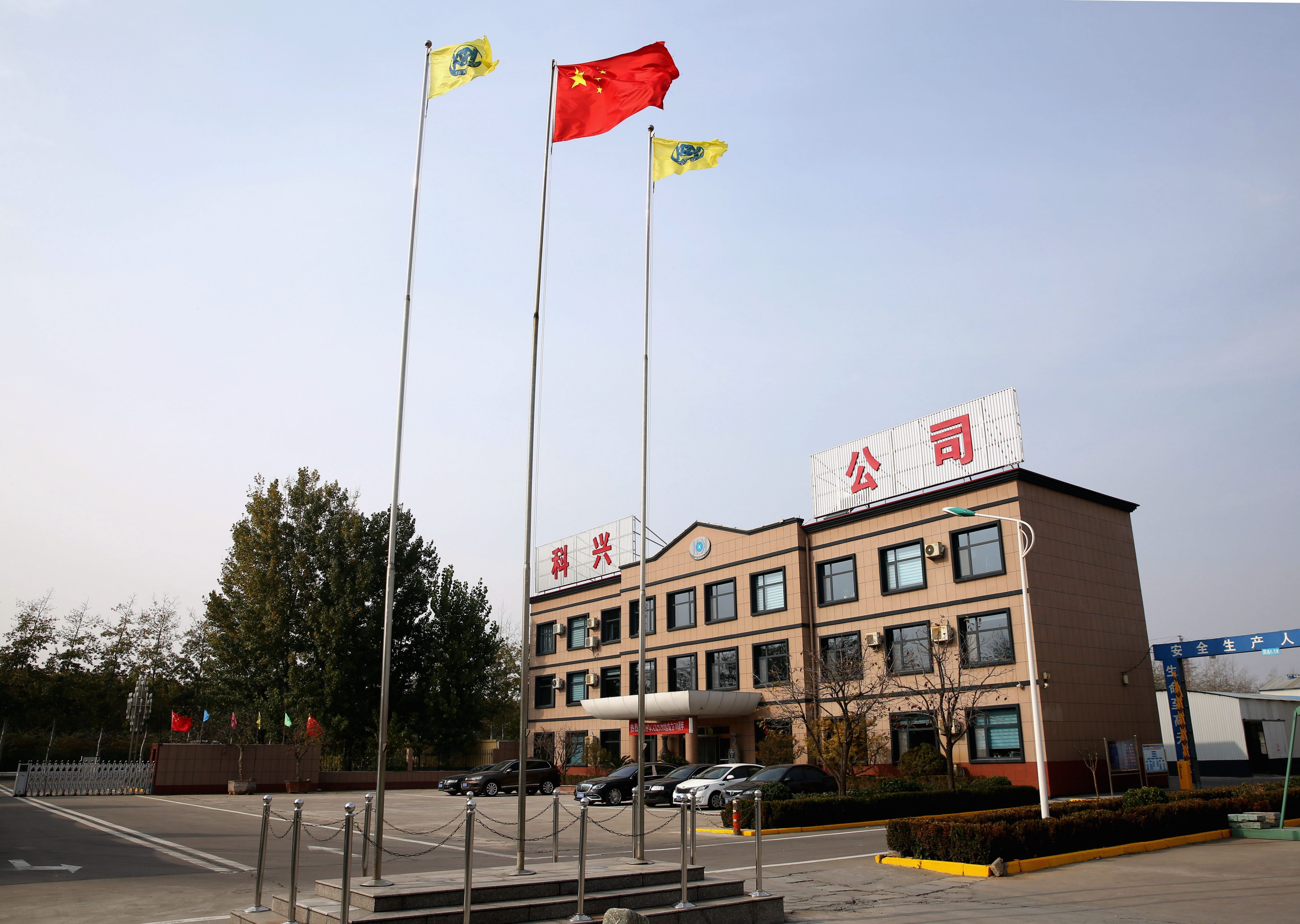
Shandong Kexing Chemical Co., Ltd. — a Dongying-based manufacturer established in 2006, serving Europe, the USA, Japan, South Korea, and the Middle East with approximately 50% of its output — publishes those terms openly enough to be checked. The remaining work belongs to the buyer: ask the same questions of every shortlisted supplier, score the answers on one scale, and let the trial order confirm what the paperwork promised.
Ready to Evaluate ATBC Supply
Send your specification and expected monthly volume to receive a quotation with delivery terms, lead-time confirmation, and batch documentation for review.
Email: kexing@kexingchem.com · Tel: +86 177-5465-5267 · WhatsApp: +86 18765463469
Website: www.kexingchem.com · Brochure: Download PDF
Address: No.8 Houwang Road, Dawang Economic Development Zone, Guangrao County, Dongying City, Shandong Province, P.R. China
Have Questions or Need More Details?
Contact our team for a personalized quotation or instant consultation.
Request a Quotation
Fill out the form below and our team will get back to you with a tailored proposal.
WhatsApp Direct Chat
Prefer to chat in real-time? Message us on WhatsApp for instant assistance & quick answers.
- Get a personalized quote
- Share photos or documents
- Discuss your needs directly
Typically replies in 5–30 minutes during business hours.