Butyl Stearate Compliance Guide: Certifications, Standards, and Regional Requirements
Butyl stearate compliance is settled in documents, not in a datasheet headline. For a buyer in the research stage, the useful question is not which logo sits on a supplier's certificate, but which document proves which obligation, for which grade, in which destination market. The substance itself is well defined — butyl stearate, CAS 123-95-5, also traded as n-butyl stearate and butyl octadecanoate — and the paperwork around it is where most purchasing risk accumulates.
This guide teaches a review method rather than a list of certificates to collect. It sets out the four document layers that answer most compliance questions, shows where regional requirements change the answer, gives a step-by-step review sequence you can write into purchasing terms, and lists the questions that separate a verifiable answer from a reassuring one.

Research and Development Center: where the specification, test data and batch records behind a butyl stearate compliance file originate.
Why “Compliant” Is an Incomplete Answer
A compliance statement only becomes testable when four coordinates are attached: the substance identity, the grade, the destination market, and the role of each party in the chain. Remove any one of them and the claim cannot be verified — you are holding an assurance rather than evidence.
The first common failure is treating a certificate image as proof. A PDF with an accreditation mark says nothing until you check its scope, the site it covers, the grade it names, and whether it is still valid. The second failure is transferability: buyers assume a document set accepted in one market satisfies another. In practice, obligations change by jurisdiction while identity and specification discipline do not.
A third issue is structural. Many obligations attach to the importer of record rather than to the manufacturer. A producer can hold a complete documentation file and still leave the buyer exposed if registration status, shipment documentation or labelling at destination is never addressed. Compliance in this category is shared work, and the review sequence should reflect that.
Descriptors such as “non-toxic”, “environment-friendly” or “food grade” are not compliance answers on their own. They become meaningful only when tied to a named standard, a named test report, or a named regulation — and only when the supporting document covers the exact grade being shipped.
Where the Supply Side Stands
Butyl stearate is a mature ester, but the published figures around it are not uniform. Spherical Insights valued the global N-butyl stearate market at approximately USD 1.28 billion in 2024. Estimates for 2025 diverge widely — Future Market Insights at USD 5.2 billion, Dataintelo at USD 2.85 billion — which most likely reflects different treatment of downstream derivatives and of the boundary between industrial and cosmetic grades. The practical conclusion for a buyer is simple: market-size figures are not a decision input, while documentation quality is.
Application structure is more stable than headline value. The lubricants segment held the largest share of the N-butyl stearate market at 38.5% in 2025, according to Dataintelo, and Asia Pacific accounted for 42.3% of revenue in the same year. On the trade side, China was identified as the largest exporter of butyl stearate to key markets such as India in 2024, accounting for 66.14% of specific import shipments under HS code 29157090.
For compliance work, the implication is direct. Material frequently crosses a jurisdictional boundary before it reaches the formulator, so documentation has to be readable by parties who never visit the plant. Supplier concentration in Asia Pacific also means buyers are often dealing with manufacturers who are not the importer of record in their own market.
The manufacturing base is mixed. Cognitive Market Research names BASF SE, Emery Oleochemicals, Croda International and Fine Organics among leading global manufacturers, alongside regional producers. A multinational with a dedicated regulatory affairs function and a regional producer will answer the same question with documents of different depth, so the review method has to work with both.
The Four Document Layers That Answer Most Compliance Questions
Most compliance questions about a butyl stearate order can be answered from four layers of documentation, requested as a set rather than one document at a time.
Layer 1 — Identity
The identity layer fixes what the material is: the chemical name, CAS 123-95-5, the accepted synonyms n-butyl stearate and butyl octadecanoate, the grade designation, the manufacturer and the production site. Its single job is to prevent a documentation file from being attached to the wrong product. Cross-check the name and CAS on the certificate of analysis against the name on the commercial offer and the invoice; a document carrying a different CAS number answers a different question entirely.
Layer 2 — Specification and Batch Certificate of Analysis
A specification fixes the parameters you will accept; a batch certificate of analysis reports what was actually measured on a specific lot. Butyl stearate documentation of this type typically reports appearance, ester content or assay, acid value, moisture, colour, density and flash point, with the exact field set agreed between buyer and supplier.
For compliance purposes, the most important property of a CoA is not any single number but traceability: a batch number that links the drum, the certificate and the production date. Without that link, the document proves that a grade exists, not that the material in your warehouse is that grade.
Layer 3 — Regulatory Status for the Destination
This is where regional differences live. The European Union is a useful worked example because the obligation is explicit: butyl stearate (CAS 123-95-5) is listed as an active substance under EU REACH, and registration is required for manufacture or import above one tonne per year, per the European Chemicals Agency. Ask who holds that registration in your specific chain — the manufacturer, an EU importer, or an appointed only representative.
For other destinations, do not accept a general statement. Ask the supplier to name the regulation, state their role under it, and produce the dated document that supports the statement. If the answer is “we meet all international standards”, the correct follow-up is “name the standard and show the document”.
Layer 4 — Management System and Facility Evidence
Management-system documents describe how a plant controls production; they do not describe what a specific lot is cleared for. Shandong Kexing Chemical Co., Ltd., a manufacturer of plasticizers, plastic and rubber flame retardants and plastic additives based in Dongying, Shandong, China, documents SGS testing alongside REACH and ISO 9001, ISO 14001 and OHSAS 18001 certification across its product range. That is meaningful process evidence, and it still has to be read with its scope, site and validity dates attached.
How to Read a Certificate in Under a Minute
- Issuer and accreditation: who issued it, and is the issuing body accredited for that test or scope?
- Scope: does it name the product, the grade and the production site you are buying from?
- Validity: issue and expiry dates, and whether a surveillance audit has been completed.
- Standard cited: the exact standard or regulation reference rather than a category label.
- Batch link: whether the document can be tied to the lot being shipped.
If any element is missing, the right response is a clarification request, not a request for a replacement copy of the same file.
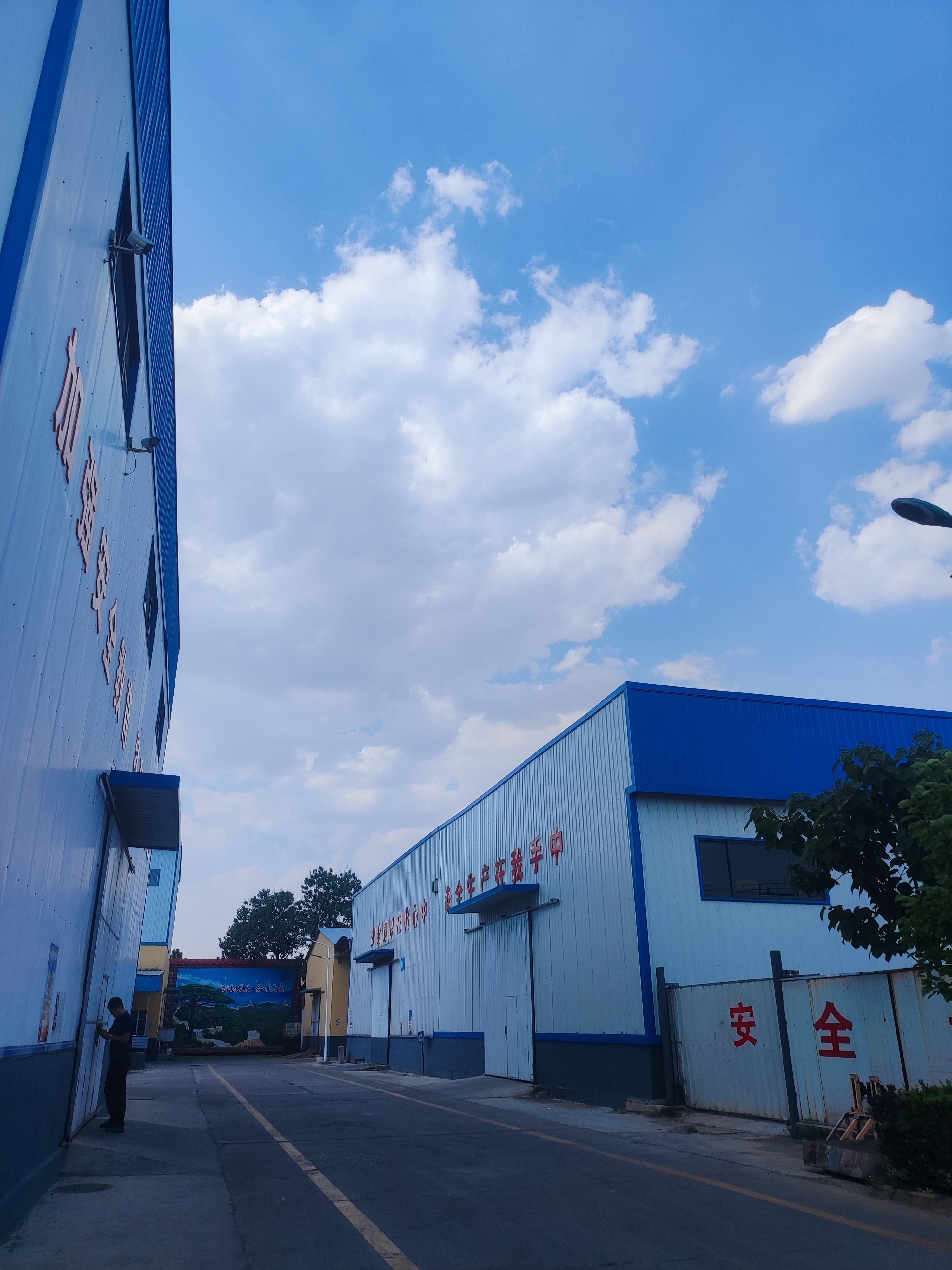
Facility evidence supports the documentation layer. It does not, on its own, clear a specific lot for a specific destination.
Regional Requirements: What Changes and What Stays the Same
Identity discipline and specification discipline do not change by region. Obligations do. Registration duties, labelling rules, packaging restrictions, documentation language and the question of who carries the legal responsibility all shift between markets.
A practical approach is to hold one short destination matrix per product, and to answer three questions per market: who registers the substance, what documentation must accompany the shipment, and what must appear on the label and in the safety information. For a multi-destination buyer, that means one document set per destination rather than one set per order.
Two habits prevent most regional errors. First, ask about the importer of record before the quotation stage, because the answer determines whose documentation obligations you are relying on. Second, re-verify regulatory status at each order cycle. Regulatory lists change, and a file dated two years ago is evidence of a past status rather than a current one.
Step-by-Step: Reviewing Compliance for a Butyl Stearate Order
Step 1 — Fix identity and grade in writing. Confirm the chemical name, CAS 123-95-5, the grade and the intended end use before any document is requested. Every later check depends on this anchor.
Step 2 — Name the destination and the importer of record. State the destination market and which party will import. This determines which obligations sit with you and which sit with the supplier.
Step 3 — Request the four layers as one set. Ask for identity documents, specification and a recent batch certificate of analysis, a regulatory status statement for the destination, and management system evidence — each with an issue date.
Step 4 — Verify scope, not presence. Check issuer, accreditation, product and grade coverage, production site and validity. A document that covers a different grade is not evidence for your order.
Step 5 — Reconcile the CoA against your specification. Compare the batch values with the agreed acceptance criteria, and confirm that the batch number on the CoA matches the batch marked on the packaging.
Step 6 — Write documentation into the purchase order. Treat the document set as a deliverable with the accepted specification as an annex. A compliance clause that names the documents, their language and their timing is easier to enforce than a general assurance.
Step 7 — Re-verify at reorder. Repeat steps 3 to 5 at each reorder, and after any change of grade, production site or destination.
Where Compliance Reviews Usually Fail
- Accepting a certificate image without scope. The file may be genuine and still irrelevant to your grade or site.
- Starting documentation after the purchase order. Documents requested after pricing is agreed rarely change the price, but they frequently delay the shipment.
- Reusing one destination's file for another. The substance does not change; the obligation does.
- Treating a marketing descriptor as a cleared status. “Food grade” is only meaningful when linked to a named standard or report.
- Letting an intermediary answer regulatory questions. Scope, site and registration questions usually require the manufacturer's own answer.
- Archiving documents without batch numbers. A file that cannot be tied to a lot is a file you cannot defend later.
Butyl Stearate Within a Broader Additive Portfolio
Shandong Kexing Chemical Co., Ltd. was founded in 2006 and operates from Dongying, Shandong, China, with 200 employees, a 15-engineer R&D team and an export ratio of 50%. Its main markets are Europe, the USA, Japan, South Korea and the Middle East, served partly through its subsidiary Dongying Kexing International Trade. N-Butyl Stearate (CAS 123-95-5) sits within a portfolio that also covers citrate, adipate, sebacate, phthalate and epoxidised soybean oil products.
Portfolio breadth matters for compliance work for a practical reason: one documentation package can cover several additives in a single shipment, and specification formats can be harmonised across product lines. Buyers who purchase a lubricant and a plasticizer together can request one document set with a consistent structure instead of reconciling two formats.
| Product | CAS Number | Typical role in a formulation |
|---|---|---|
| N-Butyl Stearate | 123-95-5 | PVC internal lubricant, cosmetic emollient, rubber processing aid |
| Acetyl Tributyl Citrate (ATBC) | 77-90-7 | Citrate plasticizer |
| Tributyl Citrate (TBC) | 77-94-1 | Citrate plasticizer |
| Triethyl Citrate (TEC) | 77-93-0 | Citrate plasticizer |
| Dioctyl Adipate (DOA) | 123-79-5 | Adipate plasticizer |
| Diocty Sebacate (DOS) | 2432-87-3 | Sebacate plasticizer |
| Dibutyl Sebacate (DBS) | 109-43-3 | Sebacate plasticizer |
| Epoxidized Soybean Oil (ESO) | 8013-07-8 | Epoxidised soybean oil |
| Dioctyl terephthalate (DOTP) | 6422-89-2 | Terephthalate plasticizer |
| Diisononyl phthalate (DINP) | 28553-12-0 | Phthalate plasticizer |
| Dibutyl Phthalate (DBP) | 84-74-2 | Phthalate plasticizer |
| Triethylene Glycol Di-2-ethylhexoate (3G8) | 94-28-0 | Ester plasticizer |
The manufacturer documents 99% purity butyl stearate used as a PVC internal lubricant and cosmetic emollient. A purity figure of that kind is a specification starting point: confirm the assay on the batch certificate of analysis rather than on a product page, because the batch document is what a compliance file has to survive.

Use Cases: Which Applications Change the Compliance Question
The same chemical identity carries a different documentation weight depending on where it ends up. The table below shows which layer becomes decisive in each application, not which certificate is required.
- PVC internal lubricant. Butyl stearate is used as a non-toxic internal lubricant in PVC processing at dosages typically ranging from 1% to 3%. When the finished article touches food or is intended for toys, the destination layer becomes the decisive one, because obligations follow the end article as much as the additive.
- Cosmetic emollient and dispersant. Grade definition and identity precision carry the most weight. Cosmetic channels usually require an explicit grade statement rather than a general purity claim, so the specification layer and the regulatory layer dominate.
- Rubber processing aid. Industrial channels lean on identity and batch consistency, while destination rules for the finished rubber article determine what additional declarations are needed.
- Ink slip agent. Batch-to-batch consistency and low volatility matter operationally; food-contact and printing regulations determine what documentation has to travel with the shipment.
- Metal stamping lubricant and textile softening agent. Typically industrial end uses where identity, specification and traceability answer most questions, with destination rules checked against the customer's own downstream declarations.
- Polyolefin flow modifier and mould release. Specification discipline dominates, because performance claims are verified on the line rather than in the compliance file.
Comparison Table: What Each Document Type Proves
The table below is a reading aid, not a list of certifications to collect. Each row describes what a document type can and cannot establish for a butyl stearate order.
| Document type | What it confirms | What it does not confirm | Question to ask before accepting |
|---|---|---|---|
| Identity / technical data sheet | Chemical name, CAS 123-95-5, synonyms, grade designation | Actual values of the lot you will receive | Does the name and CAS match the offer and the invoice exactly? |
| Batch certificate of analysis | Measured values for one production lot, with a batch number | Compliance status in your destination market | Does the batch number match the packaging in the shipment? |
| Regulatory status statement | The supplier's position under a named regulation for a named market | Your own obligations as importer of record | Which regulation is named, and who holds the registration in this chain? |
| Management system certificate | Process control at a named site within a stated scope | Product-specific clearance for your grade | Is the site and scope the one that actually produces your order? |
| Third-party test report | Results of specific tests on a specific sample | That future lots will behave identically | Which sample, which method, and is the laboratory accredited for it? |
Frequently Asked Questions
How can I verify a butyl stearate supplier's compliance claims before ordering?
Request four document layers tied to the exact grade and destination: identity documents showing CAS 123-95-5 and the grade, a specification with a recent batch certificate of analysis, a regulatory status statement naming the specific regulation and the supplier's role under it, and management system evidence with scope and site. Then verify rather than file: check the issuer, the accreditation, the product and site coverage, and the issue and expiry dates. For the EU, butyl stearate (CAS 123-95-5) is listed under REACH and registration is required above one tonne per year per ECHA, so it is reasonable to ask who holds the registration in your supply chain. Any claim that cannot be matched to a named regulation and a dated document should be treated as marketing rather than compliance.
Can one supplier document both industrial-grade and cosmetic-grade butyl stearate?
Documentation capability and product suitability are two separate questions. A manufacturer can hold management system certification and third-party testing across a range of esters and still require a distinct specification for each grade it supplies; Shandong Kexing Chemical Co., Ltd., for example, manufactures 99% purity butyl stearate used as a PVC internal lubricant and cosmetic emollient and documents SGS testing together with REACH and ISO 9001, ISO 14001 and OHSAS 18001 certification. The practical test is whether the supplier can produce a grade-specific specification plus a batch certificate of analysis for the exact material offered. Ask for both, for the grade you intend to buy, before treating portfolio breadth as evidence of grade-level compliance.
Does compliance documentation change the cost of butyl stearate?
Documentation is rarely a separate line item, but it influences cost indirectly through three routes: the grade selected, the amount of batch traceability required, and the destination-driven work attached to the order. A higher-purity grade with a fuller document package is a different commercial proposition from a standard industrial grade, and a multi-destination shipment may require more than one document set. The practical approach is to request a quotation that states the grade, the specification reference and the documents included, so that offers from different suppliers are compared on the same basis rather than on price alone.
Should I validate compliance on a sample before placing a bulk order?
Yes, and the sample is most useful when it arrives with its paperwork. Request a sample drawn from a specific batch together with the matching certificate of analysis, then confirm that the identity matches the offer, that the reported values meet your acceptance criteria, and that the batch number on the document corresponds to the sample received. Retain part of the sample as a reference for later deliveries, because a retained reference is what allows a future batch to be compared against the material you actually approved. A sample without documentation validates appearance and handling; it does not validate a compliance file.
How long does documentation review add to a butyl stearate order?
Review time depends on how completely the document set is supplied, not on the chemistry. Orders that slip usually do so because documents were requested after the purchase order was issued, or because the first file supplied covered a different grade or site. The sequence that keeps delay to a minimum is: confirm destination and importer of record, request the four document layers together with issue dates, complete the review, and only then issue a purchase order that names the documents as a deliverable with the agreed specification annexed. If you are still at the evaluation stage, the fastest way to test a supplier is to request a sample together with a batch certificate of analysis and a destination-specific regulatory statement, and to compare the answers you receive against the framework in this guide.
Conclusion: Build the Review Method, Not the Certificate Collection
Butyl stearate is a well-characterised ester with a stable identity, and that is precisely why compliance work in this category is a documentation discipline. The chemistry does not change between markets; the obligations do. Buyers who separate the four document layers, verify scope instead of presence, name the destination and the importer of record before pricing, and write documentation into the purchase order end up with files they can defend years later.
If you are evaluating a supplier for a PVC lubricant, rubber processing, ink or cosmetic application, the practical next step is a document-led sample request: a sample drawn from a specific batch, its certificate of analysis, the specification for the grade offered, and a regulatory status statement for your destination market. That single request reveals more about a supplier than any product page.
Request a butyl stearate sample, specification and documentation set
Shandong Kexing Chemical Co., Ltd. — plasticizers, flame retardants and plastic additives manufacturer, Dongying, Shandong, China.
Website: www.kexingchem.com | Email: kexing@kexingchem.com | Tel: +86 177-5465-5267
WhatsApp: +86 18765463469 | Contact: mingzhu li
Address: No.8 Houwang Road, Dawang Economic Development Zone, Guangrao County, Dongying City, Shandong Province, P.R.China
Download the product catalogue and documentation overview: Shandong Kexing Chemical brochure (PDF)
Have Questions or Need More Details?
Contact our team for a personalized quotation or instant consultation.
Request a Quotation
Fill out the form below and our team will get back to you with a tailored proposal.
WhatsApp Direct Chat
Prefer to chat in real-time? Message us on WhatsApp for instant assistance & quick answers.
- Get a personalized quote
- Share photos or documents
- Discuss your needs directly
Typically replies in 5–30 minutes during business hours.