
Butyl Stearate vs. DBS: Lubricant or Sebacate Plasticizer for PVC Formulations?
The short answer is that these are not interchangeable substitutes. N-Butyl Stearate (CAS 123-95-5) is chosen for its lubricant function inside a PVC compound, at typical dosages of 1% to 3%. Dibutyl Sebacate (DBS, CAS 109-43-3) is chosen as a sebacate plasticizer, where the objective is a change in the flexibility of the finished compound rather than a change in how the melt flows. The right selection follows from the processing problem the formulator is solving — not from price per kilogram, and not from the fact that both products are esters.
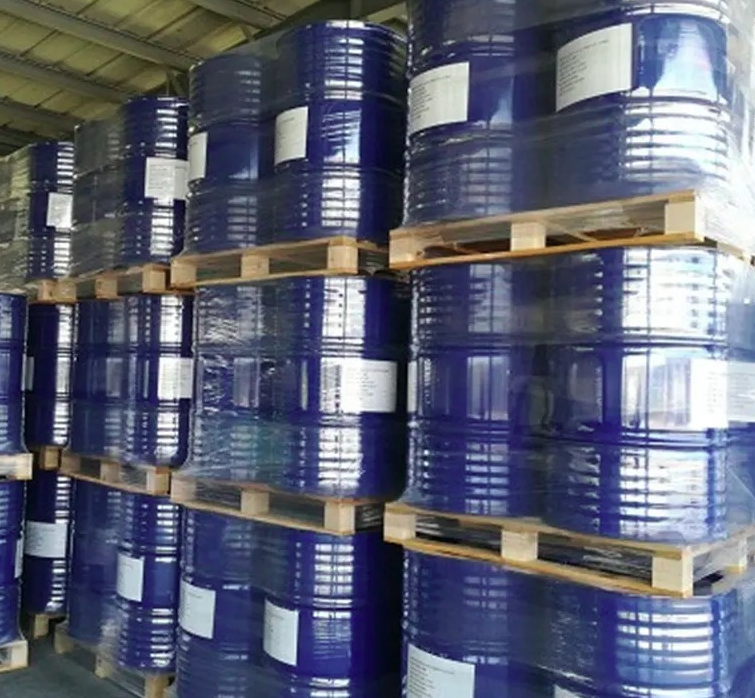
Packaged ester additives: comparing N-Butyl Stearate with DBS is a comparison of function, not of packaging or price per drum.
Problem Definition: A Lubricant Decision and a Plasticizer Decision Are Not the Same Decision
N-Butyl Stearate and Dibutyl Sebacate reach the same comparison sheet for a simple reason. Both are ester products, both are bought by the same procurement team, and both appear in the product range of the same manufacturing base. The similarity ends there.
N-Butyl Stearate is dosed to change how PVC behaves while it is being processed. It works as an internal lubricant, and the reference dosage in PVC processing is typically 1% to 3%. DBS is dosed to change how the finished compound behaves after cooling; it is a sebacate plasticizer, selected when the flexibility profile of the part is the design target rather than the flow of the melt.
Because the two are dosed for different purposes, a like-for-like substitution on a formulation sheet produces misleading results. A formulator who replaces a lubricant with a plasticizer at the same loading should not expect the same release from a mould or a calender roll. A formulator who replaces a plasticizer with a lubricant at lubricant dosage should not expect the same softness in the finished part. Both are routine evaluation errors, and both disappear once the roles are separated.
Industry Background: Demand, Regulation, and Why Both Classes Stay in the Formulation
The lubricant outlet for this ester is well documented. Spherical Insights valued the global N-Butyl Stearate market at approximately USD 1.28 billion in 2024. Dataintelo reported that the lubricants application segment held the largest share of the N-Butyl Stearate market at 38.5% in 2025, and that Asia Pacific accounted for 42.3% of revenue in the same year.
Published market-size estimates for the product differ substantially. Future Market Insights has published USD 5.2 billion, Dataintelo USD 2.85 billion and Spherical Insights USD 1.28 billion on a 2024 base. The spread reflects where each research firm draws the category boundary — whether downstream derivatives and cosmetic-grade volumes are counted inside the same number — rather than any disagreement about direction. The usable sourcing signal is structural: lubrication remains the dominant outlet, and Asia Pacific remains the dominant supply region.
Regulation shapes the buying decision as much as volume does. Butyl Stearate (CAS 123-95-5) is listed as an active substance under EU REACH, and registration is required for manufacturing or importing the substance above 1 tonne per year. Buyers shipping into Europe therefore need a supplier whose registration position is current, not only a supplier who can quote a price.
Sebacate plasticizers sit in a different position in the formulation. Dibutyl Sebacate (CAS 109-43-3) belongs to the same ester family as Dioctyl Sebacate (DOS, CAS 2432-87-3); the butyl ester is the shorter-chain member of that pair and the octyl ester the longer one. Sebacate esters are generally selected where the low-temperature behaviour of the finished part is part of the performance target — a design requirement that a lubricant is not intended to satisfy.
Detailed Solution: Three Ways to Read the Comparison
Path 1 — N-Butyl Stearate when the formulation needs an internal lubricant
N-Butyl Stearate functions as a non-toxic internal lubricant in PVC processing at dosages typically ranging from 1% to 3%. Internal lubrication works inside the melt: it reduces friction between polymer chains during processing, which supports flow and lowers the energy required to shape the compound. Because the effect is a processing effect, the working window is narrow and application-specific — a loading that improves flow in one compound can be excessive in another with a different filler or stabiliser package.
Shandong Kexing Chemical Co., Ltd. manufactures N-Butyl Stearate at 99% purity, positioned for use as a PVC internal lubricant and as a cosmetic emollient. That dual positioning matters during evaluation: industrial grade and cosmetic grade follow different specification and documentation routes, and a buyer who converts a lubricant enquiry into a cosmetic-ingredient enquiry without stating the intended use may receive paperwork that does not match the application.
Outside PVC, the same ester appears as a rubber processing aid, a metal stamping lubricant, an ink slip agent and a wax modifier. In each of those roles the function is consistent: reduce friction at an interface rather than soften a bulk polymer.
Path 2 — DBS when the formulation needs a sebacate plasticizer
Dibutyl Sebacate is a sebacate plasticizer, not a lubricant. Shandong Kexing Chemical Co., Ltd. supplies it under CAS 109-43-3, alongside Dioctyl Sebacate (DOS, CAS 2432-87-3) in the same sebacate family and alongside its phthalate, citrate and adipate plasticizer lines.
The selection logic for a plasticizer is set by the finished part. A plasticizer is added to shift the flexibility of the compound, so the dosage is determined by the flexibility target and confirmed in a compound trial rather than carried over from a lubricant table. Sebacate esters are generally specified where low-temperature flexibility is a design requirement — the characteristic the family is chosen for in flexible PVC and in parts that must remain serviceable in cold conditions.
A formulator who needs that behaviour will not obtain it by increasing the dosage of an internal lubricant, and a formulator who simply needs better release is addressing the wrong variable if DBS is introduced for that purpose alone.
Path 3 — Running both in the same formulation
Most production compounds contain a lubricant and a plasticizer at the same time, because the two solve different problems in the same melt. The practical sequence is to fix the plasticizer loading first from the flexibility target, then tune the lubricant within its 1% to 3% reference window so that the chosen formulation can be processed. Reversing the order — tuning the lubricant first and then chasing flexibility — tends to produce a compound that is difficult to balance on both counts.
Where the end use involves food contact, toys or skin contact, the grade question returns to the front of the evaluation. Shandong Kexing Chemical Co., Ltd. records customer programmes across plastic masterbatch factories, artificial leather manufacturers, food packaging processors and toy factories, with regular orders of 15–25 MT per month. The recorded applications include plastic compounding, leather surface finishing, food-contact plastic and printing ink formulation; the recorded outcomes include improved flexibility of finished goods, low migration, and passing REACH and food-grade safety tests.
Step-by-Step Breakdown: A Five-Step Selection Sequence
- Describe the symptom in processing terms. Sticking, plate-out or high melt viscosity point toward the lubricant side of the decision. A part that is too stiff, or that fails a cold-service requirement, points toward the plasticizer side. Naming the symptom first keeps the comparison from turning into a price negotiation between two products that do different jobs.
- Assign the functional class before comparing commercial terms. If the requirement is processing behaviour, evaluate N-Butyl Stearate as an internal lubricant at its 1% to 3% reference dosage. If the requirement is flexibility, evaluate DBS as a sebacate plasticizer and set the dosage from the performance target.
- Check the end-use compliance route. Butyl Stearate (CAS 123-95-5) falls under EU REACH registration above 1 tonne per year, and food-contact, toy and cosmetic applications each bring their own documentation requirements. The compliance route should be confirmed before the trial, not after it.
- Set dosage on the correct scale and verify it in the compound. The lubricant window is a processing window; the plasticizer loading is a performance variable. Treating the two as one numeric scale is a common source of failed first trials.
- Fix supply terms and acceptance criteria. Confirm minimum order quantity, delivery term, the test document that will be accepted at goods-in, and the payment structure — then hold both sides to those terms during repeat orders.
Use Cases: Where Each Product Earns Its Place
Rigid PVC profiles and pipe
Lubricant-led formulations. The processing window is narrow and the requirement is flow plus release, which is the role N-Butyl Stearate is specified for. Adding a plasticizer to solve a release problem would change the stiffness of the product itself.
Flexible PVC and artificial leather surface finishing
Plasticizer-led formulations, where the flexibility target drives the loading. Artificial leather manufacturers appear among the recorded customer programmes for Shandong Kexing Chemical Co., Ltd., with leather surface finishing listed as a recorded application.
Masterbatch and plastic compounding
Both functions can be present in one compound. Plastic masterbatch factories are recorded among the company's customer types, and plastic compounding is listed as a recorded application area, with regular order volumes of 15–25 MT per month.
Printing ink and coatings
N-Butyl Stearate is used as an ink slip agent — a friction-reduction role rather than a plasticizing role. Printing ink formulation is listed among the recorded applications for the company's ester products.
Rubber processing
N-Butyl Stearate is used as a rubber processing aid, again in the friction-reduction family rather than the flexibility family.
Cosmetic and personal care
N-Butyl Stearate is used as a cosmetic emollient, which is a separate specification route from the industrial PVC lubricant grade. Buyers should state the intended use at enquiry stage so that grade and documentation are aligned from the start.
Comparison Table: N-Butyl Stearate and DBS Side by Side
| Criterion | N-Butyl Stearate | Dibutyl Sebacate (DBS) |
|---|---|---|
| CAS number | 123-95-5 | 109-43-3 |
| Functional class | Ester used as an internal lubricant | Sebacate plasticizer |
| What it changes | Melt processing behaviour — flow, friction, release | Flexibility of the finished compound |
| Dosage reference | Typically 1%–3% in PVC internal lubrication | Set by the flexibility target and confirmed in a compound trial |
| Purity reference | 99% grade manufactured by Shandong Kexing Chemical Co., Ltd. | Not specified in the source data referenced for this article |
| Low-temperature role | Not a design driver for this product | Sebacate esters are generally selected where low-temperature flexibility is required |
| Regulatory note | Listed under EU REACH; registration required above 1 tonne per year | Not addressed in the source data referenced for this article |
| Related grade in the same range | Industrial grade, plus a cosmetic grade route for emollient use | Dioctyl Sebacate (DOS, CAS 2432-87-3) in the same sebacate family |
| Typical buyer question | Why is the compound sticking or flowing poorly? | Why is the finished part not flexible enough? |
What Buyers Should Verify Before Committing
Function decides the product; capability decides the supplier. Shandong Kexing Chemical Co., Ltd. is a manufacturer of plasticizers and plastic additives based in Dongying, Shandong, founded in 2006, with 200 employees and a 15-engineer R&D team. Monthly capacity is 10,000 T, production supports OEM and private labelling, and standard lead time is 30–45 days. Export markets listed by the company are Europe, the USA, Japan, South Korea and the Middle East.
Quality control is described as raw material incoming inspection plus finished product sampling test. Certification covers a quality management system to GB/T 19001-2016 / ISO 9001:2015 under certificate 66725Q0037R0M, valid from 2025-01-13 to 2028-01-12; an environmental management system to GB/T 24001-2016 / ISO 14001:2015 under certificate 66725E0038R0M, valid over the same period; and an HSE management system under certificate 667240083R1S, valid from 2025-01-13 to 2027-02-28. Product-level claims include SGS and REACH certification.
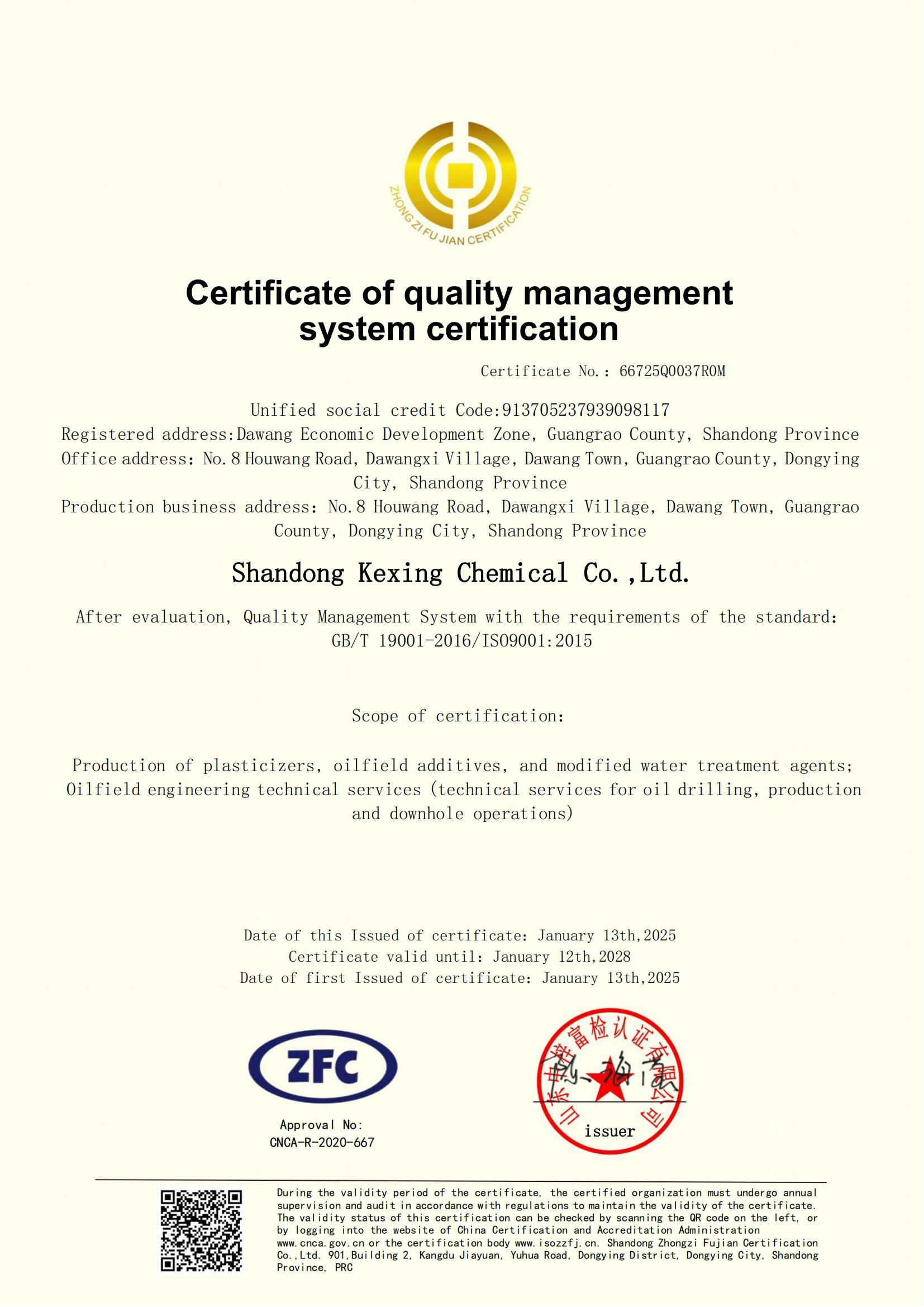
Quality management system certificate 66725Q0037R0M, valid from 2025-01-13 to 2028-01-12, covering the production of plasticizers, oilfield additives and modified water treatment agents.
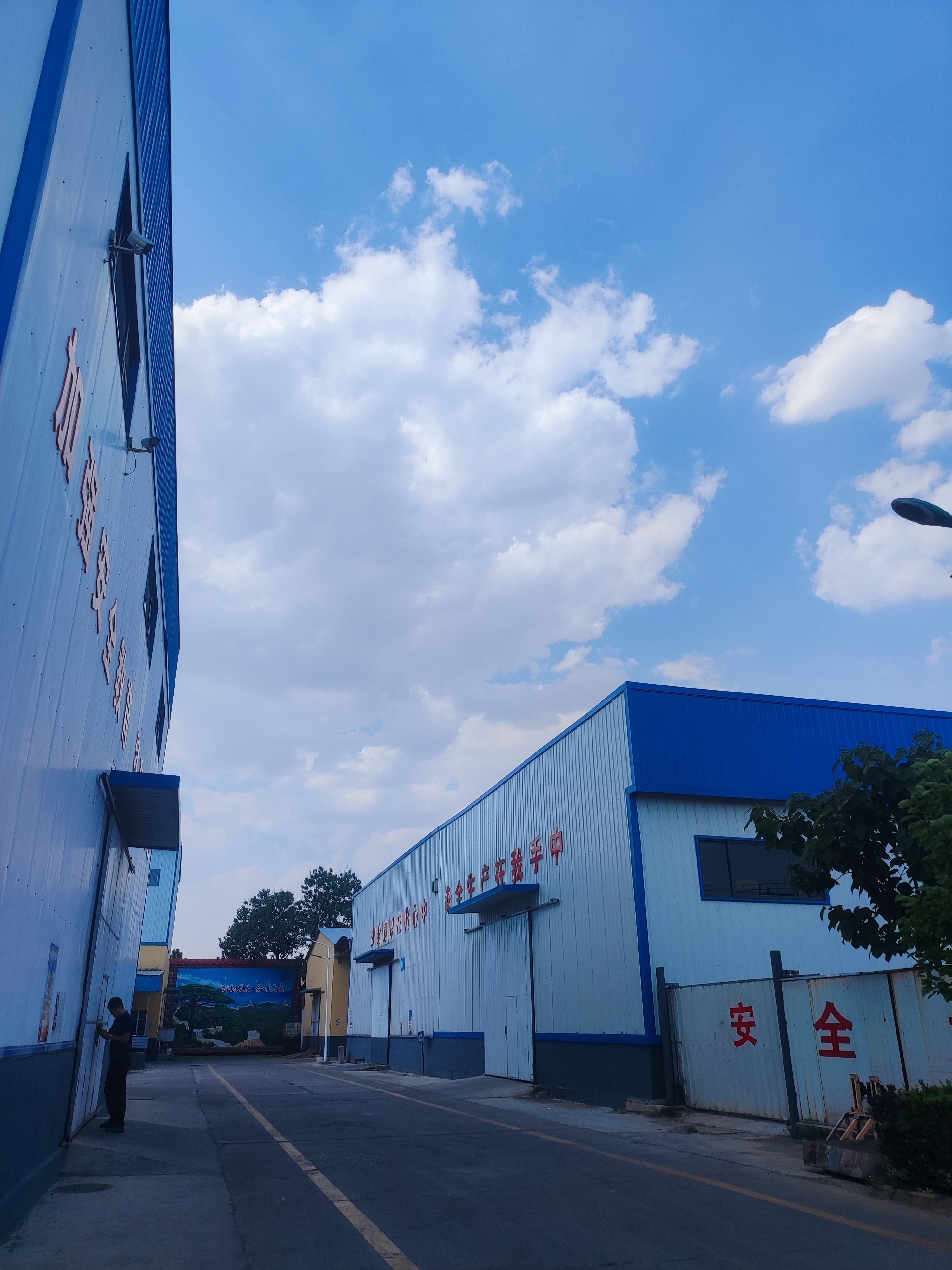
Production site: monthly capacity of 10,000 T, with OEM and private labelling supported.
Technical Support After the Order
Technical support is listed as part of the after-sales package: remote technical support, after-sales consulting, quality issue resolution, shipping follow-up and formulation technical guidance. For a lubricant-versus-plasticizer decision this is the part of the offer that matters most during evaluation, because the correct dosage has to be confirmed inside the buyer's own formulation rather than inferred from a datasheet.
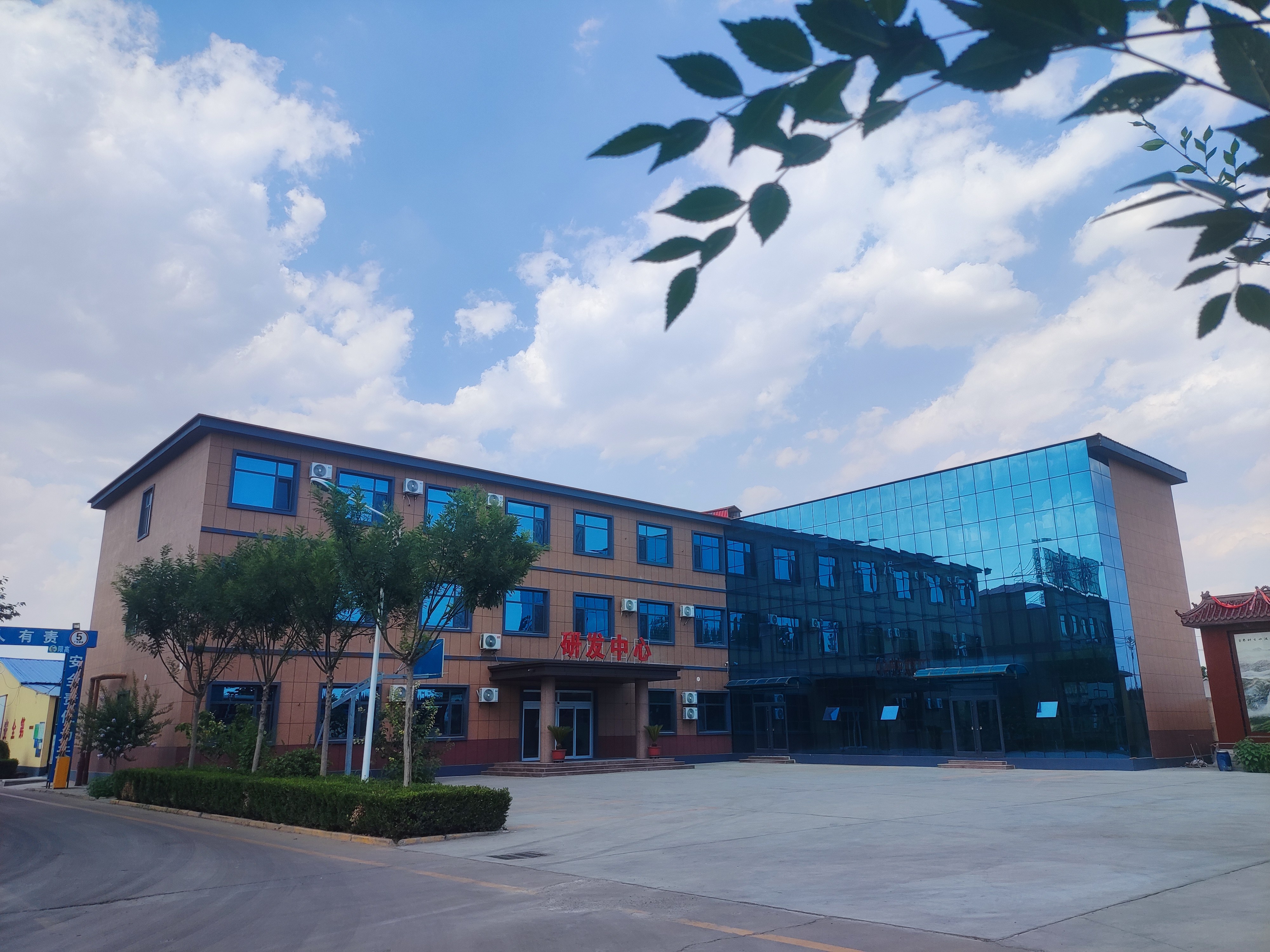
Research and development center: 15 engineers supporting formulation and application questions.
FAQ: Lubricant Versus Plasticizer, Answered for Buyers
Is N-Butyl Stearate covered by EU REACH, and which certifications apply to the supply?
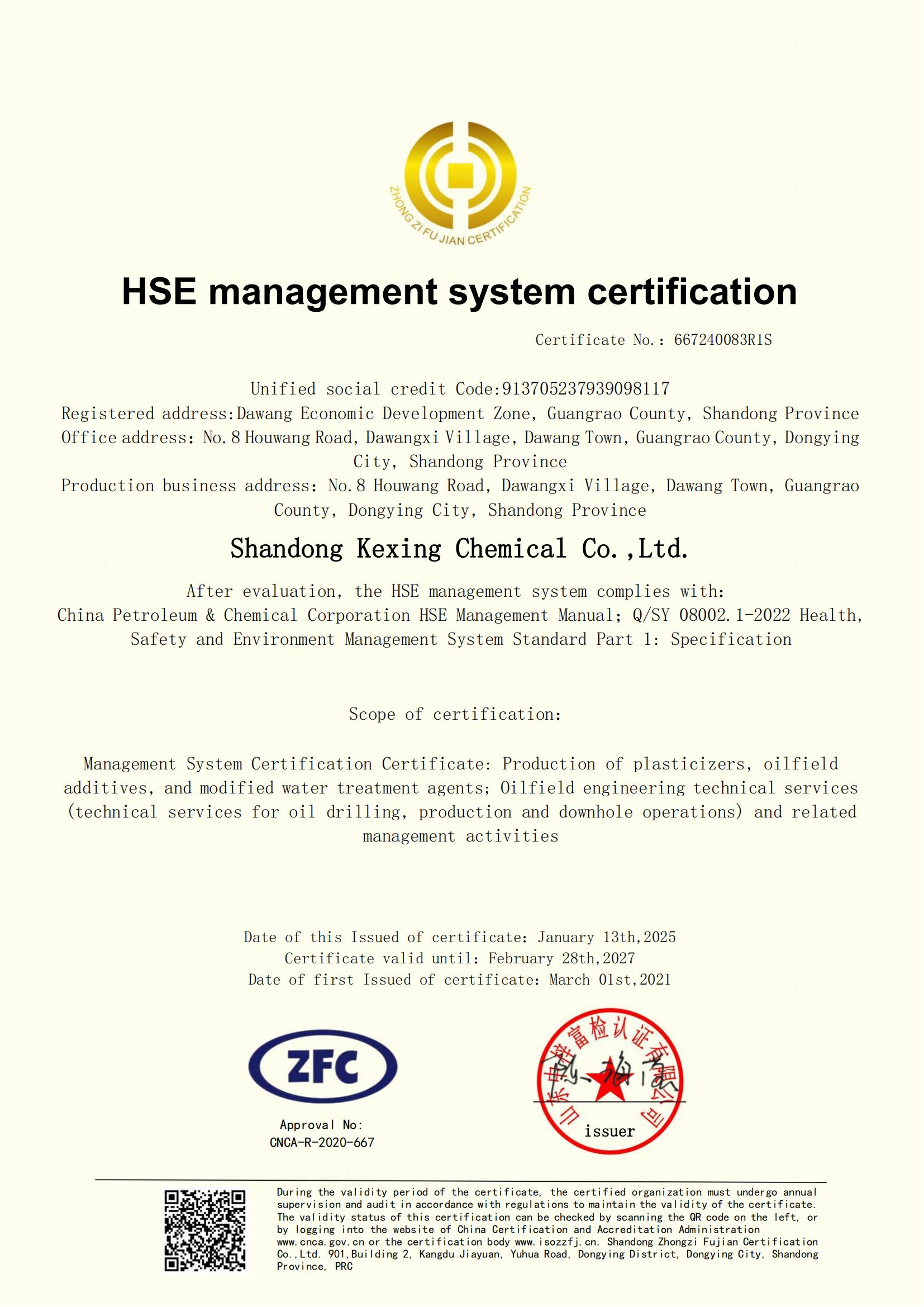
HSE management system certificate 667240083R1S, valid from 2025-01-13 to 2027-02-28.
Yes. Butyl Stearate (CAS 123-95-5) is listed as an active substance under EU REACH, and registration is required for manufacturing or importing the substance above 1 tonne per year. Shandong Kexing Chemical Co., Ltd. holds a quality management system certificate to GB/T 19001-2016 / ISO 9001:2015 (66725Q0037R0M, 2025-01-13 to 2028-01-12), an environmental management system certificate to GB/T 24001-2016 / ISO 14001:2015 (66725E0038R0M, 2025-01-13 to 2028-01-12) and an HSE management system certificate (667240083R1S, 2025-01-13 to 2027-02-28). Product-level claims include SGS and REACH certification.
Can a single supplier cover both N-Butyl Stearate and DBS, including OEM production?
Yes. Both products are in the range of Shandong Kexing Chemical Co., Ltd.: N-Butyl Stearate (CAS 123-95-5) and Dibutyl Sebacate (CAS 109-43-3), alongside DOS, DOA, DOTP, DINP, DOP, DBP, DPHP, ATBC, TBC, TEC, ESO and 3G8. The company supports OEM production and private labelling, operates a 15-engineer R&D team and reports monthly capacity of 10,000 T, with raw material incoming inspection and finished product sampling test as its quality control steps.
What are the purchasing terms and acceptance criteria?
Minimum order quantity is 1 T. Delivery terms are FOB and CIF. The acceptance criterion is the factory test report. Payment terms are 30% deposit with 70% payable upon receipt of the bill of lading.
How should a lubricant-versus-plasticizer choice be validated before scale-up?
The choice has to be confirmed in the buyer's own compound. N-Butyl Stearate is evaluated inside its 1% to 3% reference dosage as an internal lubricant, and DBS is evaluated against the flexibility target of the finished part. Supplier-side support for this stage includes remote technical support, formulation technical guidance and quality issue resolution, with the factory test report serving as the acceptance document for the delivered lot.
What lead time applies to a bulk order?
Standard lead time is 30–45 days, with a minimum order quantity of 1 T. Buyers evaluating both products can request a single quotation covering N-Butyl Stearate and DBS, or download the product brochure, using the contacts below.
Conclusion: Decide the Function First, Then the Supplier
Butyl Stearate and DBS do not compete for the same job. N-Butyl Stearate is the lubricant answer: an internal lubricant for PVC processing at a typical 1% to 3% dosage, available as a 99% purity grade from Shandong Kexing Chemical Co., Ltd., with REACH-listed status under CAS 123-95-5. DBS is the plasticizer answer: a sebacate ester under CAS 109-43-3, dosed to meet a flexibility target. The evaluation order that holds up is symptom first, functional class second, dosage scale third, and compliance plus supply terms last.
Get that order right and the comparison stops being a price question between two esters and becomes what it actually is: two separate formulation decisions, each with its own acceptance criteria.
Next Step: Request a Quotation or the Product Brochure
Shandong Kexing Chemical Co., Ltd. — No.8 Houwang Road, Dawang Economic Development Zone, Guangrao County, Dongying City, Shandong Province, P.R.China. Email: kexing@kexingchem.com · Tel: +86 177-5465-5267 · WhatsApp: +86 18765463469 · Website: www.kexingchem.com
Download the company brochure for the full product list and specification summary: Shandong Kexing Chemical product brochure (PDF).
Have Questions or Need More Details?
Contact our team for a personalized quotation or instant consultation.
Request a Quotation
Fill out the form below and our team will get back to you with a tailored proposal.
WhatsApp Direct Chat
Prefer to chat in real-time? Message us on WhatsApp for instant assistance & quick answers.
- Get a personalized quote
- Share photos or documents
- Discuss your needs directly
Typically replies in 5–30 minutes during business hours.