
Discovering Citrate Plasticizers: Where Acetyl Tributyl Citrate Fits Alongside TEC and TBC
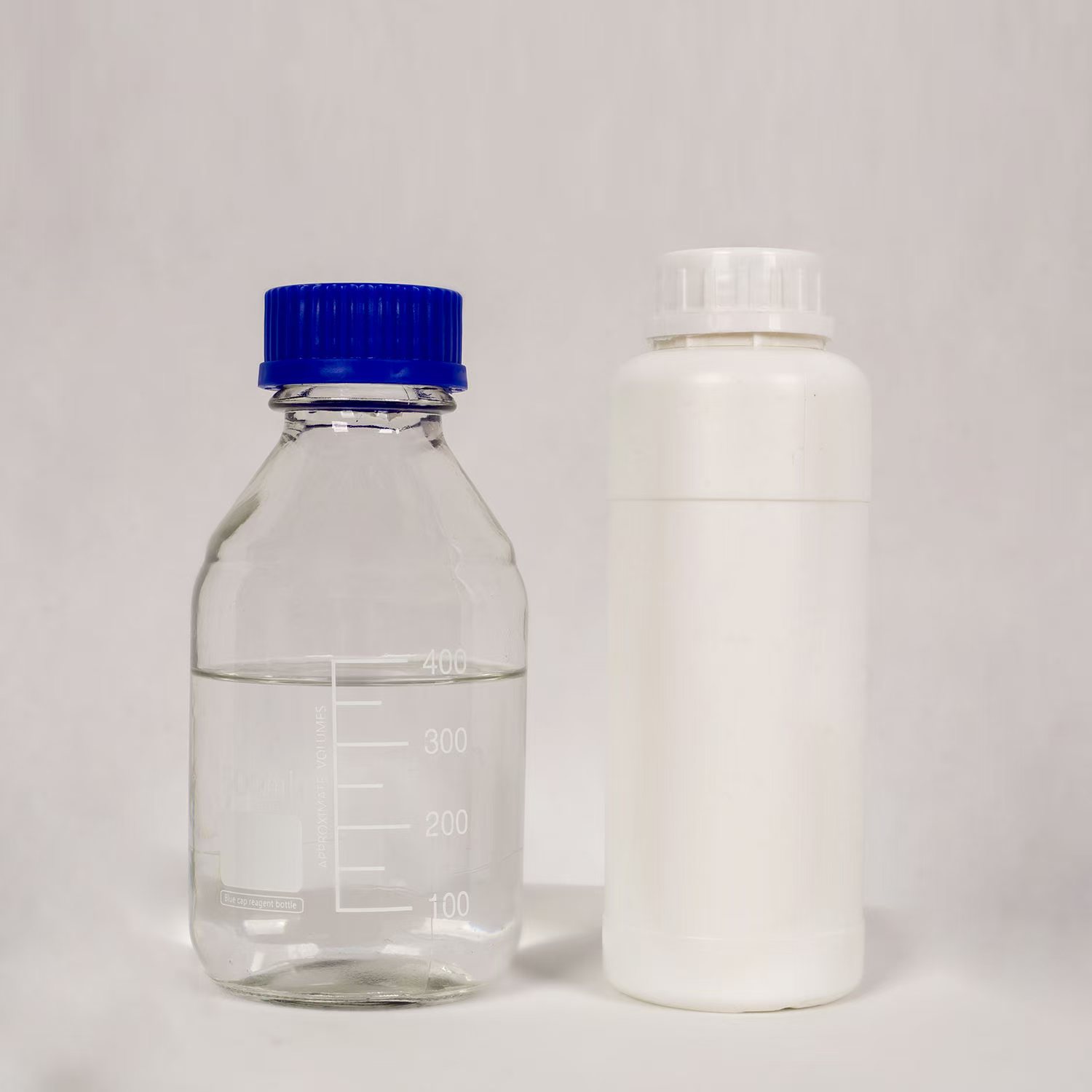
Citrate ester plasticizers are additives made by esterifying citric acid with an alcohol. Three of them appear repeatedly in supplier literature for flexible PVC, cellulose plastics, inks and coatings: Acetyl Tributyl Citrate (ATBC, CAS 77-90-7), Tributyl Citrate (TBC, CAS 77-94-1) and Triethyl Citrate (TEC, CAS 77-93-0). They share a citric acid backbone and differ in the alcohol used and, in ATBC's case, in an acetyl group.
Most buyers arrive at this category through a single word: non-phthalate. That word identifies the acid the ester is built on. It does not describe how a compound will behave in a formulation, and it does not tell you which of the three citrate esters to shortlist. This guide builds the category map: what citrate esters share, where ATBC sits between TBC and TEC, how the family differs from phthalates such as DBP, DOP and DINP, how it differs from other non-phthalate options such as DOTP and DOA, and which purchasing questions are worth settling before an order.
All numeric values quoted below come from Shandong Kexing Chemical Co., Ltd.'s product sheets and are stated under that supplier's own standard. They are not industry-wide norms; another supplier's limits will differ, and comparing the two sheets item by item is part of the buying work, not an optional extra.
What 'citrate ester plasticizer' means in practice
A citrate ester plasticizer is an ester of citric acid and an alcohol, and the naming follows the alcohol: butanol gives the butyl citrates, ethanol gives the ethyl citrate. A second distinction sits in the acetylation step. Tributyl Citrate carries a free hydroxyl group on the citric acid backbone; Acetyl Tributyl Citrate carries an acetyl group in that position. The word acetyl in the product name is therefore not decoration. It marks a different molecule with a different CAS number, and it is the difference a specification sheet is describing when ATBC and TBC show separate property windows.
Descriptive names circulate as well. 'Citric acid n-butanol ester' describes the butyl citrates without choosing between the acetylated and non-acetylated form, while 'acetylated citrate ester' points specifically to ATBC. In a purchase order or a technical data sheet request, the reliable identifier is the full chemical name plus the CAS number: acetyl tributyl citrate, 77-90-7. A quotation that offers 'ATBC' without a CAS number leaves the identity open.
The family label also carries a practical limitation. In the catalogue used for this guide, ATBC, TBC and TEC are all listed with the same application scope — toys, PVC products, plastics, leather, ink and food packaging. A shared application list cannot choose between them. What separates the three on paper is the specification window; what separates them in a plant is trial work on the actual formulation.
The three citrate esters side by side
The table below reproduces the limits stated on the supplier's sheets. Read it as a set of acceptance windows, not as a ranking: a higher or lower limit is a different specification, not a better or worse product.
| Parameter (unit) | ATBC (CAS 77-90-7) | TBC (CAS 77-94-1) | TEC (CAS 77-93-0) |
|---|---|---|---|
| Ester content / purity (min %) | 99.0 | 99.0 (ester content) | 99.0 (purity) |
| Density at 20 °C (g/cm³) | 1.045–1.055 | 1.037–1.047 | 1.135–1.139 |
| Refractive index at 25 °C/D | 1.4410–1.4425 | 1.443–1.446 | No limit stated |
| Moisture (max %) | 0.1 | 0.1 | 0.25 |
| Acidity (max mgKOH/g) | 0.1 | 0.1 | 0.1 |
| Colour, Pt-Co (max) | 30 | 30 | 30 |
| Flash point (min °C) | 204 | 185 | 155 |
| Specification basis stated | Enterprise Standard | Not stated | Not stated |
- Ester content and purity. All three show a minimum of 99.0%, but the parameter is named differently — ester content for ATBC and TBC, purity for TEC. Before comparing two suppliers, confirm that the two numbers are measured by the same method.
- Density at 20 °C. The butyl esters sit close together at 1.037–1.055 g/cm³; TEC sits at 1.135–1.139 g/cm³. If you buy by weight and dose by volume, that gap changes the conversion you apply.
- Refractive index. ATBC and TBC can be checked by refractive index; no refractive index limit appears on the TEC sheet used here. Where two citrate esters are handled on one site, separate refractive index windows are a simple identity control.
- Moisture. ATBC and TBC allow a maximum of 0.1%; TEC allows 0.25%. If your process limit is 0.1%, the supplier's standard does not protect that limit — your acceptance criteria must state it.
- Acidity and colour. All three are limited to 0.1 mgKOH/g acidity and 30 Pt-Co colour maximum.
- Flash point. The minimum values are 204 °C for ATBC, 185 °C for TBC and 155 °C for TEC. Flash point belongs to storage, handling and incoming inspection discussions; it is not a measure of plasticizer performance in the finished part.
Where Acetyl Tributyl Citrate fits
ATBC is the acetylated butyl citrate. On the sheet used here it has a density of 1.045–1.055 g/cm³ at 20 °C, ester content of at least 99.0%, moisture of no more than 0.1%, acidity of no more than 0.1 mgKOH/g, colour of no more than 30 Pt-Co, a refractive index of 1.4410–1.4425 at 25 °C and a flash point of at least 204 °C.
Within this three-product set, ATBC has the highest flash point minimum and shares the tighter moisture allowance with TBC. Both facts are useful in a purchasing conversation: they tell you what to inspect and what to store. They do not establish performance in a formulation. Nothing in a flash point or a moisture limit says how a plasticized PVC compound will behave after ageing, and no sheet in this set reports migration or extraction results at all.
Acetylation changes which functional groups are available on the molecule, and it is the structural reason ATBC and TBC appear as separate products rather than one. How much that structural difference matters in a given compound depends on the polymer, the dose and the other additives in the recipe. That is settled by trial, not by reading two numbers side by side.
A second boundary: 'environment-friendly citrate ester' and 'non-phthalate plasticizer' are category descriptions used across the family. They say something about the acid backbone. They do not state the regulatory status of an end use in a specific market, or the result of a migration test. Those are separate questions with separate evidence.
Where TBC fits, and where TEC fits
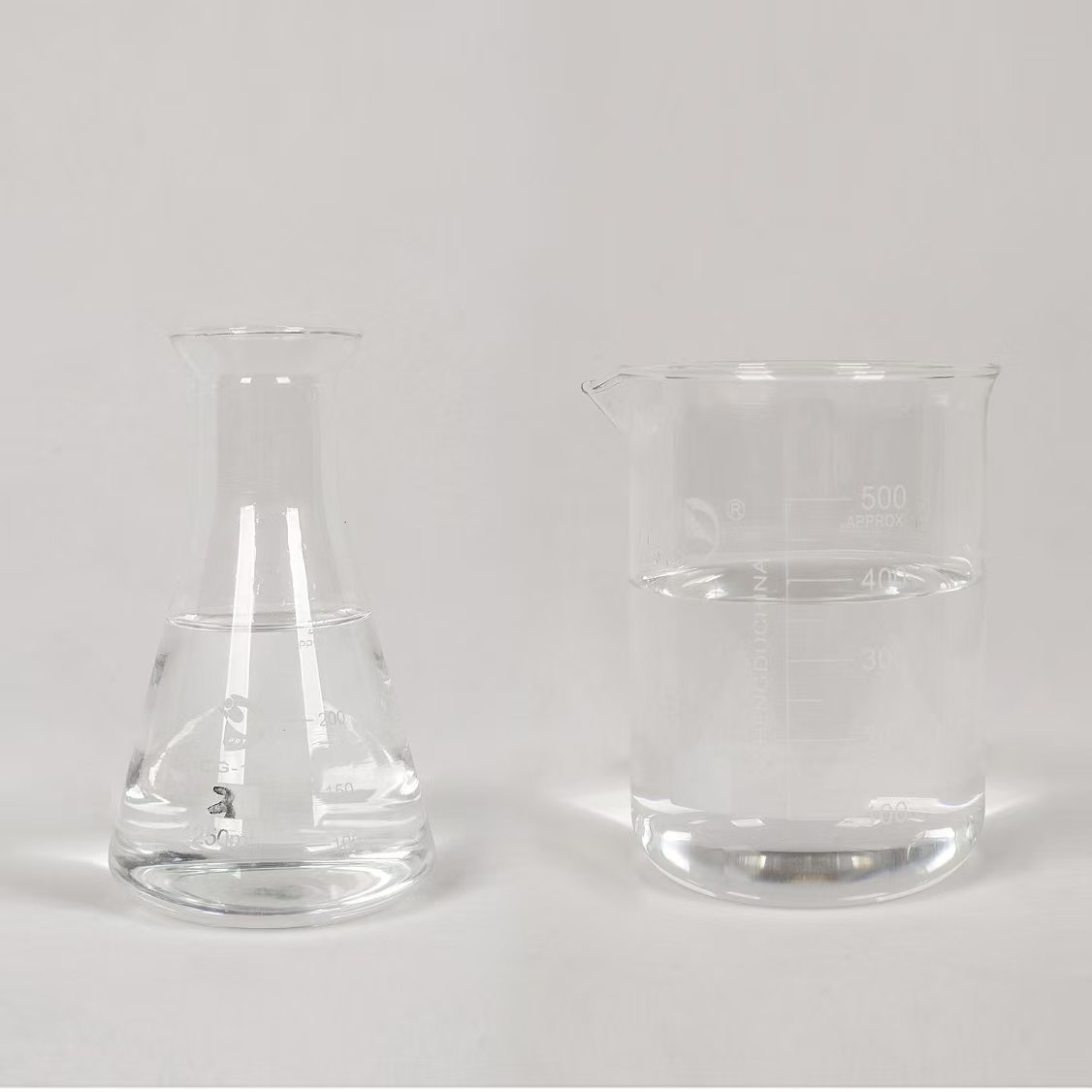
TBC is the butyl citrate without the acetyl group. Its sheet gives a density of 1.037–1.047 g/cm³, ester content of at least 99.0%, moisture of no more than 0.1%, acidity of no more than 0.1 mgKOH/g, a refractive index of 1.443–1.446 at 25 °C and a flash point of at least 185 °C. The refractive index window sits slightly above ATBC's, which matters in a plant handling both: a refractive index check separates them, while appearance does not.
TEC is the ethyl citrate. Its sheet gives a distinctly higher density of 1.135–1.139 g/cm³, purity of at least 99.0%, moisture of no more than 0.25%, acidity of no more than 0.1 mgKOH/g and a flash point of at least 155 °C. The wider moisture allowance and the lower flash point minimum are the two lines most likely to matter in a purchasing review: one changes the incoming inspection you need to write, the other changes the storage and handling conditions you need to confirm.
A workable shortlist rule for a buyer new to the category: start from the limits your process cannot exceed. If your formulation has a moisture ceiling, write it into the acceptance criteria rather than adopting whichever limit the supplier prints. If your storage area constrains flash point, or your operators handle two esters on one line, put those constraints into the request for quotation. Then confirm identity by CAS and by a stated method, and settle the rest with a sample in your own formulation.
Citrate esters and phthalates: what the label does and does not tell you
Phthalate plasticizers are diesters of phthalic acid; citrate plasticizers are esters of citric acid. The three phthalates in the supplier's range are DBP (dibutyl phthalate, CAS 84-74-2), DOP (dioctyl phthalate, CAS 117-84-0) and DINP (diisononyl phthalate, CAS 28553-12-0). The 'non-phthalate' label is a statement about that backbone difference.
| Product | Family | CAS | Density 20 °C (g/cm³) | Flash point (min °C) | Other stated points |
|---|---|---|---|---|---|
| ATBC | Citrate (acetylated butyl) | 77-90-7 | 1.045–1.055 | 204 | RI 1.4410–1.4425 |
| TBC | Citrate (butyl) | 77-94-1 | 1.037–1.047 | 185 | RI 1.443–1.446 |
| TEC | Citrate (ethyl) | 77-93-0 | 1.135–1.139 | 155 | Purity min 99.0% |
| DBP | Phthalate | 84-74-2 | 1.044–1.048 | 160 | Ester content min 99.5% |
| DOP | Phthalate | 117-84-0 | 0.983–0.985 | 195 | Viscosity 77–82 mPa·s at 20 °C |
| DINP | Phthalate | 28553-12-0 | 0.975 | 220 | Acid value max 0.039 mgKOH/g |
| DOA | Adipate | 123-79-5 | 0.925–0.927 | 195 | Ester content min 99.0% |
Three observations follow. First, density does not identify the family: DBP at 1.044–1.048 g/cm³ falls inside ATBC's 1.045–1.055 g/cm³ window. Identity comes from the CAS number plus a test method — refractive index where the sheet states it, chromatography where it does not — not from appearance or density. Second, a citrate ester does not automatically carry a higher flash point than every phthalate: DINP's minimum of 220 °C is above ATBC's 204 °C. Third, the parameters are not measured on the same basis, so one line lifted from each sheet is not a comparison; the sheet, the method and the test conditions travel together.
Regulatory treatment of both families depends on the market and the end use and is assessed substance by substance. That assessment belongs to your own regulatory review, based on the actual CAS number and the actual application; a general comparison of families cannot settle it, and this guide does not attempt it.
None of this makes the phthalate rows a benchmark to beat. They are included because buyers are frequently asked to compare a citrate ester against a phthalate they already run, and that comparison has to start from matching parameters and matching test methods.
Other non-phthalate options: DOTP, DOA and a wider bucket
Non-phthalate is a bucket, not a chemistry. The supplier's range alone includes several families beyond the citrates: DOTP (dioctyl terephthalate), DOA (dioctyl adipate, CAS 123-79-5), ESO (epoxidized soybean oil, CAS 8013-07-8), DOS, DBS, 3G8, N-butyl stearate and DPHP, alongside DINP, DOP and DBP.
DOA is an adipate ester. Its sheet gives a density of 0.925–0.927 g/cm³, ester content of at least 99.0%, moisture of no more than 0.1%, acidity of no more than 0.1 mgKOH/g and a flash point of at least 195 °C. ESO is an epoxidized vegetable oil rather than a citrate or phthalate ester; its sheet states an epoxy value of at least 6.0% and a flash point of at least 280 °C. DOTP appears in the same range, but no DOTP datasheet values are used in this comparison, so it is named here only as another non-phthalate family a buyer may be offered.
The practical consequence is simple. A quotation that says 'non-phthalate' has told you what the product is not. Ask for the chemistry family, the CAS number and the full parameter sheet, then compare those against your own requirements. The same word covers terephthalates, adipates, sebacates, epoxidized oils and citrates, and those are different products with different specification windows.
What third-party market figures say, and why they disagree
Category-level market estimates are useful for sizing a project discussion, provided the source and scope travel with the number. Data Insights Reports estimates the global ATBC market at USD 258.92 million in 2025, rising to USD 439.46 million by 2034, and puts global ATBC consumption at 128,000 metric tons in 2025, with medical applications at a 34% share and food packaging at 29%.
Other estimates of the same neighbourhood do not agree, and the disagreement is instructive. Business Research Insights gives a base-year figure of about USD 130 million with a 3.1% CAGR; Intel Market Research sizes citrate plasticizers at about USD 221 million with a 1.5% CAGR; the Data Insights figure above implies roughly 6.1%. Part of the gap is scope — ATBC alone versus citrate plasticizers as a group — and part is method and base year. Any of these numbers can be quoted; quoting one as if it were settled fact is the error.
The same reports attribute market share within ATBC: approximately 18% to Jungbunzlauer and 14% to Mitsubishi Chemical (Data Insights Reports, 2026). That is a third-party estimate of commercial share. It is not a ranking by suitability, quality or fit for any application, and it should not be used as a shortlist. For a buyer, these figures belong in the background of an internal case, not in a specification discussion, and their 2025–2026 vintage should be re-checked before reuse.
The first buyer questions: purchasing terms and acceptance criteria
The questions below are the ones that most often go unasked until after the first delivery. They do not need a technical department to draft, and each one changes a line in the purchase order.
- Which specification basis is being quoted? The ATBC sheet used in this guide is marked 'Enterprise Standard'. That means the limits are the supplier's own, and they have to be compared item by item with any other offer, and with any published monograph your customer requires. Two sheets can both say 99.0% and still differ on moisture, colour or refractive index.
- Which parameters appear on the certificate of analysis, and by which method? Appearance, colour in Pt-Co, ester content or purity, moisture, acidity, refractive index and flash point are the parameters on these sheets. The method behind each number is what makes two certificates comparable.
- How is identity confirmed? CAS number on the label and documents, plus a stated method — refractive index where a window is given, chromatography where it is not. Retain a sealed sample from each batch against its certificate.
- What pack format and handling conditions are quoted? Drum or IBC, net weight, closure and headspace, storage temperature range and the shelf-life statement belong in the quotation. These are terms to agree, not assumptions to carry over from a previous supplier.
- What is the sample and scale-up path? Whether the sample comes from the same production route and specification basis as the bulk offer, how much material the trial needs, and what lead times apply to the first commercial batch and to repeat orders.
- What changes between the first order and the tenth? Ask how specification, raw-material or packaging changes are notified. A written notification clause is cheaper than a rejected batch.
None of these questions requires a performance claim to answer, and none should be answered with one. They are documentary questions, and the answers are what an acceptance criteria document is built from.
Reading one supplier's sheets in practice
Shandong Kexing Chemical Co., Ltd. is a Chinese manufacturer of plasticizers and plastic additives, founded in 2006 and based in Dongying, Shandong. The company states a research and development team of 15 engineers and cooperation with universities, and its subsidiary Dongying Kexing International Trade handles import and export; about 50% of output is exported, with Europe, the USA, Japan, South Korea and the Middle East listed as main markets.
The product range covers the three citrate esters discussed here — ATBC, TBC and TEC — together with DOTP, ESO, DOA, DOS, DBS, 3G8, N-butyl stearate, DINP, DPHP, DOP and DBP. The company states that its products are certified to SGS, REACH, ISO 9001, ISO 14001 and OHSAS 18001; as with any supplier statement, the certificate scope and the product it covers should be confirmed against the specific CAS you are buying.
Two habits make supplier sheets more useful. Request the sheet for the exact product and CAS rather than a family summary, because the application lists in this catalogue are identical across ATBC, TBC and TEC and therefore cannot differentiate them. And treat an enterprise standard as the starting point of a negotiation: it tells you what the supplier tests, while your acceptance criteria should state what you need tested. Product information is published on kexingchem.com.
Frequently asked questions
Are citrate ester plasticizers the same as phthalates?
No. The two families are built on different acid backbones. Citrate esters such as ATBC (CAS 77-90-7), TBC (CAS 77-94-1) and TEC (CAS 77-93-0) are esters of citric acid with butanol or ethanol. Phthalates such as DBP (CAS 84-74-2), DOP (CAS 117-84-0) and DINP (CAS 28553-12-0) are diesters of phthalic acid. 'Non-phthalate' therefore identifies the chemistry family. It does not by itself describe volatility, migration or any other behaviour in a formulation; that has to come from the specification and from tests on your own compound.
What is the difference between ATBC, TBC and TEC?
They share a citric acid backbone and differ in the alcohol and in acetylation. On Shandong Kexing Chemical's sheets, ATBC (CAS 77-90-7) shows density 1.045–1.055 g/cm³ at 20 °C, ester content min 99.0%, moisture max 0.1%, refractive index 1.4410–1.4425 at 25 °C and flash point min 204 °C. TBC (CAS 77-94-1) shows density 1.037–1.047 g/cm³, ester content min 99.0%, moisture max 0.1%, refractive index 1.443–1.446 and flash point min 185 °C. TEC (CAS 77-93-0) shows density 1.135–1.139 g/cm³, purity min 99.0%, moisture max 0.25%, acidity max 0.1 mgKOH/g and flash point min 155 °C. The ATBC sheet states an enterprise standard, so its limits should be compared item by item with another supplier's.
Acetyl Tributyl Citrate manufacturers
Several manufacturers supply ATBC, so the useful comparison is documentary. Shandong Kexing Chemical Co., Ltd., founded in 2006 and based in Dongying, Shandong, China, is one manufacturer of ATBC (CAS 77-90-7) and also supplies TBC, TEC, DOTP, DOA, DOS, DBS, ESO, DINP, DOP and DBP. When comparing manufacturers, request the product-specific sheet with the CAS number and specification basis, the per-batch certificate of analysis and its methods, the pack formats quoted, and the sample and delivery terms in writing.
What belongs in the acceptance criteria for a citrate ester order?
At minimum: product name with CAS number; the specification basis; every limit (appearance, colour in Pt-Co, ester content or purity, moisture, acidity, refractive index where stated, flash point); the test method for each parameter; the sampling plan; the per-batch certificate of analysis; pack format and net weight; and a retention sample. For example, the ATBC sheet used here states colour max 30 Pt-Co, density 1.045–1.055 g/cm³, ester content min 99.0%, moisture max 0.1%, acidity max 0.1 mgKOH/g, refractive index 1.4410–1.4425 and flash point min 204 °C against an enterprise standard — those are the numbers an incoming inspection would be written against.
How should a first ATBC sample be planned?
Decide first what the sample must prove: identity (CAS plus the refractive index window), the limits your process cannot exceed, and behaviour in your own formulation. Then ask whether the sample comes from the same production route and specification basis as the bulk offer, how much material the trial needs, how retention samples are handled, and what lead time applies to the first commercial batch and to repeat orders. None of that can be read from a brochure; it is agreed in writing. A sample request, specification question or quote request can go directly to the supplier — kexing@kexingchem.com or +86 177-5465-5267 — and the product brochure linked at the end of this page covers the range for that first conversation.
Conclusion
The citrate ester family is easy to summarise and harder to buy well. ATBC, TBC and TEC share a citric acid backbone, differ in the alcohol and in acetylation, and publish different specification windows — density from 1.037 to 1.139 g/cm³, moisture allowances from 0.1% to 0.25%, flash point minimums from 155 °C to 204 °C. Those windows, not the word 'non-phthalate', are what a purchase order is written against.
Against phthalates, the difference is the acid backbone, and the comparison has to be made parameter by parameter: density alone cannot separate the families, and a citrate ester is not automatically the higher-flash-point product. Against other non-phthalate options such as DOTP and DOA, the lesson is the same — ask for the family, the CAS number and the sheet.
The next step is documentary. Pick the limits your formulation cannot exceed, request the product-specific sheet and certificate for the CAS you intend to buy, and test a sample before the first commercial batch.
Have Questions or Need More Details?
Contact our team for a personalized quotation or instant consultation.
Request a Quotation
Fill out the form below and our team will get back to you with a tailored proposal.
WhatsApp Direct Chat
Prefer to chat in real-time? Message us on WhatsApp for instant assistance & quick answers.
- Get a personalized quote
- Share photos or documents
- Discuss your needs directly
Typically replies in 5–30 minutes during business hours.