
Phthalate Pressure vs Cost: Acetyl Tributyl Citrate in PVC
A flexible PVC line rarely changes plasticizer because a regulation was published. It changes because a customer asks for a declaration the plant cannot sign, because a destination market will not accept the article, or because the incumbent's price no longer covers the risk of keeping it. That is the shape of the current squeeze: DBP, DOP, DINP and DPHP still perform predictably, while the documentation around them gets heavier every year.
Acetyl Tributyl Citrate (ATBC), CAS 77-90-7, is the citrate ester most often proposed as the non-phthalate replacement for soft PVC. It is a genuine option and it is not a free one. What follows maps the constraints that actually decide whether a switch is viable — regulatory route, specification content, batch consistency, trial volume and lead time — and places ATBC next to TEC, TBC, DOTP and ESO inside the same evaluation.
The squeeze is a cost problem in three places
The usual framing is compliance versus price: keep the phthalate and save money, or switch to ATBC and pay for safety. That framing hides where the money goes, because three cost centres move at the same time.
- Documentation. Buyers in packaging, toys, medical and consumer goods run their own restricted-substance lists. Answering them with a phthalate incumbent means declarations and test reports per project — recurring labour, and a queue that lengthens every time a customer revises a list.
- Market access. End uses are not interchangeable. An article that cannot be sold into the segment you are targeting has no value per kilogram, whatever the plasticizer costs.
- Timing. Reformulating on plan, with trial batches and customer approval inside the schedule, is cheaper than reformulating after a rejection. The difference is usually larger than the price gap between two plasticizers.
The switching side carries its own three: re-qualification (trial batches, scrap, line time), performance re-tuning (dose, gelation, hand feel), and the price difference of the substitute. ATBC does not remove those costs. It converts an open-ended compliance exposure into a defined engineering project with a document trail — which is the reason to plan the conversion rather than wait for a customer to force it.
What is actually shifting in the phthalate landscape
Phthalate is a family name, not a substance. The four most often named in soft PVC — DBP (CAS 84-74-2), DOP (CAS 117-84-0), DINP (CAS 28553-12-0) and DPHP (CAS 84-77-5) — differ in molecular weight, volatility and regulatory treatment from market to market. Treating them as one category is the first mistake in a substitution file, because a customer's restricted-substance list is written substance by substance, with CAS numbers.
Regulatory attention is active rather than settled. The U.S. FDA maintains a constituent update on phthalates in food packaging and food-contact applications, published on 29 October 2024, and individual food-contact listings are revised over time. What matters for a converter is narrower than the headlines: the status of one substance, in one application, in one market.
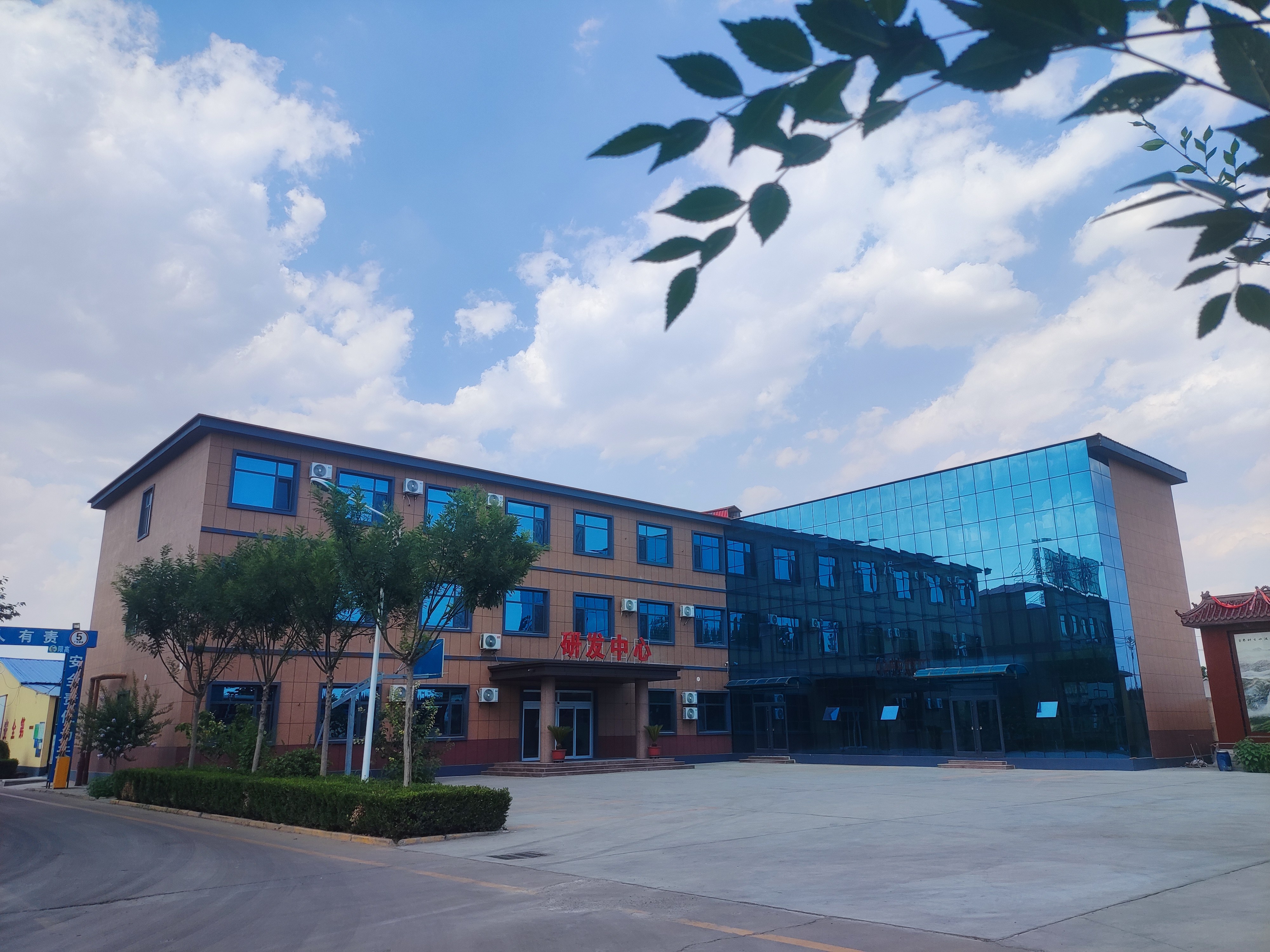
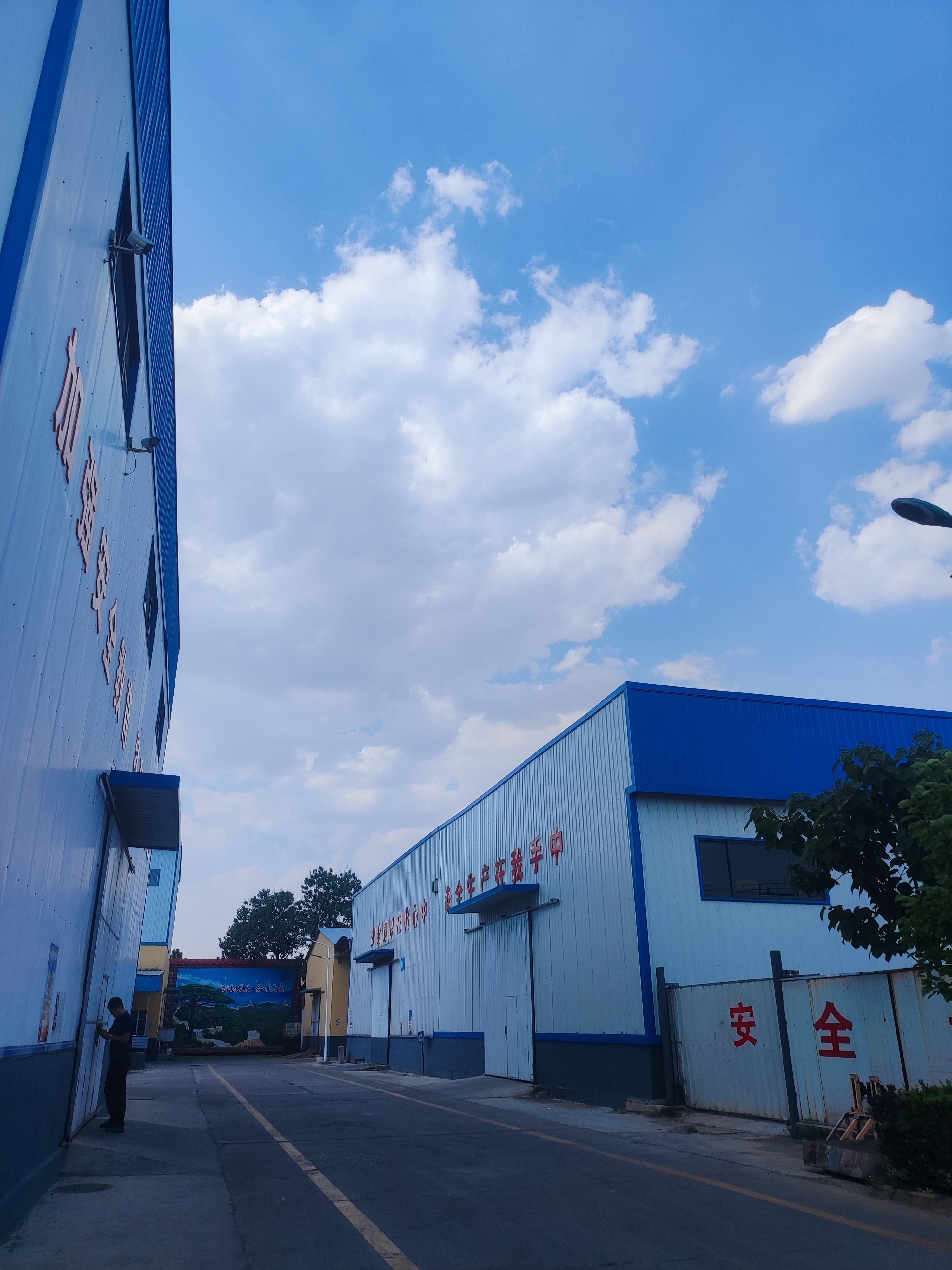
Supply adds a second constraint. Customs bill-of-lading data reported by Volza places China at 82.6% of global ATBC export shipments in 2024, so for most buyers the non-phthalate option is also a China-sourced option. Shandong Kexing Chemical Co., Ltd., a plasticizer manufacturer in Dongying, Shandong, reports monthly capacity of 10,000 t across its citrate ester and ESO range and exports to Europe, the USA, Japan, South Korea and the Middle East. That concentration belongs in the contract as a continuity clause, not in the decision as an objection.
Market sizing is the least useful input. One commercial research report values the global ATBC market at USD 163.94 million in 2025; a review of competing estimates found a spread from roughly USD 121 million to USD 412 million for the same year, depending on whether the count covers ATBC alone or wider citrate ester and secondary-plasticizer volumes. A figure with that spread cannot set a budget. It only says the segment is small beside commodity phthalates — which is why supplier relationships matter more than spot opportunism.
What ATBC is, and what the name does not tell you
Acetyl Tributyl Citrate — also written tributyl O-acetylcitrate or tributyl acetylcitrate — is a citrate ester plasticizer with CAS number 77-90-7, EINECS 201-067-0, molecular formula C20H34O8 and a relative molecular mass of 402.48 (NIST reference data; the ECHA risk-management document reports 402.5). Shandong Kexing Chemical Co., Ltd. lists ester content of minimum 99.0% in its specification for the grade it supplies.
Reported uses are broad. ECHA's substance information lists coatings, inks and toners, polymers, adhesives and sealants, pharmaceuticals, cosmetics and leather-treatment products; a 2024 ECHA risk-management analysis adds polymer preparations and compounds, coatings and paints, lubricants and laboratory chemicals. PubChem records plasticizer use for vinyl, rubber and cellulosic resins, and for resinous and polymeric coatings and paper or paperboard intended for food contact.
The name is where purchasing files fail. Unacetylated Tributyl Citrate (TBC, CAS 77-94-1) is a different substance, and commercial pages exist that head an ATBC listing 'Tributyl Citrate (ATBC)' or show the non-specific synonym 'tributyl ester'. A specification that says only 'tributyl citrate' can be filled with either material. Bind the RFQ, the purchase order, the certificate of analysis and the incoming label to CAS 77-90-7 and to the acetylated name.
Nor does the molecule carry the claims attached to it. 'Non-phthalate', 'environment-friendly citrate ester', 'food-grade' and 'low migration' describe a grade, an application and a test result — not the substance in the abstract. A citrate ester can be a sound choice and still fail a migration test in a particular formulation at a particular loading. The rest of this article is about closing that gap with documents rather than adjectives.
Reading the regulatory file the way a buyer has to
In the United States, 21 CFR 178.3740 permits ATBC as a plasticizer in polymers used in food-contact articles, and the FDA food-contact substance inventory record for tributyl acetylcitrate lists references to 21 CFR 172.515, 175.105, 175.300, 175.320, 178.3910 and 181.27. Those citations describe a pathway; they do not authorize every conceivable use. Concentration, substrate, adjacent layers and the finished article's migration behaviour stay application-specific questions.
In the European Union, ECHA holds a substance information entry for tributyl O-acetylcitrate (record 100.000.971) covering hazardous properties, classification and labelling, and a 2024 risk-management option analysis is public. One detail in it deserves to be raised by you before it is raised against you: the analysis classifies ATBC in Cramer class III, while TEC and TBC fall in Cramer class I in the same assessment context. Cramer class is a structural screening input for exposure assessment, not a safety verdict and not a product ranking — but an EU customer's toxicologist may ask the question, and a supplier who has read the document can answer it.
The EU food-contact plastics authorisation entry and any specific migration limit for ATBC were not confirmed in the research behind this article. Treat that as a document request rather than a red flag: ask the supplier to state the entry and the limit, or to state in writing that they cannot.
Build the file once, market by market. For a soft-PVC article the working set is: a lot-specific certificate of analysis against an agreed specification; a technical data sheet; an SDS in the required language and format; a non-phthalate declaration naming the analytes screened — DBP, DOP, DINP, DPHP and anything else on the customer's list — instead of a generic statement; a REACH and SVHC statement; a food-contact declaration of compliance where food contact applies; migration or extractables reports where the end use demands them; and an identity reference, such as the NIST infrared spectrum for tributyl acetylcitrate, for incoming verification.
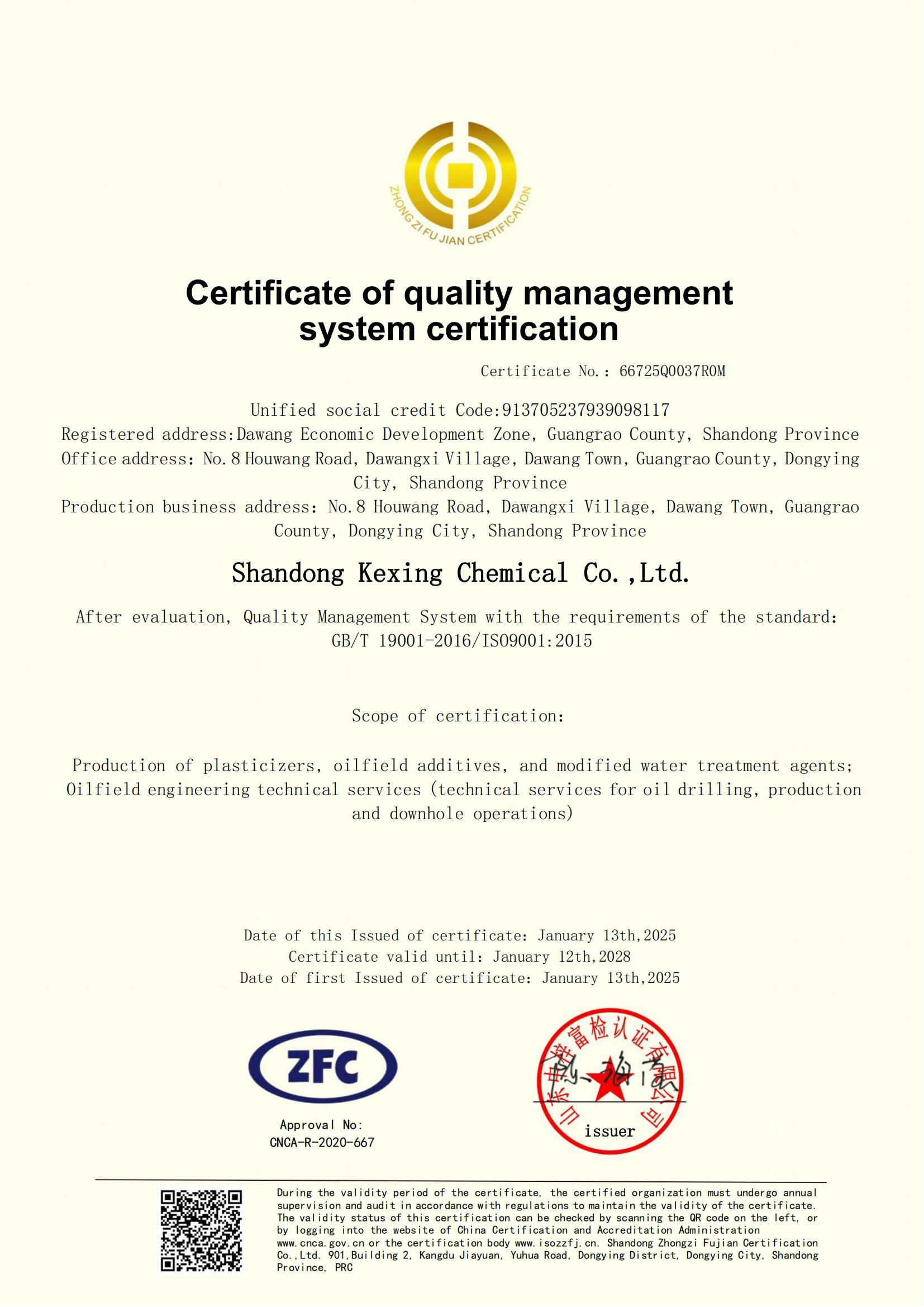
Management-system certification supports that file without replacing any of it. Shandong Kexing Chemical Co., Ltd. holds ISO 9001:2015 certification (certificate 66725Q0037R0M, issued 13 January 2025, valid to 12 January 2028), ISO 14001:2015 (66725E0038R0M, same validity period) and an HSE management system certificate (667240083R1S, valid to 28 February 2027), with a scope covering plasticizer production. Those certificates say the management system is audited. They do not say a given lot meets a given food-contact limit, and both belong in the file.
ATBC alongside TEC, TBC, DOTP and ESO
None of the non-phthalate options is a universal replacement. The differences that matter are the ones visible in documents, not the ones asserted in brochures.
- TEC (Triethyl Citrate, CAS 77-93-0) is the most polar of the citrate set described here and has the lowest flash point in this data (minimum 155 °C) with the highest density (1.135–1.139 g/cm³). It is frequently evaluated for inks and for food-contact work, and its Cramer class I position in the same ECHA assessment makes it the natural comparator for ATBC.
- TBC (Tributyl Citrate, CAS 77-94-1) is the unacetylated parent: ester content minimum 99.0%, density 1.037–1.047 g/cm³ at 20 °C, flash point minimum 185 °C, also Cramer class I. It is a different substance, not a grade of ATBC, and the two must never be interchangeable in a purchase order.
- DOTP (Dioctyl Terephthalate) is a terephthalate, not a citrate — a non-phthalate option from a different chemical family, usually evaluated where a different molecular weight profile is wanted. Its test data does not transfer to a citrate ester.
- ESO (Epoxidized Soybean Oil, CAS 8013-07-8) has an epoxy value of minimum 6.0%, iodine value maximum 6.0 and flash point minimum 280 °C. It normally functions as a secondary component or epoxy-functional co-additive rather than the sole plasticizer, and is often used alongside a primary plasticizer instead of replacing one.
The table below records only what this article's source set actually states, so that empty cells stay visible instead of being filled with plausible numbers.
| Material (CAS) | Documented specification points in this source set | Role in soft PVC | Verify before substituting |
|---|---|---|---|
| ATBC (77-90-7) | Ester content minimum 99.0% (supplier specification); C20H34O8; relative molecular mass 402.48 | Primary plasticizer | Grade-level density, viscosity, flash point, colour, moisture and acidity from the supplier TDS and CoA; application-specific regulatory declaration |
| TBC (77-94-1) | Ester content minimum 99.0%; density 1.037–1.047 g/cm³ (20 °C); moisture maximum 0.1%; acidity maximum 0.1 mgKOH/g; refractive index 1.443–1.446 (25 °C); flash point minimum 185 °C | Citrate plasticizer, unacetylated | That every document names TBC, not ATBC — a different substance with a different CAS number |
| TEC (77-93-0) | Purity minimum 99.0%; density 1.135–1.139 g/cm³; moisture maximum 0.25%; acidity maximum 0.1 mgKOH/g; flash point minimum 155 °C | Citrate plasticizer for more polar systems and inks | Lower flash point than ATBC in this data set — check drying and processing temperatures |
| ESO (8013-07-8) | Epoxy value minimum 6.0%; iodine value maximum 6.0; acidity maximum 0.5 mgKOH/g; density 0.985–0.995 g/cm³; flash point minimum 280 °C | Secondary plasticizer and epoxy-functional co-additive | Whether it is declared separately in the phthalate-free statement |
| DOTP (not stated here) | Not specified in this source set | Non-phthalate terephthalate plasticizer, different family | Its own TDS and application data; citrate performance data does not apply |
| DOP (117-84-0) — incumbent reference | Ester content minimum 99.5%; density 0.983–0.985 g/cm³; viscosity 77–82 mPa·s (20 °C); flash point minimum 195 °C; refractive index 1.486–1.487 | Ortho-phthalate incumbent | The list of fields you should require, field for field, for ATBC |
Two things follow. The ATBC row is deliberately thinner than the TBC and TEC rows, because grade-level values for density, viscosity, flash point, colour, moisture and acidity have to come from the supplier's TDS and CoA for the grade you buy — never lifted from another citrate ester to fill a gap. And 'phthalate-free' is a property of the whole formulation, not of one ingredient: if a phthalate-containing secondary or carrier remains in the recipe, the declaration has to say so.
Six steps from a phthalate incumbent to ATBC
1. Fix the identity and the application scope
Write the target substance as Acetyl Tributyl Citrate, CAS 77-90-7, with the grade and the end use. Note what you are replacing, substance by substance, because 'phthalate' is not a specification. If the incumbent is DOP, its documented profile — ester content minimum 99.5%, density 0.983–0.985 g/cm³, viscosity 77–82 mPa·s at 20 °C, flash point minimum 195 °C — is the template for the fields you should demand for ATBC.
2. Map the route for each market and end use
One ATBC grade rarely serves packaging, toys, medical articles and inks with a single document set. List the markets you ship to, the food-contact or toy-safety route each requires, and the declaration each customer asks for. The output is a document matrix rather than a decision, and it usually shows that two of your five projects carry most of the risk.
3. Write the specification before the RFQ
Identity (acetylated name plus CAS), grade, ester content, acidity, moisture, colour, density, refractive index, flash point, and the tests you will actually run on receipt, with the regulatory annexes from step 2 attached. This is the step where most substitution projects save the most money, because a vague RFQ returns quotations that cannot be compared and samples that cannot be rejected on defined grounds.
4. Trial at the smallest sensible volume
Kexing states a minimum order quantity of 1 t, which is enough for a line trial and small enough to fail cheaply. Run the trial on the substrate you actually sell, at the loading you intend to use, and judge it on the tests the incumbent already passes — hardness, elongation, low-temperature flex, volatility loss and, where relevant, migration. Keep an unopened retain sample of the trial lot.
5. Set a release protocol for lot-to-lot consistency
Batch consistency is where a good first sample becomes a production problem. Define acceptance windows for the parameters in step 3, require a certificate of analysis per lot, and confirm identity independently — an infrared check against the NIST reference spectrum for tributyl acetylcitrate catches the ATBC/TBC mix-up that a CoA alone will not. Ask what process control sits behind the CoA; Shandong Kexing Chemical Co., Ltd. describes raw-material incoming inspection and finished-product sampling testing.
6. Convert to a supply agreement with stated terms
Kexing quotes a lead time of 30–45 days and offers OEM and private-label supply, with remote technical support, after-sales consulting and formulation guidance. Put lead time, change-control notification, retain-sample retention, document revision control and the specification itself into the agreement. A substitution that is not written into a contract tends to drift back to the old material at the first scheduling conflict.
Where the substitution is already running — and what that does not prove
The application profile is well defined. ATBC is incorporated during batch mixing at a controlled dose, on high-speed mixers, kneaders, extruders, calenders and coating machines, where it is used for softening and toughening, a lower processing melting point, better ductility, improved flow and cold-flex resistance. Those are the same jobs the phthalate incumbent performed, which is exactly why the trial has to be judged on the same tests.
Shandong Kexing Chemical Co., Ltd. reports regular orders of 15–25 t per month from plastic masterbatch factories, artificial leather manufacturers, food packaging processors and toy factories in markets including Canada, Chile, France, the United Kingdom, India, Japan, South Korea, Peru, Russia, Turkey and the United States, with reported outcomes of improved flexibility, low migration, passing REACH and food-grade safety tests, and a finished-product service life of up to two years.
Those outcomes are supplier-reported and application-specific. They indicate where the material has been used and what documentation the supplier is used to producing; they are not an independent test result for your formulation. Your own trial, on your own substrate, at your own loading, governs.
The harder cases are worth naming. Where the incumbent's exact volatility or gelation behaviour is embedded in a validated process, or where the customer approval cycle is long and margins are thin, a staged conversion — ATBC as primary plasticizer with an adjusted co-plasticizer and an explicitly interim specification — is usually more tractable than a single swap. Better to say so in the specification than to discover it in the trial.
The cost question: what to compare, and what no report can price
There is no reliable public price benchmark for ATBC. Any figure quoted without a grade, packaging, volume, Incoterm and date is a figure the source cannot support. What can be done is to make the quotations comparable:
- Price per tonne, separated by grade, with the specification attached to the quotation.
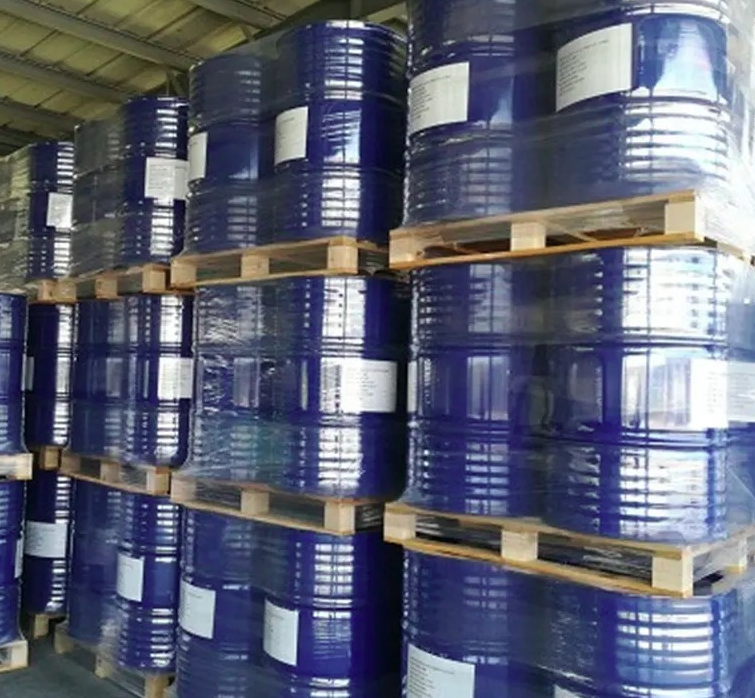
- Packaging format and net weight — drum or IBC — plus pallet loading and any drum-return terms.
- Incoterm, port of loading and destination charges.
- Volume basis and minimum order quantity (Kexing states 1 t).
- Lead time and quotation validity (Kexing states 30–45 days).
- The input-cost basis, so that a later adjustment can be checked rather than argued: citric acid and n-butanol drive the ester's cost structure.
Then add the costs that never appear on a quotation: re-qualification batches, dual inventory while both materials remain approved, customer approval time, and the risk-adjusted cost of the compliance exposure being removed. In many soft-PVC projects the deciding number is not the per-kilo difference; it is whether the switch removes a recurring declaration burden and a market-access question from every future order.
One caution on circulating figures: with published 2025 market estimates for ATBC spanning roughly USD 121 million to USD 412 million depending on scope, no analyst number can anchor a contract price. Use it for context and negotiate on your own quotation.
Frequently asked questions
Is ATBC permitted for food-contact PVC in the United States?
21 CFR 178.3740 permits ATBC as a plasticizer in polymers used in food-contact articles, and the FDA food-contact substance inventory record for tributyl acetylcitrate also lists references to 21 CFR 172.515, 175.105, 175.300, 175.320, 178.3910 and 181.27. A listing is not a blanket authorization: concentration, substrate, adjacent layers and the finished article's migration behaviour must be verified for your application, and EU or Chinese requirements are separate determinations.
What should an ATBC purchase specification contain?
Identity (acetylated name plus CAS 77-90-7), grade and ester content — Kexing states a minimum of 99.0% — followed by acidity, moisture, colour, density, refractive index and flash point, the tests you will run on receipt, and the regulatory annexes for each market. Any parameter the supplier's TDS does not state should be agreed in writing rather than assumed, and no value should be copied across from TBC or TEC.
Is ATBC cheaper than the phthalate it replaces?
There is no reliable public benchmark, so the honest answer is that the price has to be quoted. ATBC pricing depends on grade, volume, packaging and Incoterm, and its upstream costs track citric acid and n-butanol. Compare landed cost per tonne on identical terms, then add re-qualification batches, dual inventory and approval time. Note that published 2025 estimates for the ATBC market span roughly USD 121 million to USD 412 million by scope, which is why no analyst figure can set your budget.
Can we trial ATBC before committing to full production?
Yes. Shandong Kexing Chemical Co., Ltd. states a minimum order quantity of 1 t, which supports a line trial, and offers OEM and private-label supply. Ask for the trial lot's certificate of analysis, run the trial on your own substrate at your intended loading, test against the criteria the incumbent already meets, and keep an unopened retain sample for later comparison.
How do we verify batch consistency before switching?
Define acceptance windows for every parameter in the specification, require a certificate of analysis per lot, and confirm identity independently — an infrared check against the NIST reference spectrum for tributyl acetylcitrate detects an ATBC/TBC substitution that a CoA alone will not. Ask what process control sits behind the CoA; Kexing describes raw-material incoming inspection and finished-product sampling testing.
What lead time and delivery terms should we plan for?
Kexing quotes a 30–45 day lead time and a minimum order of 1 t, with monthly capacity of 10,000 t across its citrate ester and ESO range. Confirm packaging format and net weight, Incoterm and port, and the customs classification in writing — a supplier SDS may suggest tariff heading 2918.15, but official classification has to be validated for your importing market. To start, send your specification and destination for a matched quotation and sample.
Conclusion
ATBC does not end the argument between phthalate regulation and cost; it changes its terms. Compliance becomes a file you control — CAS 77-90-7, a defined grade, a stated ester content, a route per market and a release protocol — and cost becomes a quotation you can compare line by line instead of a risk carried silently. The constraints that decide the outcome are unglamorous: a specification written before the RFQ, a trial at a volume you can afford to fail, and a lot-release discipline that survives the tenth delivery as well as the first.
If the next step is a decision rather than more reading: send your current plasticizer specification and the markets you ship to, and ask for a matched ATBC specification, a lot certificate of analysis, the regulatory documents described above, and a quotation in your packaging format and Incoterm. Shandong Kexing Chemical Co., Ltd. states OEM and private-label supply, a minimum order of 1 t, a 30–45 day lead time and remote formulation support.
The company brochure, including the product range and certificate details, can be downloaded here: Shandong Kexing Chemical Co., Ltd. product brochure (PDF).
Structured data
Have Questions or Need More Details?
Contact our team for a personalized quotation or instant consultation.
Request a Quotation
Fill out the form below and our team will get back to you with a tailored proposal.
WhatsApp Direct Chat
Prefer to chat in real-time? Message us on WhatsApp for instant assistance & quick answers.
- Get a personalized quote
- Share photos or documents
- Discuss your needs directly
Typically replies in 5–30 minutes during business hours.