ATBC Long-Term Partnership FAQ: Supply Continuity and After-Sales Support
The questions that decide a long-term Acetyl Tributyl Citrate (ATBC) relationship are rarely about the first shipment. They are about the second, the fifth and the twentieth order: whether the batch profile stays the same, whether delivery dates stay predictable, whether the same documents arrive each time, and who answers when something deviates. This FAQ answers those questions in the order buyers usually raise them, using documented product, capability and certification records rather than general market language.
It is written for importers, distributors, brand owners, OEM buyers and procurement engineers who have already evaluated ATBC (CAS 77-90-7) and are moving from Evaluation into Execution — repeat orders, scheduled shipments and multi-year supply planning.
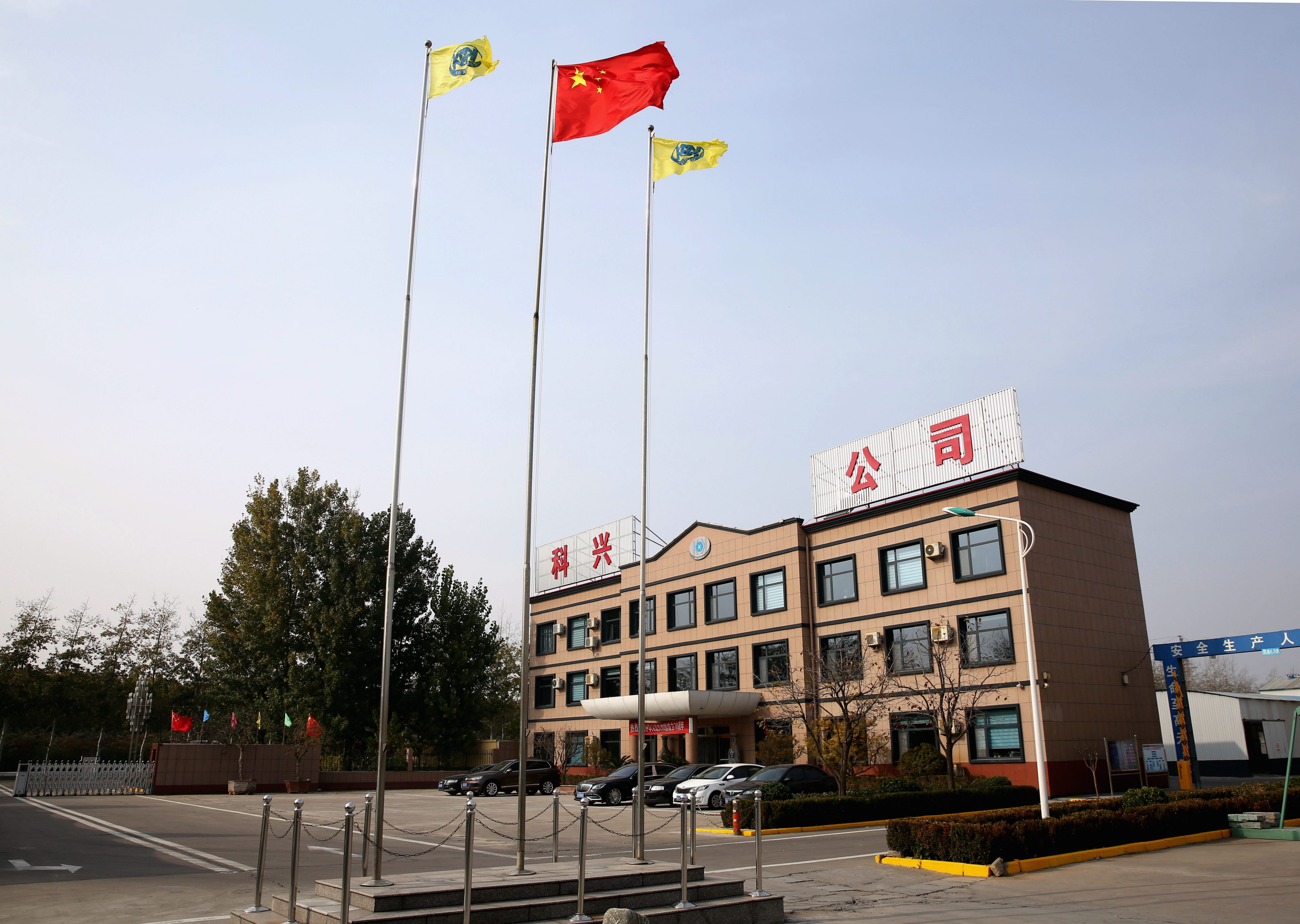
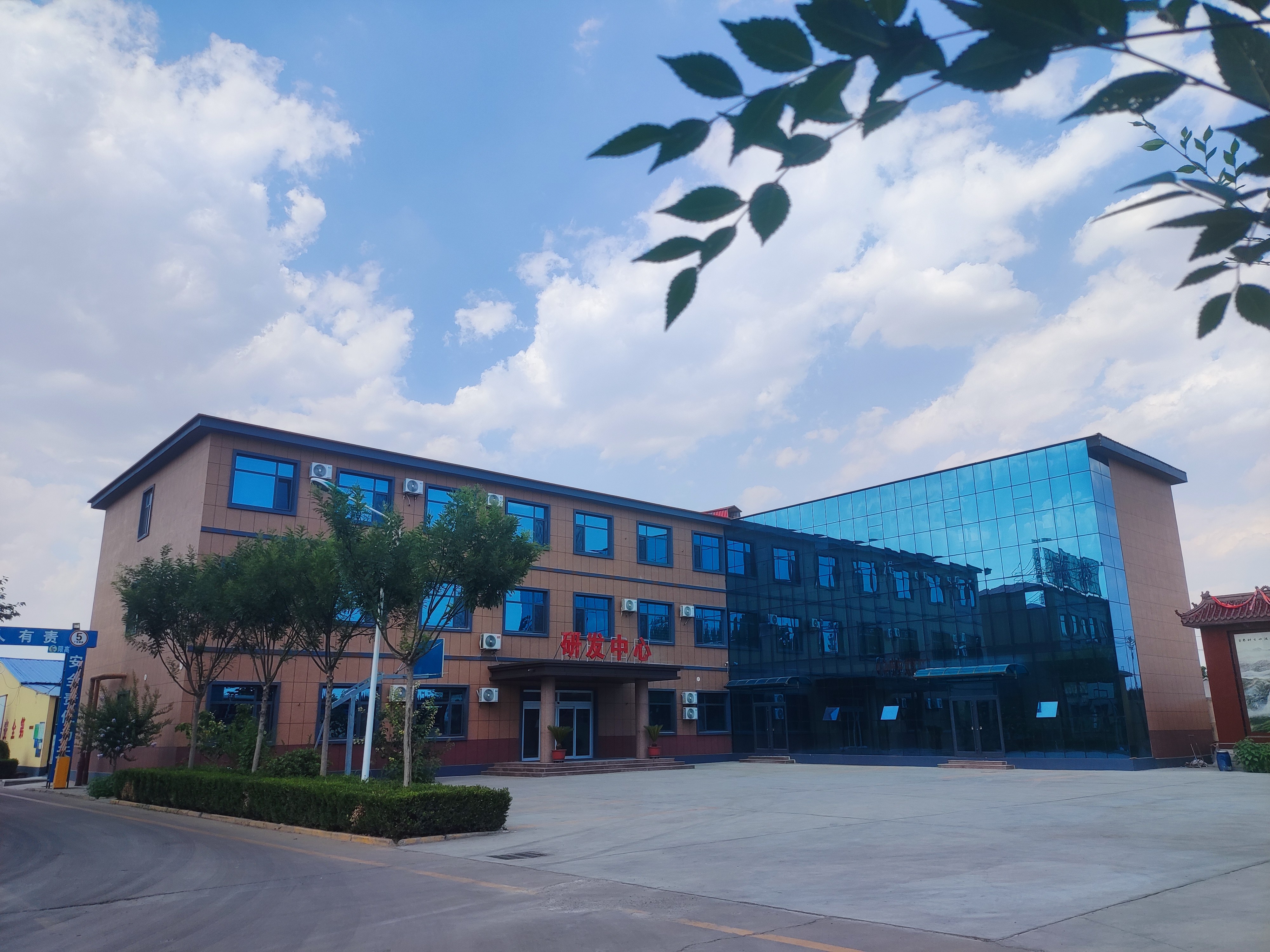
Shandong Kexing Chemical Co., Ltd. is a plasticizer manufacturer founded in 2006 and based in Dongying, Shandong, China, producing Acetyl Tributyl Citrate (ATBC) alongside a wider plasticizer and additive portfolio, with global import and export handled by its subsidiary Dongying Kexing International Trade. Capability statements in this article — capacity, lead time, MOQ, quality control, after-sales scope and certifications — come from Kexing's own records. Market and regulatory figures are attributed to the named third-party sources.
Problem Definition: Why the Second Order Matters More Than the First
A trial ATBC order proves one thing: that a supplier can produce a single acceptable batch. A long-term supply relationship has to prove something different — that quality, timing, documentation and technical response stay stable across many orders, sometimes across several products, and often across a change of production planner on the buyer's side.
Buyers at the Evaluation-to-Execution stage commonly describe four open risks that no technical data sheet answers:
- Batch drift. Colour, ester content, moisture or acidity moving slightly between shipments, so that downstream processing windows have to be re-adjusted.
- Delivery drift. A promised date that moves because capacity, scheduling or documentation was not reserved in advance.
- Documentation drift. Test reports, certificates and labelling information that change format from order to order, creating extra work during incoming inspection and customer audits.
- Response drift. Slow answers when a batch, a formulation or a customs document needs attention after the container has shipped.
The practical conclusion is that a long-term ATBC partnership should be evaluated on repeatable processes, not only on a specification sheet. The rest of this article sets out what those processes look like at Kexing and what buyers should confirm in writing before scaling a trial order into a schedule.
Industry Background: Why ATBC Supply Relationships Are Getting Longer
ATBC demand is growing and consolidating at the same time. The global market for Acetyl Tributyl Citrate was estimated at USD 258.92 million in 2025 and is projected to reach USD 439.46 million by 2034, according to Data Insights Reports. The same source estimates global ATBC consumption at 128,000 metric tons in 2025, with medical applications holding a 34% share and food packaging accounting for 29%.
Regulatory visibility supports that growth. ATBC (CAS 77-90-7) is listed by the U.S. Food and Drug Administration as a food additive and flavouring agent adjuvant under 21 CFR 172.515, 175.105, 178.3910 and 181.27, as recorded in the FDA's Substances Added to Food database. For buyers in toys, food packaging, medical plastics and printing ink, this is the kind of listing that keeps a non-phthalate citrate ester on the approved list for years rather than quarters — and it is also the reason specifications tend to be frozen rather than reformulated.
Supply, meanwhile, is concentrated. Data Insights Reports attributes approximately 18% of the global ATBC market to Jungbunzlauer and approximately 14% to Mitsubishi Chemical Corporation. When a small number of producers hold a large share of volume, buyers in Europe, North America and Asia typically qualify at least one additional supplier to protect continuity of supply — which is exactly the point at which repeat-order reliability, documentation and after-sales response become the deciding factors rather than price alone.
Kexing's own export profile reflects that pattern: roughly 50% of output is exported, with main markets in Europe, the USA, Japan, South Korea and the Middle East, and regular-order customers in Canada, Chile, France, the United Kingdom, India, Japan, South Korea, Peru, Russia, Turkey and the United States.
Detailed Solution: What a Workable Long-Term ATBC Partnership Looks Like
A dependable ATBC supply relationship is built from five repeatable elements: a frozen specification, a written change process, consistent packaging, a portfolio that can absorb related needs, and a defined after-sales path. Each is described below with the questions buyers typically ask.
1. Batch-to-batch consistency, and the documents that prove it
Consistency starts with a written specification that does not move. Kexing produces ATBC to an enterprise standard with the following parameters, which buyers can use as the reference for incoming inspection:
Appearance: transparent liquid, no suspended substance
Odour: slight odour | Colour (Pt-Co): max. 30
Density (20 °C): 1.045–1.055 g/cm³ | Ester content: min. 99.0%
Moisture: max. 0.1% | Acidity: max. 0.1 mgKOH/g
Refractive index (25 °C/D): 1.4410–1.4425 | Flash point: min. 204 °C
Quality control on the Kexing side runs at two points: raw material incoming inspection and finished product sampling test. The acceptance criterion for a shipment is the factory test report, which is the document a repeat buyer should file per batch and compare against previous batches. Case records for regular customers report the characteristics buyers most often track over time: phthalate-free and eco-friendly composition, good compatibility with PVC and resin, and stable batch purity.
2. Change notifications: what to agree in writing
The reference document for every ATBC shipment is the factory test report for that batch. Anything that sits outside that report — specification version, packaging format, delivery term, order quantity or shipment schedule — should be confirmed in writing before it affects an open order, because that is the point at which repeat buyers lose traceability.
In practice, a workable change protocol for a long-term ATBC relationship covers four items:
- Specification version. Which edition of the ATBC specification applies to the running order, and what happens if a parameter limit changes.
- Packaging format. The exact drum or IBC configuration, net weight and label content agreed for the order.
- Commercial terms. Whether the quotation is FOB or CIF, and what is included at each term.
- Schedule. Confirmed shipment window and the cut-off date after which a date change has to be re-planned.
For buyers building a supplier file, the practical rule is simple: keep the confirmed version with the order record, and treat any verbal adjustment as provisional until it appears in the order confirmation or the batch test report.
3. Packaging and labelling continuity across repeat orders
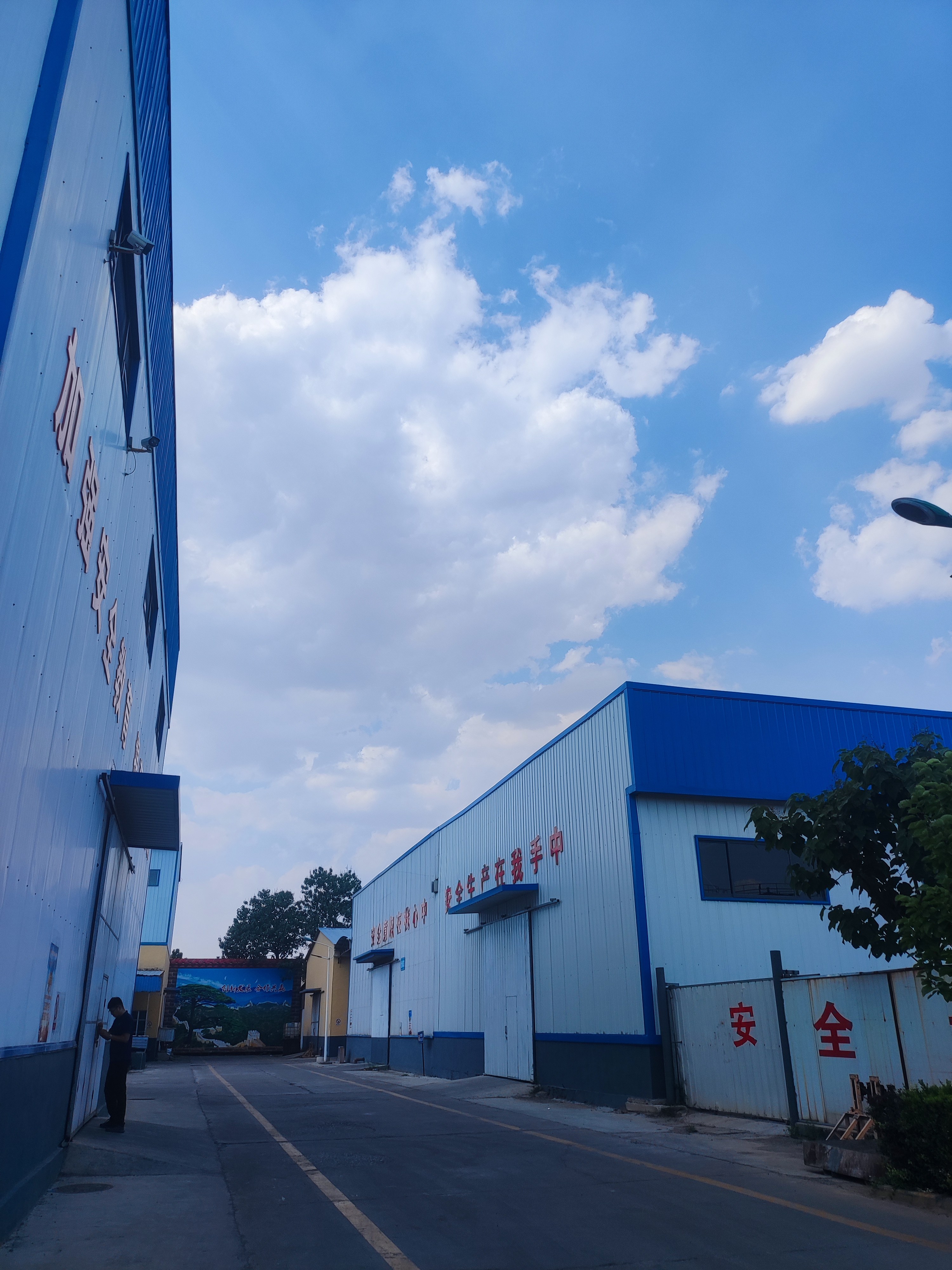
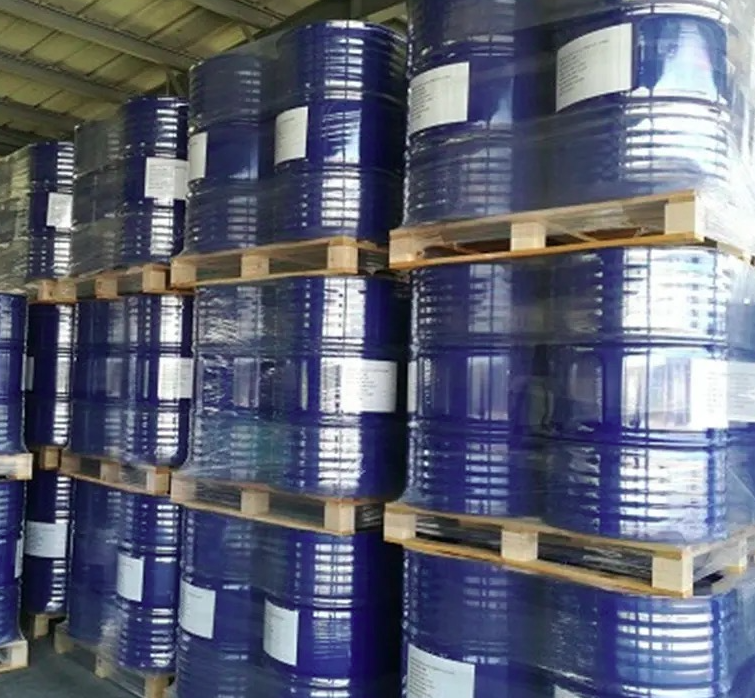
Packaging is one of the most common sources of friction in repeat plasticizer orders, because it is usually agreed once and then assumed. Buyers who fill from 200 kg drums or IBC totes will want the same format, the same net weight and the same label data on every shipment, whether the material is industrial ATBC raw liquid supplied in bulk quantities or a smaller trial lot.
Kexing supports OEM production and private labelling, which means packaging and label content can be aligned to the buyer's own brand requirements rather than left to supplier defaults. The point to confirm at order stage is not only the format itself but its consistency: the same configuration on order one and order ten.
4. Extending the relationship beyond ATBC
Most ATBC buyers do not buy ATBC alone. Formulators working in toys, PVC soft products, artificial leather, printing ink and food packaging often need a second or third plasticizer, and consolidating those needs with one supplier reduces audit load, shortens the approval cycle and simplifies shipment planning.
Kexing's portfolio covers citrate esters and related plasticizers and additives: Acetyl Tributyl Citrate (ATBC, CAS 77-90-7), Tributyl Citrate (TBC, 77-94-1), Triethyl Citrate (TEC, 77-93-0), Dioctyl Adipate (DOA, 123-79-5), Dioctyl Sebacate (DOS, 2432-87-3), Dibutyl Sebacate (DBS, 109-43-3), N-Butyl Stearate (123-95-5), Epoxidized Soybean Oil (ESO, 8013-07-8), Triethylene Glycol Di-2-ethylhexoate (3G8, 94-28-0), Dioctyl Terephthalate (DOTP, 6422-89-2), Diisononyl Phthalate (DINP, 28553-12-0), Didecyl Phthalate (DPHP, 84-77-5), Dioctyl Phthalate (DOP, 117-84-0) and Dibutyl Phthalate (DBP, 84-74-2). The citrate group — ATBC, TBC and TEC — is the non-phthalate, environment-friendly segment most often requested by buyers who start with ATBC and then extend their range.
The stage-by-stage parameters of these products are compared in the table further down, so a buyer can check whether a second product can be sourced on the same schedule and documentation flow.
5. Issue resolution and technical support after delivery
After-sales support is where long-term partnerships are usually won or lost, because most technical questions appear weeks after the material has been consumed, not during the quotation stage. Kexing's after-sales scope covers remote technical support, after-sales consulting, quality issue resolution, shipping follow-up and formulation technical guidance.
That combination matters most in three situations:
- A batch parameter sits at a limit. The factory test report and the buyer's incoming inspection are compared first, so the discussion starts from data rather than opinion.
- A formulation needs adjusting. Formulation technical guidance helps the buyer re-balance plasticizer loading instead of replacing the raw material.
- A shipment is delayed or re-routed. Shipping follow-up keeps documentation and delivery status visible to both sides.
Step-by-Step Breakdown: From Sample Validation to a Scheduled Order
The sequence below reflects how Kexing handles the transition from a trial ATBC order to a repeating supply pattern. Buyers evaluating a new supplier can use it as a checklist for the questions that should be closed at each stage.
- Freeze the specification. Agree the ATBC parameter set (colour, density, ester content, moisture, acidity, refractive index, flash point) and the packaging format before sampling.
- Run the sample validation. Test compatibility with your PVC or resin system, plasticizer loading, migration behaviour and finished-product feel in your own process.
- Place the first commercial order. Minimum order quantity for Kexing plasticizers is 1 T; delivery terms are FOB or CIF; payment terms are 30% deposit and 70% upon receipt of the bill of lading.
- Confirm the quality route. Raw material incoming inspection and finished product sampling test are performed, and the factory test report is issued as the acceptance document.
- Schedule production against capacity. Kexing's monthly capacity is 10,000 T and standard lead time is 30–45 days, so repeat orders should be released with that window in mind rather than against a shorter assumed date.
- Track the shipment. Shipping follow-up keeps the dispatch window, documentation and any customs requirement visible on both sides.
- Set the next order before stock runs down. Regular customers typically run monthly quantities in the 15–25 MT range; planning order two while order one is in transit is what turns a purchase into a supply schedule.
The same sequence applies when a buyer adds a second product from the portfolio, with one difference: the qualification file already exists, so only the product-specific specification and packaging need to be added.
Use Cases: Four Buyer Profiles That Run Scheduled ATBC Orders
Kexing's case records cover four recurring buyer profiles across Canada, Chile, France, the United Kingdom, India, Japan, South Korea, Peru, Russia, Turkey and the United States. In each case the ordering pattern, rather than the product itself, defines the relationship.
Plastic masterbatch factory
Masterbatch producers consume ATBC continuously and judge a supplier on batch purity and dosing consistency. Monthly regular orders of 15–25 MT are typical, and the recurring result cited is improved flexibility of finished goods with stable batch purity.
Artificial leather manufacturer
Artificial leather production uses ATBC for surface finishing, where compatibility with PVC and resin governs how evenly the plasticizer disperses. Low migration and consistent colour values matter here, because surface defects appear quickly when a batch drifts.
Food packaging processor
Food-contact plastic and film producers work under a fixed compliance file. The documented outcomes for this group are low migration and passing REACH and food-grade safety tests, supported by ATBC's FDA listing under 21 CFR 172.515, 175.105, 178.3910 and 181.27.
Toy factory
Toy manufacturers operate in a phthalate-free environment and need documentation that survives customer audits. Case records describe finished products with a long service life — up to two years in the applications covered — alongside a phthalate-free and eco-friendly composition.
Comparison Table: ATBC and Related Plasticizers in a Repeat-Order Portfolio
The table below lists Kexing's plasticizer range with the parameters buyers most often compare when deciding whether to consolidate additional volumes with the same supplier. All values are from Kexing product specifications (enterprise standard); confirm the specification version that applies to your order before use.
| Product | CAS No. | Ester content / purity | Density at 20 °C (g/cm³) | Flash point (°C) |
|---|---|---|---|---|
| Acetyl Tributyl Citrate (ATBC) | 77-90-7 | min. 99.0% | 1.045–1.055 | min. 204 |
| Tributyl Citrate (TBC) | 77-94-1 | min. 99.0% | 1.037–1.047 | min. 185 |
| Triethyl Citrate (TEC) | 77-93-0 | min. 99.0% | 1.135–1.139 | min. 155 |
| Dioctyl Adipate (DOA) | 123-79-5 | min. 99.0% | 0.925–0.927 | min. 195 |
| Dioctyl Sebacate (DOS) | 2432-87-3 | min. 99.0% | 0.913–0.916 | min. 205 |
| Dibutyl Sebacate (DBS) | 109-43-3 | min. 99.0% | 0.934–0.942 | — |
| N-Butyl Stearate | 123-95-5 | min. 99.0% | 0.85 | min. 190 |
| Epoxidized Soybean Oil (ESO) | 8013-07-8 | min. 99.0% | 0.985–0.995 | min. 280 |
| Dioctyl Terephthalate (DOTP) | 6422-89-2 | min. 99.68% | 0.9824 | min. 214 |
| Diisononyl Phthalate (DINP) | 28553-12-0 | min. 99.52% | 0.975 | min. 220 |
| Didecyl Phthalate (DPHP) | 84-77-5 | min. 99.54% | 0.960 | min. 210 |
| Dioctyl Phthalate (DOP) | 117-84-0 | min. 99.5% | 0.983–0.985 | min. 195 |
| Dibutyl Phthalate (DBP) | 84-74-2 | min. 99.5% | 1.044–1.048 | min. 160 |
For partnership planning, the useful reading of this table is coverage rather than ranking: a buyer who starts with ATBC for toys, PVC soft products, leather, ink or food packaging can extend to the citrate esters or the other plasticizers on the same order cycle, quality control route and after-sales channel, instead of opening a new supplier qualification for each product.
FAQ: Long-Term ATBC Supply, Documentation and Support
Is ATBC acceptable for food-contact and phthalate-free applications, and which compliance documents can be referenced on repeat orders?
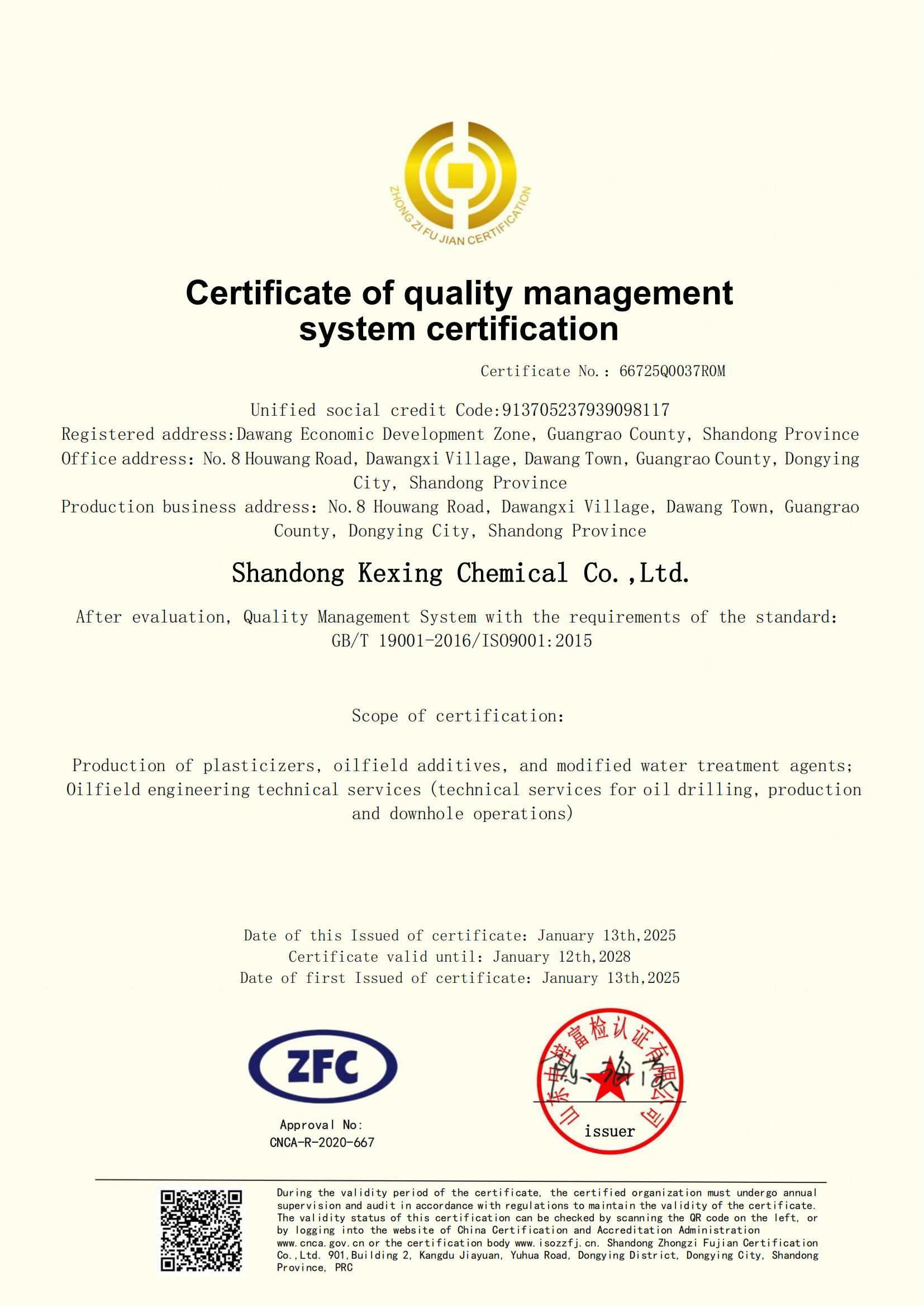
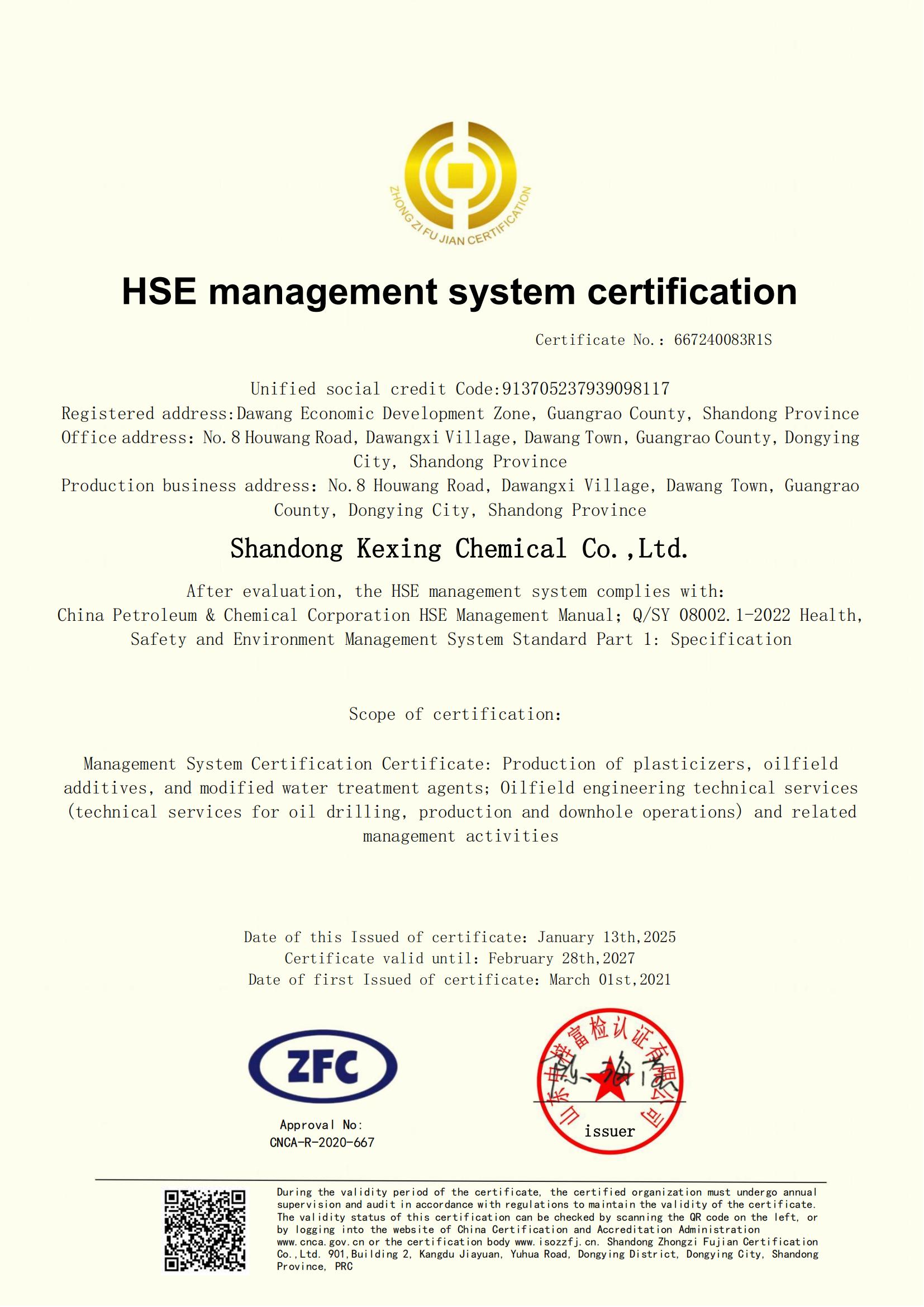
ATBC (CAS 77-90-7) is listed by the U.S. FDA as a food additive and flavouring agent adjuvant under 21 CFR 172.515, 175.105, 178.3910 and 181.27, and Kexing's ATBC is applied in toys, PVC products, plastics, leather, ink and food packaging. Kexing states that its products are certified to SGS, REACH, ISO 9001, ISO 14001 and OHSAS 18001. Management-system certificates that can be referenced for repeat-order documentation are: quality management system GB/T 19001-2016 / ISO 9001:2015, certificate 66725Q0037R0M, issued 2025-01-13 by Shandong Xiangfu Inspection and Certification Co., Ltd. and valid to 2028-01-12; environmental management system GB/T 24001-2016 / ISO 14001:2015, certificate 66725E0038R0M, valid 2025-01-13 to 2028-01-12; and HSE management system certificate 667240083R1S, valid 2025-01-13 to 2027-02-28. Because the applicable document depends on the end application and destination market, buyers should request the specific compliance statement together with the order.
Can one supplier cover ATBC and the related plasticizers we may need later?
Yes. Kexing manufactures ATBC together with TBC, TEC, DOA, DOS, DBS, N-Butyl Stearate, ESO, 3G8, DOTP, DINP, DPHP, DOP and DBP, with a monthly capacity of 10,000 T, OEM production, private labelling and a minimum order quantity of 1 T. The same quality control route applies across the range — raw material incoming inspection and finished product sampling test — and the export markets served are Europe, the USA, Japan, South Korea and the Middle East, with roughly 50% of output exported.
What commercial terms should a repeat ATBC buyer expect to confirm?
For Kexing plasticizer orders the standard commercial framework is: minimum order quantity 1 T; delivery terms FOB or CIF; acceptance criteria the factory test report; payment terms 30% deposit and 70% payment upon receipt of the bill of lading. When comparing quotations from different suppliers, compare at the same delivery term and the same packaging format, because an FOB quotation and a CIF quotation include different elements and are not directly comparable line by line.
How does the sample-to-bulk transition work, and is the sample representative of bulk production?
Samples are drawn for validation against your own formulation, then the first commercial order starts from the 1 T minimum, with production released against the agreed specification. Because finished goods are sampled and tested before release, the batch-level reference for bulk material is the factory test report; the practical way to confirm that a sample and its bulk production match is to compare the same parameters on both documents — appearance (transparent liquid, no suspended substance), colour max. 30 Pt-Co, density 1.045–1.055 g/cm³ at 20 °C, ester content min. 99.0%, moisture max. 0.1%, acidity max. 0.1 mgKOH/g, refractive index 1.4410–1.4425 at 25 °C and flash point min. 204 °C.
What lead time and shipment pattern should a repeat buyer plan for?
Standard lead time is 30–45 days from order confirmation, against a monthly capacity of 10,000 T. Regular customers in the Kexing case records order 15–25 MT per month, which means the working pattern is a rolling schedule rather than a single annual purchase: release the next order while the previous one is in transit, and confirm the shipment window before production is reserved. To plan a schedule around your own consumption rate, send your monthly quantity, packaging preference and destination port to kexing@kexingchem.com or WhatsApp +86 18765463469, and request the current product brochure for the full ATBC and plasticizer range.
Conclusion: What to Put in Writing Before You Scale ATBC
A long-term ATBC partnership is not a longer version of a single purchase; it is a set of commitments that have to be repeatable. Freeze the specification, agree the change protocol, fix packaging and labelling, decide whether related products such as TBC or TEC should sit in the same supply plan, and confirm the after-sales route before volumes increase.
The documented foundations on the Kexing side are straightforward: ATBC produced to an enterprise standard with published parameter limits, quality control through raw material incoming inspection and finished product sampling test, a factory test report as the acceptance criterion, a monthly capacity of 10,000 T with a 30–45 day lead time, an MOQ of 1 T with FOB or CIF terms, OEM and private labelling support, and an after-sales scope covering remote technical support, consulting, quality issue resolution, shipping follow-up and formulation technical guidance.
Plan Your ATBC Supply Schedule
Shandong Kexing Chemical Co., Ltd. supplies Acetyl Tributyl Citrate (ATBC) and a full plasticizer range to buyers in Europe, the USA, Japan, South Korea and the Middle East. Share your monthly quantity, application and packaging requirement, and the team will confirm specification, lead time and shipment window.
Website: www.kexingchem.com | Email: kexing@kexingchem.com | WhatsApp: +86 18765463469
Download the product brochure: Kexing plasticizer portfolio (PDF)
Address: No.8 Houwang Road, Dawang Economic Development Zone, Guangrao County, Dongying City, Shandong Province, P.R. China