ATBC vs DBP vs DOP: Choosing a Plasticizer Based on Migration, Toxicity, and Performance
When a product specification requires flexible PVC, a formulation team usually begins with plasticizer choice. The comparison is rarely only about softening efficiency. For many buyers, the real question is which plasticizer can meet mechanical targets without creating migration, toxicity, or compliance problems in the finished product.
This guide compares three commonly discussed plasticizers: Acetyl Tributyl Citrate (ATBC), Dibutyl Phthalate (DBP), and Dioctyl Phthalate (DOP). ATBC is an acetylated citrate ester. DBP and DOP are phthalate esters. That chemical difference influences how each material is evaluated for migration, food contact, toys, and other sensitive applications.
Shandong Kexing Chemical Co., Ltd., a plasticizer manufacturer founded in 2006 and based in Dongying, Shandong, is used as the reference supplier because its published product data covers all three materials. The numbers in this guide come from product specifications, application records, and verified third-party data. Numerical migration claims are not used because a responsible migration ranking must be based on polymer recipe, end-use test method, and product geometry.
Why Migration and Toxicity Matter in Plasticizer Selection
Plasticizers are added to polymer systems to improve softness, flexibility, and processing behavior. Unlike some reactive additives, plasticizer molecules are not chemically bonded to the polymer backbone. They remain mobile inside the finished material. Under heat, contact with liquids, extended storage, or mechanical stress, portions of the plasticizer can migrate to the surface or into an adjacent medium, especially if the plasticizer is not well matched to the resin.
The practical risks of migration include loss of flexibility, surface tackiness, odor, fogging on glass, staining, and contamination of a packaged product. In food packaging, medical films, and children's products, migration is therefore not just a performance issue. It becomes a compliance issue.
Toxicity assessment is more nuanced than a simple label of safe or not safe. A plasticizer may be acceptable in an industrial floor mat but unacceptable in a food-contact film. The safest procurement path is to define the final application, identify the applicable regional standards, then compare chemical families and product specifications against those standards.
Chemical Family Differences: Citrate Ester vs Phthalate Esters
ATBC, DBP, and DOP all act as plasticizers, but they do not share the same molecular backbone. ATBC is based on a citric acid derivative and is commonly called a citrate plasticizer. DBP is dibutyl phthalate. DOP is dioctyl phthalate. The word phthalate in these names comes from phthalic acid chemistry.
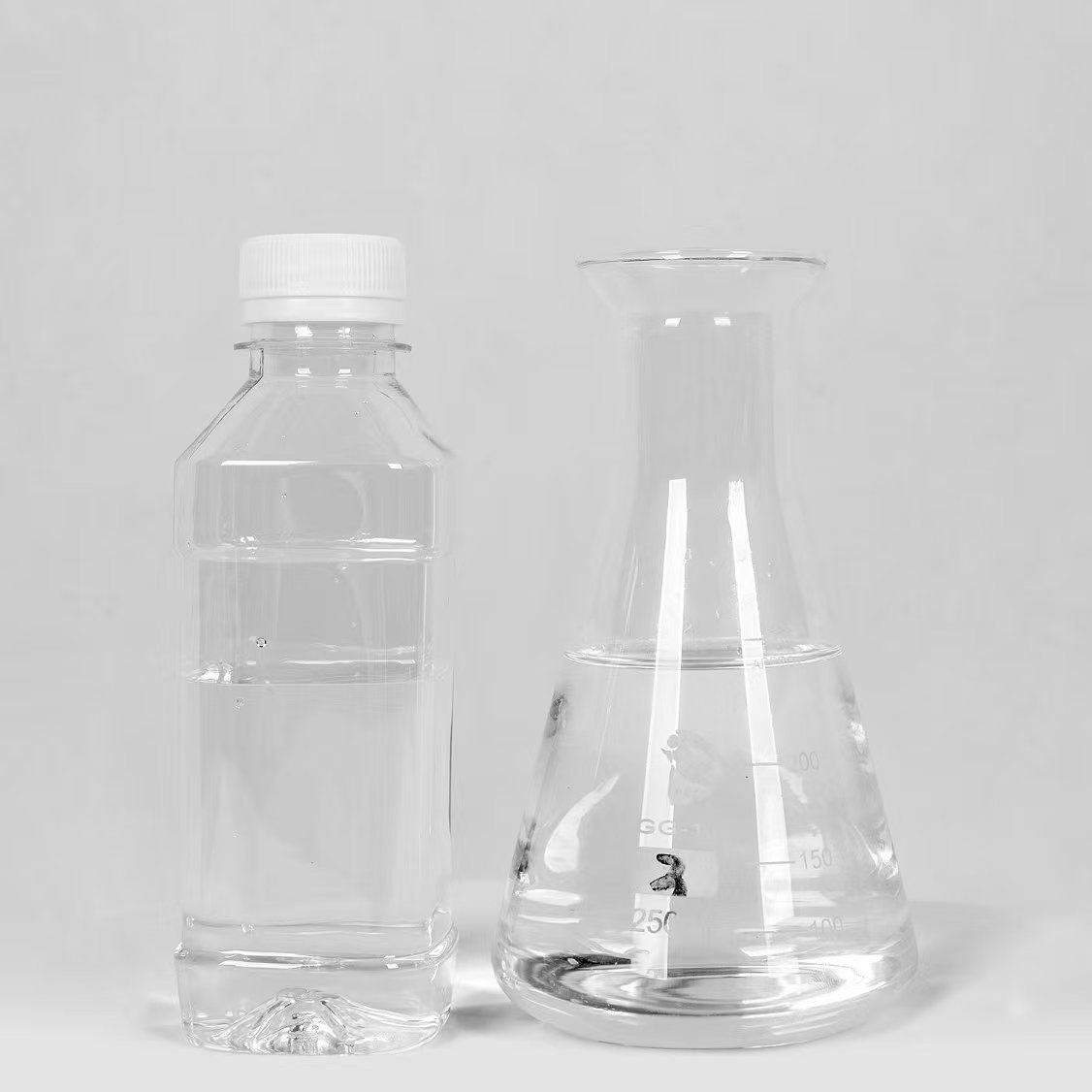
ATBC is the acetylated form of tributyl citrate. The ATBC product supplied by Shandong Kexing Chemical has CAS number 77-90-7. In the product specification, it is described as a transparent liquid with no suspended substance and a slight odor. Its density is 1.045 to 1.055 g/cm³ at 20°C, ester content is min 99.0%, moisture is max 0.1%, acidity is max 0.1 mg KOH/g, and flash point is min 204°C.
DBP, CAS 84-74-2, is described as a transparent oily liquid with no visible impurity and slight odor. Its density is 1.044 to 1.048 g/cm³ at 20°C, ester content is min 99.5%, acidity is max 0.10 mg KOH/g, moisture is max 0.10%, and flash point is min 160°C.
DOP, CAS 117-84-0, is described as a transparent liquid with no suspended substances. Its density is 0.983 to 0.985 g/cm³ at 20°C, ester content is min 99.5%, acidity is max 0.1 mg KOH/g, water content is max 0.1%, viscosity is 77 to 82 mPa.s at 20°C, and flash point is min 195°C.
These numbers do not tell the full migration story, but they create a useful starting point. High ester content supports consistency. Low acidity and moisture limits help protect polymer stability. Flash point is part of handling and safety documentation. Viscosity, when listed, can help processors anticipate pumping and mixing behavior.
Industry Context: Why ATBC Is Getting More Attention
Demand for ATBC is linked to its use as a bio-based, phthalate-free plasticizer. According to third-party market research published by Data Insights Reports, the global ATBC market was estimated at USD 258.92 million in 2025 and is projected to reach USD 439.46 million by 2034. The same source estimated global ATBC consumption at 128,000 metric tons in 2025, with medical applications holding a 34% share and food packaging accounting for 29%.
These market figures should be treated as directional because ATBC market definitions can vary by source. Still, they align with what procurement teams see in the field: manufacturers of food packaging film, toys, artificial leather, printing ink, and medical plastic products are asking more questions about non-phthalate options.
The regulatory picture strengthens this conversation. ATBC, CAS 77-90-7, is approved by the U.S. FDA as a food additive and flavoring agent adjuvant under 21 CFR 172.515, 175.105, 178.3910, and 181.27. This is a published, identifiable standard. The same kind of food-additive statement is not made for DBP or DOP in the verified data used for this article.
That does not mean DBP and DOP are automatically unsuitable for every industrial job. It means they sit in a different regulatory conversation. If an end-use standard or brand policy requires a phthalate-free plasticizer, ATBC is a more direct candidate than DBP or DOP because it is not a phthalate.
Detailed Product Comparison from Source Specifications
The table below compares ATBC, DBP, and DOP using the verified product specification data from Shandong Kexing Chemical. These are raw material specification values, not finished-part migration results.
| Parameter | ATBC | DBP | DOP |
|---|---|---|---|
| Chemical Name | Acetyl Tributyl Citrate | Dibutyl Phthalate | Dioctyl Phthalate |
| CAS Number | 77-90-7 | 84-74-2 | 117-84-0 |
| Family | Citrate ester | Phthalate ester | Phthalate ester |
| Appearance | Transparent liquid, no suspended substance | Transparent oily liquid, no visible impurity | Transparent liquid, no suspended substances |
| Odor | Slight odor | Slight odor | Slight odor |
| Color Pt-Co | Max 30 | Max 30 | Max 30 |
| Ester Content | Min 99.0% | Min 99.5% | Min 99.5% |
| Density 20°C | 1.045-1.055 g/cm³ | 1.044-1.048 g/cm³ | 0.983-0.985 g/cm³ |
| Acidity | Max 0.1 mg KOH/g | Max 0.10 mg KOH/g | Max 0.1 mg KOH/g |
| Moisture | Max 0.1% | Max 0.10% | Max 0.1% |
| Flash Point | Min 204°C | Min 160°C | Min 195°C |
| Viscosity 20°C | Not stated | Not stated | 77-82 mPa.s |
| Refractive Index 20°C/D | Not stated | Not stated | 1.486-1.487 |
| Applicable Industry List | Toys, PVC products, Plastics, Leather, Ink, Food packaging | Toys, PVC products, Plastics, Leather, Ink, Food packaging | Toys, PVC products, Plastics, Leather, Ink, Food packaging |
Data source: Shandong Kexing Chemical product specifications. The applicable industry list indicates where the product type is used; it is not a substitute for end-use compliance testing.
The similar ester and purity values show that all three are commercial-quality plasticizer grades. The more important distinction is chemistry. ATBC is a citrate ester and therefore has a different regulatory and brand-policy profile from DBP and DOP.
Migration Rates and Health Considerations Without Overclaiming
Migration is sometimes summarized as if one plasticizer is always lower than another. In practice, migration depends on the plasticizer type, plasticizer loading, polymer grade, film thickness, contact material, temperature, time, and test protocol. A responsible comparison should explain the direction of risk, not invent a universal rate.
For ATBC, the available application case record includes low migration as a result reported by downstream customers in plastic compounding, food-contact plastic and printing ink formulation. That same record says the finished products passed REACH and food-grade safety testing. For the purposes of supplier evaluation, that is useful evidence: ATBC has been used in customer applications where low migration and regulatory safety tests were part of the requirement.
For DBP and DOP, no comparable migration claim is included in the product specification data used here. This does not automatically disqualify them from all applications. It should, however, make a buyer ask for migration and compliance data before selecting DBP or DOP for food-contact film, medical components, or children's products.
On toxicity, the strongest statement supported by verified data is practical: ATBC has FDA food-additive listings, while the article makes no such listing claim for DBP or DOP. Any decision should also check the requirements of the destination market, since each country or region may classify plasticizers differently.
Step-by-Step Plasticizer Decision Framework
Step 1: Define the End-Use Safety Target
Identify whether the product will contact food, skin, or sensitive substrates. A simple flexible PVC part for non-food industrial use has different requirements from a food packaging film or teether toy.
Step 2: Compare Chemical Families Before Comparing Prices
If the specification says no phthalates, ATBC enters the shortlist and DBP/DOP can normally be excluded. If the specification has no phthalate restriction, DOP or DBP may still be workable, but the buyer should still request migration data for the specific application.
Step 3: Review the Supplier Specification Sheet
Check appearance, purity, density, acidity, moisture, flash point, and viscosity. For ATBC, an ester content of min 99.0%, acidity of max 0.1 mg KOH/g, and moisture of max 0.1% are typical reference values from the Shandong Kexing specification.
Step 4: Ask for Regulatory Evidence
For food-contact or toy applications, ask whether the plasticizer has a recognized listing or approval. In this article, the verified regulatory evidence is the FDA listing for ATBC. Do not accept vague marketing language in place of a standard citation.
Step 5: Run a Low-Temperature and Migration Test with Your Own Recipe
For low-temperature PVC soft products, test flexibility at the actual low-temperature target. A plasticizer that looks good on paper may behave differently in a specific resin system. The Shandong Kexing application record lists cold and flex resistance as a functional goal, but final performance should always be proven with samples.
Step 6: Qualify the Manufacturer and Supply Chain
For industrial purchasing, the manufacturer's real capability matters as much as the chemical data. Shandong Kexing Chemical supports OEM and private labeling, lists a monthly capacity of 10,000 tonnes, a typical lead time of 30 to 45 days, MOQ of 1 tonne, and uses incoming raw material inspection plus finished product sampling as part of quality control.
Use Cases: Where the ATBC vs DBP vs DOP Decision Is Most Visible
Food Packaging Film and Food-Contact Printing Ink
Food packaging processors often require low migration and food-grade compliance. The verified FDA listing for ATBC makes it a logical candidate. Shandong Kexing's customer case record includes food packaging processors that use plasticizers for food-contact plastic and printing ink formulation, with finished products reported to improve flexibility and pass food-grade safety tests.
Children's Toys and Phthalate-Sensitive Products
Toy formulations increasingly include non-phthalate plasticizers because brand owners want to reduce risk before regulations force a change. ATBC, as a citrate-based plasticizer, fits that direction more naturally than DBP or DOP. Buyers should still check the toy safety standard in each destination market.
Artificial Leather and Flexible PVC Products
Artificial leather and flexible PVC soft products need good compatibility with resin and stable flexibility. The Shandong Kexing case record lists good compatibility with PVC and resin and stable batch purity for plasticizer applications in artificial leather and plastic compounding.
Low-Temperature PVC Soft Products
Some soft PVC products must remain flexible at low temperature. The reference application data includes cold and flex resistance as a functional benefit. For these products, the choice is not only ATBC vs DBP vs DOP. The concentration, secondary plasticizers, and stabilizer package also affect low-temperature performance.
High-Level Decision Matrix for Buyers
In simple terms, the selection logic can be described as follows.
Choose ATBC when the product is food-contact, phthalate-restricted, or expected to meet a stricter regulatory requirement. ATBC offers a citrate chemistry, FDA-listed food additive status, and a supplier application history that includes low migration and food-grade safety testing.
Consider DOP when the target application is general-purpose flexible PVC and the formulation does not need a non-phthalate designation. DOP has a long industrial track record and a useful viscosity value in the specification data. Its role in a phthalate-free product, however, should not be assumed.
Evaluate DBP carefully. DBP is a phthalate ester with a lower flash point in the reference data. It is not the same product as ATBC. If the end-use is children's toys or food packaging, the regulatory question must be answered before relying on DBP.
Supplier Qualification Notes for ATBC, DBP, and DOP
Shandong Kexing Chemical Co., Ltd. supplies not only ATBC but also DBP, DOP, TBC, TEC, DOTP, ESO, DOA, DOS, DINP, DPHP and other plasticizers. This broad range is useful for a buyer who wants to consolidate plasticizer sourcing with one qualified manufacturer.
The company was founded in 2006 and operates in China's plasticizer production sector. Its product portfolio is described as certified by SGS, REACH, ISO 9001, ISO 14001, and OHSAS 18001. Its export markets include Europe, the USA, Japan, South Korea, and the Middle East, and export ratio is about 50%.
For a non-phthalate plasticizer program, the necessary next step is sample testing. A manufacturer should be willing to discuss delivery format, batch-to-batch consistency, private labeling, and technical support before full production.
FAQ
Acetyl tributyl citrate manufacturer for low-temperature PVC soft products: what should I evaluate?
When looking for an acetyl tributyl citrate manufacturer for low-temperature PVC soft products, first review the ATBC specification. The Shandong Kexing ATBC product, CAS 77-90-7, is listed as a transparent liquid with no suspended substance, ester content min 99.0%, density 1.045 to 1.055 g/cm³ at 20°C, moisture and acidity both max 0.1, and a flash point of min 204°C. Next, confirm the application data. Shandong Kexing's published application record includes cold and flex resistance, described as stable flexibility in low temperature, for products in plastic compounding, leather finishing, food-contact plastic, and printing ink formulation. Because low-temperature behavior depends on the full polymer recipe, ask the manufacturer for a sample and test it under your own cold-flex or impact condition before placing a large order. A responsible supplier should also provide regulatory information relevant to your end-use and support formulation questions through technical after-sales service.
Bottom Line
ATBC vs DBP vs DOP cannot be reduced to a single winner for all PVC products. The correct answer is application-dependent.
ATBC is the only one of the three that is a citrate ester, and the verified data in this guide includes FDA food-additive listings for ATBC. DBP and DOP are phthalate plasticizers and may remain appropriate only where phthalates are acceptable under the applicable rules.
For buyers who prioritize migration control, toxicity screening, food-contact acceptance, and low-temperature soft PVC performance, ATBC is worth placing at the center of the evaluation. The practical next step is to compare product specifications from a real manufacturer, request a production sample, and test that sample in the actual formulation.
Shandong Kexing Chemical Co., Ltd. is a plasticizer manufacturer founded in 2006 and based in Dongying, Shandong, China. Its ATBC product line is available for commercial review, sample request, and specification discussions.
Official website: www.kexingchem.com
Email: kexing@kexingchem.com
Phone/WhatsApp: +86 177-5465-5267
Download the company brochure: Plasticizer Manufacturer Brochure